Cheat Sheet to Local SEO for Awnings & Shade
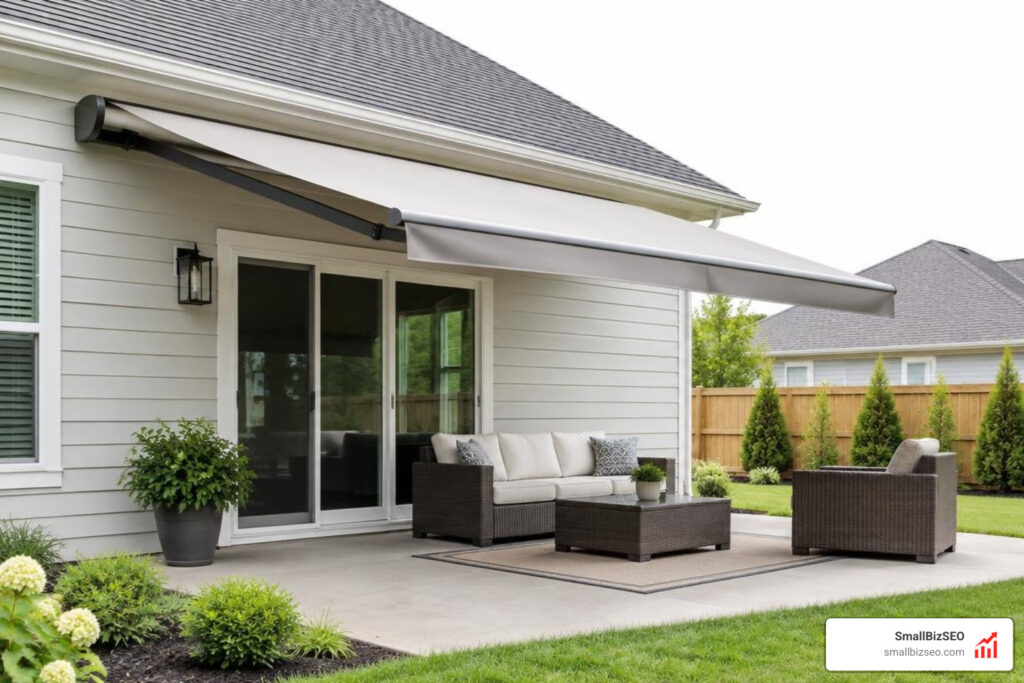
How Can Awning and Shade Companies Get Found in Search?
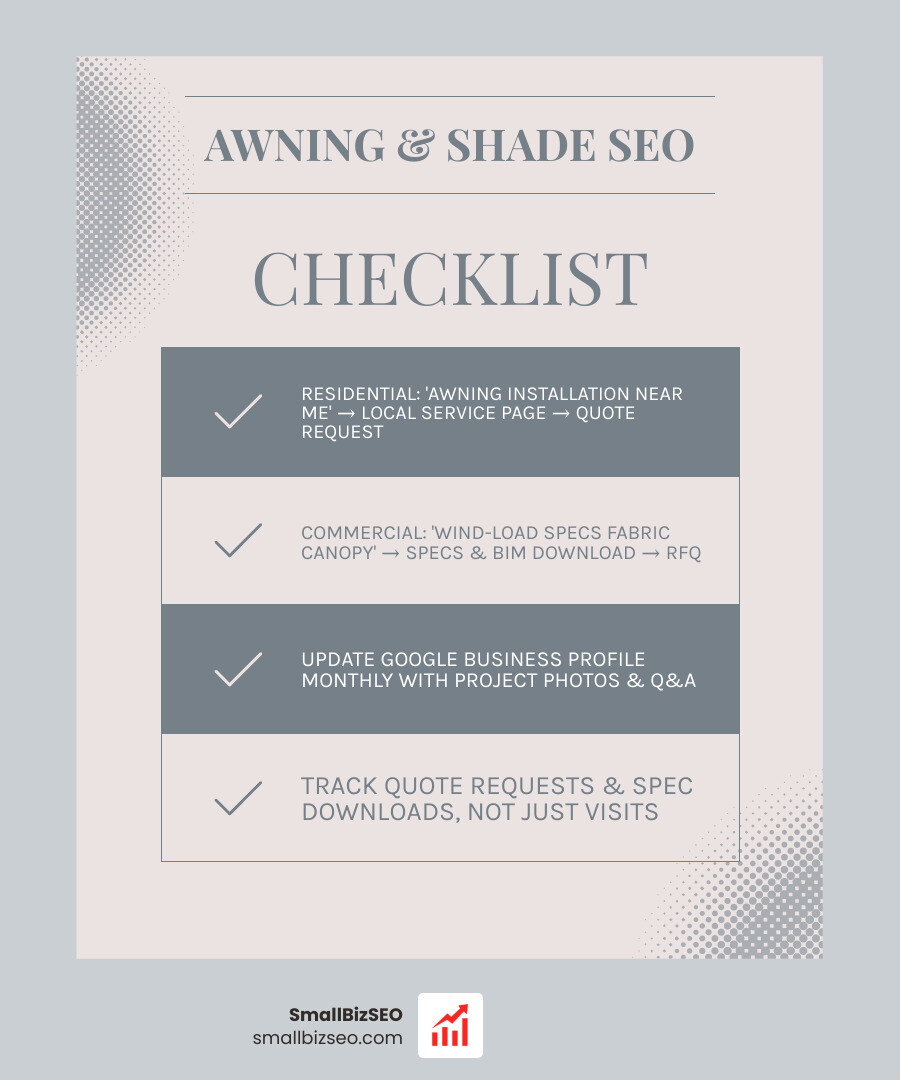
SEO for awnings, canopies, & shade structures starts with separate paths for separate buyers. Give homeowners clear pages for products and local installation, such as “retractable patio awnings” and “awning installation near me.” Give architects and commercial buyers product pages with specifications, test results, and downloadable design files. Add real project photos, keep your Google Business Profile current, and track quote requests and specification downloads, not just visits.
These pages do different jobs. A homeowner may want to compare styles before spring. An architect may need wind-load data months before a project goes out to bid. A clear path for each helps the right visitor find what they need.
I’m Clayton Johnson, founder of SmallBizSEO, where I work on SEO, content strategy, and search visibility for small businesses. For SEO for awnings, canopies, & shade structures, I focus on turning buyer questions and company expertise into pages that can attract qualified inquiries.
Related content about SEO for awnings, canopies, & shade structures:
Mastering SEO for Awnings, Canopies, & Shade Structures
Shade structures do far more than look good; engineered fabrics block up to 97% of harmful UV radiation, while quality outdoor awnings can lower interior temperatures and summer cooling loads by up to 20%. Capturing demand for these high-performance systems online requires a structured approach. Commercial buyers operate on distinct timelines, with 68% of commercial shading specification decisions made before an architect or general contractor ever contacts a manufacturer sales representative. In fact, 78% of architects begin their product research directly on a search engine rather than browsing physical binders.
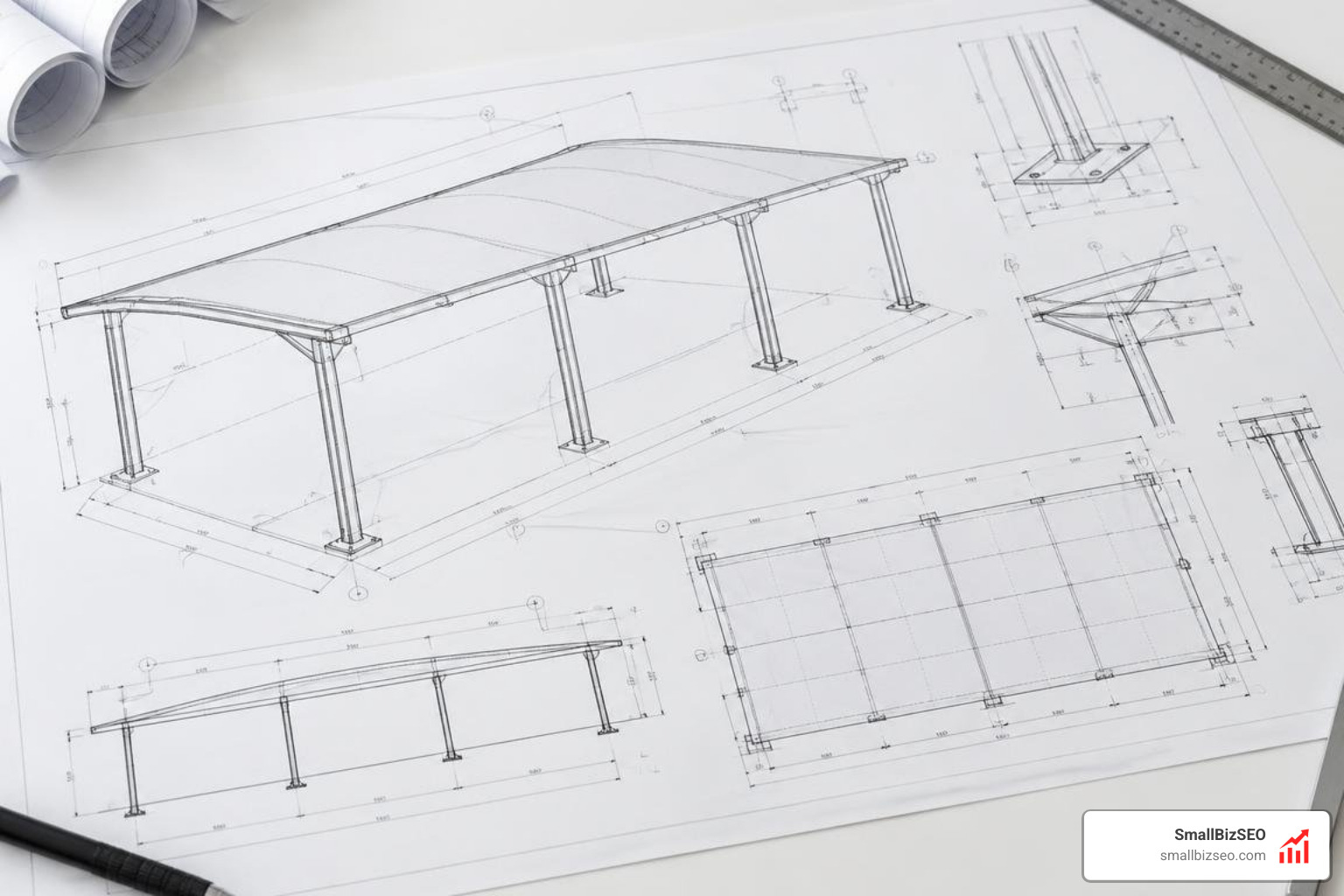
To rank on page one, outdoor shading fabricators and installers must balance consumer-facing local queries with upstream technical searches. Commercial buyers evaluating commercial awnings and restaurant enclosures require detailed engineering data, permit assistance guidance, and load ratings. Incorporating targeted practices from our construction SEO services allows installers and manufacturers to capture high-value project leads early in the planning phase.
How Does Buyer Intent Shape SEO for Awnings, Canopies, & Shade Structures?
Buyer intent in the shade industry splits cleanly into two groups: residential homeowners seeking seasonal comfort and commercial specifiers looking for code-compliant architectural systems. Homeowners search for terms like "patio awning installation near me" or "motorized retractable canopy cost." Commercial architects and structural engineers search for standard-driven phrases like "ASTM E330 tensioned fabric shade canopy" or "cantilever parking structure wind load specs."
Targeting broad, generic terms like "awnings" creates unnecessary friction because they carry high keyword difficulty and attract mixed intent. In contrast, long-tail phrases that target specific geographic markets or product classifications convert at significantly higher rates. Conducting structured keyword research allows businesses to build dedicated pages matching each distinct search intent.
| Search Category | Primary Target Audience | Sample Keywords | Key Conversion Goal |
|---|---|---|---|
| Residential Patio | Homeowners & Property Owners | "retractable patio awnings", "motorized deck cover installation" | In-home design consultation, phone call |
| Commercial Storefront | Retailers, Restaurant Owners | "storefront canvas awnings", "commercial canopy permits" | On-site quote request, permit consultation |
| Architectural Specifier | Architects, Structural Engineers | "ASTM D4851 awning fabric specs", "BIM shade sail Revit family" | CAD/BIM download, technical spec guide form |
| Repair & Recover | Existing Awning Owners | "retractable awning fabric replacement", "canopy motor repair" | Service appointment booking |
What Technical Specs Do Architects Need on Shade Structure Websites?
Architects and engineers require clear, standard-specific data to include a product in project documents. When technical landing pages feature downloadable BIM Revit families, CAD details, and test documentation, specifiers can quickly drop those components directly into their building models.
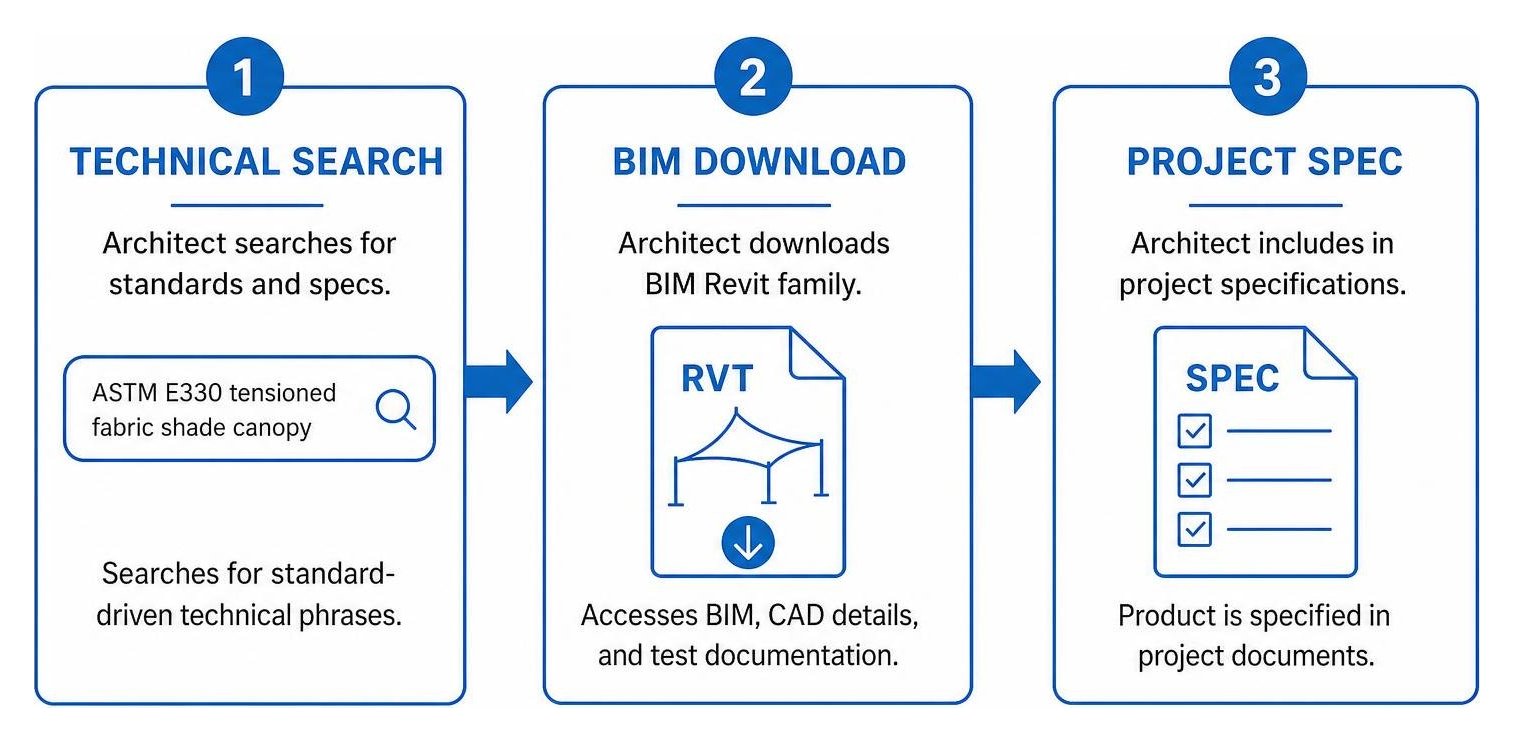
Publishing standard-specific resources builds strong E E A T signals and improves your website's authority. Specifiers evaluating custom shade structures for businesses frequently seek validation for specific certifications, including:
- ASTM D4851: Standard test methods for coated and laminated fabrics used in tensioned structures.
- ASTM E330 / AAMA 1005: Structural performance testing under uniform static air pressure differences, verifying wind load resistance.
- NFPA 701: Flame propagation standards for architectural textiles and commercial fabrics.
- TAS 100 / High-Velocity Hurricane Zone (HVHZ): Wind-driven rain and structural wind resistance certifications.
Applying sound on-page SEO principles across these specification assets ensures that standard-specific queries land directly on technical landing pages rather than broad promotional pages.
How Do You Optimize Local Listings and Overcome Seasonality?
Awning and canopy search volume follows a pronounced seasonal curve, climbing sharply during early spring, peaking in early summer, and dipping in colder months. To capture the spring rush, businesses must build content, secure local citations, and update project galleries during the fall and winter months so pages are indexed and ranking before peak demand hits.
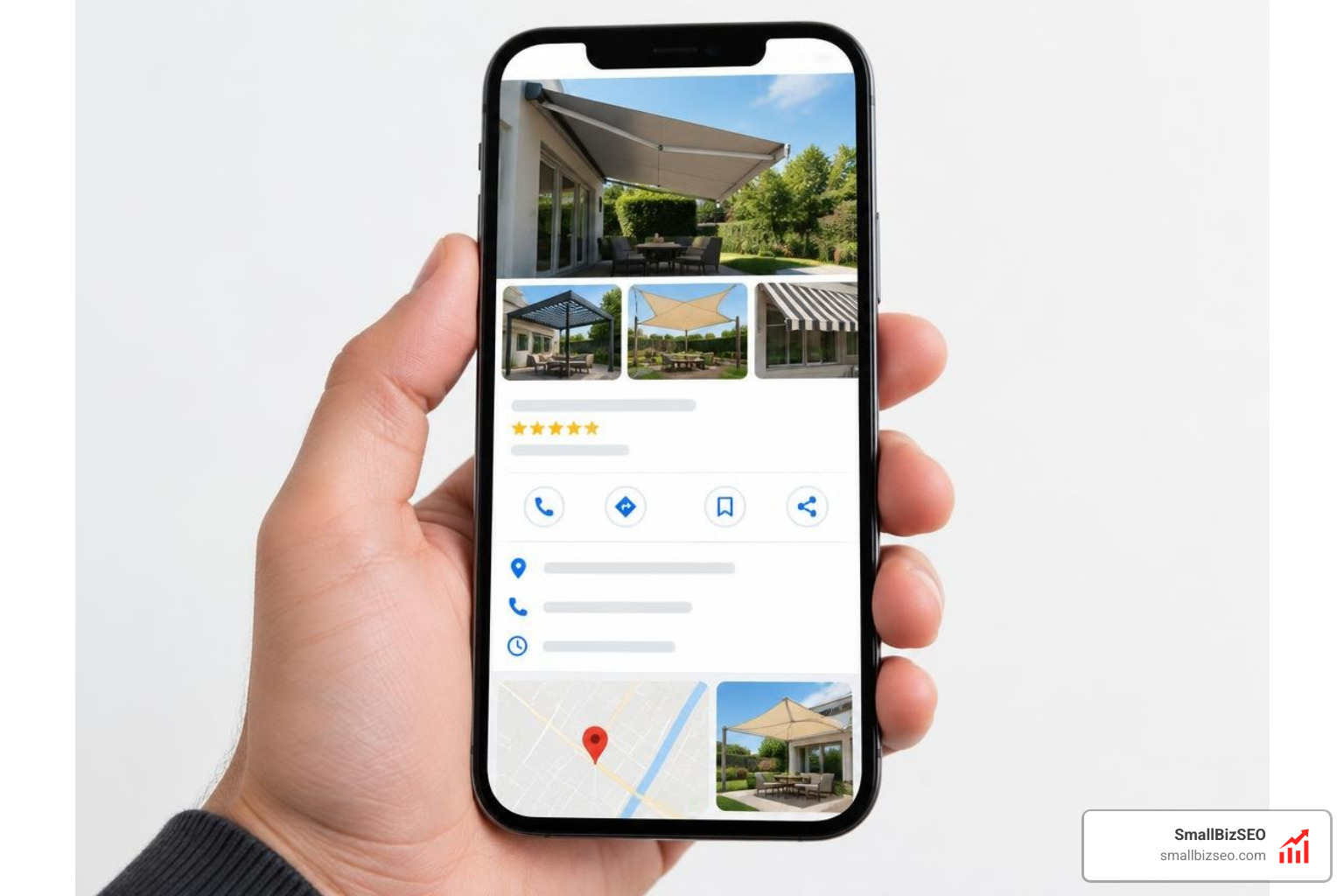
Winning the local Map Pack requires disciplined Local SEO execution. Follow these core practices to strengthen your Google Business Profile Ranking:
- Maintain Identical Business Data: Ensure strict NAP consistency (Name, Address, Phone number) across every online business directory and trade listing.
- Build Industry Citations: Secure accurate placements on top trade platforms and regional business hubs to build a solid local citation profile.
- Upload Real Installation Photos: Replace generic catalog graphics with tagged photos of real installations, categorizing them by structure type (e.g., custom shade sails, metal walk covers, retractable awnings).
- Request Reviews at Installation: Collect customer reviews right after installation on sunny days, encouraging clients to mention specific products, frame finishes, and fabric durability.
- Target Service Areas with Dedicated Pages: Create dedicated location pages for each key market, pairing specific neighborhood project details with local building code requirements.
What Schema Markup Powers Generative AI and SEO for Awnings, Canopies, & Shade Structures?
Generative search assistants and Google AI Overviews rely on clear structured data to understand technical parameters, fabric characteristics, and contractor capabilities. Studies indicate that technical pages featuring complete structured markup achieve citation rates of 43% in relevant AI search answers, compared to just 4% for pages lacking schema.
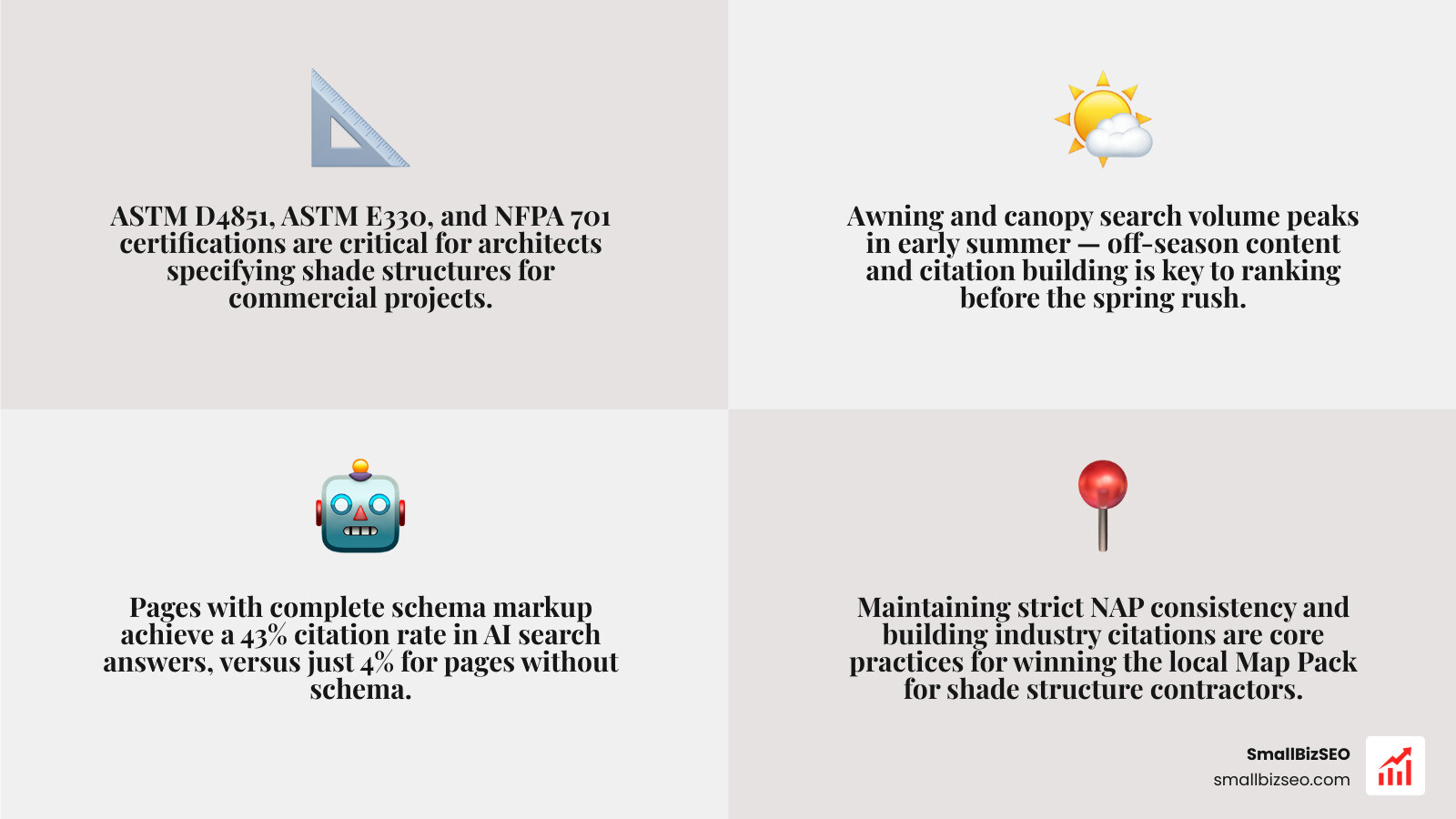
To position your business effectively within emerging AI search interfaces, implement structured Schema markup using JSON-LD:
- LocalBusiness Schema: Defines operating hours, geo-coordinates, verified service categories, and license credentials.
- Product Schema: Identifies awning models, frame materials, UV blocking percentages (up to 97%), motorized drive systems, and warranty terms (such as 10- or 15-year fabric warranties).
- DefinedTerm Schema: Explicitly defines industry terminology such as "Cantilever Shade," "Tensile Membrane," "Retraction Wind Sensor," and specific ASTM test standards.
- HowTo Schema: Outlines seasonal fabric maintenance steps, cleaning routines, and storm preparation workflows to earn rich snippets.
How Can You Track Commercial ROI and Specification Pipelines?
Commercial shading systems feature extended sales cycles lasting anywhere from 6 to 18 months between initial design drafting and final fabrication. Measuring campaign performance solely on phone calls or basic page views overlooks the actual commercial specification pipeline.
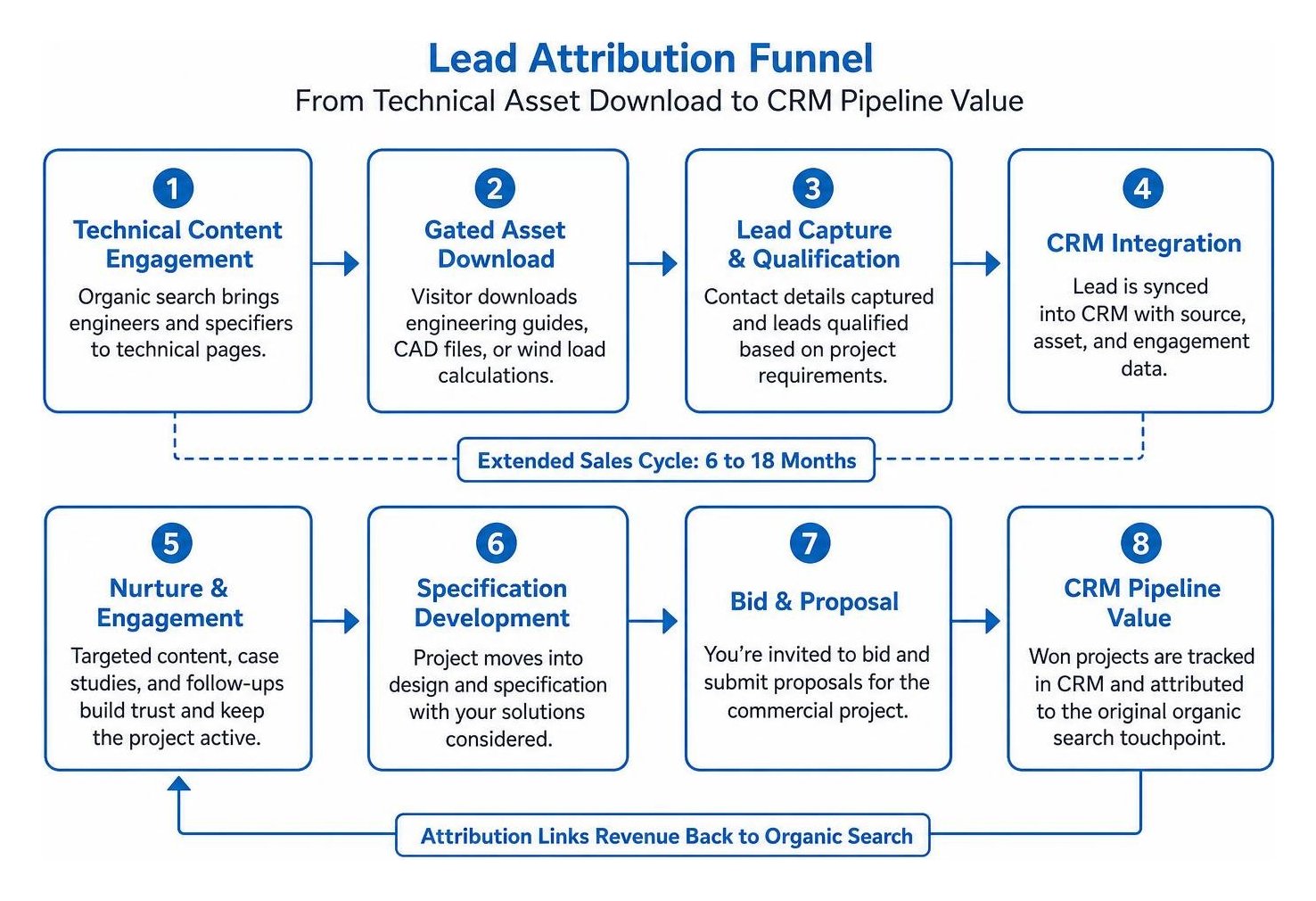
An experienced contractor SEO company tracks upstream micro-conversions that signal project intent. Gated engineering guides, CAD downloads, and wind load calculation forms often convert between 15% and 28% of qualified technical visitors. By combining high-authority link building with IP-lookup tools and CRM integration, manufacturers can attribute multi-thousand-dollar commercial bids directly to organic search interactions.
Turn Search Visibility into Long-Term Specification Growth
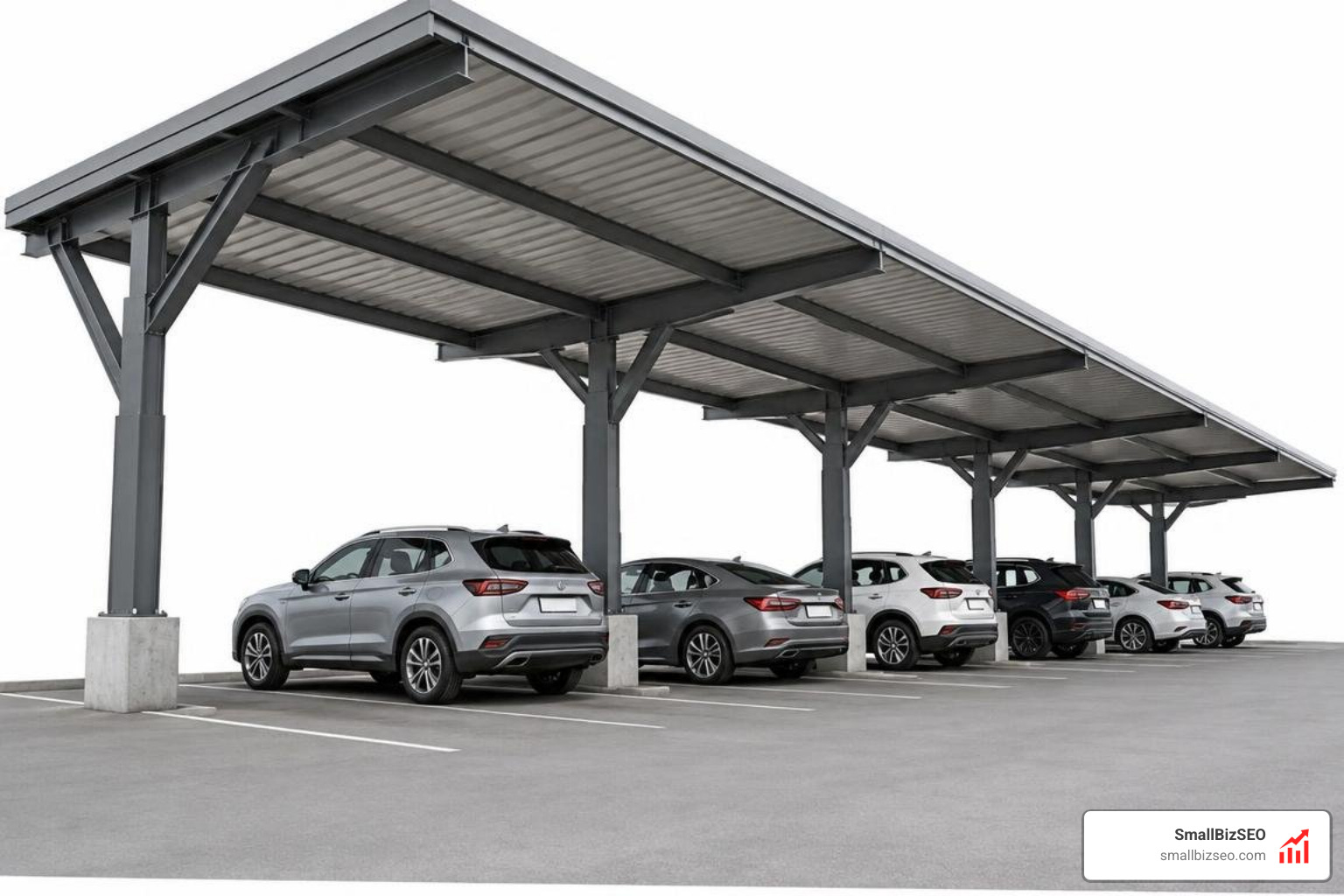
Dominating the search landscape for awnings, canopies, and tensile shade systems requires a dual-track strategy. You need fast, localized pages to capture residential homeowners looking for shade before summer, alongside detailed, standard-compliant technical pages that win architect specifications for commercial developments.
By publishing off-season technical content, implementing comprehensive schema markup, and optimizing your local business profiles, your business can build an organic pipeline that delivers consistent, high-value inquiries year-round. Request a data-backed professional SEO company audit today to identify your top ranking opportunities and accelerate your pipeline growth.