Flex Your Authority and Learn How to Optimize E-E-A-T Signals Today

Why Learning How to Optimize E-E-A-T Signals Can Transform Your Search Rankings
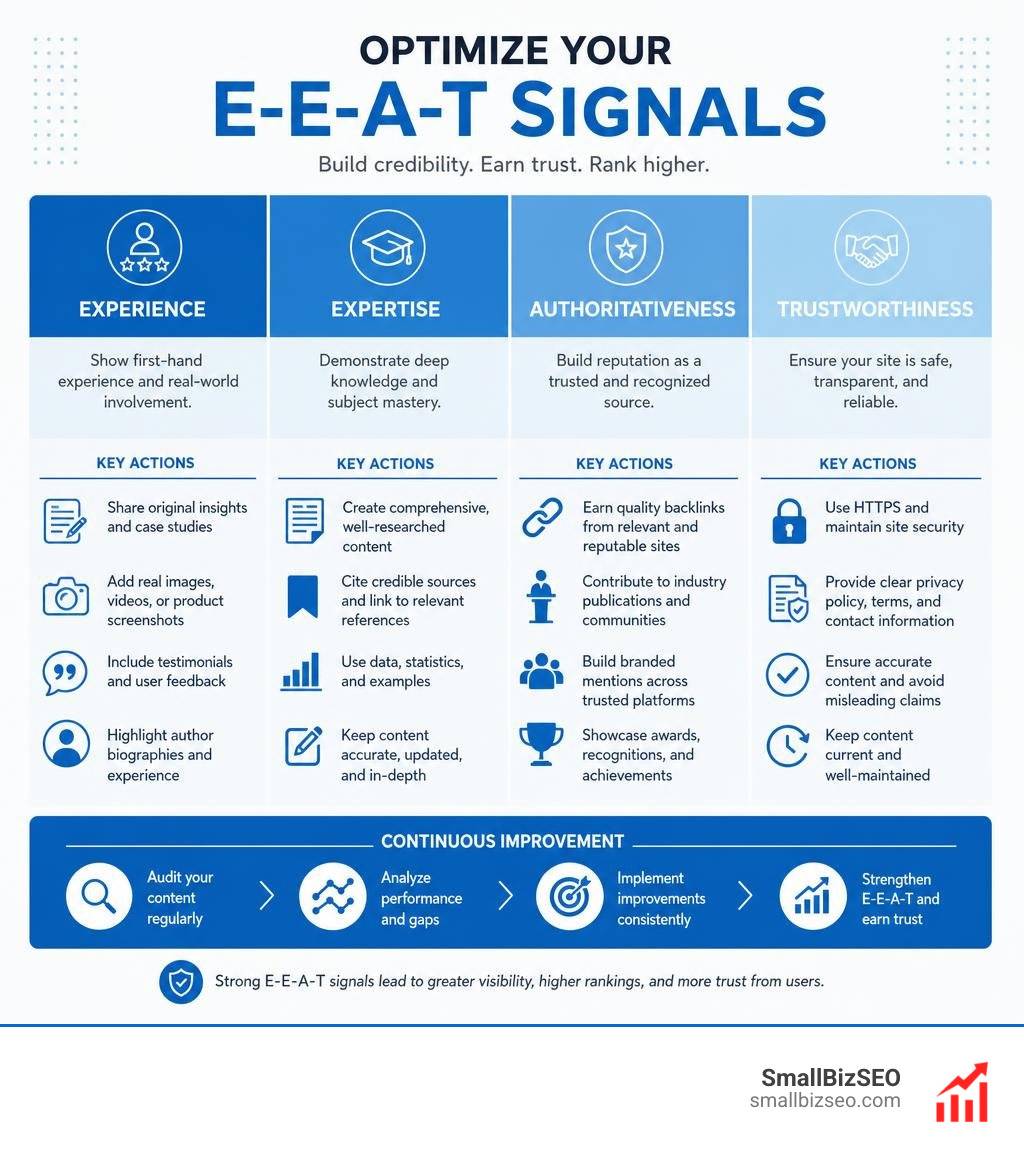
If you want to optimize E-E-A-T signals on your website, here is what matters most:
- Prove Experience — Add original photos, personal stories, and case studies that only a real practitioner could provide.
- Demonstrate Expertise — Use real author bios with credentials that match the content topic.
- Build Authoritativeness — Earn backlinks and mentions from reputable sites in your industry.
- Establish Trustworthiness — Add HTTPS, clear privacy policies, contact pages, and accurate content. Trust is the most important pillar — without it, the other three don't matter.
Search has changed. Google's ranking systems are built to surface helpful, reliable content created for people — not for algorithms. Yet many small business websites are still being outranked by competitors who simply do a better job of proving their credibility.
E-E-A-T stands for Experience, Expertise, Authoritativeness, and Trustworthiness. It is the framework Google uses to evaluate whether content is genuinely useful and safe to show to searchers. It is not a single ranking score you can hack — it is a collection of signals that, together, tell Google your site deserves to be trusted.
The stakes are especially high for small businesses. You are competing against bigger brands with larger budgets. Strong E-E-A-T signals are one of the clearest ways to level that playing field.
I'm Clayton Johnson, a digital PR and SEO specialist who has helped businesses learn how to optimize E-E-A-T signals through impactful content strategies and authority-building campaigns. In the sections ahead, I'll walk you through exactly how to implement these signals — step by step.
What is E-E-A-T and How to Optimize E-E-A-T Signals
To understand how to build a credible online presence, we must first demystify what E-E-A-T actually is. It is not an algorithm that runs in real time to score your page, but rather a conceptual framework. Google trains real human Search Quality Raters to use this framework to evaluate search results. Their feedback is then used to refine Google's automated ranking systems, ensuring they prioritize high-quality, reliable, and people-first information.
When we look to Learn more about E-E-A-T fundamentals, we see that it functions like a four-legged stool. If one leg is missing or weak, the whole structure collapses. This is especially true of the final letter: Trustworthiness. Google's guidelines state that untrustworthy pages receive a low rating no matter how experienced, expert, or authoritative the creator seems.
Why Google Prioritizes E-E-A-T in Modern Search
Google prioritizes E-E-A-T because the modern web is flooded with generic, low-effort content. Search engines want to connect users with creators who have real skin in the game. When someone searches for legal advice, financial planning, or medical symptoms, a wrong answer can have devastating real-world consequences. This is why Google places the highest standards on Your Money or Your Life (YMYL) topics.
By understanding how to optimize your content for E-E-A-T and build real search trust, we focus on creating people-first content rather than search engine-first content. Google's automated systems are designed to detect when a site is simply regurgitating search results to capture clicks. High E-E-A-T content answers the searcher’s intent completely, accurately, and safely.
The Evolution of Search and How to Optimize E-E-A-T Signals for AI Engines
Search has evolved from simple lists of blue links to direct answers, featured snippets, and generative AI summaries. In this new era, E-E-A-T is more important than ever. Generative engines use advanced retrieval systems to scan the web for clear expertise, consistent in-depth focus, and reliable, well-documented information when choosing which brands to cite.
When we Discover how to optimize E-E-A-T for generative engines, we must think about machine verifiability. AI models do not just look at your page in isolation; they cross-check your claims, your authors, and your brand reputation across the entire web. If an LLM retriever cannot verify the assertions in your content against trusted primary sources, your brand will not win those highly coveted AI citations.
Proving First-Hand Experience and Expertise
A major update to Google’s guidelines introduced the extra "E" for Experience! This addition was specifically designed to distinguish real human efforts from generic AI-generated text. But how do Experience and Expertise differ, and when does Google look for each?
| Pillar | Focus | What Google Looks For |
|---|---|---|
| Experience | First-hand, practical involvement | Original photos, personal testing notes, case studies, videos, and first-person narratives ("I tested", "We solved"). |
| Expertise | Specialized, formal knowledge | Professional credentials, degrees, certifications, and industry-specific achievements. |
On-Page Tactics to Demonstrate Real-World Experience
To prove to both users and search engines that we have actual, real-world experience, we must move away from generic advice. If we are writing a product review, we shouldn't just list the specifications found on the manufacturer's website. We should share actual screenshots, talk about the mistakes we made while using it, and explain the exact results we achieved.
When we Explore experience signals optimization, we see that adding original multimedia is highly effective. Including unique photos, videos, or podcasts showing actual use of products or processes is incredibly difficult for machines to replicate. Use first-person perspective in your copy, and include sections like "What we learned during our testing" to make your hands-on involvement obvious.
Establishing Expertise and Author Credentials
Expertise is all about showcasing the formal qualifications of the person behind the content. Every article that provides advice or makes claims should be assigned to a real, named author with a dedicated author profile page.
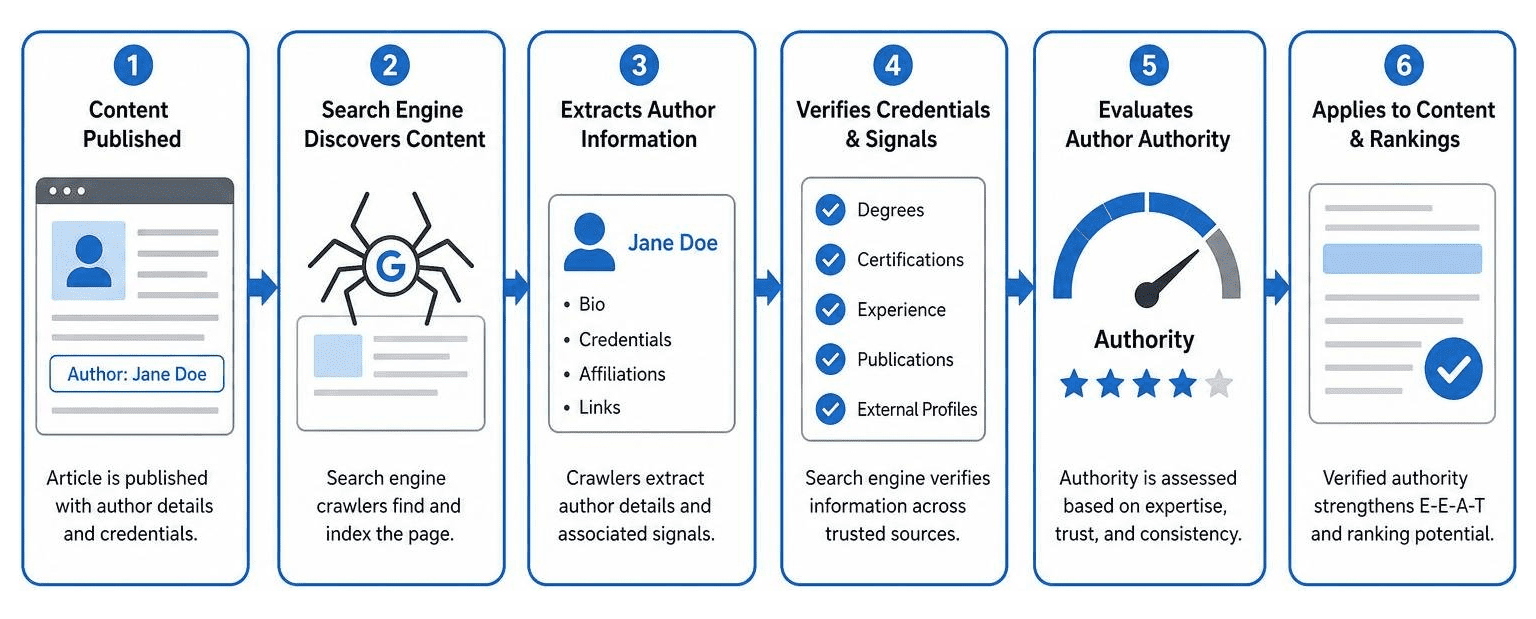
To align with the best practices of how to pass Google's own SEO analysis audits, we should implement the following author-level elements:
- Detailed Author Bios: Write clear bios that highlight relevant certifications, degrees, and professional history.
- External Links: Link the author's bio to their LinkedIn profile, personal website, or other authoritative publications where they have contributed.
- Structured Data: Use Person schema markup to help search engines easily read and verify the author’s credentials, connecting them to external entities.
Building Trustworthiness and Authoritativeness
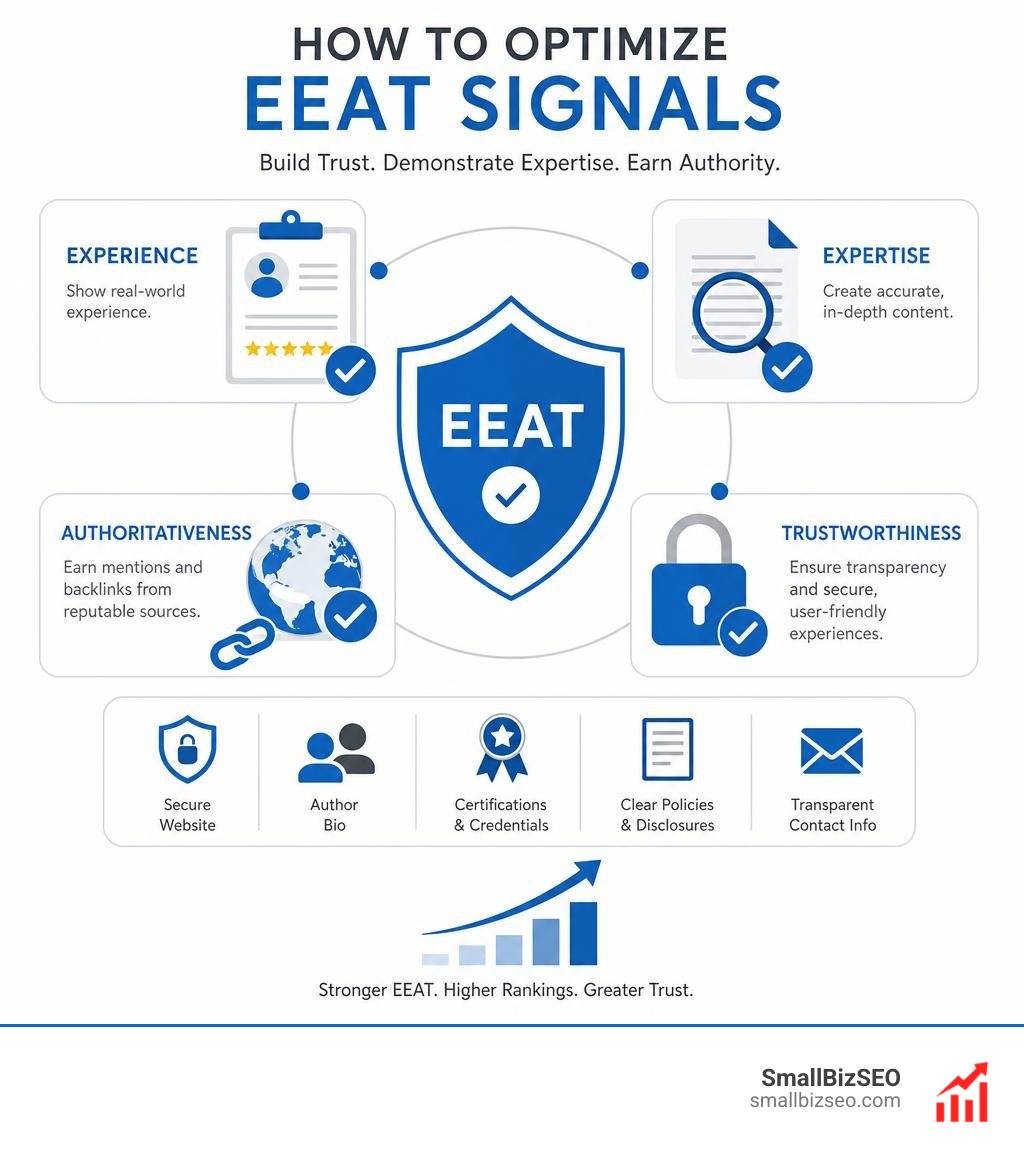
Trustworthiness is the core of E-E-A-T. You can have the most experienced and expert writers in the world, but if your site lacks basic transparency and security, search engines will not rank your content.
How to Optimize E-E-A-T Signals for YMYL Sites
If your website deals with health, finance, safety, or legal matters, you are held to the absolute highest standards of quality. A single piece of inaccurate advice on a YMYL site can lead to serious real-world harm.
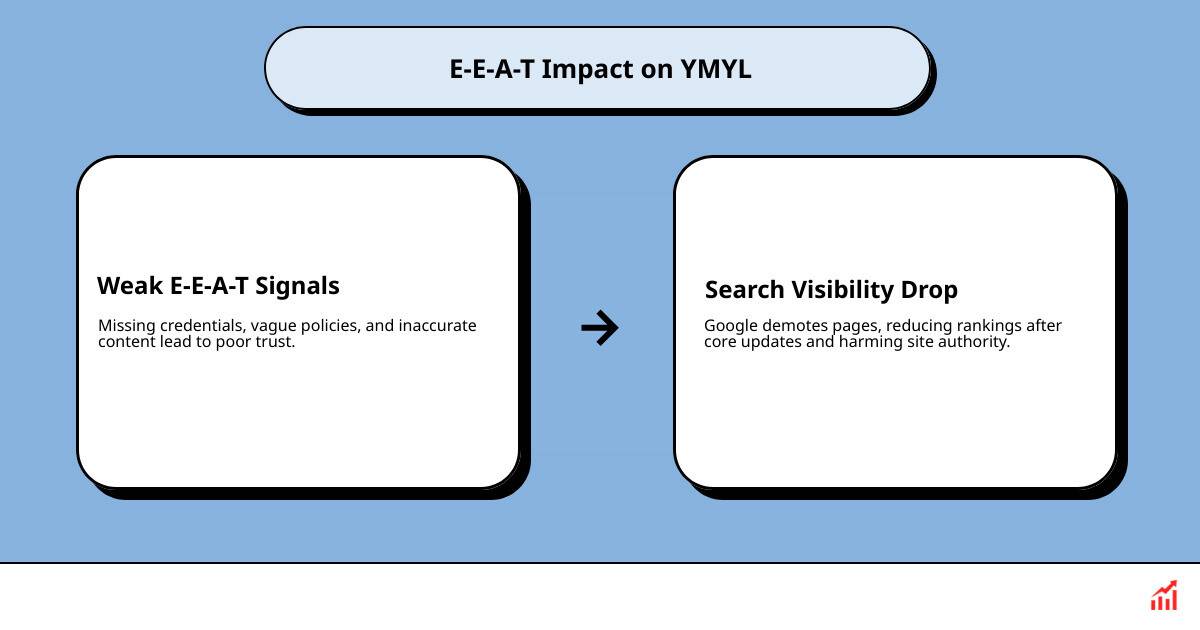
If your site has experienced a ranking drop, learning how to recover from a Google algorithm penalty requires a thorough audit of your trust signals. For YMYL sites, we recommend establishing clear editorial guidelines, implementing a rigorous fact-checking process, and having qualified professionals review all high-risk content. Make sure your terms of service, privacy policies, and refund policies are highly visible, easy to read, and accessible from your website's footer.
Off-Page Signals: Backlinks, Citations, and Brand Mentions
While on-page optimization is crucial, Google also looks at what the rest of the web says about your business to determine your authoritativeness. If authoritative, industry-specific websites are linking to your content or mentioning your brand, it tells Google that you are a recognized leader in your space.
To understand where your site stands, you can Check your site's authority with a free E-E-A-T checker. To build off-page authority, focus on earning high-quality backlinks through digital PR, guest blogging on respected industry platforms, and publishing original research or data that others will want to cite. Additionally, maintaining a consistent flow of positive user reviews on third-party platforms like Google Business Profile or Trustpilot signals to search engines that your brand is active, reliable, and trusted by real consumers.
Frequently Asked Questions About E-E-A-T
Is E-E-A-T a direct Google ranking factor?
No, E-E-A-T is not a direct ranking factor with a specific numerical score. Instead, it is a conceptual framework that Google uses to train its search quality raters. Google's engineers then use this feedback to adjust their automated algorithms so they can better identify and reward high-quality content. To see how Google defines these standards, you can Read Google's official documentation on helpful content.
How should websites handle AI-generated content under E-E-A-T?
AI-generated content can align with E-E-A-T standards, but only if it undergoes heavy human editing, fact-checking, and refinement. Publishing unreviewed, generic AI text is a fast way to lose user trust. If you use AI tools to assist with drafting, make sure a subject-matter expert reviews the content for accuracy, adds real-world experience, and ensures the tone is helpful and people-first. For businesses that need high-quality, reliable writing, our professional SEO content services can help you create credible and authoritative copy that ranks.
How often should content be updated to maintain E-E-A-T?
To sustain strong E-E-A-T signals over time, we recommend auditing your most important pages every few months. Outdated statistics, broken links, and old advice can quickly damage your site's credibility. When updating a page, make sure to refresh the data, cite newer primary sources, and display a visible "last updated" date. To identify which pages are losing ground and need an update, you can perform a Keyword gap analysis: what it is and how to do it right.
Conclusion
Learning how to optimize E-E-A-T signals is not a one-time technical fix; it is an ongoing commitment to quality, transparency, and user safety. By proving your real-world experience, showcasing your expert credentials, and building a secure, trustworthy website, you align your brand with what search engines want to reward.
At SmallBizSEO, we specialize in helping small businesses build real search trust. Through our data-driven "Velocity" framework, we deliver rapid rankings and E-E-A-T-compliant growth backed by transparent, automated reporting. We take the guesswork out of search optimization so you can focus on running your business.
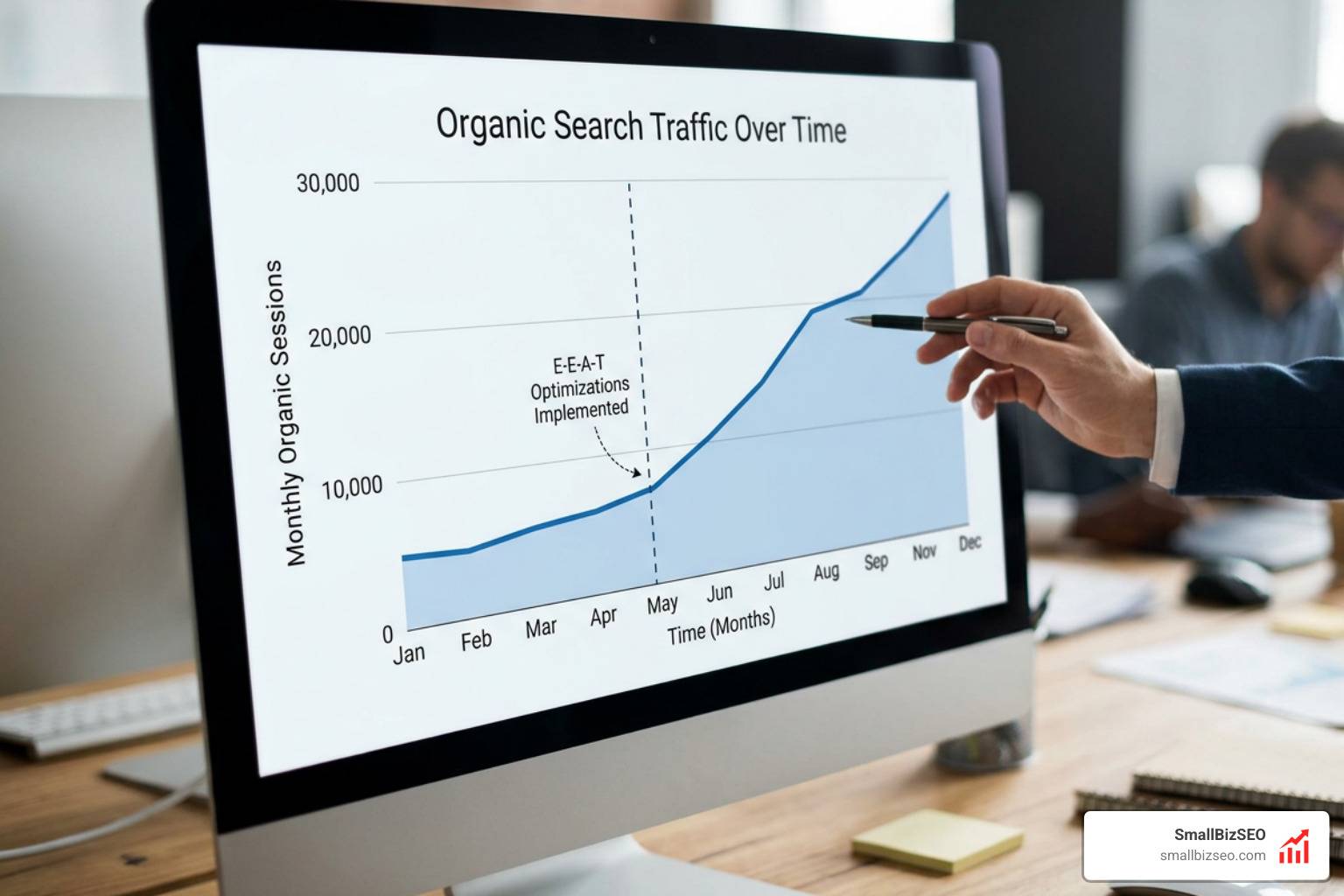
Ready to elevate your search visibility and build a highly trusted brand? Partner with us for professional SEO services today, and let's start driving sustainable growth for your business.