SEO for Collection Agencies: Generate Business Leads
How Can SEO Help Collection Agencies Win Creditor Clients?
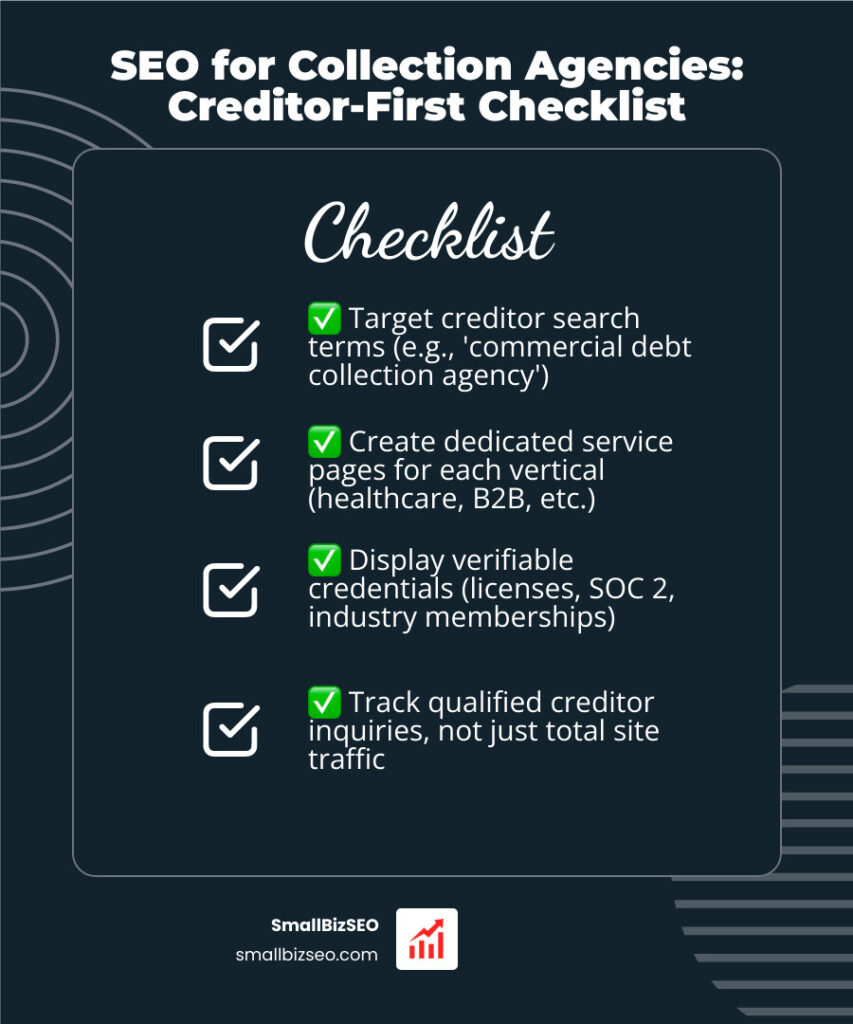
SEO for collection agencies should help creditors find and evaluate a commercial recovery partner, not just bring more visitors to a website. Start with service pages that address searches such as “commercial debt collection agency” or “healthcare receivables collection,” focusing strictly on services your agency actively provides. Make those pages easy for search engines to find, clearly display operational credentials, and give business buyers a straightforward way to inquire. If your business is eligible for a Google Business Profile, keep its details accurate and select categories that match your actual operations.
The true benchmark is qualified creditor inquiries, not general traffic. This guide outlines how to target commercial procurement intent, build high-converting service pages, and measure which organic leads turn into contracted placements.
Fundamentals of SEO for Collection Agencies
Search engine optimization for debt collection firms succeeds by capturing commercial decision-makers who need accounts receivable solutions. When financial directors, credit managers, and billing supervisors evaluate recovery partners, they search for specific commercial recovery capabilities, structured placement workflows, and clear reporting practices.
A structured organic strategy targets every stage of the creditor evaluation process. Business clients discover candidate agencies through search queries, vet operational capabilities on service pages, and review agency reporting standards before placing an account portfolio.
How Do Creditor Service Keywords Map to Lead Qualification?
Commercial procurement queries differ sharply from generic searches by focusing on specific recovery capabilities, onboarding turnaround times, and contract arrangements. Structuring your keyword targeting around the services your agency actually delivers helps ensure inbound inquiries represent viable corporate accounts.
| Creditor Service Focus | High-Intent Keyword Examples | Key Evaluation Criteria on Landing Pages |
|---|---|---|
| Commercial B2B Recovery | "commercial B2B debt collection agency", "corporate trade credit recovery" | Standard placement procedures, dispute documentation steps, transparent fee arrangements |
| Wholesale & Supplier Receivables | "distributor past-due invoice collection", "wholesale receivables agency" | Vendor account onboarding, bulk placement support, creditor portal integration |
| Small Business Invoicing | "small business debt recovery services", "past-due invoice collection agency" | Minimum account volume, onboarding speed, commercial reporting dashboards |
| Professional Services AR | "commercial service invoice recovery", "B2B professional fee collections" | Fee schedules, client communication workflows, commercial documentation requirements |
By executing smart search marketing strategies, agencies can build content that speaks directly to corporate controllers and credit managers evaluating external collection partners.
What Trust Signals Drive Creditor Inquiries in SEO for Collection Agencies?
Creditor clients evaluate commercial recovery partners through transparent documentation, clear operational workflows, and verified service credentials. Because business buyers assess vendor risk thoroughly, landing pages must present factual marketing information without exaggerated claims.
Key trust elements to display on your commercial service pages include:
- Verified Operational Documentation: Clearly explain client onboarding steps, standard recovery timelines, and account status reporting workflows.
- Industry Affiliations: Note memberships in professional credit management and collection trade associations, clarifying that memberships reflect professional participation rather than guarantees of performance or ethics.
- Neutral Client Feedback: Share authentic testimonials from commercial clients that focus on communication and reporting transparency. Use neutral review requests with no incentives or review gating.
- Public Inquiry Forms: Request only business contact information and broad service needs. Do not collect debtor, account, or financial details through a public form; use an approved secure channel for sensitive placement data.
- Technology & Reporting Capabilities: Detail secure client portal features, data transmission protocols, and automated balance reporting available to corporate partners.
- Verified Data Security Standards: When an agency has a third-party report, such as a SOC 2 Type II attestation report, accurately describe the systems and controls it covers without implying a certification.
Earning authoritative citations through industry contributions and educational publications helps establish your website as a dependable resource for commercial credit professionals.
Strategic Search Architecture and Content Execution
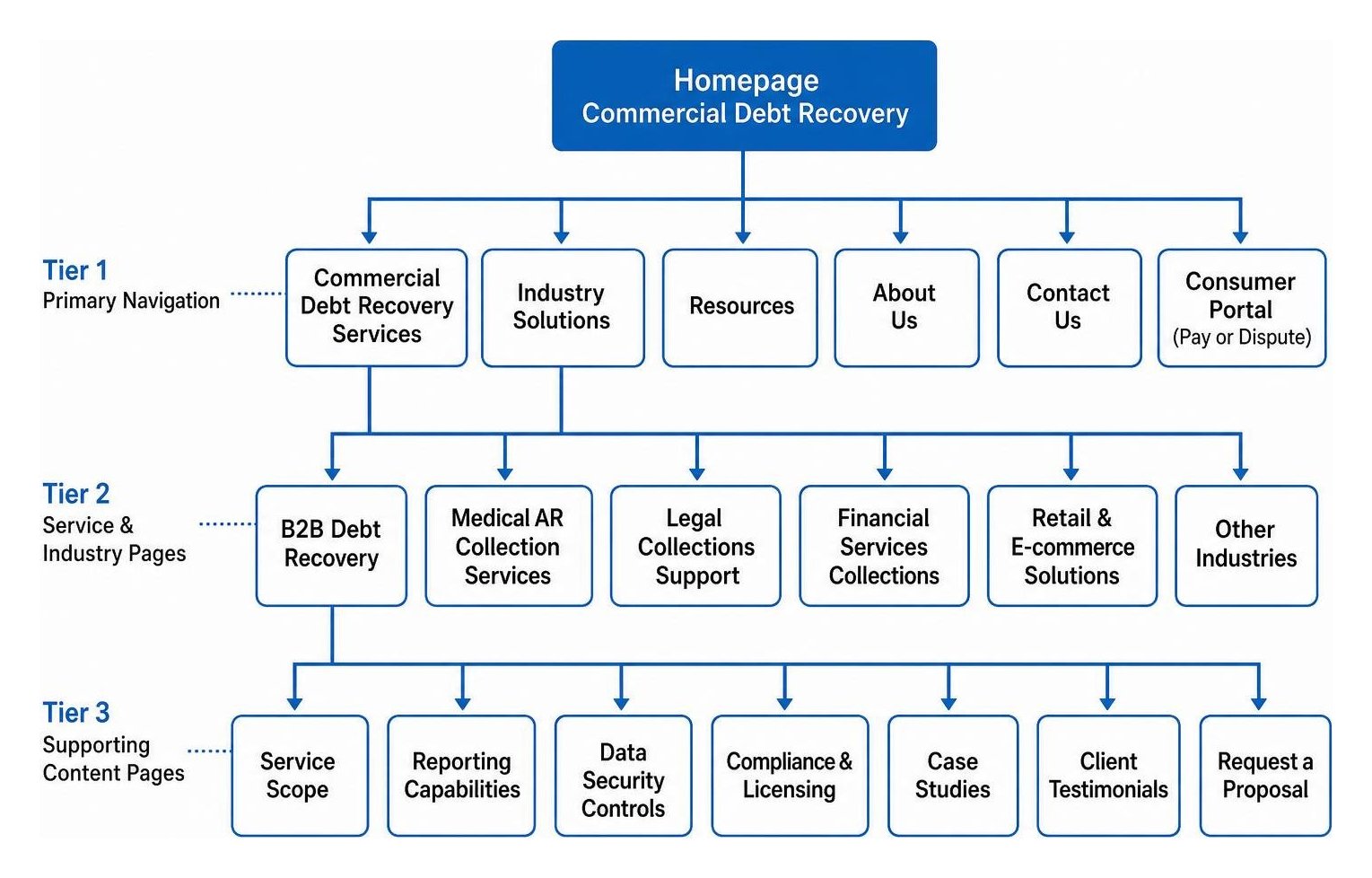
A well-structured site architecture organizes pages by specific client needs, making it simple for search engines to index services and for credit managers to evaluate specialized recovery options. Rather than relying on a single broad services page, organize your website into logical tiers that highlight distinct commercial recovery practice areas.
Consulting our comprehensive SEO strategy guide for finance firms helps clarify how information hierarchy and internal linking support high-intent search visibility. All on-page technical implementations should also align with core recommendations found in Google Search Central's SEO Starter Guide.
When Should You Build Dedicated Industry Vertical Landing Pages?
You should create specialized industry landing pages only when your agency possesses genuine operational experience, dedicated staff, and tailored workflows for that specific sector. Creating thin, generic pages for industries your team does not actively service dilutes topical relevance and fails commercial procurement evaluations.
Focus on developing in-depth vertical landing pages where your team has established capabilities:
- Commercial Trade Credit: Detail standard approaches for handling overdue trade credit balances, vendor invoicing disputes, and commercial account reconciliation.
- Wholesale & Manufacturing Receivables: Outline structured recovery workflows for distributor accounts, supplier supply-chain invoices, and freight billing issues.
- Small Business Invoicing: Present structured recovery processes for past-due supplier accounts, recurring service contracts, and commercial vendor balances.
- Professional Services Billing: Address unpaid B2B consulting, legal, accounting, or enterprise service contracts with tailored corporate communication procedures.
Each vertical page should answer common creditor procurement questions: typical onboarding steps, reporting schedules, data integration options, and standard fee structures.
Why Are Ongoing Content Refreshes and Technical Optimization Crucial?
Search optimization requires ongoing maintenance to maintain visibility as commercial search habits and search engine guidelines evolve. A comprehensive program integrates continuous content refinement, strategic internal linking, earned outreach, and robust technical health.
Key execution areas include:
- Monthly Content Review and Refresh: Review priority service pages and supporting guides each month, then use SEO content services to update copy, answer new creditor questions, and strengthen internal linking.
- Strategic Internal Linking: Connect educational guides, service overviews, and industry vertical pages using descriptive, contextual anchor text that helps search engines understand topical relationships.
- Monthly Earned Outreach: Turn useful insights from refreshed content into relevant editorial pitches and pursue link building services that support sustainable authority growth.
- Google Business Profile Alignment: If eligible based on your business model, maintain accurate profile details and select only categories that reflect your actual, active commercial operations.
- Core Technical Foundations: Implement Organization and LocalBusiness schema markup where appropriate, optimize page loading speeds across corporate desktop and mobile devices, and maintain clean indexation controls.
Measuring Lead Quality and Long-Term Value
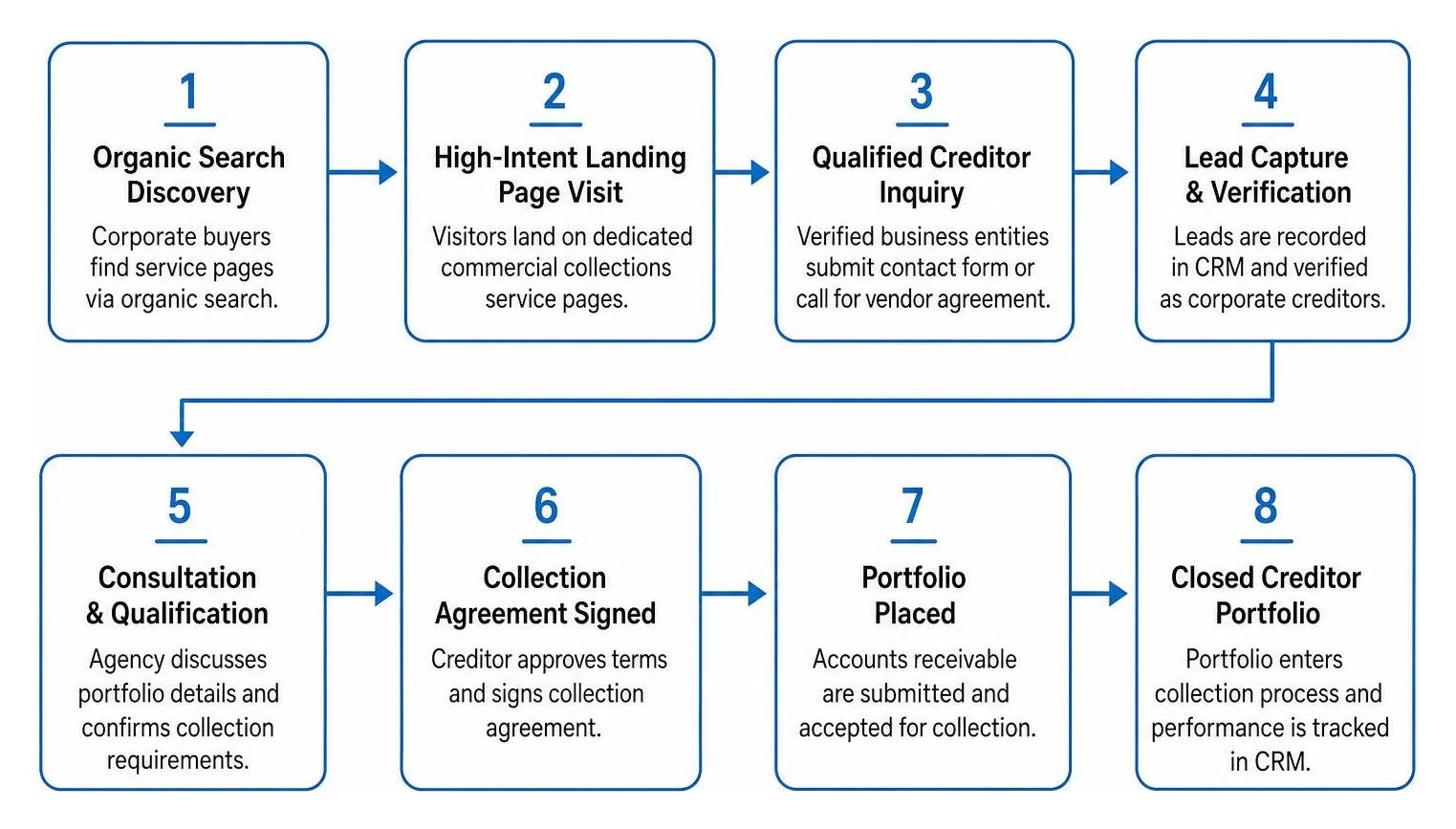
Evaluating organic search performance requires tracking qualified commercial inquiries rather than raw web traffic. Because commercial collections focuses on viable debt placements, marketing performance should be evaluated through verified lead volume, commercial submission relevance, and pipeline progression.
To refine service-page architecture and align content with high-intent search queries, explore SEO content services for focused planning, page improvements, and content refreshes.
How Do You Track Qualified Lead Growth from Organic Search?
You track qualified lead progress by monitoring commercial engagement signals and attributing inbound creditor inquiries back to their organic entry paths. Using CRM lead source tracking and goal completions provides practical insight into marketing channel performance without assuming guaranteed revenue outcomes.
Practical metrics for evaluating collection agency search performance include:
- Verified Creditor Form Inquiries: Tracking inbound quote and consultation submissions from verified corporate email domains and commercial business entities.
- Direct Business Phone Inquiries: Monitoring phone calls generated from organic landing pages and eligible Google Business Profiles regarding commercial accounts.
- Service-Specific Inquiry Distribution: Measuring the proportion of inquiries mapped directly to specialized commercial service landing pages.
- Organic Landing Page Engagement: Tracking conversion rates on dedicated B2B vertical pages to identify which messaging best resonates with corporate credit managers.
- Organic Referral Source Attribution: Reviewing first-touch and last-touch organic search paths to identify high-performing informational and commercial pages.
Partnering on Data-Driven Search Growth
Building durable search visibility in the commercial recovery sector demands ongoing technical precision, structured content planning, and marketing strategies built around verified operational strengths. As corporate buyers continue using digital search to vet commercial recovery vendors, maintaining an authoritative, technically sound web presence supports discovery during procurement evaluations.
If you are ready to evaluate your organic growth opportunities, refine your service targeting, or audit your search architecture, book a consultation to review your digital strategy.