The Ins and Outs of SEO for Moving & Storage Companies

How Can Commercial Moving and Storage Companies Get Found Online?
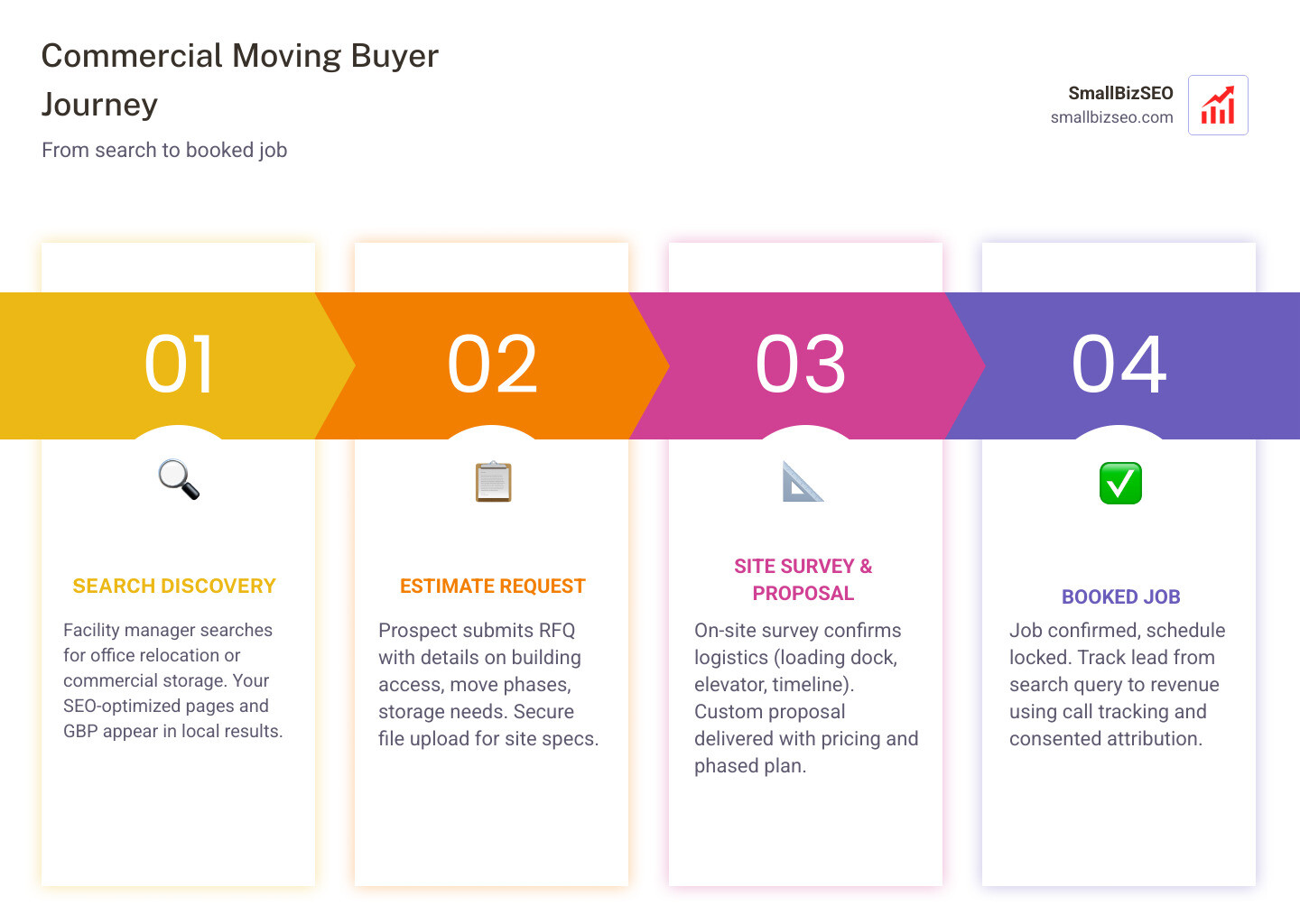
SEO for commercial moving and storage companies helps businesses appear when facility managers and other buyers search for office relocation, commercial storage, and related services. Start with pages that explain what you offer and where you work. Keep your Google Business Profile accurate, earn genuine reviews, and make it easy to request an estimate. Unlike a typical residential inquiry, a commercial request may need details about building access, move phases, storage needs, and a site survey.
The goal is not just more traffic. Track whether search inquiries become qualified estimates, surveys, proposals, and booked jobs. The sections ahead explain how to build that path without making claims about services you do not provide.
Why Is Local and Technical SEO for Commercial Moving & Storage Companies Essential for B2B Growth?
Local and technical SEO can help your commercial logistics business appear directly in front of corporate decision-makers when they evaluate vendors for office moves, facility decommissioning, and warehousing.
Commercial relocations involve enterprise operational requirements that standard consumer marketing fails to address. When a facility director, procurement manager, or office administrator conducts an organic search, they are not looking for consumer truck rentals. They need an insured logistics partner capable of navigating strict property management rules, certificates of insurance (COIs), freight elevator bookings, and multi-stage scheduling.
An organic search strategy should reflect verified service capabilities. Technical site health, accurate local listings, and clear service pages can help search engines crawl, index, and understand a mover’s offerings without relying solely on third-party lead brokers. Research on organic search factors offers additional moving-company SEO context. For implementation support, review SmallBizSEO’s technical SEO visibility audit and SEO content services.
| RFQ Checklist Item | What to Confirm Before Quoting |
|---|---|
| Inventory and scope | List the offices, furniture, records, equipment, packing needs, and tasks included in the request. |
| Actual service area | Confirm that the pickup, delivery, storage, and any partner handoffs fall within the mover’s verified operating coverage. |
| Access windows | Capture loading dock reservations, freight elevator availability, building rules, after-hours restrictions, and contact procedures. |
| Survey needs | Offer an on-site or virtual survey when the scope, access conditions, or customer’s procurement process calls for one. |
| Storage arrangement | State whether storage is operated directly, provided through a verified partner, or unavailable for the project. |
| Exclusions and approvals | Identify services, equipment, materials, and compliance requirements that are outside the confirmed scope. |
| Quote process | Explain what information is needed, who will receive the quote, and what assumptions should be confirmed before approval. |
Technical SEO also involves structured data implementations. Adding valid schema markup helps search engines interpret your physical operations, service boundaries, and commercial offerings. Use valid markup standards directly aligned with Google's LocalBusiness structured data guidelines to define your moving and storage entities without inflating business details.
How Does SEO for Commercial Moving and Storage Companies Differ from Residential Moving Search?
Commercial moving search targets multi-stakeholder procurement cycles, risk mitigation, and specialized facility access rather than consumer pricing and immediate availability.
Residential movers often optimize for short-tail consumer queries such as "cheap movers near me" or "apartment moving service." In contrast, business-to-business (B2B) search intent centers on operational continuity. Corporate buyers search for specific logistical solutions: after-hours office relocations, loading dock clearances, secure document storage, and industrial equipment rigging.
When developing a specialized commercial relocation strategy, align your landing pages with the specific stages of a corporate move:
- Building Access Logistics: Explain the access information needed before quoting, such as loading dock reservations, freight elevator requirements, property-management rules, and approved entry windows.
- Phased Office Moves: Describe phased relocation options only when the mover offers them, including how the sequence is planned to support the customer’s operational needs.
- Estimate Surveys: Explain when an on-site or virtual survey may help clarify scope, access conditions, inventory, or exclusions. Do not present a survey as mandatory for every project.
- Storage Integration: State whether storage is operated by the mover, available through a verified partner, or not offered. Describe only the storage access, security measures, and handling capabilities that have been confirmed.
What Content and RFQ Assets Are Critical for Corporate Relocation and Warehousing?
High-converting commercial moving content requires detailed service landing pages, structured scope-of-work documentation, transparent facility specifications, and secure Request for Quote (RFQ) intake forms.
To build organic authority and convert B2B traffic into verified inquiries, your website needs specialized content assets rather than thin, generic descriptions. An in-depth moving and storage search guide emphasizes creating distinct, comprehensive URLs for each specialized service you provide.
Ensure your commercial landing pages incorporate these critical trust factors:
- Verified equipment and scope: List only equipment and services the mover actually offers. Clearly identify exclusions, including any IT, specialty handling, or disconnect work that has not been confirmed.
- Verified storage details: If storage is offered, describe only confirmed access procedures, security controls, environmental features, and inspection options. If storage is partner-provided, identify that relationship accurately.
- Truthful project examples: Use documented, anonymized examples only when permission and facts support them. Otherwise, explain the planning questions a commercial move may involve without presenting a hypothetical project as past work.
- Restricted RFQ intake: Request only the minimum information needed to scope the move. Use an approved restricted intake process for sensitive building documents, access codes, and personnel information; a public form is not the right channel for those details.
How Can Commercial Movers Optimize Local Listings, Reviews, and Authority Signals?
Commercial movers optimize local visibility by maintaining fully compliant Google Business Profiles, earning verified B2B client reviews, and building authoritative industry citations.
Local search visibility remains a core discovery channel for B2B logistics. To maintain search engine trust, your Google Business Profile (GBP) must accurately represent real-world operations.
- Customer-facing eligibility: List a physical location only when the business qualifies for it and customers can be served there during the posted hours. A service-area business can use a legitimate home address without displaying it publicly when the platform allows that setup. Avoid virtual offices, mailbox addresses, and other listings that create a misleading customer-facing presence.
- Category accuracy: Select the closest available categories that describe the verified business model and core services. Keep promotional phrases out of the registered business name rather than treating them as categories.
- Review requests: Invite feedback from completed commercial clients through a consistent process. Useful reviews can describe verified parts of the experience, such as communication, care around building requirements, or coordination with the customer’s team. Do not screen requests to solicit only favorable reviews.
- Entity consistency: Keep business details and service information aligned across the website, Google Business Profile, and relevant industry listings. Use
MovingCompanyschema only for facts that can be substantiated, and consult industry guidance on moving-company visibility when planning citations.
Measuring Success and Implementing Sustainable Search Strategies for Moving Companies
Sustainable SEO for commercial moving and storage balances long-term organic authority with disciplined lead tracking, converting search traffic into measurable revenue.
B2B logistics companies must manage customer acquisition as an integrated operational system. Relying strictly on paid search ads exposes your business to volatile auction costs, while organic rankings build an owned marketing channel that compounds over time. Incorporating proven moving optimization techniques allows your brand to attract enterprise searchers at every stage of their vendor evaluation process.
Multi-service companies can build separate, accurate content for the relocation and storage services they actually provide. Each page should reflect confirmed scope, operating model, and customer needs rather than borrowing claims from unrelated moving or storage topics.
What Are the Common Pitfalls in SEO for Commercial Moving & Storage Companies?
Common SEO mistakes include publishing thin location doorway pages, making unsubstantiated licensing or compliance claims, creating unstaffed virtual listings, and neglecting mobile performance.
Avoid these frequent technical and strategic errors:
- Low-value local pages: Build a page only when it adds useful, accurate information about the services and operating conditions it covers. Repetitive pages that merely exchange one place name for another give buyers little reason to trust the content.
- Unverified claims: Match every statement about licenses, certifications, security practices, or specialty work to current evidence for the applicable service and jurisdiction. Remove claims that cannot be documented.
- Misleading location setup: Use a Google Business Profile only for a location or service-area setup that accurately reflects how the business serves customers. A hidden home address can be appropriate for an eligible service-area business, while virtual offices and mailboxes should not be presented as customer locations.
- Quote-path friction: Make the mobile RFQ path easy to complete, with working contact actions and forms that collect only the information needed for an initial response. If specialized work is part of the verified offering, cover it in a focused page, such as specialty item relocation marketing, rather than crowding the core commercial-move page.
How Do You Track Pipeline Milestones from Search Query to Booked Commercial Job?
Track commercial moving SEO performance by monitoring the entire pipeline: organic landing page impressions, form completions, completed site surveys, delivered proposals, and final booked revenue.
Measuring SEO success requires looking beyond simple rankings and raw traffic numbers. A successful B2B search program attributes real business milestones to specific organic landing pages and search terms.
SmallBizSEO supports technical SEO, content strategy, and reporting that connect search activity to the business pipeline. Rankings and revenue cannot be guaranteed, so reporting should focus on verified inputs and outcomes:
- Qualified Estimate Requests: Measure inquiries that meet your basic operational criteria, filtering out unsupported routes or out-of-scope services.
- Completed Site Surveys: Track the rate at which organic quote requests turn into confirmed virtual or on-site facility walk-throughs.
- Proposal Deliveries: Monitor formal commercial bids submitted to corporate procurement departments.
- Booked Commercial Revenue: Attribute signed contracts, deposit payments, and ongoing storage agreements back to the initial organic entry point.
- Consented Attribution: Use compliant call tracking and web analytics to attribute leads accurately while respecting customer data privacy.
To review technical barriers, indexation issues, and missed content opportunities, start with a technical SEO visibility audit or explore SEO content services. For a project discussion, book a consultation.
Building Your Long-Term Commercial Search Pipeline
Winning corporate relocation and commercial storage contracts requires an SEO strategy tailored to B2B decision-makers. By publishing clear service boundaries, detailing building access logistics, maintaining an accurate Google Business Profile, and providing secure RFQ pathways, your moving and storage company can establish authority in local organic search. Focus on steady, transparent technical improvements and measure your success through qualified proposals and booked jobs to build an owned source of high-value commercial leads.