Content Velocity Explained: The Operational Metric Behind High-Growth SEO

What is content velocity for SEO?
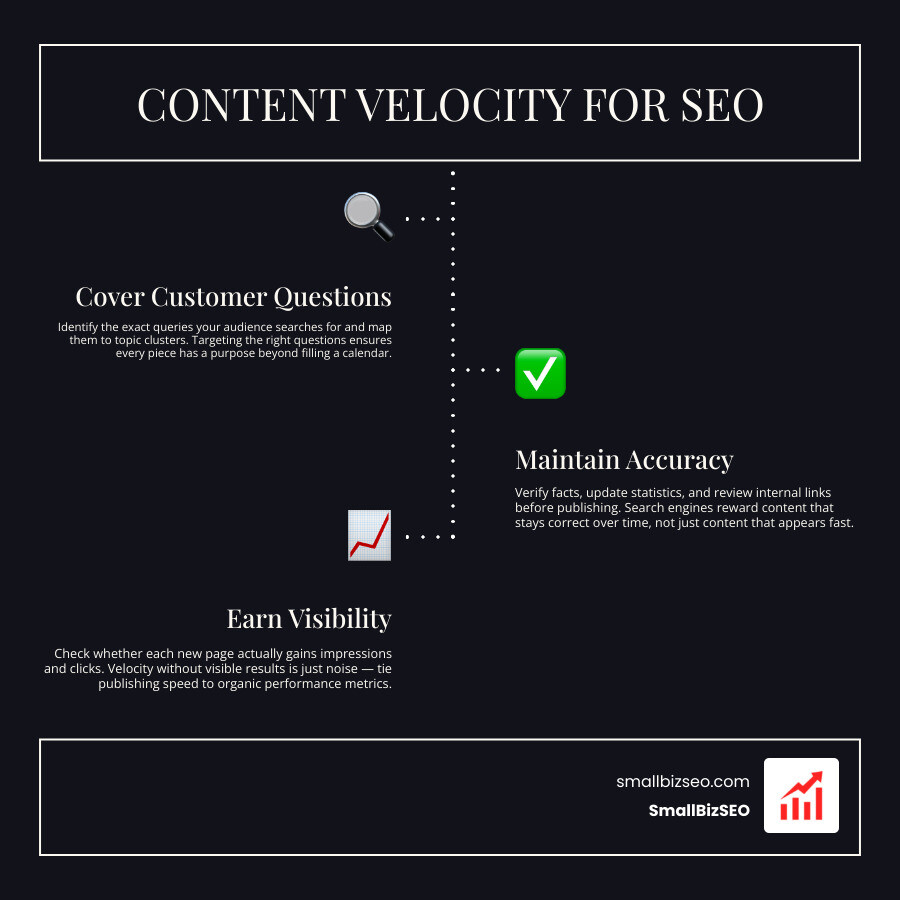
Content velocity is how quickly and consistently a team turns useful ideas into published content. For SEO, it also means covering the right customer questions, keeping pages accurate, and checking whether new content earns search visibility. It is not simply the number of posts published each month.
A small business does not need to publish every day to improve its content velocity. It can start by finding where work gets stuck, setting a pace it can maintain, and reviewing each page before it goes live.
I'm Clayton Johnson, founder of SmallBizSEO. My work in SEO, content strategy, and digital PR shapes how I answer what is content velocity: it is a way to publish useful content efficiently while staying focused on visibility and qualified leads.
What Is Content Velocity and Why Does It Drive Organic Growth?
Content velocity measures how quickly and consistently a business can create, refine, and publish high-quality content that supports its broader SEO goals. Rather than treating publishing as an occasional task, a strong velocity framework treats content creation as an ongoing operational pipeline.

When we increase publishing speed in a sustainable way, search engines crawl the website more frequently, discover new URLs faster, and index relevant solutions sooner. At the same time, high-performing marketing teams are 2.5 times more likely to use automation and structured workflows to speed up production. Inefficient content processes cost large organizations an average of $2.5 million annually due to wasted time, duplicated efforts, and missed opportunities. By streamlining these operations with strategic SEO content services, businesses can capture market demand before competitors react.
What Is Content Velocity in Marketing and SEO vs. Raw Content Volume?
Content volume measures the total number of assets produced, while content velocity evaluates the speed, efficiency, and strategic direction of the entire content lifecycle from concept to distribution.
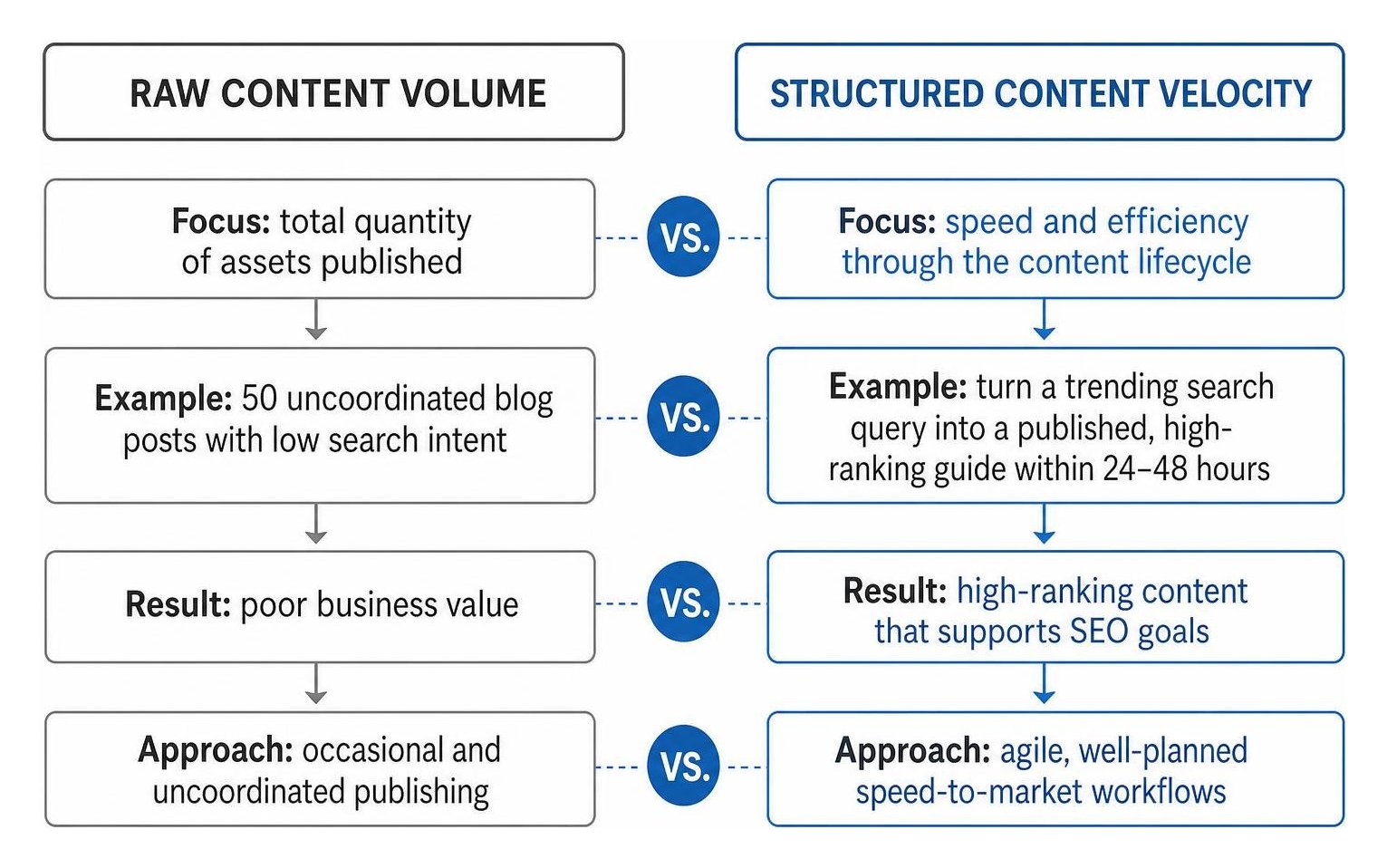
Understanding this distinction is critical: publishing 50 uncoordinated blog posts with low search intent is high volume, but it delivers poor business value. Conversely, an agile team executing well-planned speed-to-market workflows can turn a trending search query into a published, high-ranking guide within 24 to 48 hours.
| Operational Factor | Content Volume | Content Velocity |
|---|---|---|
| Primary Focus | Total quantity of assets published | Speed and efficiency through the content lifecycle |
| Measurement Metric | Raw count (words, articles, pages) | Time-to-publish, stage turnaround, and time-to-value |
| Workflow Dynamic | Linear, ad-hoc, or batch production | Iterative, modular, and continuous production |
| Quality Control | Often reactive or bypassed for speed | Built-in stage-gate checks and brand governance |
| SEO Impact | Risk of keyword cannibalization | Systematic topical depth and structured internal linking |
Beyond Volume: What Is Content Velocity in Web Analytics and User Depth?
In web analytics, content velocity takes on a complementary meaning: it measures how specific pages contribute to a visitor navigating deeper into a website during a session.
As defined in technical documentation for Content Velocity in Adobe Analytics, the metric evaluates user engagement mathematically as:
Content Velocity = Page views (Visit participation) / Visits
In this model, visit participation awards credit for all subsequent page views in a session to the upstream pages the user visited earlier. If a visitor lands on an educational guide, navigates to a service page, reviews case studies, and reaches a booking form, the initial entry page earns high participation credit. Tracking both operational publishing velocity and on-site user depth allows us to identify which content assets consistently drive visitors toward conversion actions.
How Does Publishing Speed Impact Topical Authority and AI Search Visibility?
Publishing speed builds search authority by allowing a website to cover an entire topic cluster within a concentrated timeframe. When search algorithms evaluate a site, dense topical coverage signals deep subject-matter expertise far more effectively than sparse articles spread over years.
Content freshness and velocity directly influence visibility in modern search engines and AI answer systems. Research shows that:
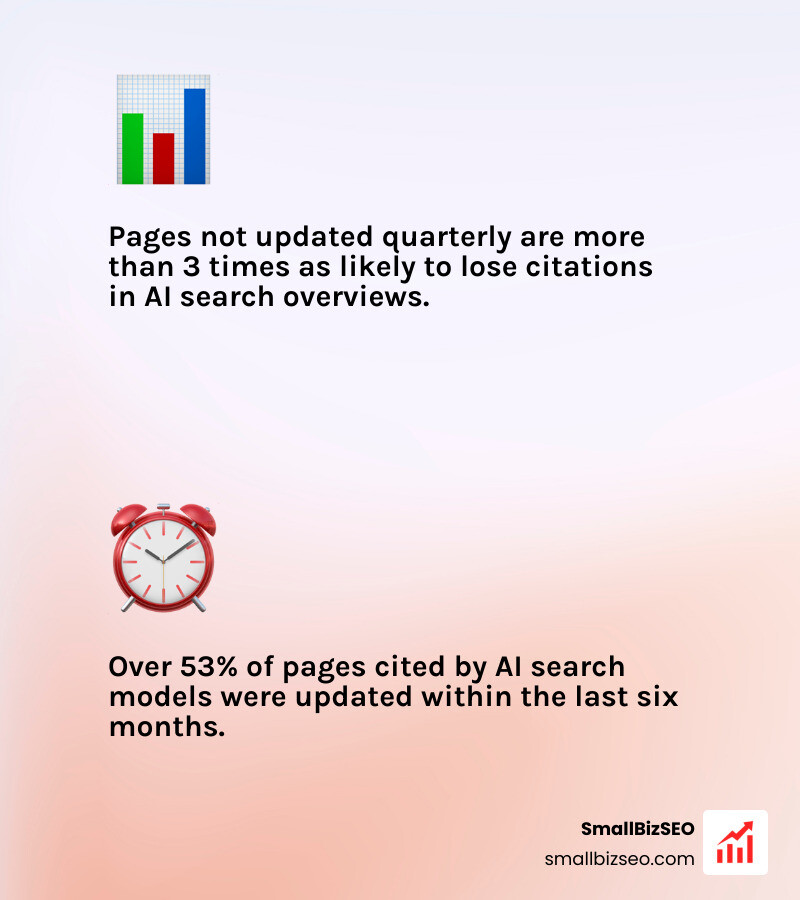
- Pages not updated quarterly are more than 3 times as likely to lose citations in AI search overviews.
- Over one-third (35.2%) of pages cited by AI search models were updated within the preceding three months.
- More than half (53.4%) of cited pages were refreshed within six months.
- Only 26.2% of cited pages had not been updated for over a year.
- Top-ranking websites update and refine their existing content every 1.36 years on average.
Because newly published organic content often takes several months to reach full ranking maturation, front-loading publication allows multiple related assets to mature simultaneously. Conducting a comprehensive SEO visibility audit helps identify existing keyword gaps so your team can target under-served queries rapidly.
How Can You Build a Sustainable Content Velocity Strategy for Long-Term Value?
A sustainable velocity strategy combines structured roadmaps, clear team ownership, and standardized quality checkpoints. Increasing production speed should never mean publishing thin material; search engines explicitly reward comprehensive, accurate, people-first information.
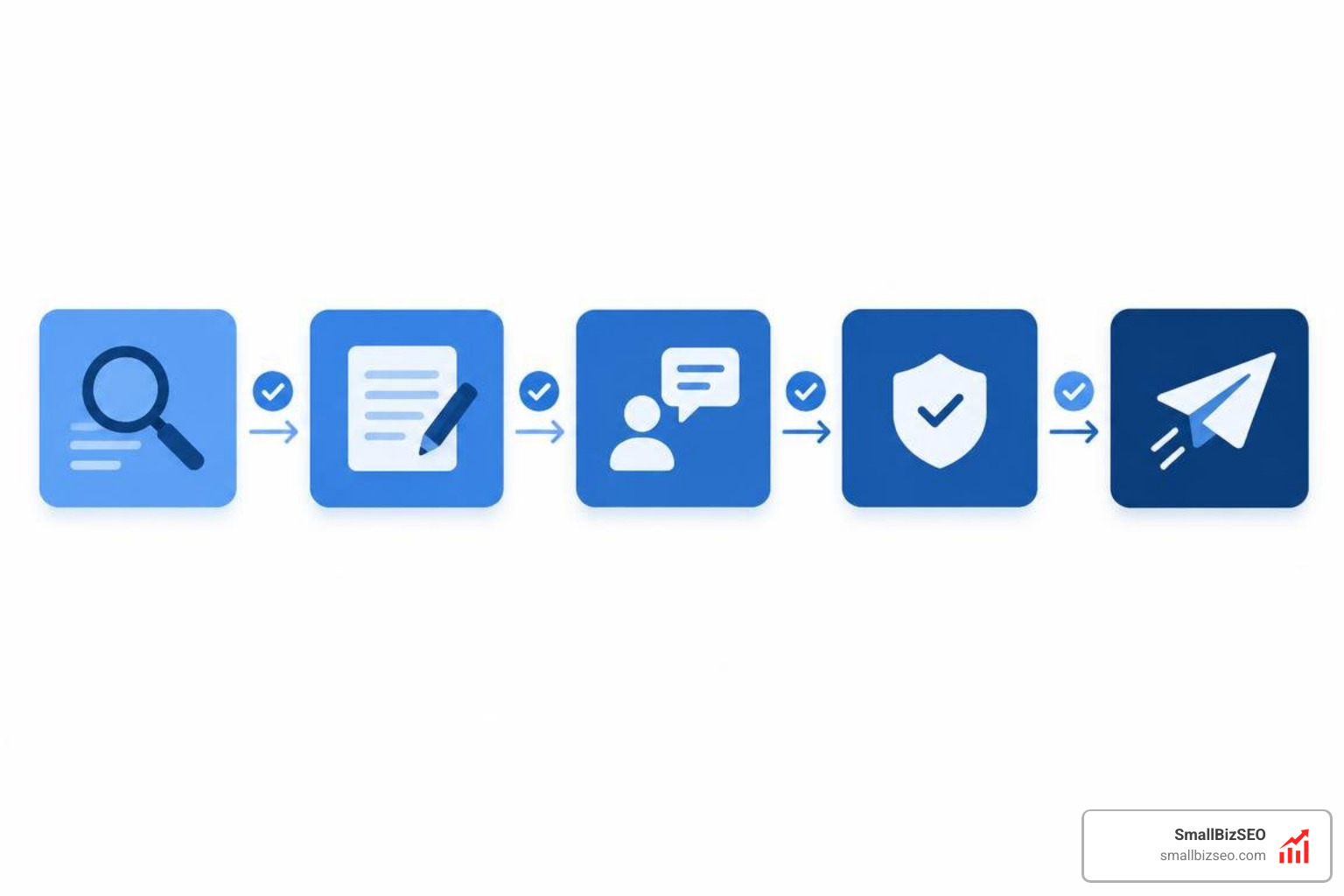
Over 60% of marketing leaders report that AI tools are effective for handling repetitive operational tasks—such as research briefs, initial drafting, and metadata generation—allowing human editors to focus on strategic insights, original data, and brand tone. Integrating tailored AI SEO services into your workflow removes operational drag while maintaining editorial integrity.
How Do You Measure Content Throughput and Overcome Workflow Bottlenecks?
To improve your content throughput, you must measure how long an asset spends in each production phase and eliminate administrative gridlock.
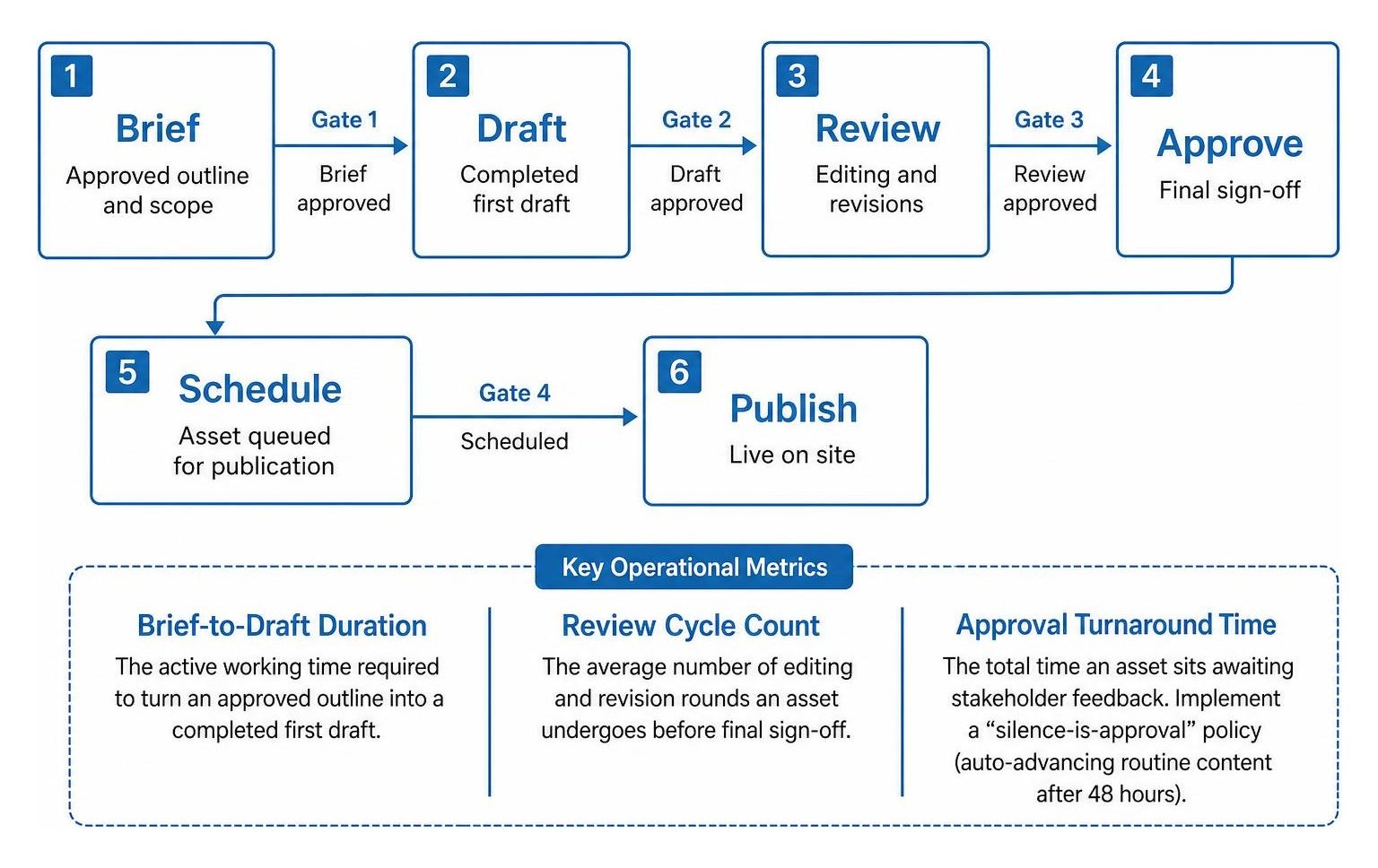
Common operational bottlenecks include unclear briefs, manual digital asset retrieval, and bloated review chains. Marketing teams can address these friction points by tracking key operational performance indicators:
- Brief-to-Draft Duration: The active working time required to turn an approved outline into a completed first draft.
- Review Cycle Count: The average number of editing and revision rounds an asset undergoes before final sign-off.
- Approval Turnaround Time: The total time an asset sits awaiting stakeholder feedback. Implementing a "silence-is-approval" policy (auto-advancing routine content after 48 hours) prevents executive inboxes from stalling campaigns.
- Time to First Organic Impression: The number of days between URL publication and its first recorded impression in search performance reports.
- Reuse and Repurposing Rate: The percentage of core pillar assets adapted into derivative formats such as newsletters, FAQs, and social summaries.
How Can You Balance Rapid Content Production With Editorial Quality and Governance?
Balancing speed and quality requires a proactive governance model based on search engine quality standards, experience, expertise, authoritativeness, and trustworthiness (E-E-A-T).
We recommend using modular content structures—pre-approved components such as case study highlights, author bios, and structured service explanations—that writers can insert into new layouts without reinventing standard messaging. Combining modular drafting with scheduled refresh cycles ensures your existing library retains search rankings while new pages expand your reach.
Accelerate Your Organic Growth With Systematic Content Operations
Content velocity is the operational bridge between content strategy and measurable organic revenue. By replacing fragmented writing efforts with structured workflows, modular components, and automated quality checks, your business can build topical authority and outpace slower competitors.
At SmallBizSEO, we help businesses implement a data-driven content velocity framework designed to scale organic traffic and secure lasting visibility in search results. Contact our team today to build a high-performance content engine tailored to your market.