Drive More Member Signups and Event Attendance Through Strategic Search

How to Execute SEO for Chamber of Commerce Organizations to Dominate Local Search
To execute SEO for chamber of commerce organizations effectively, build high-intent landing pages for membership, events, directory, and resource searches; keep your member directory on your root domain with LocalBusiness and Event schema markup; and maintain consistent local citations and Google Business Profile signals. This approach helps search engines index your pages easily while guiding business owners toward membership signups and event registrations.
A strong online presence establishes your chamber as the primary economic hub for your area. Research shows that 97% of consumers do research online before buying from local businesses, and organic search drives over 53% of all website traffic. When prospective entrepreneurs search for networking groups, ribbon cuttings, or regional business regulations, your organization must appear at the top of the search engine results pages.
Furthermore, affiliation with a respected civic organization builds immediate consumer trust. Consumers are 49% more likely to view chamber-affiliated businesses favorably and 63% more likely to purchase goods or services from them. When your website ranks prominently, your digital domain authority extends directly to your members, driving local discovery, economic development, and consistent membership growth.
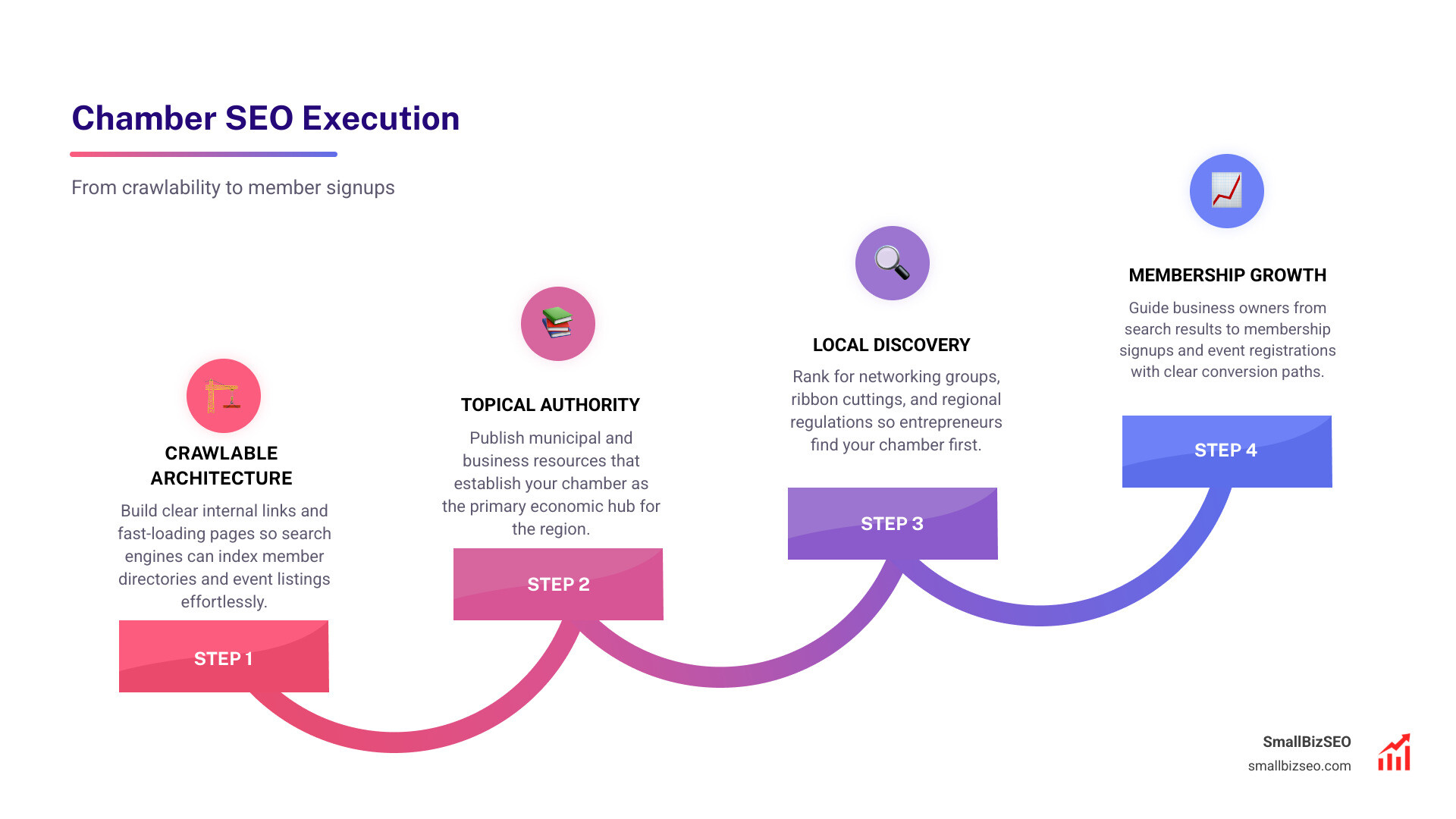
A successful search campaign requires a crawlable architecture that allows search engines to index your pages effortlessly while guiding business owners toward membership signups and event registrations.
To dominate local search, your website must serve both search engine crawlers and real human visitors looking for quick answers. Search engines prioritize sites that exhibit strong topical authority, clear internal linking structures, and fast load times. Following our comprehensive local SEO guide allows chambers to align technical site architecture with community needs, ensuring that your valuable municipal and business resources remain easily discoverable.
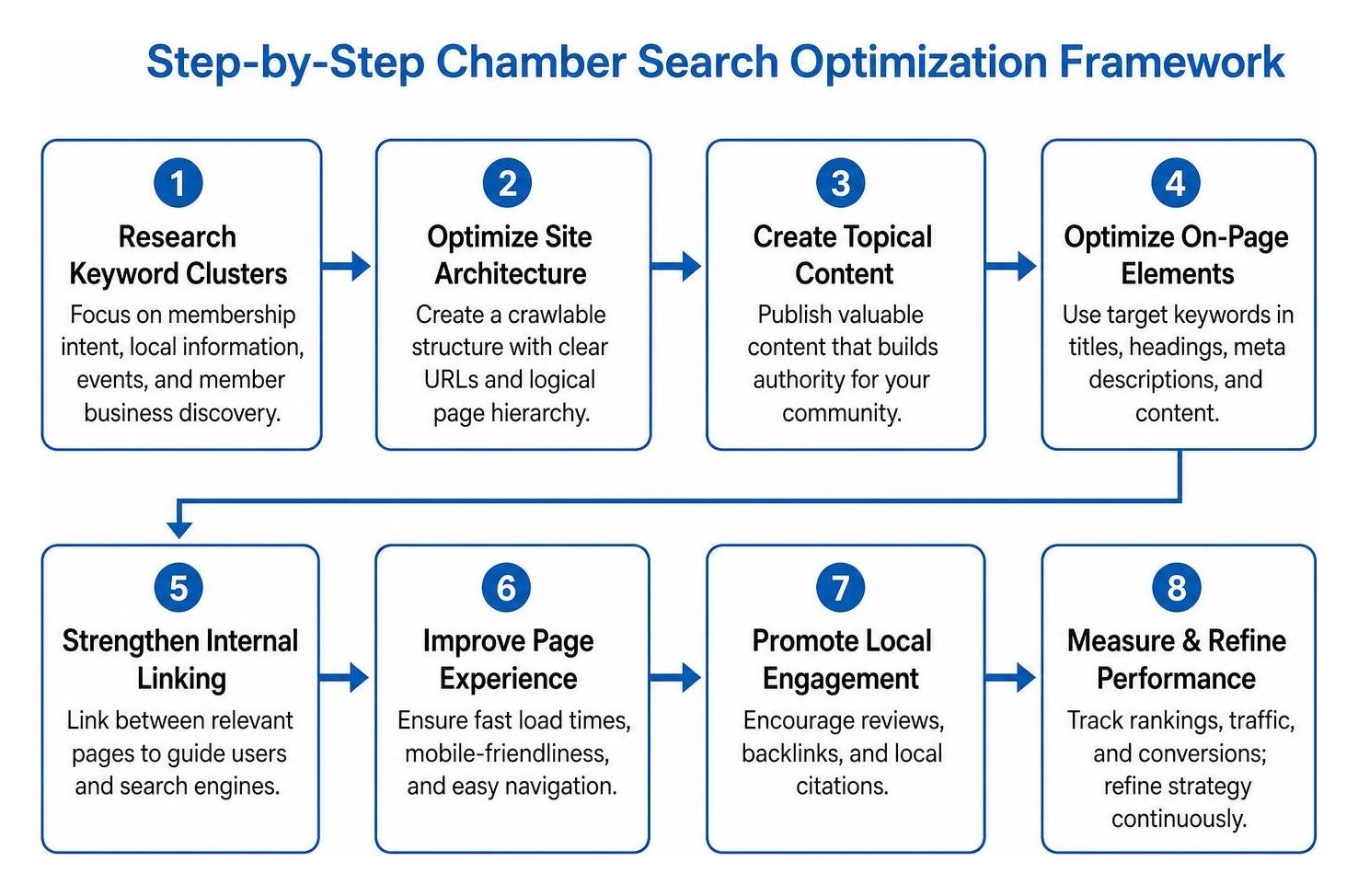
What Are the Core Keyword Clusters in SEO for Chamber of Commerce Organizations?
Every high-performing chamber website should focus its content and URL structure around four distinct keyword clusters:
- Membership Intent: Queries from business owners seeking networking, community advocacy, and local exposure (e.g., "join local business network," "business networking groups").
- Event Queries: Searches for professional mixers, workshops, and civic celebrations (e.g., "business networking breakfast," "upcoming ribbon cuttings").
- Directory Searches: Shoppers and B2B buyers looking for verified local service providers (e.g., "find a certified electrician," "commercial accounting services").
- Resource Keywords: Practical queries regarding local regulations, startup grants, and regional market trends (e.g., "starting a business checklist," "commercial zoning permits").
Employing proven tactics to attract members to chamber websites ensures that each keyword cluster leads visitors to dedicated, high-converting landing pages.
| Keyword Cluster | User Search Intent | Target Landing Page Structure | Primary Call-to-Action |
|---|---|---|---|
| Membership Intent | Compare membership tiers and business benefits | /membership/join |
"Apply for Membership" |
| Event Intent | Register for local mixers and educational seminars | /events/[event-title] |
"Register for Event" |
| Directory Intent | Find and hire reputable neighborhood businesses | /directory/[industry-category] |
"Contact Member" |
| Resource Intent | Access economic development data and permits | /resources/[guide-topic] |
"Download Free Business Guide" |
How Does Technical SEO for Chamber of Commerce Organizations Power Directory and Event Rankings?
Technical SEO ensures that search engine crawlers can index every directory listing, calendar entry, and resource document without technical roadblocks.

One common mistake is hosting directory profiles on external vendor subdomains or embedding them within unindexable search widgets. To preserve and grow your link authority, host your searchable database directly on your root domain using a modern web directory strategy for search visibility. Providing individual profiles on your primary domain gives each business a valuable asset while strengthening your overall domain authority through free member page architecture on chamber domains.
Implement the following technical enhancements across your site:
- LocalBusiness Schema: Embed structured data markup on every member profile, specifying business names, physical addresses, operating hours, telephone numbers, and geolocation coordinates.
- Event Schema: Add structured event markup to calendar entries so search engines display rich snippets featuring dates, venues, ticket prices, and registration links directly in search results.
- Mobile Speed Optimization: Keep mobile page load times under three seconds, as 53% of mobile visitors abandon pages that take longer to load.
- AI Discoverability: Add an
llms.txtfile to your root directory to allow emerging search assistants and generative search models to parse your verified local data accurately.
How Can Chambers Optimize Local SEO and Google Business Profile Signals?
Your chamber's Google Business Profile (GBP) functions as your digital storefront on Google Maps and local map pack results.
Ensure your organization's Name, Address, and Phone number (NAP) data matches identically across your website, Google Business Profile, Apple Business Connect, and Bing Places. Maintain this accuracy across all regional platforms using consistent local citation management and consistency.
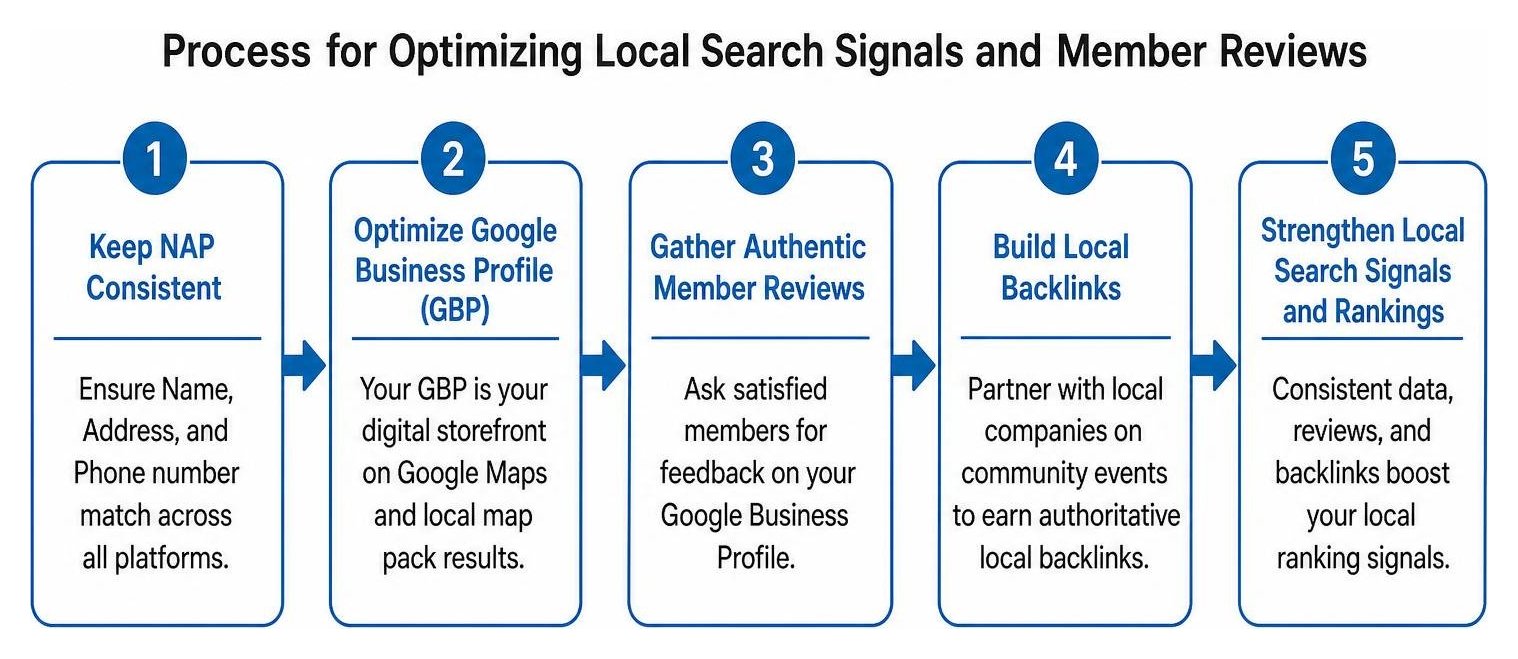
Gathering authentic member reviews significantly boosts local ranking signals. Reach out to satisfied members during annual membership renewals or after major networking events to ask for feedback on your Google Business Profile. Furthermore, partner with local companies on community events to build authoritative local backlinks, utilizing established local sponsorship backlink strategies to anchor your organization's authority.
What Content Strategy Drives Consistent Member Engagement and Backlinks?
A structured content calendar positions your chamber as the primary voice of local commerce while regularly delivering fresh ranking signals to search engines.

To maintain steady organic growth, establish a sustainable publishing cadence:
- Weekly Ribbon-Cutting Recaps: Publish brief articles celebrating new member openings. Feature high-quality event photos, highlight the member's core services, and include an internal link back to their directory profile.
- Monthly Business Guides: Write comprehensive guides addressing common operational challenges, such as local tax compliance, commercial leasing tips, or marketing best practices.
- Quarterly Economic Snapshots: Publish reports on local job growth, commercial real estate developments, and regional business climate data.
Publishing authoritative resources naturally earns inbound citations from municipal websites, regional news outlets, and participating business blogs. Industry data on business network optimization demonstrates organic traffic increases exceeding 2400% and more than a 130% rise in directory revenue after overhauling content structure and directory accessibility.
How Can Chambers Measure Search Performance and Convert Organic Traffic?
Chambers measure digital marketing success by tracking qualified organic actions that drive community participation and revenue.
At SmallBizSEO, we rely on our data-driven "Velocity" framework to deliver fast rankings, E-E-A-T-compliant authority, and transparent automated reporting. By tracking metrics in Google Analytics 4 and Google Search Console, your team can see exactly which guides, directories, and event pages convert visitors into dues-paying members. If your organization wants expert guidance to scale local reach and automate lead generation, explore our custom chamber of commerce SEO services.
Which Key Metrics and Conversion Goals Should Chambers Track?
To evaluate the return on your search marketing efforts, monitor these core performance indicators:
- Organic Directory Impressions and Clicks: Measure how often users find member listings through non-branded local search queries.
- Membership Application Submissions: Track completed online membership registration forms originated via search landing pages.
- Event Registration Conversions: Monitor ticket sales and RSVP confirmations generated from optimized event posts.
- Resource Download Rates: Track downloads of economic guides, permit checklists, and startup toolkits used as lead magnets.
- User Engagement Metrics: Analyze average session duration and bounce rates to confirm that visitors easily navigate your site hierarchy.
Building a Sustainable Search Strategy for Long-Term Growth
Implementing a strategic search approach transforms your chamber website from a static informational brochure into an active economic engine. By targeting high-intent keyword clusters, maintaining a fast and crawlable member directory, and consistently publishing valuable local content, your organization will expand its reach, boost event attendance, and continually attract new business members.