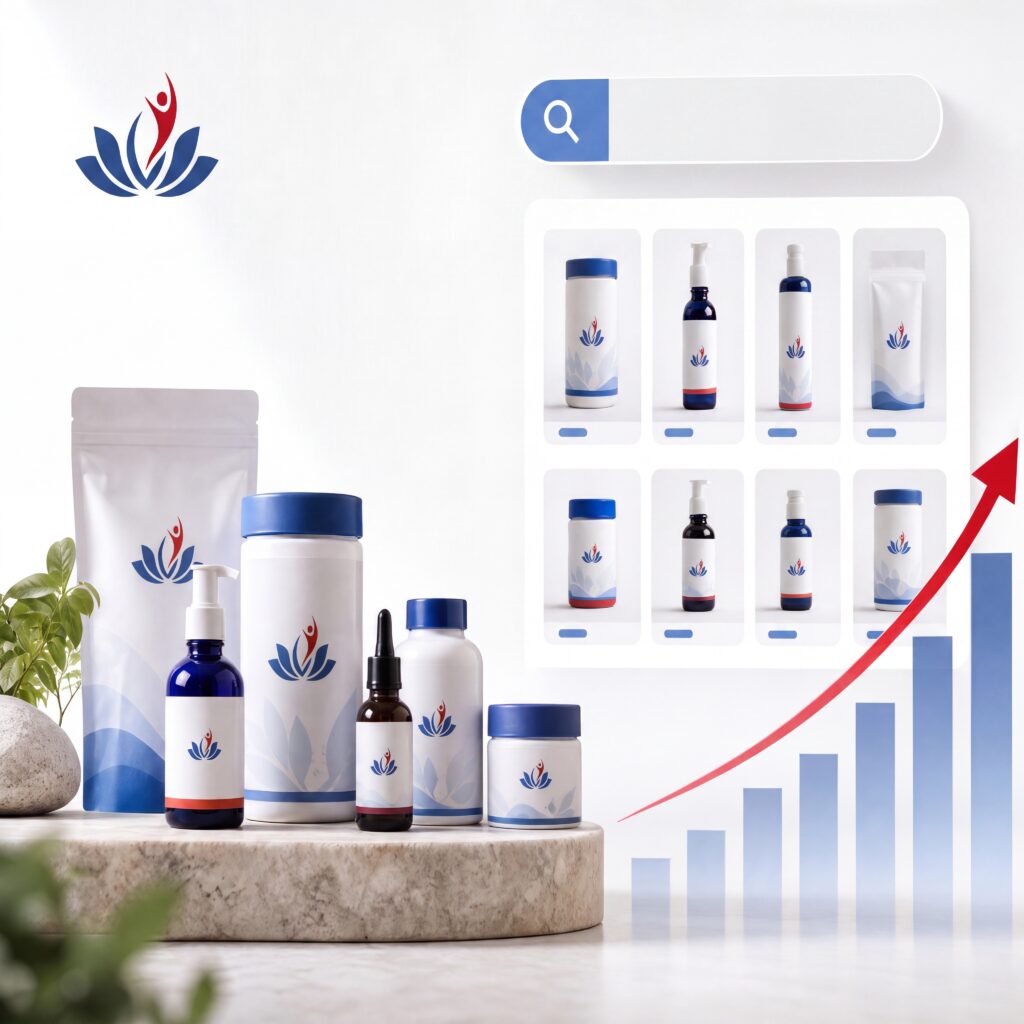
Prioritize the categories, products and purchase-path gaps that deserve attention before adding more pages.
An established store may already have extensive product content and still struggle to identify what to improve next. A category can attract impressions without useful clicks, or visitors can reach products and fail to continue. We use the store’s available evidence to separate discovery gaps from shopping friction, prioritizing specific changes rather than promising that more indexed pages will automatically create revenue.
Search intent & content
Turn observed store patterns into focused SEO questions
Review category discovery, product-page information and catalog changes as connected parts of the shopping journey. We use available store data to prioritize specific improvements, then examine how visitors move toward the defined purchase actions.
Underdeveloped category opportunities
Review meaningful product groups against existing landing pages and available search data, identifying where a useful category is missing, poorly connected or insufficiently explained before proposing additional content.
Example searchecommerce category page optimization
Product-page decision gaps
Inspect priority item pages for missing attributes, unclear variants or weak links to purchasing information, distinguishing a content problem from stock, price or other merchandising questions.
Example searchproduct page conversion information review
Catalog lifecycle management
Review how the store handles discontinued items, replacements and seasonal ranges, preserving useful navigation and appropriate technical signals instead of allowing outdated products to fragment the customer journey.
Example searchdiscontinued product SEO strategy
Search-to-purchase measurement
Connect available search and ecommerce measurement with defined shopping actions, helping the team investigate where visits progress or stall without assuming that attribution captures every purchase influence.
Example searchecommerce organic purchase journey reporting
Website priorities
Build useful pages around real customer decisions
Choose a testable priority set
Start with a focused group of categories or products and define the change being evaluated, making it easier to learn than rewriting the entire catalog at once.
Separate traffic and merchandising issues
A page with visitors but little progression needs a different investigation from a useful category that is difficult to discover. Review evidence before prescribing more content.
Check technical interactions
Inspect parameter, canonical and pagination behavior around priority ranges so catalog changes do not create conflicting signals or unnecessary duplicate destinations.
Review results in context
Compare the affected journeys with inventory changes, seasonality and measurement limitations, avoiding a simple before-and-after claim that attributes every sales change to SEO.
Our approach
A practical plan for your website
We begin with the existing store, available search evidence and ecommerce event definitions. The plan selects a manageable priority set, documents the intended improvement and reviews the resulting journey before wider rollout.
Review the foundations
Check crawlability, existing pages, customer needs, and the services your business actually offers.
Map services to demand
Connect customer questions to useful service pages and supporting content without duplicating search intent.
Build, measure, improve
Publish useful pages and refine them using search visibility and separately configured inquiry analytics.
- Priorities tied to observed store evidence rather than invented opportunity figures.
- Catalog changes considered alongside inventory and merchandising context.
- Measurement definitions checked before interpreting purchase-path reports.
- Incremental improvements reviewed before catalog-wide expansion.
Frequently asked questions
Questions about your industry SEO strategy
How does ecommerce growth SEO differ from building basic ecommerce SEO?
Foundational work establishes usable category and product architecture. Growth work revisits an operating store, using available evidence to choose which gaps, lifecycle issues or shopping-path problems deserve the next investment.
Should a store add more category pages to grow?
Only where meaningful product groupings and customer questions justify them. Reviewing existing categories may reveal stronger opportunities in internal links, content clarity or catalog maintenance rather than additional URLs.
Can analytics show exactly how much revenue SEO caused?
Measurement can inform the investigation, but attribution and event coverage have limits. Review defined shopping actions alongside inventory, seasonality and other changes rather than treating one report as complete causal proof.
How do we measure whether SEO is helping?
Use Google Search Console for search visibility and page performance. Measure calls, inquiries, and lead quality separately through analytics and intake tracking where configured.
Can you guarantee rankings or new customers?
No. We focus on the work within our control: technical foundations, useful content, clear navigation, and measurement. Search outcomes depend on competition and other factors.
Build a clearer path from search to inquiry
Bring your existing store and available performance data to SmallBizSEO so we can prioritize useful changes instead of expanding the catalog blindly.
Search rankings & AI visibility — AI SEO / AEO
- Google AI Mode
- ChatGPT
- Claude
- Gemini
- Perplexity


Related services & strategies