Field Guide to Local and E-Commerce SEO for Truck Upgrades
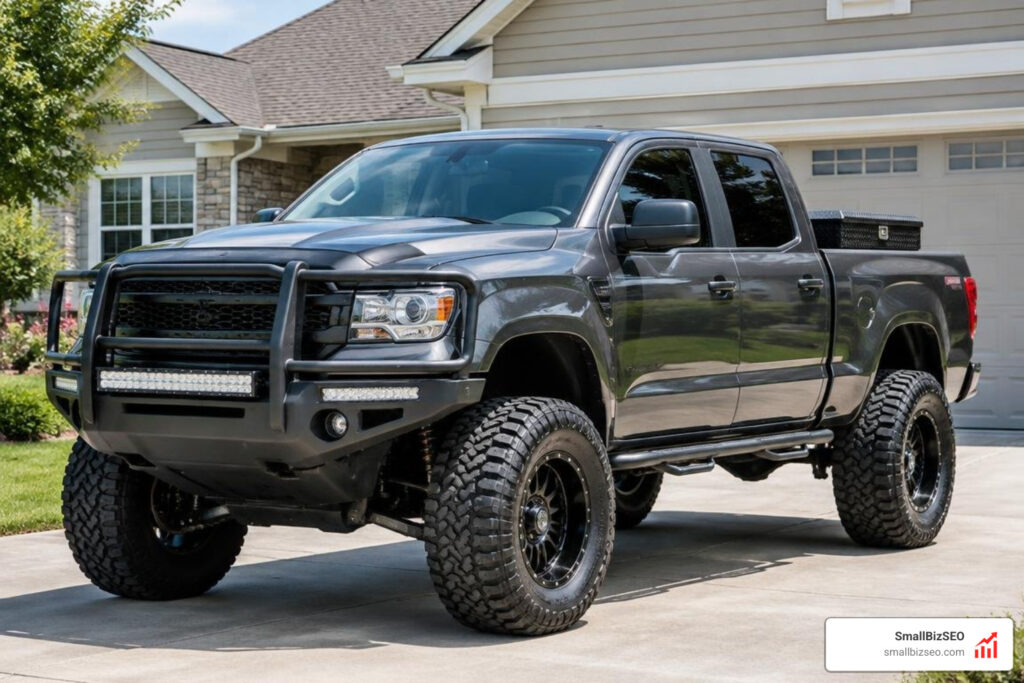
How Can SEO for Truck Accessories Bring in More Buyers?
Start with fitment. To improve SEO for truck accessories, make product pages easy to find and show which trucks each part fits. Include the year, make, model, bed length, and cab size where they matter. Then build useful pages for popular truck models, answer installation questions, and create local service pages if your shop installs parts.
Truck buyers often search for a specific part and a specific vehicle. A clear fitment answer helps them find the right page and decide whether to buy or visit your shop.
I'm Clayton Johnson, founder of SmallBizSEO. My work in technical SEO, content strategy, and link building shapes this approach to SEO for truck accessories: answer the buyer's question clearly, then make the next step easy.
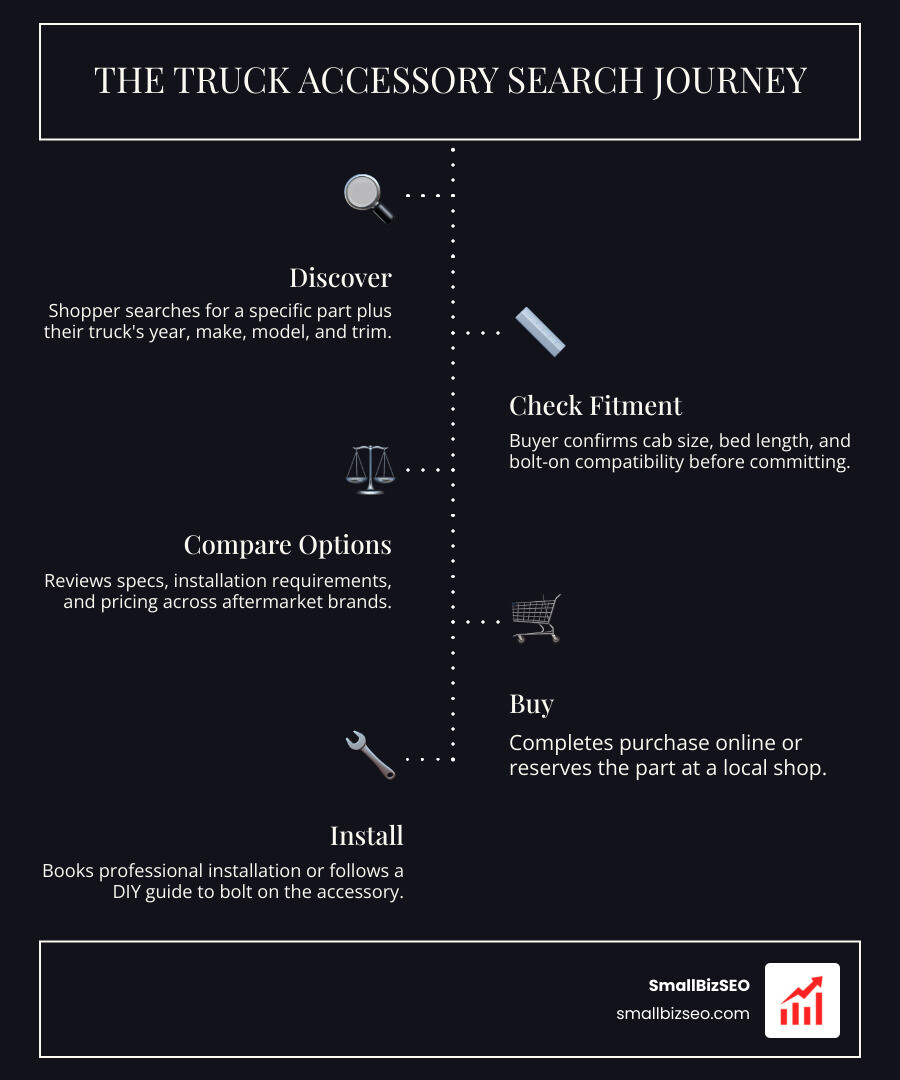
Introduction: Navigating the Search Landscape for Truck Parts
Every day, DIYers and automotive enthusiasts run approximately 104 million searches looking for vehicle parts, accessories, and hands-on guidance. Across the broader web, organic search drives roughly 27% of all website traffic, outperforming direct navigation and email campaigns.
For the automotive aftermarket, capturing that demand requires understanding how shoppers search. The average automotive click-through rate sits at 5.39%, but general SEO tactics often fall short. A typical truck parts buyer does not browse vaguely for "truck gear." Instead, they search with exact vehicle attributes—such as cab configuration, bed length, or trim package—seeking immediate reassurance that an aftermarket accessory will bolt directly onto their rig without cutting or drilling.
Whether your catalog targets weekend DIY mechanics or commercial fleet managers, winning organic visibility comes down to organizing complex fitment data into search-friendly web pages.
Actionable Playbook: Executing Technical and Local SEO for Truck Accessories
Connecting your inventory with high-intent shoppers requires two synchronized engines: an e-commerce catalog optimized for year-make-model search intent and a local footprint that attracts owners seeking nearby professional installation.

What Technical Frameworks Win SEO for Truck Accessories Catalogs?
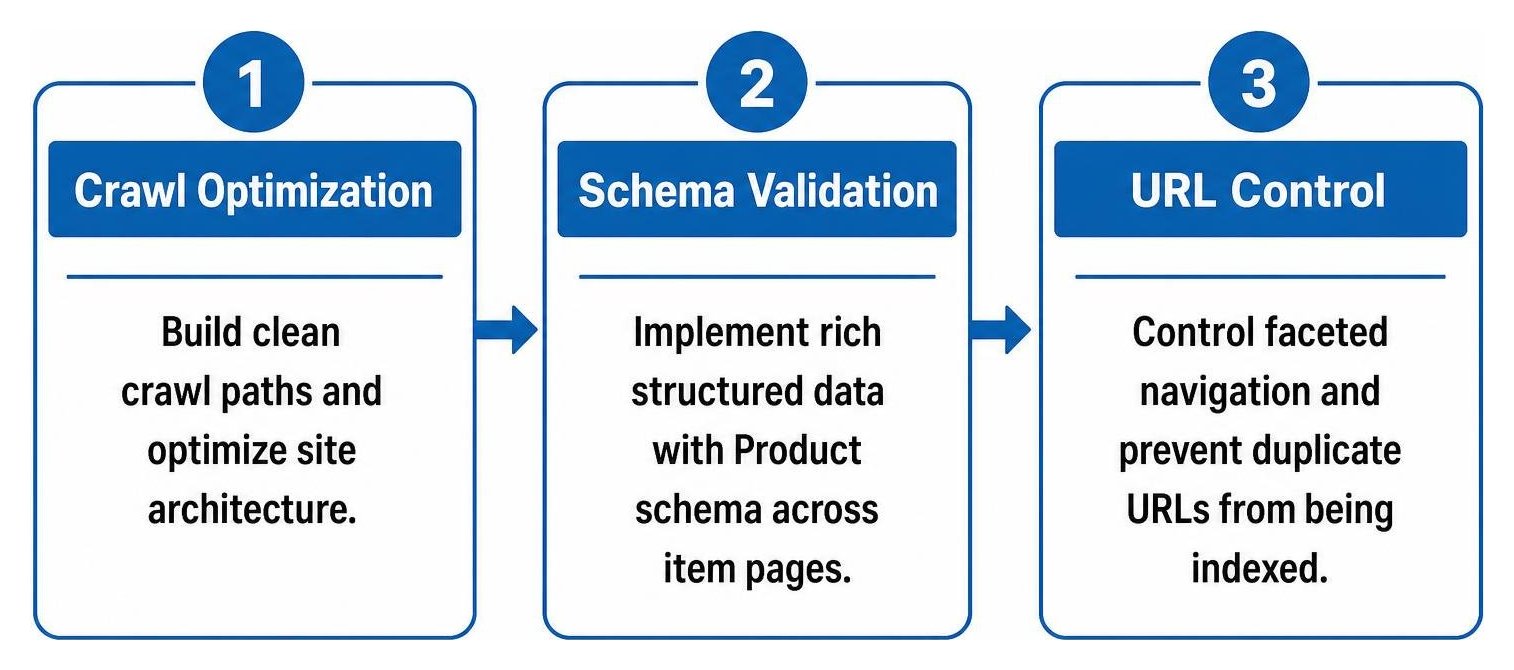
High-performing aftermarket websites rely on crawlable architectures, structured data, and strict indexation controls to prevent catalog clutter from diluting organic rankings.
- Implement Rich Structured Data: Add comprehensive JSON-LD Product schema across every item page. Include properties for price, availability, brand, SKU, part number, and vehicle compatibility properties so search engines can read your catalog specifications directly.
- Control Faceted Navigation: Automotive stores often feature dozens of layered filters (such as color, material, finish, lift height, and wheel offset). Use canonical tags pointing back to primary category pages, or set parameters to prevent crawlers from indexing endless duplicate URLs.
- Optimize Page Speed and Core Web Vitals: Large catalogs heavy with lifestyle photography can slow down mobile loading. Compress image assets, use responsive formats, and streamline script execution to ensure swift mobile browsing.
- Build Clean Crawl Paths: Keep your site hierarchy logical. Structure URLs intuitively so search engine bots and shoppers can navigate smoothly from root categories down to specific subcategories.
Reviewing a comprehensive technical SEO guide can help you identify baseline crawl bottlenecks before launching larger catalog expansions.
How Do You Optimize Vehicle Fitment and Year-Make-Model Pages?
Winning fitment search traffic requires translating industry standards—like ACES (Aftermarket Catalog Exchange Standard) and PIES (Product Information Exchange Standard)—into crawlable, plain-text webpage elements.
JavaScript vehicle selectors are helpful for shoppers on-page, but search crawlers cannot always interact with drop-down menus. To rank for high-intent queries, display vehicle compatibility in standard HTML text tables and dedicated landing pages.
| Feature Type | Generic Category Page | Vehicle-Specific Fitment Landing Page |
|---|---|---|
| Target Query | "Heavy duty truck bumpers" | "Front winch bumper for current-generation Ford F-150" |
| Search Intent | Top-of-funnel browsing | High-intent commercial evaluation & purchase |
| Content Depth | General brand summaries | Direct specs, bed/cab notes, bolt pattern details |
| Conversion Rate | Moderate | High (eliminates fitment anxiety) |
Structuring an effective ecommerce SEO strategy means building dedicated model hubs. For example, instead of forcing a buyer to dig through 5,000 tonneau covers, create dedicated hubs for popular platforms like the Silverado 1500, Ram 2500, or Toyota Tacoma. List compatible styles, summarize cab and bed dimensions, and link directly to matching product pages.
How Does Local SEO for Truck Accessories Drive Regional Shop Visits?
Local truck accessory retailers and installation garages capture immediate foot traffic by dominating regional search results and map listings.
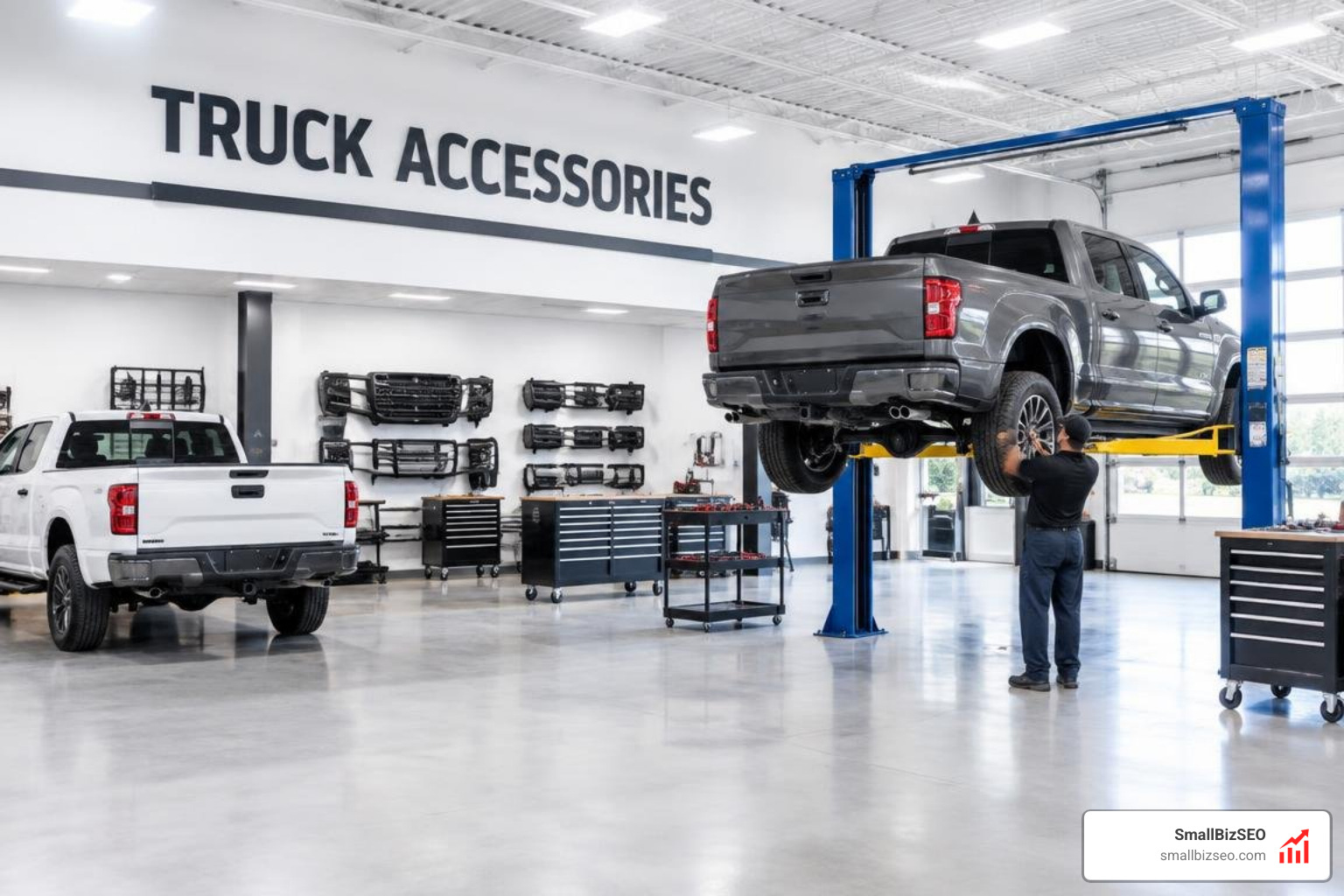
To capture regional vehicle owners:
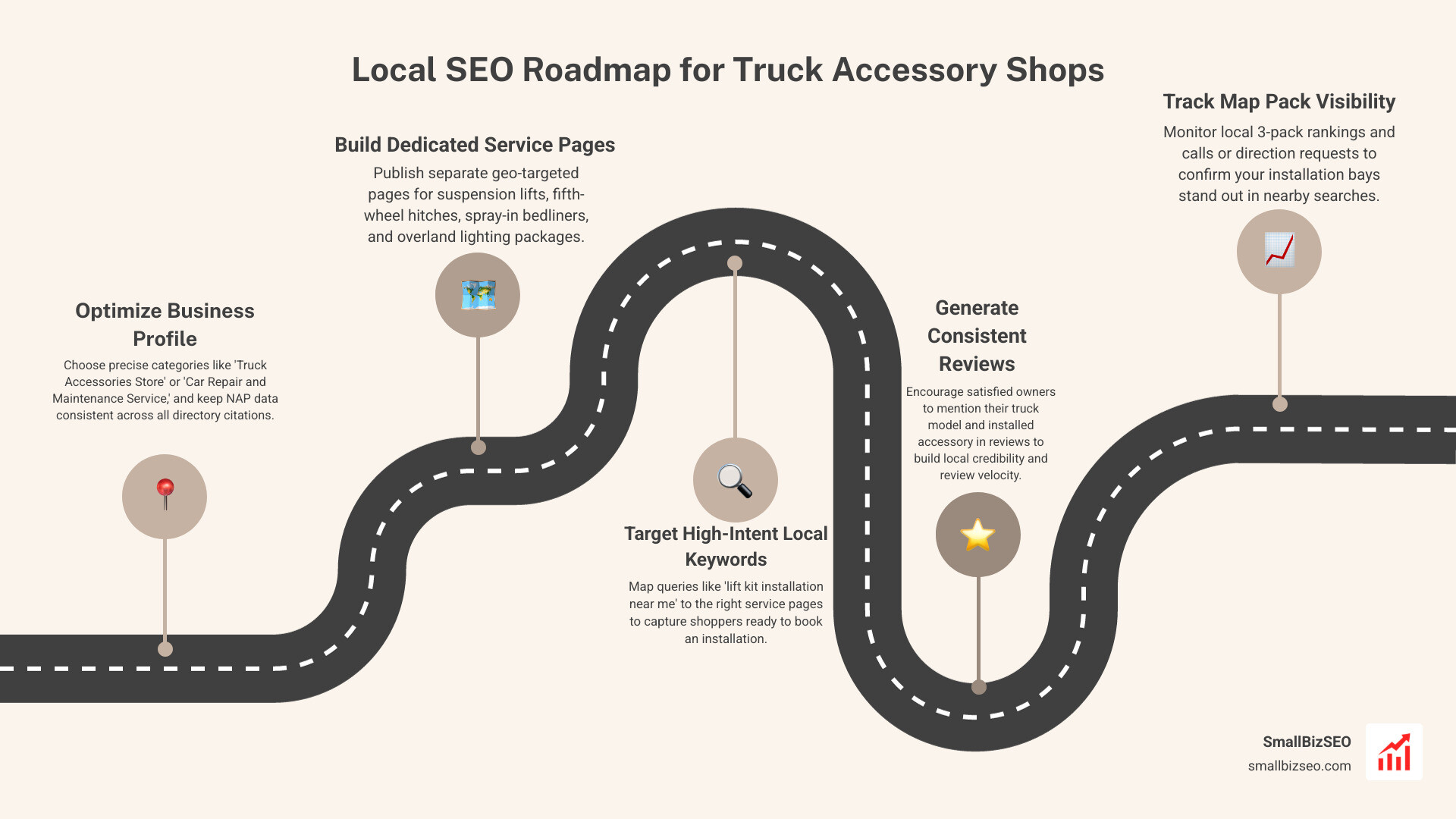
- Optimize Your Business Profile: Select precise primary categories such as "Truck Accessories Store" or "Car Repair and Maintenance Service." Keep your business name, address, and local phone number perfectly consistent across all directory citations.
- Create Dedicated Local Service Pages: Avoid grouping all services onto a single page. Publish separate, geo-targeted pages for high-demand services like suspension lift kit installations, custom fifth-wheel hitch setups, spray-in bedliners, and overland lighting packages.
- Generate Consistent Customer Reviews: Encourage satisfied truck owners to leave detailed reviews mentioning their vehicle model and the specific accessory installed.
Following practical steps from our local map rankings guide will help ensure your physical installation bays stand out when drivers search for nearby upgrades.
How Should Content and E-E-A-T Address the Buyer Journey?
Search algorithms and vehicle owners both favor brands that show genuine, hands-on experience, expertise, authoritativeness, and trustworthiness (E-E-A-T). Informative content bridges the gap between early research and final purchase.
- Pre-Purchase Comparison Guides: Write clear comparison articles comparing hard folding vs. roll-up tonneau covers, or level kits vs. full suspension lifts.
- Step-by-Step Installation Guides: Provide wrench-time estimates, necessary tool lists, torque specifications, and common troubleshooting tips.
- Application-Specific Resources: Overlanding, towing, and off-roading communities search for gear combinations tailored to real-world environments. Exploring tactics for targeting specialized use cases highlights the power of long-tail keywords.
Integrating foundational E-E-A-T search principles helps establish your shop as a dependable technical authority in the automotive aftermarket.
Future-Proofing Growth: Authority, AI Search, and Performance Tracking
Sustained visibility for truck parts businesses requires consistent off-page authority and active performance tracking.

Our team at SmallBizSEO helps businesses scale using our data-driven "Velocity" framework. This approach combines structured catalog optimization, high-impact content development, and genuine automotive link acquisition. We focus on building authoritative editorial backlinks from industry publications, regional car club features, and supplier networks.
If you are unsure where your site stands or want to uncover hidden technical barriers, you can claim your comprehensive SEO visibility audit to benchmark your catalog against top competitors.
How Are AI Search Engines and GEO Reshaping Parts Discovery?
Generative Engine Optimization (GEO) focuses on structuring website content so conversational AI search systems can easily parse, synthesize, and cite your product data.
When a driver asks an AI assistant, "What is the best hard folding bed cover for a short bed truck with a factory track system?", the platform pulls answers from sources with clear contextual compatibility, accurate technical measurements, and consistent multi-source citations. Providing clean data formats, direct answers to common compatibility questions, and valid schema markup ensures your parts are recommended across both traditional search engines and emerging AI tools.
What Common Mistakes Sabotage Aftermarket Growth and Conversions?
Catalog-heavy automotive sites often run into technical traps that compromise organic rankings and frustrate buyers.

Avoid these common aftermarket SEO pitfalls:
- Hiding Fitment Behind Scripts: Relying entirely on JavaScript selectors prevents search bots from seeing compatible vehicle models in plain text.
- Publishing Duplicate Supplier Copy: Copying and pasting raw manufacturer descriptions leads to identical content across thousands of competing retailer sites.
- Uncompressed Image Files: Uploading multi-megabyte photo galleries of trucks and bumpers degrades mobile load times and lowers user engagement.
- Thin Doorway Pages: Programmatically spinning thousands of thin make-and-model pages without unique specs, advice, or relevant inventory risks search quality penalties.
- Ignoring Installation Support: Leaving out bolt-on notes, wiring details, or lift clearances creates customer hesitation and raises cart abandonment rates.
Accelerate Your Truck Accessory Rankings
Building reliable organic search traffic for an aftermarket truck catalog requires aligning technical fitment data with the practical questions vehicle owners ask every day. By presenting clean structured markup, creating dedicated vehicle hub pages, delivering genuine installation advice, and maintaining an active local search presence, your shop can reliably outrank generic storefronts.
Focus on matching search intent at every stage of the truck build—from the initial lift kit research to the final garage installation—and watch your organic traffic turn into long-term commercial growth.