Why Food Venues Need Specialized Restaurant SEO Services Today
Why Food Venues Need Specialized Restaurant SEO Services Today
How Can Restaurant SEO Services Help Fill More Seats?
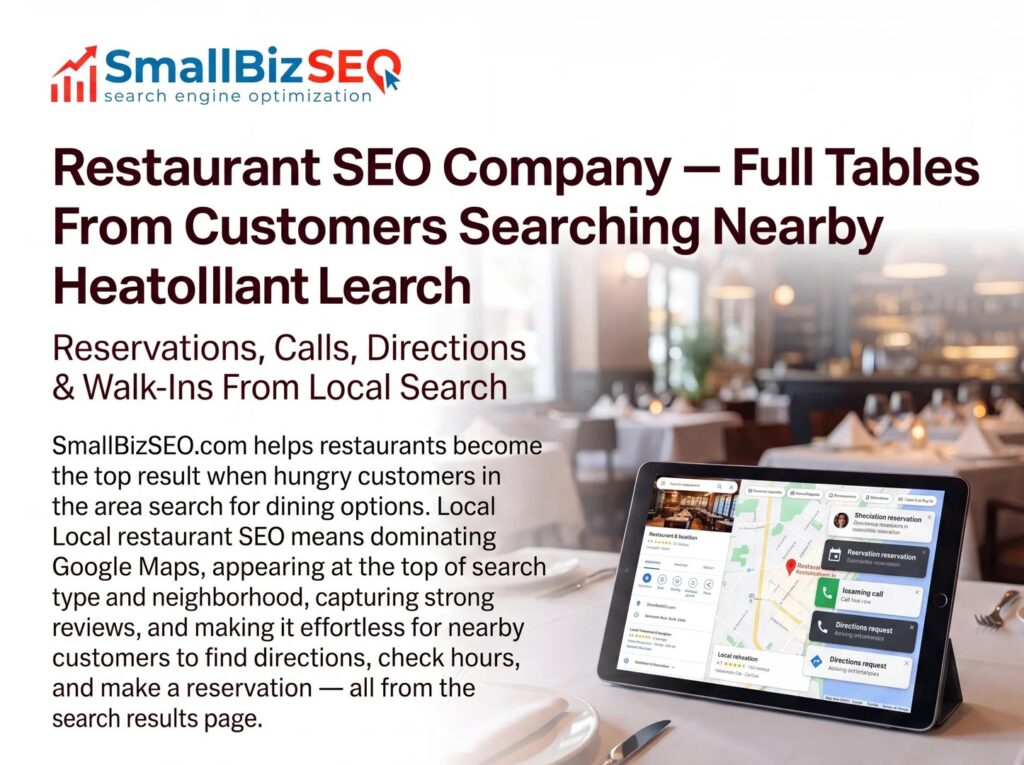
Start with what diners need to make a choice. Keep your Google Business Profile accurate, put your menu on an easy-to-read website page, and make hours, directions, and reservations easy to find on a phone. Restaurant SEO services bring those tasks together with review management and local search optimization, so more nearby diners can find you and book directly.
The goal is not just more website visits. It is more calls, reservations, orders, and visits you can track.
I’m Clayton Johnson, founder of SmallBizSEO. My work connects SEO, useful content, and digital PR to help small businesses earn visibility and qualified leads; this guide applies that approach to restaurant SEO services.
Restaurant SEO services terminology:
How Modern Restaurant SEO Differs from Generic Search Optimization
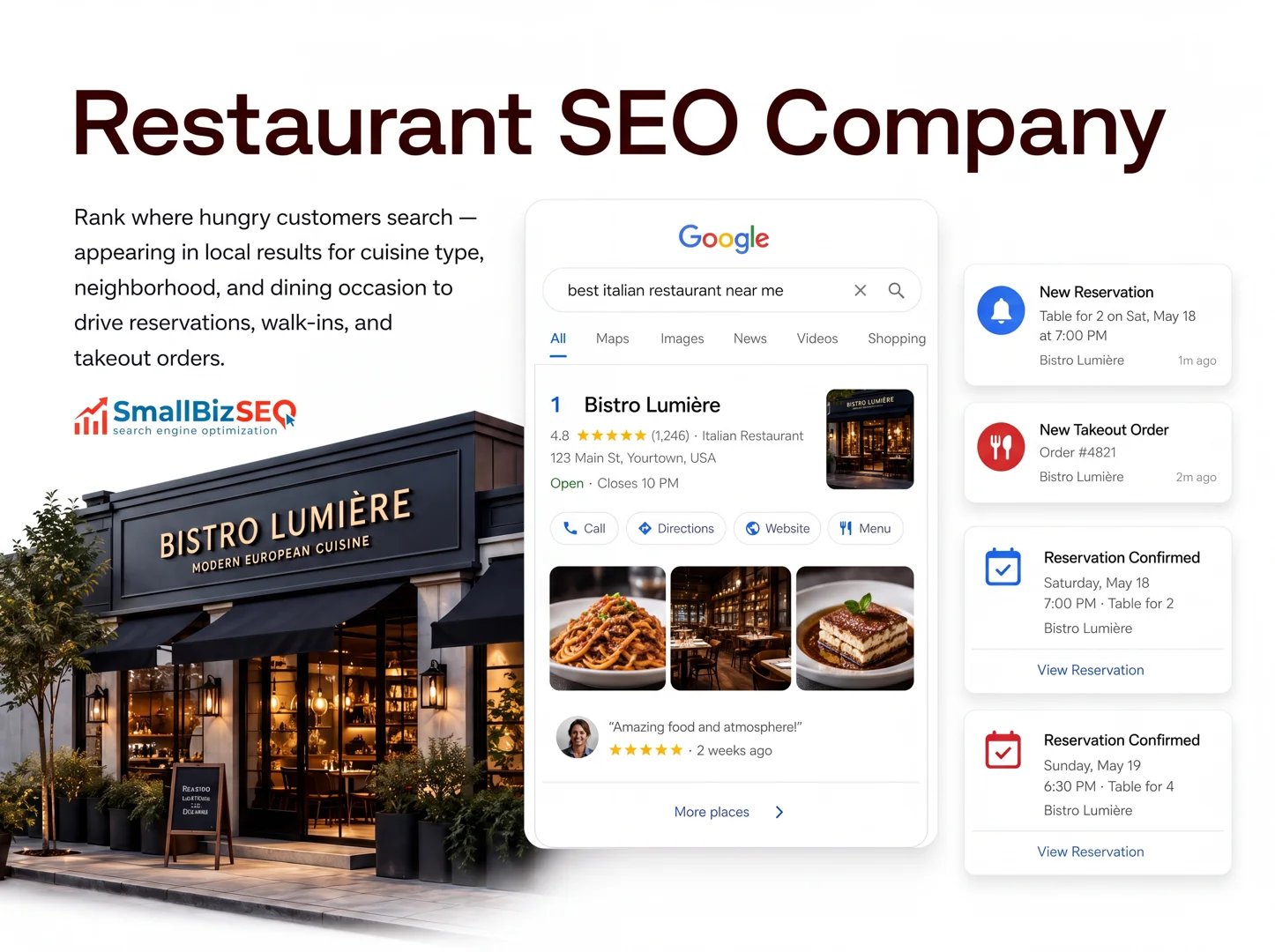
Restaurant SEO differs from traditional search marketing because it targets immediate, location-driven intent on mobile devices. While national retail or B2B brands chase long research cycles and informational queries across desktop screens, restaurant discovery happens when people are hungry and ready to spend money immediately.
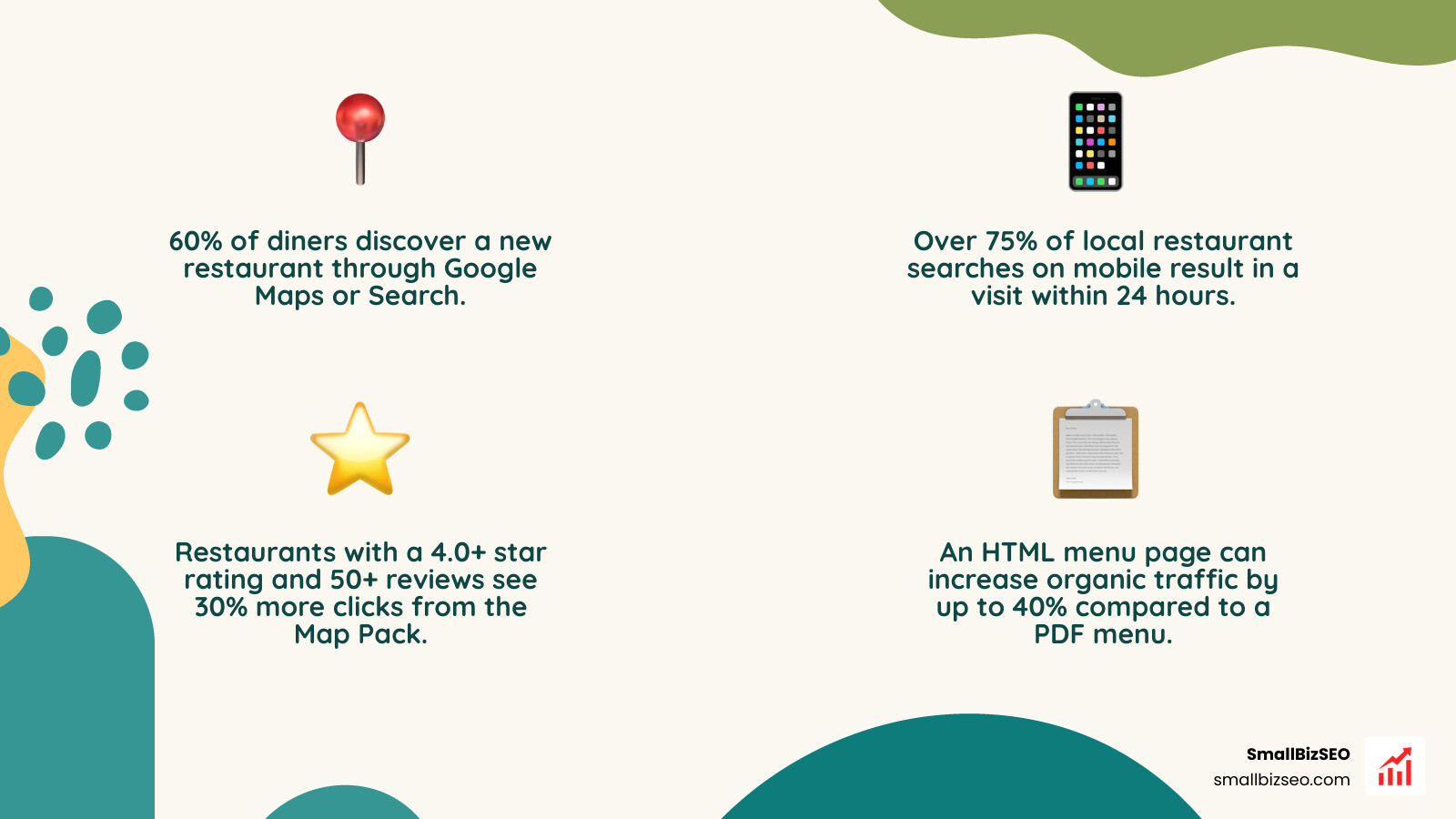
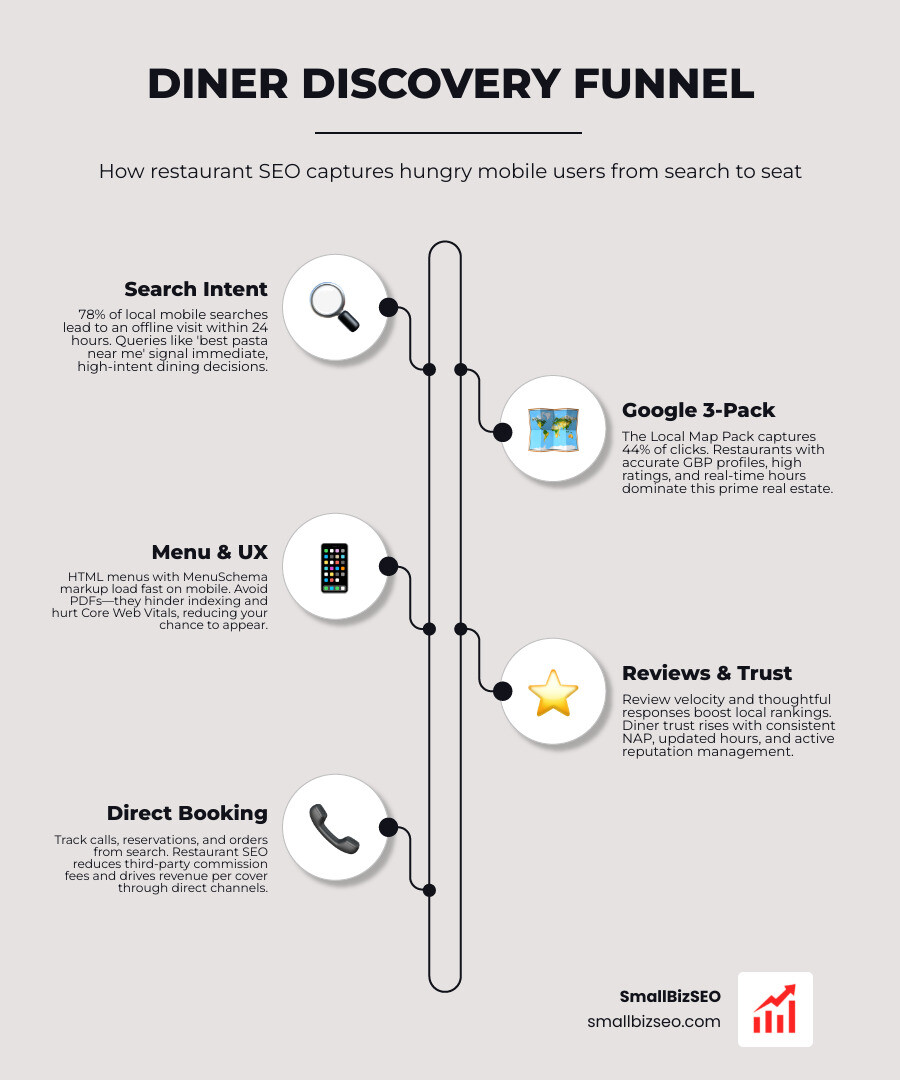
More than nine in ten diners research a restaurant online before visiting, and over 80% of those searches occur on smartphones. When someone types "best pasta near me" or "gluten-free brunch open now," they are rarely browsing for casual reading. In fact, 78% of local mobile searches result in an offline store visit within 24 hours.
Understanding these dynamics begins with mastering the ultimate guide to local search optimization basics. Traditional optimization relies on national keyword volume, long-form articles, and domain-wide authority. By contrast, food and hospitality discovery operates on proximity, real-time operating hours, appetizing visual content, and immediate booking availability.
Why Is the Google Local Map Pack the Primary Real Estate for Diners?
The Google Local Map Pack sits directly at the top of search engine results pages, showcasing three nearby food establishments alongside their average star ratings, price tiers, address details, and primary categories. Securing a spot in this 3-Pack is vital because it captures 44% of all user clicks for local dining searches.
Google determines Map Pack placements using three core signals:
- Relevance: How closely your business profile and website content match what the hungry diner entered in the search bar.
- Prominence: Your brand authority, shaped by local backlinks, review volume, star ratings, and directory coverage.
- Distance: The physical proximity between the searcher's mobile device and your dining room doors.
Many operators miss out on revenue because of Google local map pack secrets most local businesses overlook. For example, maintaining active review generation and monitoring ranking radius with geo-grid tracking tools reveals neighborhood-by-neighborhood blind spots. Furthermore, having NAP consistency explained across your citations ensures search algorithms encounter identical name, address, and phone details on every directory, preventing suppressed map rankings.
What Technical and Menu Optimization Factors Move the Needle?
Your digital menu is your most valuable organic search asset, yet many dining establishments bury it inside uploaded PDF files or flattened images. Search engines cannot easily parse, index, or interpret dishes locked within image files. Converting your offerings into clean, crawlable HTML text directly on your website enables search bots to read every ingredient, specialty item, and dietary flag.
Strategic on-page SEO for hospitality requires structured data, also known as schema markup. Adding detailed code tells search engines exactly what each web page represents.
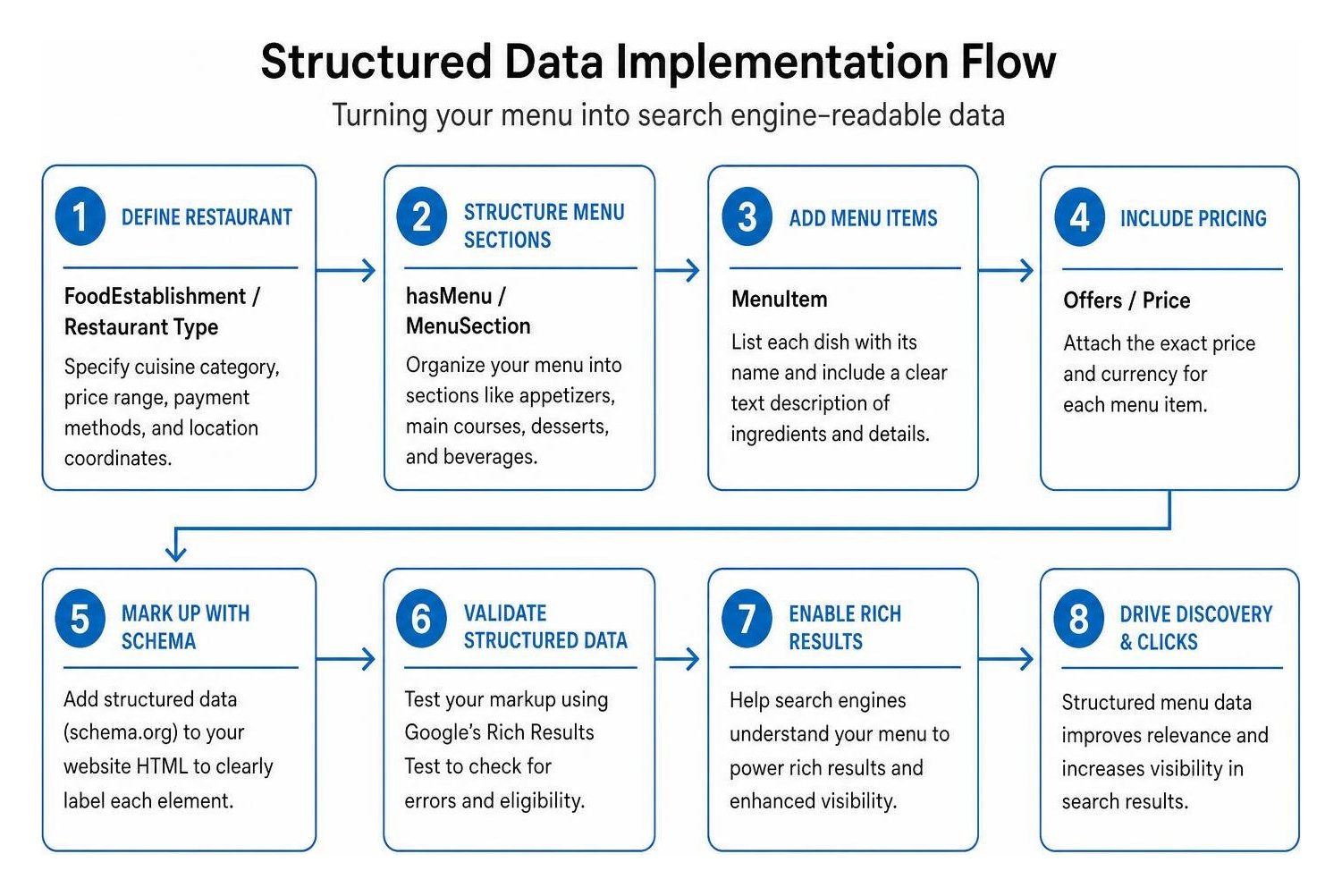
Essential schema properties every restaurant website must implement include:
- FoodEstablishment / Restaurant Type: Defines your exact cuisine category, price range, accepted payment methods, and physical location coordinates.
- hasMenu / MenuSection: Categorizes your appetizers, main courses, desserts, and beverage lists into structured hierarchies.
- MenuItem: Names individual dishes and includes detailed text descriptions.
- Offers / Price: Specifies the exact numerical price and currency for each dish.
- suitableForDiet: Flags dietary categories such as VeganDiet, GlutenFreeDiet, or VegetarianDiet, allowing you to capture long-tail dietary queries.
Beyond schema, technical performance matters. Fast mobile load times and solid Core Web Vitals keep hungry visitors from bouncing to a competitor's site before your reservation widget even loads.
Why Invest in Professional Restaurant SEO Services to Drive Bookings?
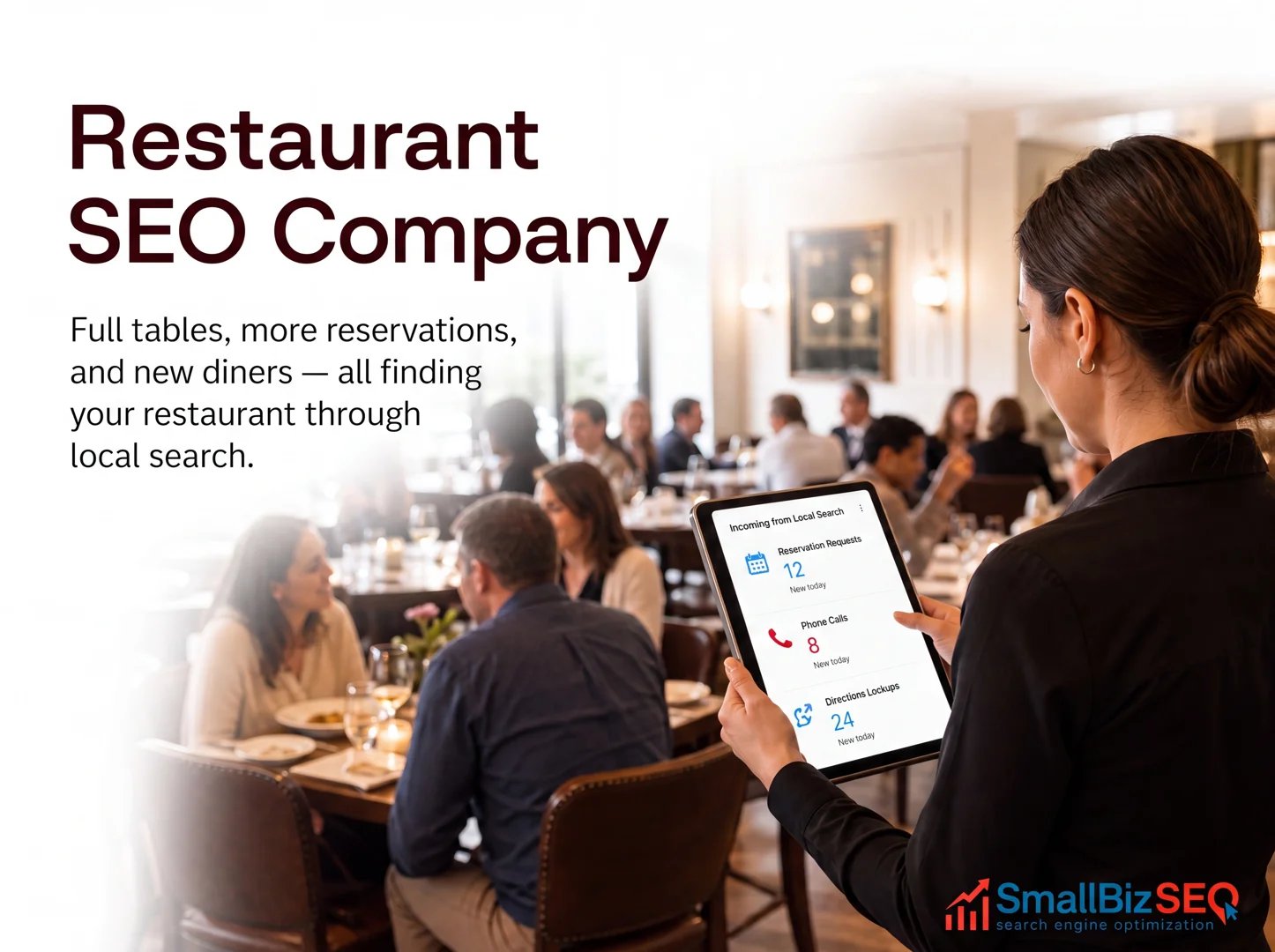
Investing in tailored search visibility transforms your website into an owned customer acquisition channel that drives direct reservations. Many hospitality businesses rely heavily on third-party delivery platforms and online travel agencies, routinely paying hefty commissions per ticket. Organic search marketing creates a direct pipeline of guests, protecting your margins and building long-term customer loyalty.
A specialized restaurant SEO company handles complex off-page campaigns, food writer outreach, and neighborhood PR. Earning mentions in local food blogs, neighborhood lifestyle guides, and city publications signals genuine authority to search engines. Because roughly 75% of search performance stems from off-site authority factors, sustained digital PR gives your kitchen a lasting advantage over nearby competitors.
What Core Features Define High-Impact Restaurant SEO Services?
A modern optimization strategy goes beyond basic keywords to capture specific dining occasions, private dining needs, and AI-driven recommendations.
- Cuisine and Occasion Landing Pages: Dedicated pages targeting phrases like "private dining room for birthday party" or "farm-to-table dinner" capture high-spending guests who are ready to book.
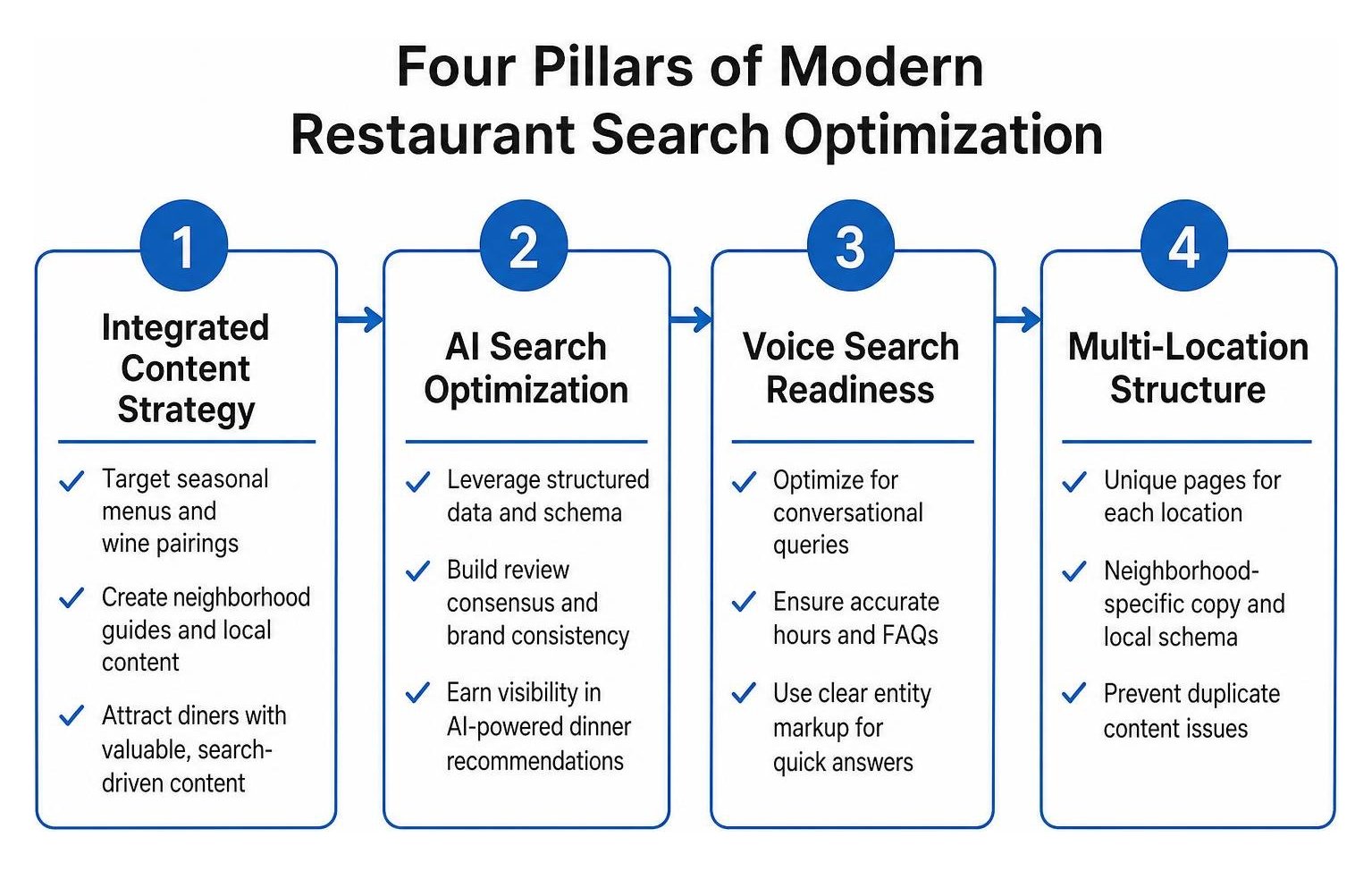
- Integrated Content Strategy: Executing targeted SEO content marketing attracts diners searching for seasonal menus, wine pairings, and local neighborhood guides.
- AI Search Optimization: When diners ask ChatGPT, Gemini, or Perplexity for dinner suggestions, these AI engines rely on structured data, review consensus, and consistent brand entities to generate their recommendations.
- Voice Search Readiness: Conversational queries spoken into virtual assistants (such as "find a romantic Italian patio open right now") demand clear entity markup, accurate operating hours, and comprehensive FAQ sections.
- Multi-Location Structure: Brands with multiple venues need distinct landing pages for every address, complete with unique neighborhood copy, local phone numbers, and location-specific schema to prevent duplicate content issues.
Working with an experienced local SEO company ensures your entire digital footprint aligns seamlessly. You can also verify your credentials through local business authority verification to anchor your listings across geographic directories.
Which Common Restaurant SEO Mistakes Kill Search Visibility?
Many food establishments struggle with avoidable technical and listing errors that silently cost them customers. Exploring 5 local SEO mistakes killing your visibility highlights the most frequent missteps:
- Unindexed Image Menus: Using scanned PDF images prevents search engines from indexing signature dishes and specialty ingredients.
- Duplicate Map Listings: Having multiple unverified profiles for the same address splits your ranking signals and confuses search algorithms.
- Ignored Guest Feedback: Leaving customer reviews unanswered signals poor engagement and lowers your prominence in search algorithms.
- Outdated Operating Hours: Inaccurate hours, particularly during holidays or seasonal schedule changes, lead to disappointed guests and negative reviews.
- Slow Mobile Experience: Slow page speeds, unclickable phone numbers, and hidden reservation buttons drive diners away to competitor sites.
How Much Do Restaurant SEO Services Cost and What Is the Expected Timeline?
Professional search management for single-location venues typically ranges from $1,000 to $2,500 per month. Multi-unit operations, regional groups, and brands in dense metro markets generally invest between $2,000 and $5,000+ per month to manage multiple profiles, scale citations, and build localized content.
| Venue Scope | Typical Monthly Retainer | Key Deliverables & Focus Areas | Expected Milestones |
|---|---|---|---|
| Single-Location Independent | $1,000 – $2,500 | Profile optimization, HTML menu schema, review workflows, local citations, core technical fixes | Early map gains in 30–60 days; steady reservation growth by months 3–6 |
| Multi-Location Group (3+ Venues) | $2,000 – $5,000+ | Distinct location landing pages, enterprise geo-grid tracking, digital PR, menu architecture, custom analytics | Citation alignment in 60 days; compounding category dominance across locations by months 4–9 |
Selecting tailored restaurants hospitality SEO packages gives operators transparent reporting that connects search visibility directly to covers, phone calls, and direct booking revenue.
Turning Search Visibility into Packed Tables Every Night
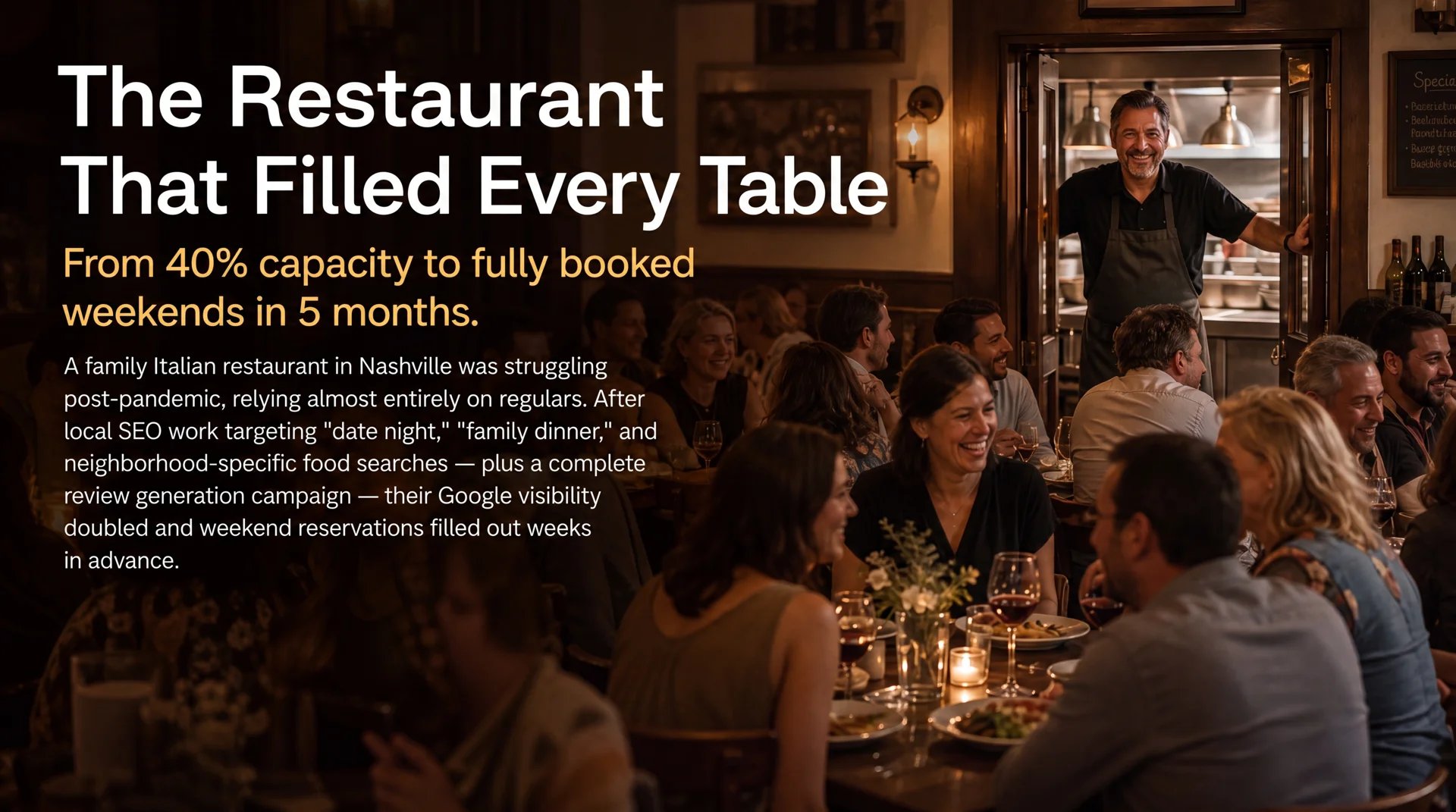
A top search ranking is only valuable if it translates into confirmed covers and active dining rooms. At SmallBizSEO, we use our data-driven Velocity framework to combine technical site health, local citation depth, and entity optimization to help food establishments win top spots in search results.
By tracking online orders, direction requests, phone inquiries, and table reservations, we provide automated, transparent reporting that shows the clear return on your marketing investment. Ready to stop losing hungry diners to the kitchen down the street? You can claim your comprehensive restaurant SEO visibility audit today and build an ongoing stream of direct, profitable table bookings.