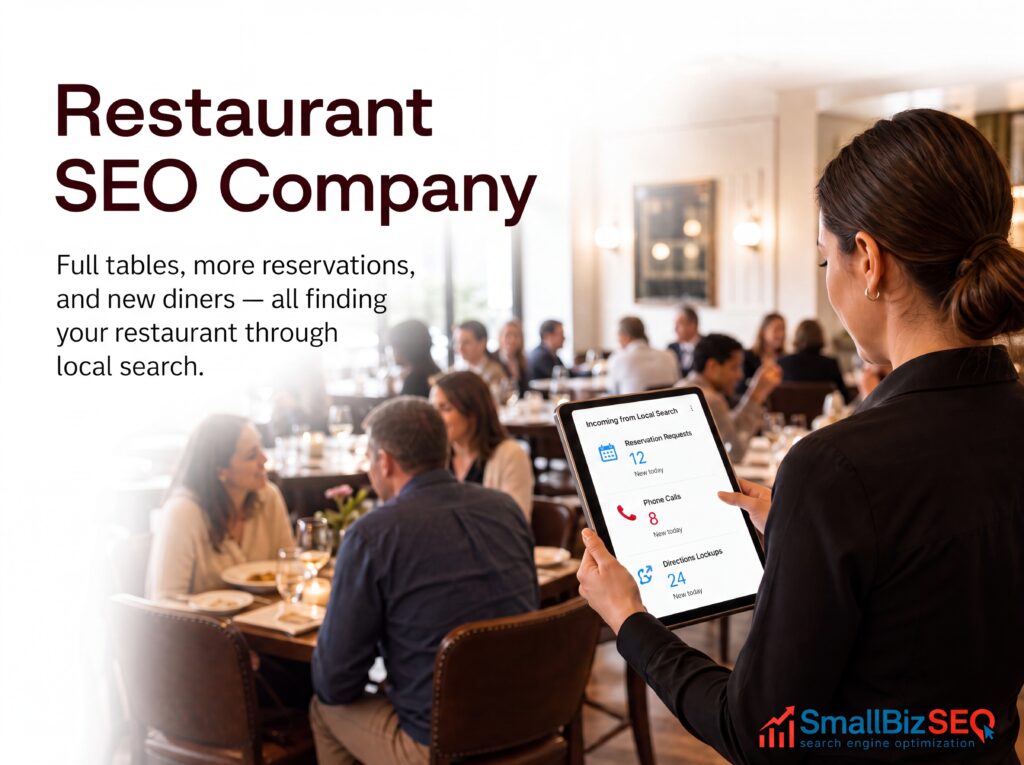
Make the menu and the next step easy to find, especially on a phone.
A restaurant visitor may want to inspect the menu, reserve a table, place an order or ask about a group meal. Those tasks should not compete behind a single promotional homepage. We organize accurate dining information and clear action paths around the restaurant’s actual offering, without inventing dishes, awards, dietary assurances or ordering capabilities.
Search intent & content
Separate dining research from ordering and group requests
Connect cuisine and location searches with a readable menu, then give guests clear routes to reserve, order or discuss a group meal. Each path should carry the dining information relevant to that decision.
Cuisine and local discovery
Connect genuine cuisine and location information with a useful introduction to the restaurant, giving visitors practical context without stuffing the page with unrelated neighborhood names.
Example searchrestaurant cuisine near me
Menu evaluation
Make the current menu easy to read and navigate, using supplied descriptions and prices where maintained rather than relying entirely on imagery or an outdated download.
Example searchrestaurant dinner menu
Reservations and visits
Provide the actual reservation route and accurate hours, distinguishing a booking request from a confirmed table and explaining any supplied arrangements for walk-in inquiries.
Example searchrestaurant reservation information
Ordering and group dining
Where offered, separate direct ordering from private or group dining inquiries, giving each a route suited to the task rather than sending every visitor to the same form.
Example searchrestaurant group dining inquiry
Website priorities
Build useful pages around real customer decisions
Keep menus current
Assign clear ownership for menu changes and connect search landing pages to the maintained version so guests do not encounter conflicting offerings.
Prioritize mobile essentials
Put menus, hours, directions and action links within easy reach, avoiding visual presentation that makes practical dining decisions unnecessarily difficult.
Represent the real experience
Use genuine food and venue photography with accurate context, letting the restaurant’s actual offering carry the page rather than unsupported superlatives.
Distinguish guest actions
Review reservation, order and group-inquiry paths separately where configured, since each has a different business meaning and completion process.
Our approach
A practical plan for your website
We begin with the current menu, opening information and the restaurant’s real reservation or ordering tools. That reveals which search pages and mobile pathways need the most attention.
Review the foundations
Check crawlability, existing pages, customer needs, and the services your business actually offers.
Map services to demand
Connect customer questions to useful service pages and supporting content without duplicating search intent.
Build, measure, improve
Publish useful pages and refine them using search visibility and separately configured inquiry analytics.
- Accurate menus and clearly maintained opening information.
- Genuine food and venue imagery with appropriate rights.
- Dietary and ingredient questions directed to the restaurant’s own information.
- Working reservation and ordering links for the services actually offered.
Frequently asked questions
Questions about your industry SEO strategy
Is a menu image enough for restaurant SEO?
A clear image can help, but guests also benefit from readable, accessible menu information and current details. The right format should support practical browsing on different devices.
Should reservations and takeout share one button?
They usually represent different tasks. Clear labels and separate routes help guests understand whether they are reserving a table, ordering food or contacting the restaurant.
Can restaurant pages promise dietary suitability?
Use only the restaurant’s accurate, approved descriptions and direct individual questions to its team. Marketing copy should not infer ingredient handling or make assurances the restaurant has not supplied.
How do we measure whether SEO is helping?
Use Google Search Console for search visibility and page performance. Measure calls, inquiries, and lead quality separately through analytics and intake tracking where configured.
Can you guarantee rankings or new customers?
No. We focus on the work within our control: technical foundations, useful content, clear navigation, and measurement. Search outcomes depend on competition and other factors.
Build a clearer path from search to inquiry
Let’s make your restaurant’s menu, location and dining pathways easier to discover and use through a focused local SEO plan.
Search rankings & AI visibility — AI SEO / AEO
- Google AI Mode
- ChatGPT
- Claude
- Gemini
- Perplexity


Related services & strategies