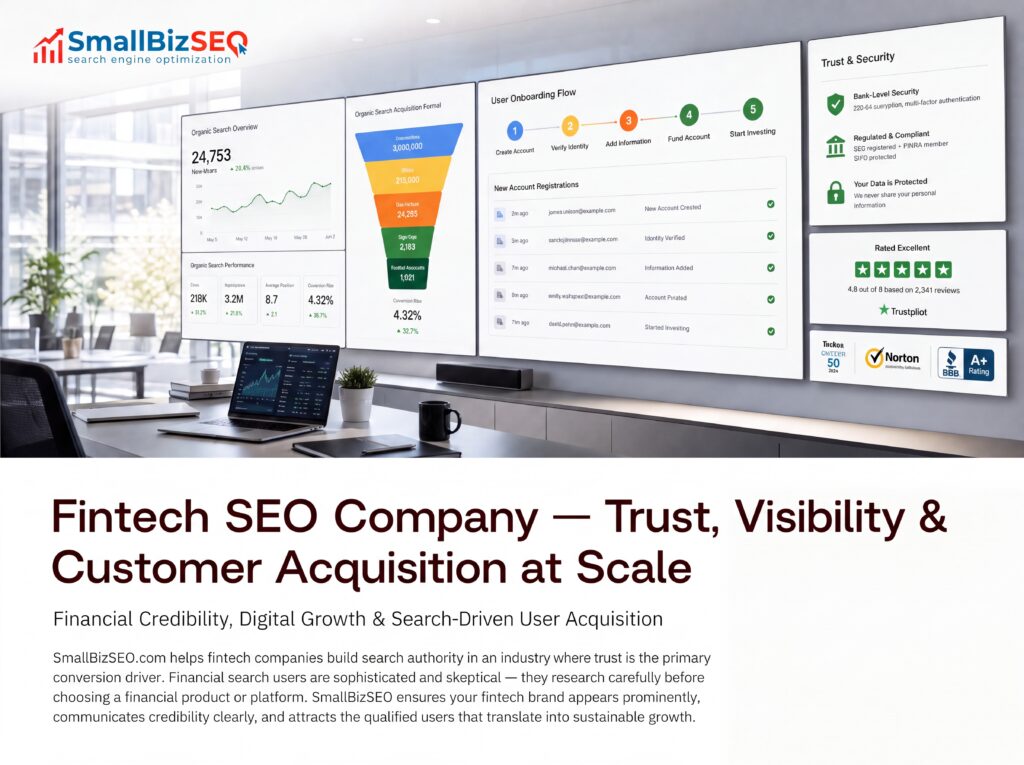
Help buyers understand what your platform does, who it serves and how to evaluate fit.
A finance team comparing payment tools has different questions from developers researching account connections or an operator evaluating lending software. Fintech SEO needs to reflect those users and the actual product. We connect audience-focused pages with technical documentation and clear evaluation steps, without turning marketing claims into assurances about financial results, permissions or security.
Search intent & content
Match product research to the buyer’s role
Bring business buyers and developers to the information each needs for evaluation. We connect payment workflows, operational use cases, supported integrations and product comparisons with technical documentation and the relevant demo, contact or signup route.
Payments workflow discovery
Explain the payment workflow the product supports and the businesses it serves, using actual capability details to distinguish it from unrelated processing or consumer-payment tools.
Example searchbusiness payments platform features
Developer integration research
Connect integration pages to maintained technical documentation and support information, helping developers evaluate a real connection path rather than assuming every named platform is supported.
Example searchfinancial platform API documentation
Operational buyer evaluation
Build useful product and use-case pages for the operational team that would use the software, explaining the workflow and evaluation process without invented efficiency or savings figures.
Example searchfintech operations software demo
Platform comparisons
Support comparison-stage research with accurate product differences, clear terminology and source-backed competitor information where used, keeping the next step aligned with an actual demo or signup process.
Example searchpayments platform alternatives
Website priorities
Build useful pages around real customer decisions
Separate software from financial services
Make clear whether the business supplies technology, financial products or a combination, using approved descriptions of roles and relationships throughout the site.
Connect proof to capabilities
Place relevant documentation, genuine integration details and factual product explanations beside claims so buyers can inspect what a feature means in practice.
Reduce onboarding ambiguity
Explain the public evaluation steps and where eligibility or account review occurs, rather than implying that a marketing signup establishes access to every feature.
Measure by evaluation stage
Distinguish technical documentation use, demo requests and completed signups where tracking permits, giving sales and product teams more useful context than pageview totals.
Our approach
A practical plan for your website
We review the product’s actual capabilities, buyer roles and evaluation journey. Those inputs shape the architecture connecting use cases, product pages, integrations and documentation before content volume is expanded.
Review the foundations
Check crawlability, existing pages, customer needs, and the services your business actually offers.
Map services to demand
Connect customer questions to useful service pages and supporting content without duplicating search intent.
Build, measure, improve
Publish useful pages and refine them using search visibility and separately configured inquiry analytics.
- Capability descriptions grounded in current product documentation.
- Integration claims limited to real, supported connections.
- Clear explanations of demo, signup and account-review steps.
- Financial and security claims routed through the business’s own review process.
Frequently asked questions
Questions about your industry SEO strategy
Should fintech content focus on developers or business buyers?
The product may need both, but the pages should answer different tasks. Business buyers need workflow and fit information, while developers need accurate technical resources and integration context.
How should integration pages be created?
Start with genuinely supported connections and useful implementation context. Naming popular platforms without a real relationship can confuse buyers and create inquiries the product cannot support.
Are comparison pages useful for fintech SEO?
They can be when the differences are factual, current and relevant to evaluation. A useful comparison explains product fit rather than asserting unsupported financial, security or performance superiority.
How do we measure whether SEO is helping?
Use Google Search Console for search visibility and page performance. Measure calls, inquiries, and lead quality separately through analytics and intake tracking where configured.
Can you guarantee rankings or new customers?
No. We focus on the work within our control: technical foundations, useful content, clear navigation, and measurement. Search outcomes depend on competition and other factors.
Build a clearer path from search to inquiry
Discuss your fintech product, buyer roles and documentation with SmallBizSEO to map a focused search-to-evaluation strategy.
Search rankings & AI visibility — AI SEO / AEO
- Google AI Mode
- ChatGPT
- Claude
- Gemini
- Perplexity


Related services & strategies