Franchise SEO Agency: A Survival Guide for Multi-Location Growth
Franchise SEO Agency: A Survival Guide for Multi-Location Growth
What Does a Franchise SEO Agency Need to Do for Every Location?
A franchise SEO agency should help customers choose your brand and find the right location. Look for a partner that can answer early questions about your services, keep location pages and listings accurate, and show which markets turn search visibility into leads. Map rankings matter, but they do not show whether customers found your brand before they searched for a nearby branch.
I’m Clayton Johnson, founder of SmallBizSEO. My work connecting SEO, content, and digital PR informs how I evaluate a franchise SEO agency: by its ability to build trust in the brand and make each location easier to find.
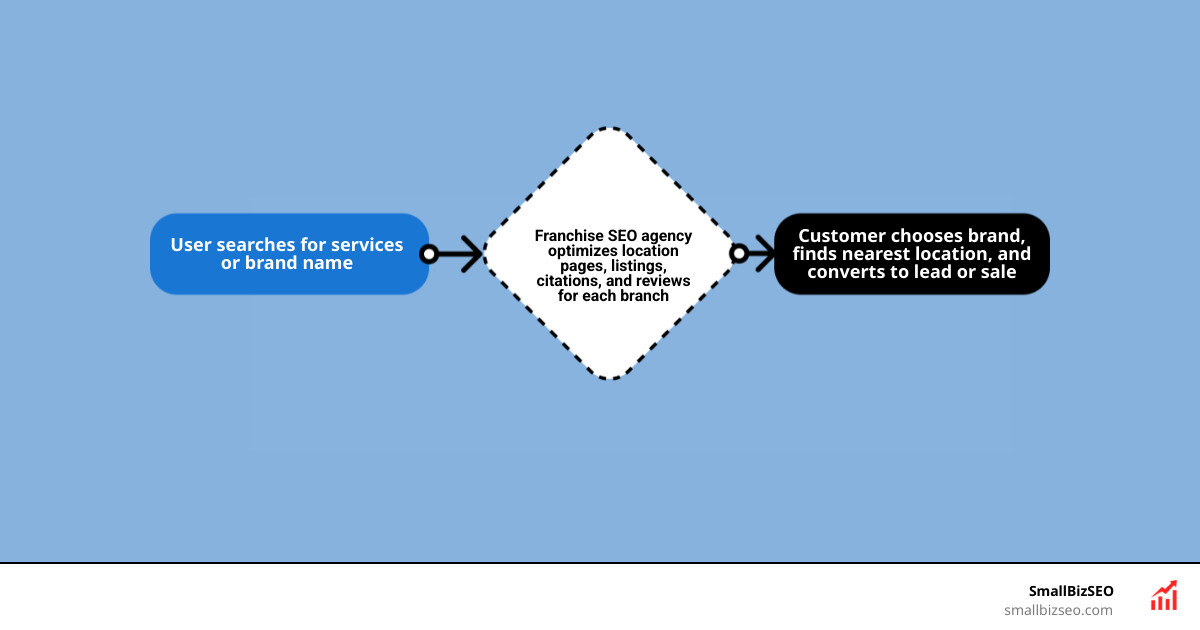
Franchise SEO agency definitions:
How Does Multi-Location Search Work and What Does a Franchise SEO Agency Do?
Multi-location search connects high-intent customers with physical storefronts or service territories by balancing national brand authority with local store relevance. A franchise SEO partner coordinates national brand visibility and local search presence so that individual operators capture qualified local demand without competing against their own corporate domain.
With over 845,009 franchise establishments producing more than $921.4 billion in annual economic output, competition across multi-unit search results is intense. When consumers look for solutions, their discovery path unfolds in two distinct stages:
- Brand-Level Authority: The customer explores a category (e.g., commercial water restoration or orthodontic care) using broad, informational questions.
- Location-Level Conversion: The customer selects an established brand and searches for the nearest open branch with high customer ratings.
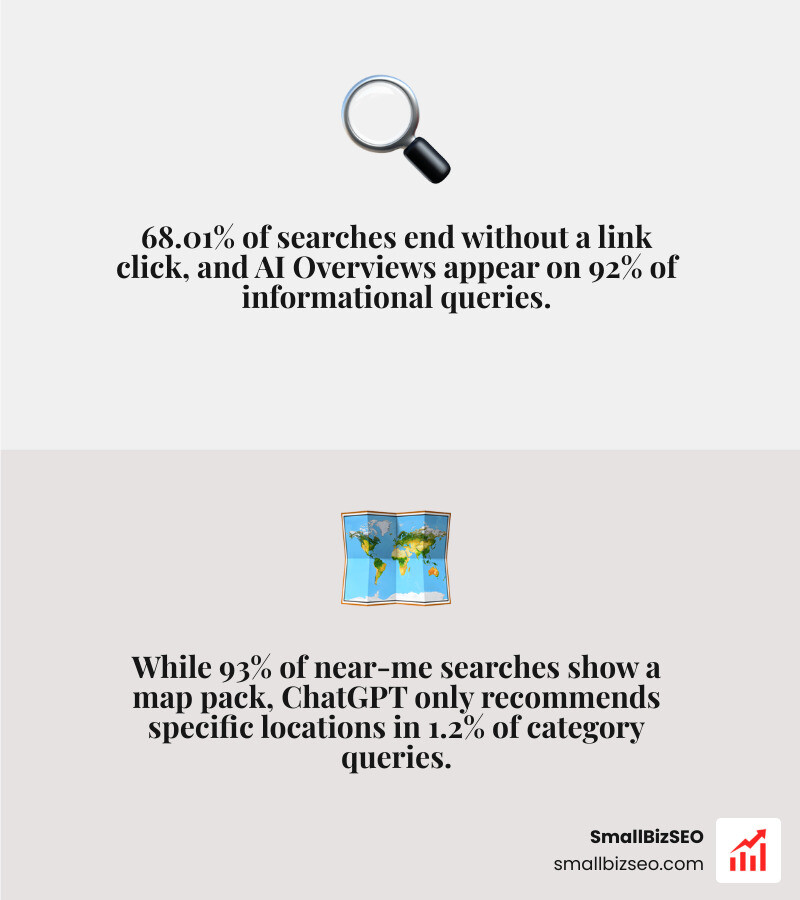
Approximately 68.01% of search queries end without a traditional link click. Search engines increasingly deploy AI-generated answer summaries alongside traditional 3-Pack map displays. When users run informational searches, AI Overviews appear on the vast majority of search result pages. For straightforward, near-me queries, Google displays local map packs on 93% of searches.
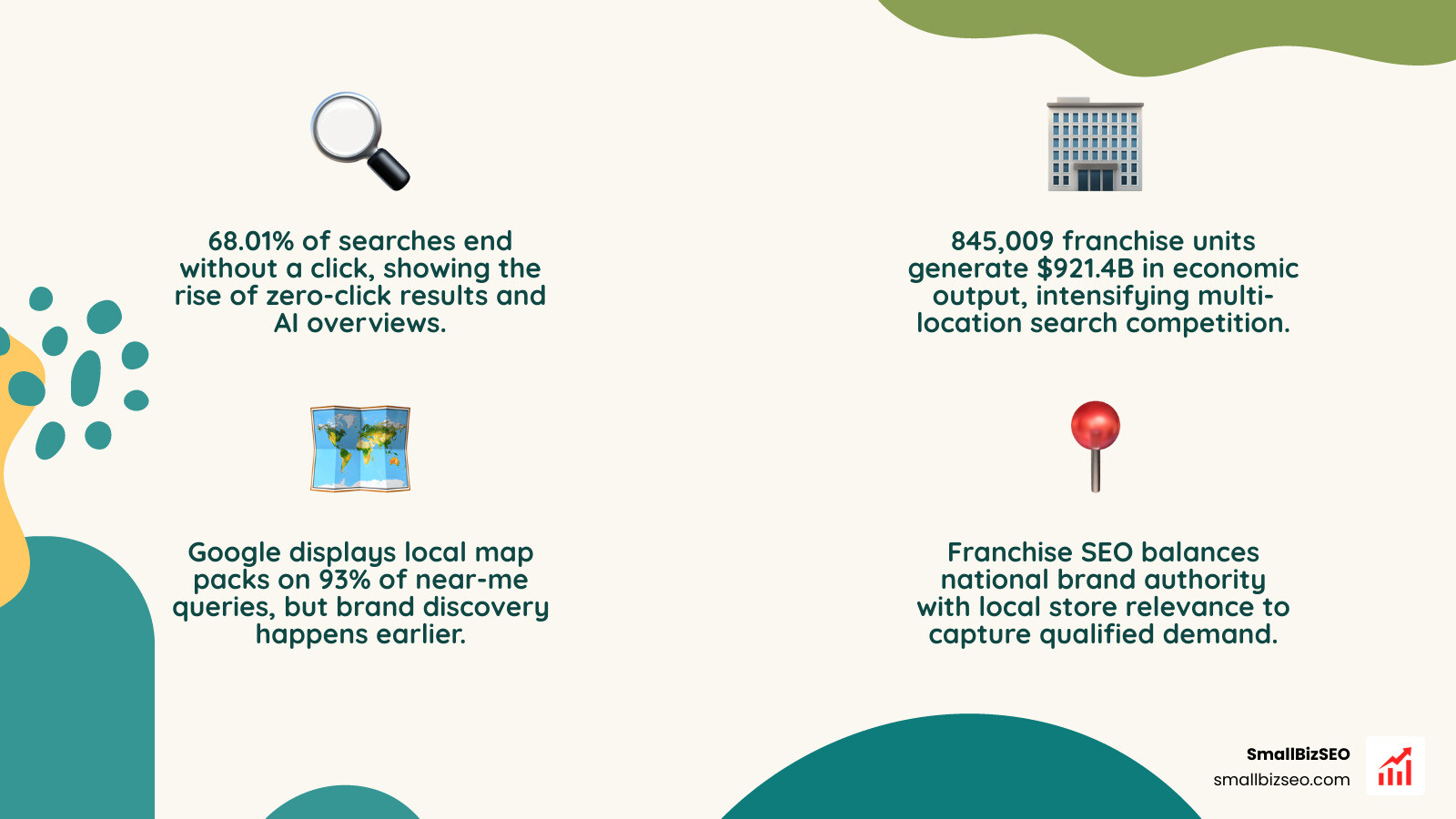
A specialized agency ensures corporate domains capture top-of-funnel discovery while local landing pages capture high-intent navigation.
What Are the Three Types of Providers and How Do You Choose the Best Franchise SEO Agency?
Multi-location marketing providers fall into three main categories based on technical scope, service depth, and operational scale:
| Provider Category | Primary Target Level | Core Operational Focus | Key Strategic Limitation |
|---|---|---|---|
| Local Search Shops | Individual Store Units | Citation management, local listings, and basic Google Business Profile optimization | Inability to scale national digital PR or fix complex site-wide technical debt |
| Full-Service Franchise Marketing Agencies | Mid-Market Networks | Integrated media combining paid advertising, social campaigns, and basic SEO | High retainer costs with generalist implementation across deep technical SEO areas |
| Enterprise Search Specialists | Corporate Franchisors and Multi-Unit Groups | Large-scale technical architecture, generative AI search presence, entity schema, and local conversion optimization | Requires active corporate leadership buy-in and structured coordination across locations |
When comparing franchise SEO services, franchisors must look beyond vanity rankings. Choosing a partner requires strict evaluation standards:
- Market-Level Lead Attribution: The agency must track qualified phone calls, form completions, and booking actions per territory rather than providing bundled aggregate traffic.
- Full Asset and Data Ownership: Your brand must retain full ownership of all directory listings, landing page content, creative assets, and performance databases if the contract concludes.
- Scalable Governance Standards: The partner must provide standardized processes that let new franchise owners launch local search presences without altering core site infrastructure.
Reviewing an independent agency directory benchmarking index helps confirm whether prospective agencies have proven enterprise track records.
Why Is Relying Solely on Local Map Rankings a High-Risk Strategy in AI Search?
Relying exclusively on Google Maps rankings creates a single point of failure because map packs capture only bottom-of-funnel clicks, leaving early brand research entirely unprotected.
While leading brands appear in the Google Local 3-Pack on 35.9% of searches, AI discovery platforms recommend single locations far less frequently—ChatGPT mentions specific branches in roughly 1.2% of category recommendations, while Gemini cites locations in about 11.0% of responses. AI Overviews now surface for 92% of informational category questions and 97% of mixed-intent commercial searches.
Consumer behavior inside search listings continues to evolve. Map profile direction requests have climbed by 21% to 31%, while direct phone calls and basic website clicks have decreased by 12% to 16%. Consumers conduct research inside AI summaries and directory reviews before visiting a physical location.
An experienced enterprise local SEO company optimizes entire entity networks across search engines, conversational AI platforms, and mapping layers to protect market share across every step of the customer journey.
What Are the Key Structural and Technical Pillars for Scalable Franchise Search Dominance?
Scalable multi-unit search architecture requires centralizing all location pages on a single primary domain using clean subfolder structures, layered entity data, and unique location assets.
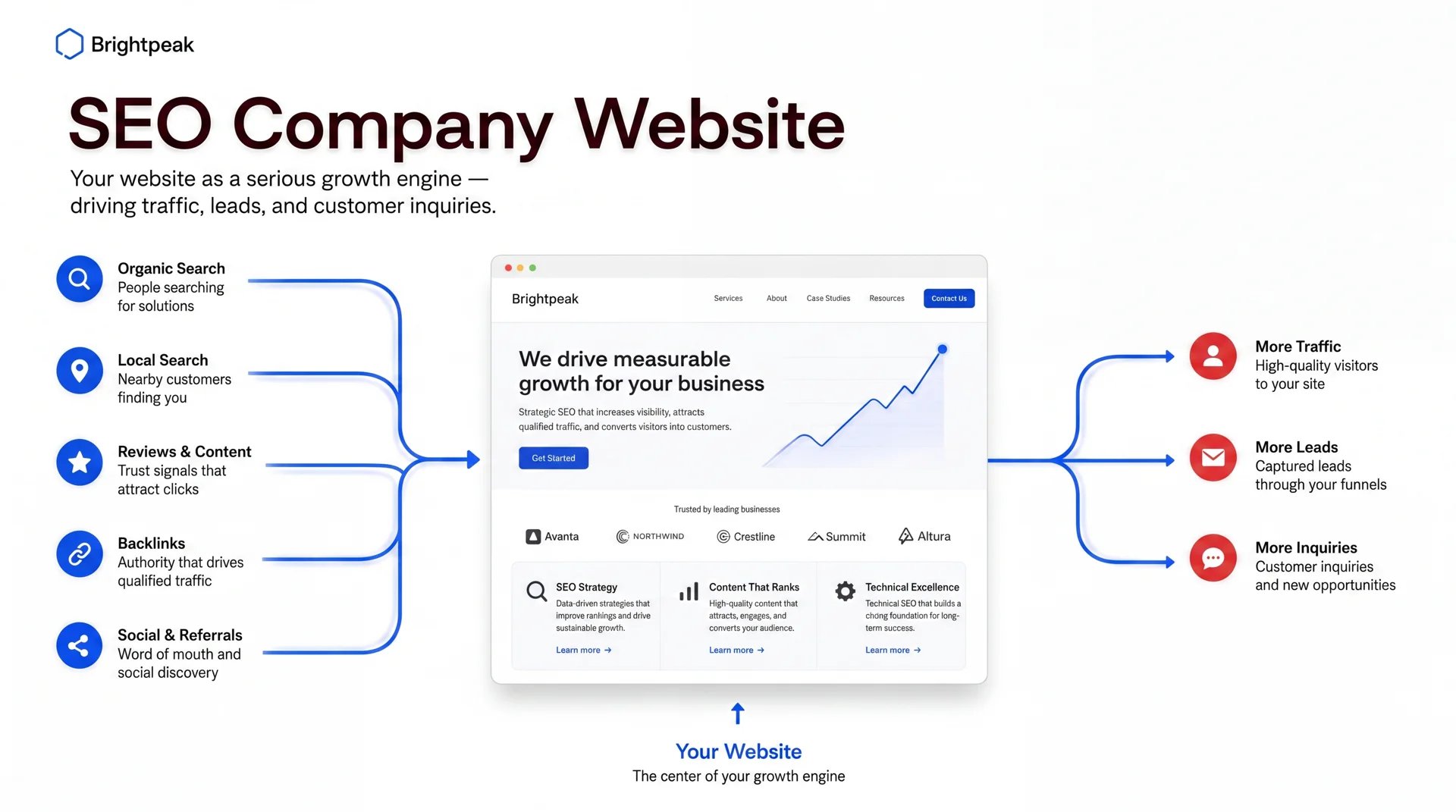
Understanding the technical requirements across search strategies clarifies why multi-unit brands require customized technical playbooks:
| Metric / Requirement | Traditional Single-Location Local SEO | National Corporate Brand SEO | Multi-Unit Franchise SEO |
|---|---|---|---|
| Primary Goal | Top-3 Google Maps visibility | Nationwide non-geographic rankings | Dual-layer discovery: broad authority plus hyper-local map dominance |
| Core Technical Assets | Single Google Business Profile, localized homepage | High-authority domain with broad informational content hubs | Enterprise CMS, scalable subfolders, hundreds of synchronized directory profiles |
| Primary Structural Risk | Low domain authority and limited link profile | Inability to capture regional intent | Severe internal keyword cannibalization and location page duplicate content |
Subfolders (such as domain.com/locations/city-name/) pool backlinks, brand authority, and technical optimization into a single corporate domain. In contrast, separate domains or subdomains divide ranking equity and dramatically increase maintenance costs.
To prevent internal keyword cannibalization between nearby territories, every location page must feature self-referential canonical tags and distinct, locally sourced media. Hyperlocal copy updates produce an average 107% ranking lift, while adding authentic staff and facility photography drives an 84% visibility increase over generic corporate stock photos. Implementing a unified local playbook keeps your brand consistent while empowering local franchisees.
How Should Multi-Location Brands Structure URLs, Technical Schema, and Hyperlocal Content?
To establish clear geographic signals without triggering duplicate content filters, every branch location requires a dedicated landing page built with custom technical schema and accurate entity data.
Every high-performing multi-location page relies on these foundational technical elements:
- Explicit
@typeassignments (LocalBusiness,MedicalClinic,HomeAndConstructionBusiness). - Geographic coordinates specified to five decimal places for pinpoint map positioning.
- Synchronized Name, Address, and Phone (NAP) data matching major data aggregators.
- Hyperlocal content blocks including territory-specific staff biographies, direct community service offerings, local customer testimonials, and driving directions referencing neighborhood landmarks.
Franchise networks avoiding duplicate content risks often review top-performing agency evaluations to identify partners capable of managing programmatic content updates across hundreds of regional markets.
What Evidence Proves a Franchise SEO Agency Can Optimize for Generative Engine Search?
An agency proves its Generative Engine Optimization capabilities by showing measurable brand mentions, accurate citations, and consistent visibility across platforms like ChatGPT, Google AI Overviews, Perplexity, and Gemini.
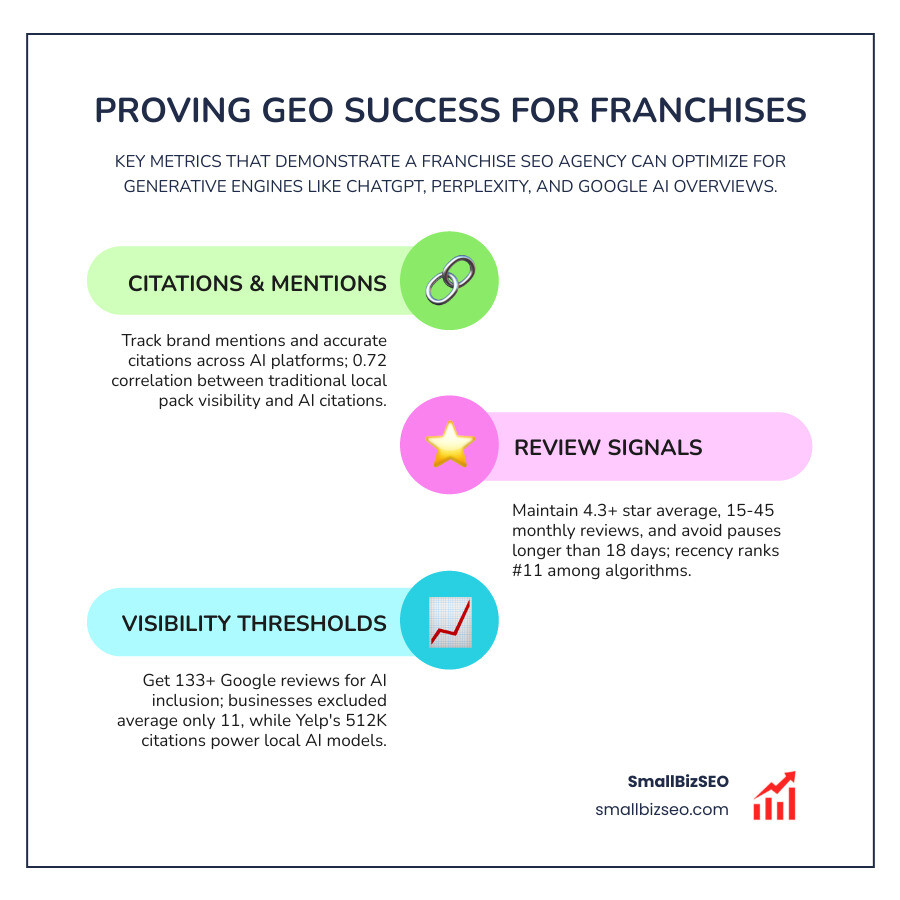
Traditional local search visibility and conversational AI citations show a strong 0.72 performance correlation. Machine learning platforms pull location and reputation data from established third-party networks—over 512,000 Yelp citations help power local answer models, while Foursquare databases supply up to 70% of select conversational local summaries.
Customer feedback volume and recency are critical ranking drivers:
- Review Recency Factor: Review recency ranks as the #11 most influential local search factor out of 187 algorithmic signals.
- Review Star Baselines: Map 3-Pack visibility drops sharply for profiles below a 4.3-star average.
- Consistent Review Flow: Maintaining a consistent pace of 15 to 45 authentic customer reviews per month sustains visibility, whereas pauses as brief as 18 days cause measurable ranking declines.
- AI Citation Thresholds: Businesses surfaced across multiple generative AI platforms average 133 or more Google reviews, compared to an average of just 11 reviews for excluded competitors.
Partnering with a dedicated franchise SEO company ensures your network builds the structured review acquisition systems and entity signals required by modern search algorithms.
Who Should Own the Strategy and How Do You Measure Franchise Search ROI?
The corporate franchisor should own the central search strategy, core website technology, and vendor contracts, while providing local operators with controlled dashboards to manage store-level updates and customer reviews.
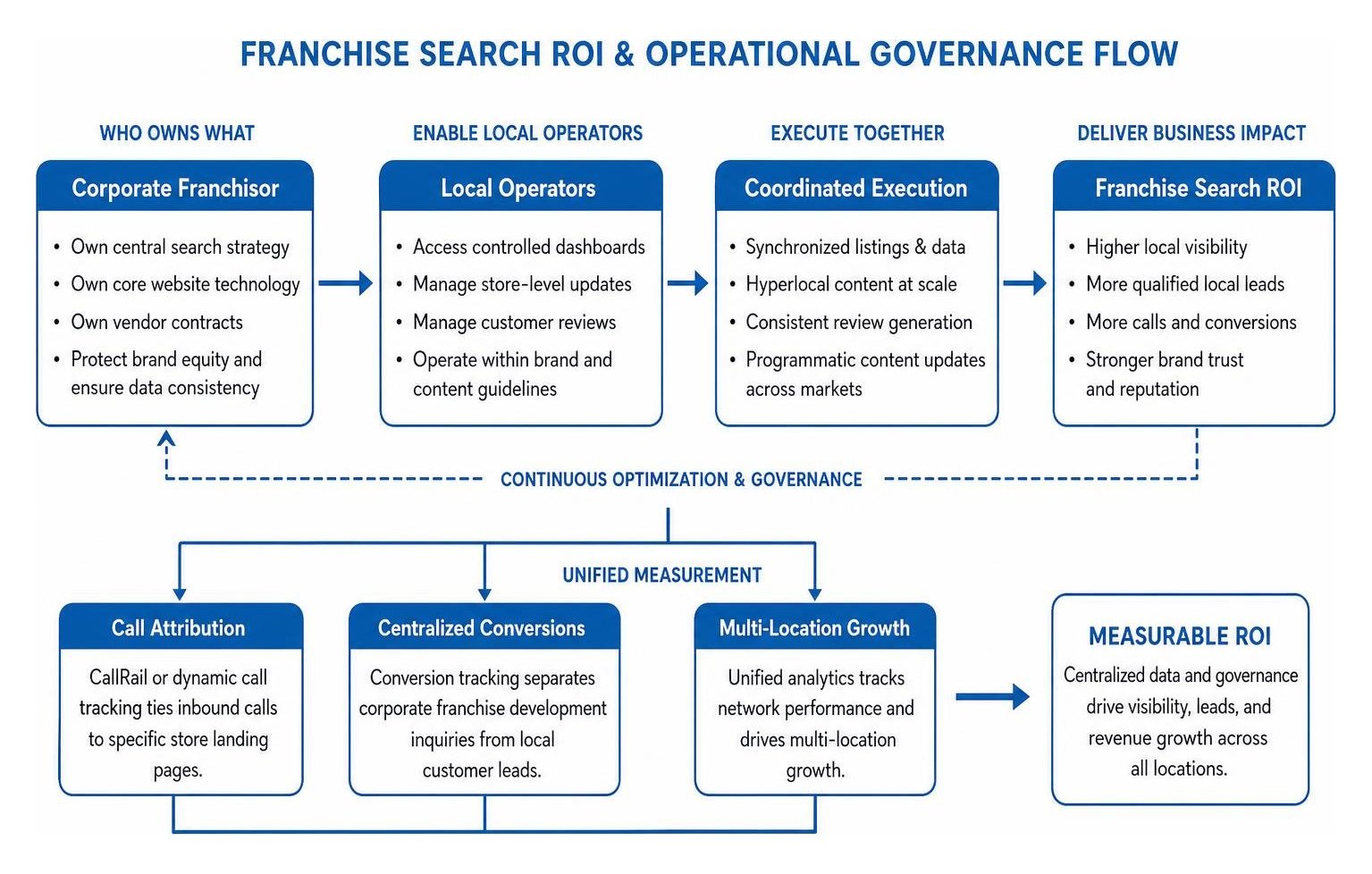
Centralized data management protects corporate brand equity and avoids costly technical errors. High-performing multi-unit systems leverage unified analytics to track business impact:
- CallRail or dynamic call tracking to tie inbound calls directly to specific store landing pages.
- Centralized conversion tracking that separates corporate franchise development inquiries from local customer leads.
- Unified multi-location growth tracking, mirroring networks that achieved 372% year-over-year lead-to-revenue gains by centralizing local listings.
At SmallBizSEO, we implement our data-driven "Velocity" framework to secure sustainable search visibility and establish E-E-A-T authority across every store territory through transparent, automated reporting. Starting with a comprehensive SEO visibility audit establishes clear performance baselines across your entire territory footprint.
Should the Franchisor or Individual Franchisees Own the SEO Contract and Strategy?
The franchisor must hold the overarching master SEO agreement and control domain architecture to maintain unified brand governance, ensure technical stability, and maximize economies of scale.
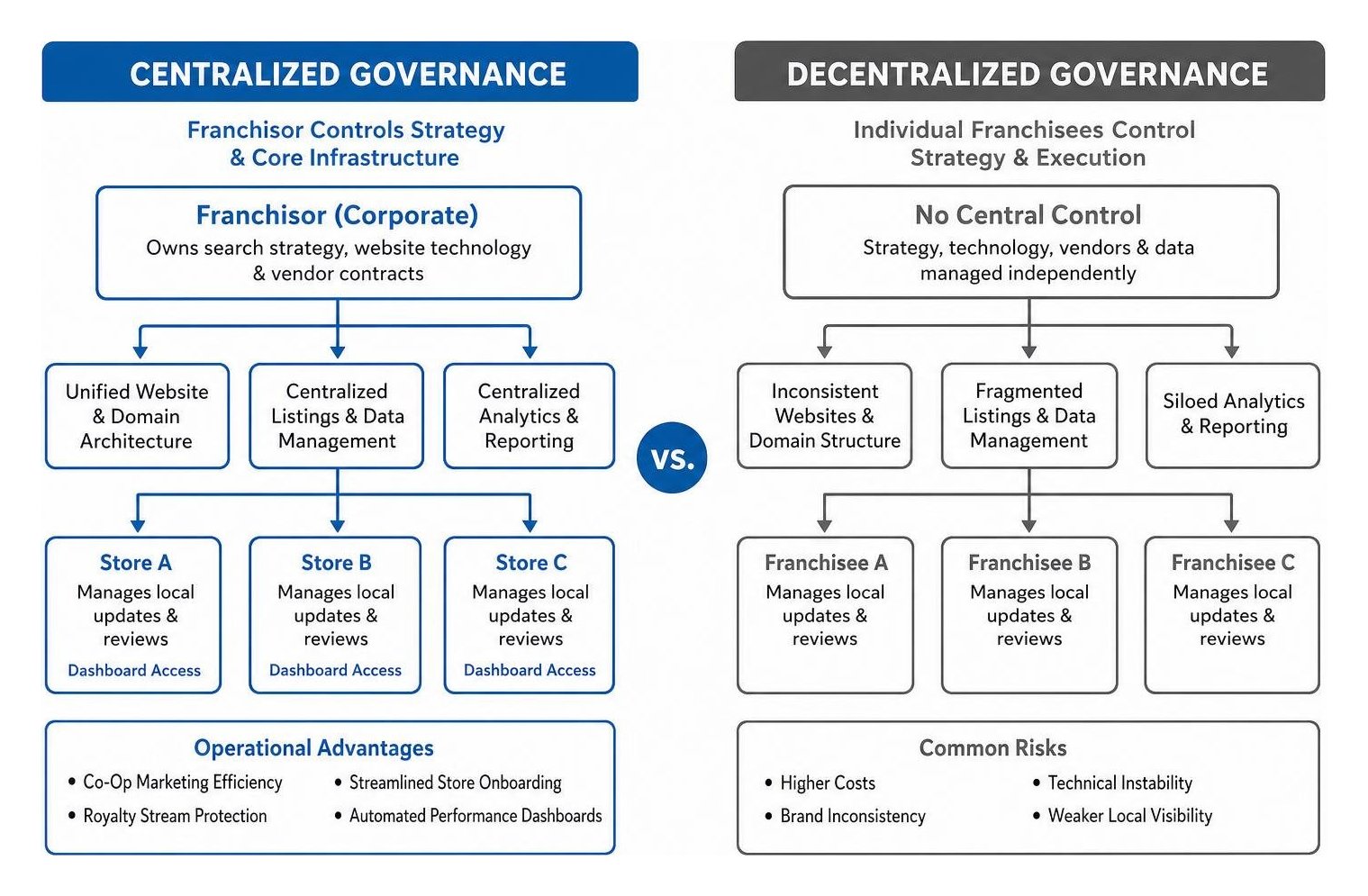
A centralized model provides distinct operational advantages:
- Co-Op Marketing Efficiency: Pooling digital marketing funds enables enterprise-grade software deployments that individual franchisees could not afford independently.
- Royalty Stream Protection: Clean centralized listings prevent rogue operators from misrepresenting brand standards or running unauthorized campaigns.
- Streamlined Store Onboarding: New franchise territories launch instantly within an established high-authority domain structure, generating leads weeks ahead of standalone sites.
- Automated Performance Dashboards: Corporate leadership and local store operators view tailored performance dashboards tracking revenue attribution per market.
Scaling Multi-Unit Search Growth
Winning across competitive multi-unit search results requires coordinating broad brand authority with precise, location-specific relevance. Brands that centralize technical website architecture, deploy structured schema data, manage active review systems, and optimize for generative AI answers consistently outperform competitors in every local territory. Aligning your corporate leadership and local operators around a shared, data-driven search strategy turns organic search into your network's most dependable growth engine.