How SaaS Brands Crush SEO with High-Quality Links

How SaaS Brands Crush SEO with High-Quality Links
Why Most SaaS Companies Struggle to Rank — and What Actually Fixes It
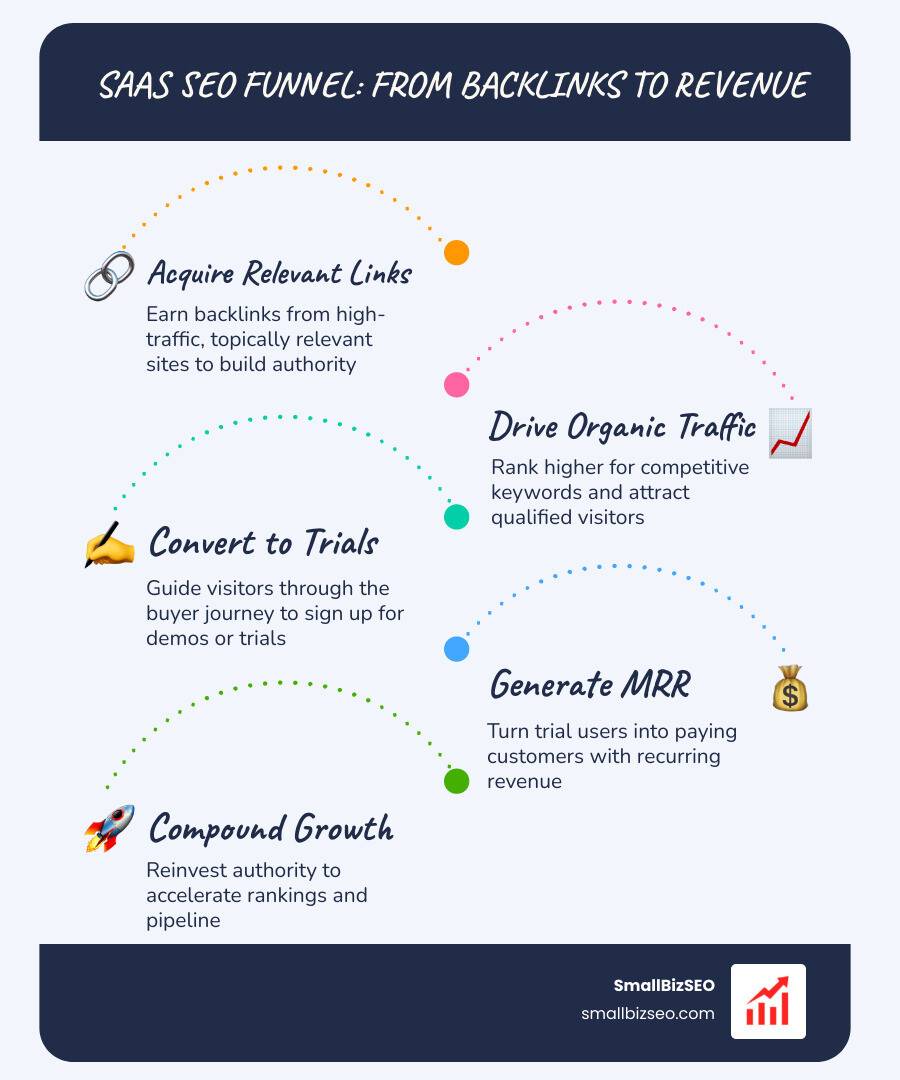
Link building for SaaS is one of the highest-leverage SEO investments a software company can make — but most teams either do it wrong or skip it entirely.
Here's the short version of what works:
- Earn links from relevant, high-traffic sites — topical relevance beats raw Domain Rating every time
- Build to content first, then route authority to product pages via internal links
- Get listed in integration directories (Zapier, HubSpot, Slack) for fast, high-authority wins
- Land listicle placements — they drive both Google rankings and AI-generated recommendations
- Create linkable assets like free tools or original research that earn links passively over time
The payoff is real. HubSpot grew from 500,000 to over 7 million monthly organic visitors largely through content and links. A cybersecurity SaaS nearly doubled its organic traffic — from 102,000 to 195,000 monthly visits — in just 12 months with 120 well-placed backlinks. A fintech SaaS went from 700 to 6,300 monthly visitors in a year with only 24 links, averaging a Domain Rating of 68.
The challenge is that SaaS link building doesn't work like link building for a local business or an e-commerce store. The keywords are more competitive. The buyer journey is longer. And most content earns links to blog posts — not the product and feature pages that actually drive signups.
That gap between getting links and getting the right links to the right pages is where most SaaS companies leave organic growth on the table.
I'm Clayton Johnson, a digital PR and SEO strategist focused on helping brands build search visibility through impactful campaigns — including link building for SaaS companies competing in crowded markets. In the sections below, I'll walk you through exactly how to build a link strategy that drives rankings, qualified traffic, and real revenue.
Why Link Building for SaaS Requires a Different Playbook
Most standard SEO advice tells you to write great content, send a few pitch emails, and wait for the links to roll in. If you are running a B2B SaaS company, that is a recipe for flatlining traffic.
SaaS keywords are among the most expensive and competitive on the internet. Paid clicks for high-intent software keywords can easily cost between $15 and $150 each. Because the financial stakes are so high, your competitors are systematically building links every single month. You cannot rely on passive acquisition to catch up.
The Unique Economics of SaaS SEO
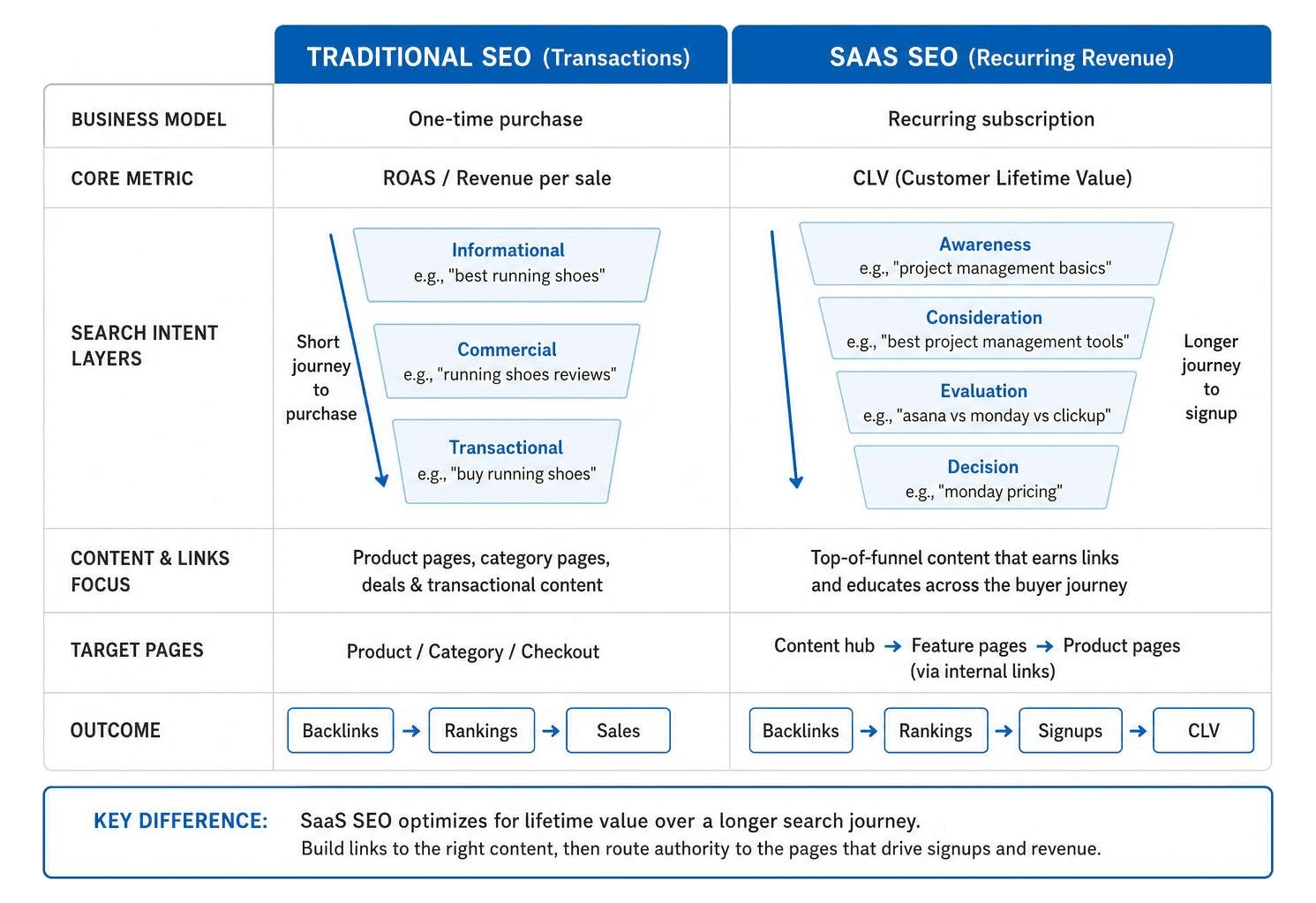
The economics of B2B SaaS are defined by Customer Lifetime Value (CLV) and recurring revenue. When a customer signs up for a software product, they do not just pay once; they pay month after month. This high lifetime value changes the math of what a backlink is worth.
Because organic search leads typically convert at a higher rate and retain longer than paid leads, investing in organic acquisition is incredibly cost-effective. For example:
- FollowUpBoss generates over 30,000 monthly visitors to its blog and outranks major competitors in the real estate CRM space.
- GetVero generates over 20,000 monthly visitors to highly targeted blog content, ranking for informational keywords that competitors pay massive CPCs to acquire.
To win these highly profitable search terms, you must understand that SaaS buyers search in distinct layers: problem-aware queries, category comparison queries, and competitor-specific queries. Your link profile must support content across this entire journey.
Anatomy of a High-Quality SaaS Backlink
Not all links are created equal. In the software space, a link from a low-traffic, generic site will not move your rankings. In fact, it might even trigger search engine filters for unnatural patterns.

To build a healthy, penalty-free backlink profile, you should understand the core principles of backlink quality. For a foundational primer, see our guide on Demystifying Backlinks in Digital Marketing for Beginners.
When executing a modern campaign, we focus on three primary types of placements:
| Link Type | Best For | Risk Level | Velocity |
|---|---|---|---|
| Guest Posts | Building topical authority, controlling anchor text | Very Low | Moderate |
| Niche Edits | Boosting existing high-intent pages, fast indexing | Low | Fast |
| Digital PR | High-DA media placements, brand mentions | Very Low | Slow |
If you want to scale this process safely, partnering with a specialized SaaS link building agency ensures your placements are vetted by hand rather than sourced from risky automated networks.
Evaluating Quality Beyond Domain Rating
Domain Rating (DR) is a useful third-party metric, but it can be easily manipulated. To ensure a backlink actually carries ranking power, we evaluate every prospect using a strict five-point rubric:
- Topical Relevance: Does the site write about software, business, or your specific industry vertical? A link from a DR 40 niche-relevant blog is far more valuable than a link from a DR 75 lifestyle site.
- Organic Traffic: Does the linking site have real, consistent search traffic? We look for a minimum of 1,000 organic monthly visitors.
- Editorial Standards: Does the site have a real editorial process, or do they publish anything for a fee?
- Link Neighborhood: Who else is this site linking to? If they link to spammy niches, we avoid them.
- Indexation Health: Are the site's new posts indexing quickly on search engines?
High-ROI Strategies for Link Building for SaaS
To build an authority system that compounds over time, you need to move away from one-off outreach campaigns. Instead, implement systematic SaaS link building strategies that turn your product and content into natural link magnets.
Engineering Link Magnets with Free Tools and Original Data
The absolute best way to earn links passively is to build assets that people naturally want to reference. In the SaaS world, this means free interactive tools, templates, and original research.
- Free Tools: Think of HubSpot’s Website Grader. By building simple, free tools or calculators that solve a specific problem without a signup wall, you create a permanent utility that bloggers and industry writers will link to for years.
- Original Research: Anonymize and aggregate your proprietary product data to publish unique industry insights. For example, Buffer’s annual surveys earn hundreds of organic backlinks because they become the definitive source for industry statistics.
Dominating Listicles for SEO Rankings and AI Visibility
In the modern search landscape, listicles (like "Best Project Management Tools") do double duty. They help you rank on traditional search engines, and they serve as the primary citation source for AI search engines.
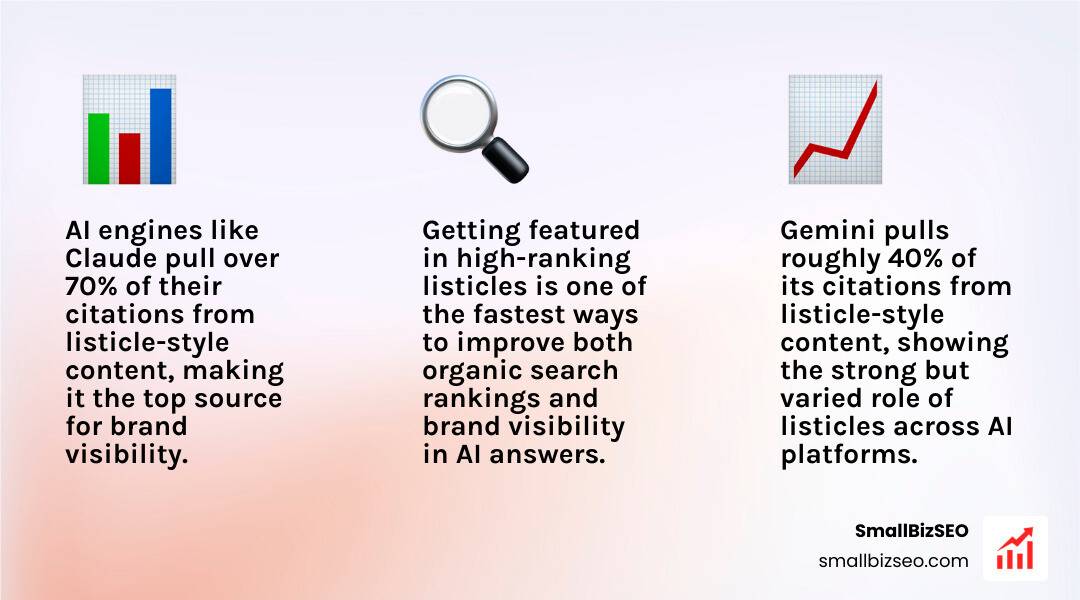
AI engines like Claude pull over 70% of their citations from listicle-style content, while Gemini pulls roughly 40%. Getting featured in existing, high-ranking listicles is one of the fastest ways to improve both your organic search rankings and your brand visibility in AI answers.
Leveraging Integration Directories and Affiliate Partnerships
If your software integrates with other tools, you are sitting on a goldmine of easy link opportunities.
By claiming your integration partner directory listings on platforms like Zapier, HubSpot, Slack, and Google Workspace, you can secure high-DR, dofollow links before you ever send a single outreach email. These listings also drive high-intent referral traffic from users who are already looking for tools that connect with their current tech stack.
Executing High-Conversion Outreach and Internal Distribution
Once you have identified your target sites and built your linkable assets, the next step is reaching out to editors and routing that earned authority to your money pages.
Writing Outreach Emails That Get Placed
Cold outreach response rates have declined significantly due to generic, automated spam. To stand out in a busy editor's inbox, your outreach must be highly personalized and offer clear editorial value.
When pitching content managers, skip the generic templates and use a structured Link Building Email Outreach Template that focuses on building a relationship rather than asking for a quick favor.
Our internal data shows that highly personalized pitches referencing specific articles and offering unique content angles achieve an 18-25% response rate, compared to just 2-4% for generic templates.
Routing Authority with Strategic Internal Linking
Because product and pricing pages rarely earn direct backlinks, you must use a "bridge asset" strategy. You build backlinks to your informational blog posts, free tools, or research reports, and then pass that link equity down to your commercial pages using strategic internal links.
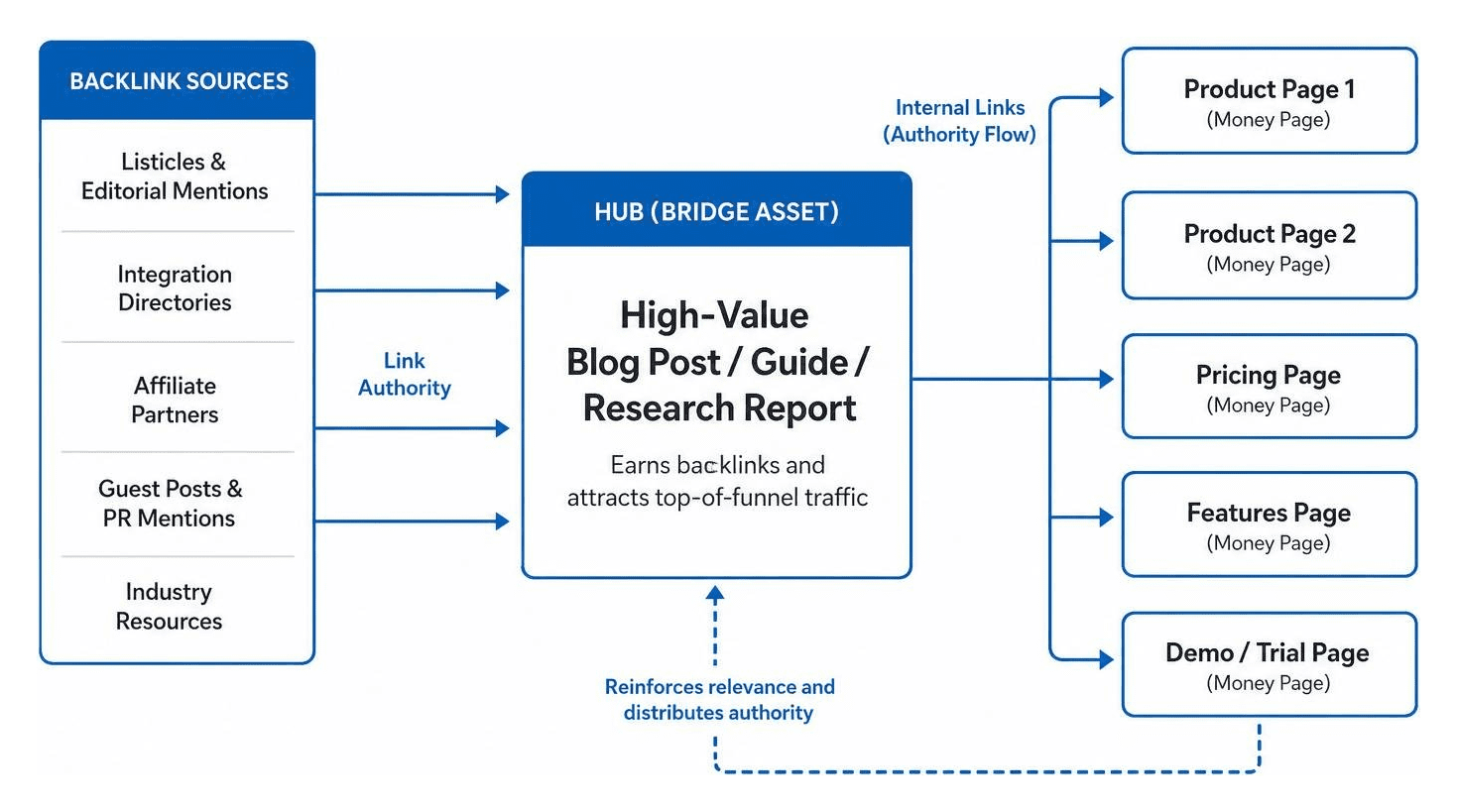
To make this work, keep your internal anchor text natural and descriptive. Rather than over-optimizing with exact-match keywords, distribute your anchor text across branded terms, partial matches, and topical phrases. If you need help designing a content architecture that supports this flow, our SEO Content Services can help you map out your topical hubs.
Tactics to Avoid and How to Measure Success
SaaS companies often make the mistake of chasing raw link volume at the expense of quality. This approach is highly risky and can lead to search engine penalties. Google also provides clear guidance on avoiding manipulative link practices in its spam policies for Google web search.
Common Pitfalls in Link Building for SaaS to Avoid
- Private Blog Networks (PBNs): Avoid networks of sites set up solely to link to each other.
- Cheap, Low-Quality Links: Any service offering links for under $100 is likely using automated spam tactics. Quality SaaS links require manual outreach and generally start at $150 to $300 each.
- Over-Optimizing Anchor Text: Keep your exact-match commercial anchors under 10% of your total profile to avoid triggering search filters.
- Homepage-Only Linking: Ensure your links are distributed naturally across your deep content and feature pages, not just your homepage.
Tracking KPIs That Impact the Bottom Line
To understand if your efforts are working, look beyond vanity metrics like total link count. Track the leading and lagging indicators that tie directly to business growth:
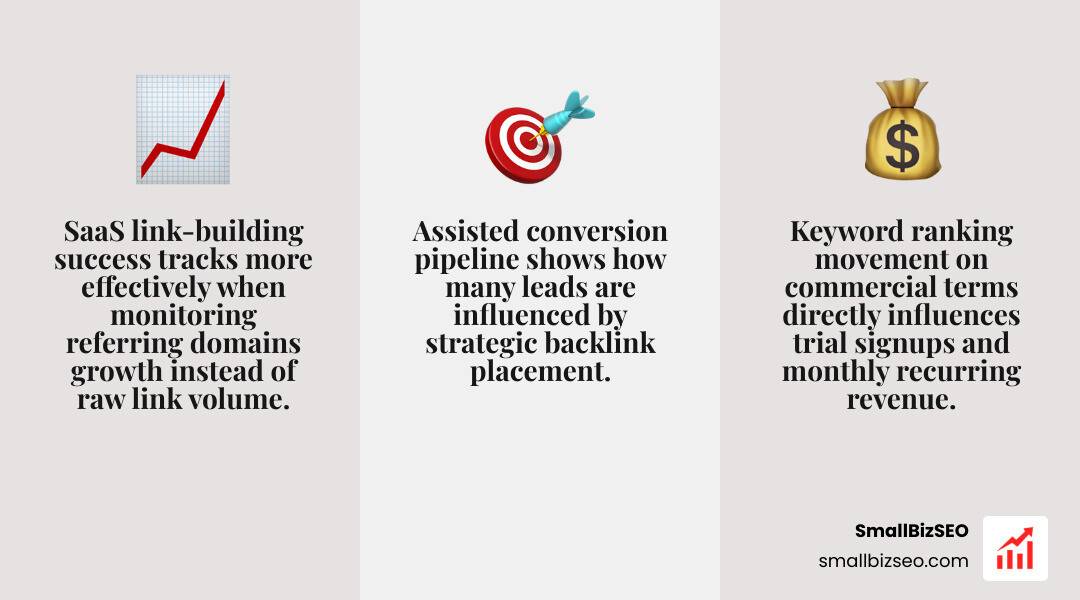
By monitoring your referring domains, keyword rankings, and assisted conversion pipeline, you can tie your link-building investments directly to trial signups and Monthly Recurring Revenue (MRR). For a complete breakdown of how to set up these tracking systems, check out our SEO Services Guide.
Frequently Asked Questions About SaaS Link Building
How long does it take to see results from SaaS link building?
Most SaaS brands begin to see initial ranking movement within 3 to 6 months of starting a consistent link-building campaign. For highly competitive, high-intent keywords, it can take 9 to 12 months of steady authority building to reach the first page of search results.
Should SaaS companies buy backlinks?
We do not recommend buying cheap, unvetted links from public lists or networks. Instead, invest in professional, manual outreach and editorial placements on legitimate, high-traffic websites that maintain strict editorial guidelines.
How many referring domains does a SaaS site need?
There is no single magic number. It depends entirely on the competitive density of your niche. While a niche vertical might only require 30 to 80 referring domains to rank, highly competitive categories like CRM software often require 150 to 500+ referring domains to compete for top positions.
Scale Your Software Authority with SmallBizSEO
Building a scalable, high-yield link-building system takes time, specialized tools, and deep industry relationships. At SmallBizSEO, we help B2B SaaS companies grow their organic search footprints using our data-driven "Velocity" framework.
We deliver high-authority, E-E-A-T-compliant backlinks through a fully transparent process, backed by automated reporting so you always know exactly where your placements are coming from.
Ready to outrank your competitors and improve your visibility in both traditional search and AI recommendations? Explore our Link Building Services and book a free strategy call with our team today.