How to Optimize Your After School and Summer Program for Local Search

How can after-school and summer programs get found by more families?
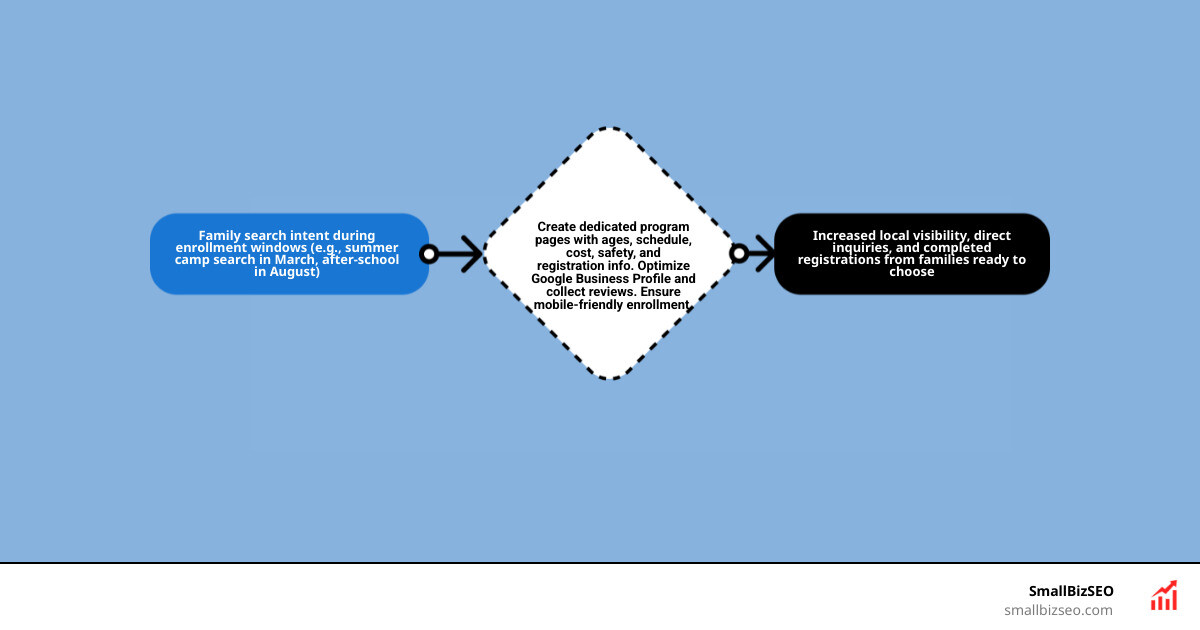
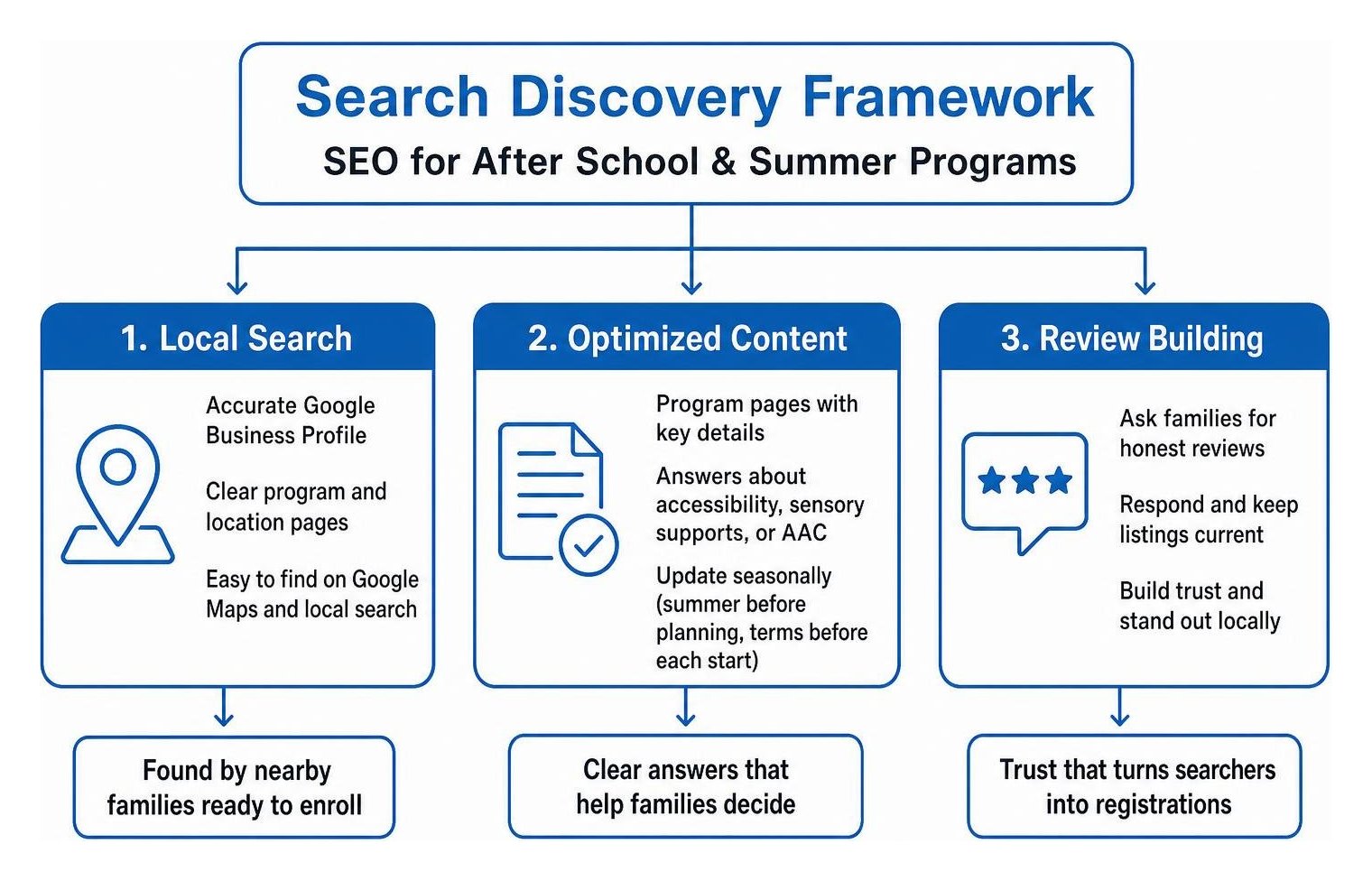
Start with the searches families make when they are ready to choose. When implementing SEO for after-school and summer programs, create a clear page for each program and location. State the ages served, schedule, cost, pickup options, safety practices, and how to enroll. Keep your Google Business Profile accurate, ask families for honest reviews, and make registration easy on a phone.
Search demand shifts with the school calendar. Update summer program details before families start planning, then refresh after-school pages ahead of each new term. Helpful answers about accessibility, sensory supports, or AAC can also help families decide whether a program fits their child.
I’m Clayton Johnson, founder of SmallBizSEO. My work in content strategy, technical SEO, and link building shapes this guide to SEO for after-school and summer programs: helping families find clear answers and take the next step.
Discover more about SEO for after-school and summer programs:
Core Blueprint: SEO for After School & Summer Programs That Fills Seats
To keep rosters full throughout the school year and camp seasons, youth organizations need a structured digital foundation. Search visibility connects parents looking for enrichment with trusted local providers.
Why Does Local SEO for After School & Summer Programs Drive Immediate Inquiries?
Direct Answer: Local search optimization drives immediate phone calls and form submissions because most queries like "after-school programs near me" trigger the Google Map Pack, placing your business directly in front of nearby parents who are ready to enroll.
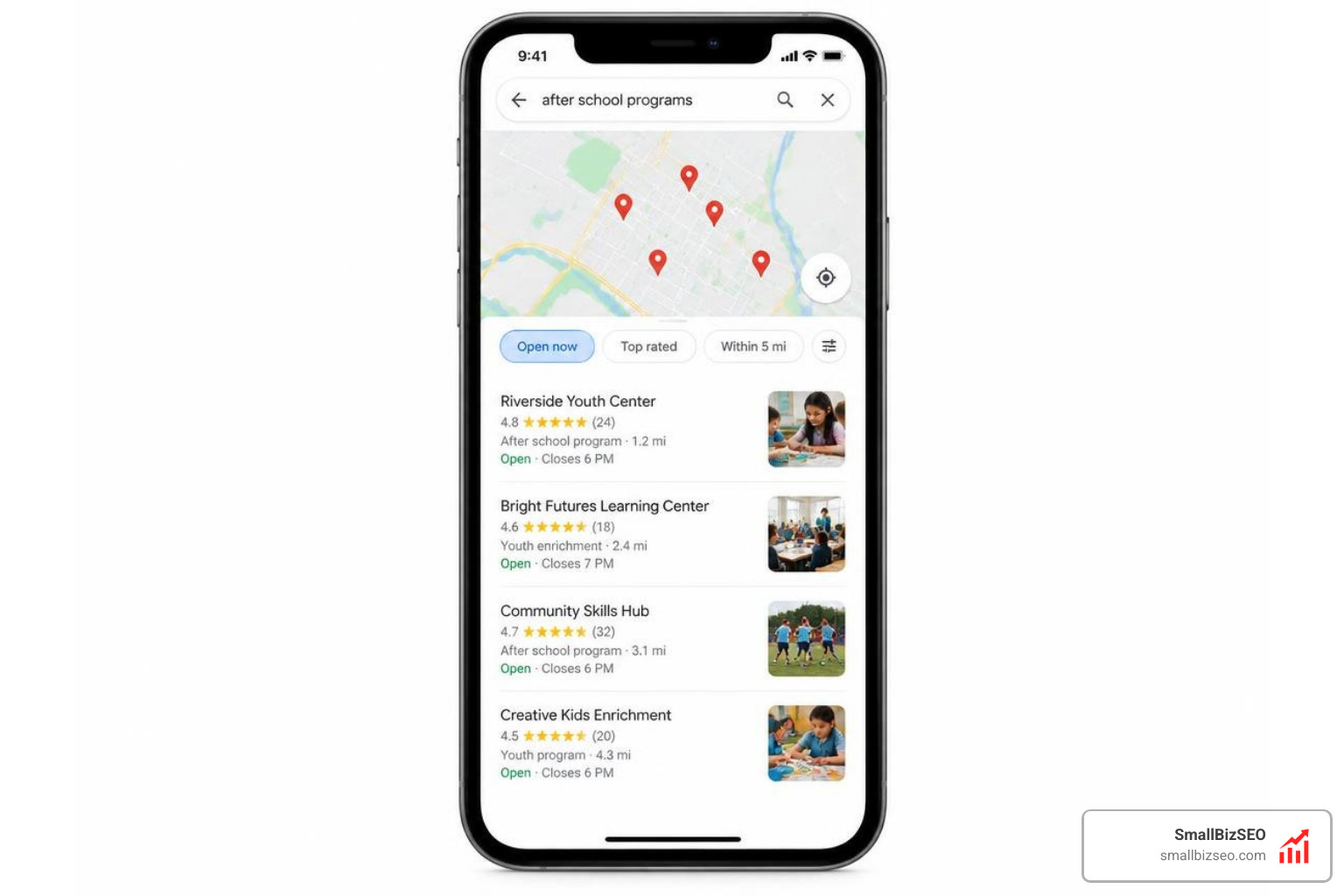
When parents look for care, practical logistics always come first. Working parents must confirm transportation details before evaluating enrichment curriculums. Clearly listing specific school pickup routes directly on your Google Business Profile (GBP) and landing pages answers their primary concern immediately.
To maximize local discovery:
- Optimize Your Google Business Profile: Choose primary categories such as "After School Program" or "Summer Camp." Fill out services, operating hours, and regular updates.
- Prioritize Safety Credentials: Highlight staff background checks, CPR certifications, and low staff-to-student ratios to build parent trust. Organizations aligning with structured standards like NYC public school after-school guidelines establish credibility immediately.
- Build Review Velocity: Maintain steady collection of parent testimonials. Listings with high star ratings generate significantly more clicks than lower-rated competitors. Ask parents to mention both safety and their child's positive experience.
Working with an experienced local SEO company helps streamline directory consistency and Google Map Pack visibility.
How Should Programs Optimize On-Page Content and Inclusive Offerings?
Direct Answer: Programs should create dedicated service pages for each distinct activity—such as STEM, arts, athletics, or special education—while placing essential logistical details above the fold and explicitly highlighting specialized accommodations like sensory supports and AAC integration.
Parents seeking adaptive recreation or inclusive environments often face limited options. Covering these details directly improves rankings for high-intent, long-tail searches.
| Content Element | Conversion Impact | Best Practice Placement |
|---|---|---|
| Pickup Logistics & Hours | Highest initial filter | Above the fold on all service pages |
| Safety & Staff Ratios | High trust builder | Prominently in header or overview section |
| Specialized Supports (AAC, Sensory) | Essential for inclusive care | Dedicated accessibility sub-sections |
| Curriculum & Activity Schedules | Secondary decision factor | Middle-to-lower page sections |
When designing pages for youth community centers SEO, use structured headers, bulleted schedules, and accessible language. Detailed guidance on on-page SEO techniques ensures each enrichment page communicates value clearly to search engines and parents alike.
What Schema Markup and Technical Fixes Ensure Rich Search Results?
Direct Answer: Implementing JSON-LD structured data—specifically LocalBusiness, EducationalOrganization, and Event schema—allows search engines to present rich snippets for camp dates, registration deadlines, and FAQs directly within search results.
Structured data translates your website's human-readable text into clear data points for search engines:
- LocalBusiness & EducationalOrganization: Confirms physical operating hours, contact numbers, and geographic areas served.
- Event Schema: Displays specific summer camp sessions, open house dates, and registration deadlines directly in search results.
- FAQ Schema: Displays quick answers to common parent questions about pricing, age brackets, and transportation.
Equally critical is mobile optimization. A majority of parent searches for youth activities happen on smartphones. Ensure your registration workflow features fast loading times, clear form fields, and minimal checkout friction. You can explore our technical SEO guide to resolve crawl errors and improve site speed across all devices.
How to Execute Link Building and SEO for After School & Summer Programs?
Direct Answer: Build authoritative local backlinks by collaborating with local school districts, securing listings on community recreation boards, contributing expert advice to parenting blogs, and partnering with youth development non-profits.
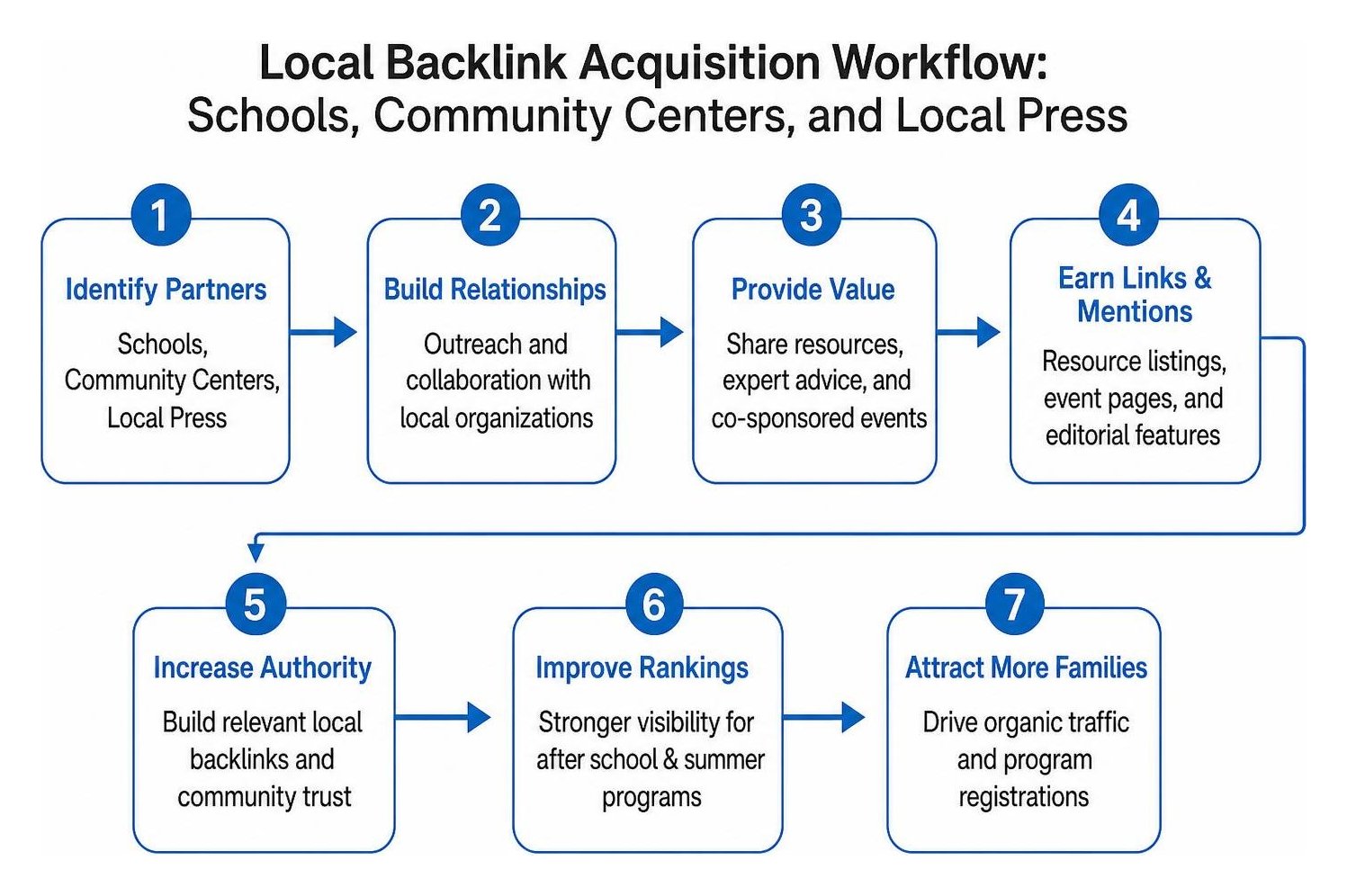
Search engines rely on backlinks to verify your authority and community presence. Rather than relying on generic directory links, prioritize relevant local sources:
- Educational and District Portals: Partner with local schools or library resource hubs to earn links from trusted educational domains.
- Youth Development Initiatives: Engage with established community programs, like regional after-school and youth development networks, for resource listings and co-sponsored events.
- Local Media & Sponsorships: Sponsor youth athletic leagues, library summer reading challenges, or science fairs to earn natural brand mentions and local editorial links.
Connecting these off-page efforts with your digital profiles reinforces community authority and organic search rankings.
Measuring Search Visibility and Scaling Year-Round Enrollments
Direct Answer: Measure SEO success by tracking organic phone calls, direction requests in Google Maps, keyword rankings for high-intent terms, and completed registration form submissions across seasonal enrollment cycles.

Tracking performance ensures marketing efforts directly support full enrollment:
- Google Business Profile Insights: Monitor calls, website clicks, and direction requests generated directly from map listings.
- Organic Lead Tracking: Measure online registrations and contact form completions from organic visitors using web analytics.
- Keyword Ranking Growth: Track local rankings for primary terms such as "summer camp for kids" and "after school care."
Reviewing our guide to SEO reporting helps clarify which metrics drive actual registrations versus surface-level page views.
Keep Your Enrichment Programs Full All Year
Consistent enrollment relies on meeting parents right where they search for safe, engaging youth activities. By maintaining an accurate Google Business Profile, highlighting transportation and accessibility details, applying structured schema markup, and earning local links, your programs will build lasting visibility and trust.
At SmallBizSEO, we use our data-driven Velocity framework to deliver transparent rankings and measurable growth for family service providers. If you are ready to expand your reach and fill every session, explore our specialized work as an after-school and summer programs SEO company to get started today.