Local SEO for Tile Contractors: Everything You Need to Know
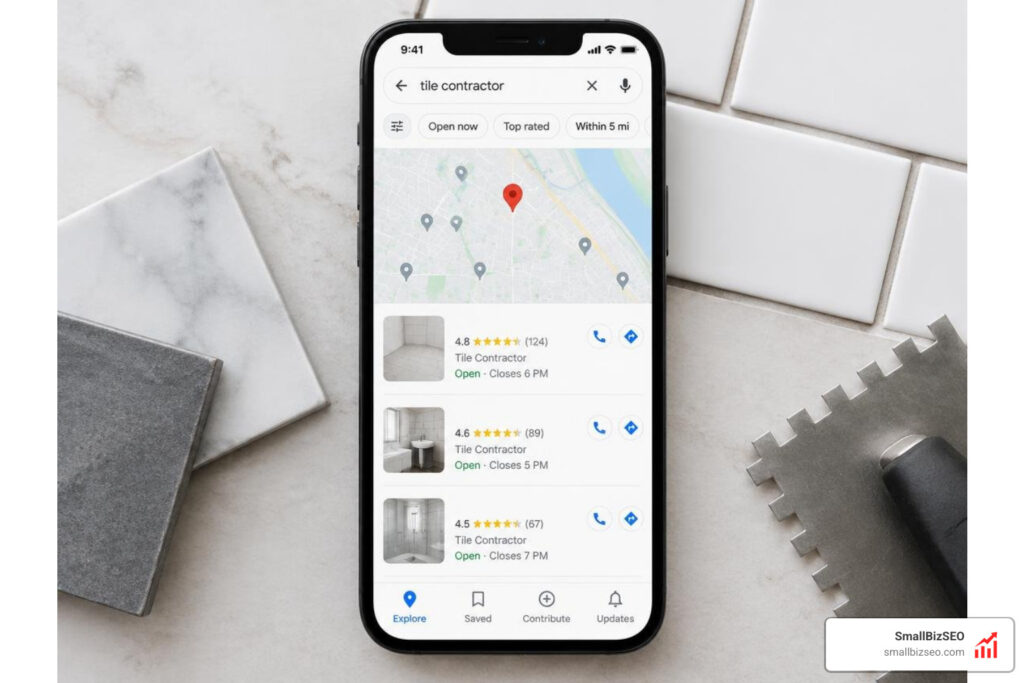
How Do Local SEO’s Core Pillars Help Tile Contractors Succeed?
Local SEO helps tile contractors get found by matching your business profile and website with homeowners actively searching for tile installation nearby. Google evaluates three core signals to rank local installers: relevance (how well your services match the search query), distance (how close your business or service area is to the searcher), and prominence (your reputation, review volume, and website authority).
A balanced local search campaign relies on four distinct technical pillars:
- Local SEO: Optimizing geographic signals, directory listings, and map pack visibility.
- On-Page SEO: Structuring page copy, headers, and metadata around specific installation services.
- Technical SEO: Ensuring fast page load speeds, mobile responsiveness, and clean site architecture.
- Off-Page SEO: Securing backlinks and digital mentions from reputable industry partners.
To rank consistently in both map results and standard organic search, contractors must balance their Google Business Profile with an authoritative website.
| Ranking Channel | Primary Focus | Key Ranking Signals | Best Practice for Tile Installers |
|---|---|---|---|
| Google Business Profile | Local 3-Pack & Google Maps | Primary category, proximity, review recency, photo upload frequency | Set category to "Tile contractor" and post weekly job photos |
| Organic Website | Localized search engine results | Dedicated service pages, technical health, on-page content, backlinks | Build distinct pages for showers, floors, and backsplashes |
For official guidance on optimizing these signals directly with Google, review these tips to improve your local ranking on Google.
What Makes SEO for a Tile Contractor Different From General Contractors?
SEO for tile setters requires marketing skilled craftsmanship and hidden waterproofing rather than generic remodeling or raw materials. While general home service marketing focuses on broad problem-solving, tile installation is visually driven, detail-heavy, and high-risk.
Homeowners usually buy their own tile before searching for an installer. That means your website must sell your labor, precision, and technical preparation rather than the stone or ceramic itself. Searchers actively look for proof of complex installations like herringbone patterns, curbless walk-in showers, and seamless mitered edges.
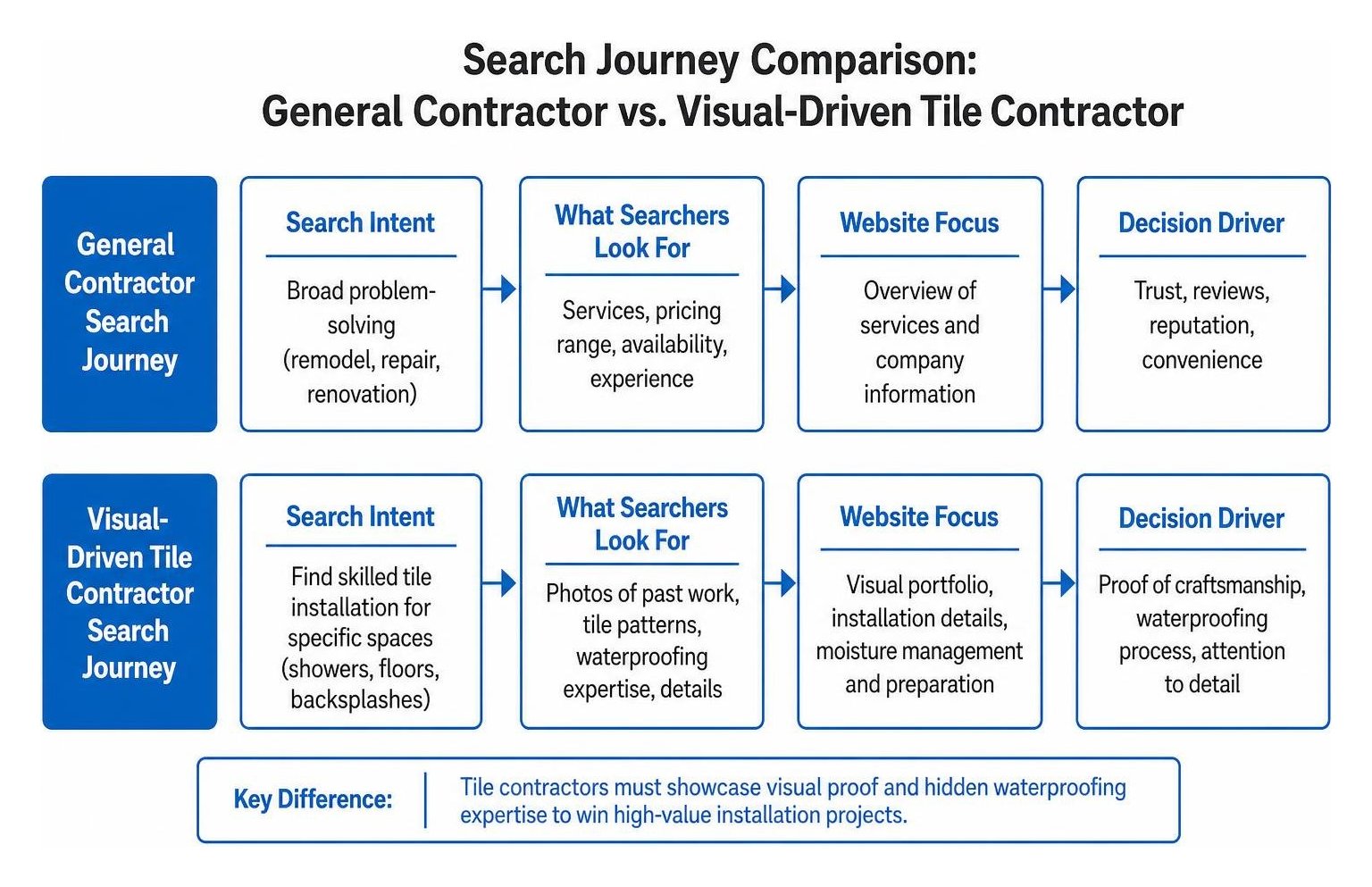
More importantly, high-end bathroom remodels succeed or fail on what sits behind the cosmetic surface. Explaining your moisture management, uncoupling membranes, and flood-testing procedures helps justify premium labor rates over budget handymen. Structuring your site around these trade specifics makes local SEO far more effective at attracting serious remodel inquiries.
Which Website Pages Turn Search Clicks Into Booked Estimates?
To convert search clicks into estimate requests, build dedicated service pages for each distinct job type rather than bundling everything onto a single generic page. When a homeowner searches for "shower pan tile installation," sending them to an all-in-one remodeling page increases bounce rates and reduces conversions.
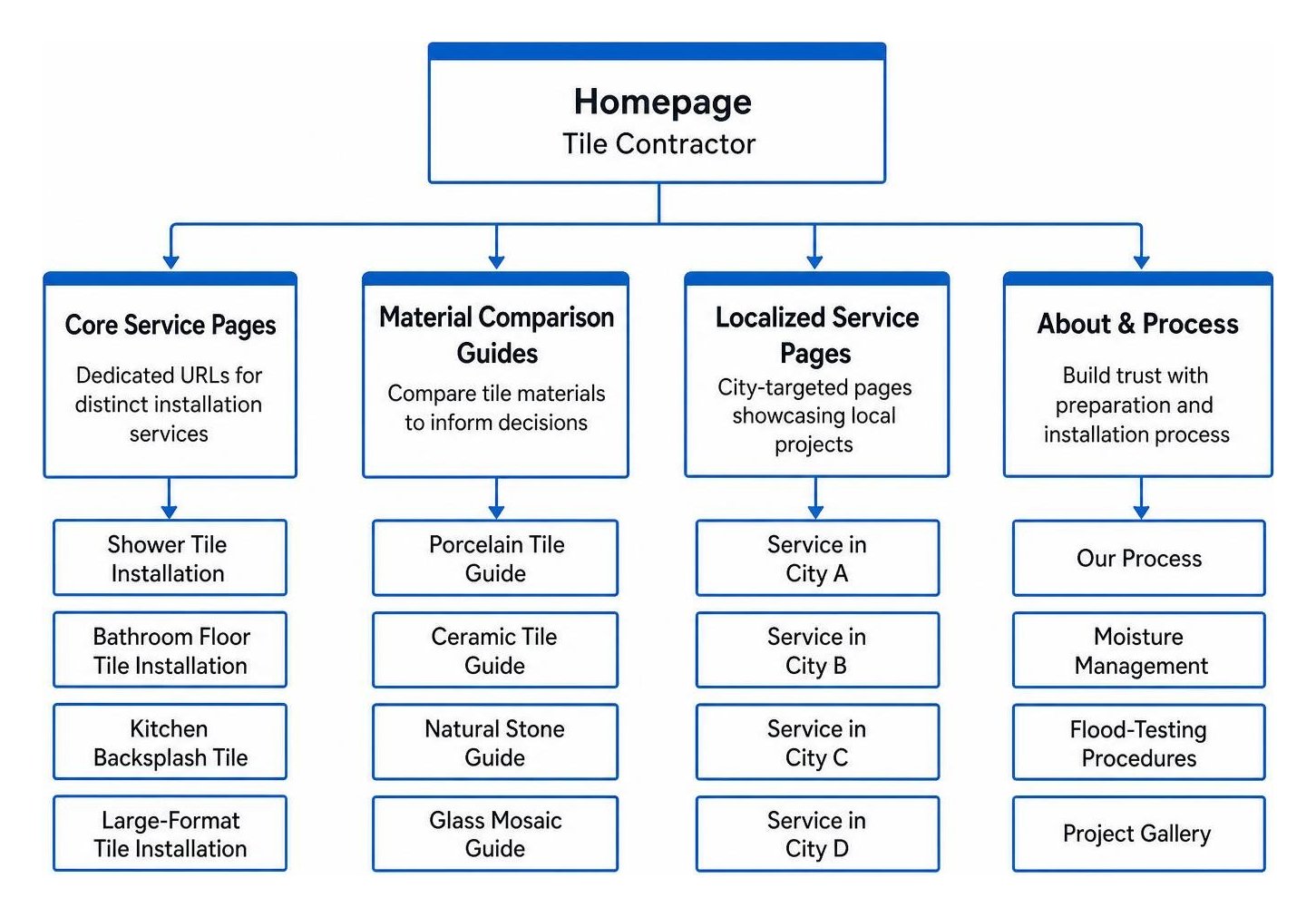
Every high-performing tile website needs a clear structure:
- Core Service Pages: Dedicated URLs for shower tile, bathroom floors, kitchen backsplashes, and large-format tile.
- Material Comparison Guides: Informative resources comparing porcelain, ceramic, natural stone, and glass mosaics.
- Localized Service Pages: City-targeted pages highlighting completed projects in surrounding communities.
Because roughly 64% of users search for installation services on mobile devices, site performance is critical. When a site's load time increases from 1 to 3 seconds, visitor drop-off increases by 32%. Ensure every page loads rapidly, displays clear click-to-call buttons, and uses proper on-page SEO with clear headings and schema data.
How Do Project Photos and Reviews Drive Google Maps Rankings?
Uploading authentic project photos and gathering detailed client reviews are the two strongest actions for boosting Google Maps visibility. Research shows that photo upload frequency correlates more strongly with profile view counts for home renovation trades than review volume alone.

Homeowners want to see straight grout lines, balanced cuts, and clean job sites. Use these steps to turn your daily work into local search signals:
- Take three wide-angle photos of the finished room at the final walkthrough once cleanup is complete.
- Take detailed close-ups showing corners, niche placement, and drain transitions.
- Name image files descriptively before uploading (such as
herringbone-backsplash-kitchen.jpg). - Hand the homeowner a physical card with a QR code linked directly to your Google Business Profile review form.
- Ask the client to upload their own photo of the completed space alongside their written review.
Client-submitted photos attached to reviews provide powerful trust signals for search algorithms and prospective buyers evaluating your craftsmanship.
How Can You Execute a High-Yield Local Tile SEO Strategy?
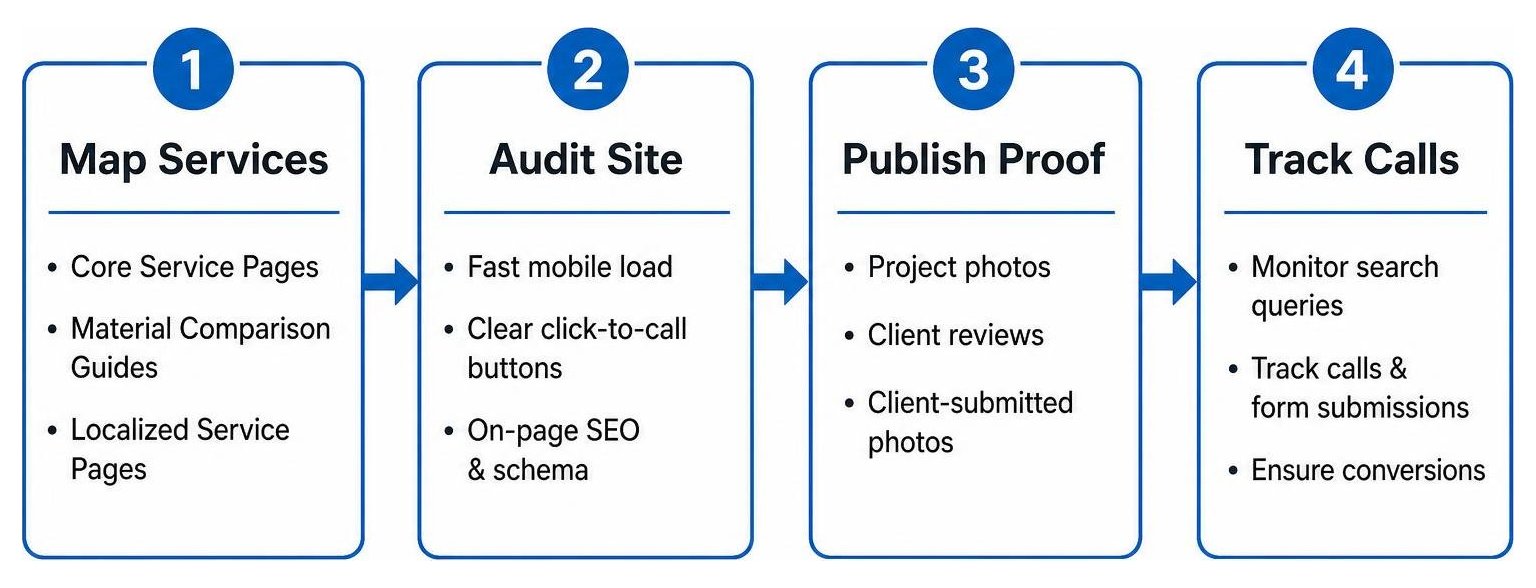
An effective local SEO campaign requires ongoing technical maintenance, search console monitoring, and conversion tracking to ensure your traffic turns into revenue. SEO is not a one-time setup; it is an active operational process.
Start by configuring Google Search Console to monitor the exact search queries driving impressions to your pages. Track user interactions through Google Analytics to ensure forms submit properly and phone numbers trigger calls seamlessly. Ensuring clean site indexation and fast mobile delivery requires proactive technical SEO that prevents crawl errors and broken estimate links.
How Can You Win Featured Snippets and AI Search Answers for Tile Installation?
Win position-zero featured snippets and AI-generated answers by structuring your articles to directly answer specific, technical installation questions in plain language. AI search engines and Google Overviews prioritize clear, expert-backed answers that demonstrate direct trade experience.
To capture these top search positions:
- Use clear question headings like "How long should shower tile cure before grouting?"
- Provide a direct, 2-to-3 sentence answer immediately beneath the header before expanding into details.
- Create step-by-step numbered lists for complex procedures like subfloor deflection testing and epoxy grout application.
- Add structured FAQ schema to your informational blog posts.
Demonstrating real trade expertise establishes your business as a trusted authority for both search algorithms and homeowners researching their projects.
What Common SEO for Tile Contractor Mistakes Should You Avoid?
The most common mistakes tile contractors make are relying on thin, generic service pages and letting their local profiles go dormant during busy seasons. When contractors bundle all flooring and masonry into a single paragraph, search engines struggle to understand their core specialty.
Avoid these frequent digital marketing pitfalls:
- Targeting Broad Keywords: Chasing high-competition terms like "flooring" instead of high-intent phrases like "custom shower tile installer."
- Keyword Cannibalization: Writing multiple weak blog posts that compete against your main service pages for the exact same term.
- Renting Shared Directory Leads: Paying third-party marketplaces for leads that get distributed to 3 to 5 competing contractors simultaneously.
- Neglecting Profile Activity: Failing to add new photos, updates, or review responses for months at a time.
- Inconsistent Business Data: Using mismatched business names, phone numbers, or addresses across local citation directories.
Building owned digital assets gives you an exclusive stream of direct inbound calls that you control completely.
How Can You Build Local Authority and Backlinks for Long-Term Growth?
Building local backlinks and industry authority requires earning online mentions from regional trade partners, material suppliers, and design professionals. Search engines treat links from established local websites as votes of confidence in your company's legitimacy.
Effective link-building tactics for tile contractors include:
- Partnering with local interior designers and kitchen cabinet makers to feature your installation photos on their project blogs.
- Getting listed on local tile distributor and stone supplier "preferred installer" directories.
- Joining local home builder associations and chamber of commerce networks.
- Sponsoring local community organizations or trade school vocational programs.
Local organic search momentum typically compounds over 3 to 6 months of steady optimization. To scale your inbound estimate pipeline with proven search frameworks, explore proven contractor ranking packages built to deliver exclusive, high-ticket remodel leads.
Own Your Local Market With High-Intent Tile Search
Capturing high-value bathroom remodels, curbless walk-in showers, and custom backsplashes requires a digital presence that highlights your skill and technical preparation. By pairing a photo-rich Google Business Profile with dedicated service pages, fast mobile performance, and local backlinks, your business becomes the obvious first call for homeowners seeking quality craftsmanship. Consistent search optimization turns local search visibility into an owned business asset that drives steady estimate requests year-round.