Local SEO Map Services: What You Need to Know
Local SEO Map Services: What You Need to Know
How Can a Local SEO Map Help Customers Find You?
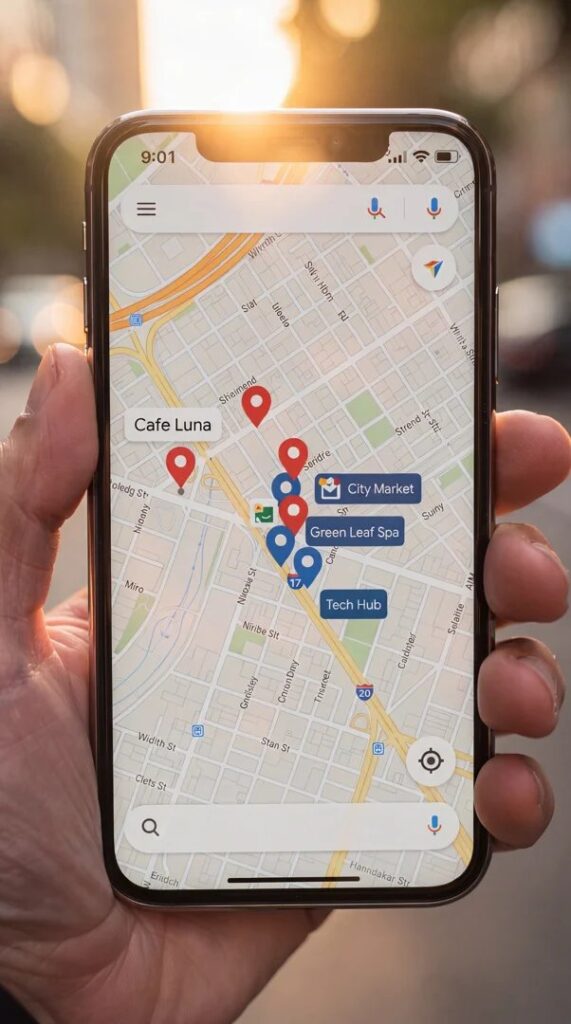
An SEO local map shows where your business appears in Google Maps results across a neighborhood, not just at one search location. That matters because your ranking can change from one street to the next. To improve visibility, check your rankings at several nearby points, then make sure your Google Business Profile has the right category, accurate hours, and up-to-date contact details. Ask customers for honest reviews, too.
Google weighs distance, relevance, and prominence when showing local results. A map-based view helps you see where nearby customers find you, where competitors appear instead, and which areas need attention.
I'm Clayton Johnson, founder of SmallBizSEO, where I help small businesses connect SEO, content, and digital PR to qualified leads. I apply that same practical approach to SEO local map visibility: find the gaps, fix what you can, and track whether more customers can find you.
Quick look at SEO local map:
- enterprise local SEO
- google local map pack
- local SEO map
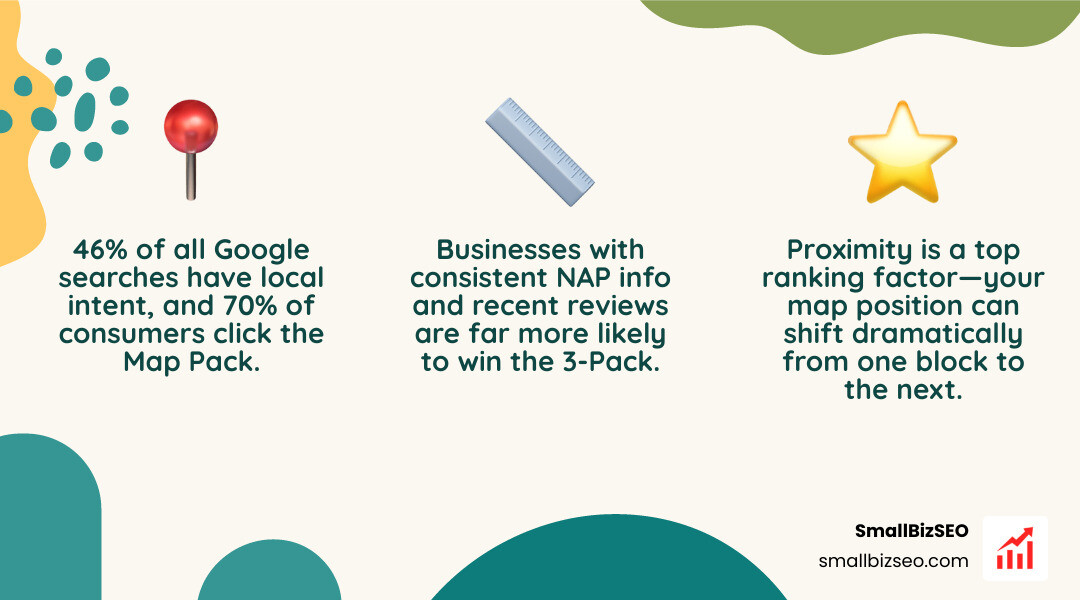
Around 46% of all searches on Google carry local intent. When nearby consumers search for immediate solutions, the Google Map Pack captures roughly 70% of those clicks. Even better, 78% of local mobile searches result in an offline purchase. Understanding your map presence is no longer optional—it directly governs your inbound foot traffic, phone inquiries, and service bookings.
Why Does Geo-Grid Tracking Redefine SEO Local Map Visibility?
Geo-grid tracking simulates searches across dozens of physical coordinate points in your immediate area to show exactly where your profile ranks block by block.
Traditional rank trackers only check your placement from a single static point—often directly at your physical front door. That creates a false sense of security. You might rank #1 when standing in your lobby, but drop down to #12 just three blocks away.
This steep drop-off happens because proximity heavily influences Google's local algorithm. Geo-grid scanning eliminates guesswork by delivering up to 98.7% geo-location accuracy through clean, unbiased coordinate checks.
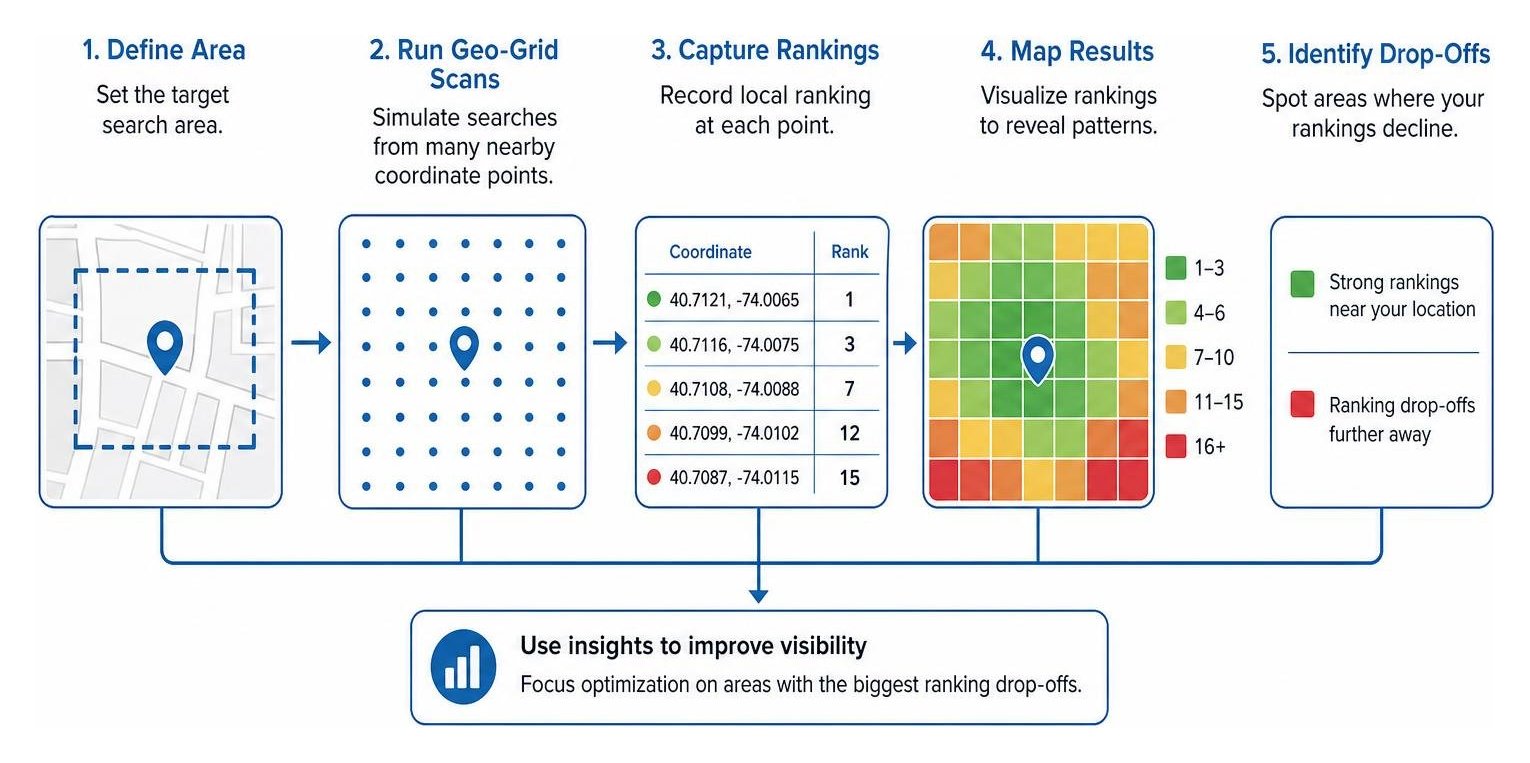
Geo-grid heatmaps help you understand whether customers discover you via direct brand searches or exploratory queries (like "emergency plumber" or "roof repair"). For service area businesses operating without a traditional storefront, grid tracking maps visibility across your entire target service radius. Reviewing a practical guide to local SEO map visibility helps identify ranking blind spots so you can expand your reach systematically.
What Are the Key Ranking Factors Behind the Google Local 3-Pack?
Google determines map rankings using three foundational pillars:
- Relevance: How well your business profile, service categories, and website content match what the user typed.
- Distance: How close your business is to the searcher's physical location or specified geographic query.
- Prominence: How established, credible, and well-reviewed your business appears across the web.
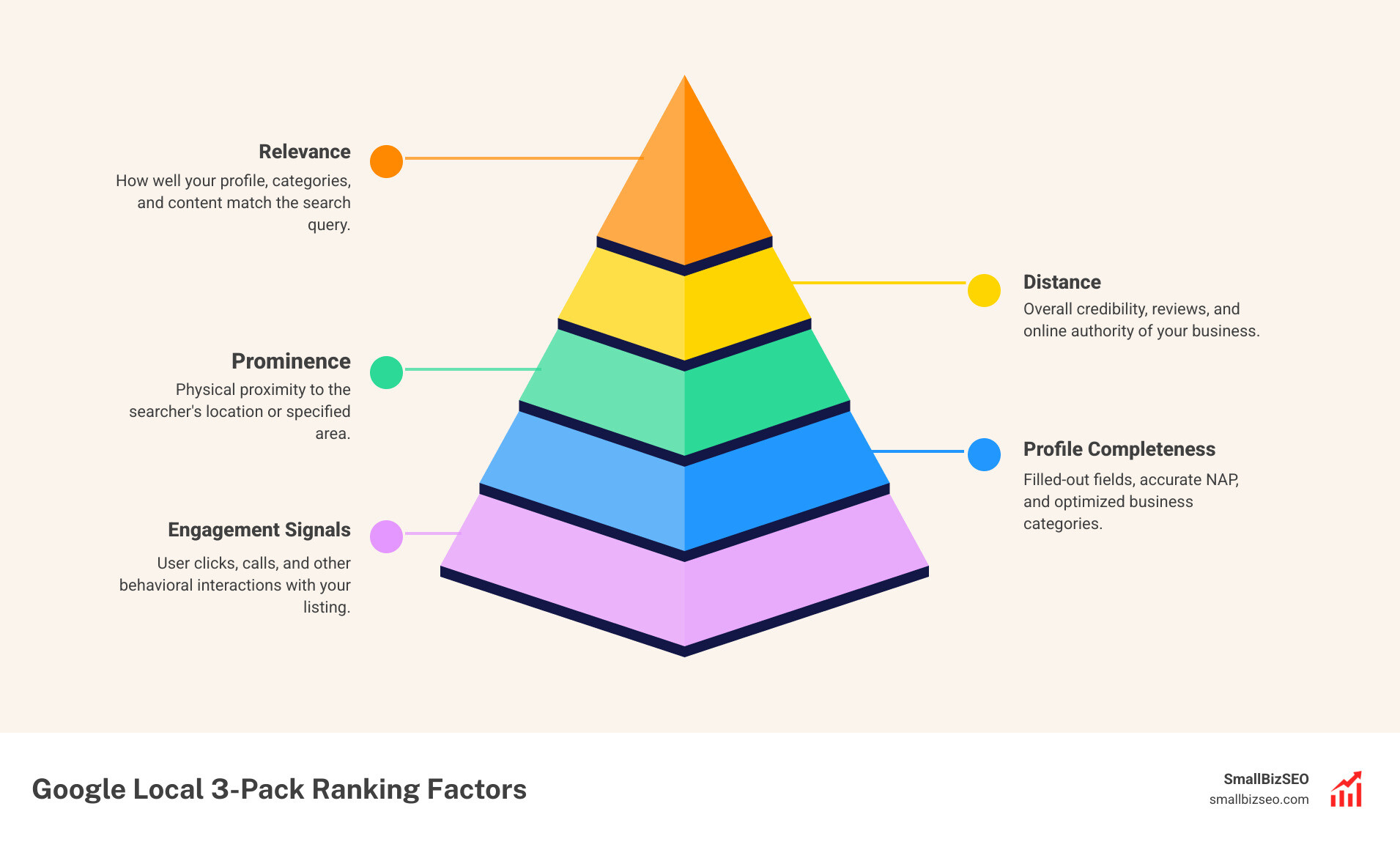
Many small business owners struggle because they overlook subtle setup details. We often uncover google local map pack secrets most local businesses overlook, such as picking primary categories that are too broad or leaving profile fields blank. Exploring proven Local SEO tips for small businesses reinforces the need for accurate data entry and ongoing customer review collection.
How to Audit and Optimize Your Local Map Rankings for Maximum Conversions
Auditing your map presence begins with an inspection of your Google Business Profile (GBP) dashboard metrics. Running a seo local map audit regularly helps you catch ranking drop-offs before they cost you customers. Review your exploratory search volume—effective local SEO campaigns typically see 60% to 70% of impressions coming from non-branded, discovery searches. If you need a complete walk-through of this process, check our definitive guide to a local SEO audit.
Follow these core steps to complete a thorough audit:
- Audit Primary and Secondary Categories: Choose a hyper-specific primary category that reflects your core offering, then supplement it with relevant secondary categories based on top-ranking competitors.
- Refine Your 750-Character Description: Write a clear, customer-focused overview incorporating primary service keywords and service areas naturally without keyword stuffing.
- Add Geo-Tagged and High-Quality Visuals: Upload 20 to 30 genuine, high-resolution photos of your workspace, team, and projects.
- Incorporate a 360-Degree Virtual Tour: Interactive virtual tours enhance user engagement, signaling trust to Google's ranking systems.
- Fill Out Profile Attributes: Toggle on all relevant amenities (such as wheelchair access, Wi-Fi, or appointment options) to appear in filtered and conversational searches.
How to Optimize Your Google Business Profile and Citations for SEO Local Map Domination
Name, Address, and Phone number (NAP) consistency across directories is vital for establishing local trust. Search engines cross-reference listings across major aggregator networks to confirm your operational details. Having NAP consistency explained clearly across your team ensures that minor formatting errors (like mixing up "Suite" and "Ste") do not dilute your prominence.
Review management is just as critical. A profile that secures one fresh review per week routinely outranks a competitor sitting on 200 stale reviews collected years ago.
Key Google Business Profile management best practices include:
- Deploying QR Code Review Prompts: Place physical QR codes at checkout counters or on service invoices to streamline the review process for happy clients.
- Crafting Keyword-Rich Responses: Respond to all customer feedback quickly, incorporating service mentions and locations naturally within your replies.
- Publishing Weekly Google Posts: Share timely updates, seasonal offers, and project highlights directly on your profile to signal active management.
- Managing Q&A Proactively: Pre-populate and answer common client questions directly within your profile's public Q&A module.
Which Local Ranking Checkers and Geo-Grid Audit Tools Provide the Best Data?
Selecting the right geo-grid tool allows you to track Share of Local Voice (SoLV) and overlay competitor positions across your neighborhoods. Here is a comparison of leading local rank-tracking platforms:
| Tool | Grid Customization | AI Insights & Recommendations | Best Fit For |
|---|---|---|---|
| Search Atlas | High (Custom Grid Shapes) | Automated SEO Task Engine | Agencies and data-driven teams |
| Local Falcon | High (3x3 to 15x15 Grids) | Share of AI Voice & Competitor Heatmaps | Visual reporting and AI trend tracking |
| BrightLocal | Moderate (Standard Grids) | GBP Gaps & Local Citation Tracking | Small businesses and local consultants |
| Merchynt | Moderate (Automated Scanning) | Automated Profile Optimization | Hands-off local business owners |
| Localo | Moderate (Radial Tracking) | AI Review Response & Schema Generation | Quick audits and local benchmarking |
Scaling Strategy and the Future: Multi-Location Systems, AI Search, and Expert Growth
Multi-location organizations cannot rely on a single generic website homepage to rank across multiple towns. To capture search volume across different areas, companies need to win every regional market with a robust enterprise local SEO strategy.
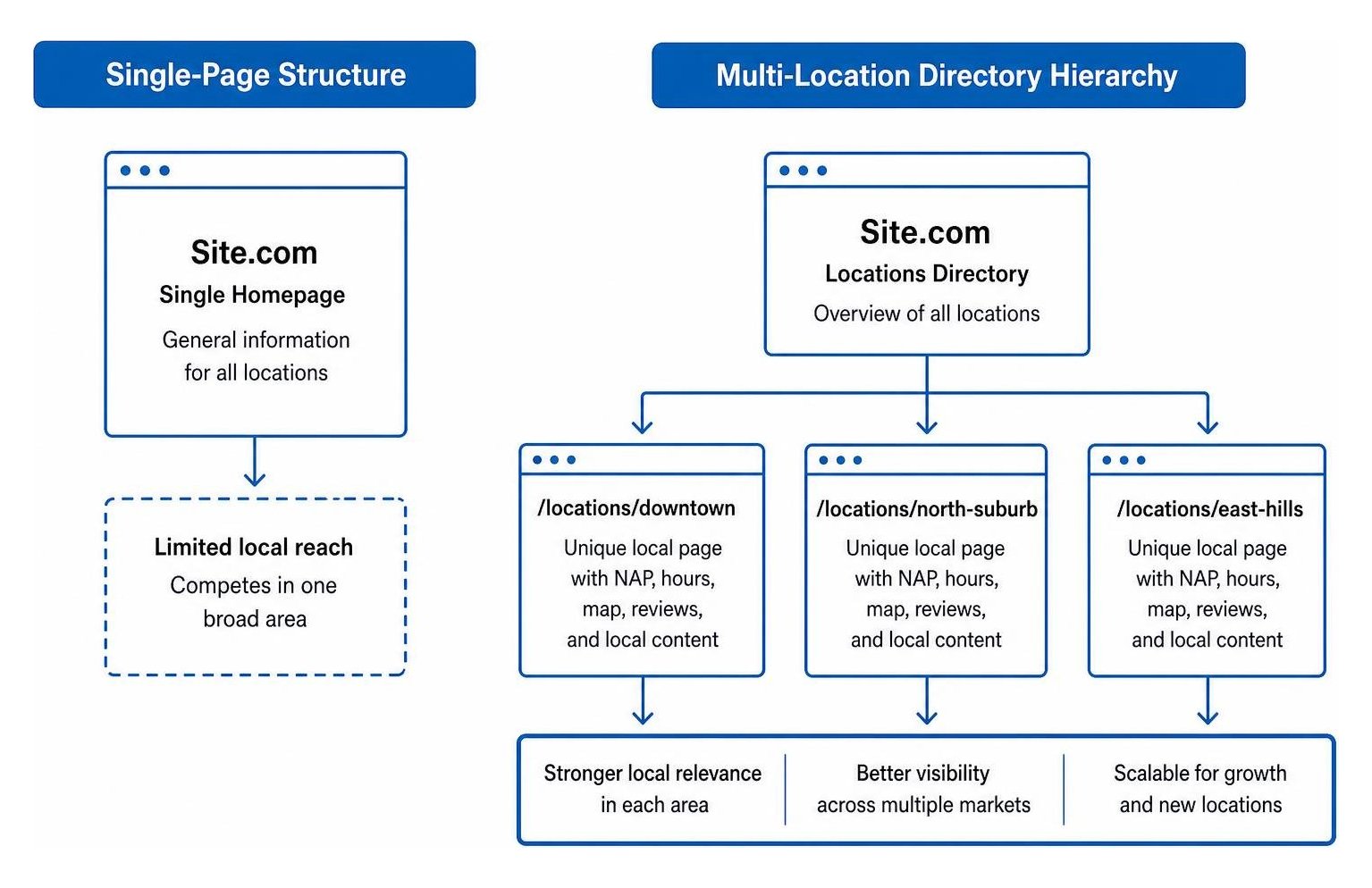
A scalable multi-location setup requires:
- Dedicated Subdirectory Architecture: Organize pages logically using structured URLs (such as
/locations/downtownor/locations/north-suburb) on a single high-authority domain. - LocalBusiness JSON-LD Structured Data: Apply precise schema markup that defines unique geo-coordinates, operating hours, telephone numbers, and
hasMapURLs for each individual branch. - Location-Specific Value: Include distinct team bios, customer reviews, local photography, and specific service menus on each page to avoid duplicate content penalties.
How Do Multi-Location Architecture and Local Backlinks Drive Regional Visibility?
Organic backlinks from neighborhood sources pass essential prominence signals to your map listings. High-authority national links are valuable, but Google places significant weight on geographic relevance for map rankings.
To build meaningful prominence in your local market:
- Partner with regional Chambers of Commerce and business associations for directory inclusions.
- Sponsor local youth sports teams, non-profit charity events, or community festivals to earn localized press mentions.
- Collaborate with complementary, non-competing businesses on joint neighborhood promotions.
Focusing on scoring the best local backlinks strengthens your site's entity signals, helping your location landing pages and Google Business Profiles climb into the top 3 spots.
How Are Generative AI Overviews and Gemini Ask Maps Transforming Local Discovery?
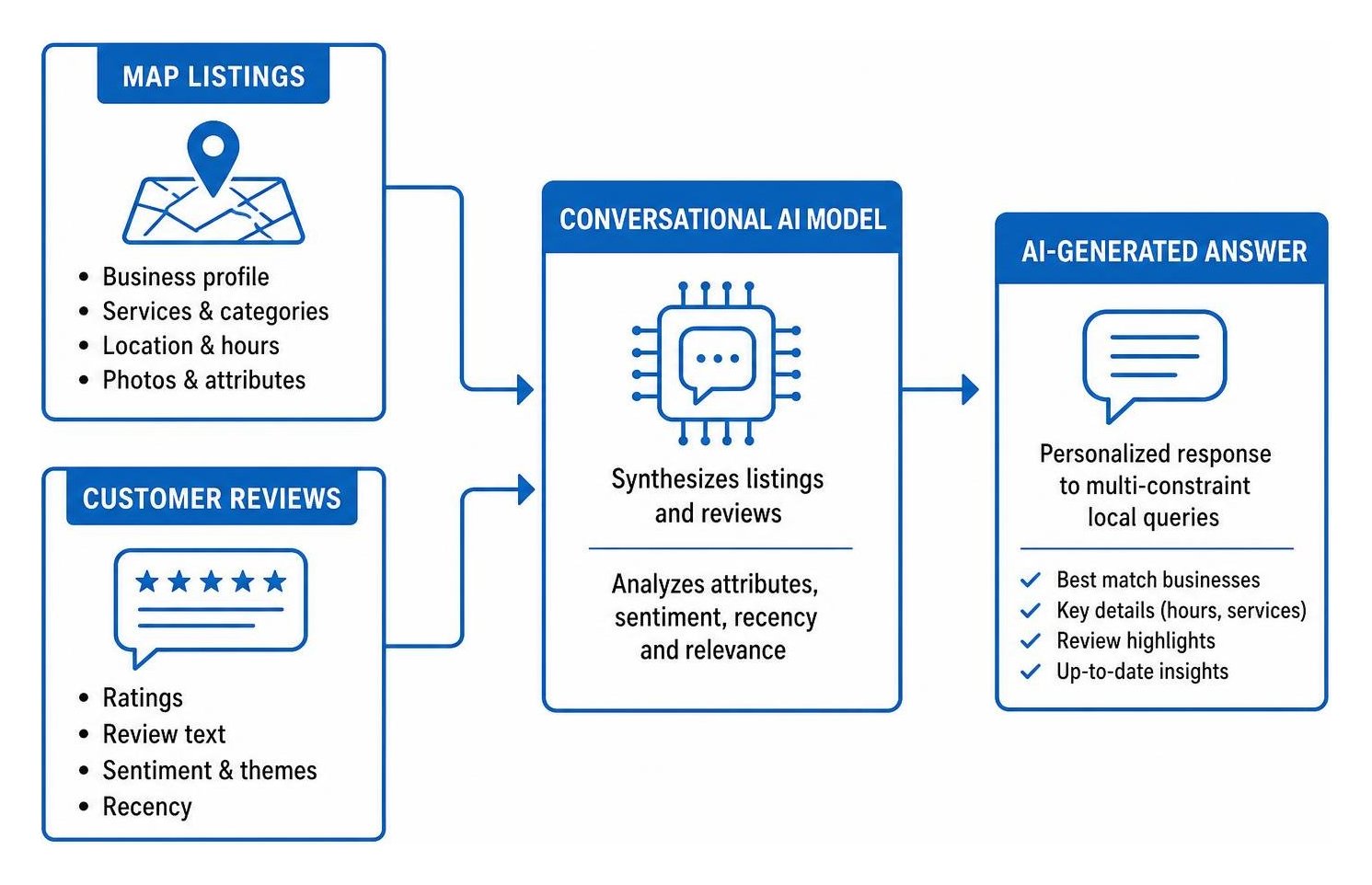
Conversational search is reshaping how people discover businesses. With tools like ChatGPT engaging over 200 million weekly active users, consumers increasingly search using detailed, compound questions—such as "find an emergency plumber open late with upfront pricing."
Google's Gemini-driven Ask Maps analyzes detailed profile attributes, customer sentiment within reviews, up-to-date operating hours, and photo tags to answer these multi-constraint queries.
At SmallBizSEO, we built our data-driven "Velocity" framework to help local businesses establish consistent prominence, complete technical profiles, and scale high-converting content. When you are ready to evaluate your current rankings and find untapped visibility gaps across your target neighborhoods, claim your comprehensive SEO visibility audit with our team.
Turn Your Local Map Presence Into a Steady Stream of Customers
Dominating Google Maps requires moving beyond basic profile setups. By using geo-grid heatmaps to spot ranking drop-offs, enforcing NAP consistency, building steady review velocity, and keeping profile attributes thorough, you ensure your business remains the clear top choice across your entire territory.
Take action today: audit your primary categories, implement LocalBusiness schema across your location pages, and respond to your latest customer reviews. A well-managed local map strategy reliably turns neighborhood searches into long-term, paying customers.