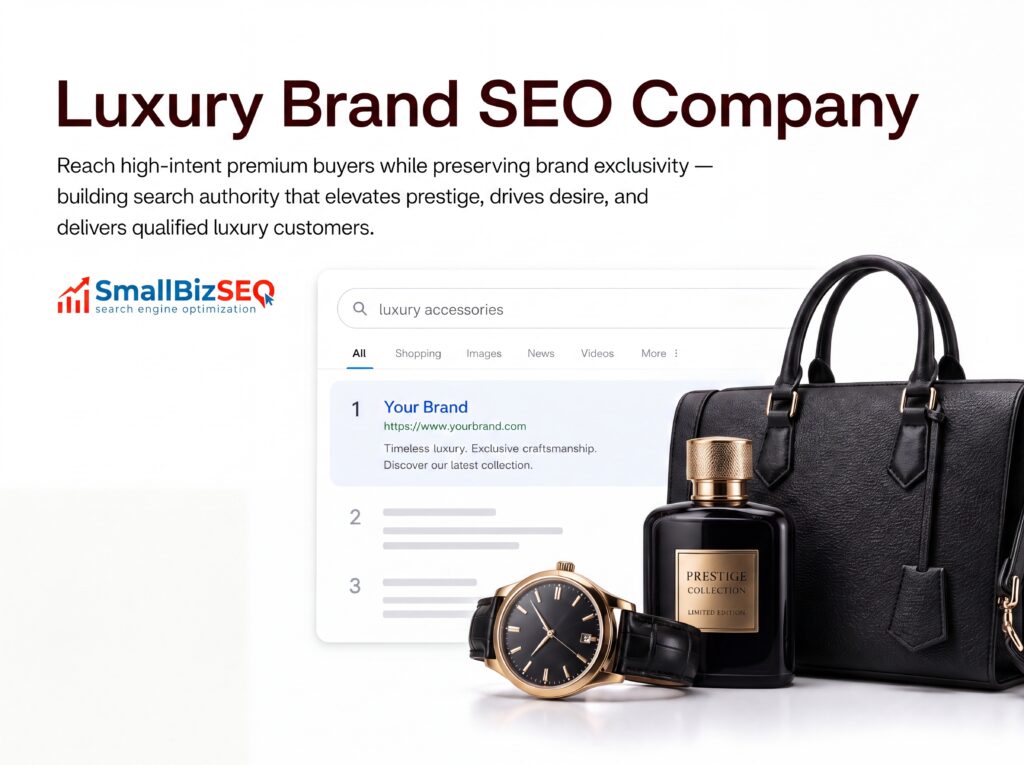
Help customers discover the offering through useful information and a coherent brand experience.
A visitor researching a design house, someone seeking a particular collection and a client considering a bespoke appointment are not simply searching for a more expensive product. We organize luxury-brand SEO around those intentions. The strategy should make real products and services easier to understand while preserving the brand’s language and relying on documented craft, provenance and experience rather than invented exclusivity.
Search intent & content
Connect the brand story with the customer’s decision
Guide customers from the brand’s collection story to product details or a bespoke inquiry. We connect documented craft, materials and provenance with the actual offering, preserving the brand’s distinctive vocabulary throughout the discovery and evaluation journey.
Brand and collection discovery
Give important collections a clear place in the site and connect them to the brand’s actual point of view. Useful introductory copy should explain the range without replacing distinctive language with an interchangeable premium-product pitch.
Example searchbrand collection design story
Specific product research
Make genuine specifications, materials and item details accessible alongside visual presentation. A refined product page can answer practical questions without relying solely on imagery or adding unsupported claims about rarity and enduring value.
Example searchpremium product material and design details
Bespoke and appointment inquiries
Where offered, explain the process for a commission, private consultation or other appointment-led service. Clarify what the client can discuss and how arrangements are confirmed rather than imply preferential access that has not been established.
Example searchbespoke design consultation
Craft and provenance exploration
Use documented making processes, origin information or archive material to answer genuine brand questions. Connect those stories to relevant products or services instead of publishing decorative heritage claims with no evidence behind them.
Example searchproduct craftsmanship and provenance information
Website priorities
Build useful pages around real customer decisions
Preserve a coherent vocabulary
Develop category and product language that balances customer understanding with the brand’s own terminology. Search-oriented copy should clarify the offering without forcing unrelated bargain or mass-market positioning into every page.
Make image-led pages informative
Use concise context, accessible navigation and accurate product information around the visual experience. Customers should be able to understand what is shown and where to go next without guessing from an editorial image.
Separate retail and commissioned work
An available product needs selection and purchase details; bespoke work needs a consultation brief. Distinct paths prevent beautiful portfolio content from being mistaken for current stock or a standard service package.
Measure relevant journeys
Review collection discovery, product engagement and appointment inquiries separately where configured. Avoid inferring a visitor’s wealth or suitability from search behavior when evaluating whether the content serves the intended task.
Our approach
A practical plan for your website
We review your brand language, actual offering and documented product stories. Then we organize collections, item information and appointment paths so search discovery feels connected to the same brand experience customers encounter elsewhere.
Review the foundations
Check crawlability, existing pages, customer needs, and the services your business actually offers.
Map services to demand
Connect customer questions to useful service pages and supporting content without duplicating search intent.
Build, measure, improve
Publish useful pages and refine them using search visibility and separately configured inquiry analytics.
- Craft and provenance statements are supported by documented brand information.
- Product specifications remain clear within the visual presentation.
- Bespoke services and available inventory have distinct customer journeys.
- Positioning claims reflect the real brand rather than invented exclusivity or affiliations.
Frequently asked questions
Questions about your industry SEO strategy
Can SEO copy preserve a distinctive luxury-brand voice?
Yes. Start with the brand’s actual language and the customer’s information need, then clarify categories and product details. The aim is useful discovery, not replacing every sentence with generic search phrases.
Does a luxury strategy need to target affluent demographics?
The content can focus on genuine product, design and service intentions without inferring personal wealth. Evaluate whether pages answer the relevant customer task rather than assuming a visitor’s status from a search.
How should heritage or craftsmanship stories be used?
Publish documented details that help explain the brand and connect them to relevant offerings. Specific evidence is more persuasive than unsupported claims of exclusivity, rarity or guaranteed long-term value.
How do we measure whether SEO is helping?
Use Google Search Console for search visibility and page performance. Measure calls, inquiries, and lead quality separately through analytics and intake tracking where configured.
Can you guarantee rankings or new customers?
No. We focus on the work within our control: technical foundations, useful content, clear navigation, and measurement. Search outcomes depend on competition and other factors.
Build a clearer path from search to inquiry
Share your brand story, collections and appointment model. We can build a search strategy that makes the offering easier to discover while preserving its distinctive voice.
Search rankings & AI visibility — AI SEO / AEO
- Google AI Mode
- ChatGPT
- Claude
- Gemini
- Perplexity


Related services & strategies