7 Blueprint-Ready SEO Tactics for Architectural Design Firms
How can architectural design firms improve their search rankings?
SEO for architectural design firms starts with the searches your ideal clients make. Create service pages for the work you want to win, such as residential design or historic restoration. Add project pages that explain the brief, location, constraints, and your role. Then make sure those pages load quickly on phones, can be found by Google, and link to a clear way to inquire.
Referrals matter, but they cannot put your firm in front of every client searching for an architect. A useful website gives those clients a way to find your work and judge whether you are a good fit.
I’m Clayton Johnson, founder of SmallBizSEO. My work in content strategy, technical SEO, and digital PR shapes this approach to SEO for architectural design firms: make your expertise easy to find, understand, and trust.
Core Pillars of SEO for Architectural Design Firms
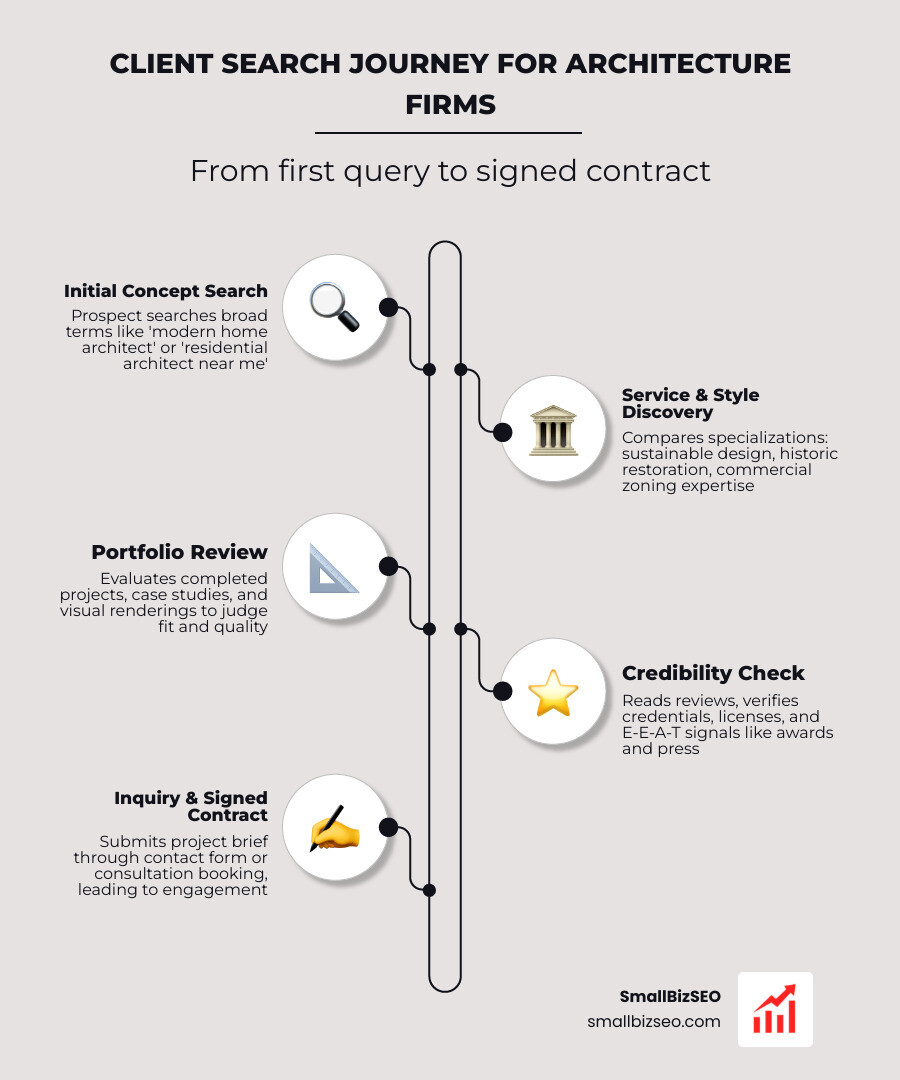
Architectural practices attract high-value contracts when their websites balance visual design with clear, search-ready text. Relying solely on word-of-mouth leaves your project pipeline vulnerable during market shifts. About 80% of architectural and development projects start with a local or specialized search query. By structuring your website around the specific services you offer and the commercial intent of prospective property owners, you turn a passive online portfolio into an active client acquisition engine.

Executing an effective campaign requires mastering each core discipline of digital marketing. As explained in our practical guide to the 4 types of SEO, true search performance combines keyword targeting, on-page content depth, technical infrastructure, and off-page authority. For architects, this means organizing pages around high-intent specializations like zoning analysis, feasibility studies, building code compliance, master planning, and historic restoration.
Why Is Local SEO for Architectural Design Firms Critical for Winning Projects?
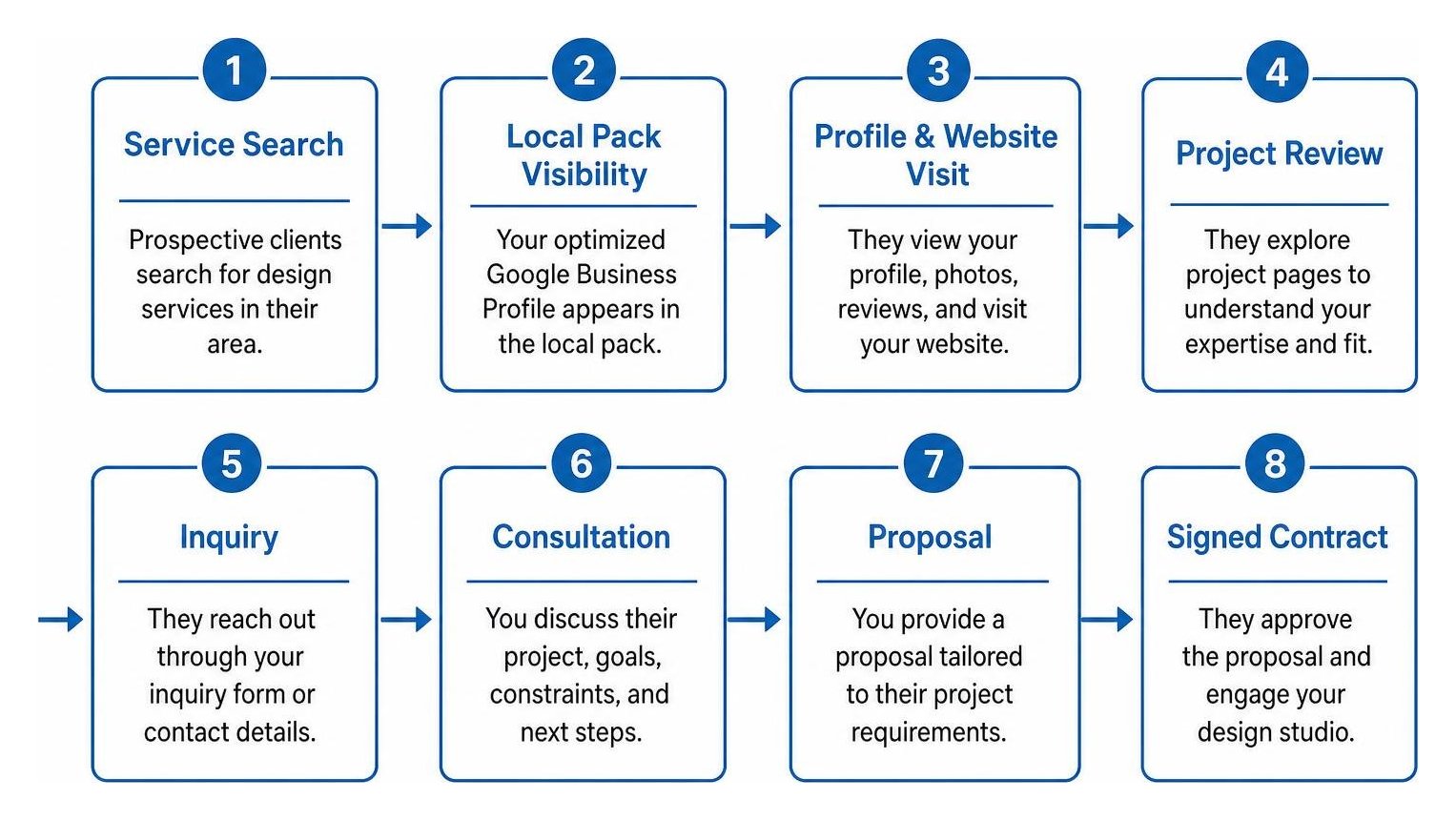
Local SEO connects your studio directly with property developers, commercial property managers, and homeowners looking for design expertise in their immediate area.
Because architecture requires deep familiarity with regional zoning, municipal planning codes, and environmental regulations, prospective clients heavily favor local practices. Search data reveals that 80% of Google Business Profile views occur on mobile devices, and 60% of users state that high-quality project photos directly influence who they contact. Furthermore, verified client reviews directly influence 24% of conversion decisions.
To maximize your local pack visibility:
- Claim and optimize your Google Business Profile by choosing accurate primary and secondary categories.
- Maintain identical Name, Address, and Phone (NAP) citations across leading design directories and professional associations.
- Upload high-resolution, labeled photography of completed structures and conceptual renderings.
- Encourage satisfied residential and commercial clients to leave detailed reviews describing your design process and collaboration.
Implementing a structured approach to local SEO helps architectural studios establish prominent map rankings. This visibility is vital when expanding beyond word-of-mouth to capture regional high-budget tenders.
How to Implement Technical and Visual SEO for Architectural Design Firms
Technical SEO ensures that search engines can effortlessly crawl, index, and render your visual assets without sacrificing website speed or mobile responsiveness.
Architectural websites often suffer from performance bottlenecks because they host hundreds of uncompressed, high-resolution rendering files. With 70% of prospective clients browsing portfolios on mobile devices, poor page loading speeds destroy conversion rates and search rankings.
To keep your digital studio fast and search-friendly:
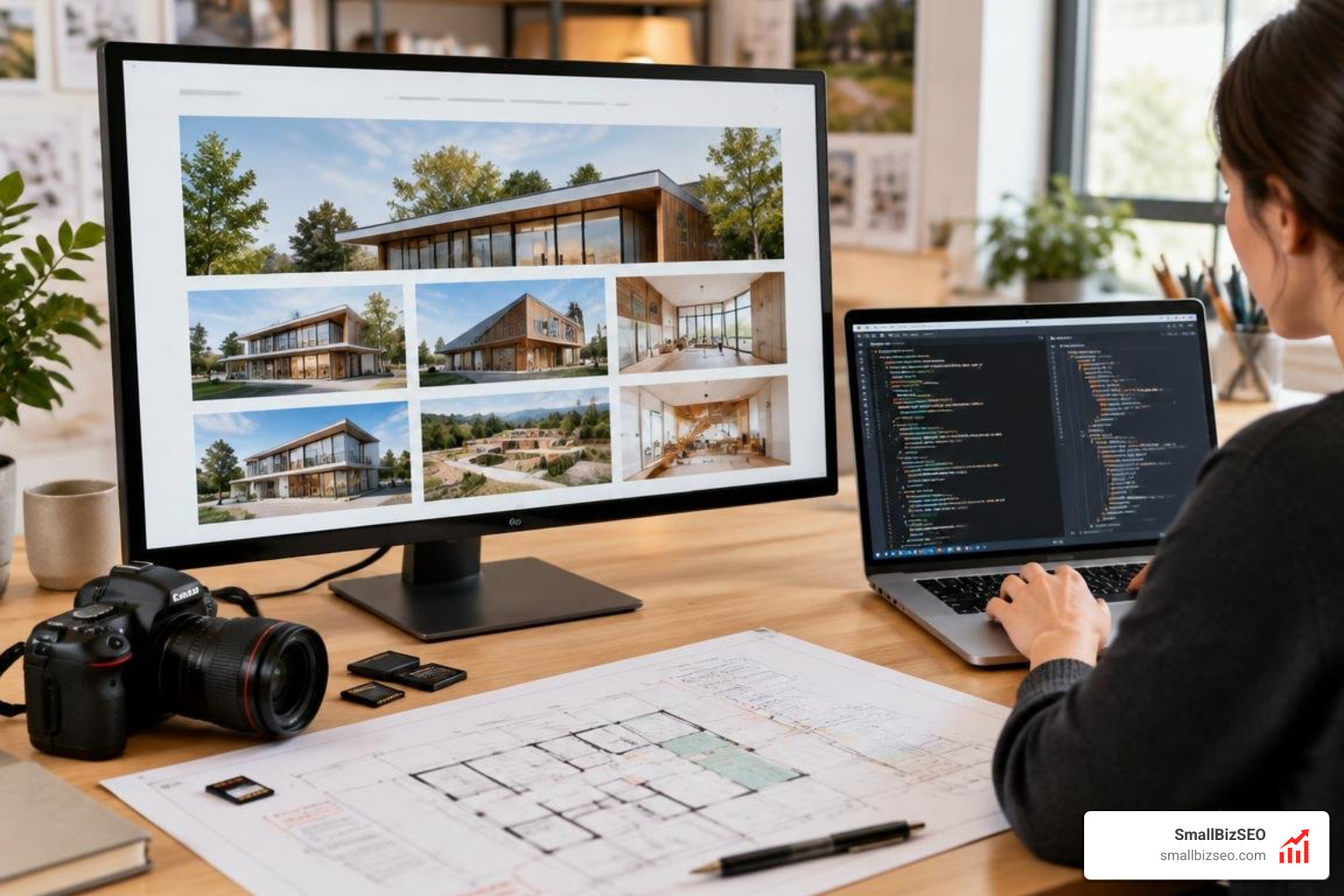
- Convert all large imagery to modern WebP formats and compress assets so individual images remain under 200 KB without losing clarity.
- Write descriptive alt text and clean file names (such as
sustainable-mass-timber-office-atrium.webp) rather than generic camera exports. - Implement structured data markup to clearly define your projects to search engines. Adding schema markup makes your practice easily understandable to crawlers.
- Resolve broken links, redirect chains, and missing metadata by preventing critical SEO audit errors.
For a complete breakdown of Core Web Vitals, server responsiveness, and site architecture standards, review our technical SEO guide.
Actionable Steps to Execute Architecture Search Optimization and Measure ROI
A structured SEO campaign delivers measurable pipeline value by systematically turning raw search traffic into qualified design inquiries.
Below is an overview comparing the primary pillars of an architectural search strategy:
| SEO Discipline | Core Focus | Typical Timeline | Primary Business Impact |
|---|---|---|---|
| Local SEO | Google Business Profile, local citations, client reviews | 1 to 3 Months | Captures regional searches and immediate inbound calls |
| Technical SEO | Image compression, Core Web Vitals, schema markup | 1 to 2 Months | Improves crawl efficiency and mobile user experience |
| Content Strategy | Project case studies, cost breakdowns, zoning guides | 3 to 6 Months | Builds authority and attracts commercial developers |
| Authority Building | Design press PR, editorial backlinks, portfolio showcases | 4 to 12 Months | Lifts competitive keyword rankings studio-wide |
Building industry authority also involves securing external coverage on recognized platforms. Presenting your completed works on third-party design hubs—such as architectural project showcase listings on Houzz—generates relevant referral traffic and reinforces your brand's digital presence.
How Does Content Strategy and E-E-A-T Drive Inquiries for Architecture Studios?
Publishing in-depth, educational content demonstrates your technical capability to search engines and prospective clients before the initial consultation.
Search engines prioritize content that displays Experience, Expertise, Authoritativeness, and Trustworthiness (E-E-A-T). For design practices, this means moving beyond simple photo galleries and publishing comprehensive case studies.
Every portfolio project page should include an 8-point factual framework:
- Project typology and functional classification
- Client brief and programmatic objectives
- Site location and urban context
- Total square footage and spatial dimensions
- Year of completion or current construction phase
- Firm's specific role (lead architect, interior designer, master planner)
- Key architectural decisions, material selections, and structural constraints
- Collaborator and consultant credits
Publishing comprehensive cost breakdowns, feasibility study explainers, and local building code analyses helps with building topical authority across architectural niches. Understanding how to optimize content for E-E-A-T ensures your studio ranks as a trusted authority when developers research complex design challenges.
How Can Architecture Practices Prepare for AI Search and Answer Engines?
Preparing for AI search requires organizing your website's data so large language models and search engines can easily extract and cite your firm's specific accomplishments.
AI engines like Google AI Overviews, ChatGPT, and Perplexity do not rely on keyword density. Instead, they parse clear, factual statements to answer direct user queries such as "Which architecture firms specialize in adaptive reuse commercial projects?"
To secure AI citations and recommendations:
- Present project facts, dimensions, awards, and materials in structured bullet lists and summary tables.
- Clearly state your firm's licenses, certifications, and specialized accreditations across about and service pages.
- Maintain complete factual consistency across your website, professional directories, and industry publications.
- Answer specific client questions directly at the start of case studies and informational articles.
What Metrics and Timelines Define Success for Architecture SEO Campaigns?
Search engine optimization is a compounding asset that builds momentum over several months, resulting in lower client acquisition costs and higher project values.
Most architectural studios experience initial ranking and traffic improvements within three to six months. Technical fixes and local profile optimizations yield the fastest initial gains, while deep content authority and earned backlinks drive compounding growth over the long term.
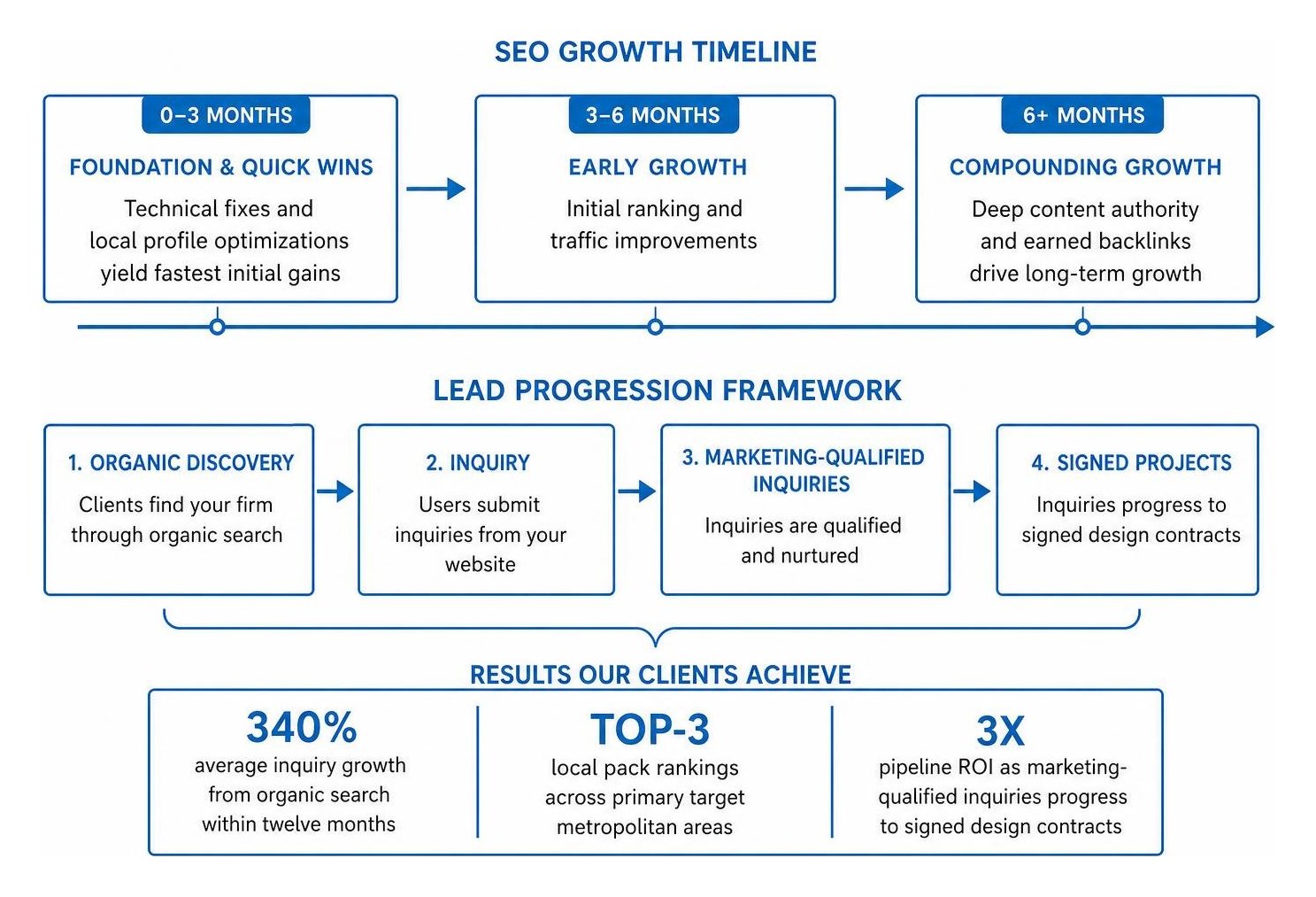
Our clients regularly achieve exceptional outcomes through this methodology:
- 340% average inquiry growth from organic search within twelve months.
- Top-3 local pack rankings across primary target metropolitan areas.
- 3x pipeline ROI as marketing-qualified inquiries progress to signed design contracts.
Tracking meaningful business metrics—such as Sales Qualified Leads (SQLs), project inquiry volume, and estimated pipeline value—ensures your marketing investment directly supports studio growth. At SmallBizSEO, we utilize our proprietary Velocity framework to deliver fast, transparent rankings backed by clear reporting.
To discover untapped opportunities in your market, request a comprehensive architectural design SEO visibility audit and start turning search visibility into signed architectural commissions.
Elevate Your Studio's Digital Foundation
Building an authoritative online presence requires the same structural care, precision, and planning you dedicate to physical blueprints. By combining fast technical performance, local profile authority, comprehensive project case studies, and clear content structures, your architecture firm can consistently attract high-budget residential and commercial clients. SmallBizSEO is ready to help you implement a data-driven strategy that highlights your design portfolio and fuels long-term studio growth.