Put Your Dining Menu Right in Front of Hungry Local Searchers
Why SEO for Local Restaurants Brings Diners to Your Door
SEO for local restaurants starts with being easy to find and easy to choose. Claim your Google Business Profile, keep your hours and address correct, and add your menu as text on your website. Then ask diners for honest reviews and make it simple to call, get directions, or book a table from a phone.
These steps help you appear when someone searches for a dish or a place to eat nearby, even if they do not know your restaurant’s name. Google weighs how well your business matches the search, how close it is to the diner, and how well known it is.
I’m Clayton Johnson, founder of SmallBizSEO. My work in SEO for local restaurants draws on helping small businesses improve their website content, technical SEO, and authority so more customers can find them.
Simple guide to SEO for local restaurants terms:
- roofing company SEO
- SEO business
- SEO advertising agency
Why SEO for Local Restaurants Drives Immediate Dining Traffic
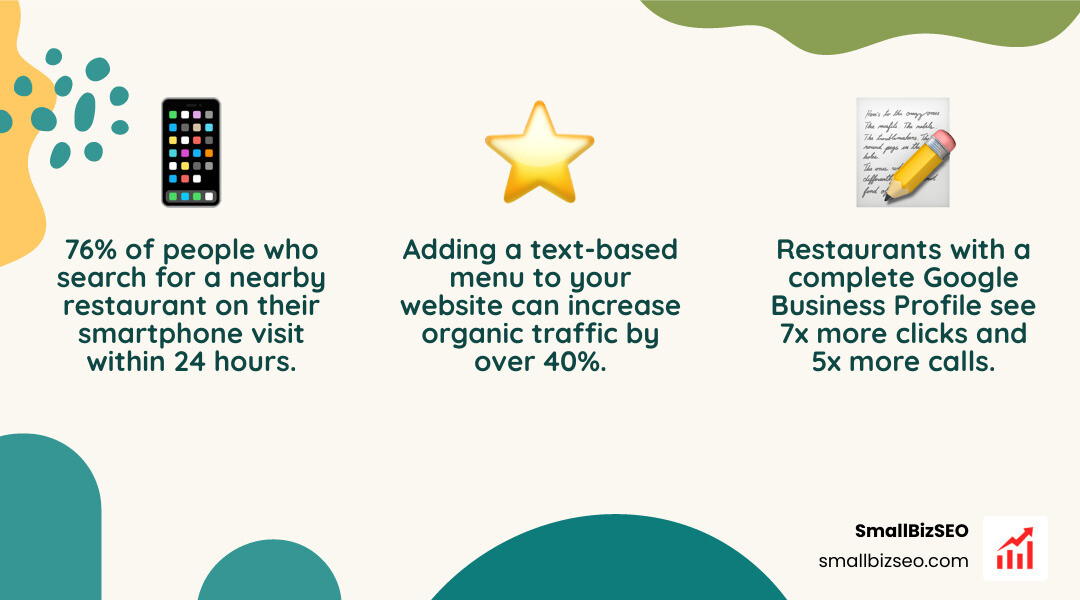
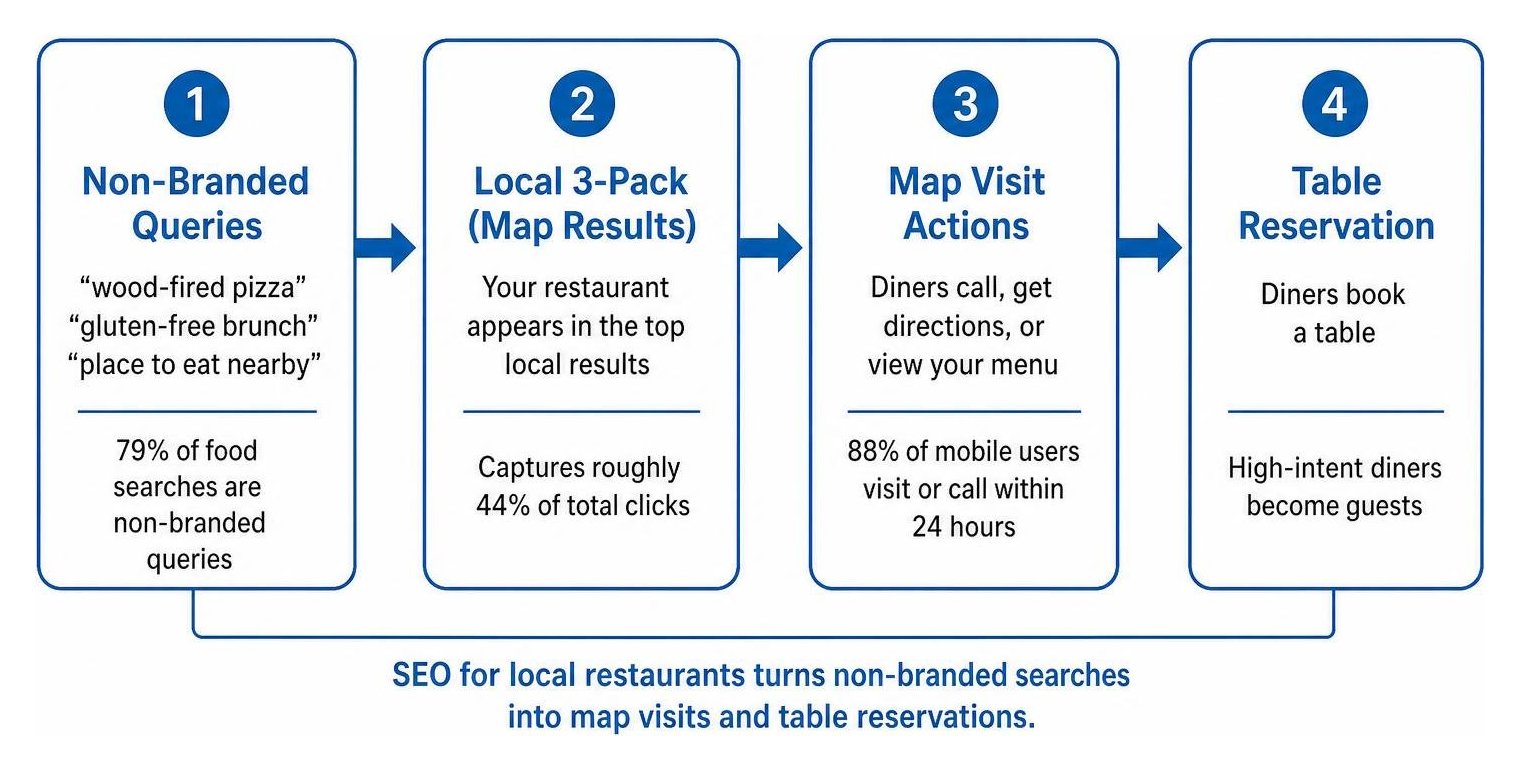
When hungry customers search online for a place to eat, they want quick answers and immediate options. About 93% of diners use online search to find restaurants, and 88% of mobile users who conduct a local search visit or call a business within 24 hours. Because roughly 79% of food searches are non-branded queries such as "wood-fired pizza" or "gluten-free brunch," your visibility in search results directly controls how many guests walk through your doors.
Winning the Local 3-Pack is the primary goal for restaurant visibility. The Local 3-Pack captures roughly 44% of total clicks in map-driven searches, while standard organic web results capture only 29%. Furthermore, between 54% and 59% of all clicks go straight to the top three results. If your dining room relies solely on social media or passersby, you are handing high-intent diners over to nearby competitors.
What Are the Core Ranking Signals in SEO for Local Restaurants?
Google determines which eateries appear at the top of local results using three fundamental pillars: relevance, distance, and prominence.
- Relevance: How well your business matches the user's specific craving or search intent. Google scans your category tags, business description, and on-page menu content to confirm you serve what the user wants.
- Distance: How far your restaurant is from the searcher's physical location or the geographic area specified in the query. While you cannot change your physical location, maintaining accurate geo-coordinates ensures you appear for neighborhood diners.
- Prominence: How well-known, trusted, and well-reviewed your eatery is across the web. This signal is measured by your review velocity, average star ratings, directory citations, and authoritative local backlinks.
Complete Implementation Playbook: From Profile Setup to Technical On-Page SEO
To turn online searches into booked tables and takeout orders, restaurants must follow a structured, end-to-end optimization system. Following established guidelines, such as Google's official tips to improve your local ranking on Google, allows search engines to accurately crawl, understand, and display your establishment across maps and web results.
How Do You Optimize Your Google Business Profile and Text-Based Menus?
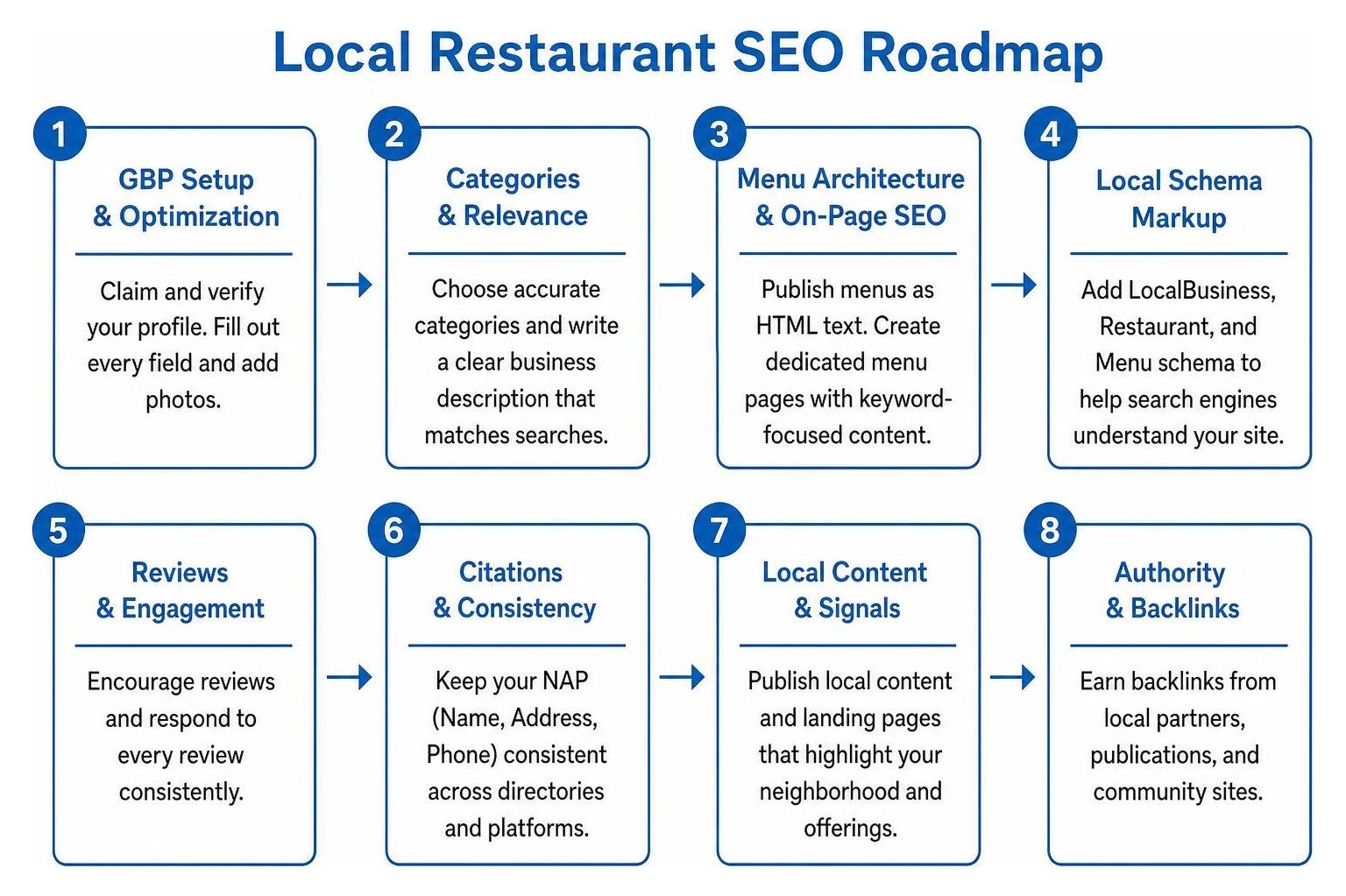
To maximize your local discoverability, you must claim and verify your Google Business Profile (GBP), fill out every available field, and replace static PDF menus with live, crawlable HTML text on your website.
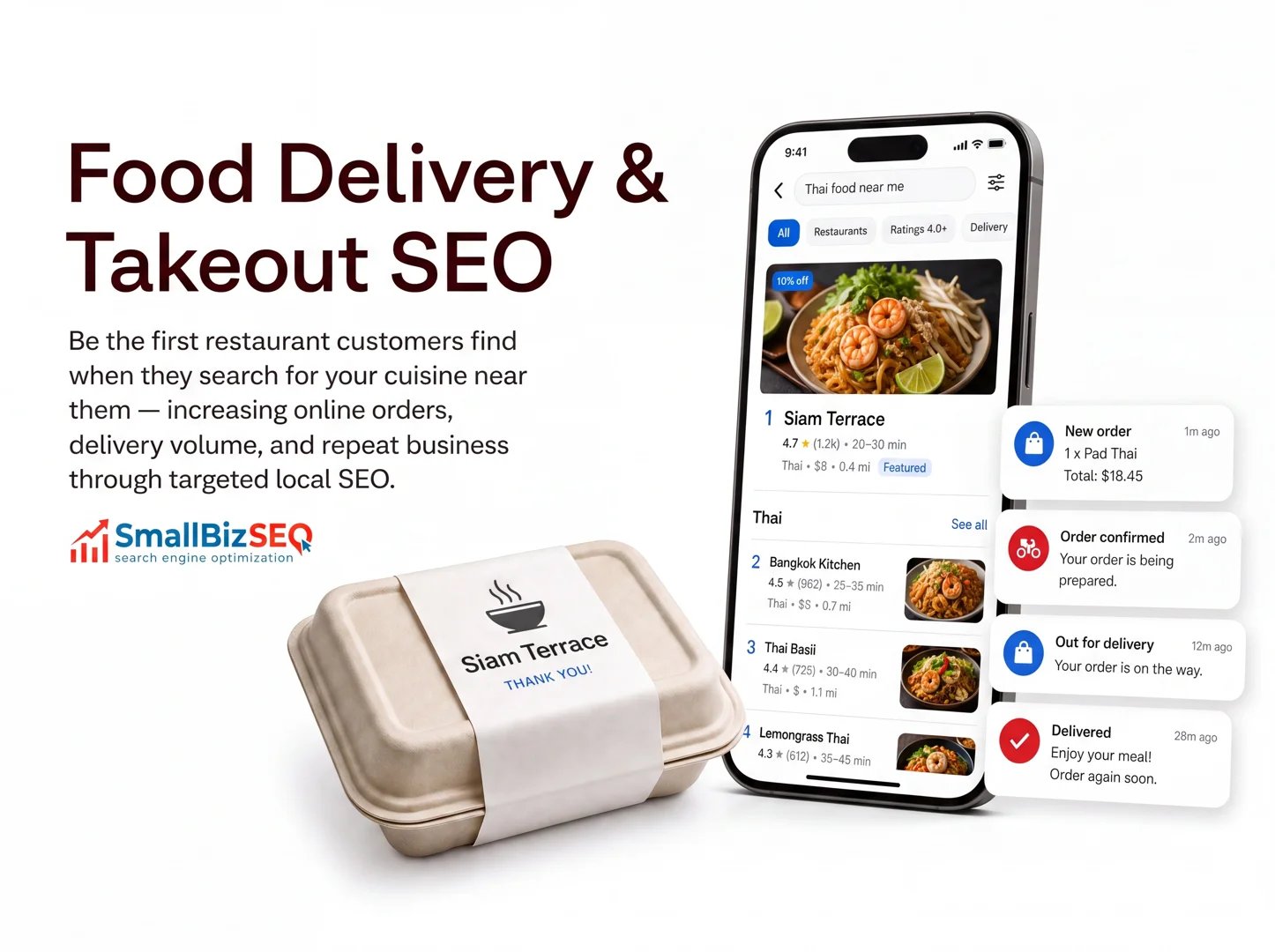
Businesses with high-quality photos receive 42% more direction requests on Google Maps, and listings featuring comprehensive menus see up to 30% more website clicks. Follow these essential steps:
- Category Selection: Set your primary category to your exact concept (such as Italian Restaurant or Sushi Restaurant), and select up to five secondary categories (like Caterer or Bar).
- Business Description: Write a clear description incorporating your signature dishes, dining style, and neighborhood terms naturally.
- Menu Editor Integration: Enter your full menu items, descriptions, and prices directly into the GBP menu tool.
- HTML Menus Over PDFs: Avoid uploading your menu solely as an unreadable PDF or image. Search engine bots cannot easily parse text trapped inside flattened images. A live HTML menu ensures every dish, ingredient, and seasonal special acts as an indexed keyword landing point.
- Direct Ordering Links: Route your GBP ordering button directly to your own website rather than third-party portals, preserving your profit margins and boosting site engagement. Adopting a strategic approach to search engine optimization for restaurants keeps your first-party ordering system front and center.
How Do Technical SEO and Menu Schema Boost Mobile Visibility?
Technical SEO ensures your website loads instantly on smartphones and communicates data directly to search engines through structured markup. With mobile devices generating over 62% of web traffic, a slow mobile experience immediately drives hungry patrons away.
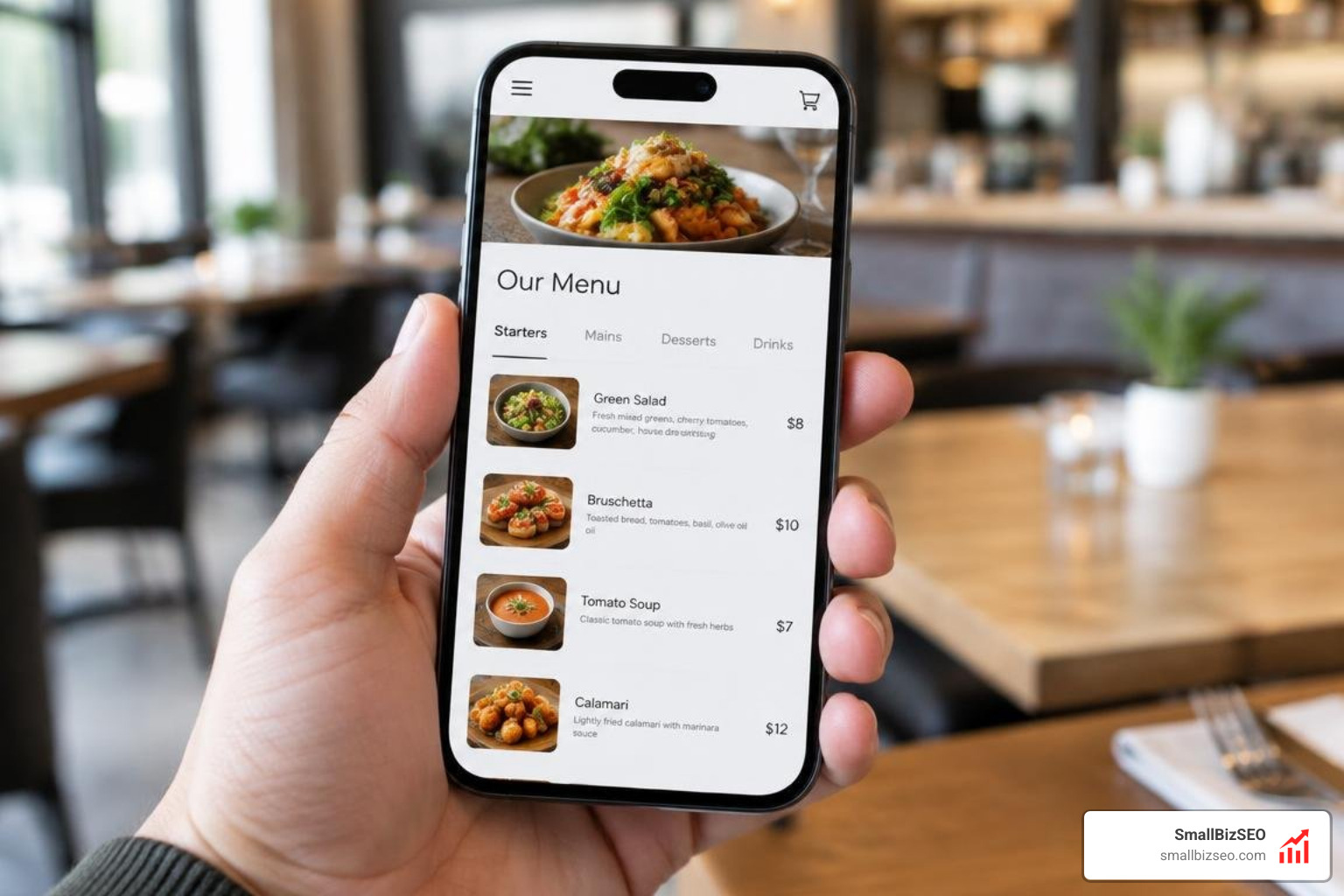
A fast, technically sound site requires three core components:
- Core Web Vitals and Mobile Performance: Aim for a Largest Contentful Paint (LCP) under 2.5 seconds by compressing food photography into modern WebP formats and deferring non-critical scripts.
- Structured Schema Markup: Implement JSON-LD
RestaurantandMenustructured data. This code explicitly defines your operational hours, price range, cuisine type, address, and individual menu items. You can explore structured markup implementations using menu SEO best practices. - Navigation and Tracking: Maintain simple URLs (such as
/menu/pasta) and attach UTM tags to your reservation buttons to track bookings accurately in your analytics platform. For a deeper breakdown of map visibility strategies, review these tactics for local SEO map visibility.
How Can Restaurants Build Citations and Manage Reviews for Prominence?
Prominence is built by maintaining consistent business listings across top web directories and actively gathering positive customer reviews. Reviews are a direct local ranking signal; a high volume of recent, positive reviews signals to Google that your restaurant is active and reliable.
| Review Collection Method | Primary Channel | Best Timing for Outreach | Typical Conversion Rate |
|---|---|---|---|
| Point-of-Sale QR Code | Printed receipt or tabletop card | Immediately after the meal | High immediate engagement |
| Direct SMS Follow-up | Text messaging | 30–60 minutes after takeout delivery | Very high open rate |
| Post-Order Email | Automated inbox reminder | 2–4 hours after dining experience | Moderate, high-detail feedback |
To build robust authority and local prominence:
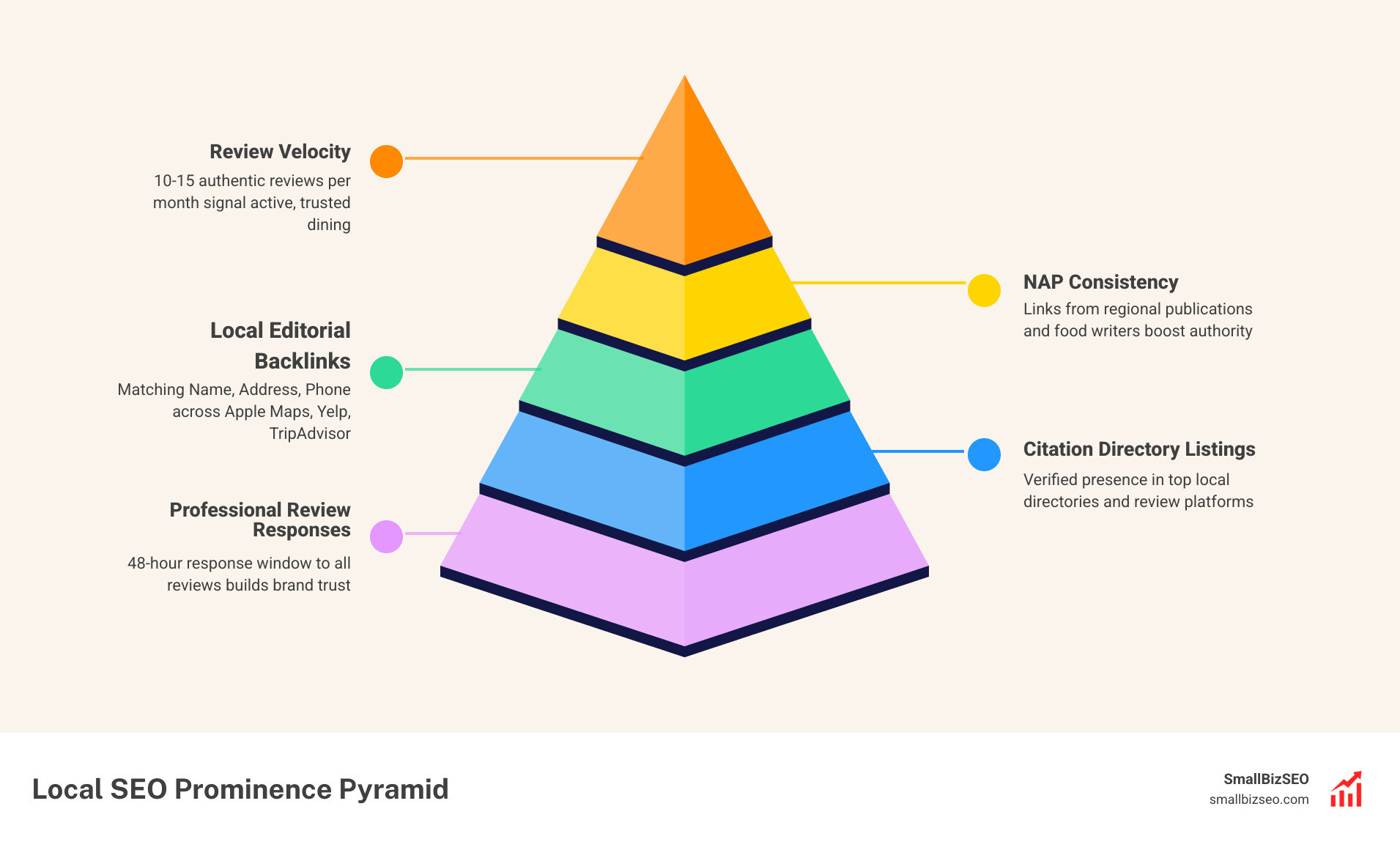
- Audit NAP Consistency: Ensure your Name, Address, and Phone number (NAP) match across Apple Maps, Yelp, TripAdvisor, OpenTable, and food directories.
- Implement a Review Workflow: Aim to acquire 10 to 15 authentic reviews each month. Train staff to encourage feedback, print review QR codes on guest checks, and respond professionally to all reviews within 48 hours.
- Earn Local Editorial Links: Secure backlinks from regional publications, neighborhood community sites, and local food writers. Our proven local SEO guide outlines effective outreach tactics, while analyzing local ranking benchmarks highlights the competitive impact of high-authority citations.
Tracking Performance, AI Search Evolution, and Avoiding Costly Mistakes
Consistent monitoring is necessary to protect your rankings and adapt as modern search habits evolve toward automated and conversational queries.
How Does Generative AI Search Affect SEO for Local Restaurants?
Generative AI engines and conversational assistants now directly answer local dining queries by analyzing structured data, customer reviews, and web citations. Over 45% of consumers consult AI tools when looking for local business recommendations.
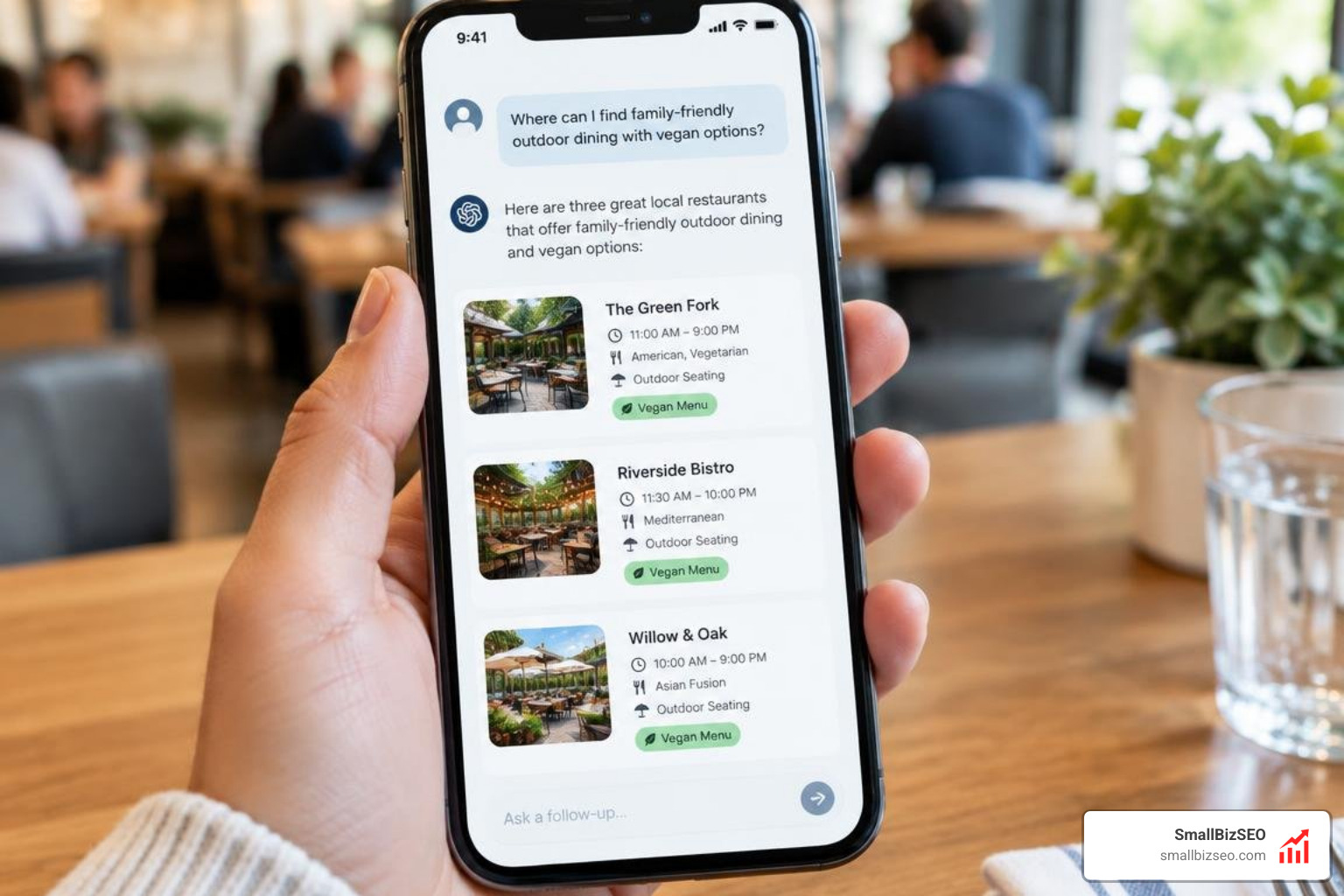
AI models pull information from entity signals rather than just simple keyword matches. If a user asks, "Where can I find family-friendly outdoor dining with vegan options?", the engine scans review sentiment, schema markup attributes, and recent photo tags to build its recommendations.
To ensure your establishment is selected by AI overviews:
- Keep your GBP attributes completely up to date (outdoor seating, wheelchair accessible, kids' menu).
- Encourage customers to mention specific dishes and dining experiences in their written reviews.
- Maintain accurate, machine-readable JSON-LD menu schema on your primary website. For further evaluation of technical service standards, consult this comparison of restaurant SEO agencies.
How Long Does It Take to See Results and Avoid SEO Errors?
Most restaurants observe initial improvements in map impressions and search clicks within 4 to 8 weeks, with substantial ranking growth taking hold within 3 to 6 months of continuous optimization.
Avoid these critical mistakes that degrade organic performance:
- PDF-Only Menus: Unreadable by web crawlers on mobile screens.
- Keyword Stuffing: Forcing location keywords unnaturally into business titles, risking profile suspension.
- Third-Party Redirects: Pointing website visitors to high-commission delivery apps instead of your direct ordering checkout.
- Neglecting Negative Feedback: Leaving complaints unanswered, which harms consumer trust and algorithmic prominence.
At SmallBizSEO, we use our proprietary "Velocity" framework to deliver clear, sustainable rankings and E-E-A-T-compliant visibility through automated reporting and hands-on execution.
Turn Local Online Searches into Booked Tables Tonight
Getting found by nearby diners does not require complicated guesswork. By claiming your business profiles, structuring your menu as fast-loading HTML text, adding valid schema markup, and consistently gathering authentic reviews, your restaurant will naturally rise to the top of map packs and local searches.
Begin by running a thorough audit of your current digital listings, fixing any broken citations, and turning every dish on your menu into an indexed asset. Explore our dedicated scalable SEO services to implement an automated search strategy that fills more tables every night.