Why Does Search Engine Optimization for Restaurants Matter More Than Ever?

Why Does Search Engine Optimization for Restaurants Matter More Than Ever?
How Can Restaurant SEO Bring More Diners Through Your Door?
Start with the searches that lead to a visit or booking. Claim your Google Business Profile, check your hours and contact details, and add current photos, a menu, and a reservation link. Then make sure your website works well on a phone and puts the menu and booking button within easy reach. These steps help nearby diners find you and decide what to do next.
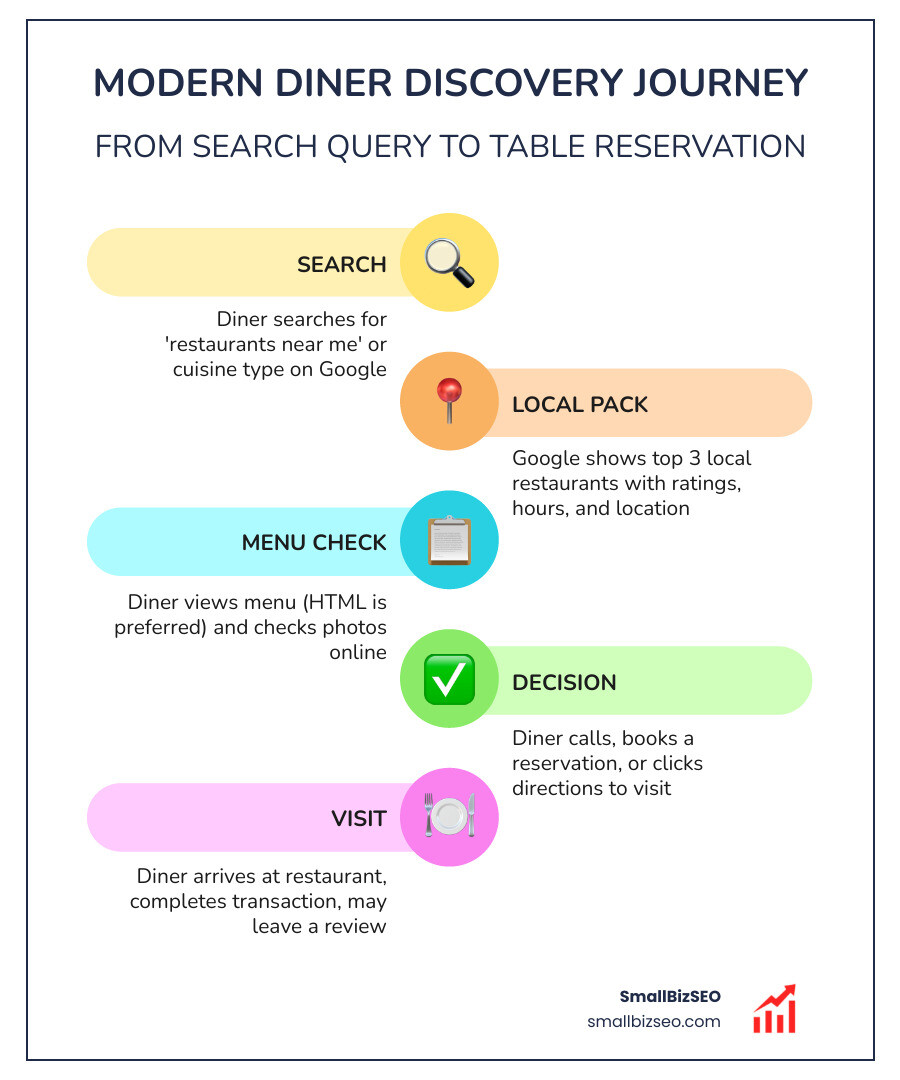
Search engine optimization for restaurants is not just about website visits. A diner may find your hours on Google Maps, read your menu, and book a table without ever reaching your homepage. Your information needs to be accurate wherever that choice happens.
I'm Clayton Johnson, founder of SmallBizSEO, where I help small businesses connect search visibility, useful content, and clear paths to becoming a customer. My approach to search engine optimization for restaurants starts with those same basics: answer diners' questions and make the next step easy.
Search engine optimization for restaurants further reading:
The Foundational Pillars of Search Engine Optimization for Restaurants
Search engine optimization for restaurants improves your visibility in local search by making your website and online listings relevant, prominent, and technically sound. When hungry patrons search for dining options, search algorithms match their intent with restaurants that present clear, accurate, and authoritative information.
By building organic discovery across search engines, your establishment captures high-intent dining queries without relying entirely on costly third-party delivery apps. Protecting your profit margins begins by owning your digital presence across maps, organic results, and voice assistants.
What Is Search Engine Optimization for Restaurants and How Does Google Rank Dining Spots?
Restaurant SEO is the specialized practice of optimizing your hospitality brand so search engines display your establishment for relevant dining searches. Google determines which restaurants appear in top search results by evaluating three core ranking pillars: relevance, proximity, and prominence.
- Relevance: How well your business profile, menu items, and website content match what the user is typing (for example, "gluten-free pasta" or "authentic wood-fired pizza").
- Proximity: The physical distance between the searcher’s current location and your restaurant.
- Prominence: How well-known and trusted your restaurant is across the web, measured by review volume, media mentions, citations, and quality backlinks.
When diners conduct non-branded searches like "best brunch near me," Google's ranking algorithms determine which spots earn prime placement in the local 3-pack. Ranking in these top three map spots drives significant phone calls and direction requests. To build this foundation, review our targeted local SEO guide to understand how search engines process regional signals.
How Can Restaurants Optimize Google Business Profile and Local 3-Pack Rankings?
You can optimize your Google Business Profile (GBP) by completing every data field, selecting precise primary and secondary categories, maintaining strict NAP (Name, Address, Phone) consistency, and uploading high-resolution photos weekly.
To dominate the map pack, apply these foundational steps:
- Category Selection: Choose the most specific primary category available (such as Northern Italian Restaurant instead of just Restaurant), followed by relevant secondary categories.
- Visual Content: Add high-quality photos of your dining room, exterior, staff, and signature dishes. Businesses with regular photo uploads generate significantly more direction requests on Google Maps.
- Weekly Google Posts: Share seasonal specials, limited-time menus, and upcoming live events directly on your profile to signal active operations.
- Review Generation and Response: Build steady review velocity by encouraging happy guests to leave feedback. Always respond to reviews within 48 hours, weaving in natural dish references where appropriate.
Understanding the mechanics of map rankings can transform your foot traffic. Discover actionable tactics in our breakdown of Google local map pack secrets to outrank nearby competitors.
Why Are Mobile Performance, HTML Menus, and Technical Structure Crucial?
A fast, mobile-friendly website paired with crawlable HTML menus allows search engines to index your dishes while providing a seamless ordering experience for guests on smartphones.
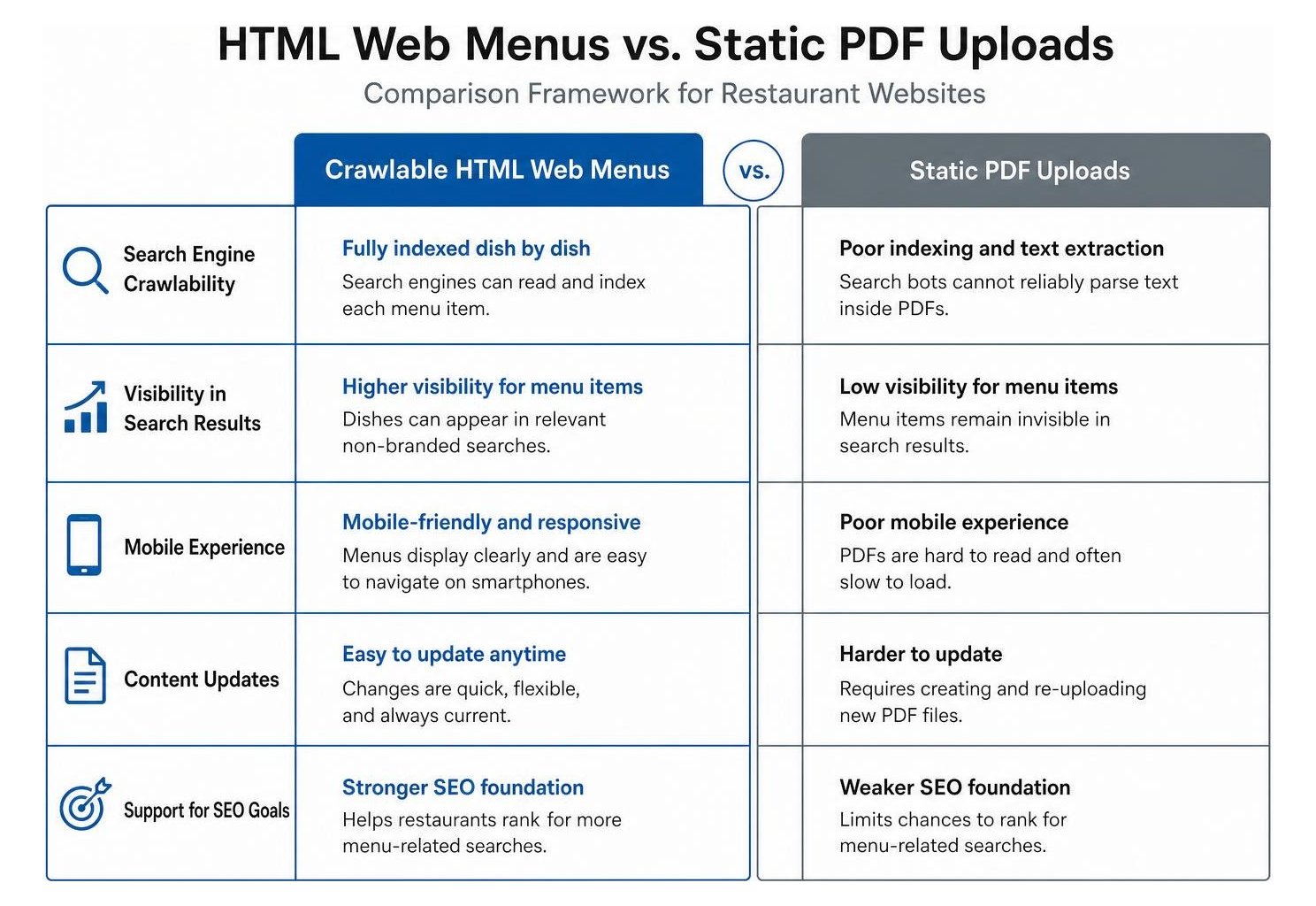
Many restaurants make the mistake of uploading their menu as an unreadable PDF or image file. Search bots cannot reliably parse text locked inside flat images, rendering your dishes invisible to long-tail searches. Industry studies, including Toast's research on diner menu browsing habits, reveal that a quarter of guests always check a menu before choosing where to dine.
| Feature | HTML Web Menus | Static PDF Uploads |
|---|---|---|
| Search Engine Crawlability | Fully indexed dish by dish | Poor indexing and text extraction |
| Mobile User Experience | Responsive, readable without pinching | Requires zooming, slow to load |
| Schema Markup Integration | Supports Menu and MenuItem tags |
Incompatible with structured data |
| Keyword Visibility | Ranks for specific ingredients and dishes | Misses out on long-tail dish queries |
To capture dish-specific searches, implement structured on-page SEO alongside JSON-LD structured data. Adding Schema.org markup such as Restaurant, PostalAddress, OpeningHoursSpecification, and hasMenu provides search engines with direct, machine-readable facts about your dining options.
Actionable Execution and Performance Tracking for Restaurants
Building search dominance requires a structured roadmap that transitions from technical fixes to ongoing authority expansion. Executing targeted improvements in stages ensures your site gains momentum quickly without overwhelming your kitchen or front-of-house staff.
How to Execute Search Engine Optimization for Restaurants in a 90-Day Plan?
A structured 90-day plan systematically resolves site errors, aligns external business citations, publishes optimized pages, and gathers authoritative local backlinks.
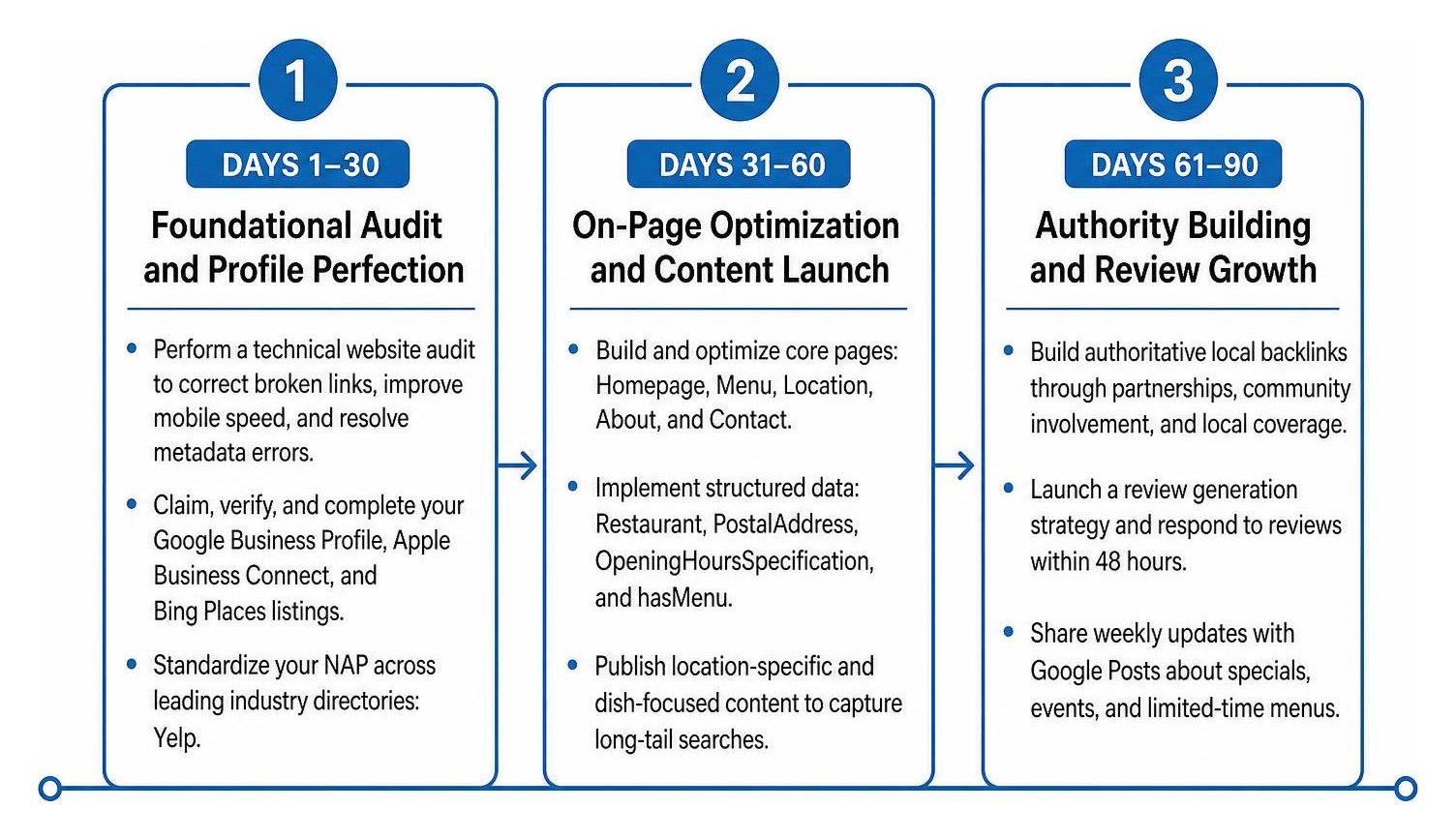
Days 1–30: Foundational Audit and Profile Perfection
- Perform a technical website audit to correct broken links, improve mobile speed, and resolve metadata errors. You can learn more about finding technical errors in The Ultimate Guide to SEO Audit Errors What Literally Happens When Your Site Breaks.
- Claim, verify, and complete your Google Business Profile, Apple Business Connect, and Bing Places listings.
- Standardize your NAP across leading industry directories:
- Yelp
- TripAdvisor
- OpenTable
- Resy
- YellowPages
Days 31–60: Website Tuning and Content Expansion
- Convert all PDF menus into responsive HTML pages with clear dish descriptions and pricing.
- Add structured JSON-LD schema markup across your site's codebase.
- Review recent industry insights on restaurant online ordering trends to align your site navigation with direct table reservations and takeaway funnels.
- Create dedicated pages for unique offerings such as private dining, catering services, or weekend brunch.
Days 61–90: Authority Building and Review Systems
- Establish a post-dining review request process using table QR codes or automated email confirmations.
- Partner with local food writers, culinary bloggers, and community event guides for authoritative backlinks.
- Partnering with a dedicated restaurant SEO company can accelerate this phase by securing valuable regional press and local directory citations.
How Has AI Discovery Changed Restaurant Search and How Do You Measure ROI?
Generative AI search engines, such as Google AI Overviews, ChatGPT, and Perplexity, now answer dining queries by synthesizing data directly from structured web pages, Google Business Profiles, and consumer reviews.
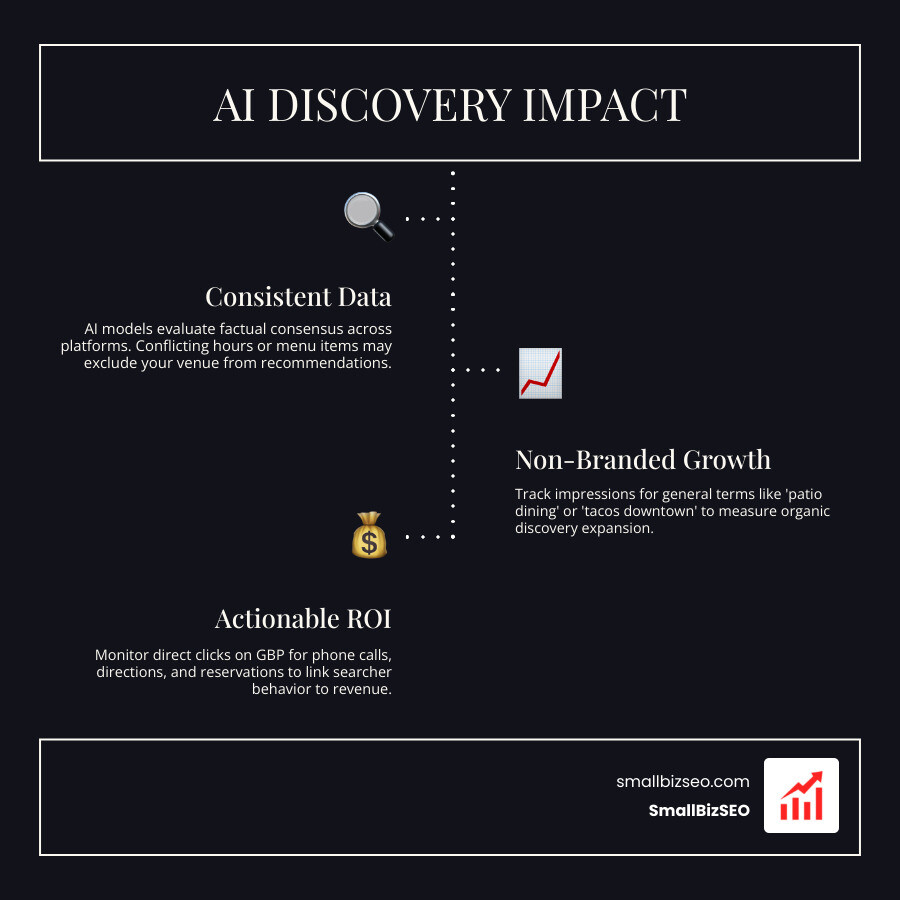
To remain visible in conversational AI recommendations, your online footprint must maintain consistent business facts across all platforms. AI models evaluate factual consensus: if your operating hours or menu items conflict across Yelp, Google, and your own website, AI assistants may omit your venue from their recommendations.
Track the financial return on your optimization efforts by monitoring these key metrics:
- Non-Branded Impressions: Growth in search appearances for general terms like "patio dining" or "tacos downtown."
- Customer Actions: Direct clicks on your GBP for phone calls, driving directions, and table reservations.
- Direct Online Orders: Growth in direct takeaway and delivery revenue compared to third-party delivery apps.
At SmallBizSEO, we implement a data-driven "Velocity" framework designed to deliver fast rankings and transparent growth. If you want a tailored growth strategy, explore our smart restaurant SEO services or request a professional SEO visibility audit to see where your business stands in local search today.
Fill Every Table with a Clear Digital Strategy
Great food and hospitality deserve an audience. By transforming your restaurant’s website into a fast, mobile-friendly hub, converting menus into searchable text, and keeping your local business profiles accurate, you position your establishment directly in front of nearby diners when hunger strikes.
Start with the essential updates: claim your map listings, publish crawlable menus, and encourage your regular patrons to share their positive dining experiences online. With consistent execution, search engines will steadily direct local food lovers straight from their screens to your tables.