A Practical Guide to Ranking Your Debt Consolidation Firm

How Can Debt Consolidation Firms Earn Search Visibility and Trust?
SEO for debt consolidation starts with the questions your customers ask before they contact you. Build pages for each service and location you actually serve, explain costs and risks in plain language, and make it easy to check who runs your business. Then fix technical issues that keep search engines from finding those pages, and track which pages bring in qualified inquiries.
This approach matters because people searching for debt help are making a serious financial choice. Clear, accurate information does more than attract visits: it helps readers decide whether your service fits their needs.
I'm Clayton Johnson, founder of SmallBizSEO. My work connecting content, digital PR, and search visibility for small businesses shapes my approach to SEO for debt consolidation: answer real questions, show credible evidence, and measure leads rather than traffic alone.
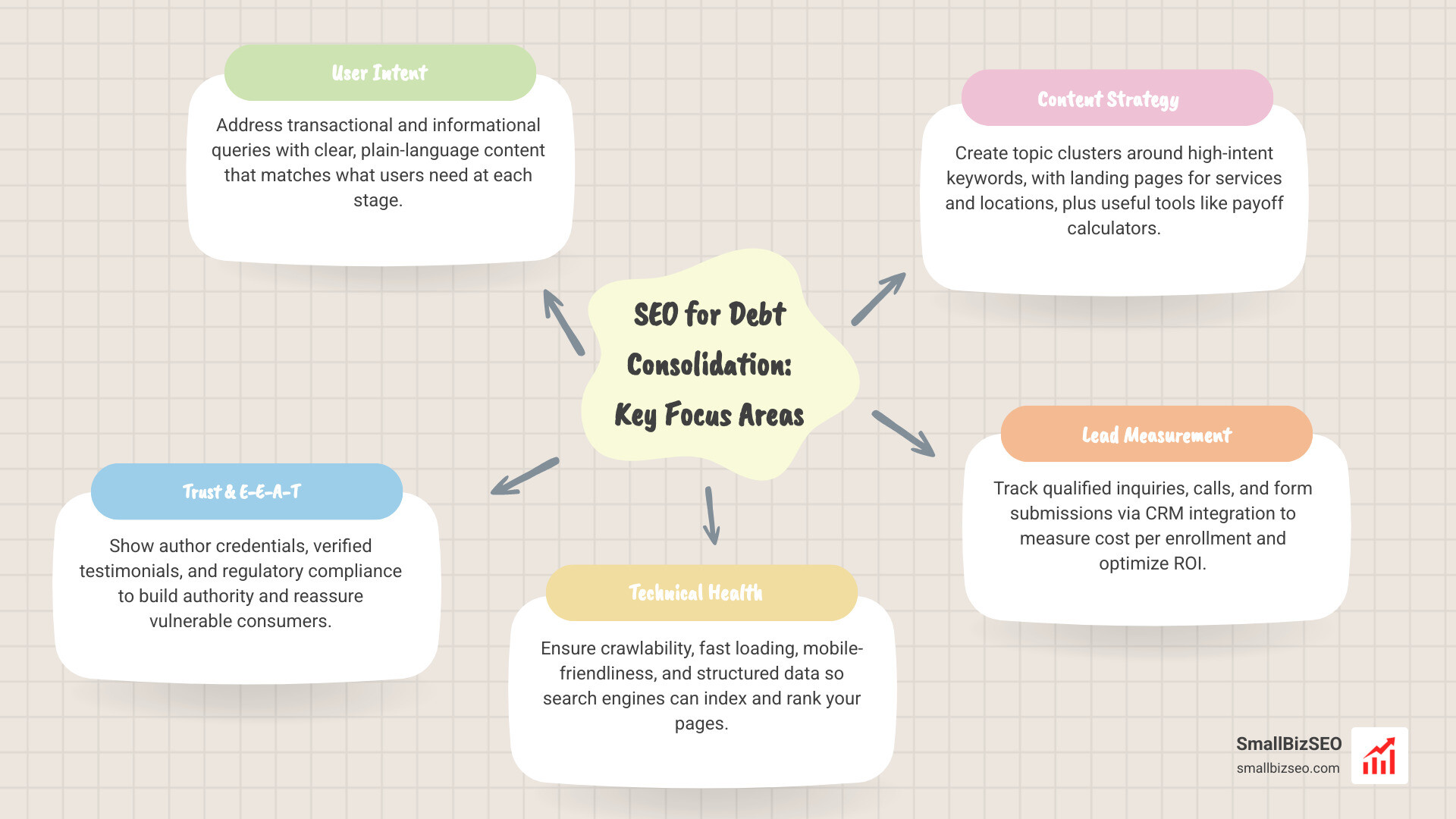
SEO for debt consolidation vocab explained:
Introduction to High-Trust Financial Search
Finding qualified clients online in the debt relief industry requires navigating one of the most competitive search spaces on the web. Search engines hold financial websites to strict Your Money or Your Life (YMYL) standards. Because your content directly affects a consumer's financial stability and emotional well-being, algorithms demand undeniable proof of trust, security, and expertise.
Paid advertising in this vertical is notoriously expensive. Terms like "online debt settlement" and related assistance keywords frequently surpass $28 per click. To build a sustainable pipeline of first-party leads, firms must establish strong organic visibility. This means aligning with strict regulatory rules while delivering helpful, transparent answers to distressed consumers looking for genuine relief.
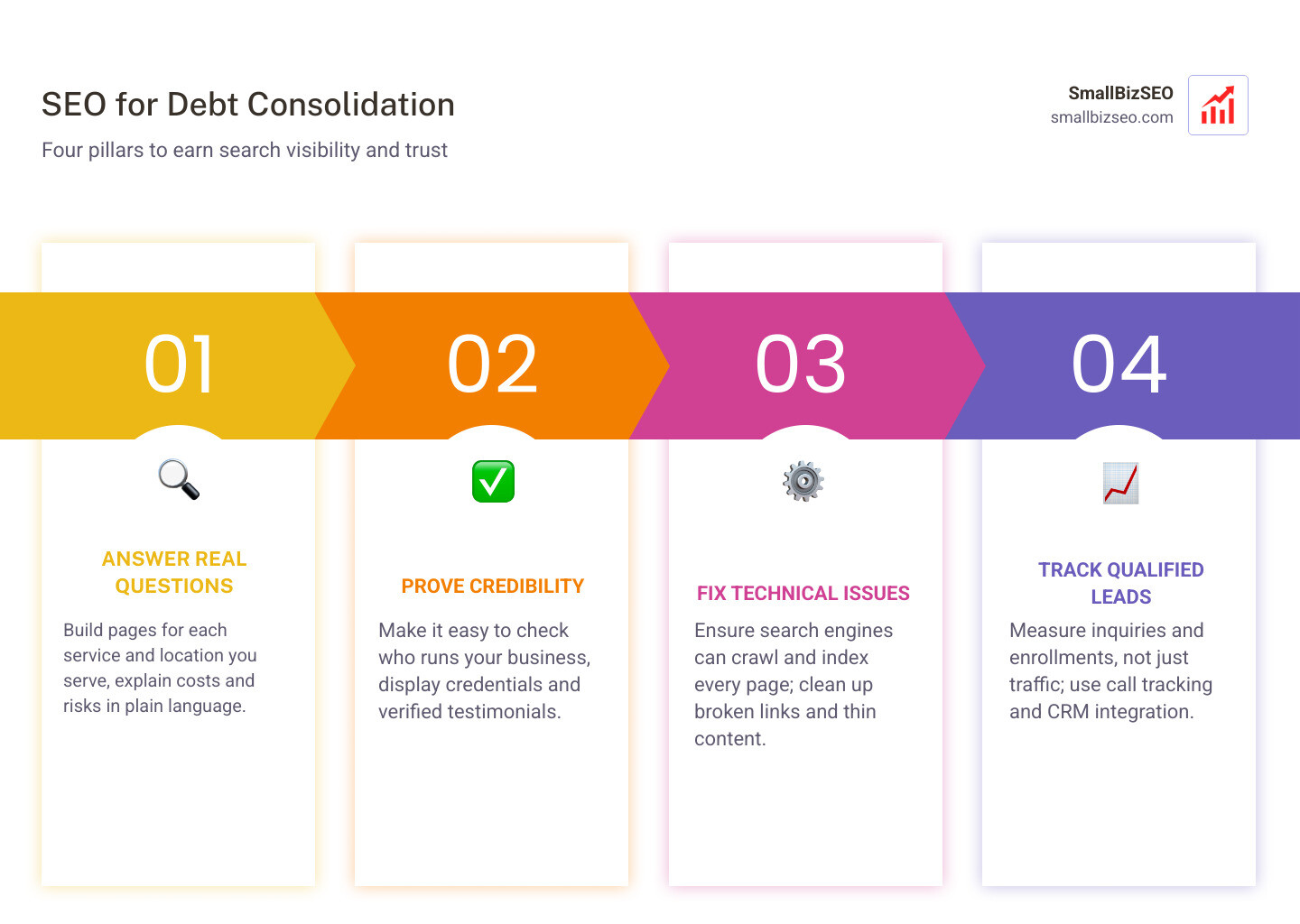
Master Strategies for SEO for Debt Consolidation
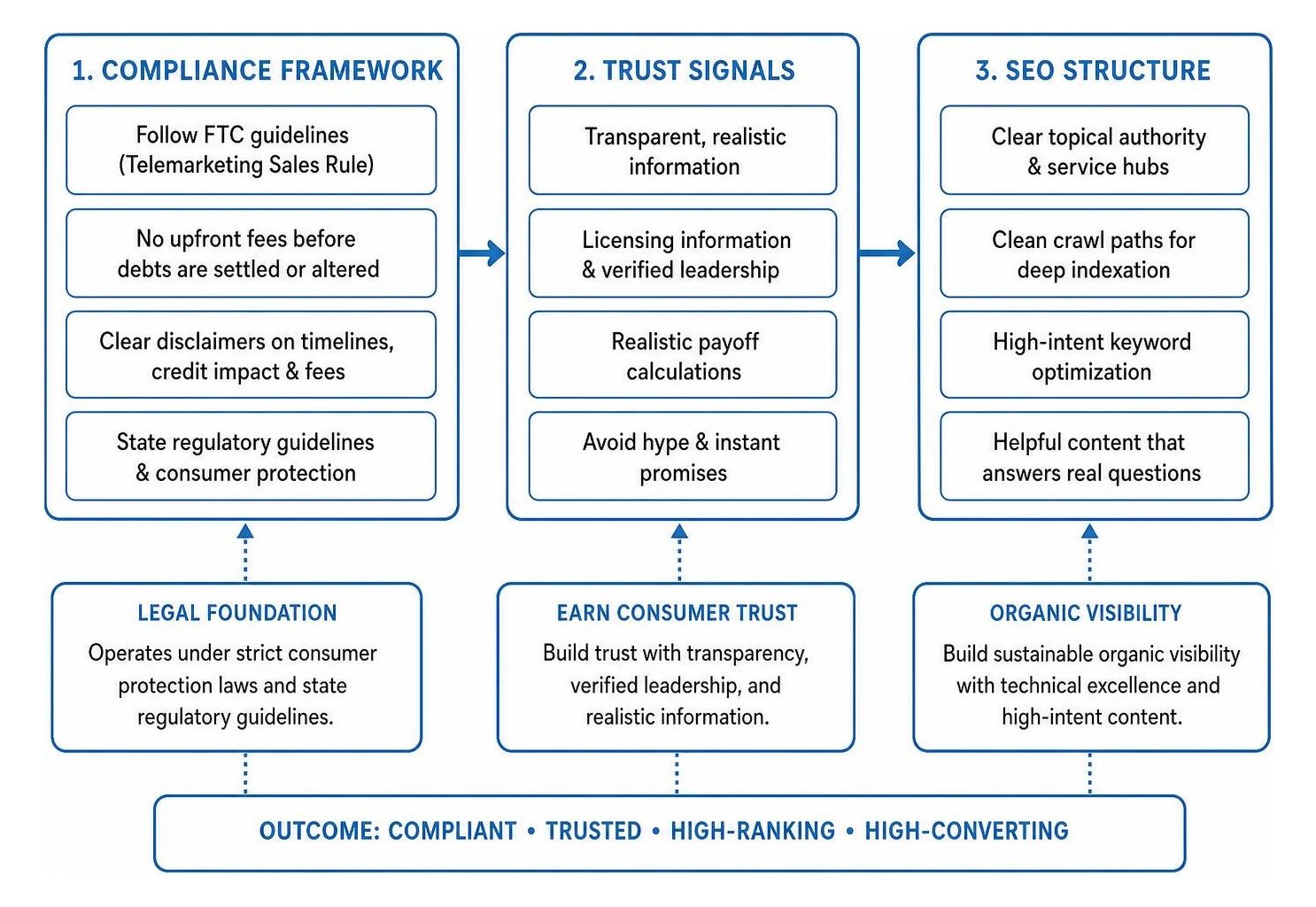
Earning top organic rankings requires a structured framework that pairs technical excellence with high-intent content. We focus on building clear topical authority across dedicated service hubs while maintaining clean crawl paths so search bots can effortlessly index every asset.

When organizing your content strategy, mapping search volume against conversion intent ensures your team produces pages that generate revenue rather than passive traffic.
| Keyword Category | Primary Search Terms | Monthly Search Volume | Commercial Value |
|---|---|---|---|
| Core High-Intent | debt consolidation |
110,000 | Very High |
| Loan Products | debt consolidation loanconsolidation loans |
135,000 60,500 |
Very High |
| Specific Debt Types | credit card debtbad debts |
18,100 27,100 |
High |
| Program Specifics | debt management plandebt relief order |
9,900 14,800 |
Very High |
| Debt Collection | debt collectorcollection agency |
60,500 27,100 |
Moderate |
To support deep indexation, your domain must earn crawl authority across web archives and maintain relevant outbound references to official consumer finance resources, including state regulatory guidelines.
How Does SEO for Debt Consolidation Differ From Generic Financial SEO?
SEO for debt consolidation differs from general financial marketing because it operates under strict consumer protection laws and heightened emotional urgency. Federal Trade Commission (FTC) guidelines under the Telemarketing Sales Rule strictly prohibit upfront fees before debts are settled or altered. Search engines prioritize websites that display clear, prominent disclaimers regarding timelines, potential credit score impacts, and fee structures.
Building trust requires avoiding hype. Generic finance sites might boast about "instant wealth," but reputable debt relief websites succeed by explaining realistic tradeoffs. When executing debt consolidation SEO strategies, we build transparent architectural safeguards into every page, including licensing information, verified company leadership bios, and realistic payoff calculations.
What Keyword Categories Drive High-Intent Traffic?
High-converting campaigns focus on high-intent transactional queries rather than broad definitions. While broad queries like "debt" draw massive search volumes (over 165,000 monthly searches), terms like "debt consolidation loan" (135,000 monthly searches) or "debt management plan" (9,900 monthly searches) signal immediate readiness to evaluate options.
Mastering keyword optimization methods involves separating informational research queries from commercial evaluation queries:
- Transactional Solutions: Phrases like "best debt consolidation loans for bad credit" or "credit card consolidation programs."
- Specific Pain Points: Terms addressing collection pressures, wage garnishment risks, or high APR balances.
- Comparison Queries: Searches comparing debt management, consolidation loans, debt settlement, and bankruptcy.
Mapping these queries into dedicated content hubs allows search engines to identify your site as a comprehensive topical resource.
How Can You Build E-E-A-T and AI Search Visibility?
You can build search authority and AI search visibility by creating citation-ready decision guides that feature transparent data, professional author credentials, and verifiable client outcomes. Recent data on AI search ranking signals shows that modern large language models and search engines prioritize brands mentioned consistently across independent web sources, authoritative directories, and consumer discussions.
To optimize for both traditional search and AI overview citations:
- Publish Comprehensive Decision Guides: Structure pages around specific buyer scenarios, detailing eligibility thresholds, realistic APR spreads, and potential risks.
- Display Verifiable Credentials: Feature clear author bylines backed by recognized financial credentials and compliance officers.
- Encourage Organic Community Discussion: Foster genuine brand sentiment on discussion forums, as third-party citations heavily correlate with AI recommendations.
- Implement Structured Schema: Use Organization, FAQPage, and FinancialProduct schema markup so algorithms can extract direct answers cleanly.
Why Does Local SEO Matter for Displacing Aggregators?
Local SEO allows specialized providers to outrank massive national aggregators like LendingTree or NerdWallet. While national aggregators dominate broad terms, localized search intent triggers Google's Local 3-Pack and geo-specific search rankings where national sites struggle to compete.
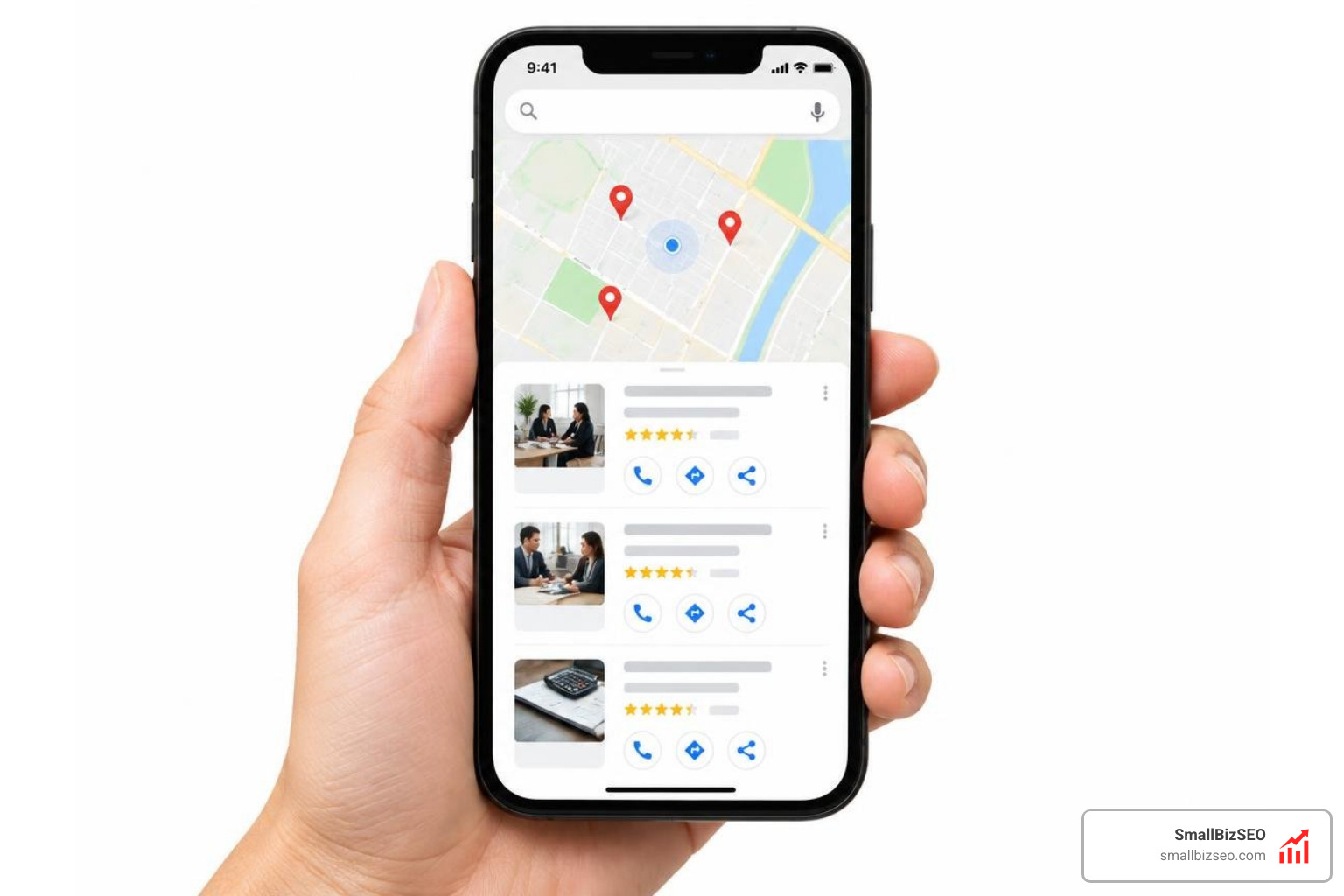
By deploying dedicated geo-targeted landing pages and executing structured debt settlement search campaigns, independent providers capture local searchers who prefer working with nearby professionals. Pair these regional pages with a verified Google Business Profile and an active client review generation process to cement top local visibility.
Converting, Measuring, and Scaling Debt Consolidation Search Visibility
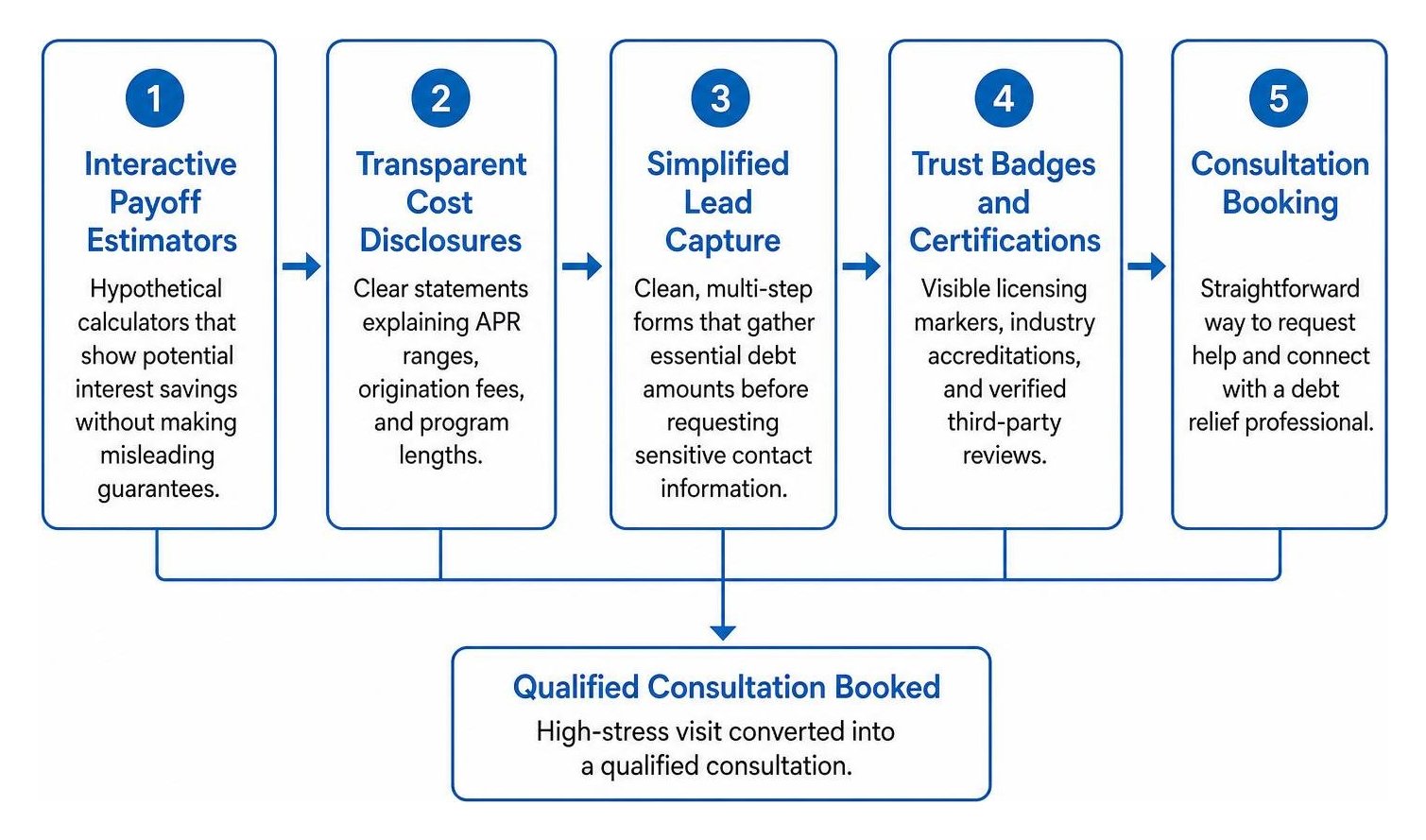
Driving organic traffic is only half the battle; your site must reliably convert high-stress visits into qualified consultations. A robust measurement framework bridges the gap between raw organic clicks and enrolled accounts.

At SmallBizSEO, our data-driven "Velocity" framework delivers fast rankings and E-E-A-T-compliant growth through transparent, automated reporting. To see where your current domain stands, consider requesting a comprehensive SEO visibility audit.
What Landing Page Elements Turn Debt Relief Traffic Into Qualified Leads?
Debt consolidation landing pages convert best when they reduce emotional friction and provide immediate clarity. Distressed consumers need reassurance, transparent math, and a straightforward way to request help without fear of predatory practices.
Key elements of a high-converting debt landing page include:
- Interactive Payoff Estimators: Hypothetical calculators that show potential interest savings without making misleading guarantees.
- Transparent Cost Disclosures: Clear statements explaining APR ranges, origination fees, and program lengths.
- Trust Badges and Certifications: Visible licensing markers, industry accreditations, and verified third-party reviews.
- Simplified Lead Capture: Clean, multi-step forms that gather essential debt amounts before requesting sensitive contact information.
- Reputation Metrics: Ongoing brand visibility tracking to ensure customer trust signals remain strong across all channels.
How Do You Track ROI and Avoid Common SEO for Debt Consolidation Pitfalls?
Track SEO ROI by measuring cost per qualified consultation and enrolled account rather than raw search impressions. In financial search marketing, traffic that fails to convert or creates high bounce rates wastes resources.
Avoid these critical industry mistakes:
- Targeting Generic Informational Keywords: Bidding or optimizing for overly broad terms attracts casual readers rather than individuals seeking immediate debt solutions.
- Publishing Thin Content Pages: Creating hundreds of thin, automated location pages leads to search quality penalties. Instead, focus on substantive regional guides.
- Ignoring Mobile Experience: Most debt relief searches occur on mobile devices during personal hours; slow-loading pages crush conversion rates.
- Neglecting Conversion Tracking: Failing to integrate dynamic call tracking and CRM lead scoring prevents you from attributing high-value client enrollments back to specific organic landing pages.
Ready to Turn Organic Search Into Your Strongest Enrollment Channel?
Sustainable search growth in the debt consolidation industry comes from clear communication, technical precision, and unwavering consumer trust. By moving away from thin marketing claims and building citation-ready resources, your firm can displace aggregators and lower client acquisition costs.
We help financial service providers build authoritative digital ecosystems that attract motivated clients and scale inquiries predictably. Contact SmallBizSEO today to schedule an evaluation of your organic search performance and learn how our Velocity framework can accelerate your firm's market share.