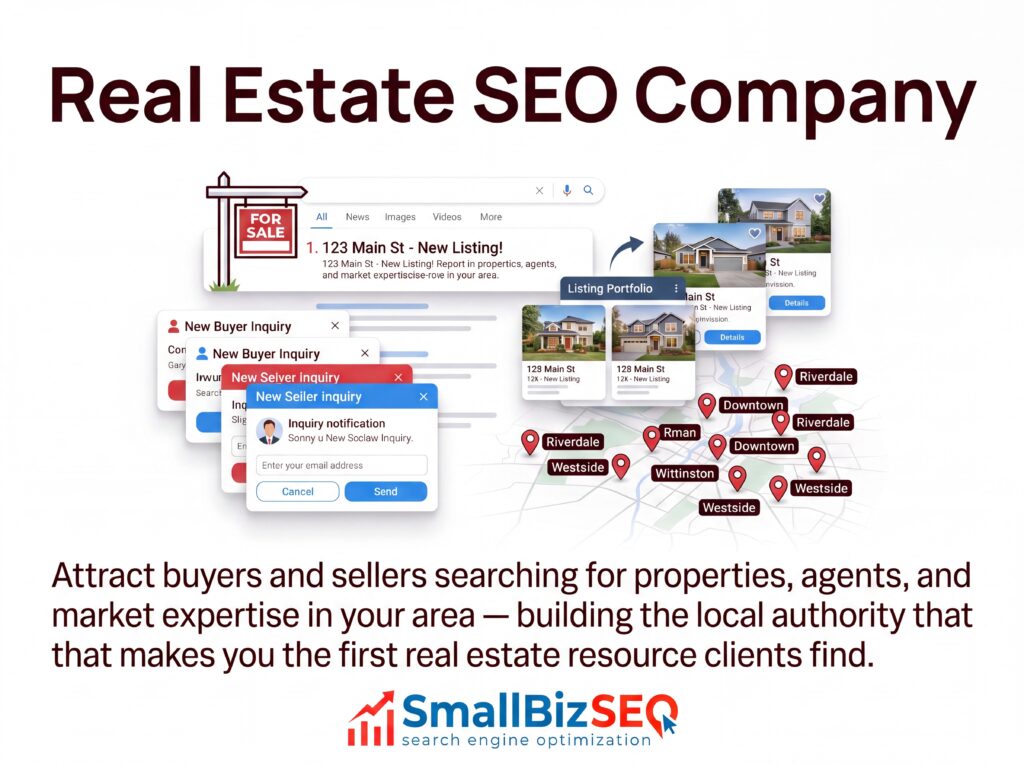
Help buyers and sellers find relevant information without making every visitor follow the same route.
A buyer comparing available properties, a homeowner considering a sale and someone evaluating an agent are making different decisions. We organize real-estate SEO around those tasks. Your website should connect authorized listing information, factual area resources and genuine professional profiles while making it clear whether a visitor is requesting property details, a showing discussion or a seller consultation.
Search intent & content
Separate the property search from the professional-service search
These example searches illustrate different customer intentions. The brokerage’s actual services, locations and listing permissions determine the page structure.
Property discovery
Review how authorized listings and useful property categories are organized. Help visitors reach relevant details and inquiry options while keeping availability and listing materials aligned with the information the brokerage is permitted to publish.
Example searchhomes for sale in a chosen area
Seller-service research
Create a distinct path explaining how homeowners can discuss selling with the business. Describe the actual consultation process and professional role rather than publish unsupported valuation promises or assume a particular sale outcome.
Example searchreal estate agent seller consultation
Factual area exploration
Build area pages around verifiable location information and the property-search tasks they support. Useful navigation and clearly sourced local details are preferable to invented market statistics or sweeping claims about neighborhood suitability.
Example searchproperty information for a local area
Agent and office selection
Present the actual team, office arrangements and service coverage so visitors can choose a relevant contact. Connect professional profiles to the services offered without inventing credentials, locations or specialties.
Example searchlocal real estate agent contact
Website priorities
Build useful pages around real customer decisions
Give listings a clear place in the site
Review how listing feeds, property pages and category pages relate. The goal is understandable navigation and a deliberate content structure, not an assumption that every feed-generated URL should become a search landing page.
Make buyer and seller actions distinct
A property inquiry needs the listing context; a seller conversation needs the homeowner’s goal and location. Separate forms can collect useful details without asking each audience irrelevant questions.
Keep local content factual
Use verifiable area information and explain its relevance to the property search. Avoid characterizations about who belongs in an area or unsupported claims about schools, safety and future values.
Measure inquiries by purpose
Distinguish listing questions, showing requests and seller consultations where configured. Those categories give a clearer picture of website usefulness than combining every contact into a single lead count.
Our approach
A practical plan for your website
We review your actual services, authorized listing setup and buyer or seller workflows. Then we organize commercial pages, local resources and professional profiles so each visitor can find the appropriate information and contact route.
Review the foundations
Check crawlability, existing pages, customer needs, and the services your business actually offers.
Map services to demand
Connect customer questions to useful service pages and supporting content without duplicating search intent.
Build, measure, improve
Publish useful pages and refine them using search visibility and separately configured inquiry analytics.
- Listing text and imagery are published only within the business’s permissions.
- Agent, office and credential information reflects the actual organization.
- Area content uses factual information rather than demographic assumptions.
- Property availability and inquiry context follow the brokerage’s current process.
Frequently asked questions
Questions about your industry SEO strategy
Should buyer and seller services have separate pages?
Yes, when both are offered. Buyers often begin with a property or search area, while sellers need to understand the consultation and representation process before sharing their plans.
Does every listing-feed page need to be a target page?
Not automatically. Review the feed structure, permissions and usefulness of each page type. Focus the content strategy on pages that serve a clear visitor task instead of treating URL volume as the objective.
How can local area pages be more than generic summaries?
Connect verified location information to practical property-search navigation and relevant services. Keep the content factual, useful and current rather than add unsupported statistics or claims about the people who should live there.
How do we measure whether SEO is helping?
Use Google Search Console for search visibility and page performance. Measure calls, inquiries, and lead quality separately through analytics and intake tracking where configured.
Can you guarantee rankings or new customers?
No. We focus on the work within our control: technical foundations, useful content, clear navigation, and measurement. Search outcomes depend on competition and other factors.
Build a clearer path from search to inquiry
Share your real-estate services and current property-search setup. We can build clearer journeys for buyers, sellers and visitors choosing the right professional contact.
Search rankings & AI visibility — AI SEO / AEO
- Google AI Mode
- ChatGPT
- Claude
- Gemini
- Perplexity


Related services & strategies