Scale Your Faux Floral Business with High-Converting Search Traffic

How Can Artificial Flower and Tree Retailers Get More Search Traffic?
Start with the searches most likely to lead to a sale. Build separate category pages for artificial trees, flowers, and plants. Then create pages for specific needs, such as realistic fiddle leaf figs or UV-resistant plants for balconies. Give each product page clear dimensions, materials, photos, price, and availability. Add buying guides that answer shoppers' questions and link to relevant products.
That is the core of SEO for artificial flowers & trees retail: help the right buyer find the right page. It gives a small retailer a way to compete without trying to rank for every broad plant search.
I’m Clayton Johnson, founder of SmallBizSEO. My work in SEO for artificial flowers & trees retail draws on my experience connecting technical SEO, content strategy, and link building to help small businesses attract qualified buyers.
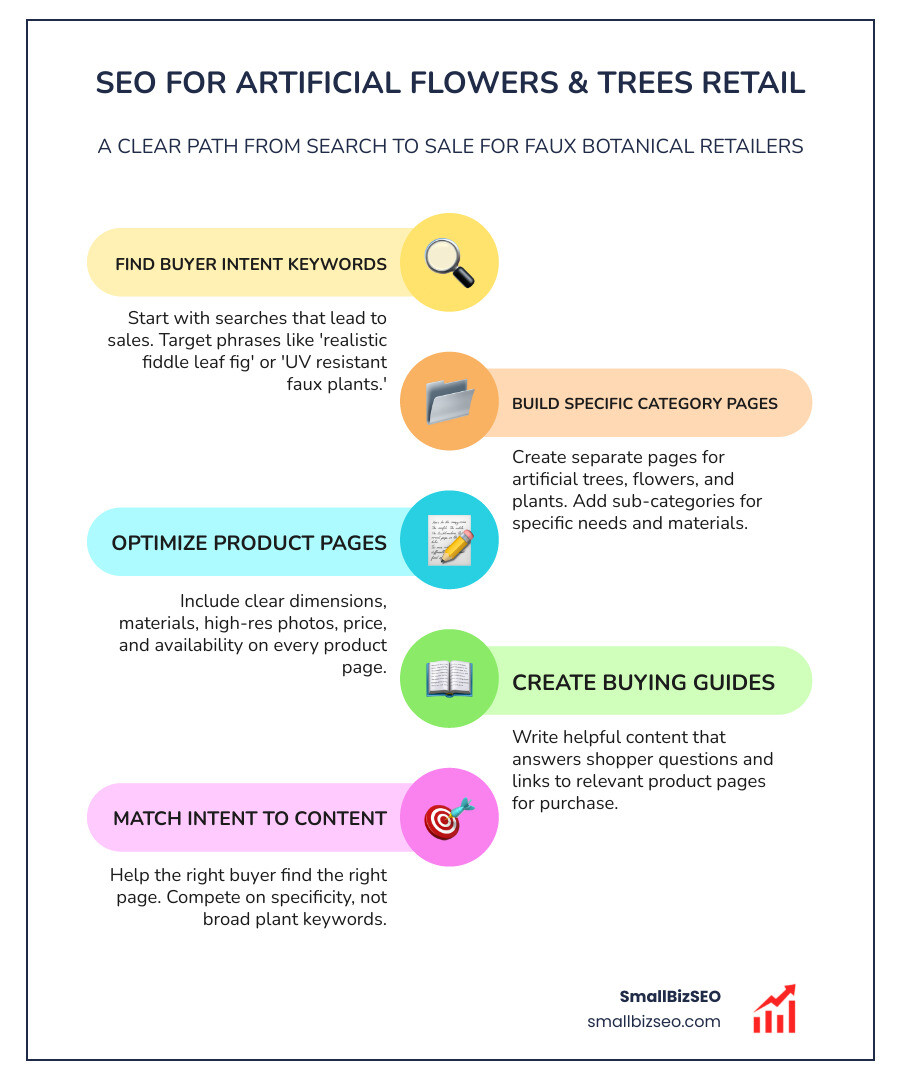
SEO for artificial flowers & trees retail terms simplified:
The faux botanical market represents a fast-expanding segment of home and commercial decor, with total addressable search volume exceeding 550,000 monthly queries across related terms. Market forecasts show the domestic sector expanding by $380.7 million over a multi-year growth trajectory. Buyers seek artificial greenery for practical, lasting value: zero maintenance, hypoallergenic qualities that eliminate pollen sensitivities, and durable foliage that looks fresh year-round.
Proven Strategies in SEO for Artificial Flowers & Trees Retail
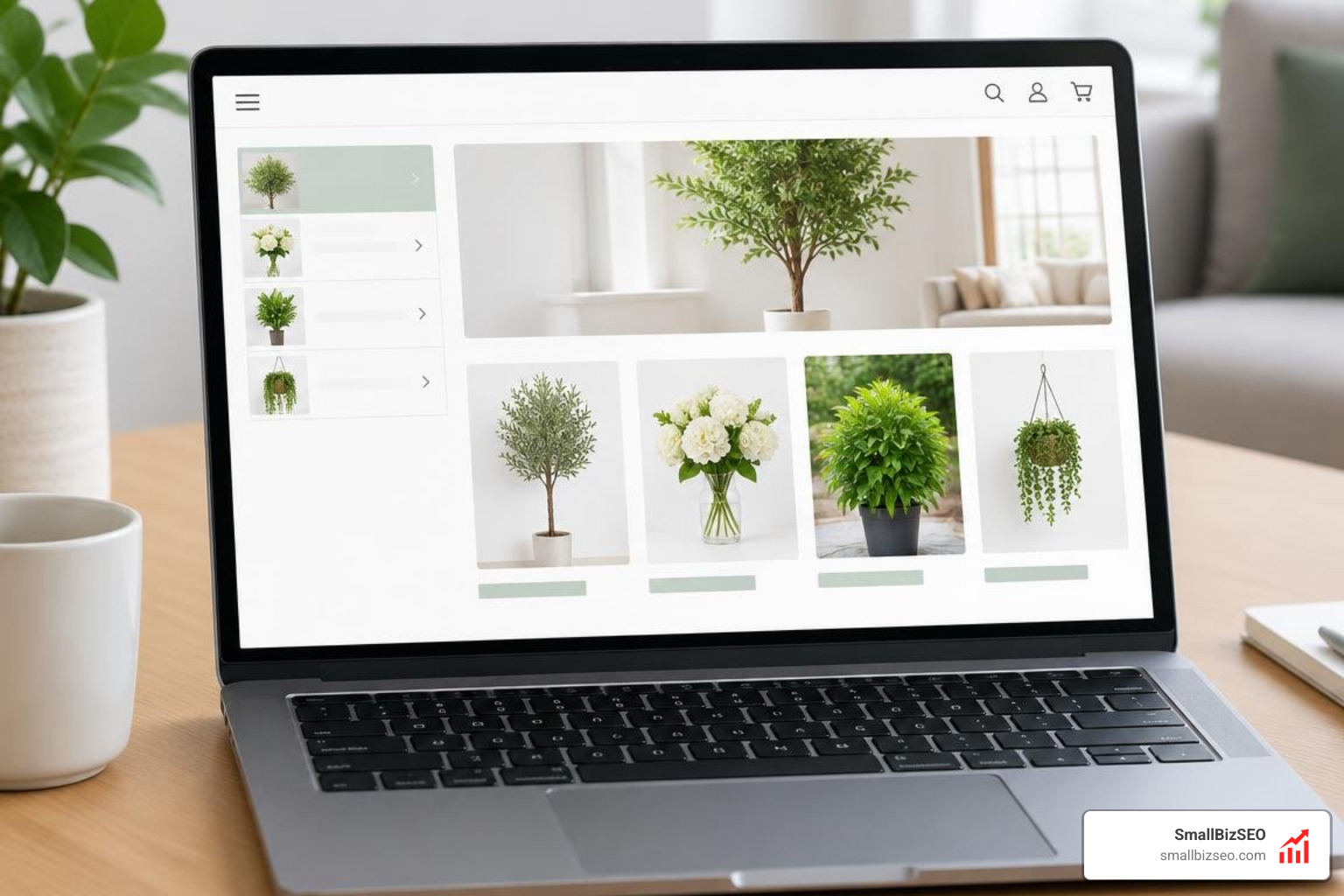
To outrank large marketplaces, build a clean site hierarchy that aligns with buyer intent. Group your catalog into clear, logical collections—such as artificial trees, hanging arrangements, silk floral stems, and outdoor UV-resistant plants.
Using structured taxonomy prevents crawl waste and ensures search engine bots easily index your depth of inventory. Implement faceted navigation thoughtfully so filter combinations (like color, pot type, or height) do not generate endless duplicate URLs. Backing this hierarchy with clear product structured data helps Google understand your catalog pricing, stock status, and dimensions.
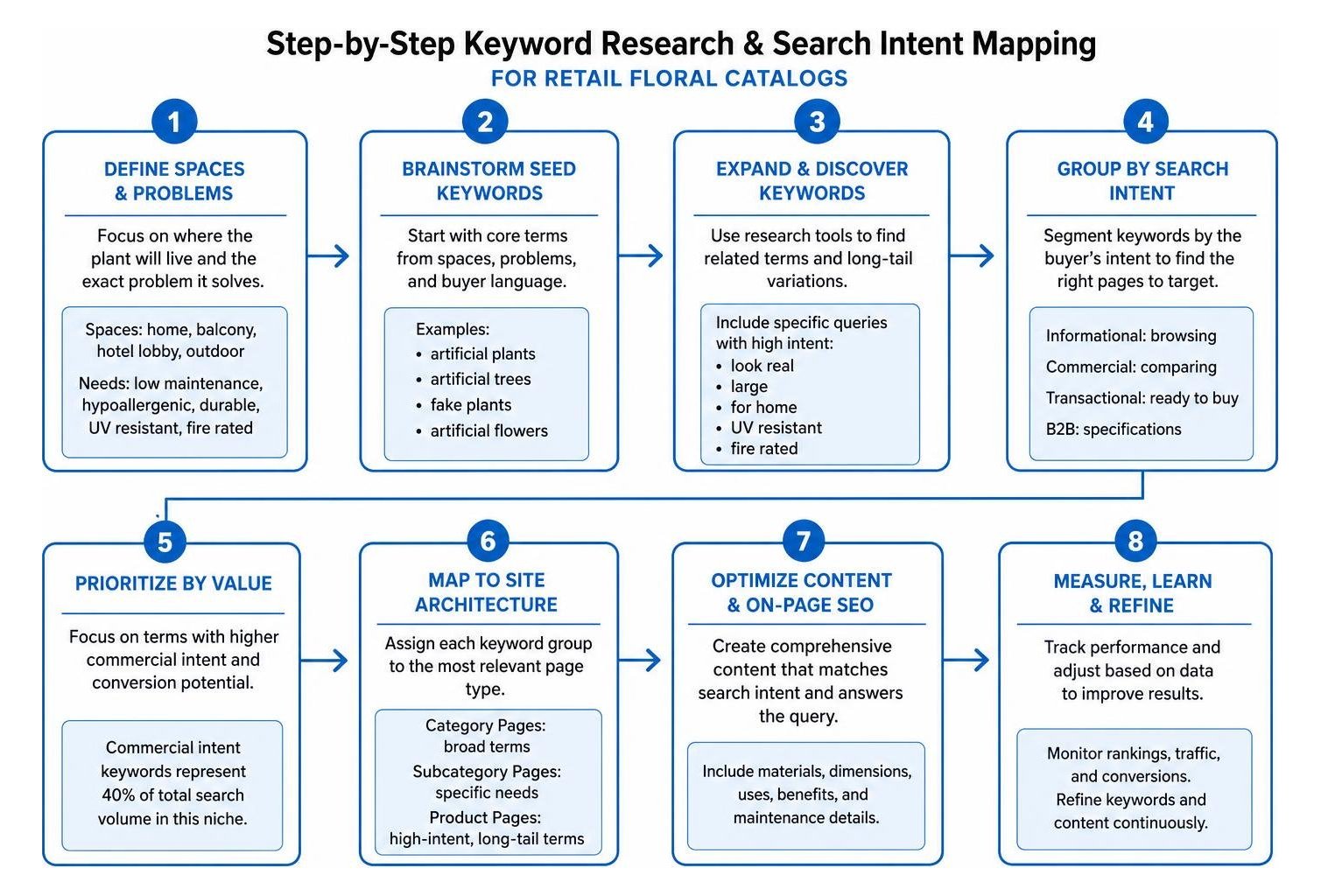
How Do You Conduct Space-First Keyword Research in SEO for Artificial Flowers & Trees Retail?
Target terms defined by where the plant will live and the exact problem it solves, rather than generic botanical names alone.
Shoppers rarely start with broad scientific terms. Instead, they search by spatial constraints, lighting needs, and realistic texture requirements. Effective keyword research identifies phrases with high purchasing intent.
While generic terms like "artificial plants" (110,000 monthly searches), "fake plants" (74,000 monthly searches), and "artificial trees" (33,100 monthly searches) carry high volume, specific queries drive superior conversion rates. Commercial intent keywords represent 40% of total search volume in this niche.
| Search Term Type | Example Keyword Query | Monthly Volume | Intent Level | Avg. Conversion Rate |
|---|---|---|---|---|
| Generic Informational | fake plants | 74,000 | Low / Browsing | 1.2% |
| Broad Category | artificial trees | 33,100 | Medium | 2.1% |
| High-Intent Specific | realistic artificial fiddle leaf fig | 4,400 | High / Transactional | 4.8% |
| Space / Problem-Solving | UV resistant faux plants for balcony | 2,900 | High / Problem-Specific | 5.4% |
| Commercial Specification | fire rated artificial trees for hotel lobby | 1,100 | Very High / B2B | 6.2% |
Specific long-tail queries like "artificial plants that look real" (28,000+ searches), "large artificial plants" (35,000+ searches), and "best artificial plants for home" (22,000+ searches) reflect buyers ready to purchase. Trending botanical varieties, such as artificial fiddle leaf figs, have seen searches increase by over 200%, while artificial succulents have grown by 120%.
How Should Retailers Optimize E-Commerce Product Pages and Category Architecture?
Write comprehensive, 300-word unique descriptions detailing botanical materials, dimensions, and maintenance while embedding structured schema markup.
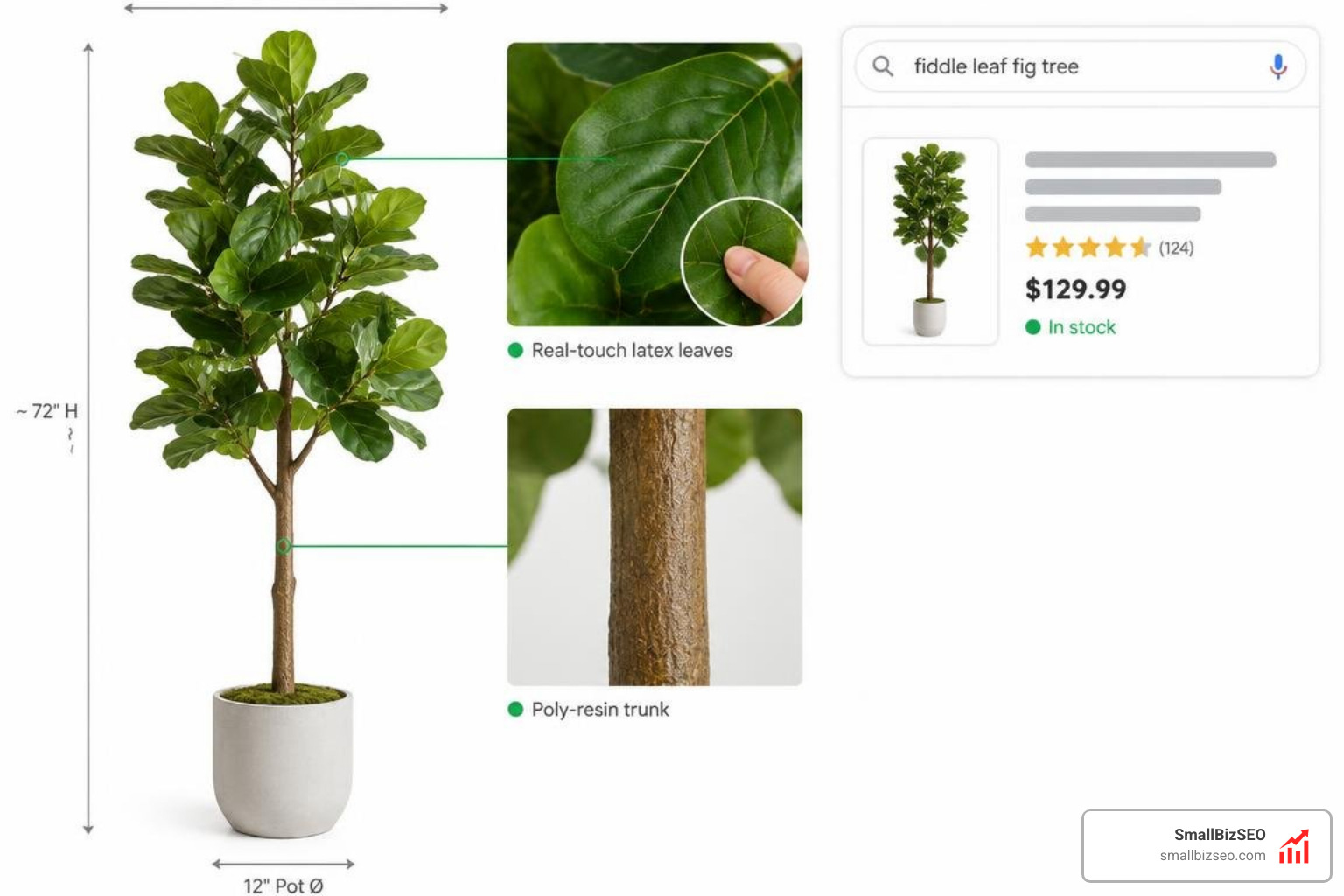
Executing effective on-page SEO transforms basic catalog pages into high-converting assets. Never rely on default manufacturer descriptions. Instead, clearly specify material composition (such as polyester, real-touch latex, or poly-resin trunks), exact height, spread, pot dimensions, and whether the foliage contains UV inhibitors for outdoor durability.
To maximize search visibility:
- Add Structured Data: Implement
ProductandAggregateRatingschema to display star ratings, pricing, and stock status directly in search results. - Manage Out-of-Stock Items: Keep seasonal or temporarily unavailable product pages live with a 200 HTTP status code, displaying clear back-in-stock alerts and links to similar items to preserve accumulated link equity.
- Handle Discontinued Inventory: Apply permanent 301 redirects to the closest relevant subcategory or updated replacement model.
- Integrate Customer Reviews: Encourage verified buyers to post photos and reviews, which creates a steady flow of natural-language keywords.
A published case study on floral ecommerce optimization shows that adding rich product schema and detailed specifications significantly lifts organic click-through rates and customer trust.
How Can Artificial Plant Retailers Maximize Technical SEO and AI Visibility (GEO)?
Optimize site speed, resolve crawl bottlenecks, and structure answers clearly to secure citations in AI search overviews.
Underlying site health is critical. Following an established technical SEO guide ensures your store maintains optimal Core Web Vitals. Compress high-resolution lifestyle images using WebP formats to maintain fast loading speeds without losing visual fidelity.
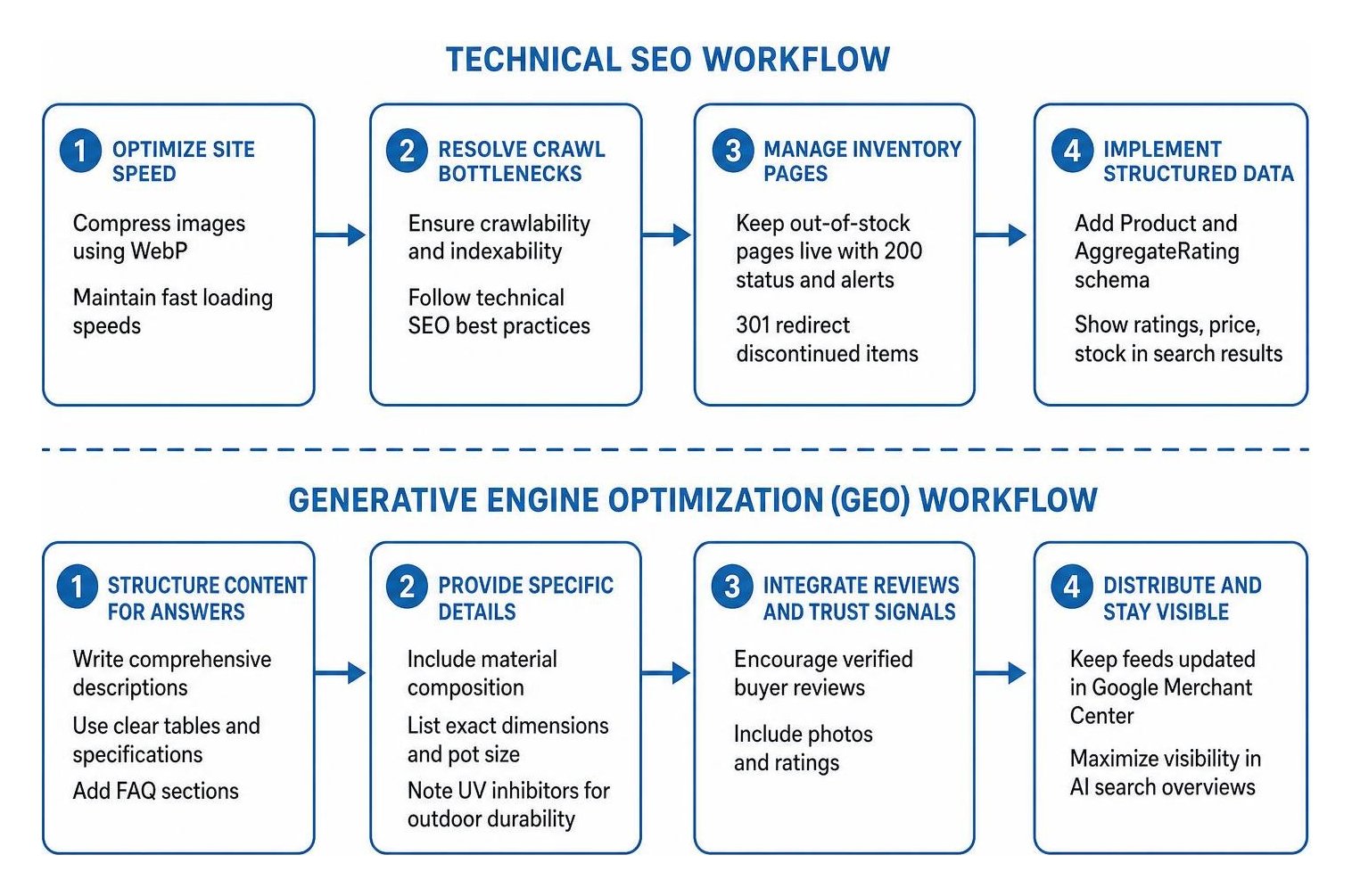
Generative Engine Optimization (GEO) focuses on structuring product data so AI engines (like Google AI Overviews) can easily extract and cite your content. You can explore modern research on buyer and retailer SEO trends to see how conversational question answering impacts modern purchasing habits.
Structure key specifications into plain tables, include direct FAQ sections on product pages, and maintain updated feeds within Google Merchant Center to maximize visibility across both visual search and conversational AI engines.
Building Long-Term Authority, Seasonal Traffic, and Conversion Growth

A comprehensive SEO strategy combines technical execution with scheduled content production and high-authority link acquisition. Planning editorial campaigns in advance ensures pages build ranking authority before seasonal shopping peaks arrive.
What Are the Essential Content and Local Tactics in SEO for Artificial Flower and Tree Retailers?
Align editorial calendars with predictable search spikes while optimizing local showroom listings and dedicated B2B trade landing pages.
Search trends for faux florals follow clear annual cycles. Consumer interest surges during spring home refreshes, climbs in autumn for warm-toned floral decor and memorial arrangements, and peaks in winter for artificial Christmas trees and holiday garlands. Publish buying guides and styling content 60 to 90 days before these peaks to allow search engines time to index and rank your pages.
For retailers operating physical showrooms or regional design studios, combining digital retail with our specialized ecommerce SEO services and proven local tactics yields significant foot traffic. Implementing recommendations from our local SEO guide—such as maintaining an accurate Google Business Profile, collecting local reviews, and building location-specific landing pages—captures high-intent local shoppers.
Additionally, build dedicated landing pages for trade professionals (interior designers, event planners, hospitality staging companies) highlighting bulk pricing, commercial fire certifications, and custom arrangement capabilities.
What Are the Common Pitfalls and Scaling Tactics for Sustainable Revenue Growth?
Eliminate duplicate manufacturer copy, avoid thin category listings, and build authoritative backlinks through interior design outreach.

Many artificial plant retailers struggle by using identical product descriptions supplied by wholesale importers, creating widespread duplicate content issues. Others publish empty category pages or let expired inventory turn into dead 404 links.
Avoid these pitfalls by creating original descriptions, curating comprehensive buying guides, and running digital PR campaigns targeting home decor publications and renovation blogs.
At SmallBizSEO, our data-driven Velocity framework focuses on resolving technical blockers, optimizing high-intent keyword mapping, and building authoritative links to generate compounding organic revenue. To uncover untapped ranking opportunities across your catalog, request a comprehensive SEO visibility audit from our team.
Growing Your Faux Floral Retail Footprint
Capturing high-converting search traffic for artificial flowers and trees requires moving beyond broad keywords to target space-first queries, seasonal demand, and specific customer requirements. By implementing structured schema markup, maintaining pristine technical health, and delivering detailed botanical descriptions, your retail store can reliably outrank mass-market competitors. Consistent execution across on-page optimization, content marketing, and backlink development ensures your products reach ready-to-buy homeowners and commercial clients alike.