SEO for Conference Management Providers

How Does SEO for Conference Management Bring in the Right Visitors?
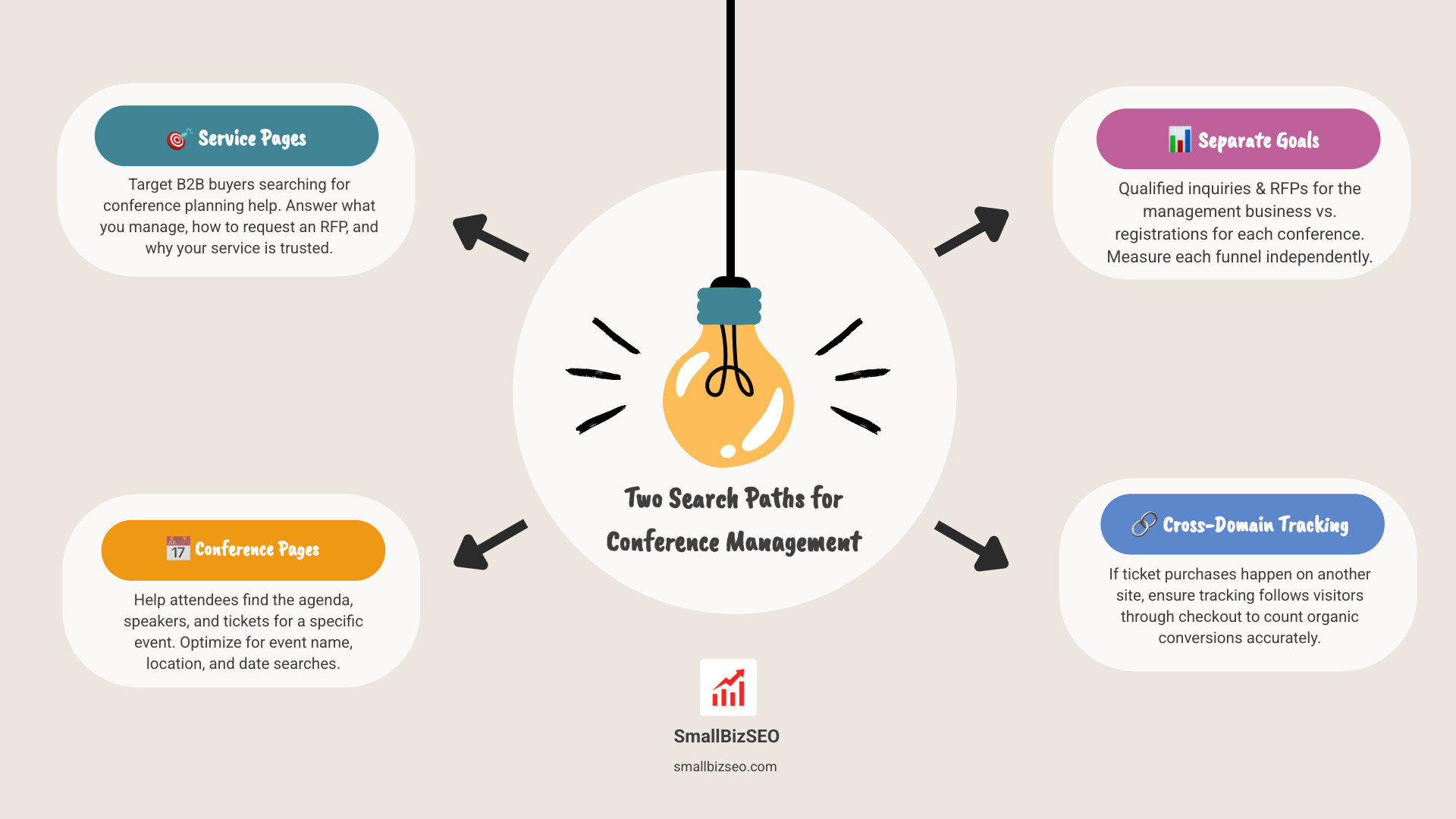
SEO for conference management helps providers get found by organizations looking for help planning a conference. Start with a clear service page that answers buyer questions, such as what you manage and how to request a proposal. Then create separate pages for the conferences you run, so people searching for an agenda, speaker, or ticket can find the right event.
Those pages serve two different goals: qualified inquiries and RFPs for the management business, and registrations for each conference. Measure them separately. If ticket purchases happen on another site, check that tracking follows visitors through checkout before counting them as organic conversions.
Why SEO for Conference Management Drives B2B Inquiries and Registrations
SEO for conference management helps conference providers reach corporate buyers researching professional event-management support and helps prospective attendees find specific event information. Service landing pages and public-facing event directories can support different search intents, so each should have a clear purpose and conversion path.
A successful organic search strategy separates corporate lead generation from attendee discovery. When decision-makers search for full-service event production, conference logistics management, or venue sourcing, provider service pages should explain the service scope, show relevant proof, and offer a clear request-for-proposal path. Individual event pages should focus on event dates, agendas, speakers, and checkout details.
A practical page checklist includes:
- Service pages: Define the provider's scope, supporting proof, and RFP action.
- Event pages: Confirm the event details, agenda, speaker information, and ticket path.
- Checkout measurement: Verify that analytics and consent settings can carry attribution into the ticketing flow.
| Channel Focus | Primary Search Intent | Target Landing Pages | Core Conversion Metric |
|---|---|---|---|
| B2B Management Services | Commercial / Transactional, such as "corporate conference management firm" | Service overview, capability breakdowns, case studies | Completed RFP forms, consultation bookings |
| Direct Conference Discovery | Informational / Navigational, such as "[Topic] summit agenda" or speaker bios | Event overview hubs, session pages, ticket checkout | Ticket purchases, badge registrations, waitlist signups |
Follow Google's Event structured data guidance only on eligible pages for actual, scheduled events. Broad provider or agency service pages should not use Event markup, and valid markup does not guarantee a rich-result appearance.
How Does SEO for Conference Management Differ from General Event Marketing?
SEO for conference management must serve two related but different journeys: business decision-makers evaluating a provider and attendees looking for a specific event. The right balance depends on the provider's services, event portfolio, and audience needs. Stable provider pages can explain capabilities, while individual event pages can carry time-sensitive details without treating either approach as a substitute for the other.
When an event concludes, conference providers can preserve useful historical pages when the material remains accurate and clearly identified as archived. Evergreen service pages can continue to explain capabilities such as logistics, hybrid-event planning, and venue coordination.
For recurring conferences, published insights from Ahrefs support maintaining persistent hub URLs rather than discarding accumulated authority each cycle. Keep accurate archives of past speaker rosters and presentation summaries when they remain useful, and distinguish them clearly from current event information.
What Site Architecture Best Supports Conference Portals and Service Pages?
A structured pillar-cluster architecture separates a provider's service offerings from specific conference programming. At the top level, core commercial pages can explain capabilities such as attendee registration handling, venue coordination, and program logistics.
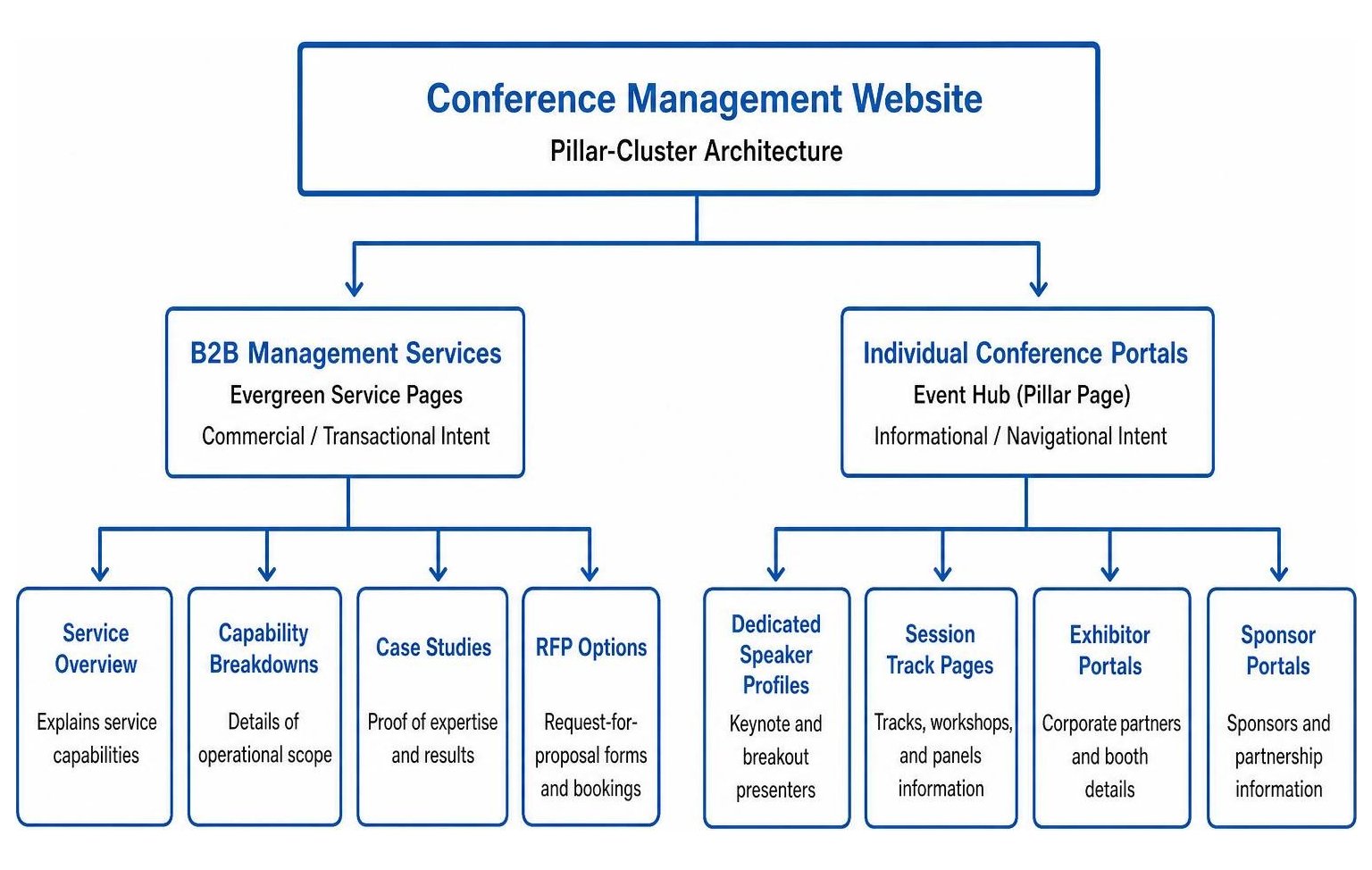
For individual conferences, create a dedicated hub URL with linked sub-pages:
- Pillar Event Hub: The central overview containing event details, primary themes, venue logistics, and ticketing links.
- Dedicated Speaker Profiles: Distinct URLs for keynote and breakout presenters that capture searches for industry authorities.
- Session Track Pages: Sub-pages focused on specific educational tracks, workshops, and panels.
- Exhibitor and Sponsor Portals: Indexable directories highlighting corporate partners and booth details.
Use clean breadcrumb navigation and deliberate internal linking so search crawlers can understand site hierarchy without unnecessary crawl bloat.
How to Execute On-Page and Technical SEO for Conference Management
Executing on-page and technical SEO requires clear metadata, responsive mobile performance, and accurate structured data on eligible pages. Use Event structured data only for dedicated pages about specific scheduled events with defined details and ticketing actions, not broad conference-management service pages. Even eligible markup is not a promise of enhanced search appearance.
On-page optimization also requires crawlable, text-rich session agendas and clear information for virtual or hybrid attendees. Keep essential agenda and access details in page text rather than locking them inside graphic banners.
Ensure registration funnels render cleanly across mobile devices, maintain reasonable load times, and present readable session summaries.
How Do You Earn Authoritative Backlinks from Speakers, Sponsors, and Industry Media?
Conference organizers can earn authoritative backlinks by providing useful promotional resources to participating speakers, appearing in relevant partner listings, and pitching newsworthy stories to industry media. Each relationship should be approached as an editorial opportunity rather than a required link exchange.
Practical methods for earning editorial links include:
- Speaker Media Kits: Give presenters direct links to their speaker pages and session summaries when those resources are useful to their audiences.
- Sponsor Resource Links: Seek relevant placements on sponsor press pages, partner directories, and corporate announcements. If a sponsor placement is paid or compensated, qualify the link with
rel="sponsored"ornofollowas appropriate. - Trade Publication Features: Pitch newsworthy panel topics, original industry research, and keynote announcements to industry publications, using guidance such as Cvent's event visibility recommendations.
- Association Calendars: Submit confirmed event details and agendas to relevant professional associations and verified trade directories.
Maintain ongoing editorial outreach, content refreshes, and internal links between provider service pages and relevant event hubs. For help building an outreach program, review link-building services.
Measuring Search Impact and Partnering for Long-Term Growth
Measuring search impact requires configuring analytics to track corporate service inquiries and ticket transactions as distinct conversion goals. Clear attribution helps conference providers evaluate whether search activity is producing qualified RFPs, attendee registrations, or both.
Successful search performance relies on ongoing content refreshes, regular technical audits, and continuous keyword monitoring. Review internal links as services, event hubs, agendas, and speaker pages change, then update pages that no longer match search intent. Evaluating crawl health, resolving broken redirects, and expanding useful content hubs can support long-term visibility. To identify opportunities on a current website, consider a professional SEO visibility audit.
How Should Organizers Track Qualified RFPs Alongside Attendee Ticket Sales?
Organizers should track qualified RFPs separately from attendee registrations with tailored conversion events in Google Analytics 4. Use cross-domain tracking only when the ticket platform supports compatible analytics implementation and the required consent settings are in place.
When ticket checkout uses external software, confirm that campaign parameters and measurement settings can pass between the conference website and the ticketing cart. Without compatible cross-domain measurement and consent, attribution may be incomplete or create self-referrals rather than reliably reflecting the original search channel.
Regularly review search metrics in Google Search Console to monitor non-branded query impressions, identify session pages attracting new organic visitors, and refine landing pages to better match the intent of corporate clients and prospective attendees.
Accelerate Your Conference Discovery and Inbound Pipeline
Building an effective organic search presence requires consistent technical execution, structured content creation, and accurate conversion tracking. Whether managing corporate summits, trade exhibitions, or executive retreats, aligning site architecture with user search intent improves discoverability for both services and events.
To develop a search strategy tailored to conference-management operations, explore SEO content services, review SEO visibility audits, or book a consultation.