SEO for Alarm Companies: Help Buyers Compare Installation and Monitoring
Aligning Alarm System Services With Real Buyer Search Intent
SEO for alarm systems starts with the buyer’s need. Build dedicated pages exclusively for the services your business genuinely offers—such as new installations, monitoring takeovers, or maintenance. Make each service page easy to navigate, presenting the specific details buyers evaluate: service coverage, accurate and applicable credentials where required, equipment specifications, contract terms, and a straightforward consultation request.
Alarm buyers must evaluate a contractor who provides hardware and long-term services for their property. Clear answers and verified facts are critical. A property owner seeking monitoring for existing equipment needs different information from someone purchasing a full hardware installation.
I’m Clayton Johnson, founder of SmallBizSEO. My work in content strategy, technical SEO, and link building shapes this practical guide to SEO for alarm systems, aligning organic search strategy with real buyer queries.
How Does Buyer Search Intent Shape SEO for Alarm Systems?
Buyer search intent in the alarm sector separates into distinct needs: equipment repair, new full-system installation, monitoring takeover for existing equipment, and commercial facility management. Publish dedicated pages only for services you actively deliver, matching each intent with clear evidence.
Property owners research security solutions to resolve immediate, concrete requirements. A business or homeowner evaluating a monitoring switch has different questions than someone scoping hardware for a new building. Align each query type with dedicated content that provides verified credentials, clear equipment terms, and logical conversion actions.
| Buyer Query Type | Target Landing Page | Proof & Evidence Required | Primary Conversion Action |
|---|---|---|---|
| New Residential Install (e.g., "smart home alarm installation") | Residential Alarm Systems Page (if offered) | Equipment specifications, warranty scope, transparent pricing | Online quote or estimate request |
| Monitoring / Takeover (e.g., "switch alarm monitoring company") | System Takeovers & Monitoring Page (if offered) | Supported panel brands, monitoring terms, contract duration | Compatibility verification request |
| Commercial Protection (e.g., "commercial security integration") | Commercial Security Systems Page (if offered) | Verified credentials, scalable hardware options, support terms | Consultation request |
| Equipment Service / Repair (e.g., "alarm keypad service") | Alarm Repair & Maintenance Page (if offered) | Active technician credentials, service scope, diagnostic fees | Direct phone inquiry |
By organizing content around these distinct search goals, our framework as a security and alarm system installers SEO company helps prospective clients find relevant information efficiently.
Should Installers Separate System Monitoring From New Installation Pages?
Yes. Separating standalone monitoring from new hardware installation pages is essential because they address different customer needs, hardware investments, and contract expectations. Only publish separate pages for options your company genuinely supports.
A new installation inquiry represents a hardware-focused decision involving panel selection, wiring or wireless devices, and upfront investment. In contrast, a monitoring query frequently comes from a property owner who already owns functional equipment and seeks a reliable monitoring provider without replacing hardware.
(Note: The diagram above represents a hypothetical and illustrative buyer journey model.)
When detailing monitoring takeovers on your website, focus on clear commercial details:
- Listing supported panel families and compatible communicator upgrade hardware.
- Clarifying monthly monitoring agreements, renewal periods, and ownership terms.
- Explaining the intake process to confirm existing device compatibility before activation.
Core Technical and Content Strategies for Alarm Contractors
Effective alarm contractor websites use a structured architecture that cleanly organizes residential installations, commercial services, monitoring solutions, and repair offerings—reflecting only genuinely offered services while providing accurate, verified credentials across every page.
A clear site hierarchy allows search engines to index specific service lines accurately and lets visitors evaluate key service information. Content should focus on verifiable credentials, clear contract structures, and factual hardware compatibility. Aligning your website with Google's advice on how to improve local ranking and guidance on creating helpful content provides a practical framework for presenting clear, accurate information to searchers without relying on ranking guarantees.
How Can Independent Dealers Compete With National Alarm Brands?
Independent dealers can compete by publishing detailed local service information, transparent contract terms, current credentials or licensing where applicable, and practical municipal compliance resources.
Independent contractors have an opportunity to establish clear search relevance through focused, factual content:
- Local Architecture and Code Familiarity: Address local building layouts, regional permitting workflows, and municipal requirements relevant to your operational footprint.
- Transparent Agreement Terms: Publish straightforward information regarding equipment ownership, renewal conditions, and cancellation policies. Direct clarity helps buyers evaluate their options without encountering hidden commitments.
- Hardware Flexibility: Detail support for non-proprietary equipment, explaining whether hardware is client-owned or vendor-locked.
What Technical Signals and Schema Strengthen SEO for Alarm Systems?
Technical SEO for alarm companies focuses on accurate LocalBusiness markup and relevant Service markup, fast mobile performance, standard HTML click-to-call links, and lightweight public contact forms that keep sensitive site details private.
Key technical priorities include:
- Structured Data Markup: Implement valid JSON-LD schema referencing exact service lines, operational service areas, and verified business licensing where applicable, avoiding exaggerated claims. Structured data can help search engines understand a page, but it does not guarantee rich results or rankings.
- Mobile Performance: Use standard click-to-call phone links so mobile visitors can call without unnecessary scripts.
- Form Privacy and Minimization: Public web forms should request only initial contact info and the requested service category. Detailed floor plans, codes, and sensitive security configurations should be reserved for private, authorized scoping sessions.
Local Citations, Compliance, and Converting Qualified Alarm Inquiries
Local visibility requires a verified, eligible Google Business Profile using your real-world business name and an eligible category, consistent directory records, localized permit resources, and voluntary review collection that strictly safeguards customer privacy.
Before creating or updating a Google Business Profile, verify that the business is eligible and use its real-world business name with an eligible primary category that reflects its core operational focus. Online-only businesses are not eligible. A qualifying service-area business should hide any noncustomer-facing address. Consistent citations across industry and business directories reinforce authority while preventing consumer confusion.
How Do Municipal Alarm Permits and Local Regulations Drive Inquiries?
Publishing localized alarm permit resources and municipal fee overviews helps property owners understand local compliance obligations while establishing your business as an informative local authority.
Alarm registration and false-alarm rules vary by jurisdiction. Create a local resource only after a qualified reviewer verifies the current requirements with the relevant official authority:
Use a consistent local-resource template: identify the jurisdiction; include a link to the official authority; add a reviewed-date field; summarize the verified permit or registration requirement and false-alarm rules; and state that a qualified reviewer confirmed the details before publication. Update or remove the page when those official requirements change.
What Trust Signals and Review Protocols Protect Customer Privacy?
Trust signals depend on displaying current, verified credentials and licensing only where applicable, alongside a voluntary review process that never pressures clients, offers incentives, mandates keywords, or reveals sensitive security details.
Protecting customer privacy is paramount. Review requests should be entirely voluntary, without incentives or forced phrasing, and reviews must never expose client street addresses, access codes, camera placements, or building security plans.
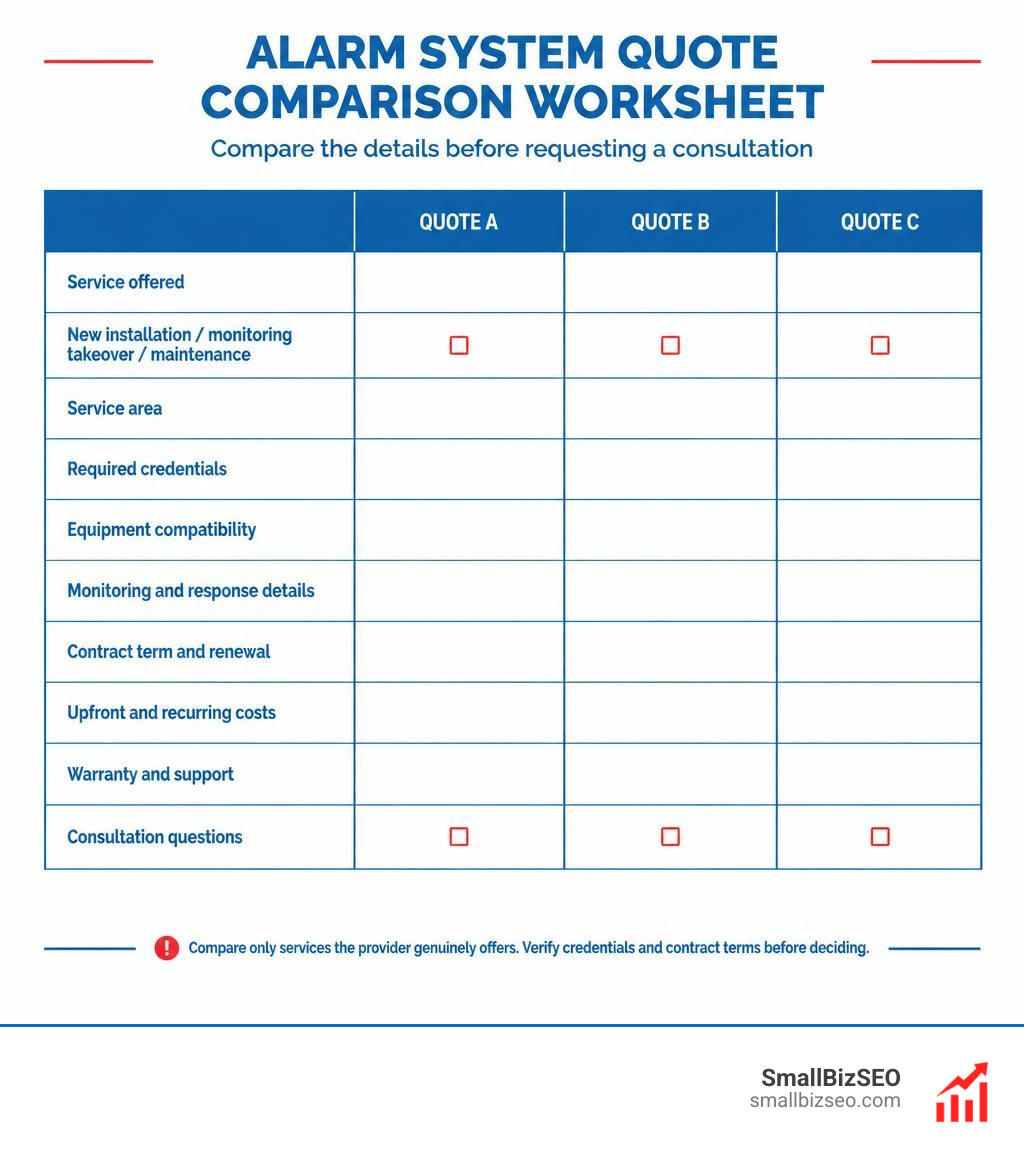
To address common consumer contract questions, contractors can point prospective buyers to verified consumer-protection resources such as the Minnesota Attorney General alarm sales overview, provided as a state-specific regulatory example. Providing a clear quote comparison worksheet directly on your website gives buyers transparent evaluation criteria:
| Quote Item | Verification Details |
|---|---|
| Equipment Ownership | Is hardware owned outright upon purchase, or is it subject to a lease? |
| Upfront & Ongoing Fees | What are the exact initial hardware/activation costs versus recurring monthly charges? |
| Contract Term & Renewal | What is the initial contract length, and what are the specific renewal and cancellation terms? |
| Monitoring Provider | Who handles central monitoring operations, and what are the primary support channels? |
| Compatibility Verification | Has existing wiring or sensor compatibility been assessed for takeover? |
| Permits & False Alarms | Are municipal registration requirements and false-alarm fee policies identified? |
| Warranty & Support Scope | What parts, labor, and ongoing maintenance terms are included in the agreement? |
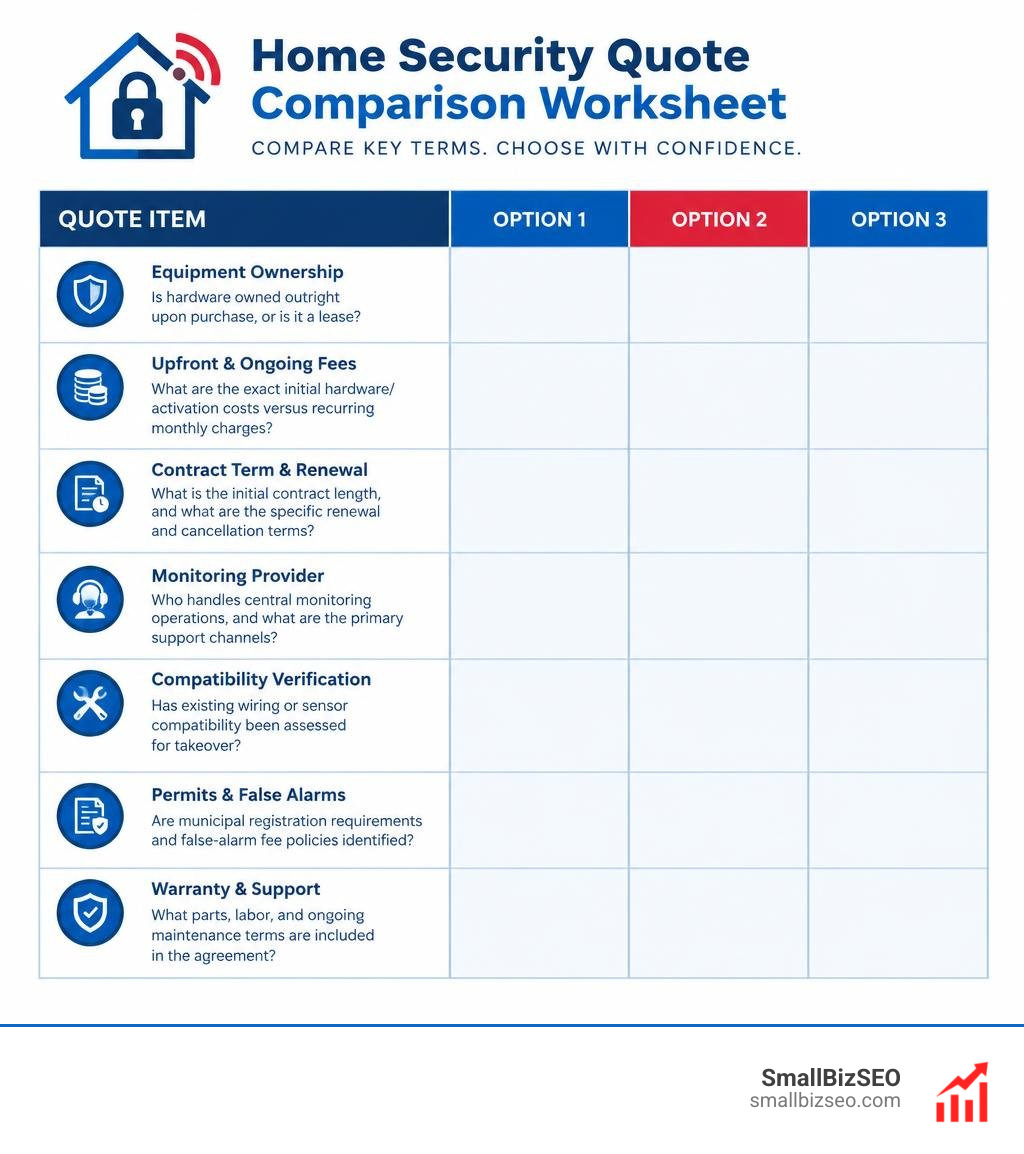
Presenting verified licensing details and clear quote terms helps potential clients evaluate services with confidence.
Practical Steps to Strengthen Your Alarm Search Visibility
Expanding your organic reach requires a structured approach centered on buyer clarity, verified credentials, and clean technical SEO. Use this checklist to refine your website strategy:
- Align Service Pages With Real Offerings: Publish distinct landing pages only for services you genuinely offer, such as installations, takeovers, or repairs.
- Configure Business Profiles Accurately: Ensure your Google Business Profile uses your real-world business name and eligible primary category.
- Implement Structured Schema: Apply clean LocalBusiness and Service JSON-LD markup detailing verified, applicable licensing and service coverage without exaggerated claims.
- Publish Local Permit Resources: Create jurisdiction-specific compliance guides that link to official authorities and include a reviewed-date field verified by a qualified reviewer.
- Protect Customer Data in Reviews: Request voluntary client feedback without incentives or keyword requirements, ensuring system layouts, addresses, and codes remain private.
- Clarify Contract Terms: Outline equipment ownership, ongoing rates, warranty terms, and cancellation policies transparently.
- Measure Performance Accurately: Track aggregate Search Console impressions, clicks, and page trends alongside qualified consultation requests and formal proposals. Acknowledge attribution limits and customer acquisition costs, avoiding assumptions that organic search operates in complete isolation.
To build a steady search presence that attracts qualified residential and commercial security inquiries, explore our tailored SEO packages or schedule a consultation to discuss your business goals.