SEO for Appraisers: Attract the Right Appraisal Requests

How Does SEO Help Real Estate Appraisers Get Found?
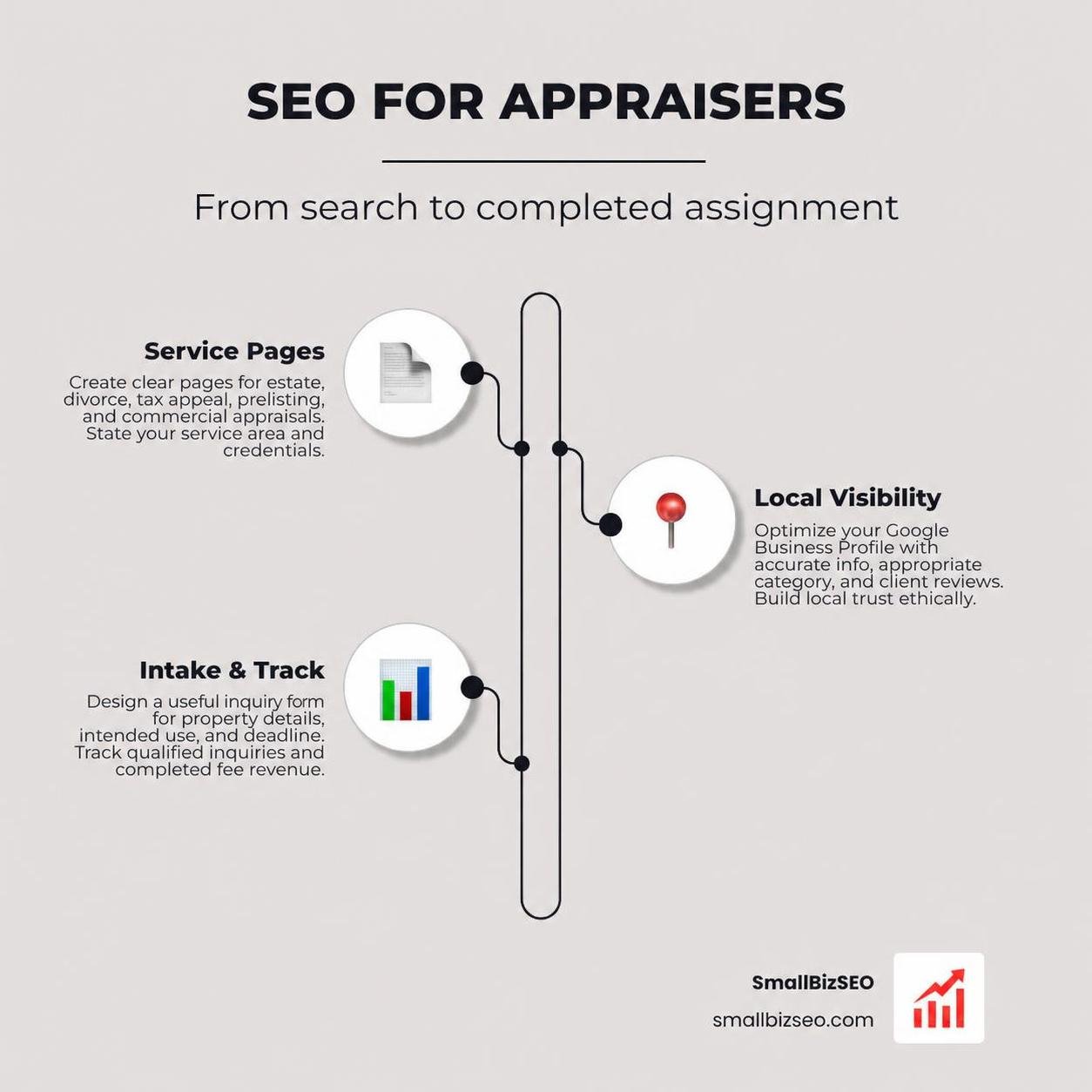
SEO for appraisers starts with matching each service you offer to the searches people make. Create clear pages for services such as estate, divorce, tax assessment, prelisting, or commercial real estate appraisals. State where you work, show your credentials, keep your Google Business Profile accurate, and give visitors a simple way to ask about an assignment.
A private client inquiry is different from a lender or appraisal management company assignment. Your website should make that distinction clear without promising a particular value or outcome.
I'm Clayton Johnson, founder of SmallBizSEO, where I work on technical SEO, content strategy, and authority building for small businesses. Here, I'll apply that experience to SEO for appraisers, focusing on useful service information and qualified inquiries.
What Helps Appraisers Build Visibility and Attract Relevant Traffic?
A clear website structure, useful service pages, and accurate local information help appraisers reach people searching for the exact types of assignments they accept.
Building organic search visibility begins by organizing your website around distinct valuation purposes rather than grouping all services onto a single generic page. When search engines crawl an appraisal firm's website, they evaluate whether the content clearly explains the scope of work, property types covered, and geographic competencies of the valuation professional. Clear service definitions and useful local context, as illustrated in modern search optimization strategies for land surveyors and appraisers, can help search engines and prospective clients understand which assignments the firm handles.
Real estate appraisal differs fundamentally from personal property, fine art, jewelry, or business enterprise valuation. Your website content should clearly define real property valuation parameters while prominently displaying genuine professional designations and credentials. The Appraisal Institute overview and American Society of Appraisers consumer resources are educational sources. Confirm an individual's license, designation, or membership through the relevant official registry or profile before presenting it on the site.
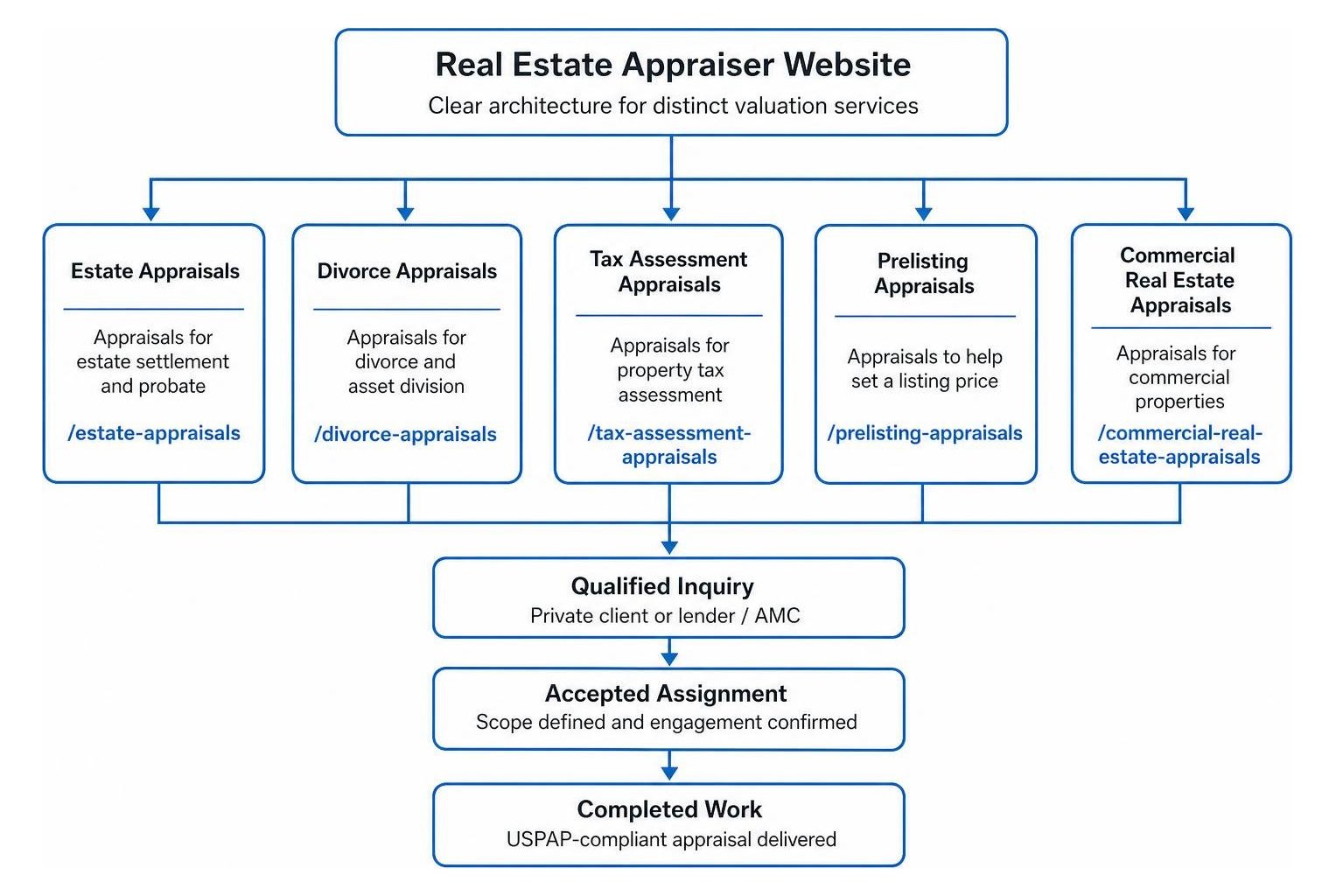
Illustrative comparison only. Actual engagement terms, applicable standards, and lender procedures vary by assignment and jurisdiction.
| Search query or topic | Helpful page to create or improve |
|---|---|
| Estate appraisal or date-of-death appraisal | A service page explaining retrospective valuation, intended users, relevant property types, and intake requirements |
| Divorce appraisal | A page describing the appraisal purpose, scope questions, and coordination considerations for attorneys or property owners |
| Commercial appraisal | A page limited to the commercial property types and valuation services the firm actually provides |
| Home appraisal cost | A pricing-information page explaining the factors that affect fees without publishing universal quotes or promises |
| Appraiser near me | A location-focused contact or service page with the firm's actual coverage, credentials, and inquiry path |
| Engagement Factor | Direct Private Inquiries | Mortgage-Related Appraisals |
|---|---|---|
| Typical Client | Property owners, attorneys, estate representatives, or CPAs | Lenders or other parties involved in a covered transaction |
| Engagement Path | The appraiser may discuss scope directly with the prospective client | The selection and engagement process may be governed by lender or program requirements |
| Applicable Requirements | Requirements depend on intended use, jurisdiction, and assignment conditions | Requirements depend on the transaction, lender, program, and applicable rules |
| Intended Use | Estate matters, divorce, tax appeals, prelisting decisions, or other non-lending needs | Loan underwriting, purchase financing, or refinancing when the assignment calls for an appraisal |
| Fee Arrangement | Confirmed after reviewing scope, property complexity, and access | May follow panel terms or another lender-arranged process, but not every lender uses a pre-negotiated panel fee schedule |
Why Does SEO for Appraisers Often Focus on Direct Private Orders?
Targeting direct private appraisal inquiries through search optimization allows independent real estate appraisers to connect with clients seeking non-lender valuation services.
Private valuation assignments arise from specific life events and legal proceedings, including date-of-death estate probate, divorce settlements, property tax assessment appeals, prelisting consultations for For Sale By Owner (FSBO) sellers, and private mortgage insurance (PMI) removal. For PMI-related requests, advise the property owner to check the loan servicer's current requirements before ordering a private appraisal, because acceptance is not implied. These non-lender clients actively use search engines to find qualified local professionals who understand their specific valuation context.
For direct private assignments, the appraiser can discuss scope, fee factors, access, and timing with the property owner, attorney, or accountant before deciding whether to accept the engagement. That differs from mortgage-related workflows, which can have independent selection processes. The Fannie Mae Appraiser Independence Requirements apply to transactions covered by those requirements, not to every appraisal engagement. Marketing for private work does not bypass lender selection or other assignment obligations. Readers should seek qualified appraisal or legal guidance for assignment-specific requirements.
What Should Appraisers Include on Estate, Divorce, and Tax Appeal Pages?
Dedicated service pages should explain the valuation purpose, property types evaluated, geographic areas served, and factors that influence timing and scope before a prospect submits an inquiry.
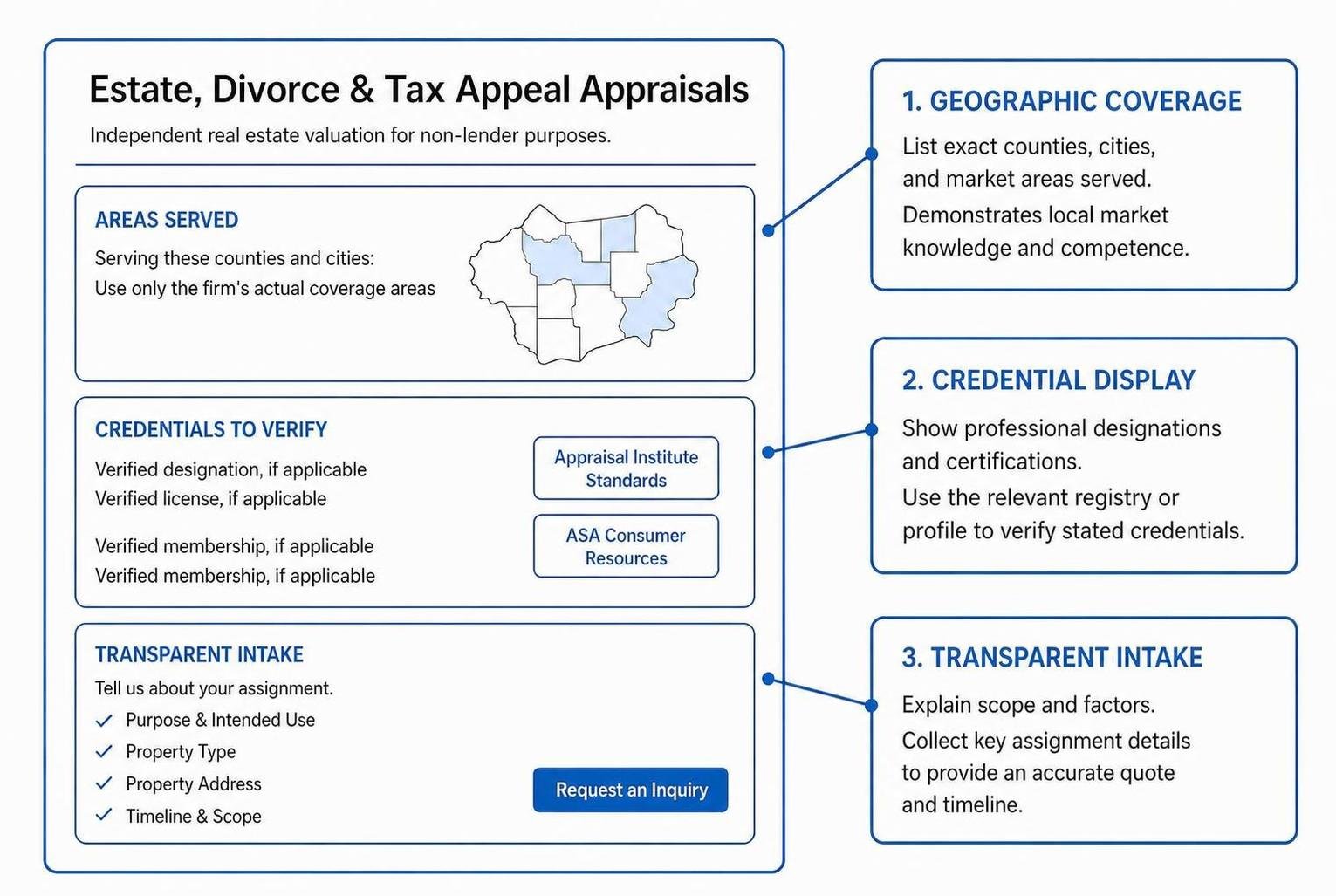
To attract qualified traffic and convert visitors into legitimate appraisal requests, service pages must be thorough and specific. Avoid publishing thin, repetitive pages that swap out only county or city names. Instead, build distinct landing pages for core assignment types containing:
- Purpose and Intended Use: Clarify the exact scope, whether it involves a retrospective date-of-death valuation for step-up basis calculations, an equitable distribution appraisal for family law proceedings, or a tax assessment dispute.
- Geographic Competence: List the exact municipalities, counties, and market areas where you maintain active MLS access, local market data, and verified valuation experience.
- Property Specializations: Specify the property types you appraise, such as single-family residences, multi-family properties, rural acreage, historic homes, or commercial real estate.
- Scope and Deliverable Details: Describe what happens during the physical property inspection, what data sources you verify, and what the completed written report includes.
- Fee and Turnaround Factors: Explain the objective variables that influence pricing and delivery timelines, such as property size, architectural complexity, historical data requirements, and current inspection access, without making universal promises.
How Can Appraisers Describe Their Services Responsibly?
This marketing guidance supports objective, factual service descriptions. Avoid promising predetermined values, guaranteed outcomes, or favorable valuations.
The Uniform Standards of Professional Appraisal Practice (USPAP) require appraisers to develop and communicate valuations with complete impartiality, objectivity, and independence. Digital marketing content must reflect these standards. Website copy must never suggest that an appraisal will achieve a specific number, support a requested mortgage figure, or guarantee a successful property tax reduction.
Instead, present only credentials, licenses, designations, services, and experience that can be verified for the actual firm or appraiser. This factual approach can help prospective clients understand the business without implying a compliance certification.
How Can Appraisers Improve Local Visibility and Measure Assignment Growth?
Combining an accurate Google Business Profile with structured on-page local signals and a professional inquiry workflow helps appraisal firms attract relevant traffic and track completed engagements.
How Should Appraisers Optimize a Google Business Profile and Build Local Trust?
Optimizing a Google Business Profile requires selecting the correct primary category, defining exact service areas, and collecting client reviews in a way that respects confidentiality.
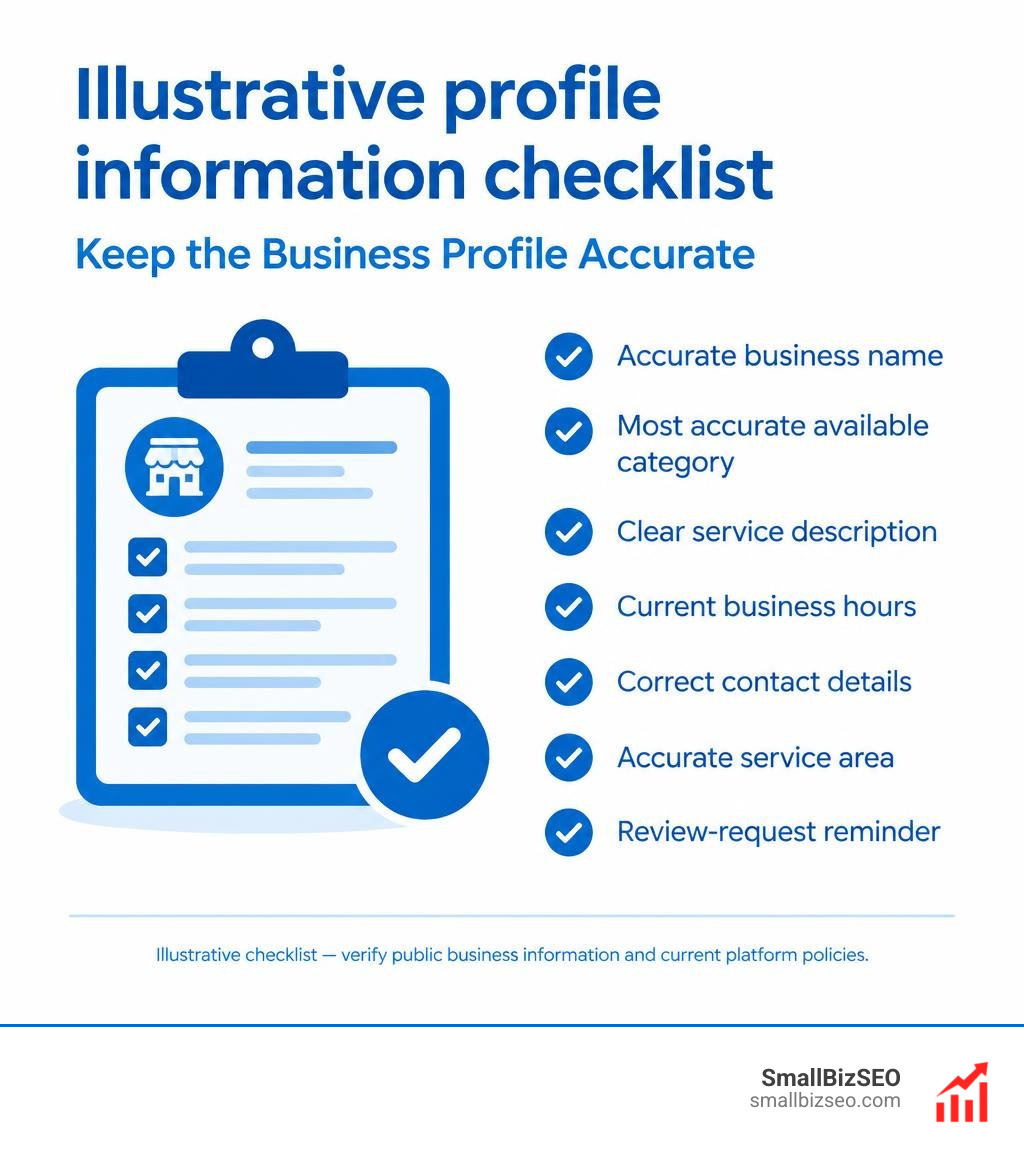
Google's local ranking guidance explains how relevance, distance, and prominence can affect local results. It is not a complete eligibility rulebook. Review the current Google Business Profile policies and choose a profile setup that accurately represents the firm's real operating model and public-facing business information.
Choose the most accurate available primary category for the firm's actual services, such as "Real Estate Appraiser" when that describes the core business. Add secondary categories only when they accurately reflect verified operations. Pair the profile with accurate service information, current hours, and local signals that match the firm's public business details. For practical local listing steps, see a practical guide to local SEO map visibility.
When requesting client reviews:
- Send direct review links to private clients, real estate attorneys, or accountants after delivering the completed valuation report.
- Ask clients to share their experience regarding your professionalism, communication, and turnaround punctuality.
- Never ask clients to disclose confidential assignment details, property valuations, or private legal circumstances in public reviews.
- Respond professionally to all reviews without confirming confidential client data or assignment outcomes.
What Should an Appraisal Inquiry Form Ask?
A useful inquiry form gathers the essential factual details needed to determine assignment scope and geographic competency before accepting a job.
A generic valuation intake form should not request a desired property value, loan targets, or sensitive financial documents. It can ask for the details needed to assess scope:
- Property address, municipality, and property type (single-family, commercial, vacant land)
- The specific appraisal purpose (estate settlement, divorce, tax appeal, prelisting)
- Intended users of the valuation report (property owner, attorney, CPA)
- Effective valuation date (current date or retrospective date of death)
- Required completion deadline or court filing date
- Requester contact information and property access details
Before accepting an assignment, confirm the intended use, scope of work, fee factors, access needs, and expected timing with the prospective client. Accept only when the firm has the appropriate competency and can meet the assignment conditions.
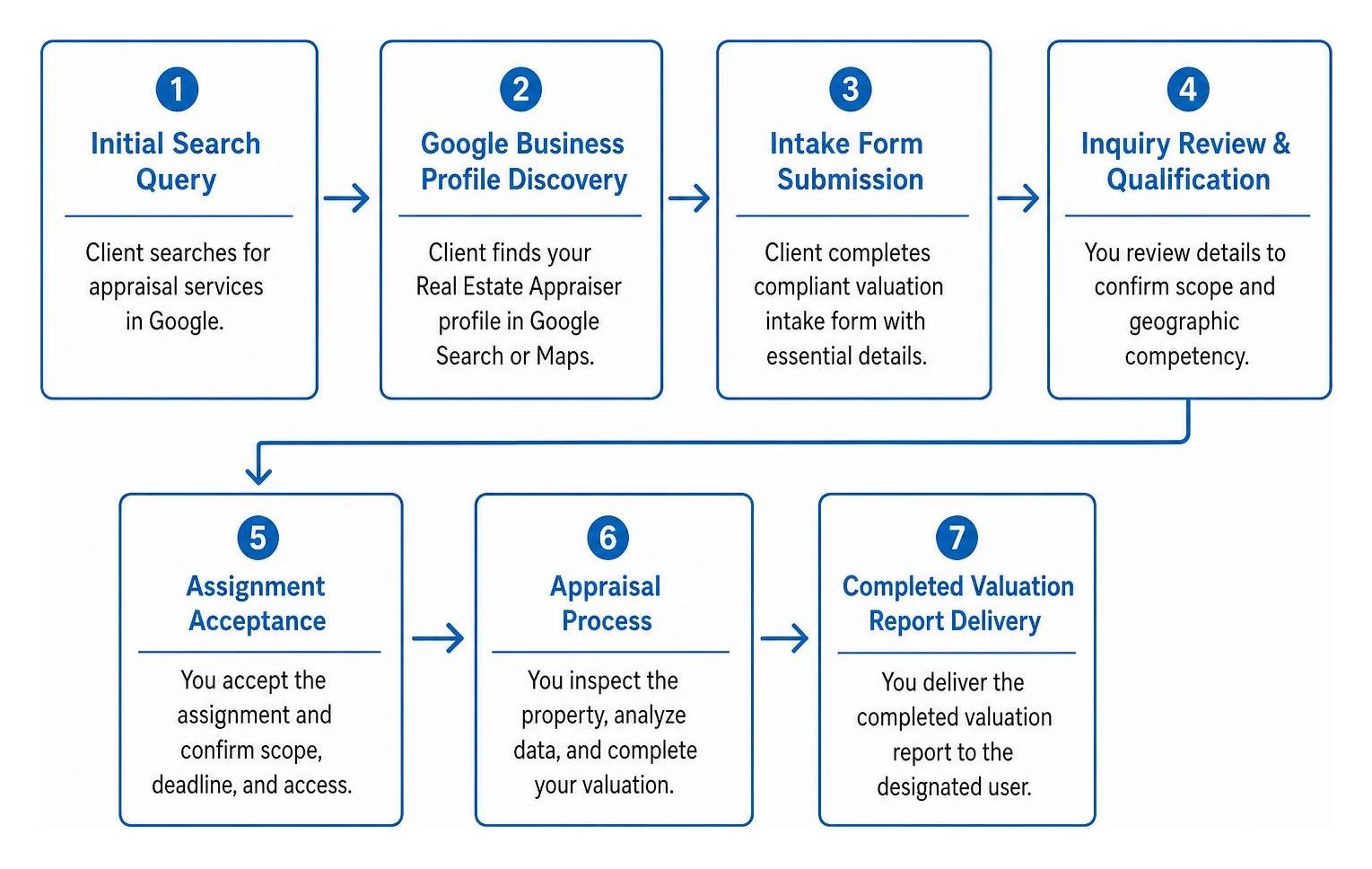
Evaluating SEO performance requires looking beyond raw website traffic. Monitor search visibility in Google Search Console to understand which search queries lead to page impressions and clicks. Track performance using a simple pipeline: Search impressions → qualified inquiries → accepted assignments → completed engagements.
Measuring progress through this pipeline ensures that your marketing efforts focus on generating legitimate valuation requests rather than unqualified form submissions.
A Practical SEO Checklist for Real Estate Appraisers
Use this practical checklist to improve service clarity, local profile accuracy, and assignment tracking:
- Audit Core Service Architecture: Separate distinct valuation assignments (estate, divorce, tax appeal, commercial) onto dedicated pages with clear scope explanations.
- Highlight Geographic Competence: Define the exact municipalities and counties where you maintain MLS access, local market expertise, and licensing coverage.
- Display Verified Qualifications: Feature state appraiser license numbers, professional designations, and professional memberships clearly across all pages.
- Keep the Business Profile Accurate: Ensure category accuracy, configure proper service-area parameters, and keep business hours current.
- Improve Inquiry Forms: Collect property details, intended use, and effective dates while avoiding requests for predetermined target values.
- Track Meaningful Engagement Metrics: Measure the progression from organic search queries to qualified inquiries and accepted appraisal assignments.
Partner with SmallBizSEO to Attract Qualified Valuation Assignments
Building a clear, useful search presence requires careful technical configuration, clear service architecture, and consistent local signals. At SmallBizSEO, we help professional service firms build sustainable organic visibility that connects them directly with qualified local clients.
Explore our customized professional service SEO packages or schedule a consultation with our team through our online booking portal to build an SEO strategy tailored to your appraisal practice.