SEO for Arbitrators: Help Counsel Evaluate Your Expertise
SEO for arbitrators helps counsel find and assess your public credentials, subject-matter experience, and contact process. Start with an accurate biography, clear specialty pages, and verified practical details. Search visibility does not confer appointments or override party agreements and institutional selection procedures.
Retaining counsel conduct thorough due diligence when selecting tribunal members or sole neutrals. A well-structured website allows them to review disclosable subject-matter background, relevant industry experience, disclosable appointment experience, language capabilities, and hearing formats without administrative friction. Because ethics and professional rules vary across jurisdictions and dispute resolution forums, counsel should review advertising guidelines to confirm local compliance before publishing marketing materials. To preserve ethical standards, neutral websites must explicitly direct prospective inquiring parties to keep initial communications brief and use an approved channel for preliminary inquiries, avoiding any premature submission of confidential case materials or substantive dispute summaries until formal conflicts checks clear.
Clayton Johnson, founder of SmallBizSEO, provides this guide to help independent neutrals and dispute resolution professionals publish informative, ethical websites that support informed evaluation by legal counsel.
A simple measurement path can track profile visits, appropriate inquiries, and matters that proceed through secure conflict and availability review to possible appointments. These signals support process improvement, not guaranteed appointments or exact attribution.
Core Pillars of SEO for Arbitrators to Demonstrate Experience and Availability
When litigators and in-house counsel research potential arbitrators, they seek verifiable evidence of dispute resolution experience, industry-specific knowledge, and operational capabilities. Organic search rankings do not guarantee tribunal selection or replace bilateral party negotiations. Instead, sound optimization ensures that your public qualifications remain discoverable during candidate vetting.
Transparency about institutional roster affiliations and disclosable procedural experience can build credibility. For example, the American Arbitration Association panel admission and qualification standards describe application prerequisites, performance criteria, and ethical expectations for its national roster of neutrals. A roster listing verifies membership or affiliation, not eligibility for every case. AAA requirements and fee disclosures apply to AAA proceedings and rosters; other providers and private appointments may use different rules, disclosure processes, and fee terms.
What Information Do Retaining Counsel Need on an Arbitrator Website?
Legal counsel need precise, factual information to evaluate whether a neutral fits the specific technical and procedural demands of an active dispute. Not all arbitrators are attorneys or require formal bar admission; many serve as technical, financial, or engineering industry experts. Clearly organizing this information enables vetting attorneys to confirm your suitability efficiently:
- Dispute Resolution Specialty & Relevant Experience: Define your primary areas, such as commercial contracts, intellectual property, international trade, construction delay claims, maritime issues, or energy regulation.
- Technical and Non-Attorney Background: If you serve as an industry expert arbitrator, highlight specialized degrees, professional engineering licenses, accounting credentials, or executive background alongside your neutral training.
- Disclosable Appointment Experience: Summarize past service categories—such as sole arbitrator, tribunal chair, or wing arbitrator appointments—where ethically disclosable without breaching party privacy.
- Procedural and Rule Experience: List disclosable institutional rule sets you have administered alongside ad-hoc arbitration experience.
- Hearing Format and Facility Logistics: Specify your capabilities for conducting in-person sessions, fully remote virtual hearings via secure videoconferencing platforms, or hybrid proceedings.
- Language Capabilities: Detail working fluency in languages relevant to international evidentiary reviews or witness testimony.
- Scheduling Availability and Contact Process: Clarify general calendar availability, lead times, and the approved contact process for preliminary conflict checks.
- Arbitrator Rates vs. Administrative Expenses: State your professional fee structure and cancellation policy, while noting that administrative, filing, facility, and other charges depend on the applicable provider and agreement.
| Profile Credential | Verification and Evidence Required | Purpose for Retaining Counsel |
|---|---|---|
| Institutional Rosters | Public roster listing or institutional certification | Verifies a stated roster membership or affiliation |
| Subject-Matter Specialty & Relevant Experience | Technical degrees, licenses, CV entries, or commercial experience | Demonstrates substantive competence in complex claims |
| Disclosable Appointment Experience | Anonymized case summaries or public tribunal appointments | Verifies practical experience as sole, chair, or wing neutral |
| Disclosable Rule Sets | Summaries of domestic, international, or ad-hoc frameworks applied | Validates procedural competence across diverse rules |
| Hearing Formats & Logistics | Remote video capabilities, travel boundaries, and venue options | Verifies operational fit for virtual or venue-based sessions |
| Language Capabilities | Documented working fluency or bilingual proceeding history | Confirms ability to review foreign-language evidence |
| Scheduling Availability | Published booking calendar windows and lead-time ranges | Informs counsel of feasibility for active case timelines |
| Approved Contact Process | Designated intake instructions and conflict-inquiry form | Outlines ethical submission path avoiding premature disclosures |
| Fee Structure vs. Admin Costs | Published neutral fees and applicable provider terms | Helps counsel understand the stated fee structure and related terms |
How to Map High-Intent Search Queries to Practice Pages in SEO for Arbitrators
Organizing your website architecture around specific search intents helps attorneys find exact operational data. To understand how site architecture fits within digital strategy, exploring a practical guide to the 4 types of SEO provides a clear structural framework.
| Search Query Type | Example Intent Query | Target Page Destination | Core Content Elements |
|---|---|---|---|
| Niche Specialty | construction arbitrator delay claims | /construction-arbitration/ |
Infrastructure focus, delay claim familiarity, engineering background |
| Commercial Neutral | commercial arbitration neutral | /commercial-disputes/ |
Contract claims, joint venture disputes, corporate governance |
| Branded Evaluation | [Neutral Name] arbitrator credentials | /curriculum-vitae/ |
Formal biography, roster admissions, publications, speaking history |
| Operational Logistics | arbitrator hearing fees and availability | /fees-availability/ |
Hourly/daily rates, cancellation policy, preliminary intake contact |
How Can Independent Neutrals Structure Ethical Content in SEO for Arbitrators?
Ethical marketing for neutrals should emphasize impartiality, accuracy, and confidentiality. Follow Google helpful content guidelines by publishing original, useful information rather than promotional claims. Rules on confidentiality, testimonials, and reviews vary by applicable agreements and professional requirements, so avoid outcome-based review solicitations and obtain qualified ethics guidance before publishing sensitive material.
Use this hypothetical blank-fill profile template as a content checklist. Replace each bracketed field only with information that is accurate and appropriate to disclose:
Hypothetical Neutral Profile Template
Practice Focus: [Dispute types and industries]
Relevant Experience: [Disclosable professional or technical background]
Procedural Experience: [Disclosable rules or appointment categories]
Hearing Logistics: [In-person, remote, or hybrid options]
Fee Information: [Published professional fees and applicable terms]
Availability: [General availability and approved inquiry channel]
Content Review Workflow for Neutral Impartiality and Confidentiality
Before publishing website copy, articles, or case lists, neutrals should implement a multi-stage review workflow:
- Redaction & Anonymity Check: Ensure no pending or closed dispute is identifiable. Remove party names, docket numbers, specific monetary awards, or sensitive industry terms unless public and authorized.
- Impartiality Assessment: Audit commentary to verify that published articles maintain a balanced, neutral perspective on legal or technical issues rather than an advocate stance.
- Testimonial and Review Audit: Confirm the site contains no subjective client praise or solicited ratings regarding dispute outcomes.
- Ethics and Advertising Compliance Review: Verify that promotional language complies with jurisdictional bar rules, neutral codes of conduct, and administering organization advertising standards, ensuring counsel review advertising before deployment.
Technical Foundations, Ethical Intake Workflows, and Getting Started
A professional dispute resolution website requires a reliable technical architecture. Search crawlers must be able to index your public credentials, understand your practice areas, and parse your biographical data cleanly.
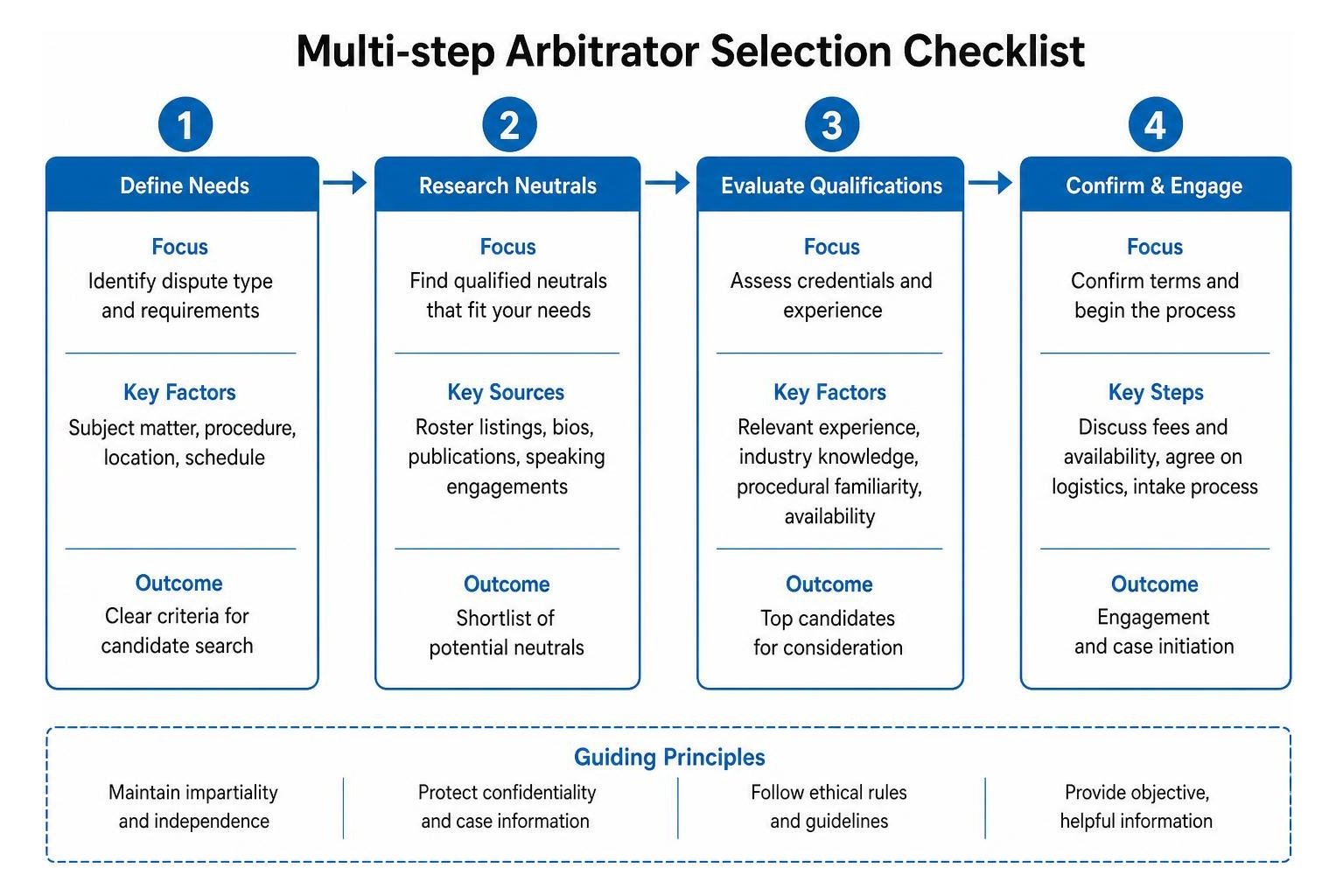
What Technical SEO and Schema Best Practices Apply to Neutral Profiles?
Implementing structured search fundamentals helps search engines parse and index your qualifications properly without misrepresenting your standing:
- Crawlable Hierarchy: Maintain clean, logical URLs and intuitive internal linking that connect your core biography to detailed practice area pages.
- Descriptive Page Titles: Use concise, accurate titles such as "Commercial Arbitrator | Construction & Licensing Disputes" to define your professional focus directly.
- Structured Data Compliance: Implement schema markup strictly following Google structured data policies. Structured data schema must accurately match visible on-page content. Schema provides search engines with clear machine-readable context, but it grants no ranking guarantees or compliance certifications.
- Local Search Profiles: If you operate an eligible, fully staffed physical office where parties or counsel are received, utilize foundational local SEO practices to maintain an accurate Google Business Profile with verified contact details. Never publish fake Google Business Profile screenshots or fabricated ratings.
- Authentic Professional Portraits and Biographies: Feature authentic, authorized photographic portraits accompanied by substantive biographies rather than generic stock imagery like gavels, scales, or courthouses. Always avoid fabricated headshots, artificial credential badges, or speculative ranking claims.
How Should Neutrals Design a Confidential Intake and Conflict-Check Funnel?
An intake workflow should protect confidentiality before appointment. Public intake pages can ask only for business contact information and a request to receive the approved conflict-check channel. Conflict-check details should be exchanged through that secure approved process.
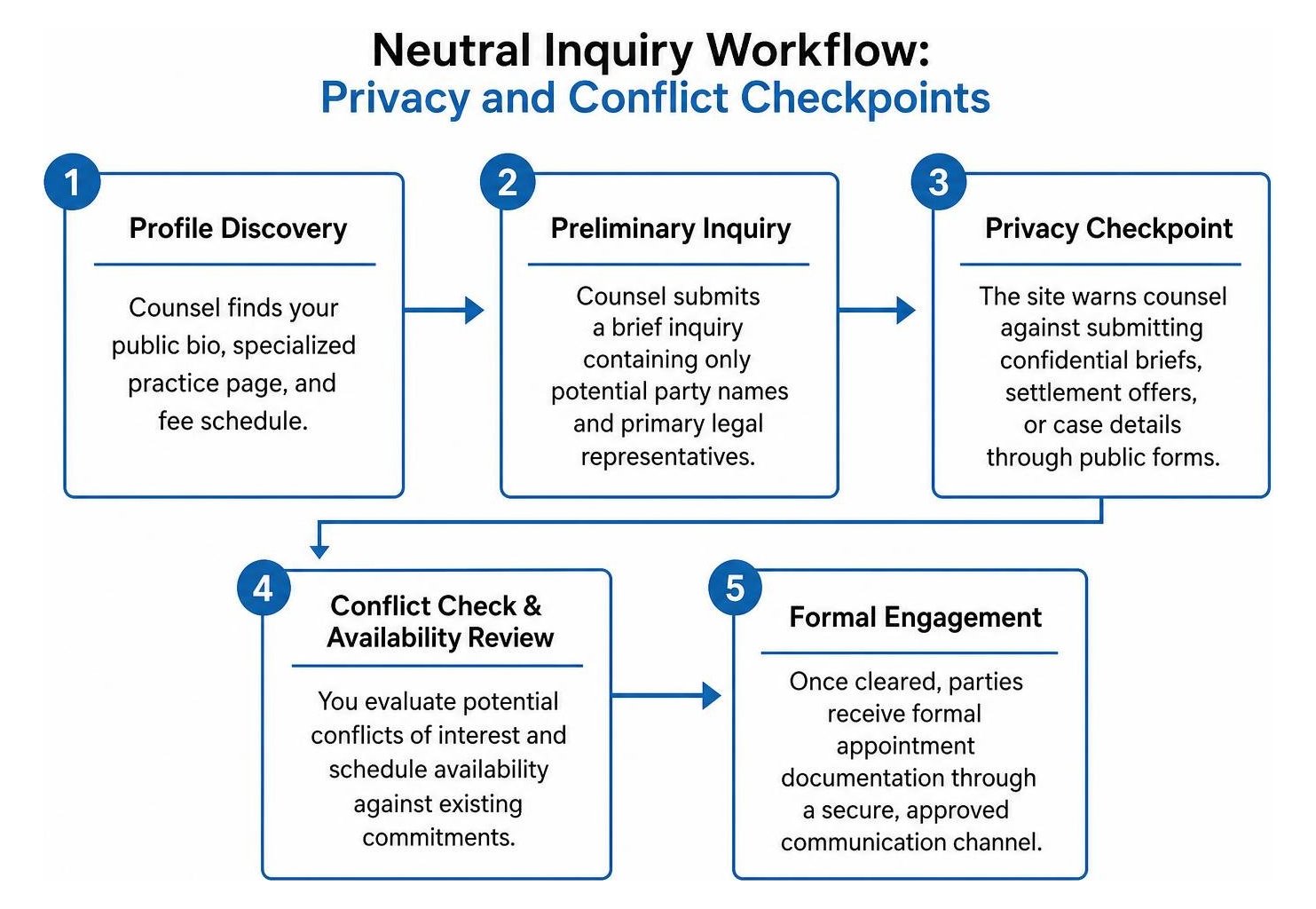
- Profile Discovery: Retaining counsel locate your verified CV, substantive biography, dispute specialties, and published rate schedule.
- Initial Contact: Counsel provide business contact information and request the approved secure channel for a preliminary conflict check.
- Privacy Checkpoint: The website advises counsel not to send briefs, factual summaries, settlement proposals, party identities, or other potentially confidential details through a public form.
- Secure Conflict and Availability Review: Appropriate conflict-check details are handled through the approved process, followed by an availability review.
- Secure Engagement: Once conflicts clear and parties agree on selection, formal appointment terms and secure communication channels are established.
To build a search-optimized web presence that accurately reflects your dispute resolution practice, explore our tailored legal SEO packages or book a strategy consultation to discuss your technical website requirements.
Establishing a Search-Ready Practice for Dispute Resolution Neutrals
Optimizing your neutral website focuses on making verifiable credentials, disclosable appointment experience, procedural backgrounds, and logistical details accessible to legal counsel. By organizing dispute specialties, implementing strict confidentiality review workflows, using an approved channel for preliminary inquiries, avoiding solicited reviews, and providing a clean intake process, you enable attorneys to evaluate your qualifications efficiently.