SEO for Armored Car Services: Reach Qualified Cash-Logistics Buyers
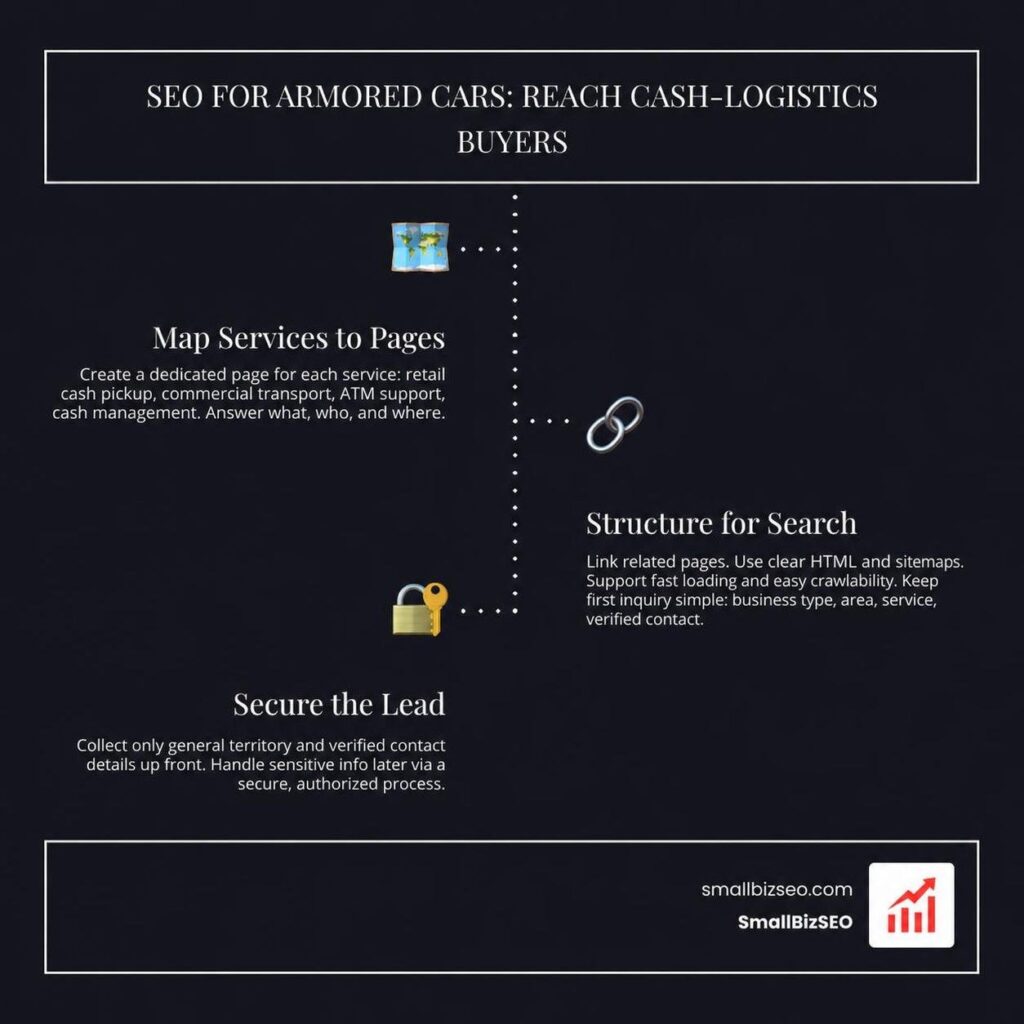
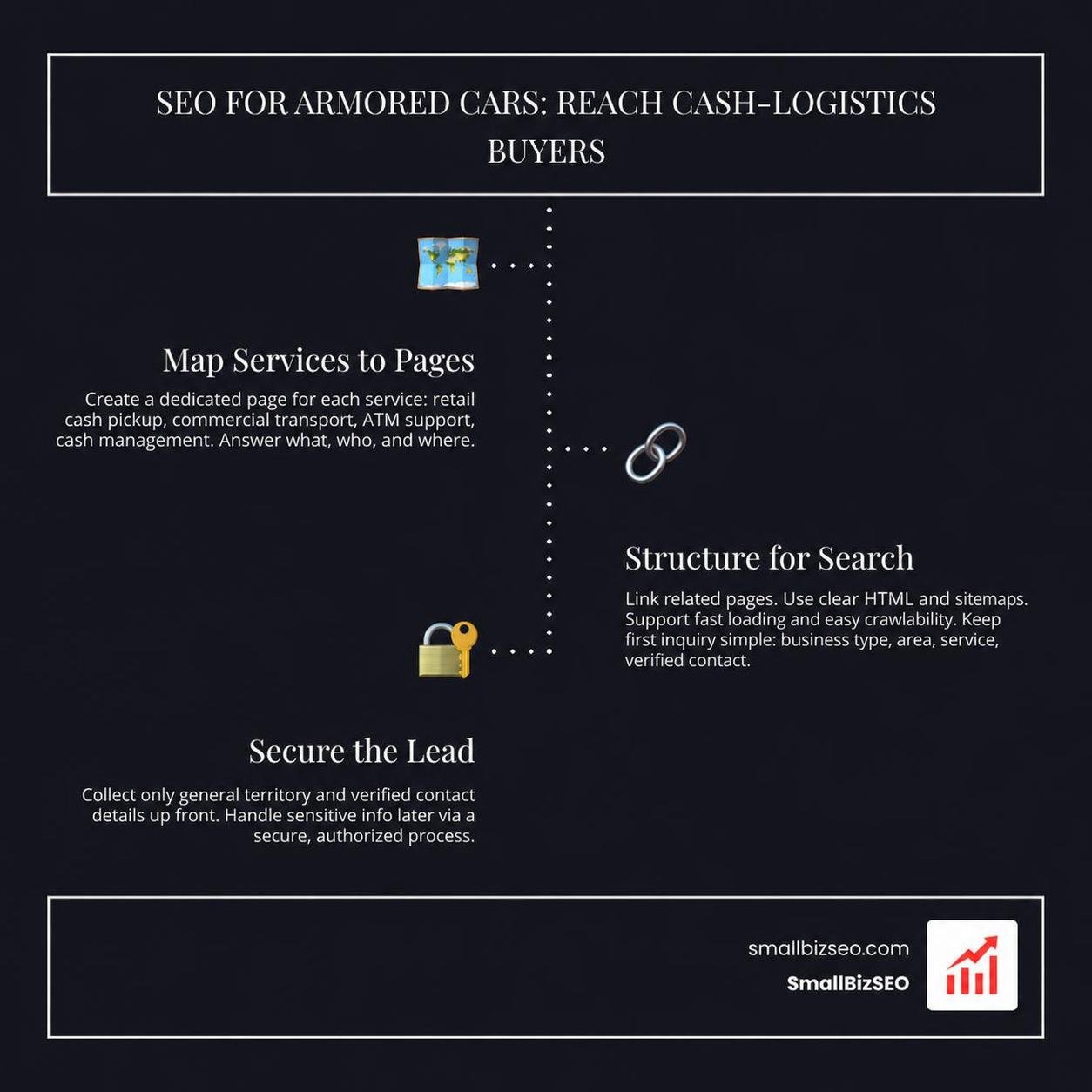
SEO for armored cars starts with the services buyers actually need. Create a clear page for each commercial service you offer, such as retail cash pickup, commercial armored transport, ATM service support, or cash management. Answer what the service covers, who it serves, and the general area you cover. Link those pages together and make them easy for search engines to read.
Keep the first inquiry simple: ask only for the business type, general service area, service category, and verified business contact. Handle sensitive operational details later through a secure, authorized process.
I’m Clayton Johnson, founder of SmallBizSEO. My work in technical SEO, content strategy, and link building informs this approach to SEO for armored cars; I do not claim direct cash-in-transit operating experience.
How Answer-Ready SEO for Armored Cars Captures High-Intent B2B Logistics Queries
Answer-ready search optimization helps your commercial website give procurement managers, retail directors, and financial controllers direct answers to their service questions within the first paragraph of every page. Rather than using generic marketing slogans, cash-in-transit providers organize their digital presence around specific commercial cash management categories, transparent service footprints, and structured onboarding protocols, publishing content only for capabilities they actually provide.
Why is SEO for armored cars essential for commercial cash logistics?
Commercial logistics buyers conduct rigorous online research before shortlisting cash-in-transit vendors. When treasury executives, retail chain operators, or banking institutions look to establish recurring cash collections or smart safe processing, they search for verified providers that explicitly state their operating capabilities. Working with a dedicated armored cars SEO company allows logistics carriers to align their web properties with high-intent commercial search queries, attracting qualified business prospects rather than untargeted consumer traffic.
For illustrative examples of how providers label service categories, see Brinks’ armored cash-in-transit overview and Loomis’ armored services overview. These links illustrate category naming only and do not substantiate any specific capability for another provider.
Strategic search visibility puts your commercial offerings directly in front of corporate decision-makers during their initial vendor evaluation phase. By structuring clear answers to logistical questions, providers establish professional credibility and improve their visibility in search engine results.
What query-to-page architecture best serves retail pickup and ATM support?
A successful search architecture maps distinct commercial search terms directly to dedicated landing pages, ensuring prospective clients immediately find the exact service they require. Service descriptions must represent only the capabilities the carrier actively offers rather than hypothetical services.
Consider a hypothetical comparison: a retail chain seeking scheduled cash collection looks for recurring pickup availability, eligible business classifications, and basic account setup steps. Conversely, a financial institution evaluating ATM support looks for terminal cash replenishment scopes and currency balancing capabilities. Neither page requires operational instructions or promised outcomes; each simply clarifies service boundaries so the right buyer contacts the right department.
| Actual Service Offered | Buyer Search Question | Key Evidence to Display | Approved Public Contact Path |
|---|---|---|---|
| Retail Cash Pickup | "How does scheduled cash collection work for multi-location commercial stores?" | General service area, customer types, service scope, exclusions, and standard onboarding steps. | Submit business type, general service area, service category, and verified business contact. |
| Commercial Armored Transport | "What commercial transport services are available for business assets?" | Available transport scope, eligible business customer types, exclusions, and verified intake procedure. | Submit business type, general service area, service category, and verified business contact. |
| ATM Service Support | "What ATM service support is available for commercial clients?" | Available service scope, eligible customer types, coverage boundaries, and onboarding workflow. | Submit business type, general service area, service category, and verified business contact. |
| Cash Management | "What cash-management services are available for commercial clients?" | Available service scope, eligible customer types, exclusions, and standard onboarding steps. | Submit business type, general service area, service category, and verified business contact. |
By separating these offerings into unique URLs, search engines can more readily discover and understand each capability, which can help match relevant landing pages to specific procurement terms.
Building Trust Through Technical Architecture and Compliant Service-Page SEO
A robust technical foundation can help search engines and visitors access your commercial offerings without unnecessary barriers from broken scripts, bloated code, or confusing navigation. Accessible site structures and accurate regulatory disclosures give visitors clearer information, but they do not establish rankings, indexing, or buyer qualification.
How should armored transport websites structure crawlable HTML and service pages?
Place core service details directly on readable HTML pages instead of relying only on downloadable documents or script-driven interface elements. Build each page with a clear heading order, descriptive link labels, legible tables, and useful text alternatives for meaningful images so commercial buyers, assistive technology, and search crawlers can interpret the same information. Structured data may help search engines understand page elements, but it does not promise rankings or rich results.
To build thorough, informative pages, apply a clear service-page checklist across every core URL:
- General Service Area: Define broad geographic regions and metropolitan areas covered.
- Eligible Customer Types: Clarify relevant industries, such as retail chains, hospitality groups, or financial institutions.
- Scope and Exclusions: State clearly what the service encompasses and any logistical limits or unsupported requests.
- Standard Onboarding Steps: Outline initial vendor vetting and agreement workflows.
- Licensing and Insurance Disclosures: Publish accurate, current licensing and liability insurance disclosures reviewed by an authorized professional, without asserting universal legal mandates across every jurisdiction.
Align your publishing standards with Google's Helpful Content guidance by delivering comprehensive, original information that directly answers commercial buyer inquiries.
How can local SEO for armored cars optimize customer-facing branches safely?
Executing effective local SEO for cash-logistics providers requires a strict distinction between client-accessible administrative offices and non-public operating facilities. According to Google's Business Profile guidance, eligibility should be evaluated case by case. A qualifying service-area business with in-person customer contact may be eligible even when its address is hidden, while restricted operating facilities should remain private.
- Customer-Facing Offices: For eligible storefront or hybrid businesses, list only genuine staffed locations where customers can meet your team during stated hours. Qualifying service-area businesses may instead use an eligible hidden-address profile. Never create listings for restricted operating facilities.
- Service Area Pages: Use indexable website landing pages—rather than public map listings—to describe broad regional territories served by your transport network.
- Operational Privacy: Never publish public map pins or web listings for private operational facilities.
Maintaining this boundary helps align your site with search engine guidelines while safeguarding organizational privacy.
Measuring Search Visibility, Lead Quality, and Growth for Armored Transport Providers
Evaluating campaign performance requires focusing on business outcomes rather than vanity traffic spikes. High-ticket B2B logistics contracts involve extended deliberation cycles, making qualified inquiries, proposal volume, and aggregate search trends the most reliable indicators of progress.
What intake fields protect operational security during online lead capture?
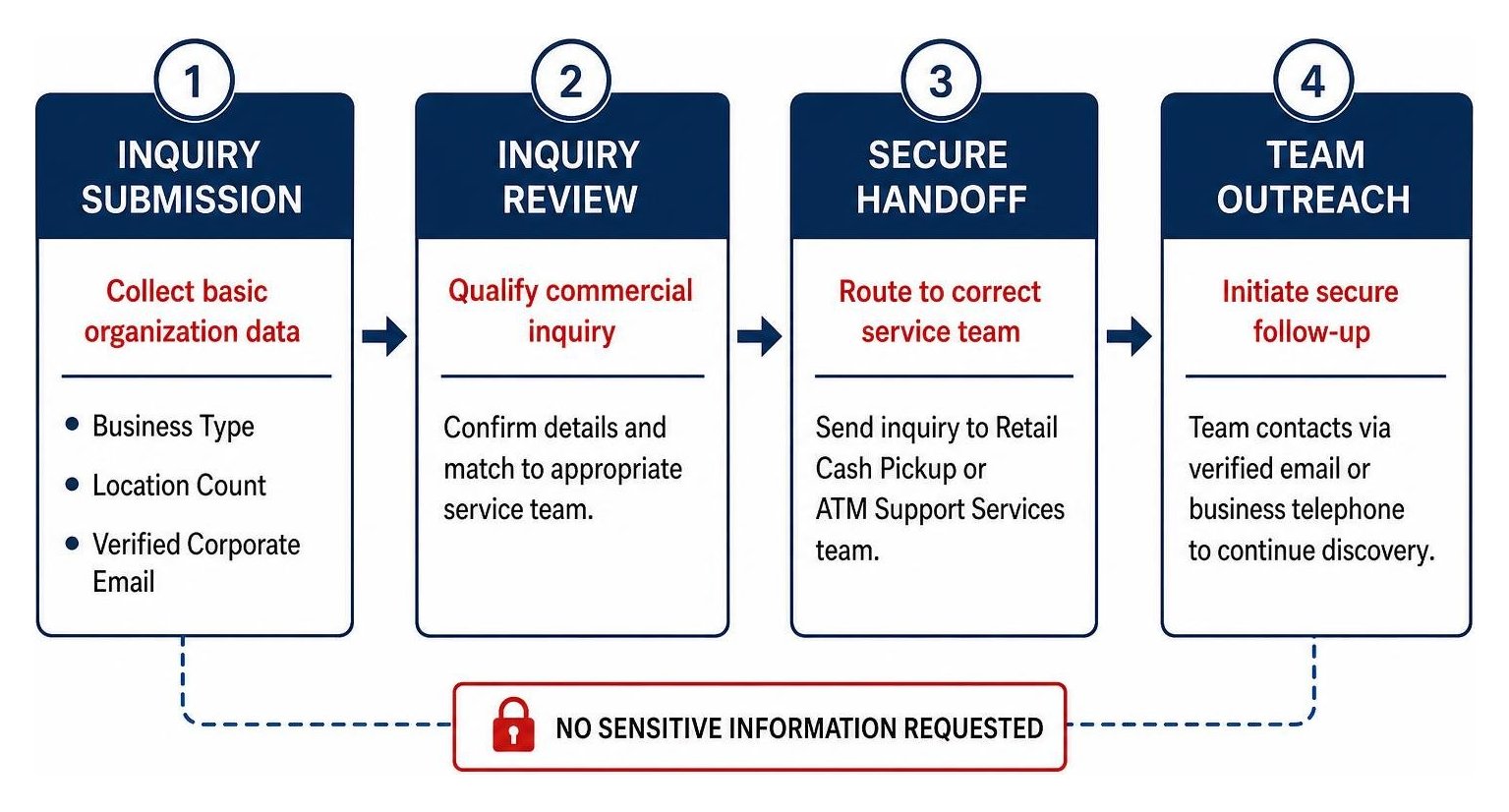
Public contact forms should collect only high-level organizational data to qualify the commercial inquiry. Public inquiry briefs must request only four data points:
- Business Type: The industry sector (such as retail chain, hospitality group, or financial institution).
- General Service Area: The broad operational territory or municipality required.
- Service Category: The core offering needed (such as retail pickup, commercial transport, ATM support, or cash management).
- Verified Business Contact: A verified corporate email address, business phone number, and primary contact name.
Public forms must explicitly never request cash volume amounts, exact pickup schedules, transit routes, restricted facility locations, account identifiers, or internal security procedures. All detailed scoping and scheduling occur strictly through a verified, secure, authorized process after commercial credentials have been confirmed.
How do cash-in-transit businesses track aggregate organic performance?
Rather than relying on isolated search position snapshots, commercial carriers should monitor aggregate Google Search Console query and page trends, along with qualified inquiries and proposals. Tracking non-branded query impressions and page trends related to cash logistics can help assess search visibility, but Search Console does not identify individual buyers or establish lead quality.
When evaluating organic growth, maintain realistic attribution and cost expectations. Multi-touch B2B contracts rarely convert from a single click, and organic ROI requires attributed revenue or margin, documented costs, and clear attribution limitations. Partnering with an experienced SEO company helps streamline technical indexation, refine service-page copy, and maintain structured internal linking architectures. To assess options for expanding search visibility, explore structured SEO packages or schedule a strategy consultation through our online booking portal.
Action Plan for Commercial Search Growth
Executing a focused digital strategy requires systematically addressing technical health, content structure, and intake workflows. Follow this prioritized sequence to establish sustainable search visibility for your commercial cash services:
- Publish Dedicated Service URLs: Build distinct, readable HTML pages for each core service offered (retail cash pickup, commercial armored transport, ATM service support, and cash management).
- Standardize Page Content: Include explicit descriptions of service scope, exclusions, eligible customer types, standard onboarding workflows, and accurate licensing and insurance disclosures reviewed by an authorized professional.
- Clean Up Public Contact Intake: Limit public inquiry forms strictly to business type, general service area, service category, and verified business contact, reserving detailed scoping for a secure, verified follow-up process.
- Audit Local Listings: Evaluate Google Business Profile eligibility case by case, using targeted website pages to define wider regional service areas and keeping restricted operating facilities private.
- Monitor Aggregate Analytics: Track aggregate Google Search Console query and page trends alongside qualified inquiries and proposals, using trend data and practical cost expectations to guide ongoing website improvements.