SEO for Business Brokers: Build Separate Seller and Buyer Pipelines
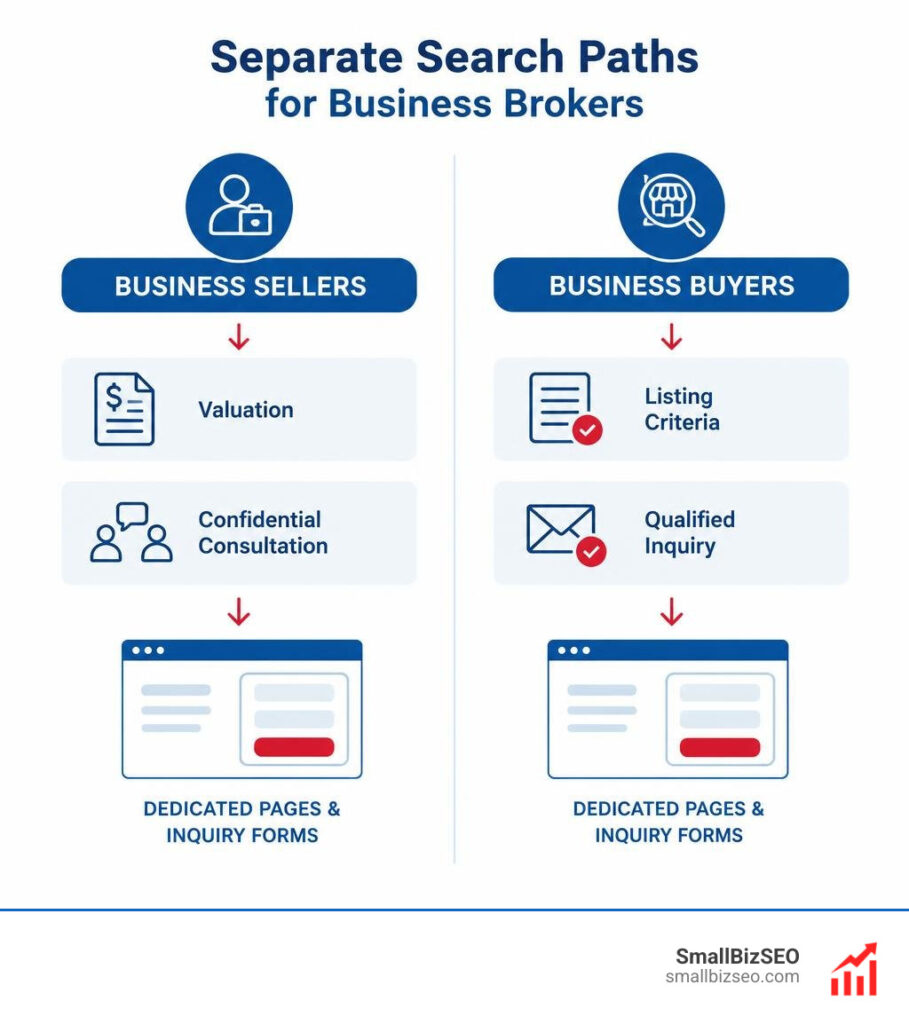
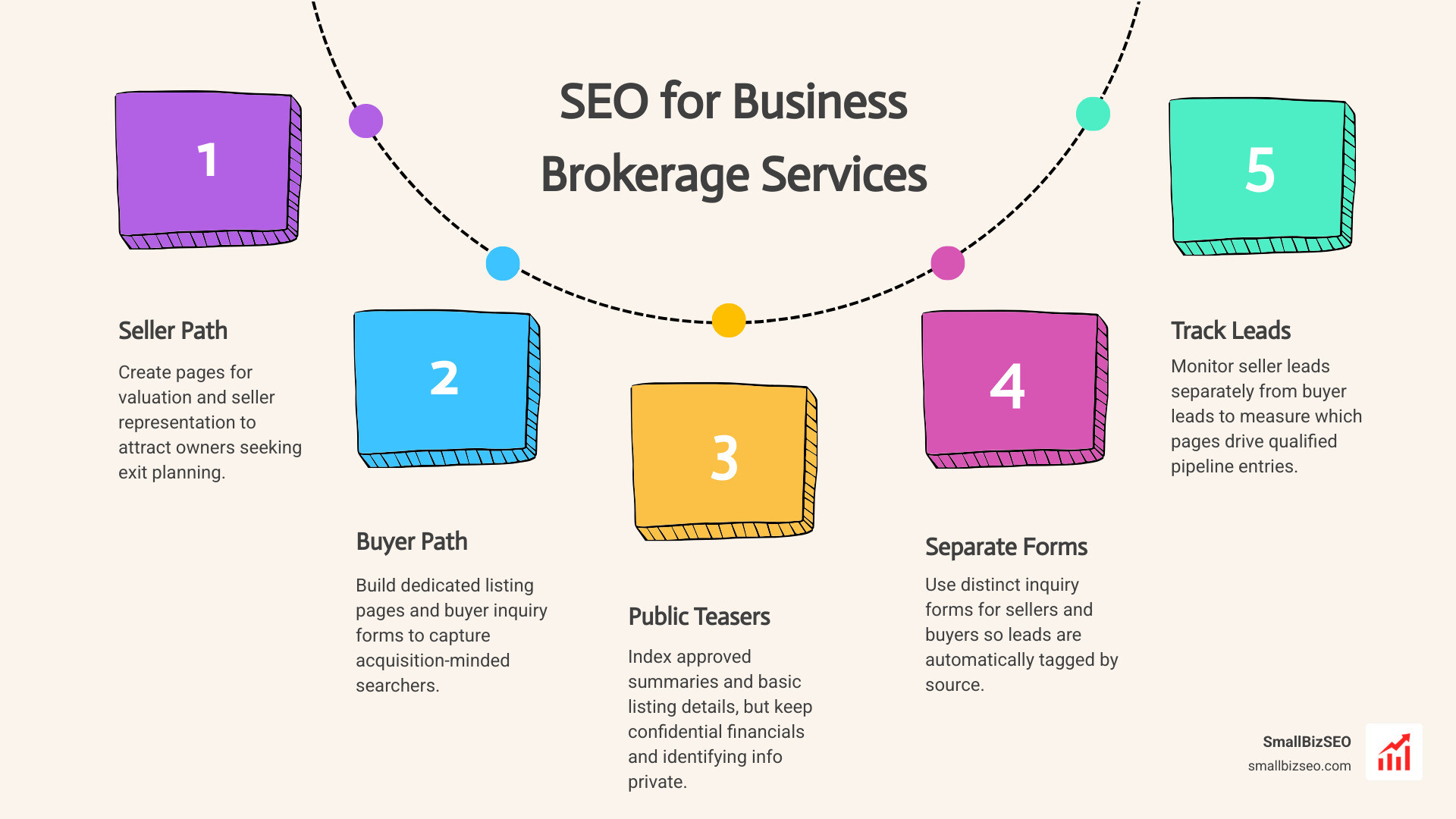
SEO for business brokerage services starts with two separate paths: help owners find valuation and seller-representation pages, and help buyers find relevant business listings. Give each path clear pages and inquiry forms. Make approved listing summaries available to search engines, but keep identifying details and sensitive financial information private. Then track seller inquiries separately from buyer inquiries so you can see which pages bring in qualified leads.
Why do business brokers need dual-pipeline search architecture?
Business brokerage websites serve two fundamentally different audiences with opposing intents. Business owners looking to exit are searching for advisory expertise, business valuation guidance, and confidential representation. Conversely, prospective buyers are searching for active acquisition opportunities, cash-flowing listings, and sector-specific businesses for sale.
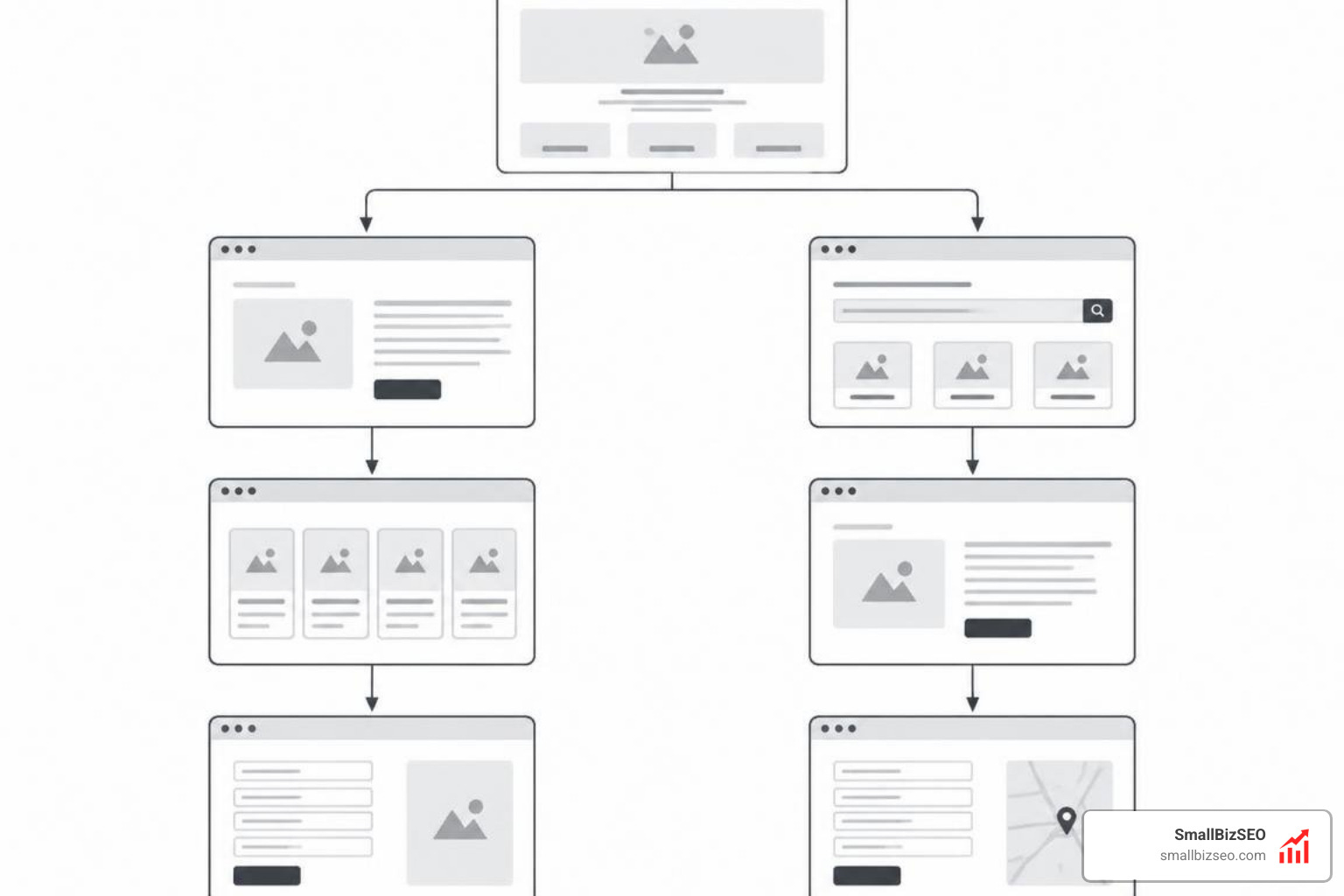
When a brokerage website mixes these two intents on generic pages, mixed navigation can make it harder for each audience to find the task and next step that fits its needs. Sellers may encounter listing-heavy pages before learning about advisory services, while buyers may have to sort through seller-focused content before reaching relevant opportunities. A dual-pipeline architecture separates these journeys from the first search query and directs each audience to dedicated pages with an appropriate inquiry path.
How can business brokers attract sellers and buyers through SEO?
Business brokers attract qualified sellers and buyers by building distinct, indexable landing pages tailored to each audience's search intent, supported by a clear internal linking structure, strong referral networks, and rigorous confidentiality controls.
Applying a practical guide to the 4 types of SEO ensures your technical setup, on-page content, off-page authority, and local optimization work cohesively. Rather than relying entirely on third-party aggregators, brokers should develop their primary domain into a high-converting digital asset.
Query-to-Page Search Intent Mapping
| Search Query Example | Searcher Intent | Target Page Type | Primary Conversion Action |
|---|---|---|---|
| "Sell my business" | Commercial / Transactional (Seller Mandate) | Dedicated Seller Representation Page | Schedule confidential discovery call |
| "Business valuation help" | Informational / Advisory (Valuation Inquiry) | Valuation Advisory Guide / Service Page | Request preliminary valuation assessment |
| "Manufacturing business broker Midwest" | Commercial Investigation (Sector / Region Specialist) | Industry & Regional Advisory Page | Book consultation with regional specialist |
| "HVAC businesses for sale" | Transactional (Buyer Search) | Dedicated Listing Teaser / Industry Hub | Submit buyer inquiry / qualification form |
Crawlable Listings vs. Third-Party Iframes
Iframe implementation varies across brokerage platforms. Depending on how a platform renders and serves listing content, search engines may process the surrounding page and listing details differently. Review the implementation rather than assuming a uniform indexing outcome.
Use Google Search Console's URL Inspection tool to inspect the actual rendered listing URL and confirm what Google can crawl and index. Where authorized, favor unique, usable listing pages with clear on-page content and privacy controls. For handling sensitive information, consult Google's guidance on controlling what you share in Search.
Practical Seller Service-Page Checklist
To generate seller mandates and valuation inquiries, high-performing seller service pages should feature:
- Clear Mandate Scope: Specific explanation of brokerage advisory services, target business size, and industry focus.
- Valuation Process Overview: Practical breakdown of preliminary valuation methodologies and data requirements.
- Confidentiality Protections: Explicit description of buyer screening protocols, anonymized marketing safeguards, and secure information handling.
- Professional Credentials: Verifiable intermediary credentials, industry association affiliations, and broker bios.
- Targeted Conversion Prompts: Direct scheduling forms for confidential discovery consultations and valuation inquiries.
- Compliance Notice: Clear notation that laws and regulatory requirements vary by jurisdiction, and qualified legal and financial counsel should review specific transaction terms and representation claims.
How should brokers map keywords to the right pages?
Keyword mapping for business brokers requires assigning queries based on whether the searcher is seeking advisory representation or reviewing acquisition opportunities.
1. Seller-Intent Keyword Mapping
Business owners search for guidance across distinct stages:
- Top-of-Funnel (Valuation & Preparation): Focus on valuation guidance and timing (e.g., "how is SDE calculated," "business valuation help").
- Middle-of-Funnel (Advisory & Comparisons): Target intermediary selection (e.g., "business broker vs M&A advisor," "business broker fees").
- Bottom-of-Funnel (Seller Representation): Target high-intent mandate queries (e.g., "sell my business," "business brokerage services").
2. Buyer-Intent Keyword Mapping
Prospective buyers target specific business types and geographies:
- Industry & Category Queries: Clean category hubs (e.g., "distribution companies for sale," "B2B services for sale").
- Regional & Asset Modifiers: Geographic filters (e.g., "commercial landscaping business for sale," "profitable franchise resale").
Hypothetical Searcher Journeys
- Hypothetical Seller Journey: An owner searches "business valuation help," reads an educational guide on multiple calculations, follows an internal link to a seller advisory page, and submits an inquiry for a confidential valuation review.
- Hypothetical Buyer Journey: An individual searches "HVAC businesses for sale," lands on an indexable blind listing page, reviews general financial parameters, and completes an initial qualification form to request further details.
How should brokers structure business listing pages?
Brokers should structure listings as public "teaser" pages that balance search indexation with strict client confidentiality, supported by clear protocols for sold transactions.
Clean URL structures such as /listings/profitable-b2b-machine-shop/ help keep listing teasers descriptive and distinct without revealing identifiable client details. See our business brokerage services SEO guidance for related implementation considerations.
Blind-Listing Privacy Checklist
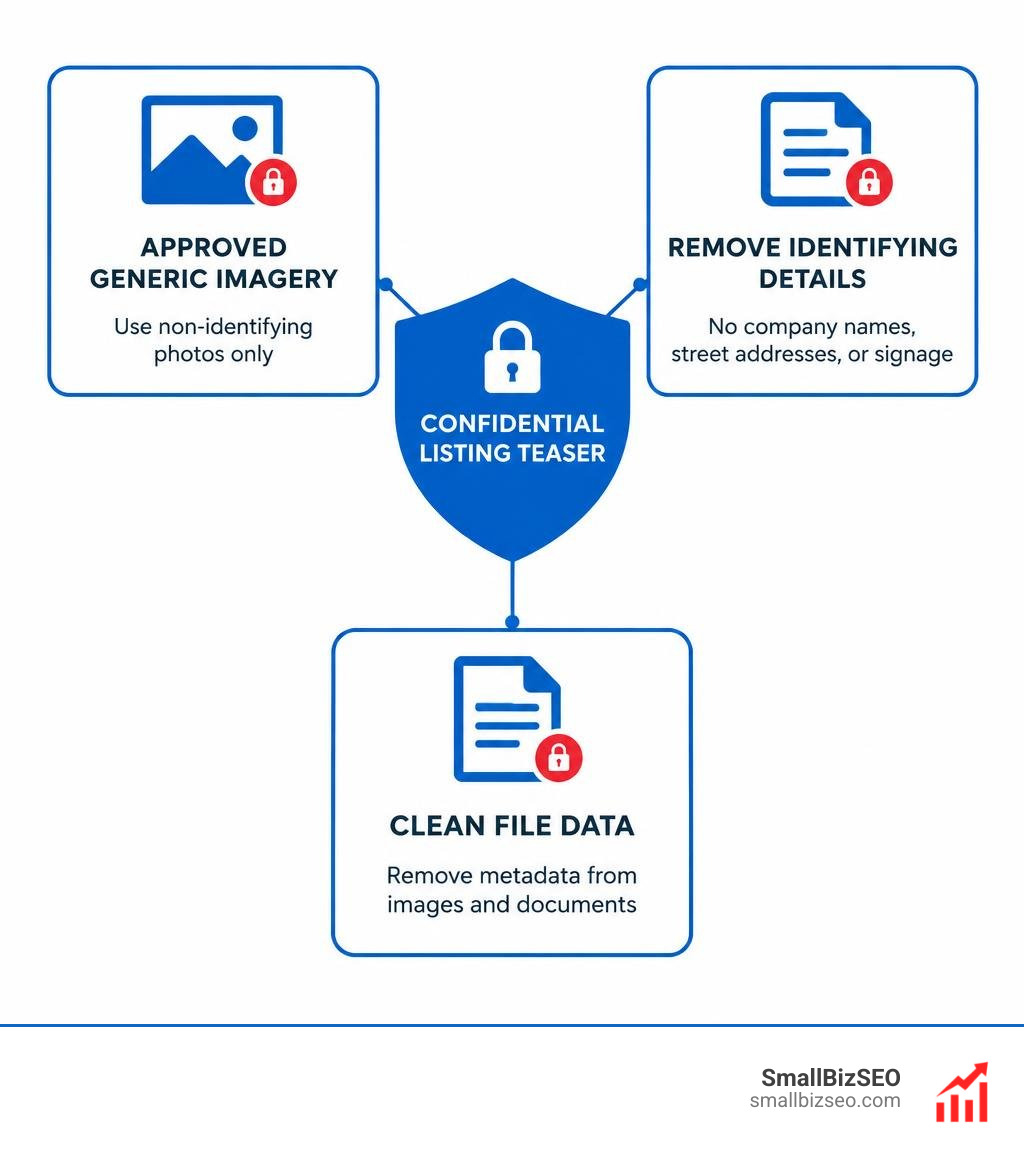
Before publishing any listing teaser to search engines, confirm the following privacy checkpoints:
- Photos & Imagery: Use generic equipment or approved stock photography only; ensure no identifiable storefronts, branded vehicles, uniforms, or unique architectural features appear.
- EXIF & Metadata Removal: Strip all EXIF metadata, camera serial numbers, creation dates, and GPS coordinates from uploaded image files.
- Filenames & URLs: Use generic descriptive filenames and URLs (e.g.,
industrial-cnc-machining-facility.jpgrather thanacme-parts-building.jpg). - Document Metadata: Verify downloadable teaser overviews have scrubbed author names, company properties, and revision histories.
- Identifying Combinations of Details: Avoid pairing exact founding years, niche employee counts, and hyper-local geography that allow searchers to identify the business through online cross-referencing.
- Sign-Off & Approval: Secure explicit written broker and seller approval for public teaser copy before publication.
Handling Public Forms and Confidential Listing Details
Public forms should collect only the contact details, industry preference, general geography, and acquisition timing needed to route a buyer inquiry. Share sensitive financial records, equipment schedules, and detailed operational documentation only through a secure, authorized process after the brokerage has assessed the inquiry. A posted non-disclosure agreement does not prevent public webpage content from being indexed.
Managing Sold and Expired Listings
When a listing is completed or withdrawn, avoid generic blanket redirects to the homepage. Instead, implement one of these structured technical approaches:
- Retain a Useful Authorized Sold Page: Update the page status to "Sold," retain only approved high-level context, remove active contact forms, and link to active related listings or category hubs.
- Relevant Replacement 301 Redirect: If an active, highly similar listing exists in the same sector and region, redirect the URL directly to that specific listing or category page.
- Serve a Clean 410 or 404 Status: If no relevant replacement exists, return a 410 Gone or 404 Not Found status so search engines remove the URL cleanly.
How can brokers build local visibility, referrals, and authority?
Business brokers build local prominence by managing an accurate Google Business Profile, establishing strong referral networks, and earning authoritative links from financial and legal partners.
Refer to our local SEO guide to establish foundational consistency across all directories.

Google Business Profile and Service-Area Rules
- Eligible Staffed Offices: Use a profile for a real business location that is staffed and able to receive customers during stated hours. Virtual offices, mail drops, and unstaffed co-working spaces are not eligible.
- Eligible Hybrid Businesses: A brokerage that serves customers at an eligible office and also travels to clients can show its office address and set a service area. Visiting clients does not, by itself, require hiding an address when customers can also be served at the staffed premises.
- Service-Area Businesses: If a brokerage travels to customers but does not serve them at a qualifying storefront or office, use a service-area profile and hide the address from customers.
- Avoid Doorway Pages: Do not create thin, repetitive location pages for every neighboring suburb. Focus content on genuine regional advisory capabilities.
See Google's guidelines for representing your business for the current profile requirements.
Confidential Client Reviews
Client reviews strengthen local search prominence, but confidentiality is paramount:
- Request honest, non-incentivized reviews post-engagement only with written client approval.
- Instruct clients to focus on advisory responsiveness, market expertise, and professionalism without mentioning company names or financial terms.
- Respond professionally while preserving confidentiality.
Referral Networks and Financial Backlinks
Professional referral networks drive both high-value client introductions and authoritative backlinks:
- Referral Partner Collaboration: Publish collaborative educational resources with commercial lenders, wealth managers, M&A attorneys, and CPAs who advise business owners.
- Industry Associations: Maintain active directory profiles on industry associations such as the International Business Brokers Association (IBBA).
- Market Research: Follow our practical strategy guide to SEO for finance companies to earn press mentions and authoritative links through regional valuation insights and transaction research.
How can brokers improve site performance and visibility?
Improving visibility across search engines requires clear informational architecture, structured data markup, and smooth mobile usability.
- Direct-Answer Formatting: Structure key guides with direct answer summaries immediately beneath question-based subheadings to help search engines parse clear definitions for valuation methods and advisory services.
- Structured Data Implementation: Where it accurately represents the business, use
LocalBusinessorProfessionalServicestructured data to describe relevant entity details. Markup can help search engines interpret the page, but it does not guarantee enhanced features or visibility. - Mobile Usability & Core Web Vitals: Optimize site performance by compressing images, streamlining scripts, and making inquiry forms simple and responsive for owners researching on mobile devices.
How can brokers measure SEO results and plan for growth?
Business brokers should measure SEO performance by tracking conversion attribution through their CRM, monitoring how organic search visitors progress from raw inquiries into seller consultations and buyer follow-ups. Attribution is directional rather than perfect: visitors may return through other channels, use multiple devices, or contact the brokerage after several touchpoints.
Separate Pipeline Measurement Framework
| Lead-Generation Milestone | What the CRM Records | Seller-Marketing Signal | Buyer-Listing Signal |
|---|---|---|---|
| First Contact | The page, channel, and form route that started the conversation. | An owner arrives through a valuation or seller-services page. | A prospect arrives through a listing teaser or category page. |
| Fit Review | Whether the inquiry aligns with the audience the page was designed to reach. | The owner’s business profile and stated goals fit the brokerage’s seller focus. | The prospect’s stated interests match the listing category or buyer audience. |
| Broker Follow-Up | The next communication requested after the initial inquiry. | A broker schedules a confidential valuation or seller-services conversation. | A broker responds with approved listing context and an appropriate next step. |
| Attributed Marketing Lead | The source page is connected to a meaningful lead-generation result. | The seller page produces a consultation request or marketing-qualified contact. | The listing page produces a buyer follow-up or qualified inquiry. |
By tracking these pipeline stages independently, brokerages can compare attributed seller and buyer leads by source page and inquiry route. Those records support lead-quality and follow-up analysis, but they should not be treated as proof that one page alone produced revenue or as a complete measure of SEO ROI.
Ready to Scale Your Brokerage's Digital Deal Flow?
Building an organic acquisition engine requires technical precision, high-intent content mapping, and unwavering client confidentiality. SmallBizSEO delivers data-driven technical optimization, content strategy, and authority building engineered specifically for professional service firms.
To audit your current search visibility and build a sustainable inbound pipeline of sellers and buyers, explore our customized brokerage SEO packages or schedule a direct consultation at book.smallbizseo.com.