SEO for Business Phone System Providers: Attract Qualified Buyers
How Can SEO Help Business Phone System Providers Attract Qualified Buyers?
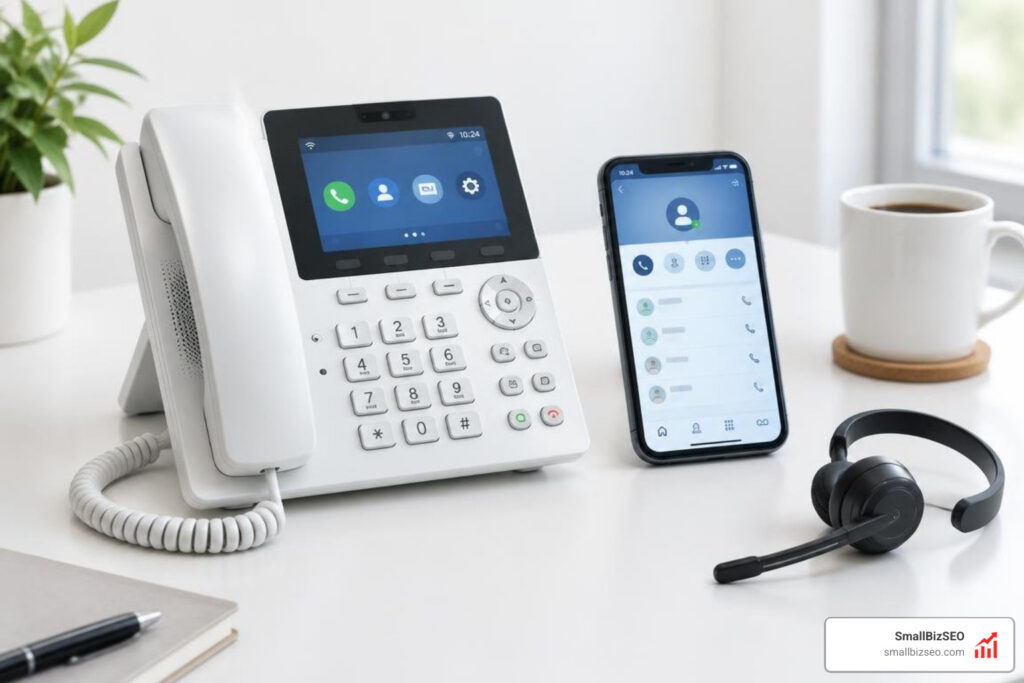
SEO for business phone systems starts with the questions buyers ask before they contact a provider. Create clear pages for the services you offer, such as replacing an old phone system, setting up Microsoft Teams Phone, or estimating business VoIP costs. If you install systems locally, explain where you work and what on-site help includes. If you serve customers nationwide, make your cloud service and support scope clear.
Buyers also need to know how a switch will work. A cloud PBX is a phone system hosted online; hosted VoIP carries calls over an internet connection. Installers, resellers, and managed service providers (MSPs) can build trust by explaining how they assess a company's needs, move its existing numbers, test calls, train staff, and provide support.
I'm Clayton Johnson, founder of SmallBizSEO. My work in technical SEO, content strategy, and digital PR informs this guide to SEO for business phone systems; I'll start with how to match buyer searches to the right pages.
How Can SEO Help Business Phone System and Telecom Providers Reach Buyers?
SEO helps telecommunications companies reach business buyers by structuring website content around specific operational needs, installation territories, and deployment stages. Instead of relying solely on generic brand terms, providers must align their websites with technical and commercial search intent. Search engines rely on entity recognition—the ability to identify distinct concepts like cloud telephony, SIP trunking, or unified communications—to match complex B2B queries with authoritative providers.
Telecommunications buyers conduct thorough technical evaluations before ever speaking to a sales representative. An enterprise operations director searching for a multi-location voice solution has vastly different requirements than a small professional firm looking to replace analog copper lines. Working with an experienced business phone systems SEO company helps providers classify search intent accurately, differentiating between national cloud app subscriptions and regional on-site installation services. Following the foundational principles in the Google SEO Starter Guide, clear site architecture allows search engines and prospective buyers to understand your service capabilities immediately.
How Should Buyer Searches Map to VoIP and PBX Landing Pages?
Group closely related buyer queries by shared intent, then create separate pages only when they describe genuinely different, useful services or decisions. A focused page can address related variations, while distinct needs such as PBX replacement, Teams Phone setup, or platform comparison deserve their own clear treatment.
To capture qualified traffic, structure your content SEO strategy around clear commercial priorities:
| Buyer Requirement | Search Intent | Target Landing Page Type | Key Evidence & Details Required |
|---|---|---|---|
| Replace aging on-premise PBX hardware | High Commercial | PBX Replacement Service Page | Cutover processes, legacy hardware audit, porting coordination, testing and contingency plan |
| Connect external PSTN calling to Microsoft 365 | Technical Research | Teams Phone Setup Page | Direct Routing vs. Operator Connect, license prerequisites |
| Compare telecom platforms and features | Commercial Evaluation | System Comparison Hub | Feature matrices, CRM integration depth, pricing models |
| Budgeting per-user or multi-site telecom costs | Transactional / Pricing | Business VoIP Cost & Pricing Page | User tiers, hardware costs, taxes, contract lengths |
| Local hands-on site survey and cabling | Local Commercial | Regional Service Area Page | Physical dispatch radius, on-site training, emergency SLAs |
Consider a hypothetical inquiry: a regional logistics company with two physical warehouses, twenty remote dispatchers, fifteen existing local phone numbers, and a requirement for multi-level IVR call queues. If this buyer searches for multi-office phone migration, they need a page detailing network readiness, call routing design, and porting coordination, not a thin contact form.
When addressing Microsoft 365 voice integration, refer to technical standards rather than vague promises. Microsoft Teams Phone licensing and PSTN connectivity are related but separate decisions. Licensing determines the calling capabilities available to users, while connectivity determines how external calling is provided. Explain the options, including Calling Plans, Operator Connect, and Direct Routing, in the context of the buyer's infrastructure and requirements rather than prescribing one universal setup.
How Can Providers Improve Technical and Local SEO?
Providers improve technical and local visibility by maintaining accurate service area parameters, deploying structured data, and optimizing website speed. Telecom buyers demand reliability; a slow-loading website with broken navigation signals poor technical execution.

Regional installers and resellers should use local SEO practices that accurately reflect their business model. Organizations that are eligible for a Google Business Profile can keep their business details consistent across their website and relevant citations. Service pages should clearly explain on-site deployment capabilities, where applicable, without overstating coverage or eligibility.
Technical optimization requires several foundational actions:
- Use structured data only when it accurately represents eligible page content and follows the relevant documentation. It can help search engines understand content, but it does not guarantee rich results or AI visibility.
- Optimize site speed and server response times while maintaining a usable experience across desktop and mobile devices.
- Verify that meaningful content and links are available in rendered HTML. Google can process JavaScript, but JavaScript SEO basics can help teams avoid rendering and discovery issues.
What Should a PBX Migration Service Page Explain?
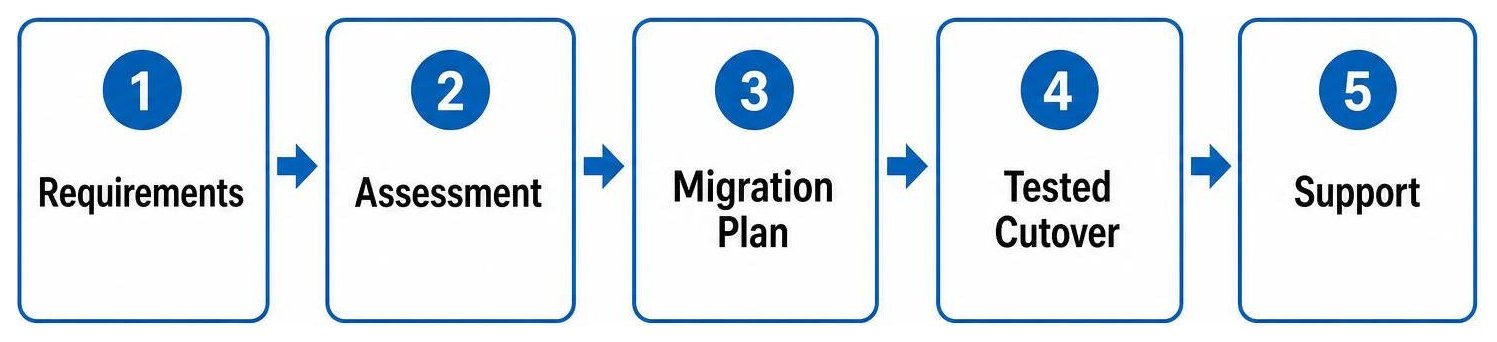
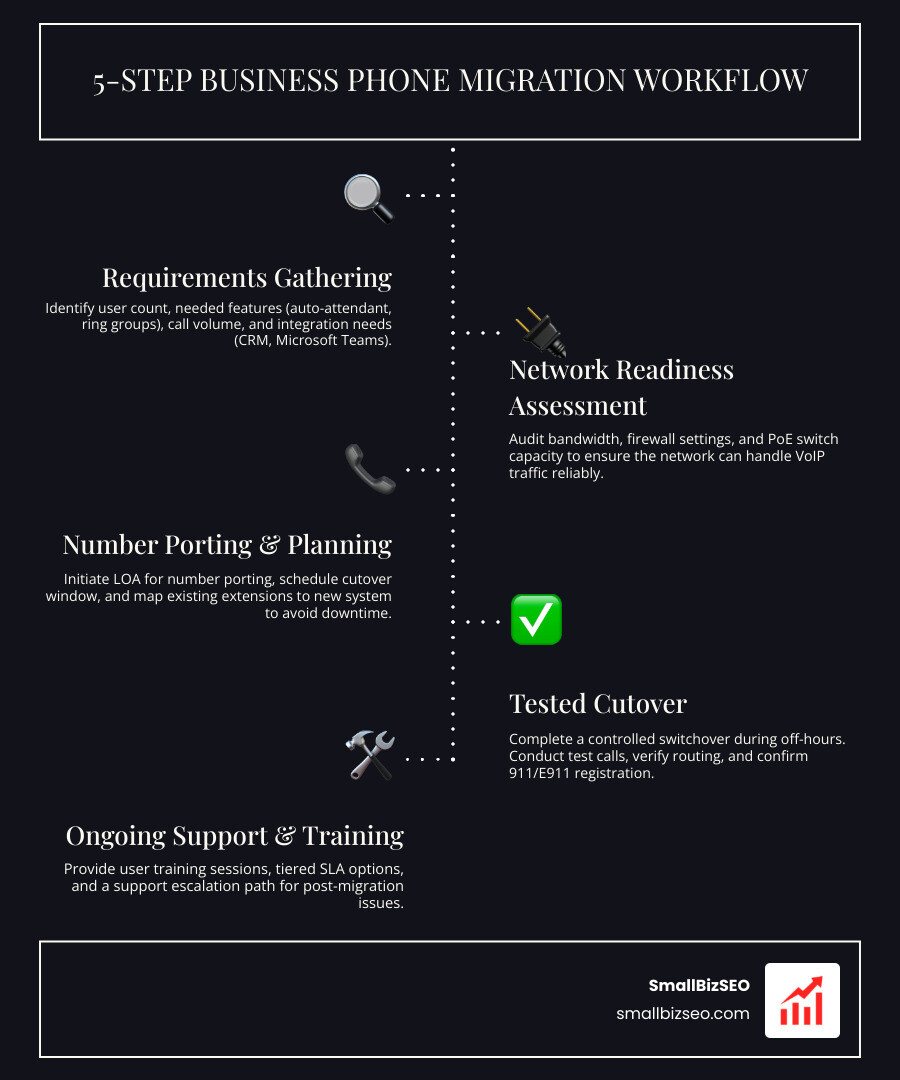
A PBX migration service page should clearly outline the technical assessment, hardware audits, number porting timelines, and testing protocols involved in a planned cutover. Clear process information can help buyers evaluate the operational considerations of replacing outdated hardware.
Applying strategic on page SEO means structuring your migration page with direct, answer-first summaries for each critical phase:
- Network Readiness and Bandwidth Audits: Explain the minimum bandwidth, latency limits, and Quality of Service (QoS) router configurations required for crystal-clear voice traffic.
- Analog Equipment Dependencies: Identify every legacy device, then verify its support, safety, and compatibility with the proposed platform before describing any integration path.
- Number Porting Coordination: Explain the Letter of Agency (LOA) process, billing name matching, porting lead times, testing, and contingency planning so buyers understand the coordination involved.
- Call Routing and Resilience: Describe how automated attendants, ring groups, and failover options will be assessed and tested for the specific platform, carrier, network, and operating environment.
- Emergency Calling Considerations: Explain that emergency-calling configuration and testing depend on the selected platform, carrier, network, and device locations, and should be evaluated as part of implementation.
How Can Providers Turn High-Intent Telecom Searches into Qualified Leads?
Turn organic telecom searches into qualified leads by establishing upfront trust architecture, providing transparent pricing frameworks, and eliminating unnecessary friction from consultation forms. B2B telecommunications procurement involves multiple internal stakeholders who are wary of aggressive sales pitches, hidden carrier fees, and restrictive multi-year contracts.
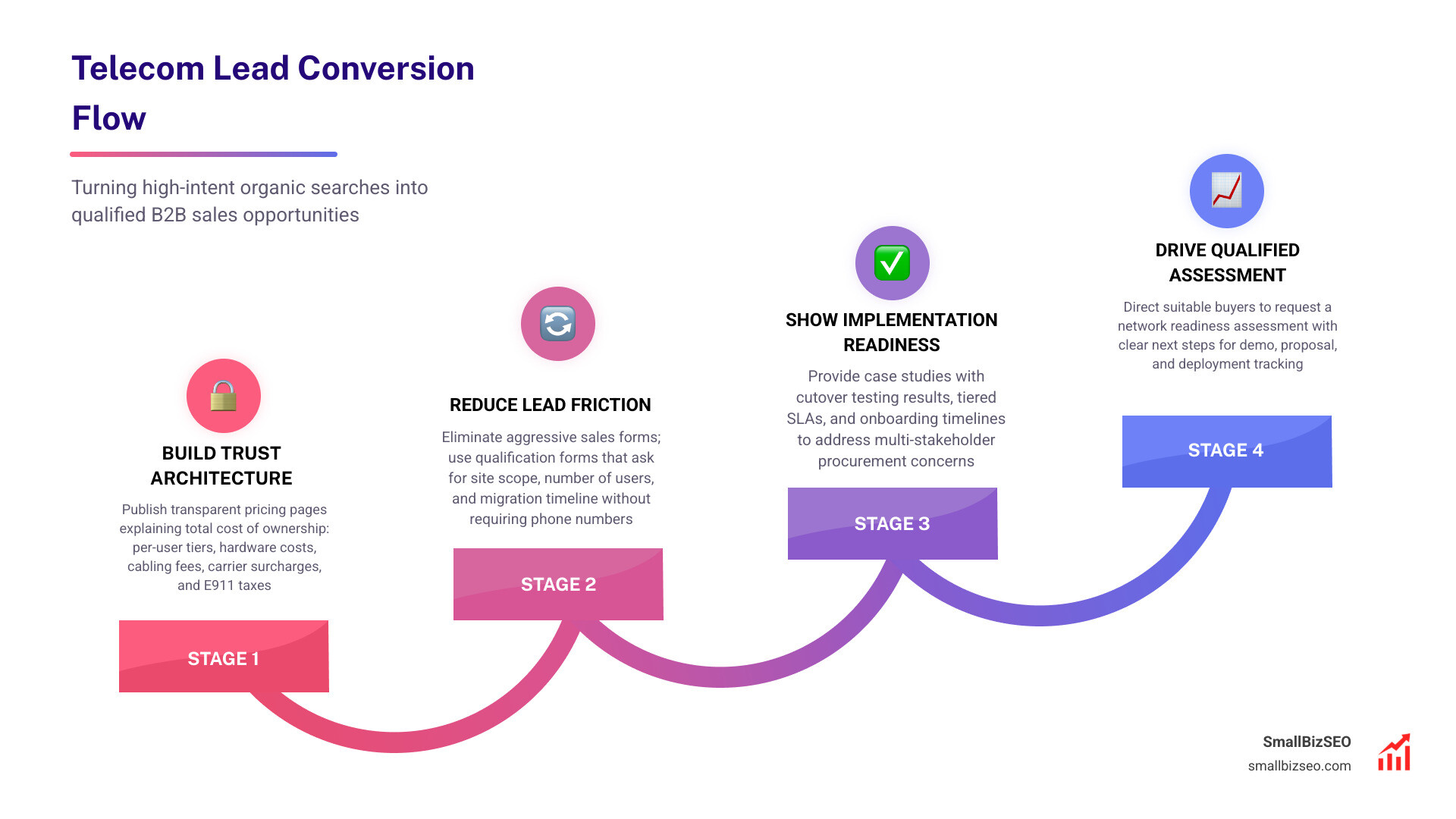
To convert cautious searchers, design transparent pricing pages that explain the true components of telecom total cost of ownership:
- Per-user subscription tiers versus flat account rates
- Physical desk phone and headset hardware costs versus desktop softphones
- Upfront structured cabling, network switching, and on-site labor fees
- Mandatory carrier surcharges, E911 fees, and regulatory telecommunications taxes
- Contract duration terms, expansion allowances, and service level agreements (SLAs)
Keep consultation request forms focused strictly on project scope, such as current line counts and target cutover dates, rather than forcing buyers into an aggressive immediate sales call.
How Can Providers Show They Are Ready to Manage a Migration?
Demonstrate deployment readiness by publishing verified technical certifications, detailed cutover checklists, and concrete support SLAs. B2B telecom buyers look for operational proof that an installer or cloud reseller can execute without risking dropped customer calls.
Incorporate trust-building elements directly into your service pages:
- Verified Platform Expertise: Display platform certifications, partner tiers, or accreditations only when they are current and actually held by the provider.
- Implementation Timelines: Provide realistic schedules showing typical phases for requirements gathering, line provisioning, configuration, and cutover.
- Tested Cutover Frameworks: Detail how your technicians run parallel testing and out-of-hours cutovers to validate call flows before disconnecting legacy trunks.
- Support Scope and SLAs: Clearly define ticket response times, emergency escalation pathways, and ongoing administrative support tiers.
How Can Providers Measure SEO’s Contribution to Qualified Pipeline?
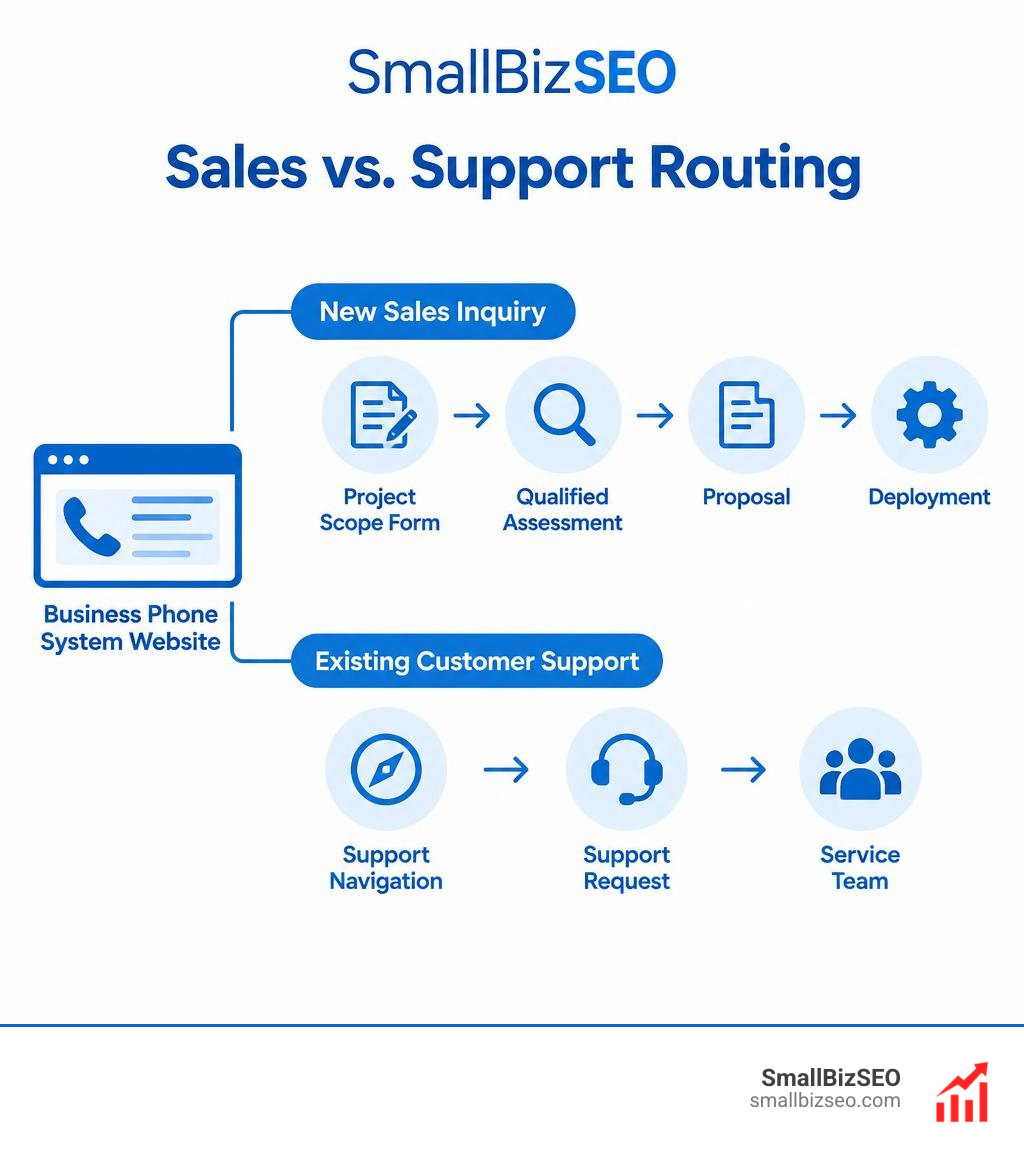
Measure SEO success by tracking qualified migration assessments, technical proposals, and signed deployments rather than relying on raw website traffic figures. Standard web analytics often distort marketing performance by lumping existing customer support logins and technician visits together with genuine sales inquiries.
To maintain an accurate view of organic pipeline growth:
- Separate Sales Inquiries from Support Requests: Use clear navigation and distinct analytics conversion events for customer support and new-business inquiries, keeping organic landing page conversion metrics focused on prospective leads.
- Track Multi-Touch Procurement Cycles: Monitor how initial informational visits to PBX comparison guides eventually contribute to booked technical discovery calls.
- Measure Proposal and Deployment Volume: Attribute signed seat expansions and multi-site hardware deployments back to organic landing page origins.
Accelerate Your Telecommunications Pipeline with Strategic SEO
Building sustained organic visibility in the telecommunications sector requires deep technical accuracy, clear service mapping, and transparent customer education. By answering real buyer questions, demonstrating relevant evidence, and building search architectures that address complex migration needs, providers can make their services easier for prospective clients to evaluate.
If you are ready to expand your organic market share, explore our tailored SEO packages to build high-converting search assets, or request an SEO visibility audit to identify immediate growth opportunities for your telecom business. You can also schedule a strategic consultation with our team to start building an authoritative search footprint.