Mastering URL Structure: The Ultimate Guide to SEO-Friendly Links
Mastering URL Structure: The Ultimate Guide to SEO-Friendly Links
What Are SEO Friendly URLs (And Why They Matter)?
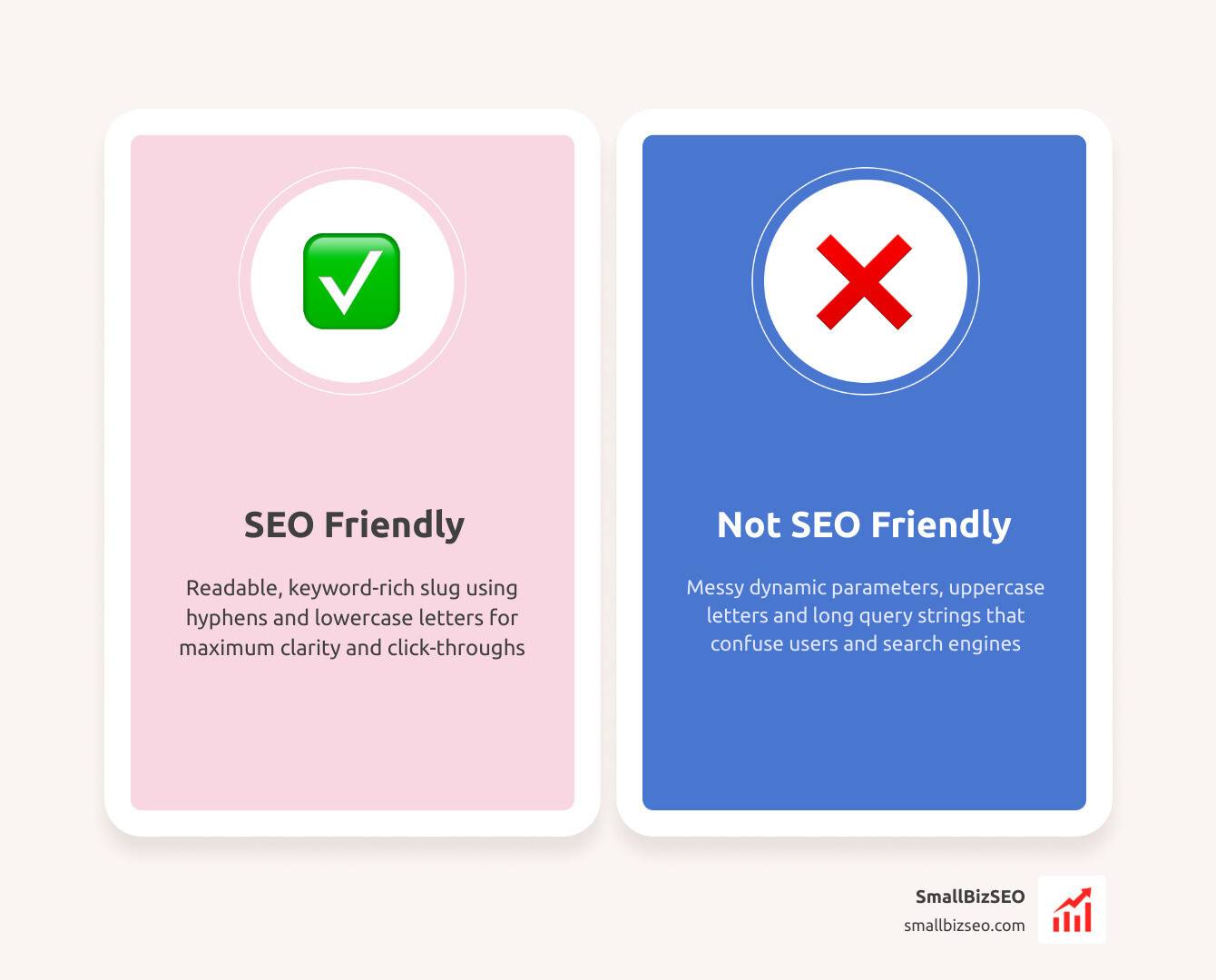
SEO friendly URLs are web addresses that are short, readable, and descriptive — built for both humans and search engines.
Here's a quick breakdown of what makes a URL "SEO friendly":
| Feature | SEO Friendly | Not SEO Friendly |
|---|---|---|
| Readability | /mens/double-breasted | /prod?id=98876451&sid=variant_03 |
| Word separator | hyphens (-) | underscores (_) or spaces |
| Letter case | all lowercase | Mixed or UPPERCASE |
| Length | 50-60 characters | 100+ characters with filler words |
| Keywords | 1-2 relevant keywords | stuffed or missing entirely |
| Parameters | minimal or none | long query strings |
The short answer: a clean URL tells users and Google exactly what a page is about — before they even click.
URLs that clearly match what someone is searching for earn 45% higher click-through rates than unclear alternatives. And with Google zero-click searches hitting 68%, every click you can earn matters more than ever.
This guide walks you through everything — from slug design and folder structure to redirect rules and how URL choices differ by website type.
I'm Clayton Johnson, a digital PR and SEO specialist who has spent years helping businesses build stronger search visibility through technical foundations like SEO friendly URLs. If you're a small business owner trying to make sense of URL structure without getting buried in jargon, you're in the right place.
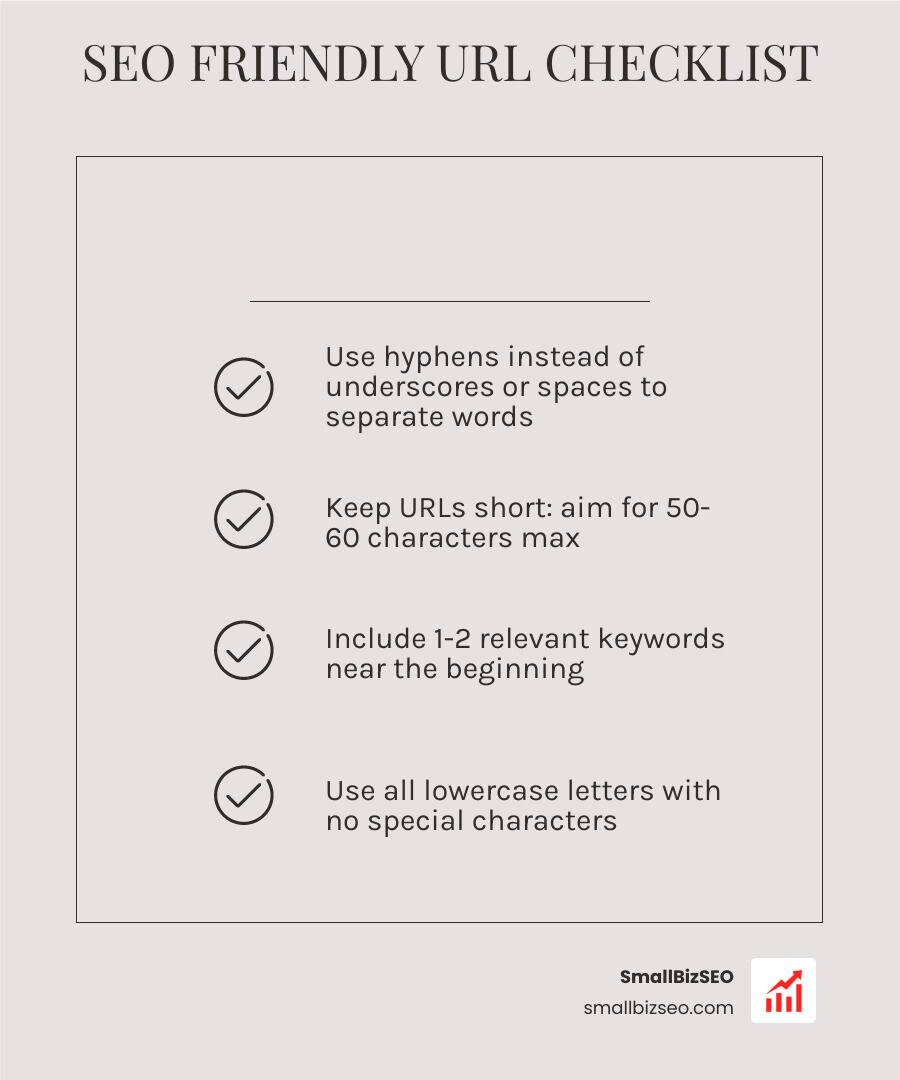
Why SEO Friendly URLs Matter for Search Rankings
When search engines crawl your website, they look for clues to understand what your content is about. While keywords in your web address are a minor ranking signal, they play a crucial role during the initial discovery phase. A clean address gives Google immediate context before its bots even finish processing your page copy.
Beyond bots, think about human searchers. If you share a link on social media or email, a clean slug looks trustworthy and professional. A messy address packed with random numbers and tracking codes looks like spam.
According to Search Engine Land's URL Guide, clean addresses are highly valuable for user clarity and long-term crawlability. When you structure your links logically, you build user trust, which directly improves your click-through rates. This user-first approach forms the foundation of modern On-Page SEO.
Core Best Practices for Designing Clean URL Slugs
A "slug" is the exact part of the web address that identifies a specific page (everything after the domain extension and folders). Designing clean slugs is one of the easiest ways to optimize your site.
To keep your slugs clean, follow these quick rules:
- Strip out punctuation: Remove commas, colons, and question marks.
- Keep it lowercase: Servers can be picky about capital letters, which we will cover next.
- Keep it short: Focus on the main topic and remove unnecessary words.
The Anatomy of SEO Friendly URLs
To make your web addresses easy for search engines to process, you must follow the technical rules of the web.
According to Google's URL Structure Best Practices, there are specific formatting choices that directly impact how search engines index your content:
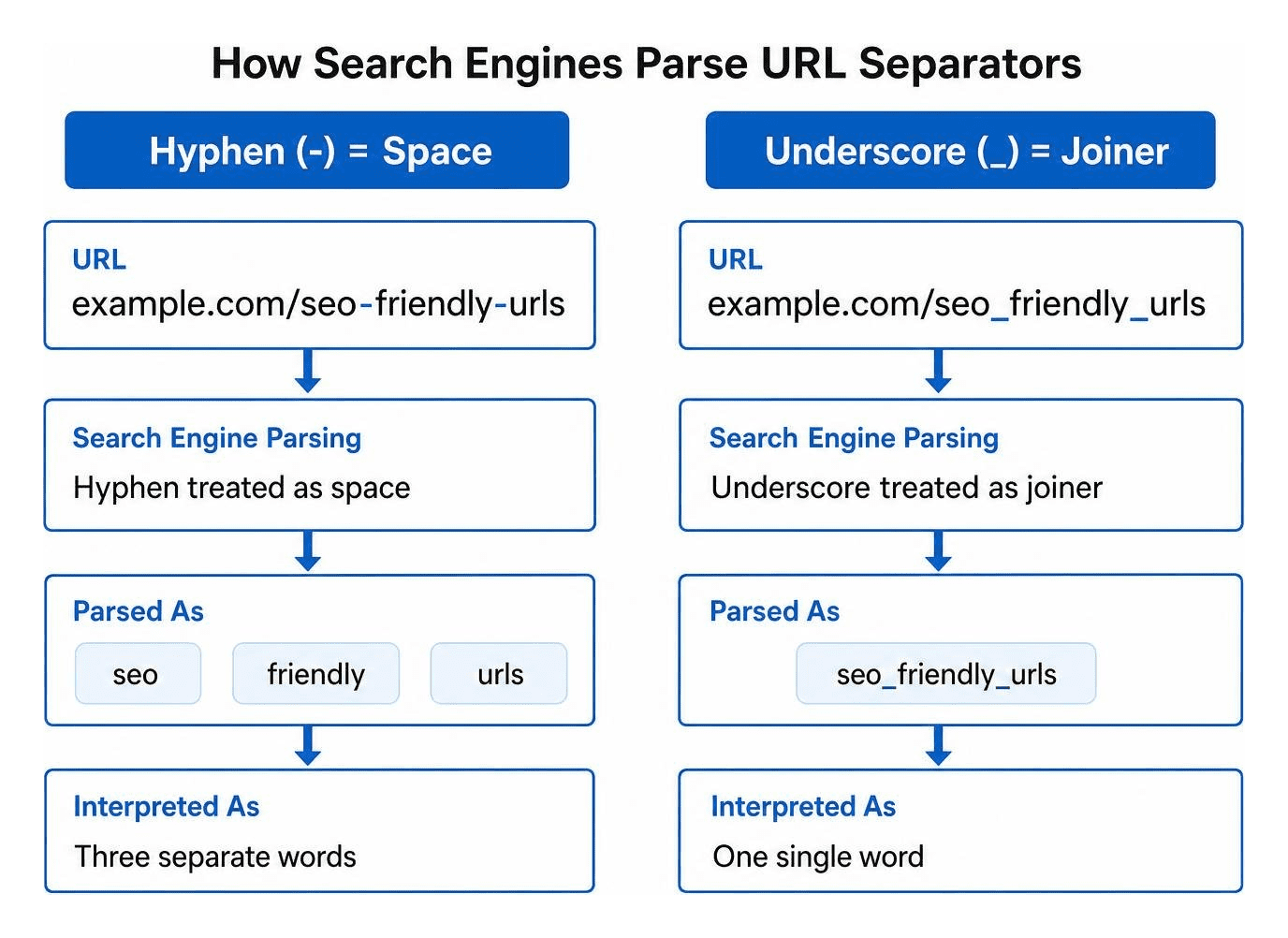
- Hyphens vs. Underscores: Always use hyphens to separate words. Google's parser treats a hyphen as a space, meaning
seo-friendly-urlsis read as three separate words. However, it treats underscores as word joiners, soseo_friendly_urlsis read as one single, confusing word. - Case Sensitivity: Web addresses are case-sensitive. If a user types
/Our-Servicesinstead of/our-services, your server might throw a 404 error or create duplicate content issues that dilute your link equity. Always use lowercase. - Special Characters: Stick to standard alphanumeric characters. Avoid symbols like percentage signs or brackets, which require complex percent-encoding and make your links look messy.
Optimal Length and Keyword Targeting for SEO Friendly URLs
When optimizing your links, aim for a sweet spot of 50 to 60 characters. Keeping your links under this limit prevents them from being truncated in search result snippets.
Interestingly, data shows that the average URL length in traditional search results is 52 characters, while the average length in AI-driven search modes is 53 characters. This consistency proves that concise links remain standard across all platforms.
When targeting keywords, follow these guidelines:
- Target 1-2 primary keywords: Do not repeat words or stuff your links with variations.
- Strip stop words: Remove filler words like "a," "the," "of," and "and" unless they are absolutely necessary to preserve the meaning of the title.
- Align with search intent: Make sure your slug clearly reflects the user's search query.
If you are looking for the right terms to target, learning How to Use Ahrefs for Keyword Research Without Losing Your Mind can help you find high-value, natural keywords to use in your slugs.
Here is a quick comparison of optimized versus poorly structured links:
| Page Topic | Optimized Link | Unoptimized Link |
|---|---|---|
| Guide to local marketing | /local-marketing-guide |
/how-to-do-marketing-for-your-local-business-in-easy-steps-and-tricks |
| Red running shoes | /products/red-running-shoes |
/prod_id_99?color=red&category=shoes&type=run |
Structuring Directories, Folders, and Site Hierarchy
Your folders act as a filing cabinet for your website. A logical hierarchy helps search engines understand how your pages relate to one another.
However, you should avoid deep nesting. Standard practice is to keep your site structure flat, using no more than one or two folder levels (e.g., /blog/seo-friendly-urls).
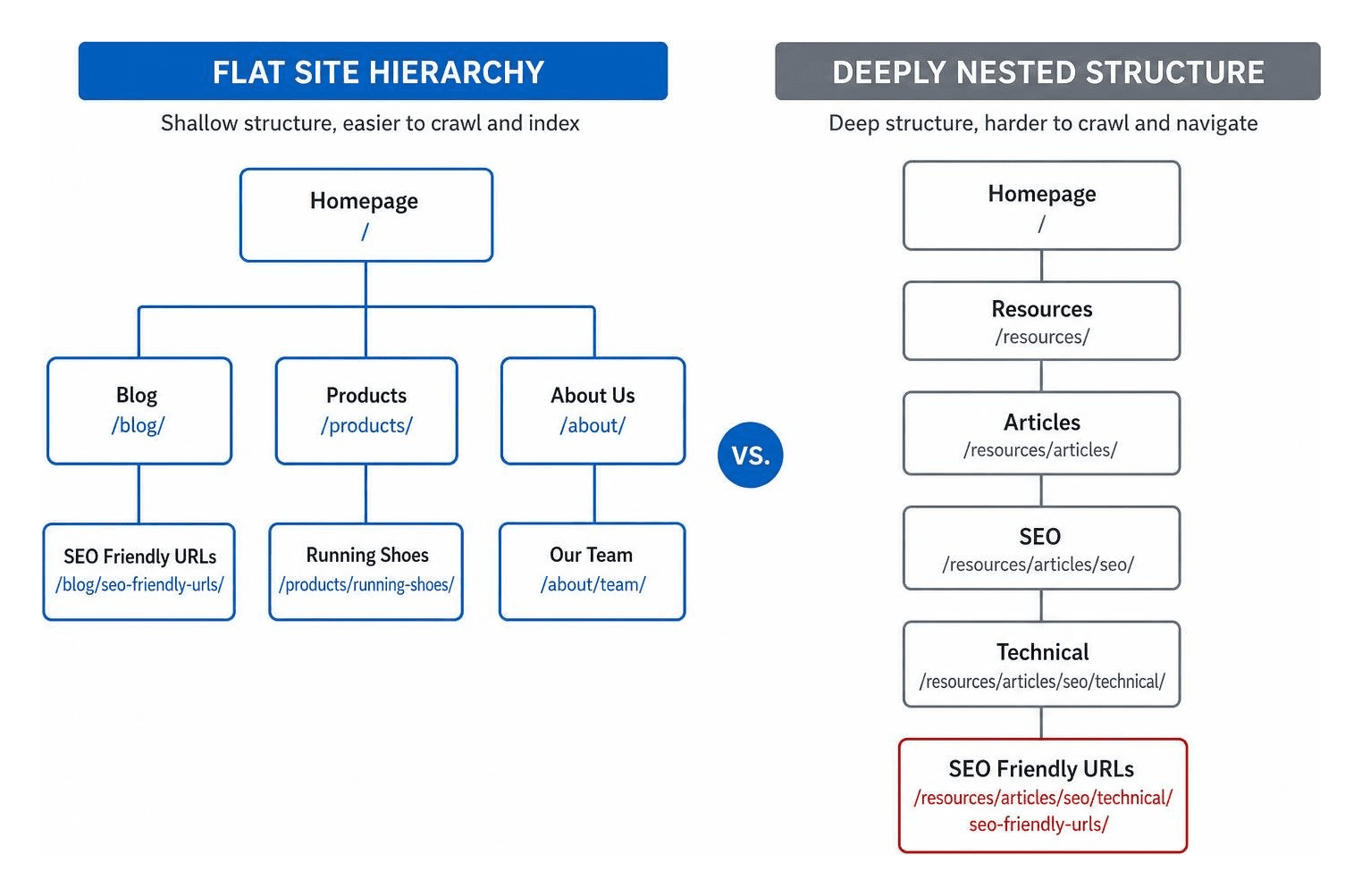
More importantly, focus on click depth rather than trying to artificially flatten your web addresses. Google cares much more about how many clicks it takes to reach a page from the homepage (ideally three clicks or fewer) than the number of slashes in the link.
If you are planning a site update, reviewing our Website Redesign Checklist: SEO Best Practices can help you organize your folders without losing your current rankings.
Tailoring URL Structures for Different Website Types
There is no single structure that works for every website. Your business model should dictate how you organize your web addresses.
URL Structures for E-commerce and Online Shops
Online shops face unique challenges because they manage hundreds of product variations, sizes, and colors.
According to Shopify's URL Structure Best Practices, e-commerce sites should use a clean, hierarchical path that groups products logically:
- Category Path:
/collections/shoes - Product Path:
/products/leather-boots
The biggest trap for online stores is faceted navigation. When users filter products by size, color, or price, the site can generate thousands of dynamic parameter links (like /products/boots?color=brown&size=10). If left unmanaged, these duplicate links waste your crawl budget. You must use canonical tags to point these filtered pages back to the main product page.
URL Structures for Blogs, News Sites, and Company Websites
For standard company websites, simplicity is key. Use flat, direct links like /about-us or /services.
For blogs and news sites, you have to decide whether to include dates. According to TextKit's URL Slug Guide, modern content strategies favor flat paths without dates.
If you write evergreen articles, including a date in the web address will make your content look outdated within a year. However, if you run a daily news site where publication freshness is critical, including the date helps readers verify that they are reading current news.
Technical URL Issues and How to Fix Them
Technical link errors can quietly hurt your search engine visibility. Here are the most common issues and how to resolve them:
- Dynamic Parameters and Session IDs: Links with long query strings (like
?sessionid=abc123xyz) confuse search engines and split your link authority. Use cookies to track user sessions instead of adding parameters to your web addresses. - Duplicate Content: If your site loads on both
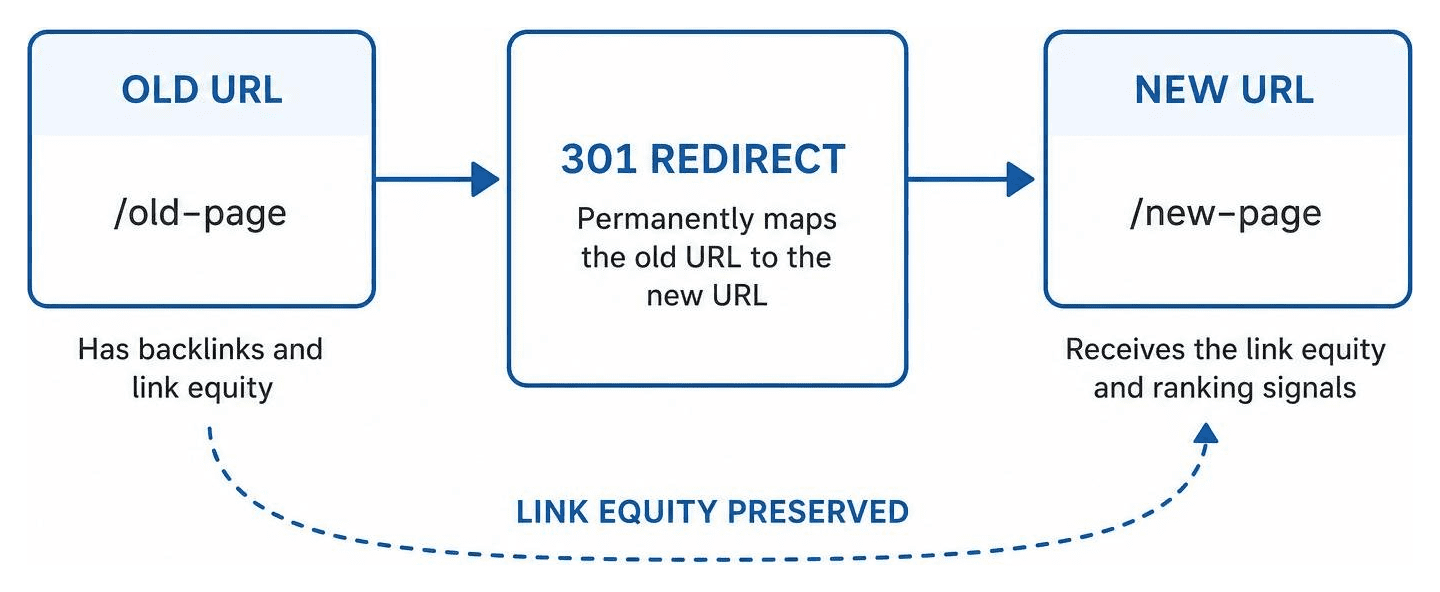
httpandhttps, or with and withoutwww, search engines will treat these as separate, duplicate pages. Consolidate your traffic by implementing site-wide 301 redirects to a single secure version. - Robots.txt and Crawl Loops: Broken relative links can create infinite crawl spaces (like
/category/subcategory/subcategory/...). Use your robots.txt file to block search bots from crawling administrative pages, search result pages, or infinite calendar loops. - Canonical Tags: Always use self-referencing canonical tags on your primary pages to tell Google which version of a link is the master copy.
Fixing these technical issues is a great first step toward learning How to Pass Google's Own SEO Analysis Audits and improving your overall site health.
Frequently Asked Questions About URL Optimization
Should I include dates in my URLs?
For most websites, no. Including dates makes your evergreen content look stale and prevents you from easily updating the page in the future. Only include dates if you run a high-volume news site where the exact publication date is essential for context.
Do URL slugs impact AI search engine citations?
Yes. Modern AI search tools like ChatGPT and Perplexity rely heavily on URL permanence and clear slugs to cite sources. If your links are descriptive and stable, AI engines are much more likely to cite your pages as trusted references.
How do I safely change an existing URL?
If you must change a web address, always set up a permanent 301 redirect from the old link to the new one. This transfers your hard-earned link equity and prevents users from hitting dead ends. After making the change, update your internal links and XML sitemap, then monitor your Google Search Console for four to eight weeks to ensure everything indexes correctly.
Conclusion
Creating clean, logical web addresses is a fundamental part of building a search-friendly website. By keeping your links short, descriptive, and easy to read, you improve both your search engine crawlability and your user experience.
At SmallBizSEO, we specialize in helping small businesses grow using our data-driven "Velocity" framework. We focus on delivering fast rankings and E-E-A-T-compliant growth through transparent, automated reporting.
If you are ready to clean up your site's technical foundation, check out our SmallBizSEO Services to schedule a comprehensive technical audit today.