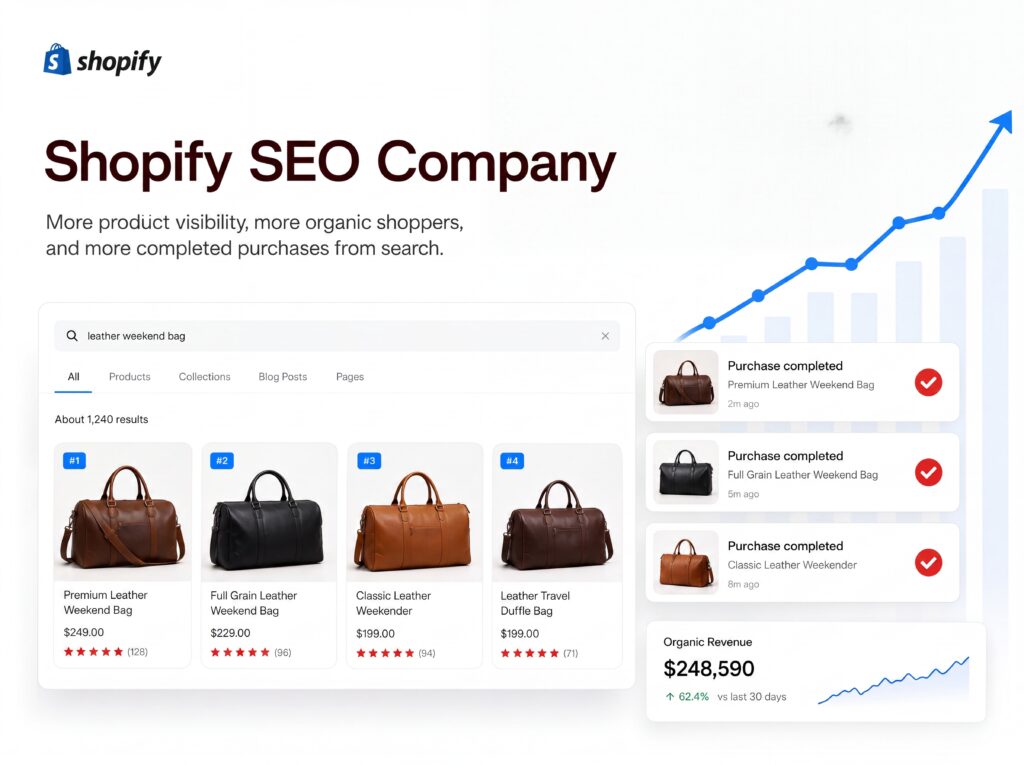
Make the content entered in Shopify work coherently with the storefront your customers and search engines actually see.
A Shopify merchant can improve a collection description in the admin and still need to understand how the chosen theme presents it. Product links, app additions and reused templates introduce other decisions. SmallBizSEO reviews those connections so the SEO plan addresses both useful shopping content and the actual storefront output, rather than assuming an app installation resolves every issue.
Search intent & content
Connect merchant content with the rendered store
Collection merchandising and theme implementation are related but separate tasks. We identify which changes belong in product or collection settings, which require template work and which depend on an app or developer, giving the merchant a clear scope for improvement.
Collection content and template review
We connect each collection’s shopping purpose with its title, description and visible template sections, checking whether customers receive useful selection guidance alongside the products rather than an unrelated block of search text.
Example searchShopify collection page SEO help
Metadata and product-path inspection
We inspect rendered titles, descriptions, canonical signals and internal product links across representative pages, identifying actual inconsistencies before proposing changes to templates or navigation used throughout the catalog.
Example searchShopify canonical and product URL audit
Theme and app performance diagnosis
We review representative collection and product experiences alongside theme, app and third-party contributions, separating observed loading or interaction issues from assumptions that every app or large image is the cause.
Example searchShopify theme app performance review
Handle changes and content handoff
We plan approved collection or product handle changes with a record of old destinations, redirect requirements and internal links, keeping merchandising edits coordinated with the people responsible for implementation.
Example searchShopify collection URL change SEO
Website priorities
Build useful pages around real customer decisions
Inspect output, not settings alone
An admin field describes the merchant’s input; the rendered page shows how the theme uses it. Reviewing both helps uncover missing, duplicated or misplaced content without blaming the platform by default.
Test shared templates carefully
A small change can affect many products using the same template. We select representative pages with different variants, content lengths and app blocks so the review reflects the store’s actual catalog.
Protect useful shopping functions
An app can add value as well as code. Performance decisions should consider the feature customers use, the observed issue and the available alternatives rather than remove functionality solely to simplify a page.
Give each task an owner
Merchandising copy, theme development and app configuration may belong to different people. A practical handoff identifies the affected template or record, intended change and checks needed before it reaches the live storefront.
Our approach
A practical plan for your website
We begin with your store’s collection structure, representative products, theme setup and active storefront apps. Then we compare merchant inputs with rendered pages, prioritize evidenced issues and prepare a scoped content and technical handoff. Implementation follows the access and approval arrangements agreed for your store.
Review the foundations
Check crawlability, existing pages, customer needs, and the services your business actually offers.
Map services to demand
Connect customer questions to useful service pages and supporting content without duplicating search intent.
Build, measure, improve
Publish useful pages and refine them using search visibility and separately configured inquiry analytics.
- Collection copy supports the products and buying decisions represented on the page.
- Technical recommendations refer to inspected storefront output and identified page types.
- Shared-template changes are checked against representative products and collections.
- URL changes retain a clear destination map and coordinated internal-link updates.
Frequently asked questions
Questions about your industry SEO strategy
Is editing a Shopify collection description enough for SEO?
It is one useful input, but the page also depends on the chosen template, product selection, navigation and rendered metadata. We review how those pieces work together before deciding which change would help the collection most.
Do Shopify stores always need a canonical rewrite?
No. We first inspect the actual canonical output and internal paths on representative pages. A recommendation should respond to an observed inconsistency and account for the store’s theme and apps rather than assume the default setup is wrong.
Will removing apps automatically solve storefront performance issues?
Not necessarily. We examine the observed experience and the contribution of theme, app and third-party code, then weigh improvements against the shopping function involved. The aim is a targeted change with a clear test, not indiscriminate removal.
How do we measure whether SEO is helping?
Use Google Search Console for search visibility and page performance. Measure calls, inquiries, and lead quality separately through analytics and intake tracking where configured.
Can you guarantee rankings or new customers?
No. We focus on the work within our control: technical foundations, useful content, clear navigation, and measurement. Search outcomes depend on competition and other factors.
Build a clearer path from search to inquiry
Talk with SmallBizSEO about a Shopify SEO review that connects collection merchandising, actual theme output and practical implementation priorities without treating your store as a generic ecommerce template.
Search rankings & AI visibility — AI SEO / AEO
- Google AI Mode
- ChatGPT
- Claude
- Gemini
- Perplexity


Related services & strategies