Single-Location SEO: Your Practical Step-by-Step Launch Blueprint
What should a new single-location business do first for local SEO?
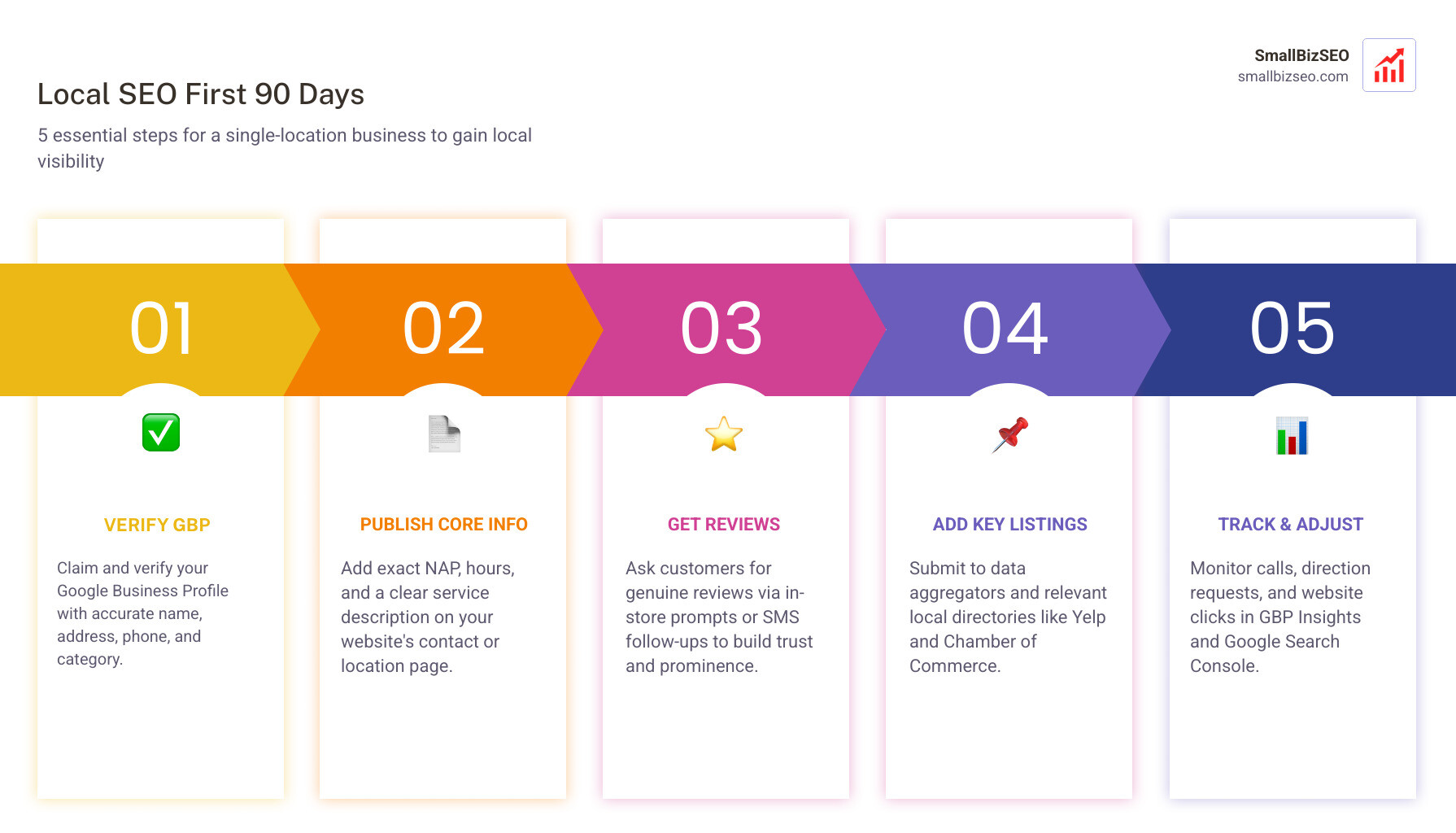
The local SEO priorities for a newly opened business with one location are to verify its Google Business Profile, publish accurate contact details and hours on its website, and choose the right business category. Next, ask customers for genuine reviews and add listings to a few relevant local directories. Track calls, direction requests, and website inquiries to see what brings in customers.
You do not need a page for every nearby town or dozens of directory listings. Start with one accurate profile and one useful website page, then build on them over the first 90 days.
I'm Clayton Johnson, founder of SmallBizSEO, where I work on technical SEO, content strategy, and link building for small businesses. I help owners set local SEO priorities for a newly opened business with one location around steps they can act on and maintain.
Local SEO priorities for a newly opened business with one location vocabulary:
- Local SEO
- How to build local backlinks
- How to divide a limited local SEO budget between website and profile work
Introduction to Single-Location SEO Launch Planning
Opening a physical storefront brings immediate operational demands, from staffing registers to managing daily inventory. However, online discovery dictates whether foot traffic walks through your doors. Research reveals that 96% of consumers use the internet to find local businesses. If your physical storefront remains invisible across search engines and map applications, potential customers simply default to established competitors.
Search behavior places heavy weight on the top search positions. The number one organic position in Google search captures approximately 32% of all search clicks, while 44% of searchers never look beyond the top three results. Furthermore, only 9% of users ever scroll to the very bottom of the first search results page.
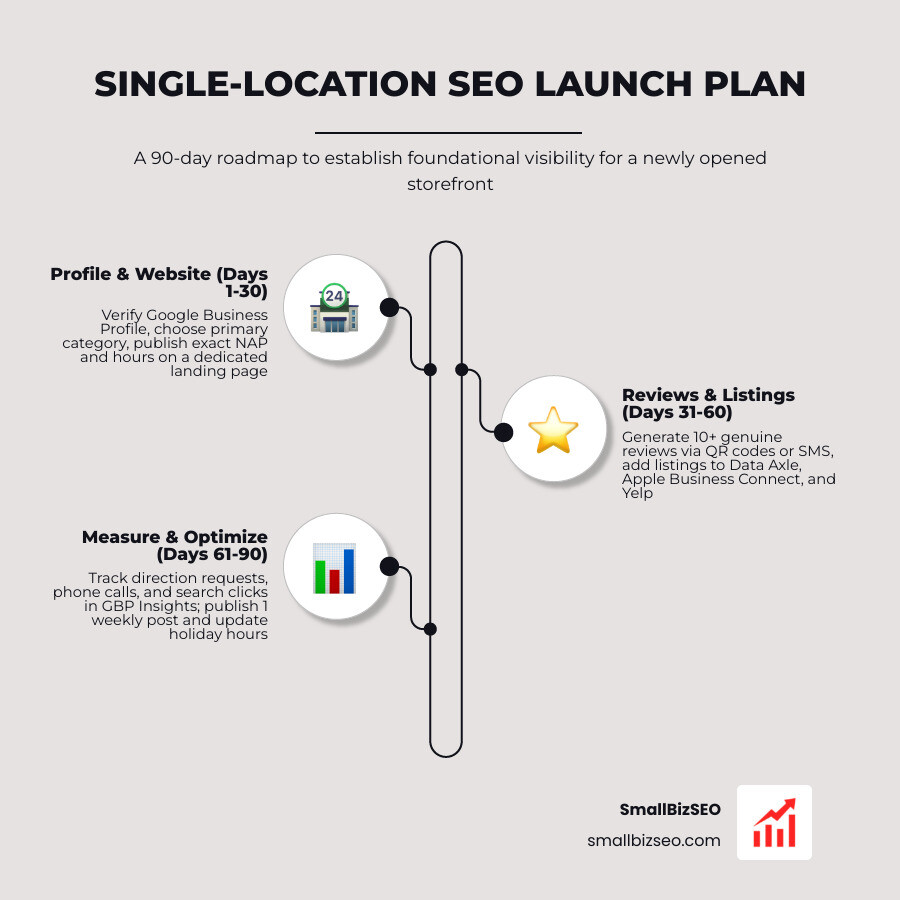
Winning these high-converting positions requires a structured launch framework rather than scattered marketing tactics. When you launch a single storefront, establishing basic search visibility means coordinating your business listings, structured website markup, customer feedback loops, and geographic relevancy signals into a cohesive operational system.
What Are the Core Local SEO Priorities for a Newly Opened Business with One Location?
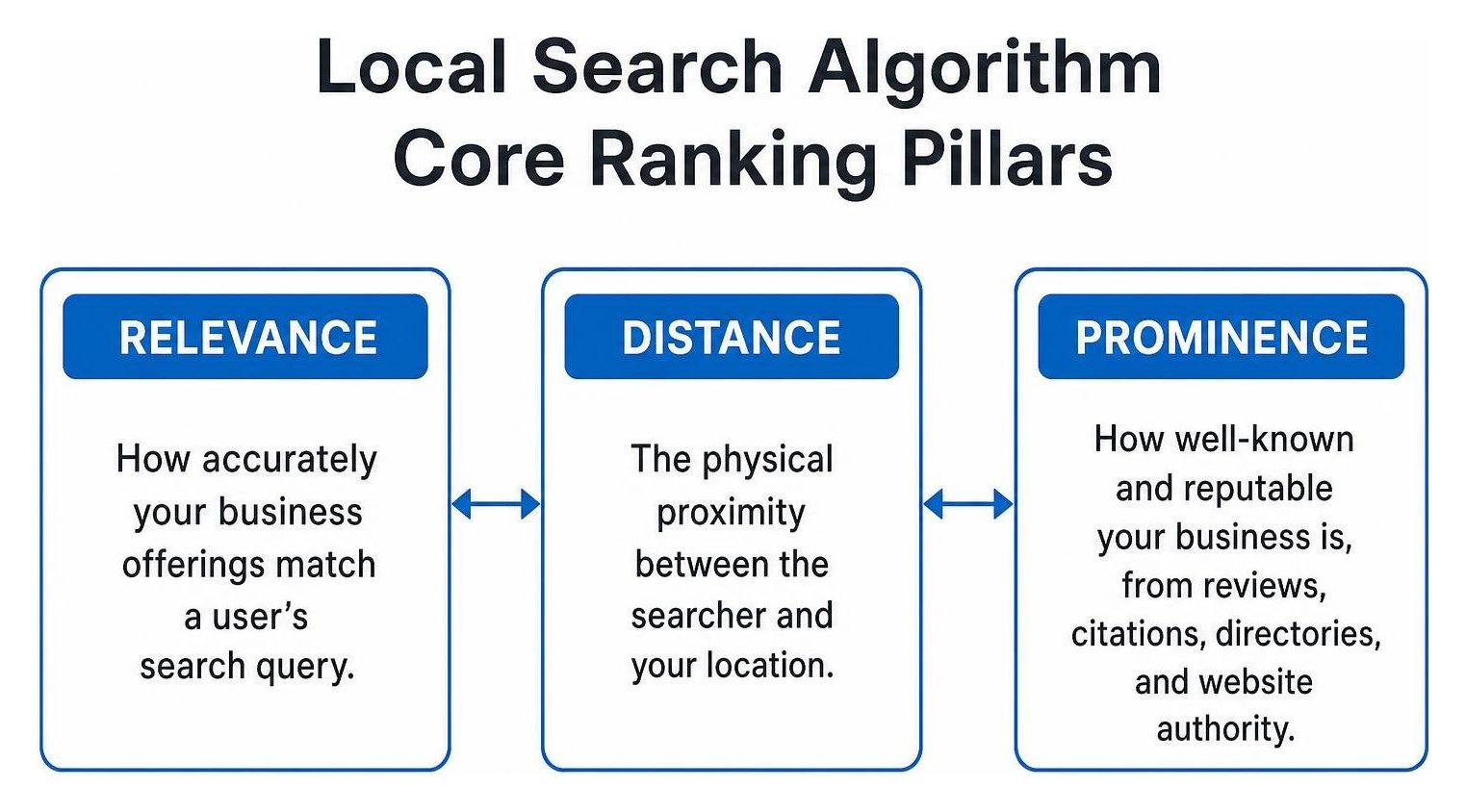
Search engines rank single-location businesses using three primary factors: relevance, distance, and prominence. Relevance measures how accurately your business offerings match a user's search query. Distance calculates the physical proximity between the searcher and your registered location. Prominence reflects how well-known and reputable your business is, derived from review counts, directories, citations, and website authority.
To help you manage early marketing tasks, we have structured the fundamental launch priorities into a simple impact matrix:
| Task Priority | Core Focus Area | Implementation Time | Strategic Impact | Complexity |
|---|---|---|---|---|
| P1: Immediate | Google Business Profile Verification | 1–2 Hours | Critical | Low |
| P1: Immediate | NAP Consistency on Primary Channels | 2–4 Hours | High | Medium |
| P2: 30 Days | Dedicated Website Location Architecture | 4–8 Hours | High | Medium |
| P2: 30 Days | LocalBusiness Schema Markup | 2–3 Hours | High | Technical |
| P3: 60 Days | Structured Review Generation System | Ongoing | High | Low |
| P3: 90 Days | Community Link Building & Outreach | Ongoing | Medium | Medium |
To maximize these foundational signals, business owners should consult established resources such as Google's official guidance on improving local rankings and implement proven prominence signals across every digital profile.
How to Execute Local SEO Priorities for a Newly Opened Business with One Location in the First 30 Days
During your first month of operation, claim and complete your Google Business Profile. Select an exact primary category that precisely reflects your core service, followed by secondary categories that represent specific offerings.
Complete every operational detail accurately:
- Standard operating hours and designated holiday hours
- A consistent local telephone number
- High-resolution exterior storefront photos showing signage
- Interior space photography to establish visual trust
- An updated list of in-store products and services
- Clear, descriptive service menus
Maintaining updated profile details provides search engines with verified data, helping secure placement in the map pack.
How Do NAP Consistency and High-Authority Citations Build Search Trust?
Search engines cross-reference directory mentions to confirm your business exists at its claimed location. This makes exact NAP consistency—matching your Name, Address, and Phone number identically across platforms—essential for early search visibility.
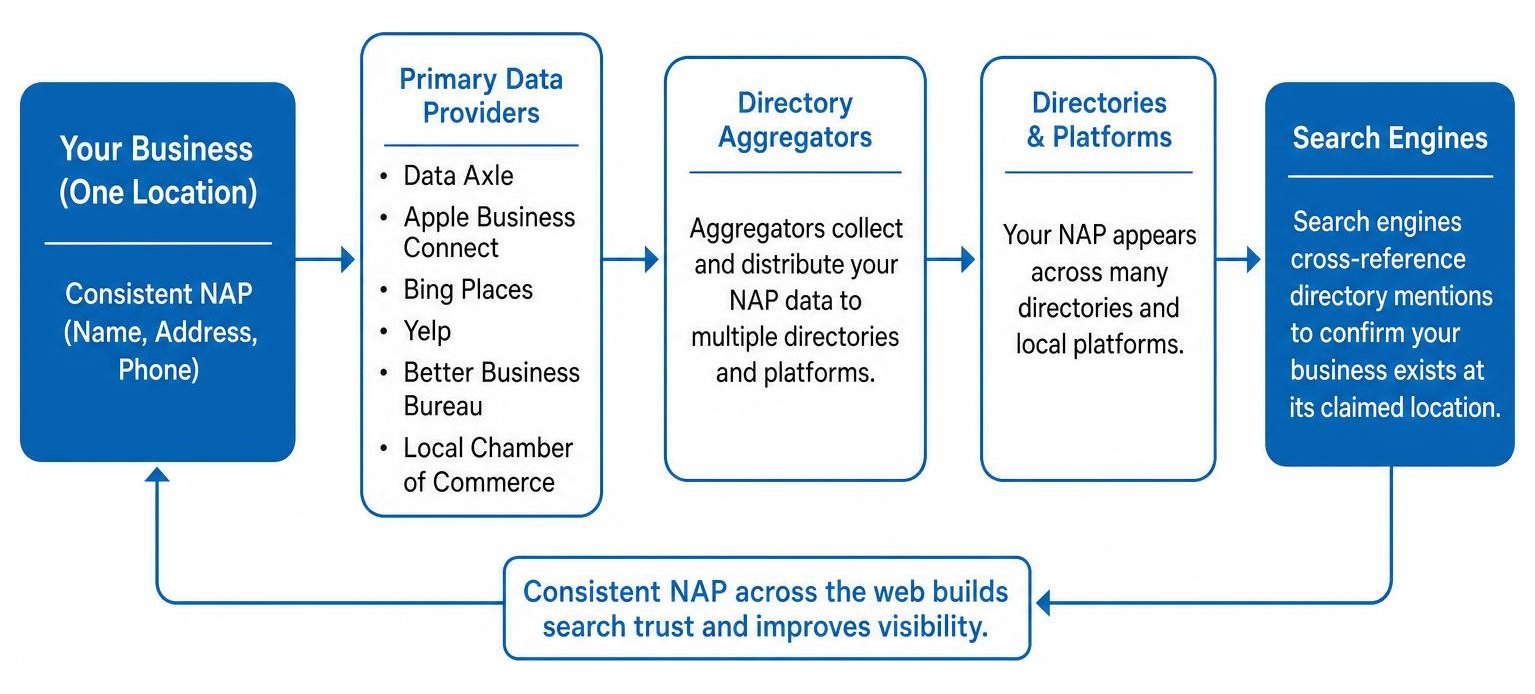
Prioritize foundational listings with top authority platforms:
- Major data platforms such as Data Axle
- Apple Business Connect and Bing Places
- Yelp, the Better Business Bureau, and your local Chamber of Commerce
Submit accurate business citations to these sources. Avoid buying hundreds of cheap directory links, which create messy duplicate records. Instead, verify top platforms directly and establish a monthly audit routine to fix conflicting addresses or outdated phone numbers.
Google Business Profile vs. Location Landing Page: When Do You Need Each?
A Google Business Profile captures searchers looking directly on Google Maps and localized map packs. In contrast, a dedicated local landing page on your website ranks for broader commercial searches and provides full details about your services.
Single-location operations should avoid mass-producing thin pages for neighboring suburbs where they lack a physical address. Creating low-value town pages can trigger search quality filters. Instead, focus on building one authoritative location page that establishes authentic local relevance.
Your primary location page should include:
- An embedded Google Map pointing to your verified pin
- Clear parking, public transit, and accessibility instructions
- Nearby landmarks and neighborhood descriptions
- Structured JSON-LD schema markup
Adding structured code clarifies your business details for search engines and AI discovery tools.
How to Advance Local SEO Priorities for a Newly Opened Business with One Location in Days 31 to 90
With your foundation established, shift your focus to customer sentiment and community authority between days 31 and 90. Customer feedback serves as both social proof and an active ranking signal; 95% of consumers read reviews before making a purchase, and 88% trust online feedback as much as personal recommendations.
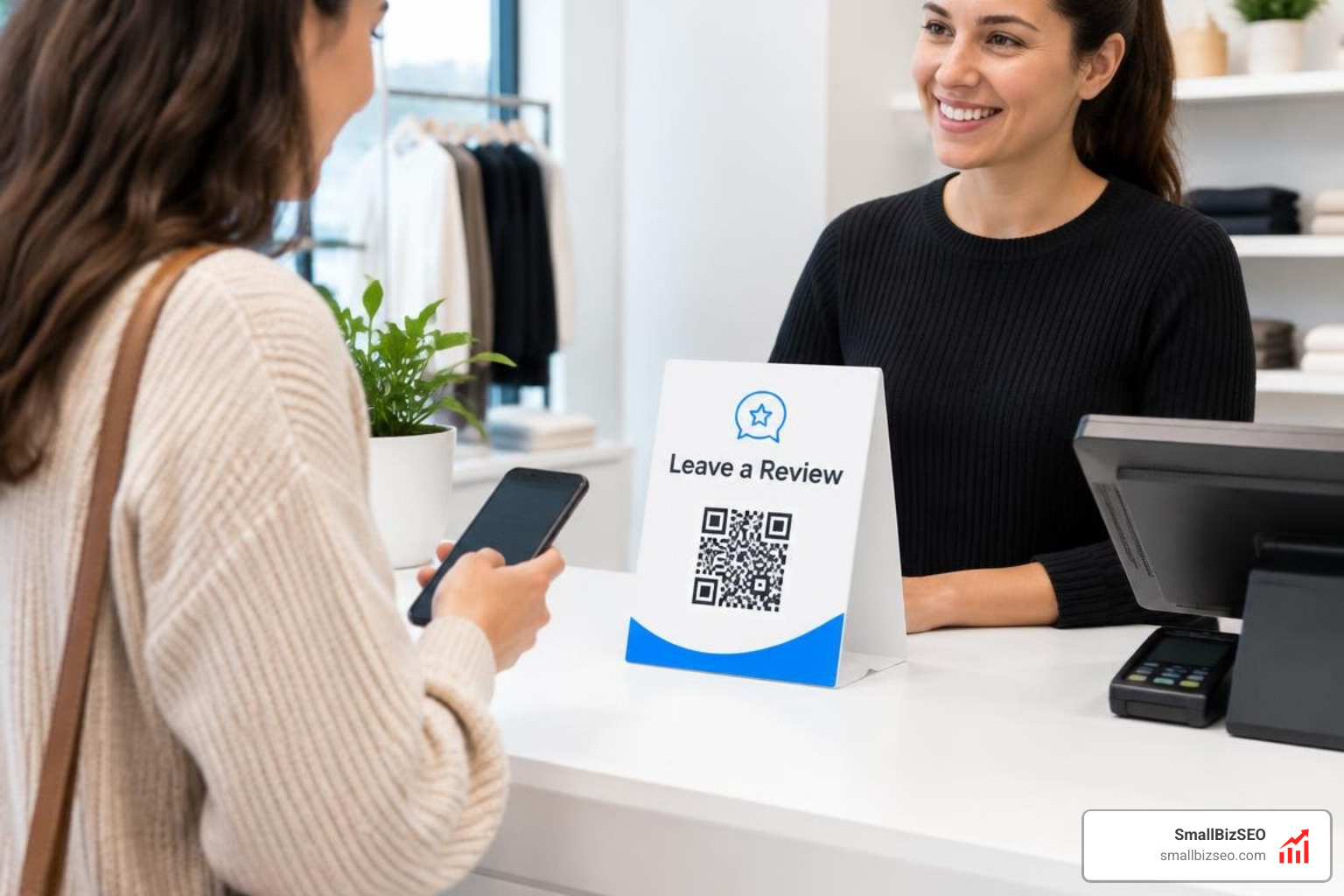
Integrate steady review collection into your daily operations using these high-converting touchpoints:
- Point-of-sale review prompts featuring scannable QR codes
- Automated post-purchase SMS or email confirmations
- Printed review links on transaction receipts
- Verbal requests following successful service interactions
Respond professionally to all reviews within 48 hours. Integrate natural service details and location references into your responses where appropriate. During this phase, publish weekly updates through your Google profile and partner with local community organizations to build natural, locally relevant links.
How to Track Local Search ROI and Maintain Momentum
Local search visibility is an ongoing operational commitment rather than a one-time project. Dedicate 90 minutes each week to manage your core tasks: publish a profile post, reply to incoming customer feedback, verify your listing hours, and inspect your search console performance.

As your storefront grows, coordinating technical website health, localized content, and link acquisition requires sustained effort. Partnering with SmallBizSEO for full-scale data-driven local SEO services provides access to our Velocity framework, delivering transparent reporting and steady local search visibility.
What Key Metrics and Direction Requests Measure True Local SEO Success?
Measure your local search success by tracking actions that directly produce revenue rather than relying solely on vanity rankings:
- Phone Call Volume: Inbound calls placed directly through your business listing.
- Customer Direction Requests: Navigation clicks indicating immediate foot traffic intent.
- Website Click-Throughs: Visitors navigating from maps to your primary booking page.
- Search Console Geo-Queries: Organic impressions generated from neighborhood-specific keywords.
- Conversion Actions: Online appointment bookings or quote submissions.
Tracking these behavioral metrics shows exactly how digital visibility translates into in-store sales.
What Common Local SEO Launch Mistakes Should Single-Venue Owners Avoid?
Avoid common setup errors that can undermine your early search progress:
- Keyword Stuffing Profile Names: Adding unnatural city or keyword phrases to your official business name violates platform guidelines and risks suspension.
- Creating Thin Doorway Pages: Launching duplicate, low-value pages for surrounding neighborhoods hurts site quality.
- Ignoring Customer Reviews: Failing to respond to negative or positive reviews signals poor operational oversight to prospective buyers.
- Buying Unverified Reviews: Purchasing fake reviews risks penalties and permanently damages customer trust.
- Listing Discrepancies: Publishing inconsistent suite numbers, street abbreviations, or phone numbers confuses search crawlers.
- Neglecting Mobile Speed: Slow-loading mobile pages lead to high abandonment rates from mobile searchers.
Turning Your Local Search Presence into Lasting Foot Traffic
Establishing local search visibility for a newly opened business requires steady operational discipline. By claiming your primary profile, standardizing your business contact details, publishing clear website schema, and gathering authentic customer reviews, you build a sustainable foundation for customer discovery.
Take a structured approach during your first 90 days, monitor customer actions closely, and maintain your listings systematically to keep new customers visiting your storefront.