A Quick Start Guide to SEO Reporting Metrics
A Quick Start Guide to SEO Reporting Metrics
SEO Reporting: Track What Drives Search Growth
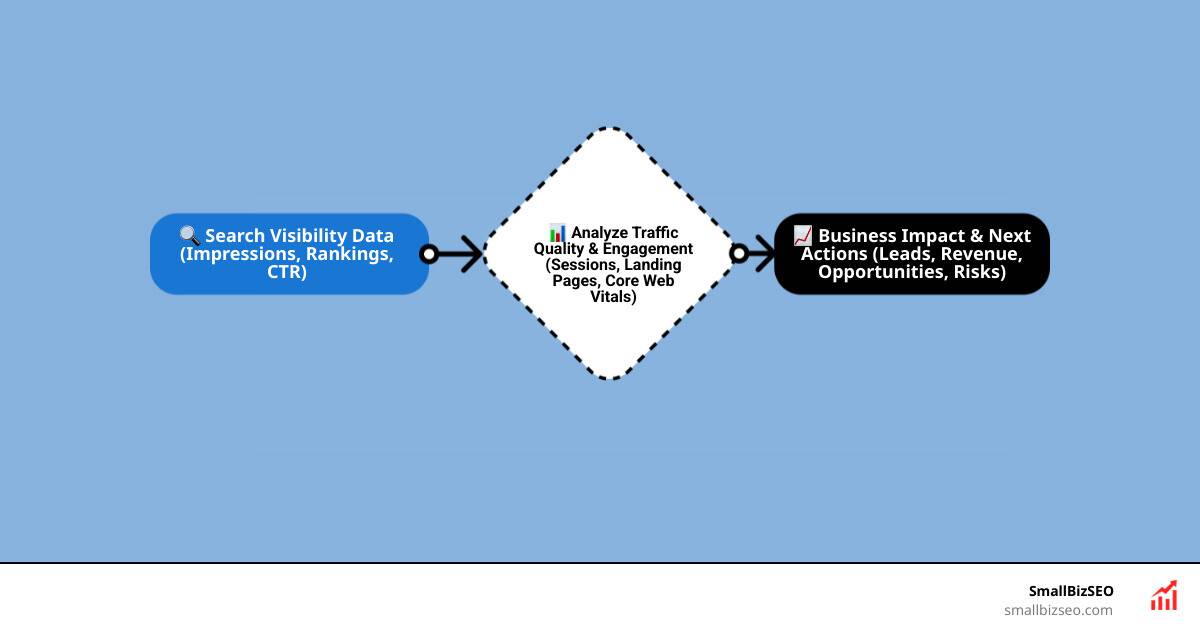
SEO reporting helps you see whether search visibility is turning into meaningful business results. Start with a small set of metrics tied to your goal:
- Visibility: impressions, rankings, and click-through rate (CTR)
- Traffic quality: organic sessions, landing pages, and engagement
- Business impact: leads, sales, revenue, and assisted conversions
- Site health: indexing, crawl errors, Core Web Vitals, and broken pages
- Next actions: the opportunities, risks, and owners behind the numbers
A useful report does more than show traffic went up or down. It explains why performance changed, what it means for leads or revenue, and what should happen next. For example, high impressions with low CTR can point to weak titles or snippets, while a sudden traffic drop may signal an indexing or technical problem.
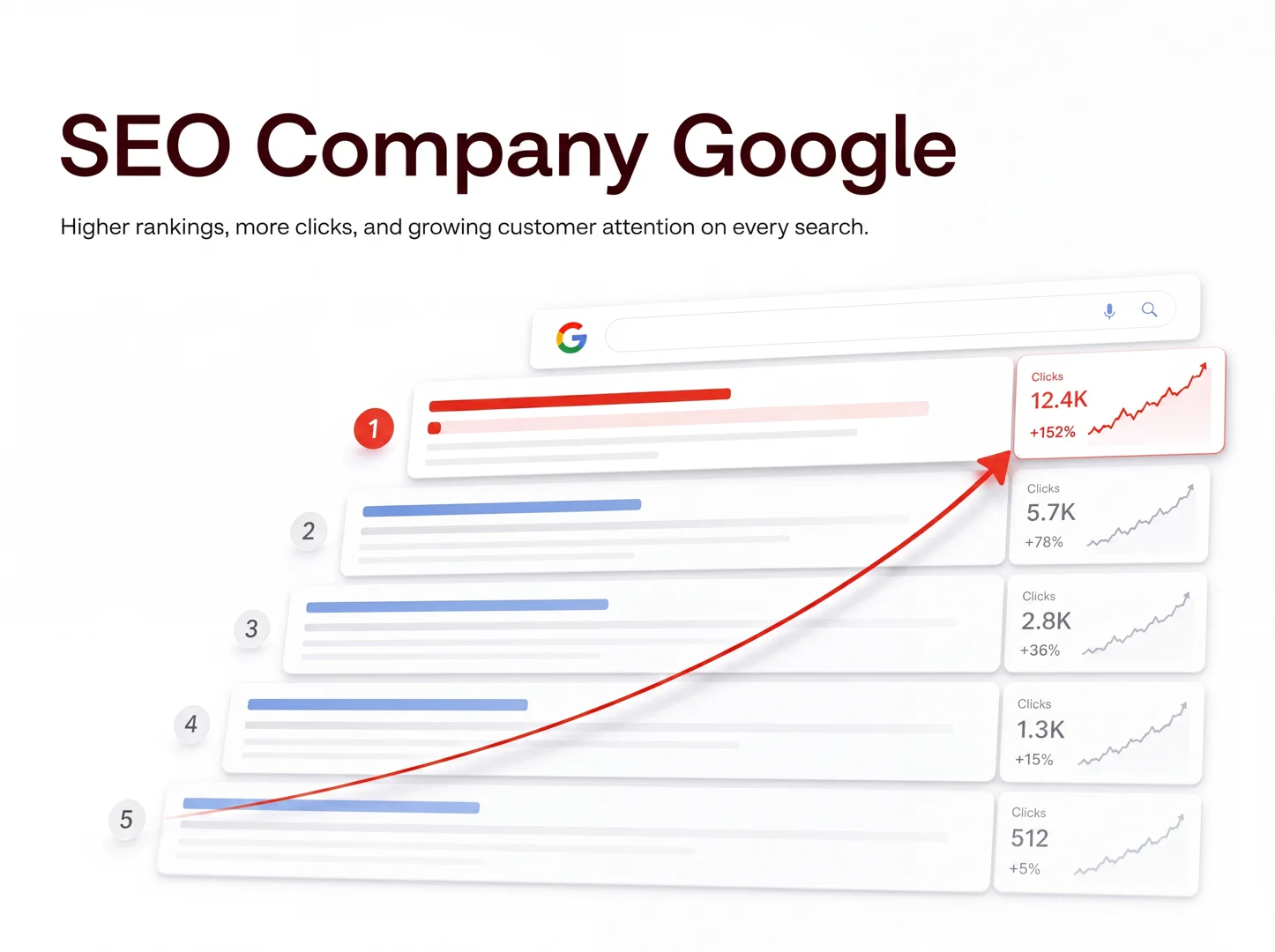
Search rankings matter because higher positions can earn far more clicks, but rankings alone are not the finish line. The strongest SEO reports connect Google Search Console data about search behavior with GA4 data about what visitors do after they arrive.
I am Clayton Johnson, and I use digital PR and SEO campaigns to improve search visibility and market presence. In this guide, I will show you how SEO reporting can turn scattered search data into clear decisions that support stronger leads and growth.
Essential Metrics for Modern SEO Reporting
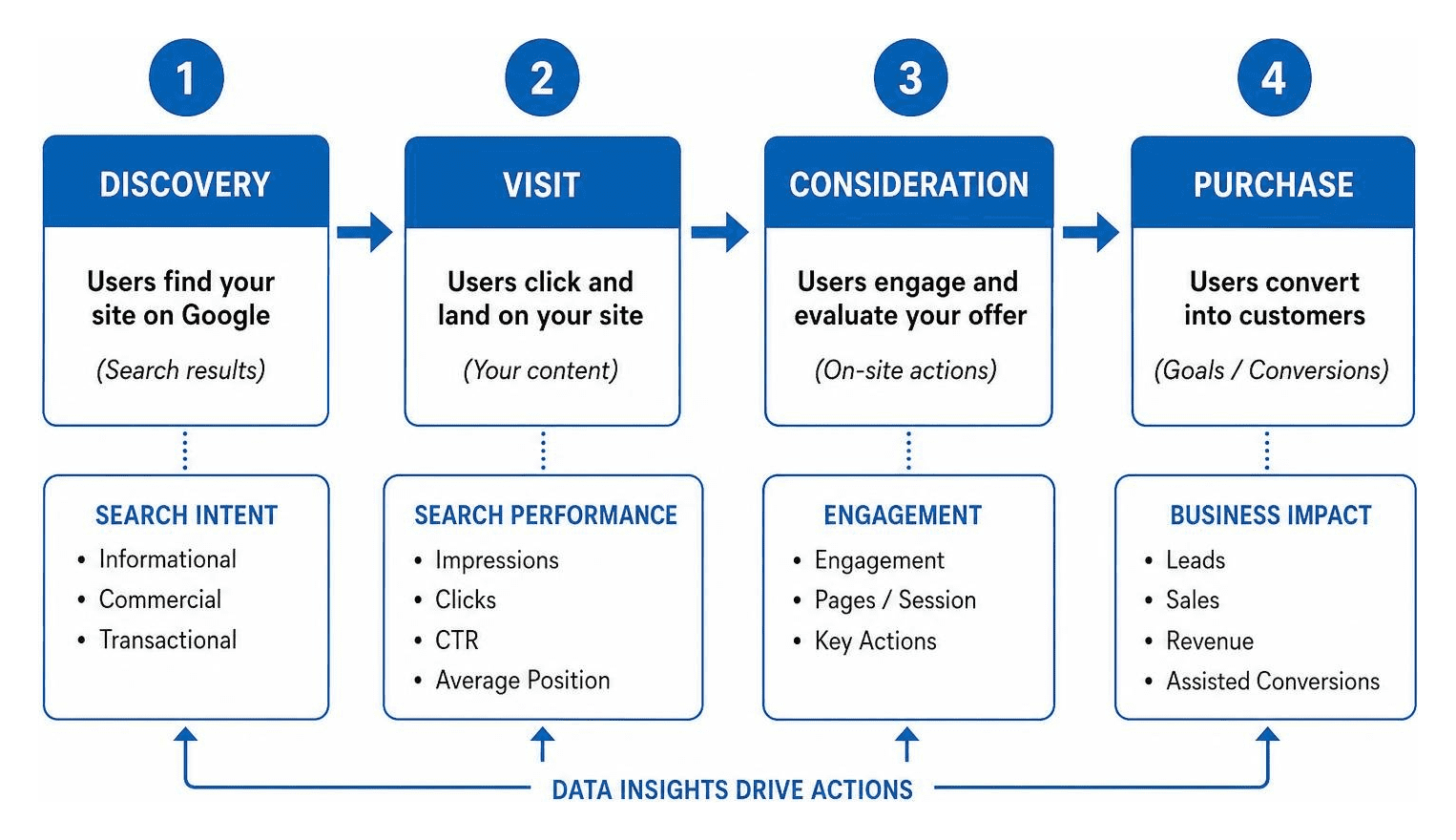
Investing in SEO without clear tracking is like throwing darts while blindfolded. To understand how campaigns perform, we separate vanity metrics from genuine commercial drivers. A complete report blends search discovery data with on-site engagement to show the entire customer journey.
Tracking foundational indicators helps us diagnose whether our content captures market demand. You can explore our in-depth guide to measuring SEO visibility metrics to see how visibility shifts forecast commercial growth.
Organic Visibility, CTR, and Query Intent
The top search result captures an average CTR of 31.7% and is 10X more likely to earn a click than the tenth result. Google Search Console (GSC) is our primary source for pre-click discovery data:
- Impression Velocity: Measures total impressions across high-value topic clusters to verify whether search engines recognize topical authority.
- Organic Clicks & Average Position: Tracks search position trends alongside actual traffic volume to reveal which rank gains deliver real traffic.
- Striking-Distance Queries: Identifies keywords ranking in positions 11 to 20 with high impressions, presenting immediate low-hanging optimization opportunities for quick ranking gains.
- Branded vs. Non-Branded Splits: Separates branded searches from non-branded discovery to confirm whether campaigns attract brand-new prospective customers or merely capture existing brand awareness.
- Query Intent Tagging: Groups search terms by informational, commercial, navigational, and transactional intent to ensure commercial landing pages capture purchase-ready prospects.
- SERP Feature Ownership: Monitors visibility across featured snippets, People Also Ask boxes, and video carousels to maximize organic real estate.
Technical Health and Core Web Vitals
Search engines index web pages by parsing HTML document code link-by-link. When technical roadblocks emerge, rankings drop quickly. A thorough report monitors:
- Crawl & Indexation Status: Identifies non-indexed URLs, crawl anomalies, crawl budget waste, and rogue noindex tags before they hurt overall site authority.
- Core Web Vitals: Evaluates Largest Contentful Paint (LCP), Cumulative Layout Shift (CLS), and Interaction to Next Paint (INP) to maintain fast page rendering and seamless page responsiveness.
- Sitemap & Status Code Health: Flags non-200 HTTP response codes, broken internal links, orphan pages, and redirect chains that waste search bot resources.
Tracking Conversions, Revenue, and Assisted ROI
Rankings and traffic numbers mean little if they do not produce qualified business leads and revenue. Proving organic value requires tracking both direct conversions and assisted sales across every step of the customer lifecycle.
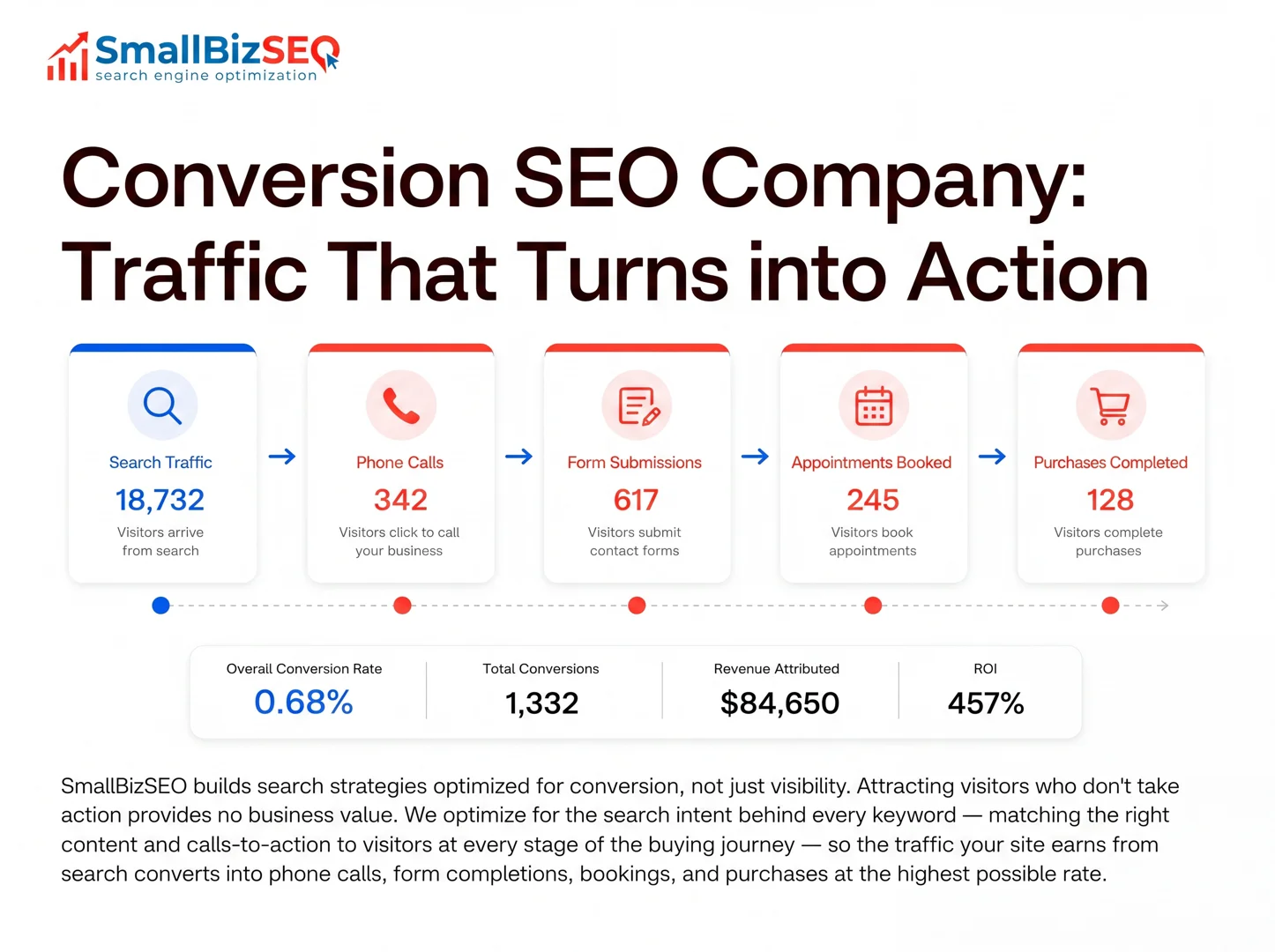
Connecting search discoveries to bottom-line pipeline is essential when delivering measurable SEO client results. We also recommend running regular Google Analytics audits to guarantee that all goal configurations, event tags, and audience definitions collect pristine data.
E-Commerce Transactions and Organic Pipeline
For online storefronts and lead generation sites, organic analytics must link directly to revenue and customer lifetime value:
- MQL to SQL Progression: Tracking contact form interactions, requested quotes, phone calls, and qualified pipeline value generated from organic entry pages.
- Checkout Funnel Completion: Pinpointing drop-off stages in transactional checkout funnels to optimize micro-conversions and reduce cart abandonment.
- Average Order Value (AOV) & Lifetime Value (LTV): Measuring whether organic customers generate higher recurring revenue and repeat transactions compared to paid channels.
- Assisted Conversions: Standard analytics often rely on last-touch attribution, crediting direct or paid visits when an organic search originally introduced the buyer. Documenting multi-touch assists reveals SEO's full financial impact across complex buying cycles.
Local Search Metrics and Business Profile Actions
For businesses serving local markets, search success is measured through customer actions on business listings:
- Direct click-to-call phone inquiries initiated from search map listings
- Driving direction requests showing physical customer foot traffic intent
- Google Business Profile website clicks, photo views, and booking confirmations
- Local pack ranking movements across target regional terms and localized geo-grids
Structuring Reports for Executives, Technical Teams, and Clients
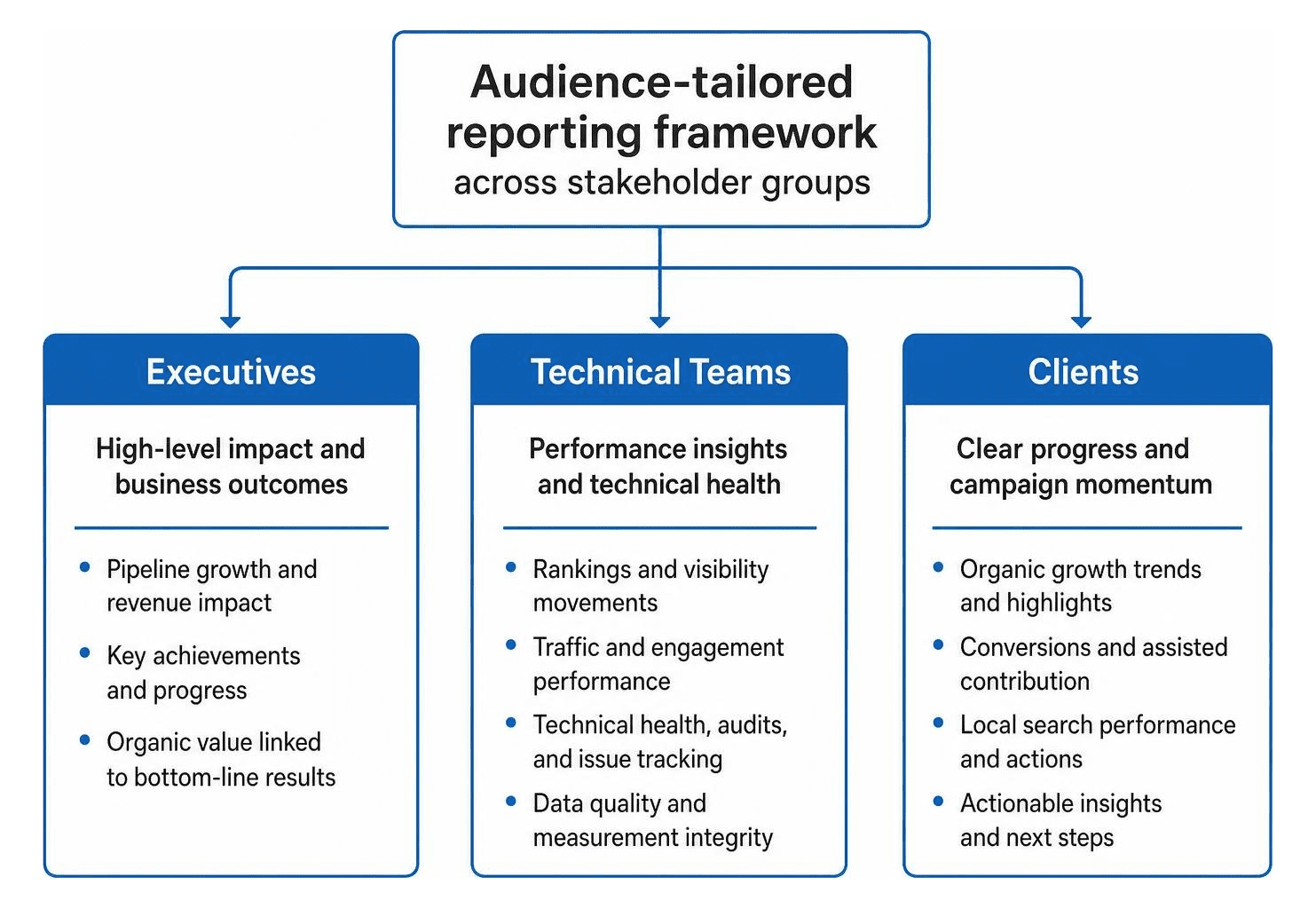
A report packed with raw spreadsheet rows often overwhelms stakeholders. Different team members need distinct levels of data granularity. Structuring a clear SEO monthly report ensures clients remain confident in campaign momentum.
Structuring an Actionable Automated SEO Reporting Dashboard
An effective dashboard follows a simple three-part structure:
- Executive Overview: A concise summary translating technical wins into pipeline growth, key achievements, and headline revenue impact.
- Core KPI Widgets: Visual graphs depicting organic sessions, conversion counts, top revenue-generating landing pages, impression growth, and visibility trends.
- Strategic Opportunities & Next Actions: Clear action items detailing upcoming content updates, technical fixes, competitive threats, and link-building initiatives.
For multi-site portfolios, using enterprise SEO dashboards and automated reporting platforms keeps data normalized while running real-time anomaly alerts that catch unexpected indexation drops or sudden ranking swings.
Tailoring Data Storytelling Across Stakeholders
To maximize buy-in, adapt the narrative for each group:
- Executives (C-Suite): Focus on revenue impact, return on spend, market share acquisition, organic pipeline growth, and competitive positioning.
- Developers & Technical Teams: Provide actionable URL tables, Core Web Vitals diagnostics, structured data error logs, and sitemap validation records.
- Marketing Teams: Share top-performing organic landing pages to create custom audience segments in GA4 for retargeting campaigns, content repurposing, and paid search synergy.
Modern Tools, AI Workflows, and Automation
Compiling monthly spreadsheets by hand can consume five to six hours per client. Modern reporting stacks automate routine data ingestion so teams can focus on strategic execution. Learning how to manage monthly SEO protects agency capacity while maintaining client communication.
Comparing Manual Spreadsheets, Looker Studio, and SaaS Tools
| Reporting Method | Best For | Core Strengths | Limitations |
|---|---|---|---|
| Manual Spreadsheets (Excel / Sheets) | Ad-hoc deep dives and raw data manipulation | Total formula control, zero software subscription costs | Labor-intensive, static data snapshots, prone to human error |
| Looker Studio Dashboards | Custom data visualizations and cross-channel blending | Free connectors, flexible layouts, real-time widget updates | Occasional connector API lag, requires initial dashboard design setup |
| Automated SaaS Platforms | Agency client portals and scaled client delivery | White-label branding, automated email dispatches, anomaly alerts | Monthly platform subscription fees, fixed layout templates |
Leveraging AI Agents and MCP for Custom SEO Reporting
Modern search reporting is moving toward conversational analysis. Marketers are building custom SEO reports with Claude Code and Search Console to generate interactive charts and dynamic queries directly inside developer environments.
By deploying Google Search Console and GA4 MCP connectors, teams connect live analytics databases to AI assistants through the open Model Context Protocol. This lets practitioners run natural-language prompts to uncover keyword cannibalization, inspect non-indexed URLs, and track period-over-period conversion trends in seconds.
Frequently Asked Questions About Tracking Search Performance
What is the most important metric to track in search reports?
The most critical metric is organic conversions and attributable revenue. While search visibility, CTR, and traffic volume show campaign momentum, commercial conversions prove business return on investment.
How often should organic search performance reports be shared?
A monthly executive cadence works best for strategic alignment, complemented by quarterly business reviews for high-level roadmap planning. Internal practitioners can monitor weekly ranking trends and automated anomaly alerts to address technical issues proactively.
What is the difference between direct and assisted organic conversions?
Direct conversions happen when an organic visitor converts during their initial session. Assisted conversions occur when a visitor discovers a site through organic search, leaves, and later returns via direct or paid channels to complete a purchase.
Turn Search Metrics into Lasting Growth
Effective reporting bridges the gap between technical execution and revenue impact. When you eliminate vanity metrics and present clean data stories, stakeholders understand the true commercial power of organic search.
At SmallBizSEO, our proprietary Velocity framework combines technical optimization, content authority, and link building with transparent reporting that highlights your return on investment. Discover how our SmallBizSEO professional SEO services can accelerate your organic growth.