The Ultimate SEO Visibility Audit Guide to Save Your Rankings
The Ultimate SEO Visibility Audit Guide to Save Your Rankings
What Is an SEO Visibility Audit (and Why It Matters Right Now)
An SEO visibility audit is a structured review of everything that controls whether your website gets found — by Google, by AI engines like ChatGPT and Perplexity, and by the real people searching for what you sell.
Here is a quick answer if that is all you need:
What an SEO visibility audit covers:
- Technical health — crawlability, indexing, Core Web Vitals, robots.txt, schema markup
- On-page signals — title tags, headings, meta descriptions, content quality
- AI search readiness — whether AI crawlers can read your pages and cite your brand
- Off-page authority — backlinks, brand mentions, entity signals
- Content gaps — topics your competitors rank for that you are missing
- Google Business Profile — local search visibility and map rankings
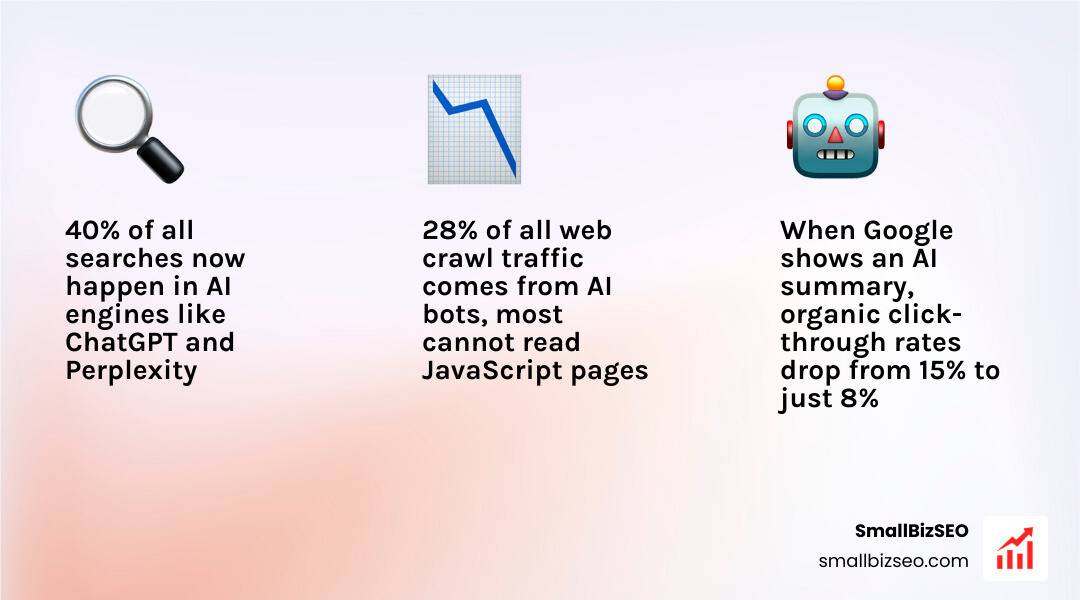
Search has changed faster in the last two years than in the previous decade. Today, 40% of searches happen in AI engines — and when Google shows an AI summary, clicks on regular results drop nearly in half, from 15% to 8%. Meanwhile, 28% of all web crawl traffic now comes from AI bots, most of which cannot even read JavaScript-rendered pages.
If your site was never audited for AI readiness, there is a real chance it is invisible to a growing slice of your potential customers.
A small business owner once described it this way: they had decent Google rankings, but when they tested buyer-intent questions in ChatGPT, a competitor was cited every single time. Their site was not blocked — it just was not structured in a way AI engines could understand or trust.
That is exactly the gap a modern SEO visibility audit is designed to close.
I'm Clayton Johnson, a digital PR and SEO strategist focused on building search visibility through content and authority — and running an SEO visibility audit is always the first step I take before touching anything else on a site. In the sections below, I will walk you through every layer of a modern visibility audit in plain language, so you can find what is holding your site back and fix it.
Why a Modern SEO Visibility Audit is Critical for Your Rankings
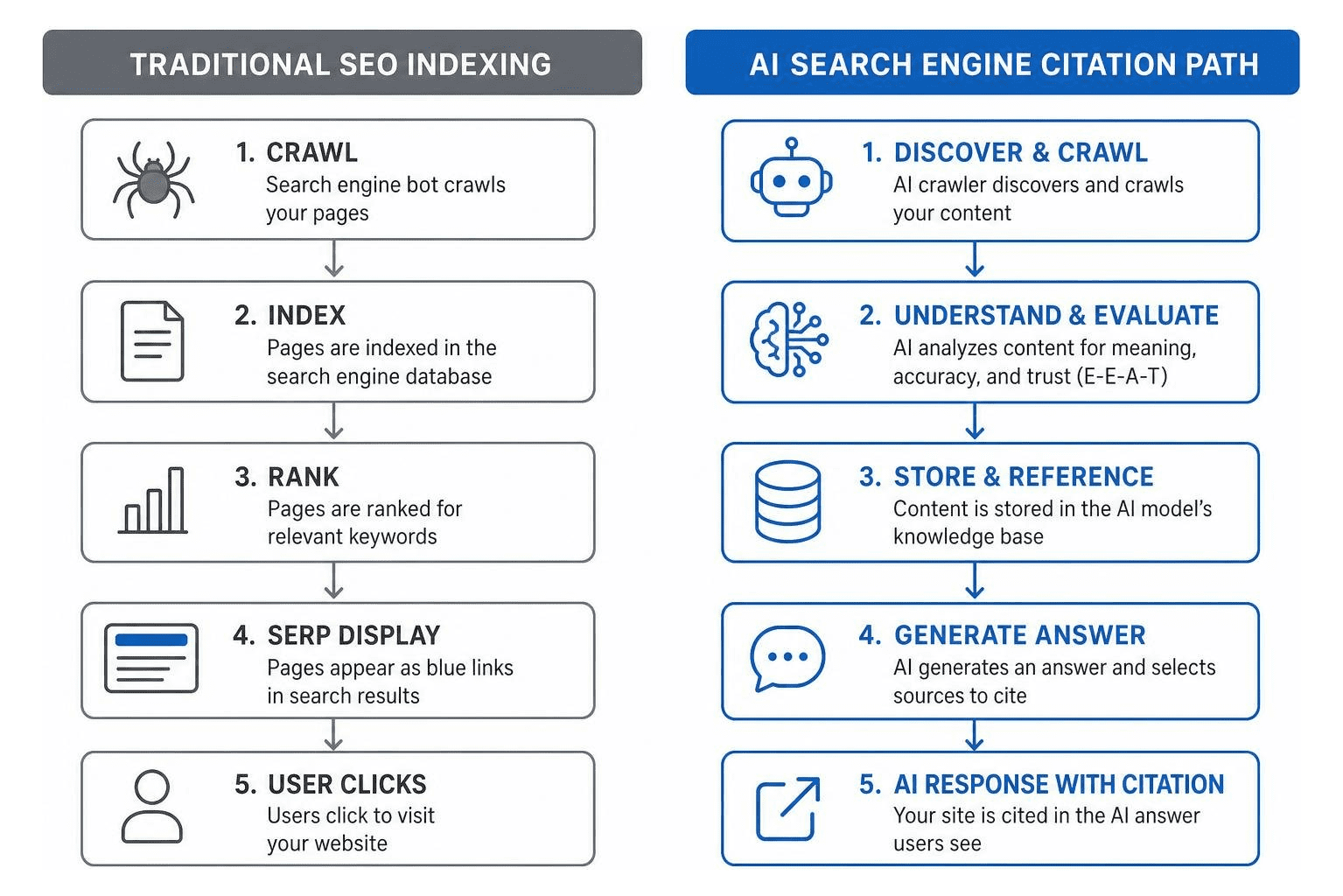
Traditional SEO is no longer the only game in town. While ranking blue links on Google remains incredibly valuable, the modern search landscape is highly fragmented. Between traditional organic listings, local map packs, and AI-driven conversational answers, your digital footprint must be visible across multiple surfaces.
To help visualize how the landscape has shifted, let us look at how traditional evaluations compare to a comprehensive seo visibility audit:
| Feature | Traditional SEO Audit | Modern SEO Visibility Audit |
|---|---|---|
| Primary Focus | Google bot crawlability and keyword rankings | Omnichannel search presence (Google, AI engines, local maps) |
| Crawl Targets | Standard search engine spiders | Traditional spiders plus LLM citation bots |
| Content Evaluation | Keyword density and basic on-page elements | Semantic clarity, direct answers, and E-E-A-T trust signals |
| Technical Scope | Sitemaps, redirects, and basic page speed | JavaScript rendering, structured schema, and AI crawler access |
| Authority Metrics | Backlink quantity and domain authority | Brand entity graphing, mentions, and cross-platform citations |
Traditional SEO Audits vs. an SEO Visibility Audit
Traditional SEO audits are fantastic for finding broken links, managing your crawl budget, and ensuring basic indexation. However, they often treat your website as a flat list of URLs. To truly understand your search presence, you need a detailed seo analysis that views your site as a structured system of page types and entities.
Traditional audits look at ranking signals in isolation. A modern seo visibility audit bridges the gap by checking how easily both human users and machine-learning models can extract value from your pages. If your technical foundation is broken, even the best content will remain hidden in the depths of unindexed server space.
Key Components of a Comprehensive SEO Visibility Audit
We believe a successful audit must balance technical health with real-world user experience and local search presence. Rather than relying on a single automated checklist, a truly tailored audit reviews several core pillars:
- Technical Health & Crawlability: Checking that search spiders and AI bots can easily access your pages without hitting redirect loops or blockages.
- On-Page SEO Essentials: Optimizing your titles, headings, and on-page seo structures so they clearly declare your page's topic.
- Content and Marketing Gaps: Identifying the exact questions your audience is asking that your competitors are answering, but you are not.
- Backlink and Authority Profile: Reviewing who trusts you online and ensuring your external link signals are clean and authoritative.
- Google Business Profile: Optimizing your local maps presence to capture nearby buyers.
AEO vs. GEO: Optimizing for AI Search Engines
As conversational platforms grow, two new terms have entered the search vocabulary: Answer Engine Optimization (AEO) and Generative Engine Optimization (GEO). Understanding the difference between these two strategies is a key part of our seo services guide.
Answer Engine Optimization (AEO)
AEO focuses on structuring your content to answer direct, conversational questions. When users search using voice search or ask a highly specific question, answer engines look for concise, factual, and structurally clear paragraphs.
To optimize for AEO, we recommend writing direct answers to common user queries in clear, 40-to-60-word summaries near the top of your pages, followed by deeper explanations.
Generative Engine Optimization (GEO)
GEO goes a step further by optimizing content specifically for generative AI models that synthesize answers from multiple sources. These models do not just look for keywords; they analyze semantic clarity, structural formatting, and external trust signals to decide which sites to cite.
Tools like the open-source codedpills/ai-visibility-audit help developers analyze how structured and readable a site's content is for large language models (LLMs).
Technical Factors and Entity Authority for AI Citations
Appearing as a cited source in an AI summary requires a mix of clean code and off-site reputation. AI engines rely on explicit technical markers and established authority signals to verify that your business is a trustworthy source of information.
Technical SEO Foundations for AI Crawlers
To make your site readable for AI, you must ensure that your technical setup does not accidentally lock out the bots. Here are the core technical items to check:
- Robots.txt Permissiveness: Ensure you are not blocking citation crawlers. While you might choose to block training bots, you must explicitly allow citation bots like OAI-SearchBot and PerplexityBot to ensure your pages can be referenced in real-time answers.
- Schema Markup: Sites with structured data are 2.8 times more likely to be cited by AI tools. Implement JSON-LD schema (such as Organization, Product, and FAQ schema) to explicitly define your business details.
- JavaScript Rendering: Many AI crawlers do not execute JavaScript. If your website relies entirely on client-side React or Vue without pre-rendering, these crawlers may only see a blank page.
- Core Web Vitals: Fast page speeds prevent crawler timeouts. Keep your Largest Contentful Paint (LCP) under 2.5 seconds. For a complete look at these elements, you can review The Complete Technical SEO Audit: A Checklist.
Building Entity Authority and Brand Mentions
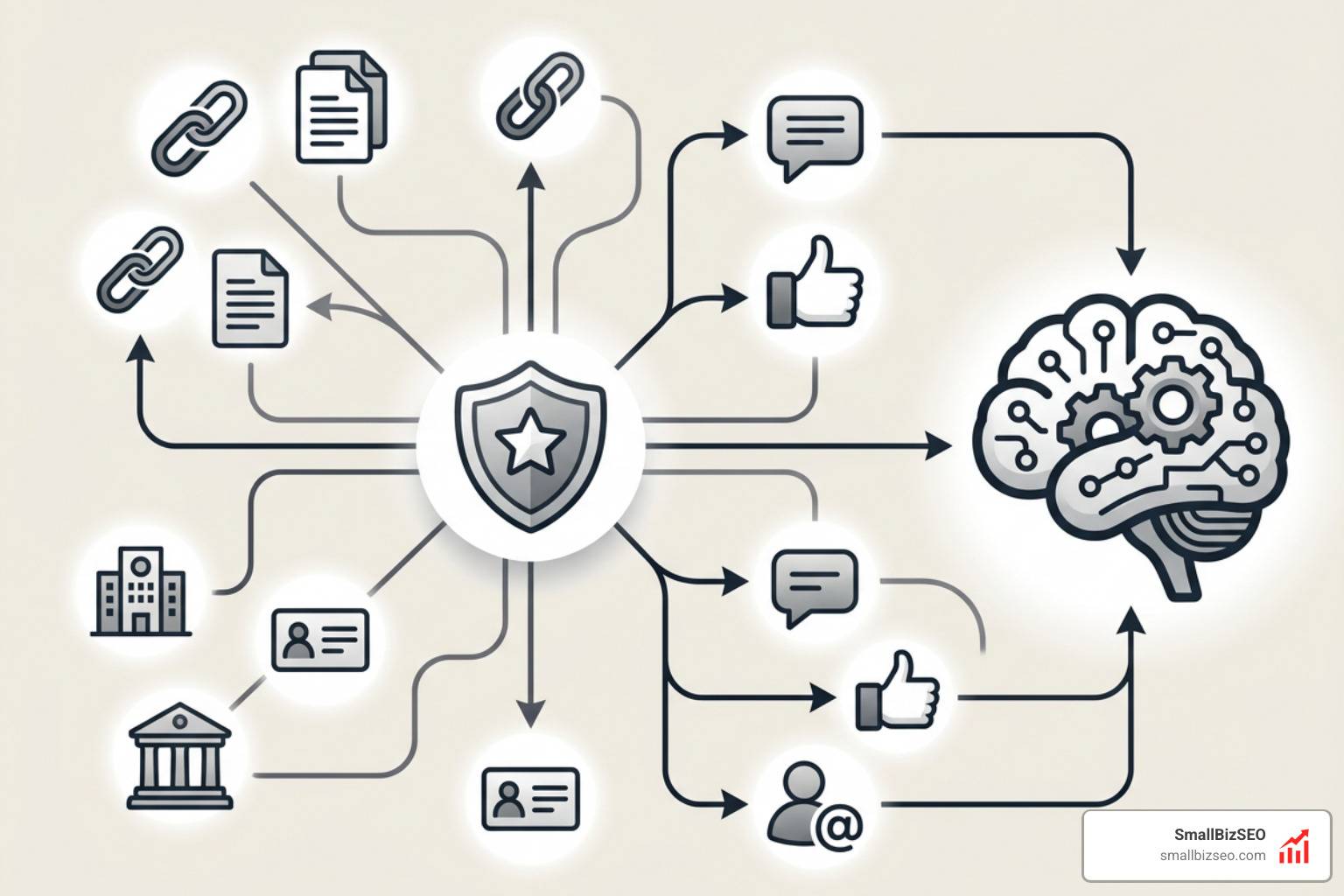
AI engines do not just read your website; they cross-reference the entire web to see if your business is legitimate. This is known as building "Entity Authority."
Interestingly, brand mentions have a 0.664 correlation with AI citation probability, compared to just 0.218 for traditional backlinks. This means that getting your business mentioned on authoritative third-party platforms, local directories, and databases like Wikidata or Wikipedia is incredibly powerful. Utilizing professional link building services to earn high-quality, contextual mentions is a fantastic way to build this cross-referenced trust.
How to Run Your Audit: Tools, Frequency, and Action Steps
Running a systematic audit keeps you from guessing what to fix. By combining automated tools with human analysis, you can build a clear, prioritized list of optimizations.
Free and Paid Tools for SEO Auditing
There are several excellent tools available to help you evaluate your search and AI visibility:
- Semrush: Perfect for tracking traditional organic rankings, running deep technical site audits, and analyzing competitor backlink profiles.
- SEOptimer & Seobility: Excellent options for quick, automated page-level audits that grade your technical setup, metadata, and mobile usability.
- AI Visibility Tool: You can install the AI Visibility Tool - Chrome Web Store to quickly scan individual landing pages for AI bot crawlability and schema errors.
If you are looking for local insights or a hand-crafted review, regional experts can provide excellent depth. For instance, teams like New York SEO Company: Local Experts, National Results, SEO Audit Services | Long Island, NYC, New York, and 18-Step SEO Audit Checklist in NY: Boost Your Website ... offer highly tailored strategies. You can also get a jumpstart by requesting a human-reviewed, personalized analysis through options like Get a free AI-powered audit in 48 hours..
Audit Frequency and First Steps After a Low Score
We recommend running a light technical audit monthly to catch any broken links or crawl errors, and a comprehensive seo visibility audit quarterly to analyze competitor content gaps and AI citation trends.
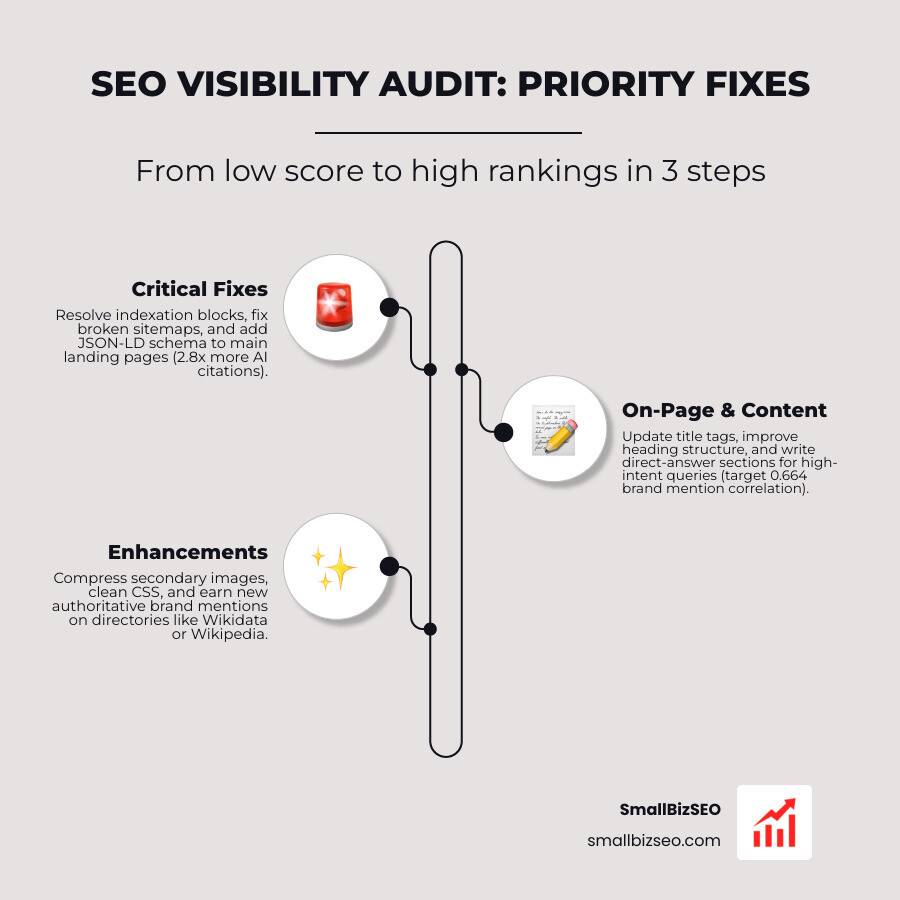
If your audit returns a low visibility score, do not panic! The best way forward is to organize your findings into a simple spreadsheet and prioritize them:
- High Priority (Critical Fixes): Resolve indexation blocks, fix broken sitemaps, and repair missing schema markup on your main landing pages.
- Medium Priority (On-Page & Content): Update truncated title tags, improve heading structures, and write direct-answer sections for high-intent questions.
- Low Priority (Enhancements): Compress secondary images, clean up minor CSS files, and seek out new brand mentions.
For businesses looking to quickly scale their online presence, using dedicated small business seo services can help implement these technical and content fixes without the trial and error.
Frequently Asked Questions about SEO Visibility Audits
How do I check if my website is visible to ChatGPT and Claude?
The most direct way is to test conversational, buyer-intent queries related to your niche directly inside these platforms. For example, search "What are the best local services for [your industry]?" and see if your brand is recommended or cited. If your competitors are appearing instead of you, check if your robots.txt file is blocking their crawlers or if your site lacks structured schema.
Do AI crawlers execute JavaScript?
Generally, no. Major AI crawlers like GPTBot, ClaudeBot, and PerplexityBot do not execute JavaScript when scanning pages. If your website relies heavily on client-side frameworks to display text, these bots may see a completely blank page, making your content invisible to AI search results.
What is the difference between training bots and citation bots?
Training bots (like GPTBot) crawl the web to gather massive datasets to train future AI models. Citation bots (like OAI-SearchBot) crawl the web in real time to find up-to-date sources to cite in user chats. You can configure your robots.txt file to block training bots if you want to protect your intellectual property, while keeping citation bots allowed so you can still earn valuable traffic-driving links.
Secure Your Search Presence Today
At SmallBizSEO, we understand that keeping up with shifting search behaviors can feel like chasing a moving target. That is why we developed our data-driven "Velocity" framework. We combine deep technical expertise, modern content strategy, and high-impact link building to deliver fast, transparent, and E-E-A-T-compliant rankings for small businesses.
Do not let your brand get left behind as search continues to evolve. Reach out to us today to schedule your comprehensive seo visibility audit and ensure your business remains visible, cited, and trusted across every search platform.