Writing Author Bios That Prove Authentic Subject Matter Expertise

How Do You Document an Author's Relevant Professional Experience?
Here's how to document an author's relevant professional experience: choose the facts that help readers trust this book. Name the author's most relevant role or qualification, explain its connection to the subject, and add one specific detail readers can verify, such as a published work, license, or award. Leave out jobs and degrees that do not strengthen that connection.
A useful bio does more than list credentials. It shows why this author knows the subject and gives readers a reason to connect with them. Keep the strongest fact near the start, then add a brief personal detail if it fits the book.
I'm Clayton Johnson, founder of SmallBizSEO, where I work on content that makes professional expertise clear and useful to readers. That work shapes my approach to how to document an author's relevant professional experience: lead with relevant facts, support them with evidence, and write for the people you want to reach.
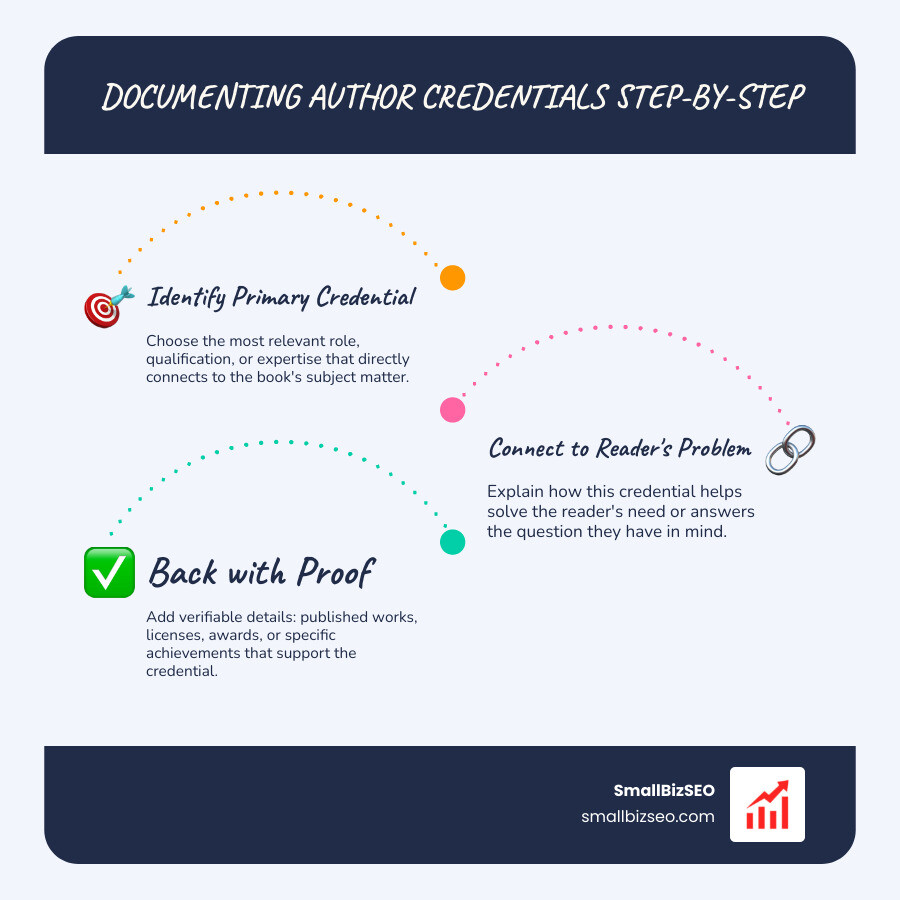
How to Document an Author's Relevant Professional Experience Step-by-Step
To document professional background effectively, we follow a simple four-step hierarchy: identify the primary credential, connect it directly to the reader's problem, back it with proof, and close with a human touch.

When we structure an author bio, we prioritize clarity over comprehensive history. A bio is not an exhaustive resume; it is an editorial elevator pitch designed to establish authority in seconds.
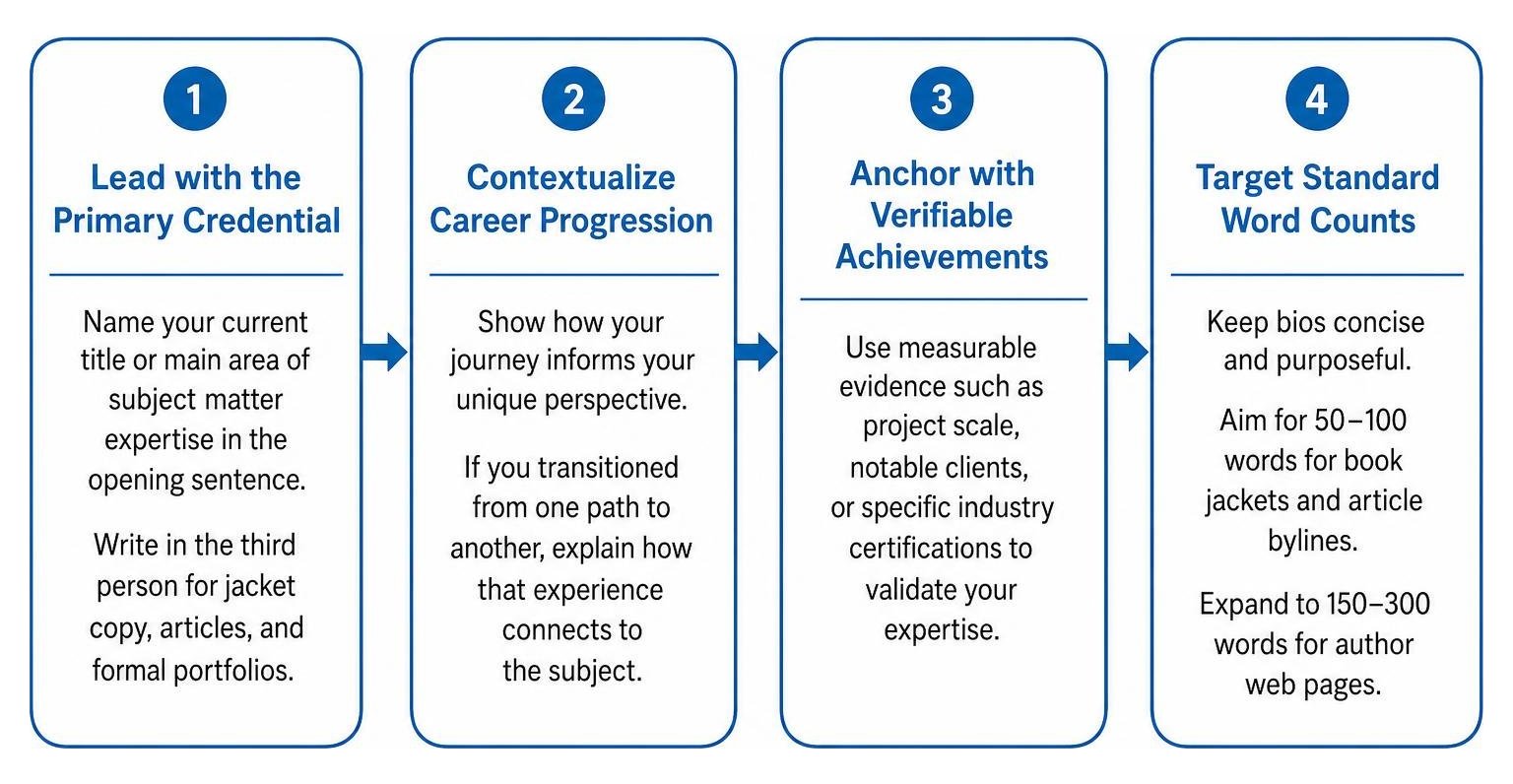
- Lead with the Primary Credential: Name your current title or main area of subject matter expertise in the opening sentence. Write in the third person for jacket copy, articles, and formal portfolios to maintain objective distance.
- Contextualize Career Progression: If you transitioned from corporate operations to consulting or fiction writing, show how that journey informs your unique perspective.
- Anchor with Verifiable Achievements: Use measurable data—such as project scale, notable clients, or specific industry certifications—to validate your claims.
- Target Standard Word Counts: Aim for 50 to 100 words on physical book jackets and article bylines, expanding to 150 to 300 words for dedicated author web pages.
How to Document an Author's Relevant Professional Experience with No Publishing Credits
First-time authors should lead with their hands-on work history, technical training, and subject immersion rather than apologizing for a lack of prior titles.
According to federal employment data compiled in the Occupational Outlook Handbook on writer employment, approximately 65% of professional writers and authors operate as self-employed professionals. This means industry practitioners routinely build independent credibility from their domain experience rather than traditional publishing houses.
- Highlight Transferable Skills: Detail your daily involvement in your field, including project management, investigative research, or corporate leadership.
- Feature Specialized Education: Mention formal degrees, coursework, or certifications that relate directly to your topic.
- State Your Debut Plainly: State clearly that this is your first book or major publication without defensive language.
How to Document an Author's Relevant Professional Experience Across Different Genres
Every genre requires a tailored presentation of your background to meet specific reader expectations.
- Prescriptive Nonfiction: Lead with formal credentials, years in the field, and quantifiable client or organizational results.
- Procedural Fiction & Thrillers: Highlight practical experience—such as law enforcement, military service, legal practice, or medical work—that guarantees narrative authenticity.
- Memoir: Focus on lived experiences, personal milestones, and relevant community leadership.
- Commercial Fiction & Query Letters: When pitching agents, follow standard guidelines for query letter credit formatting by listing genre-specific short stories, recognized contests, or professional background tied to your setting.
What Work Details and Credentials Should Be Highlighted Versus Omitted?
We highlight credentials that directly support the topic of the text and prune extraneous history that distracts the reader. Following established industry frameworks for crafting effective author bios helps keep your narrative lean and authoritative.
| Include These Essential Credentials | Omit These Distracting Details |
|---|---|
| Active licenses, board certifications, and relevant degrees | Unrelated degrees, coursework, or high school accomplishments |
| Quantifiable career milestones (e.g., portfolio volume, years active) | Chronological listings of minor, unrelated job titles |
| Major industry awards, fellowships, and recognized publications | Vanity awards, unvetted contest entries, or self-published pieces with no sales track record |
| One genre-appropriate personal detail or location mention | Lengthy lists of personal hobbies or family histories |
Maximizing Credibility: Technical SEO and Platform Optimization
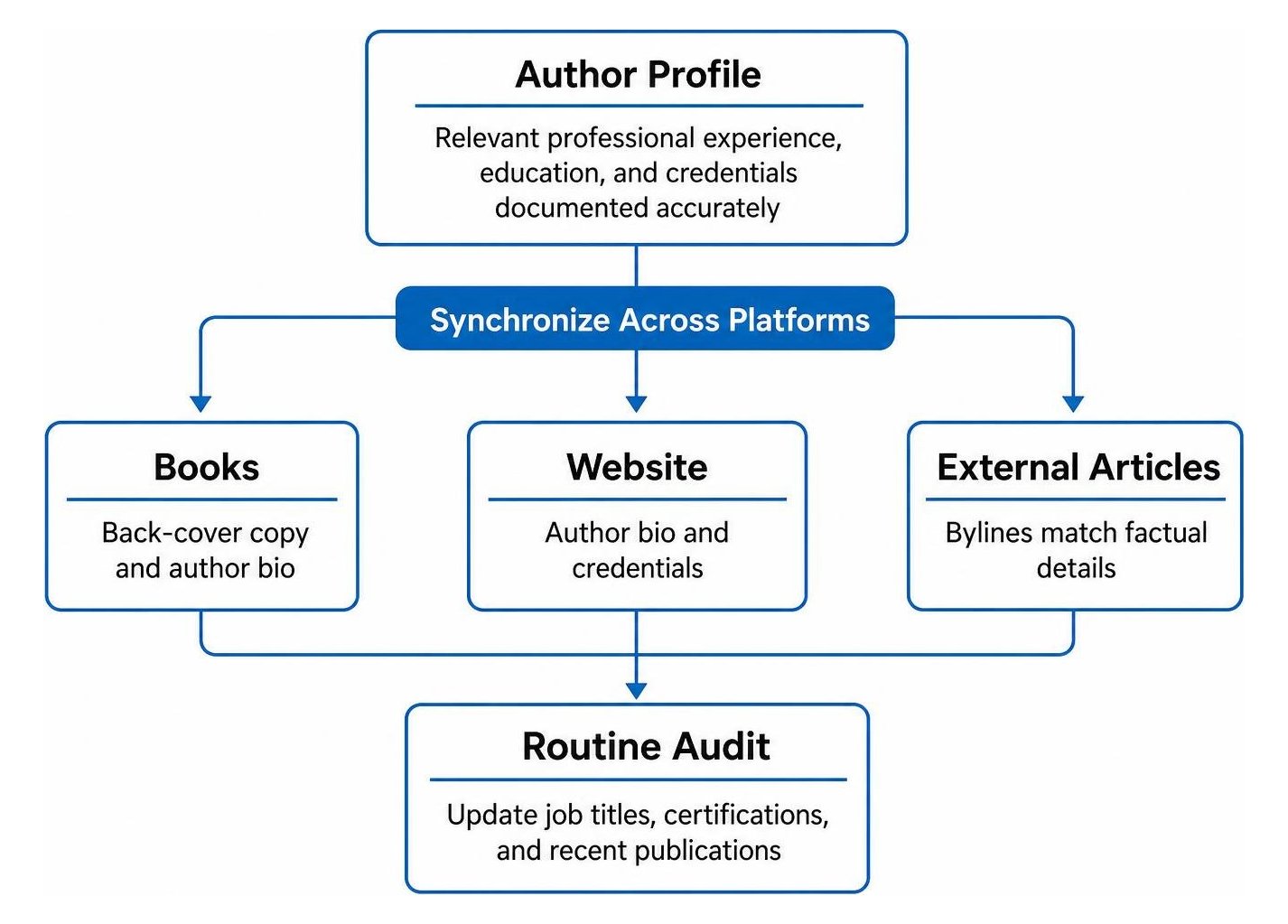
Documenting experience requires consistent distribution across digital and physical platforms. Ensure that bylines on external articles match the factual details on your back-cover copy and website bio. Conduct routine audits to update job titles, certifications, and recent publications across all platforms.
How Can Authors Balance Credentials and Relatability Without Sounding Arrogant?
The most effective way to share achievements without sounding boastful is to state verifiable facts plainly, letting the accomplishments speak for themselves while keeping the reader's needs front and center.
- State results neutrally without inflated modifiers like "visionary" or "guru."
- Include a brief personal interest or lighthearted touch to humanize your expertise.
- Frame your background around how your knowledge helps the reader solve a problem, aligning with best practices for building comprehensive E-E-A-T signals across web content.
How Do You Format Digital Author Profiles and Schema for Search Engines?
To help search engines recognize and verify your real-world experience, implement structured data markup alongside indexable profile pages.

We set up dedicated, indexable author bio pages that house full career summaries, external media mentions, and client case studies. We then apply Person and ProfilePage structured data to connect the author's byline to external profiles via sameAs properties (such as LinkedIn, professional associations, and official directories).
Using structured markup is an essential part of optimizing author content for search trust. Search engines parse these entity relationships to connect written material with verified real-world practitioners, reinforcing overall domain authority.
Transforming Real-World Credentials into Lasting Reader Trust
Documenting professional experience is about curating the exact facts that build reader confidence. By pairing objective career achievements with transparent proof and structured digital profiles, we turn abstract expertise into tangible authority.
To establish verified digital authority that search engines and audiences trust, explore our specialized solutions for establishing verified author authority. Clear, verifiable proof of expertise remains the fastest way to turn casual readers into lifelong clients and advocates.