7 Practical Schema Markup Examples to Win Rich Snippets

What Is Schema Markup, and How Do You Add It?
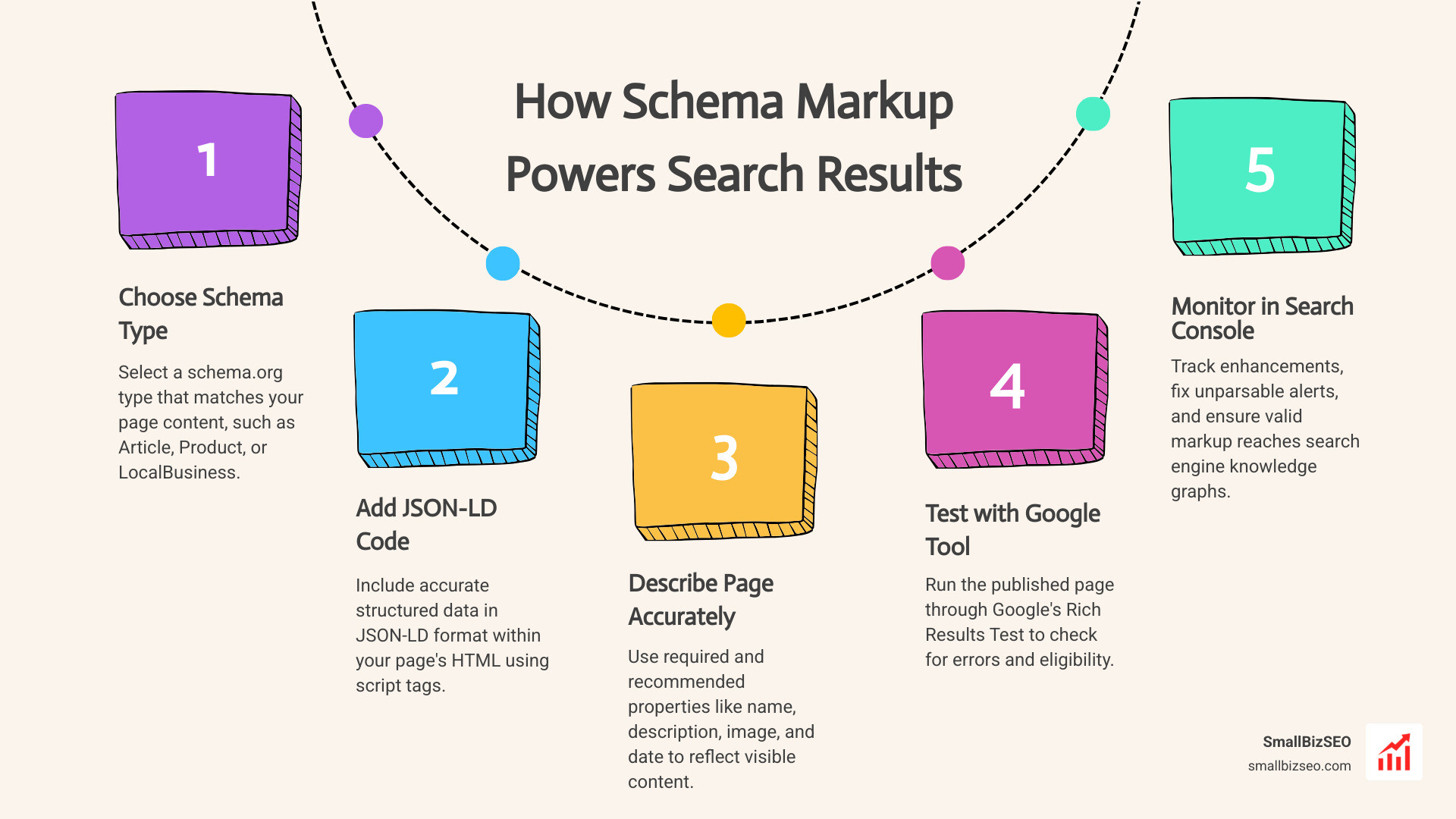
Schema markup is code that tells search engines what your page is about. It can make a page eligible for enhanced search listings, such as a product result with a price or an event result with a date. To add it, choose a schema type that matches the page, include accurate details in JSON-LD, and test the published page with Google’s Rich Results Test. Valid markup helps search engines read your content, but it does not guarantee a rich result or higher rankings.
I’m Clayton Johnson, founder of SmallBizSEO. My work in technical SEO and Answer-Ready SEO shapes this practical approach to schema markup: describe what’s truly on the page, then check that search engines can read it.
Understanding Structured Data: What Is Schema Markup and Why It Matters
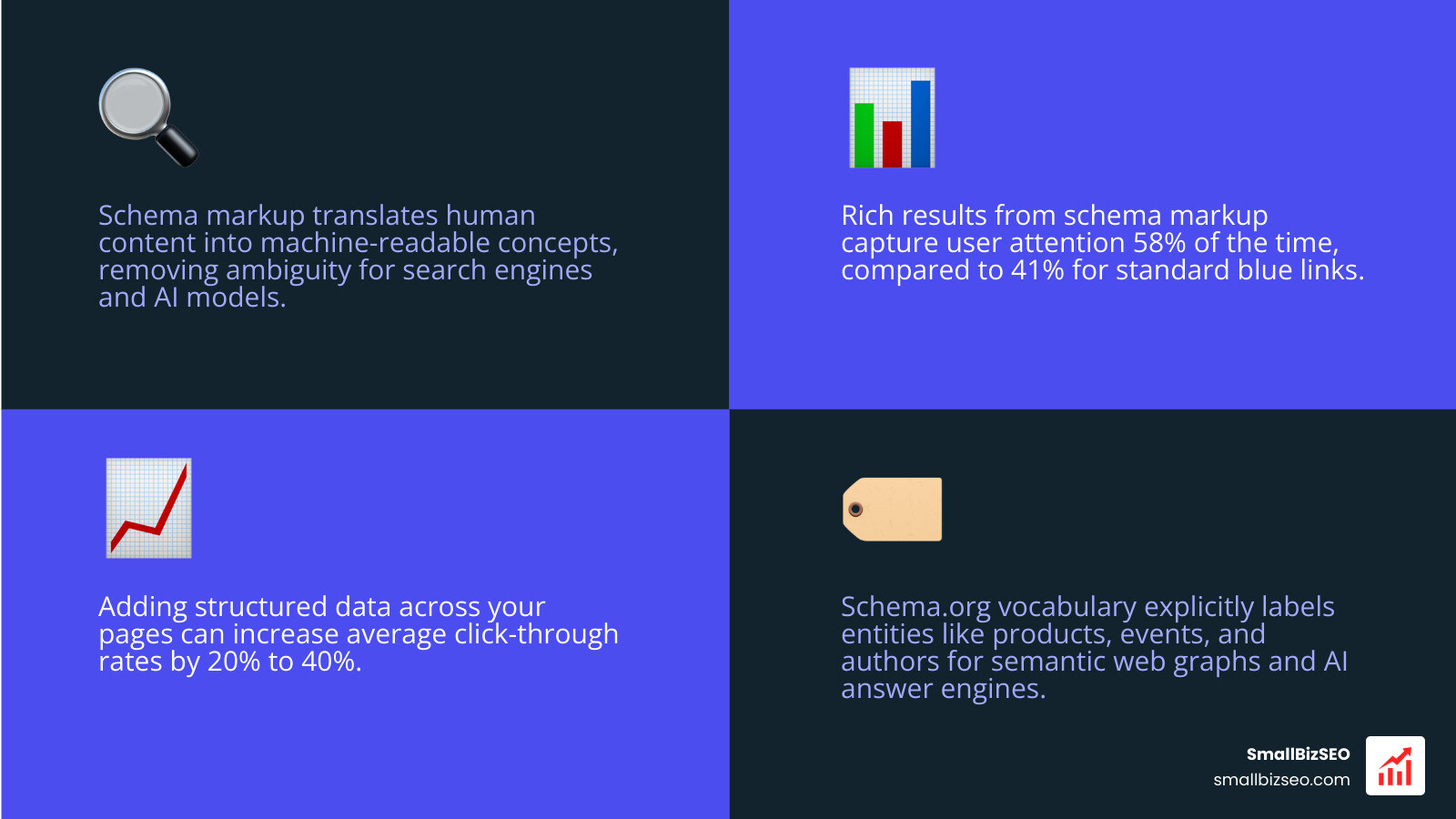
Schema markup is a standardized semantic vocabulary created collaboratively by Google, Microsoft, Yahoo, and Yandex. It translates human content into clear, machine-readable concepts that web crawlers and artificial intelligence models can interpret without guesswork.
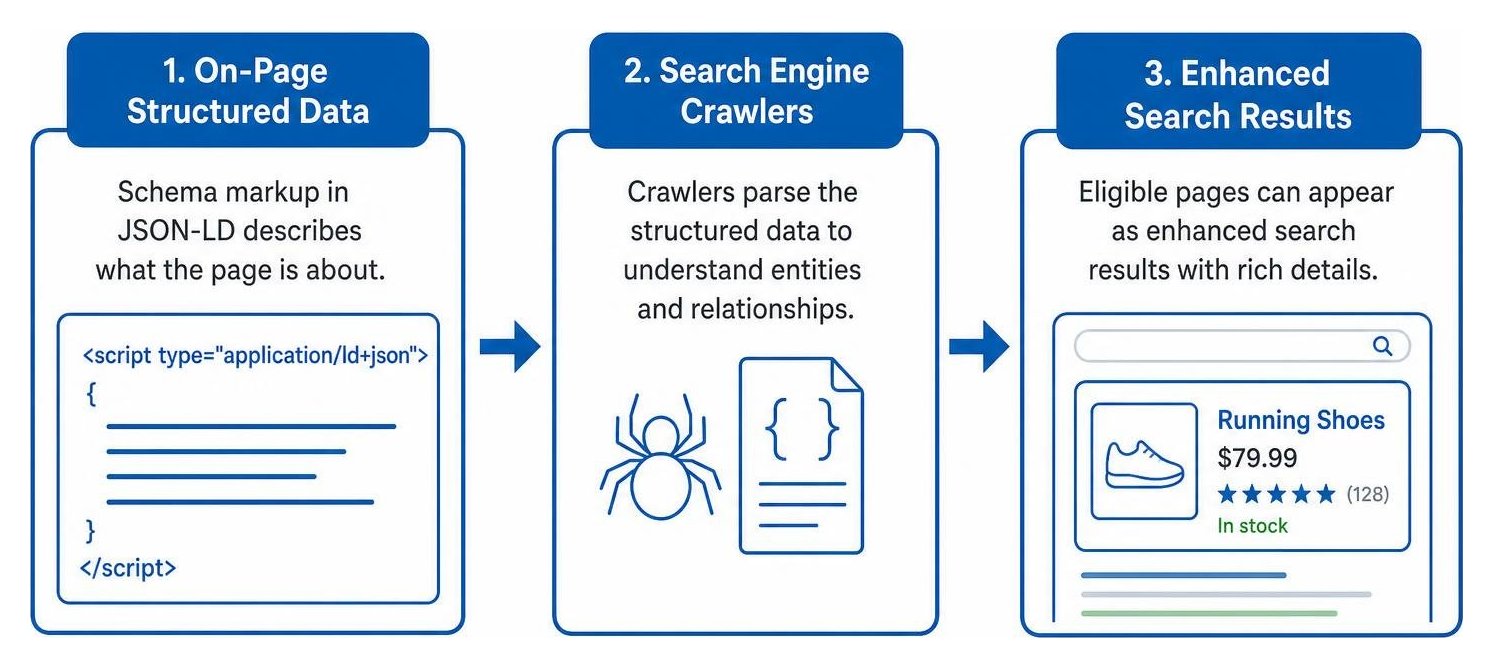
When search engines crawl standard text, they rely on algorithms to parse context, intent, and relationships between concepts. While algorithms have advanced, plain text leaves room for ambiguity. Schema markup removes that ambiguity by explicitly defining entities such as products, events, organizations, and authors.
By labeling each entity, your website feeds directly into semantic web graphs and modern AI answer engines. This clarity facilitates entity extraction, citation retrieval, and comprehensive understanding across digital platforms.
How Does Schema Markup Drive Rich Results and SERP Visibility?
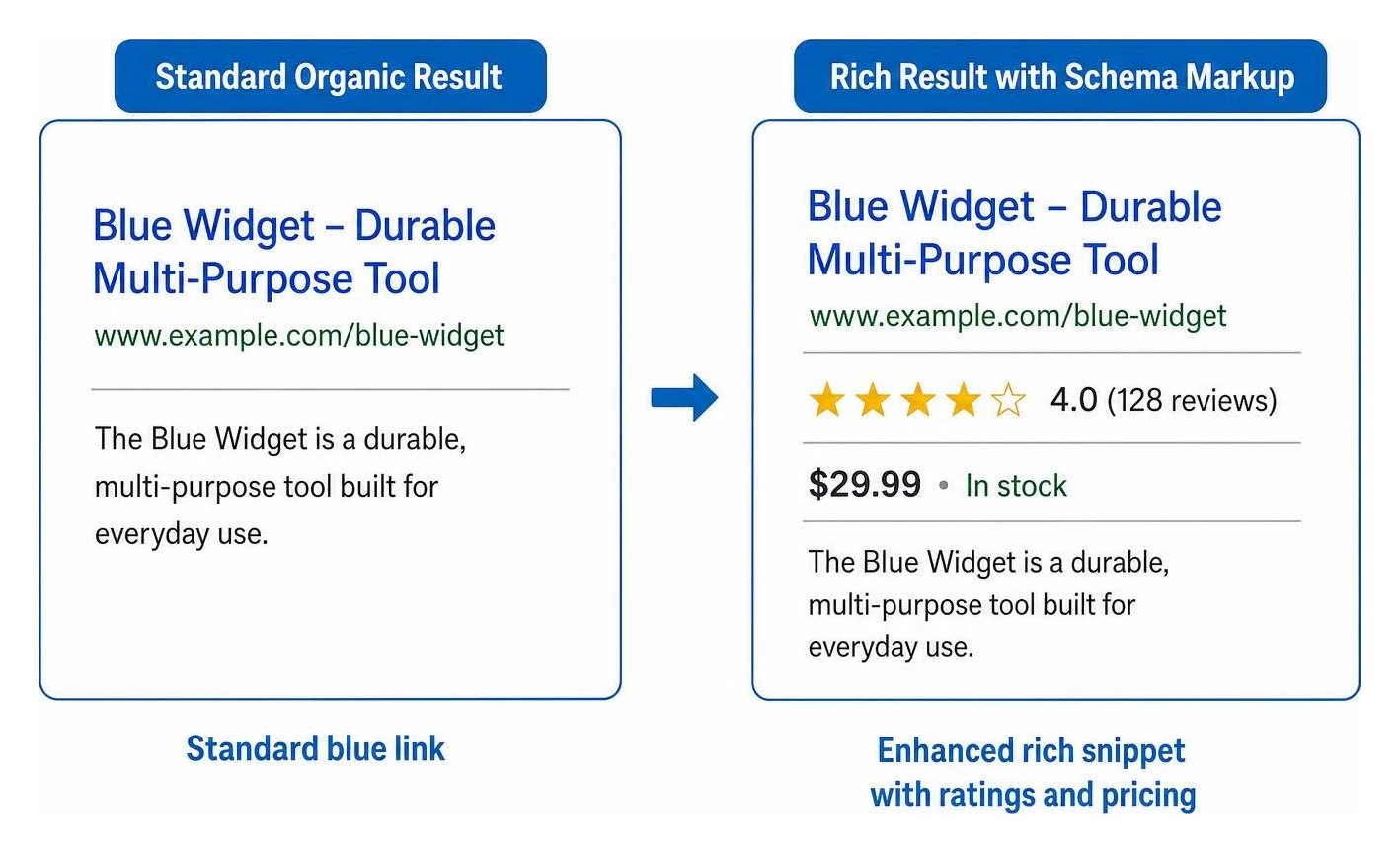
Schema markup drives enhanced search visibility by turning standard blue organic links into visual, data-rich snippets directly on the search engine results page.
Earning a rich result provides searchers with immediate answers such as star ratings, pricing, cooking times, or event schedules. Studies show that rich listings capture user attention faster than plain listings, with users clicking on rich results 58% of the time compared to 41% for standard listings. Adding structured data across your pages can yield average click-through rate increases of 20% to 40%.
Beyond click-through rates, structured data directly supports your broader on-page SEO strategy. It feeds verified facts into the Google Knowledge Graph, claims extra visual real estate in search results, and delivers concise answers tailored for voice search queries and generative AI summaries.
Which Schema Markup Types Should You Implement on Your Site?
You should implement schema types that accurately reflect the primary content and commercial purpose of each specific webpage.
- Article and BlogPosting: Enhances editorial content, improves visibility in carousel feeds, and boosts click-through rates by up to 30%.
- Product: Displays real-time pricing, stock availability, and aggregated ratings for e-commerce items.
- LocalBusiness: Connects regional companies to searchers by defining physical coordinates, opening hours, and service menus.
- Service Schema: Clearly outlines specific professional offerings, target areas, and provider details.
- FAQPage: Outlines distinct question-and-answer pairs, making answers accessible for search engines and conversational AI platforms.
- Event: Highlights performance dates, venues, and ticket purchasing links for scheduled gatherings.
- Recipe: Highlights ingredients, cooking durations, nutritional information, and preparation steps.
- VideoObject: Helps search engines index video content, descriptions, and thumbnail clips.
- Author Structured Data: Validates creator identity and credentials to strengthen Experience, Expertise, Authoritativeness, and Trustworthiness.
- Review Schema: Displays customer feedback and average score badges across qualified product and service listings.
Consulting curated Schema Markup Examples | JSON-LD and Rich Results can help you inspect proper script structures for each of these core formats.
Core Formats, Properties, and Schema Selection Strategies
Selecting the right structured data requires aligning your pages with Google Search Gallery features and the Schema.org library while reviewing what leading competitors markup in your market.
Applying structured data effectively means choosing the most specific type available for your subject matter rather than relying on broad categories.
How Do JSON-LD, Microdata, and RDFa Compare for Search Engines?
JSON-LD is the format explicitly recommended by Google because it keeps structured data cleanly separated from visible HTML elements within an isolated script tag.
Microdata and RDFa inject semantic attributes directly into HTML tags, which can clutter page code and complicate theme maintenance over time.
| Feature | JSON-LD | Microdata | RDFa |
|---|---|---|---|
| Google Recommendation | Preferred format | Supported legacy format | Supported legacy format |
| Implementation Ease | High (standalone script tag) | Moderate (modifies HTML tags) | Complex (modifies HTML attributes) |
| Maintenance Complexity | Low (easy to update) | High (breaks easily with redesigns) | High (nested tag dependencies) |
| Script Placement | Page head or before body close | Inline across HTML elements | Inline across HTML elements |
| AI & Crawler Parsing | Fast and lightweight | Requires parsing entire DOM | Requires parsing entire DOM |
What Key Properties and Technical Requirements Must You Include?
Every schema type demands a distinct set of required and recommended properties to qualify for search enhancements.
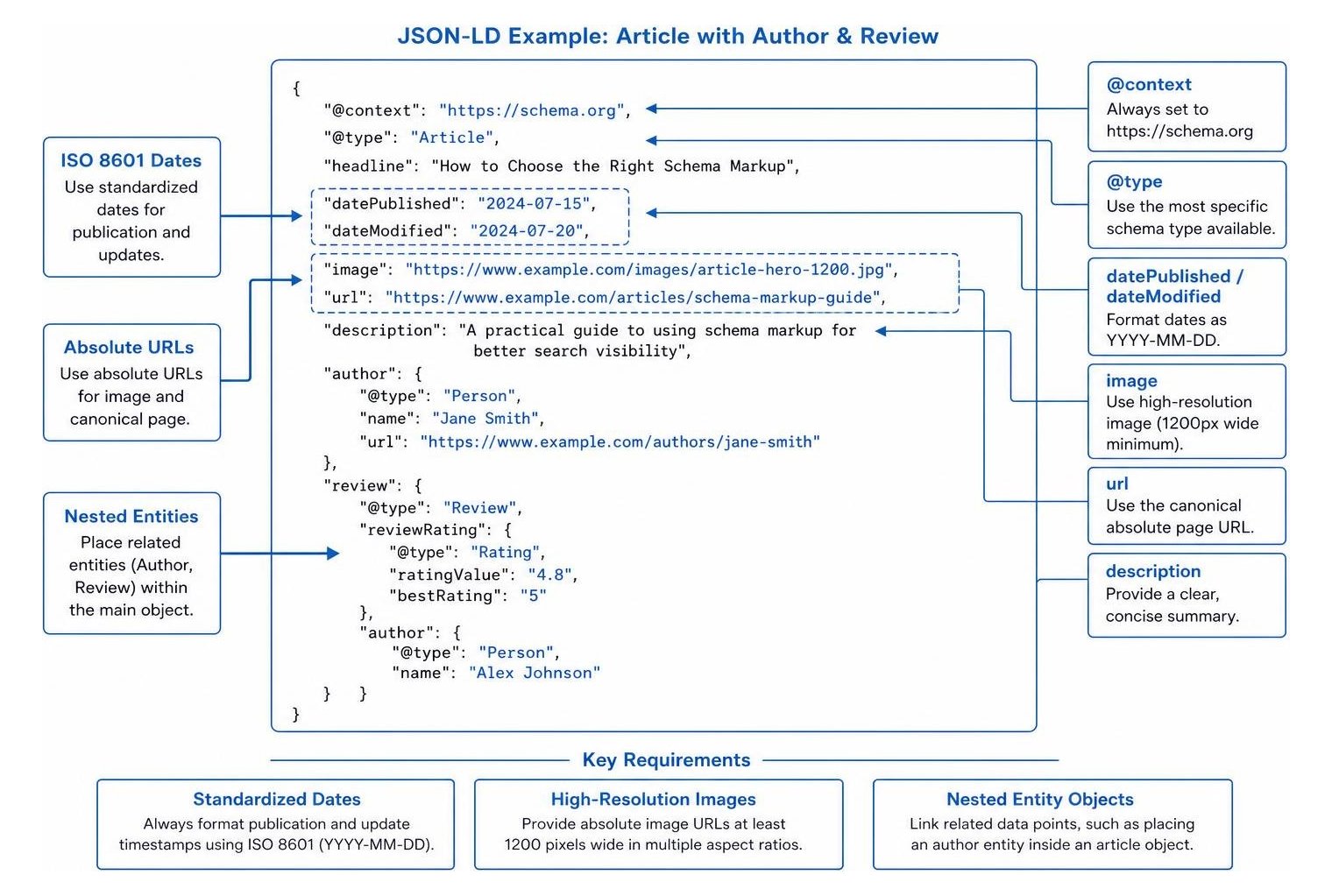
Omitting required properties disqualifies your page from generating rich snippets, while omitting recommended properties reduces your listing's context in search engines.
- Standardized Dates: Always format publication and update timestamps using ISO 8601 formatting, such as standard year-month-day representations.
- High-Resolution Images: For editorial and product schemas, supply absolute image URLs measuring at least 1200 pixels wide across multiple aspect ratios.
- Nested Entity Objects: Link related data points, such as placing an author entity directly inside an article object.
- Monetary Precision: Include valid three-letter currency codes alongside numerical pricing for all offerings.
- Entity Verification: Use sameAs properties pointing to verified external profiles on Wikipedia, Wikidata, or professional networks to validate organizational identity.
Step-by-Step Implementation, Validation, and Performance Tracking
Implementing structured data requires a clean workflow: generate the code, embed it into your site, validate the markup, and monitor performance inside search consoles.
How Do You Generate and Add Structured Data Code to a Website?
You can generate JSON-LD code using online generators, specialized plugins, or custom code integrated into your site templates.
- Content Management Systems and Plugins: Standard website platforms often generate basic Article, Organization, and BreadcrumbList markup automatically through SEO extensions.
- Manual Script Injection: For exact control over custom post types, add a script tag containing your JSON-LD data into the page head or before the closing body tag.
- E-Commerce Catalog Syncing: E-commerce stores can sync inventory, pricing, and stock status dynamically with platforms like Google Merchant Center to maintain up-to-date product markup across the web.
How Do You Test, Validate, and Monitor Markup in Google Search Console?
You should test your code during staging using official validation utilities before tracking live indexation health in search dashboards.
Use the official Schema Markup Testing Tool | Google Search Central resources to inspect your implementation. Start with the Rich Results Test to verify that your markup qualifies for specific search enhancements. Use the Schema Markup Validator to check your syntax against broad Schema.org standards.

Once your pages are published, monitor the Enhancements section in Google Search Console. This dashboard highlights unparsable structured data, missing required fields, and indexation trends across all marked-up URLs.
What Common Mistakes Cause Validation Errors and Missing Rich Snippets?
Validation errors and missing snippets usually stem from syntax issues, mismatched information, or policy violations.
- Mismatched Content: Providing structured details that do not exist in the visible page text violates search engine guidelines.
- Manipulated Reviews: Marking up self-serving reviews or creating fake customer feedback can trigger structured data penalties.
- Invalid Formatting: Using relative URLs instead of absolute paths or entering non-standard date formats breaks machine parsing.
- Generic Types: Using generic schema definitions when precise types exist limits search engine comprehension.
Building Search Authority With Structured Data
Structured data bridges the gap between your on-page content and search engine algorithms. By implementing accurate JSON-LD markup, you improve machine readability, qualify for eye-catching rich snippets, and provide clear information for modern AI search engines.
If you want an experienced team to audit your technical architecture and deploy customized entity schemas across your site, explore our professional schema markup services at SmallBizSEO. We help businesses build sustainable visibility and search performance through transparent, data-driven technical optimization.