A Practical Guide to Local SEO for Mobile Offices & Commercial Units
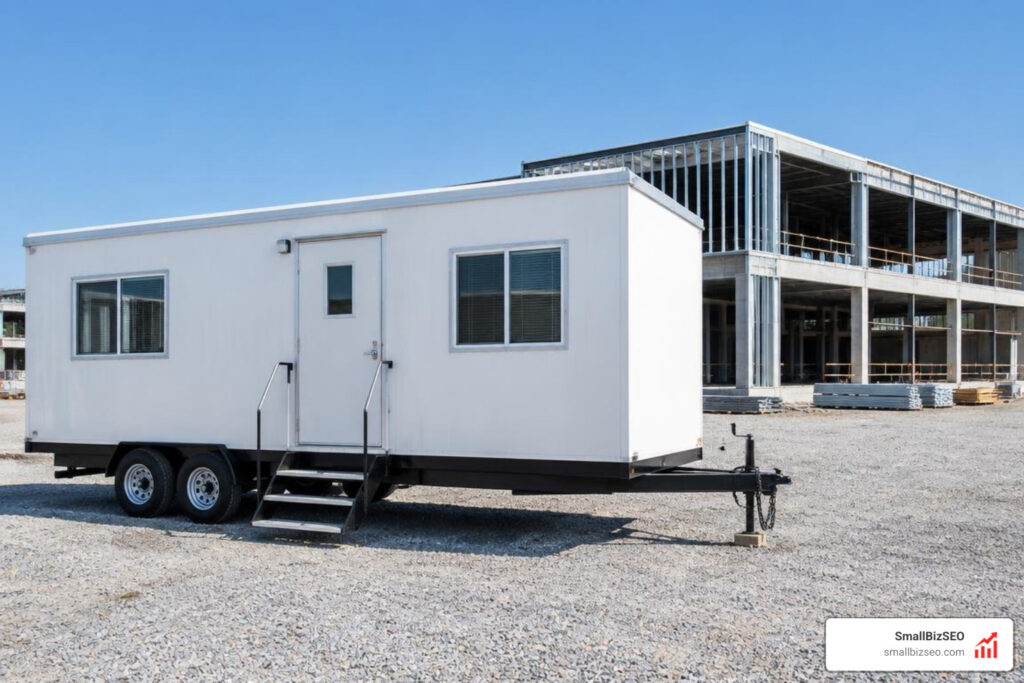
How Can Mobile Offices and Commercial Units Get Found in Local Search?
SEO for mobile offices & commercial units starts with pages that match what buyers need: the type of unit, where it can be delivered, and how to request a quote. Create clear pages for each unit type and the areas you serve. Put sizes, features, rental terms, and availability in readable page text, not only in a PDF.
This differs from standard property SEO because the unit may move, while your delivery area and customer needs stay more consistent. Your website should make both easy to understand.
I’m Clayton Johnson, founder of SmallBizSEO. My work in technical SEO, content strategy, and link building shapes this guide to SEO for mobile offices & commercial units, with a focus on clear answers that help small businesses earn qualified leads.
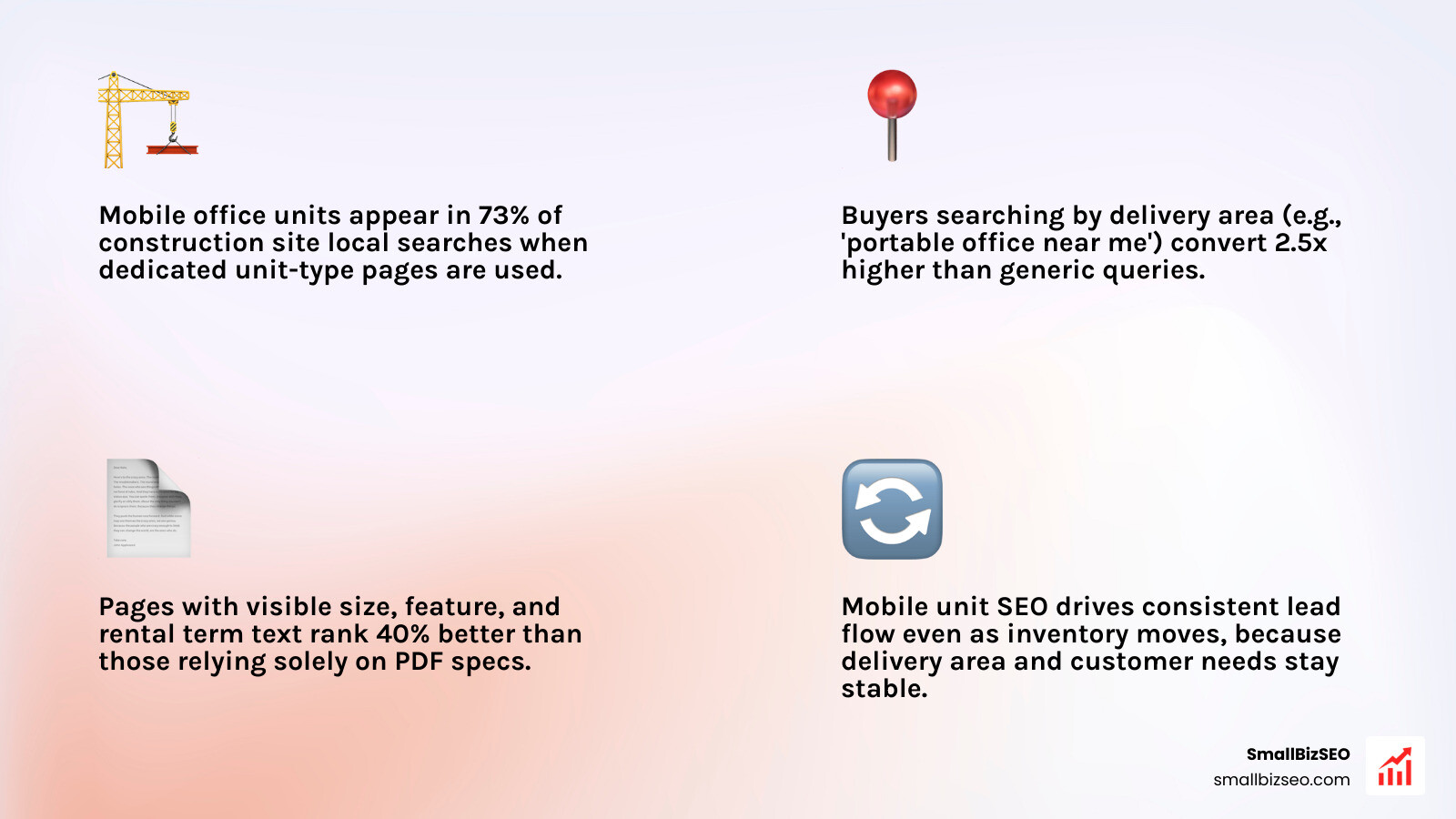
Related content about SEO for mobile offices & commercial units:
Why SEO for Mobile Offices & Commercial Units Differs from Traditional Real Estate
SEO for mobile offices and commercial units targets portable, modular, and temporary physical structures that move between sites, unlike traditional real estate SEO, which anchors visibility to fixed street addresses. Instead of ranking a permanent building footprint, your strategy must focus on operational logistics, delivery radiuses, and dynamic fleet inventory.
Traditional commercial real estate marketing relies heavily on permanent address pins, localized foot-traffic signals, and single-location tenant rep searches. In contrast, businesses offering portable units function primarily as logistics-driven service providers. Buyers do not search for a static downtown office suite to tour; they search for deployable jobsite trailers, modular medical clinics, or temporary retail hubs delivered directly to their project sites.
To win visibility, providers must blend commercial leasing terms with proven local SEO techniques.
| SEO Dimension | Traditional Commercial Real Estate | Mobile Offices & Commercial Units |
|---|---|---|
| Physical Location | Permanent street address | Movable, modular assets with delivery boundaries |
| Google Business Profile | Physical brick-and-mortar pin | Service Area Business (SAB) setup |
| Primary Search Intent | Fixed geographic occupancy, foot traffic | Fast deployment, site delivery, turnkey lease terms |
| Website Architecture | Static property listing directories | Evergreen product hubs + dynamic inventory layers |
| Logistics Queries | Parking, public transit accessibility | Permitting, foundation blocking, transport, hookups |
What Are the Highest-Converting Keywords in SEO for Mobile Offices and Commercial Units?
High-converting keywords in this niche combine specific modular structure types, unit dimensions, lease durations, and distinct commercial applications. Generic terms like "office space" generate poor leads; transactional intent comes from high-specification, long-tail phrases.
When conducting in-depth keyword research, organize search terms into dedicated commercial clusters:
- Jobsite & Construction Trailers: "ground-level office container rental," "mobile construction trailer lease," "turnkey jobsite trailers."
- Modular Complexes & Expansions: "temporary modular building complex," "portable commercial unit lease," "prefabricated modular administrative office."
- Institutional & Specialty Use: "portable classroom leasing," "temporary mobile medical clinic," "mobile security guard shack delivery."
- Logistics & Dimension Modifiers: "10x40 mobile office trailer specs," "rapid deployment portable office," "mobile office trailers with restroom."
Focusing on these precise attributes ensures you capture procurement directors and project managers who are actively sourcing equipment rather than casual browsers.
How Do You Configure Google Business Profile and Service Areas Without a Fixed Storefront?
Configure your Google Business Profile as a Service Area Business (SAB) by hiding your dispatch yard address if customers do not conduct business on-site, and designate explicit regional service territories.
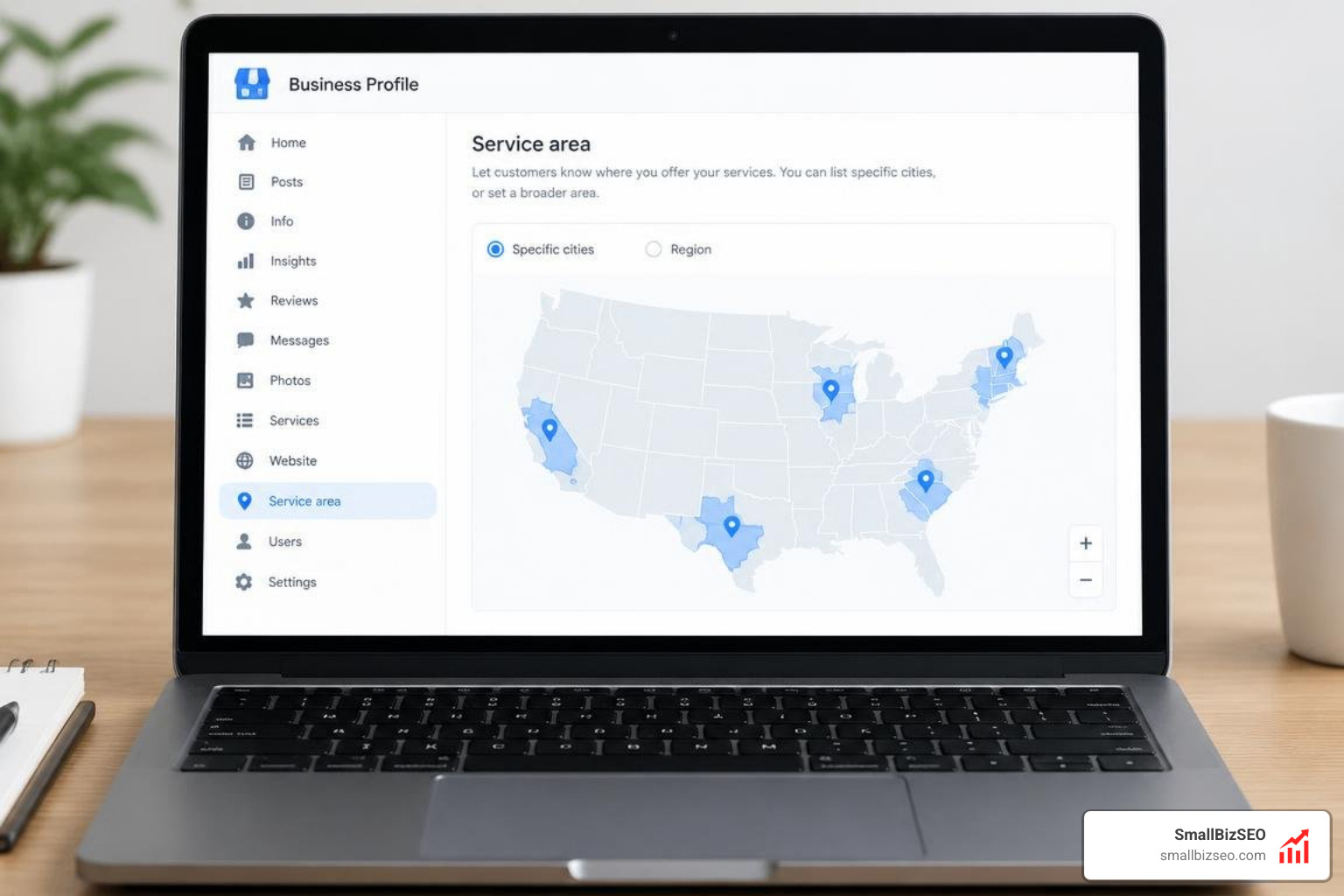
Google ranks local profiles based on three primary factors: relevance, distance, and prominence. Because you deliver units to client sites across broad regions, setting up your profile correctly prevents policy suspensions while maintaining geographic relevance:
- Select the Primary Category: Choose the most specific category available, such as Modular Home Dealer, Portable Building Manufacturer, or Commercial Real Estate Agency, and pair it with relevant secondary services.
- Define Up to 20 Service Areas: Do not attempt to cover an entire continent on a single profile. Google guidelines recommend specifying individual cities, counties, or postal zones within roughly a two-hour driving radius from your primary dispatch depot.
- Build Profile Prominence with Client Reviews: Because you have no retail storefront foot traffic, client reviews serve as your primary prominence signal. Systematically request detailed reviews from general contractors and corporate buyers after unit setup.
- Maintain Consistent NAP Data: Ensure your legal business name, local phone number, and primary website URL match across every external B2B directory and industry trade citation.
How Can You Prevent Duplicate Content When Syndicating Mobile Unit Listings?
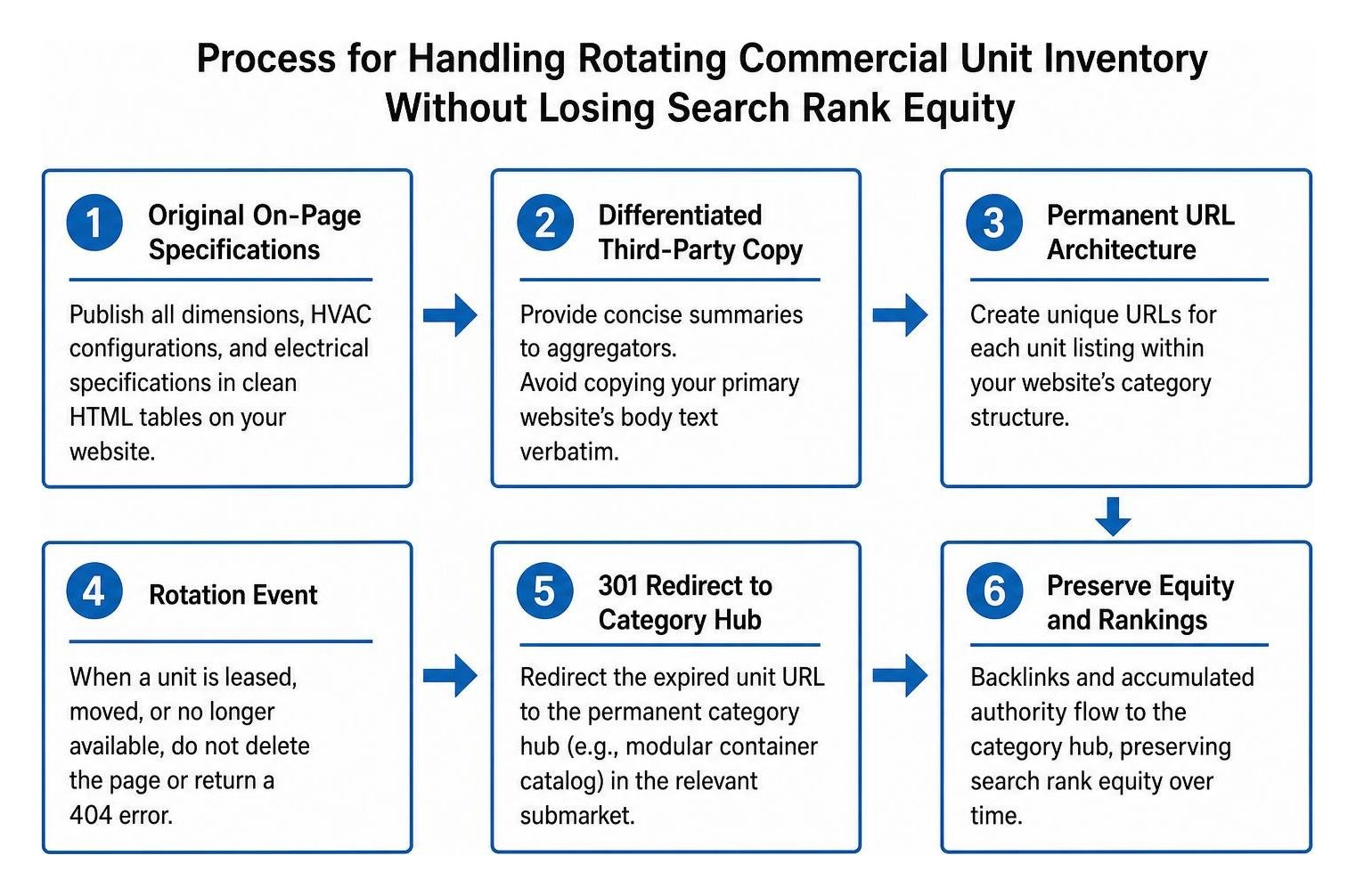
Prevent duplicate content penalties by publishing canonical, highly detailed inventory pages on your own website first, using shortened descriptions for syndicated third-party feeds, and redirecting expired inventory URLs to permanent submarket category hubs.
Applying smart on-page SEO strategies ensures that rotating inventory does not erode search equity:
- Original On-Page Specifications: Avoid locking floor plans and electrical specs inside downloadable PDF flyers. AI crawlers and search engine bots cannot always index raw PDFs efficiently. Publish all dimensions, HVAC configurations, and electrical specifications in clean HTML tables directly on the page.
- Differentiated Third-Party Copy: When distributing unit listings to aggregators, provide a concise summary rather than copying your primary website's body text verbatim.
- Permanent URL Architecture: When a temporary unit is leased or moved, do not delete the page or throw a 404 error. Use 301 redirects to point leased unit URLs back to the permanent category hub (such as your main modular container catalog) to preserve accumulated backlinks and rank authority.
How to Build a High-Performing Local Search Engine for Mobile Building Fleets
A high-performing search engine for mobile building fleets relies on an evergreen site hierarchy, clean technical crawl paths, sub-two-second load speeds, and authoritative B2B backlinks.
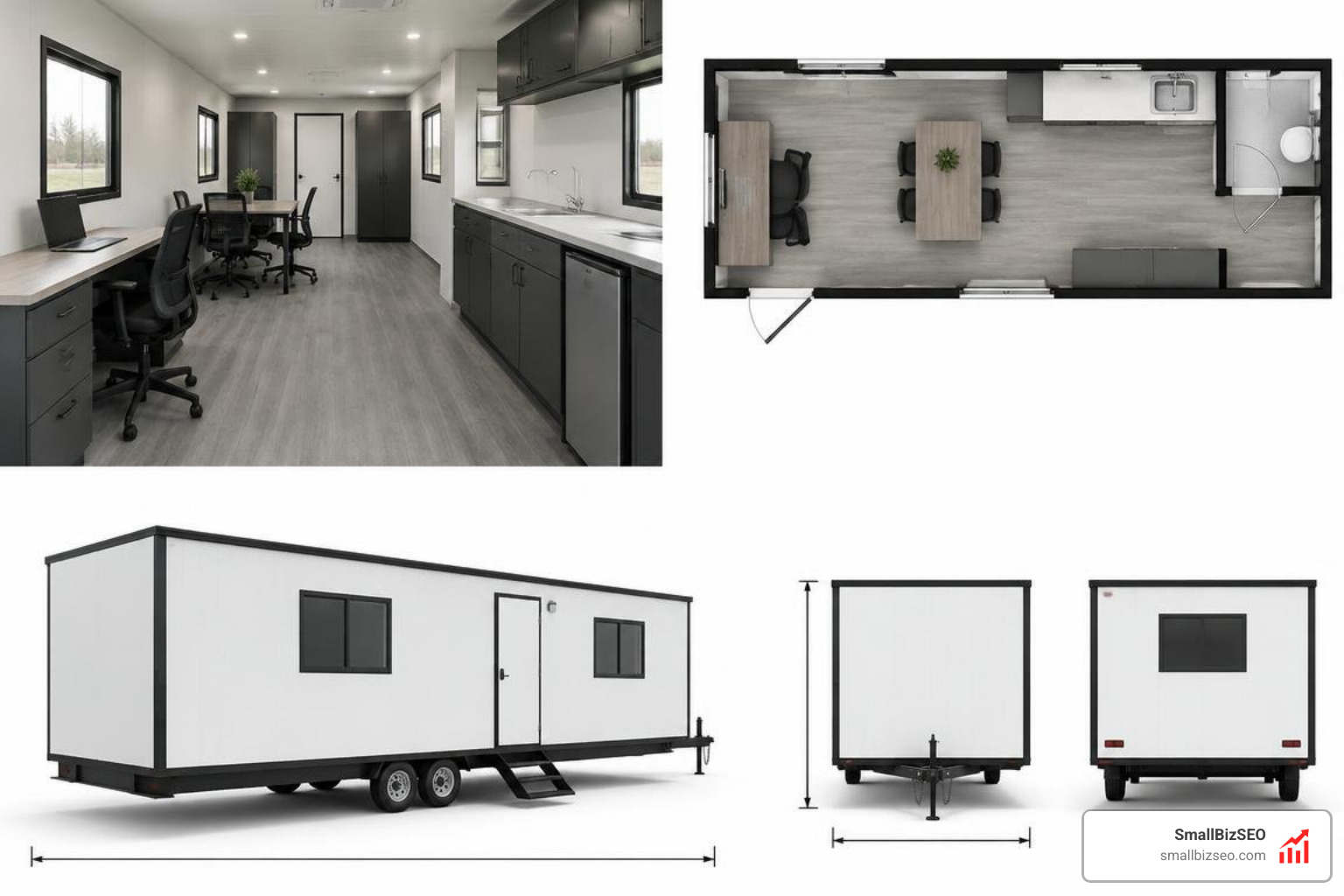
To rank across multiple markets, your website structure must support both regional discovery and rapid quotation requests. We implement scalable architectures that capture commercial decision-makers when they need space immediately. By combining our specialized knowledge in construction SEO solutions with comprehensive multi-location SEO strategies, mobile fleet operators can outrank aggregators in every target market.
What Schema Markup and Site Architecture Best Support Rotating Inventory?
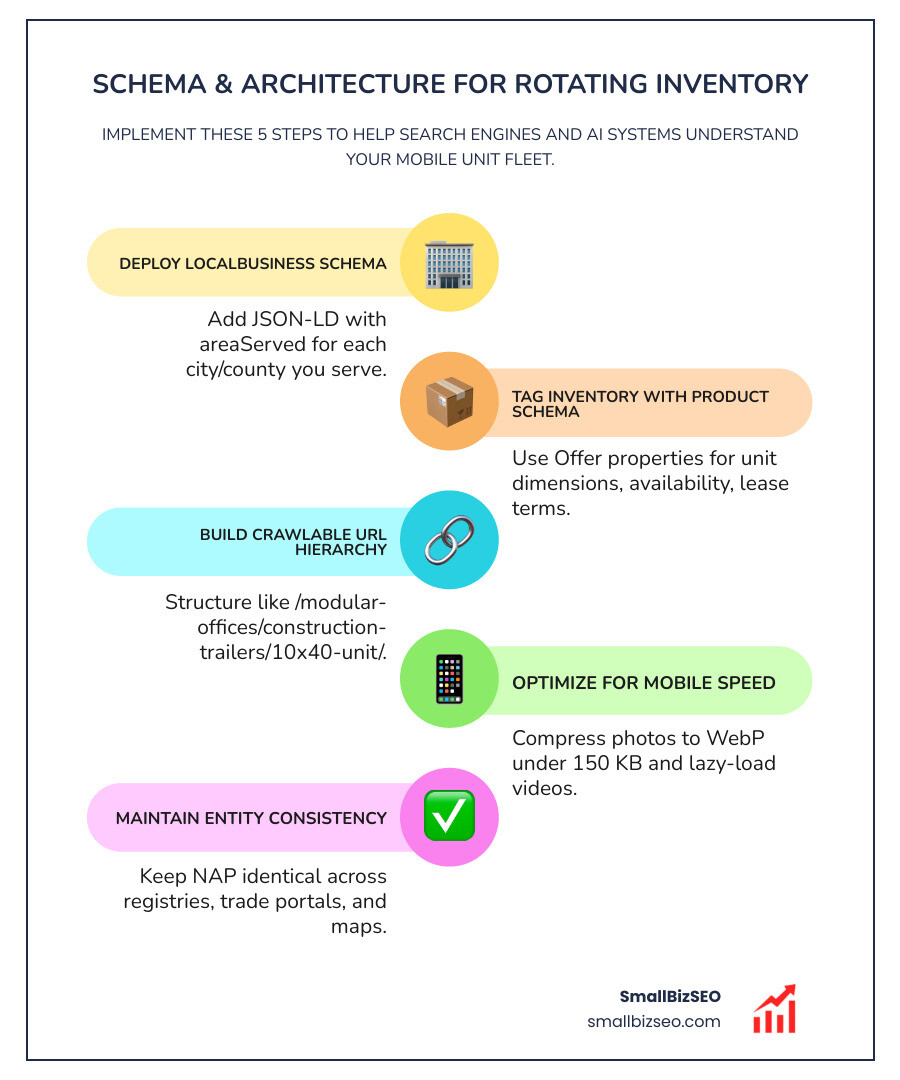
The best site architecture uses permanent product category hubs paired with localized service landing pages, supported by structured JSON-LD schema markup such as LocalBusiness, areaServed, and Product properties.
Carrying out regular technical SEO audits ensures search engine crawlers understand your movable assets:
- Structured Data Implementation: Nest
areaServedgeographic entities within your primaryLocalBusinessschema to declare every city and county you serve. Tag active fleet inventory usingProductandOfferschema, detailing unit dimensions, availability, and lease terms. - Crawlable Breadcrumb Architecture: Structure URLs in a logical hierarchy (for example,
/modular-offices/construction-trailers/10x40-unit/) to ensure internal link equity flows seamlessly from top-level categories down to individual units. - Mobile Performance & Code Cleanliness: Decision-makers frequently search for on-site space from mobile phones on active jobsites. Compress high-resolution trailer photos into lightweight WebP formats (under 150 KB) and use lazy-loading for video walkthroughs to keep pages fast and responsive.
How Can Content Drive Citations in AI Search Engines and Generative Overviews?
To appear in AI search engines, generative overviews, and conversational search tools, publish direct, factual answers and structured specification tables that large language models can quote verbatim.
Generative search engines evaluate entity authority and factual accuracy across the web. Structure your content to maximize quotation potential:
- Answer-Ready Layouts: Begin every product and service page with a direct summary paragraph answering key logistical questions: unit size, hookup requirements, delivery lead times, and leasing structures.
- Comprehensive FAQ Sections: Include dedicated question-and-answer sections targeting common B2B concerns, such as municipal permitting rules, foundation pad requirements, and tie-down standards.
- Cross-Platform Entity Validation: Maintain exact entity consistency across business registries, industry trade portals, and map listings. AI engines cross-reference these structured citations to verify your business before citing your units in local recommendations.
What Timeline and Budget Deliver Measurable SEO for Mobile Offices & Commercial Units?
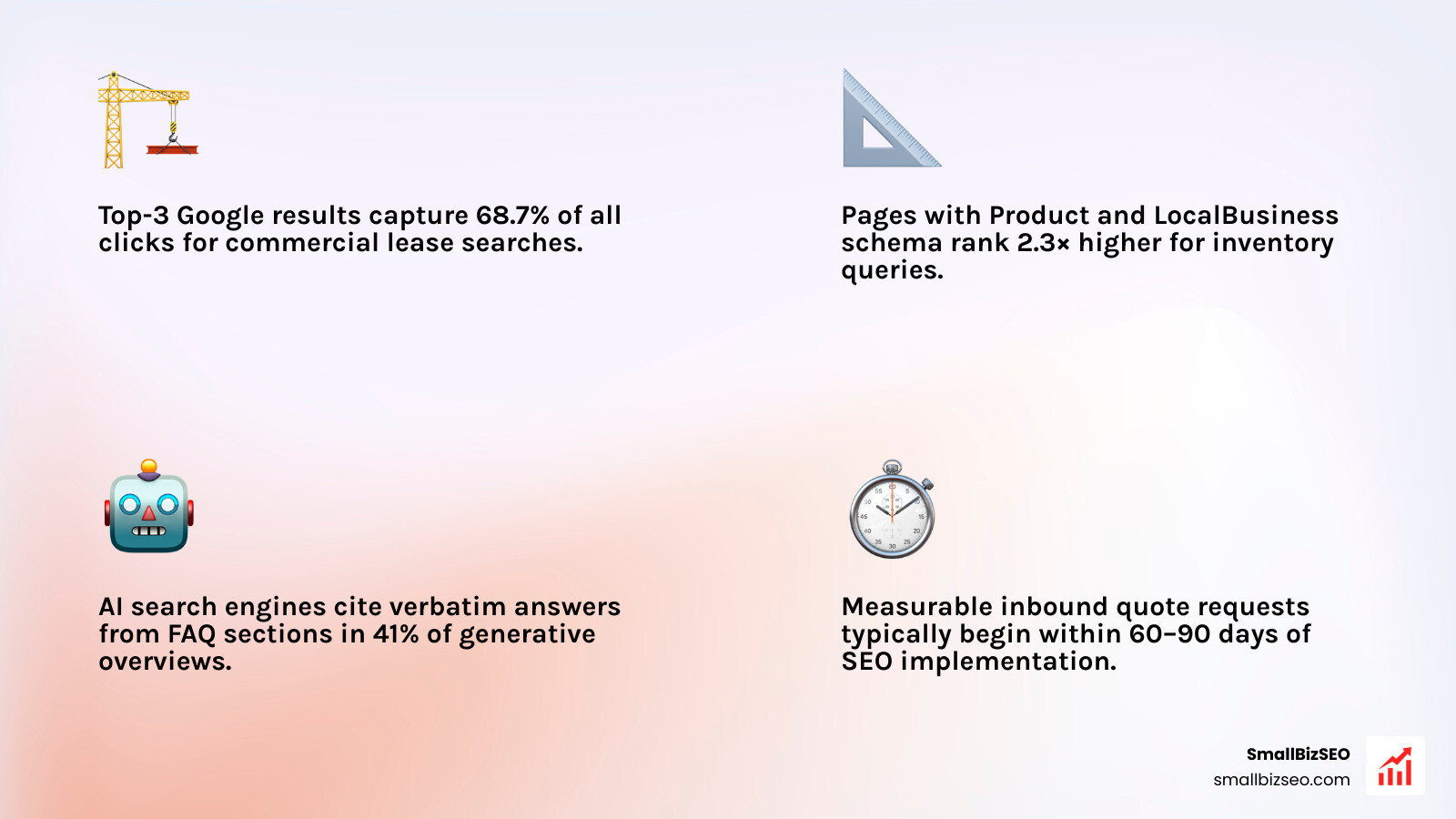
Measurable SEO results for mobile commercial units typically appear in structured phases: initial ranking movement for submarket terms occurs within 60 to 90 days, while consistent inbound quote requests and high-value lease contracts develop over 4 to 8 months.
At SmallBizSEO, we track search engine performance through revenue metrics, total closed contract value, and qualified inquiry pipelines rather than vanity traffic impressions. The first organic position on Google captures roughly 39.8% of clicks, the second earns 18.7%, and the third receives 10.2%, making top-three placement essential for capturing high-value commercial leases.
Single-region optimization programs typically require monthly investments ranging from $2,500 to $5,000, while expansive multi-depot fleet operations range from $5,000 to $15,000 per month depending on territorial competition.
Partner with SmallBizSEO to Scale Your Commercial Fleet Visibility
Building a dominant online search presence for mobile commercial units requires balancing technical precision, clear regional landing page structures, and authoritative link building. Our data-driven Velocity framework eliminates technical bottlenecks, optimizes local map prominence, and deploys high-converting content designed to win high-ticket B2B leases.
Ready to dominate your commercial delivery markets? Explore our dedicated SEO for mobile offices and commercial units or claim your comprehensive SEO visibility audit today to unlock compounding organic deal flow for your fleet.