A Practical Guide to the 4 Types of SEO
A Practical Guide to the 4 Types of SEO
How Do the 4 Types of SEO Improve Search Visibility?
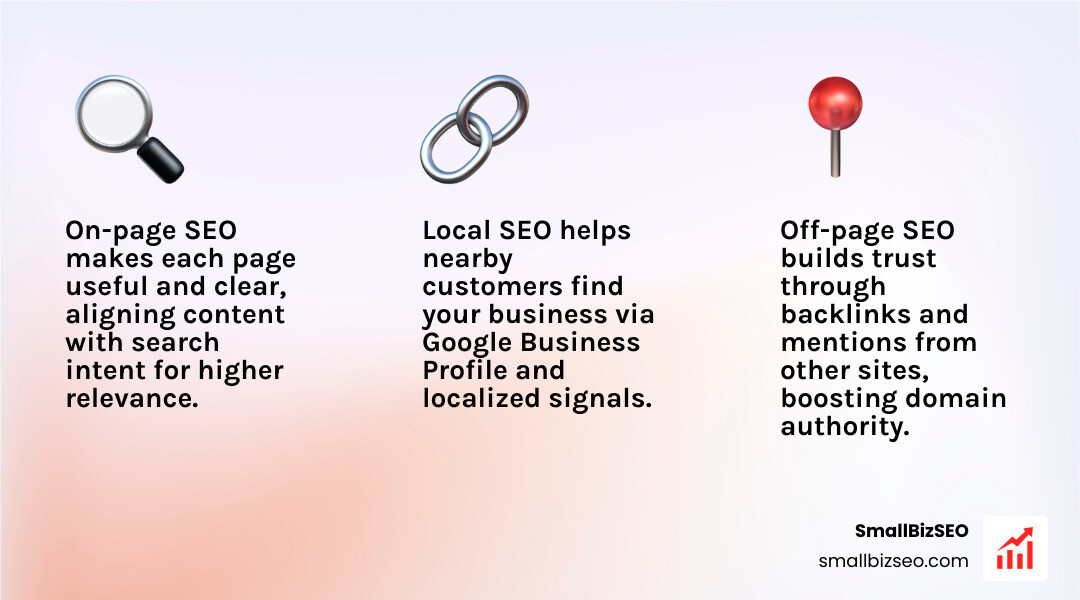
The four main types of SEO are on-page, off-page, technical, and local SEO. On-page SEO makes each page useful and clear. Off-page SEO builds trust through links and mentions from other sites. Technical SEO helps search engines access your site and gives visitors a better experience. Local SEO helps nearby customers find your business.
They work best together. A helpful page cannot bring in leads if search engines cannot find it. And a local business may miss ready-to-buy customers if its Google Business Profile is incomplete.
I'm Clayton Johnson, founder of SmallBizSEO. My work across the 4 types of SEO connects website content, search visibility, and digital PR to help small businesses attract qualified leads.
Related content about 4 types of SEO:
Understanding Organic Search Visibility
Search engines connect prospective buyers with relevant businesses by analyzing hundreds of ranking signals across relevance, technical speed, and site authority. Ranking on the first page matters because online consumers overwhelmingly select one of the first 10 results when looking for a product or service.
Modern search visibility extends beyond standard organic blue links to include local map packs, featured snippets, and AI summaries. With over 83% of the world owning a smartphone, meeting mobile usability standards and matching exact search intent are mandatory requirements for capturing qualified organic traffic.
What Are the 4 Types of SEO and How Do They Differ?
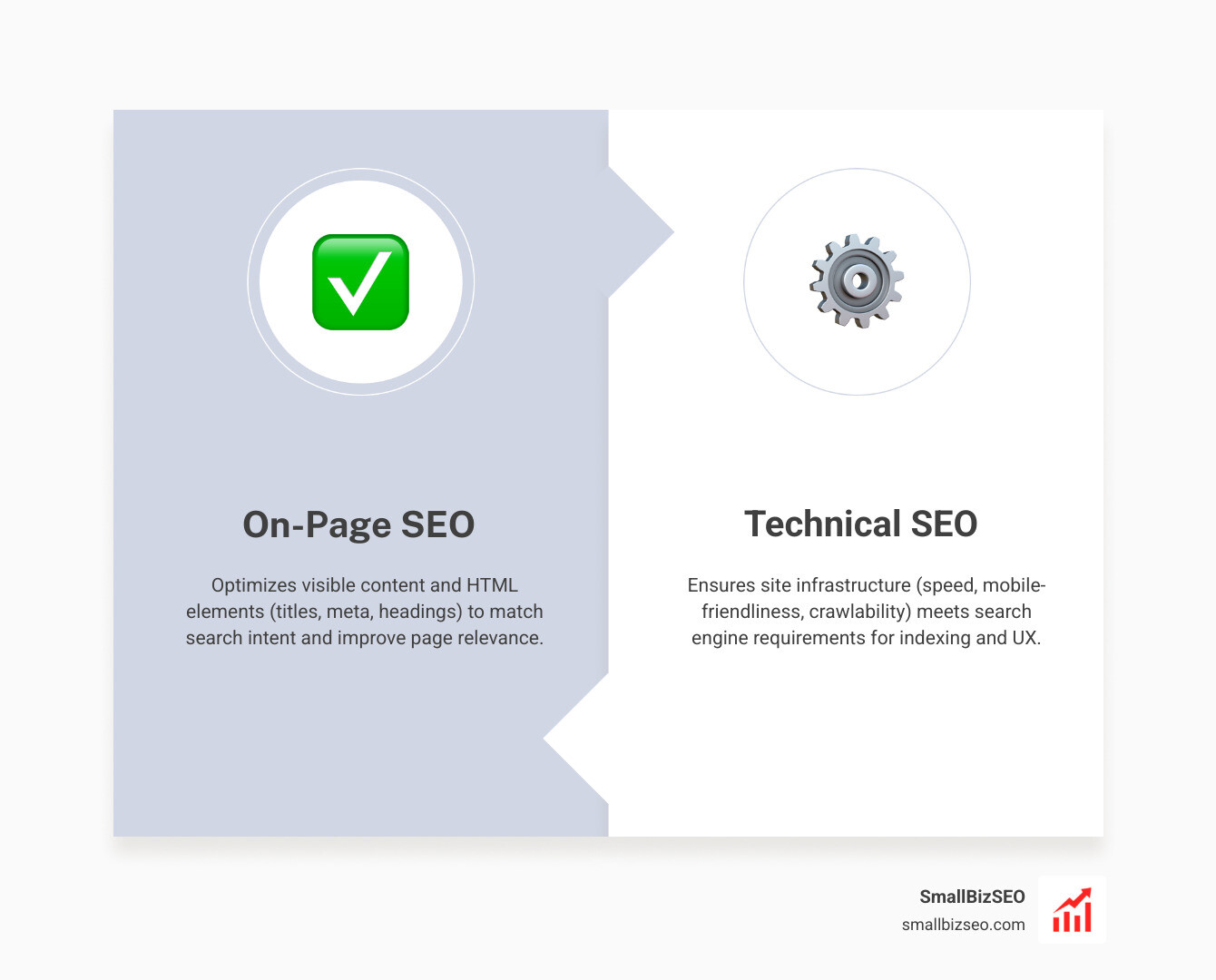
The four main categories of search optimization differ primarily by their area of focus: on-page optimizes visible content, off-page builds site authority, technical addresses site infrastructure, and local captures geographic queries. Understanding these distinct disciplines enables businesses to target the entire small business search landscape effectively.
| SEO Type | Primary Focus | Key Optimization Elements | Core Business Impact |
|---|---|---|---|
| On-Page SEO | Visible webpage content and HTML tags | Keyword alignment, headers, meta descriptions, alt text | Improves page relevance and topical match |
| Off-Page SEO | External reputation and site credibility | Editorial backlinks, digital PR, brand mentions | Increases overall algorithmic domain authority |
| Technical SEO | Backend architecture and crawl accessibility | Core Web Vitals, XML sitemaps, indexation, HTTPS | Ensures crawlability and smooth user experience |
| Local SEO | Geographic and location-based discovery | Google Business Profile, NAP citations, local reviews | Drives high-intent local calls and foot traffic |
Why Is On-Page Optimization Crucial Among the 4 Types of SEO?
On-page optimization directly tells search engine algorithms what your content covers and how well it solves a searcher's problem. When web pages address user search intent clearly, search engines reward them with higher positions.
Applying on-page SEO involves several essential steps:
- Conduct keyword research to uncover the terms your target audience uses.
- Craft title tags under 60 characters with the primary keyword placed early.
- Write compelling meta descriptions that encourage clicks from search results.
- Structure articles with logical header tags (H1, H2, H3) to organize content clearly.
- Compress images and provide descriptive alt text for accessibility and search indexing.
- Build relevant internal links to help readers and crawlers explore related topics.
What Is Off-Page SEO and How Does It Build Domain Authority?
Off-page SEO encompasses all activities conducted outside your website to establish credibility, trust, and industry authority. Think of external links as digital word-of-mouth recommendations that prove your content is reliable.
Acquiring high-quality backlinks from reputable websites remains a powerful ranking signal. Instead of pursuing mass link schemes, modern authority building focuses on digital PR, publishing original research, earning editorial mentions, and managing brand reputation across industry publications and social platforms.
Why Is Technical SEO the Critical Foundation for Crawlability?
Technical SEO ensures that search engine spiders can discover, crawl, render, and index your website pages without encountering roadblocks. Without a functional technical base, even high-quality content remains invisible to search engines.
Partnering with an experienced technical SEO company helps you monitor several vital checkpoints:
- Site Speed and Core Web Vitals: Ensure pages load quickly and stabilize visual elements to prevent layout shifts.
- Mobile-First Indexing: Provide responsive design and fast interactions across mobile devices.
- XML Sitemaps and Robots.txt: Guide search bots toward critical pages while blocking non-essential directories.
- HTTPS Security: Maintain an active SSL certificate to protect visitor data.
- Structured Data (Schema): Implement JSON-LD markup to help algorithms understand page elements and generate rich search snippets.
- Crawl Budget and Redirects: Eliminate broken 404 links, redirect chains, and duplicate URLs.
How Does Local SEO Drive High-Intent Foot Traffic?
Local SEO optimizes your digital presence to capture searches with geographic intent, such as queries containing specific city names or "near me." It allows physical stores and regional service providers to win high-visibility placement in the local map pack.
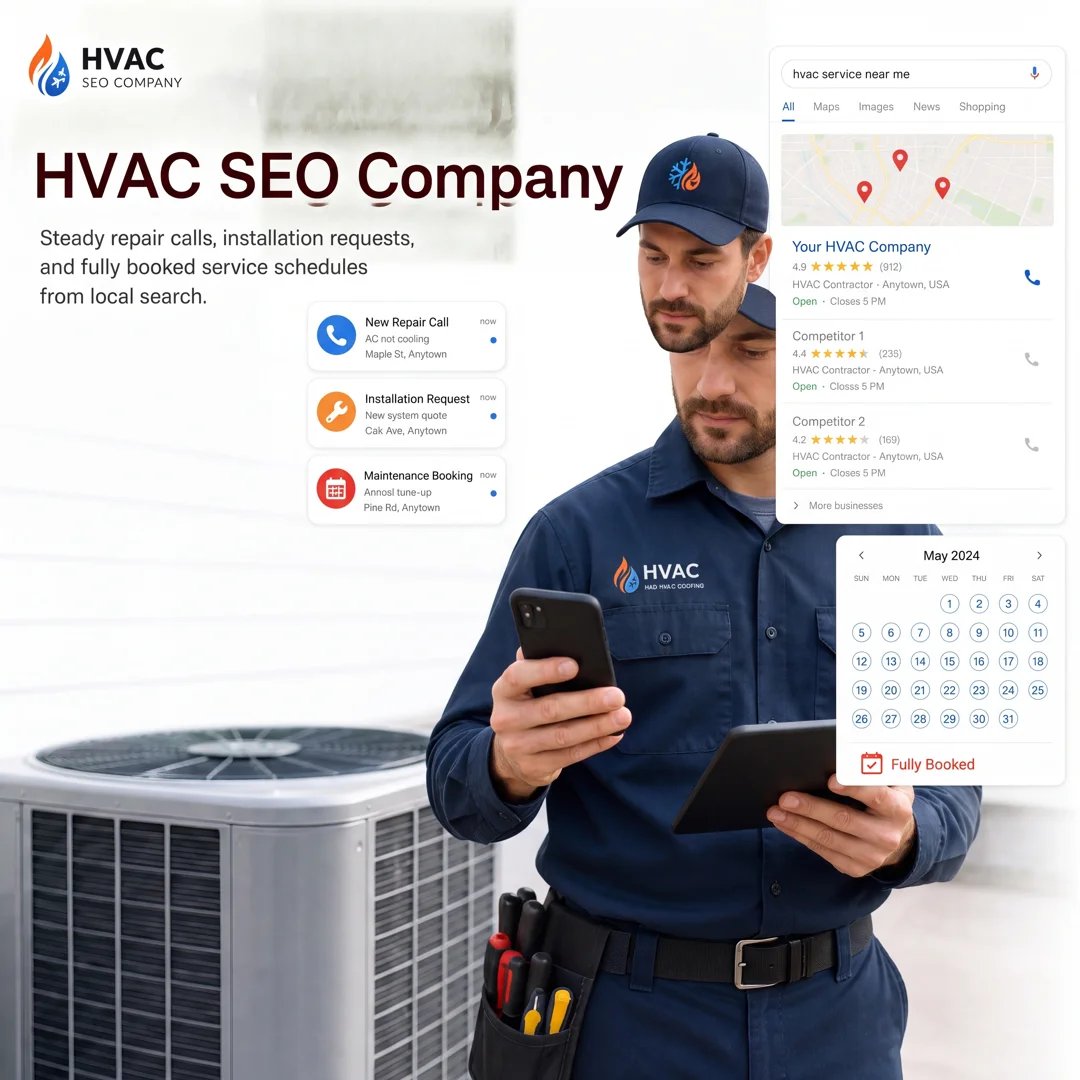
Working with a dedicated local SEO company involves claiming and updating your Google Business Profile, securing consistent Name, Address, and Phone number (NAP) data across online directories, and generating authentic customer reviews. Developing geo-targeted service pages further cements your visibility for high-converting regional searches.
How to Prioritize and Build an Integrated Search Strategy
Prioritizing your search strategy starts with identifying your biggest bottlenecks through a thorough site audit. Businesses achieve steady momentum by resolving critical crawl barriers first before investing heavily in content production and outreach.
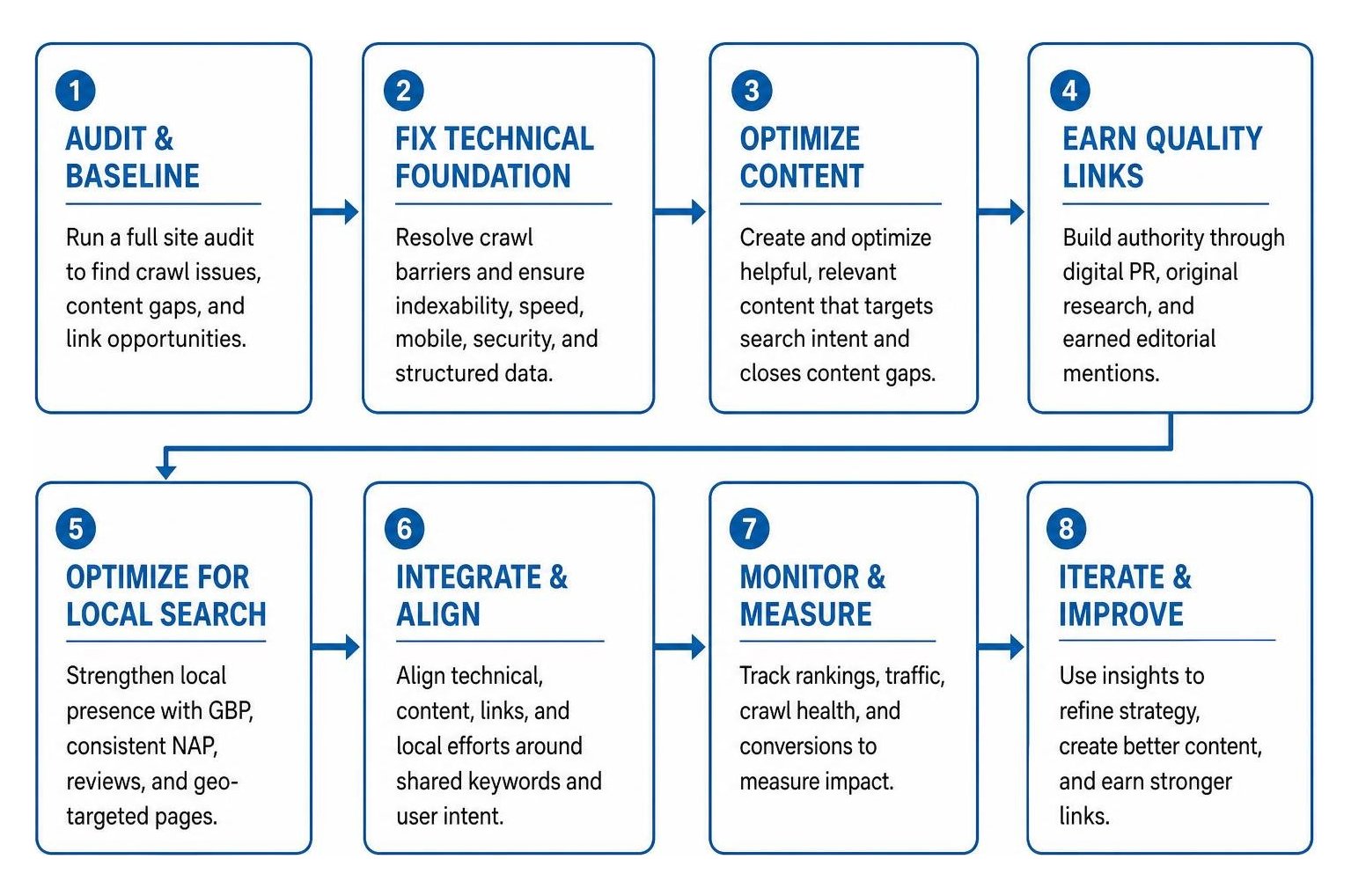
Following a structured optimization framework allows small business owners to allocate resources efficiently. Beginning with a detailed SEO visibility audit pinpoints baseline errors and highlights quick wins that deliver early ranking gains.
How Do You Prioritize and Combine the 4 Types of SEO for Growth?
The most effective search campaigns integrate all four disciplines into a coordinated workflow rather than treating them as separate tasks.
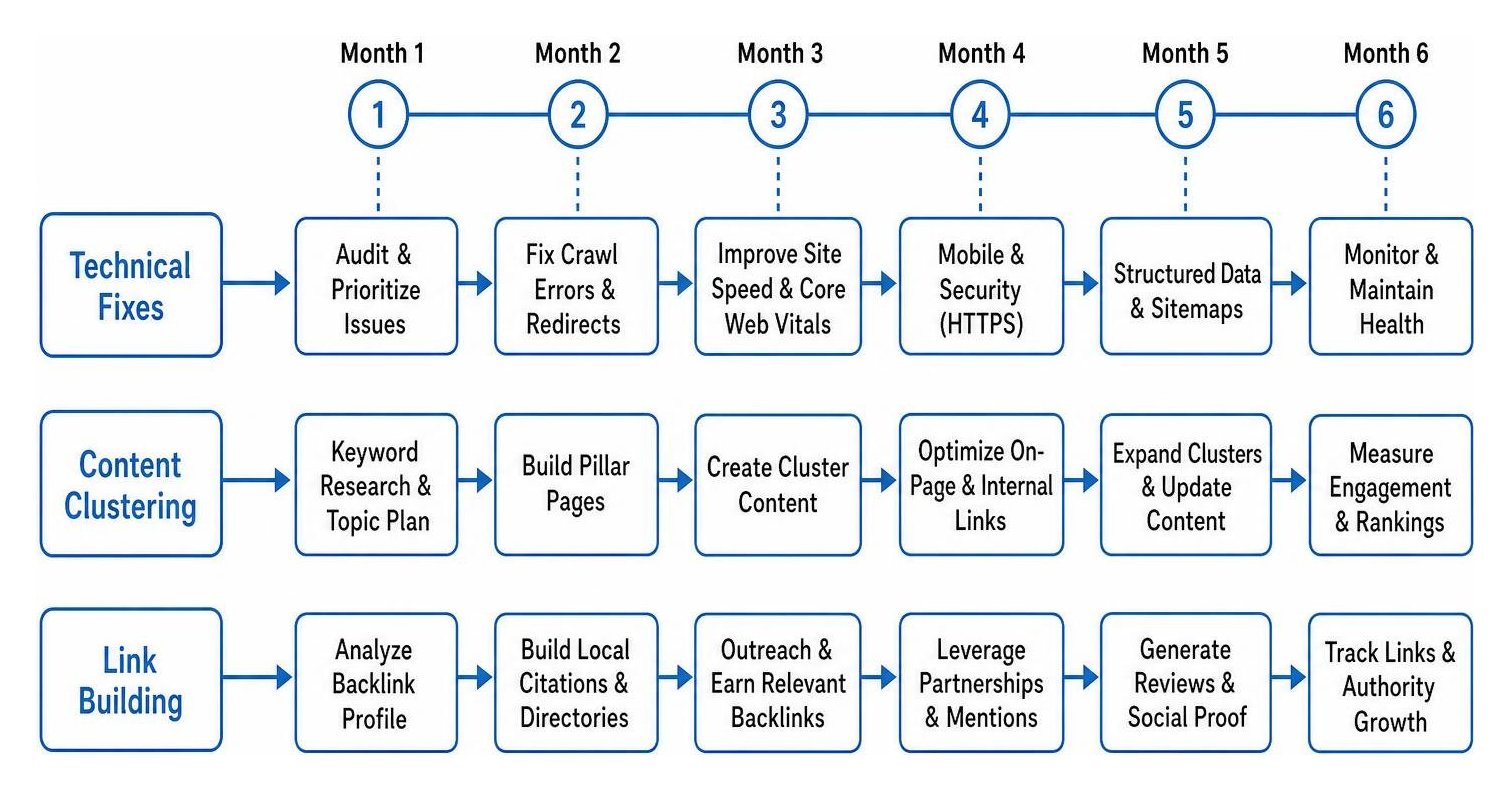
- Establish the Technical Foundation: Fix broken links, resolve crawl errors, and optimize Core Web Vitals to ensure pages can be indexed.
- Launch Intent-Driven On-Page Content: Create targeted content clusters and optimize metadata to capture non-branded informational and commercial queries, including specialized ecommerce SEO approaches for product catalogs.
- Expand Local and Off-Page Authority: Strengthen your local citations, earn industry backlinks through outreach, and actively generate reviews.
- Measure and Refine: Track organic traffic, keyword positions, and conversion rates to adapt your tactics over time.
What Common Implementation Mistakes Should You Avoid?
Avoiding fundamental optimization errors prevents ranking penalties and saves valuable marketing budget:
- Keyword Stuffing: Overloading text with repetitive keywords damages readability and violates search quality guidelines.
- Purchasing Spammy Backlinks: Buying low-quality links triggers algorithmic filters that destroy organic reach.
- Ignoring Mobile Usability: Failing to optimize for mobile screens alienates the majority of web users.
- Allowing Inconsistent NAP Details: Differing contact information across business directories confuses algorithms and lowers local map rankings.
- Publishing Thin or Duplicate Content: Creating low-value pages without unique insights leads to indexation issues and poor user engagement.
Elevating Your Search Presence
Mastering search optimization requires balancing technical health, high-value on-page content, authoritative backlinks, and localized visibility. When these disciplines work together within a clear, data-driven framework, your business builds sustainable organic traffic, outperforms competitors, and connects with high-intent customers when they are ready to buy.