A Practical Guide to Visibility in Generative AI Search

What Is AI Visibility and How Does It Reshape Search?
AI visibility is how often and how accurately your business appears in AI-generated answers. A tool might name your business in a recommendation or link to your website as a source. Unlike a traditional SEO ranking, that presence may shape a customer's choice before they visit any website.
For a small business, the first step is to check whether AI tools mention you when people ask about the problems you solve. Look at what they say, not just whether your name appears. This guide explains how to measure that presence and make your content easier to find and understand.
I'm Clayton Johnson, founder of SmallBizSEO, where I connect SEO, content, and digital PR to help small businesses build authority and attract qualified leads. My work in answer engine optimization helps owners move beyond the question "what is ai visibility" and toward clear, useful answers customers can trust.
Basic what is ai visibility vocab:
Conversational discovery is transforming how buyers find solutions. Generative engines now synthesize complex web information directly into concise, zero-click answers. Rather than forcing users to browse through multiple pages, answer engines analyze, compare, and recommend solutions inside the chat interface.
This process condenses the traditional marketing funnel. Educational research and consideration now blend seamlessly into transactional readiness within a single prompt interaction. When an AI tool evaluates your offerings, it defines market narrative and shapes buyer perception before a visitor ever clicks through to an owned landing page.
What Is AI Visibility Compared to Traditional SEO Rankings?
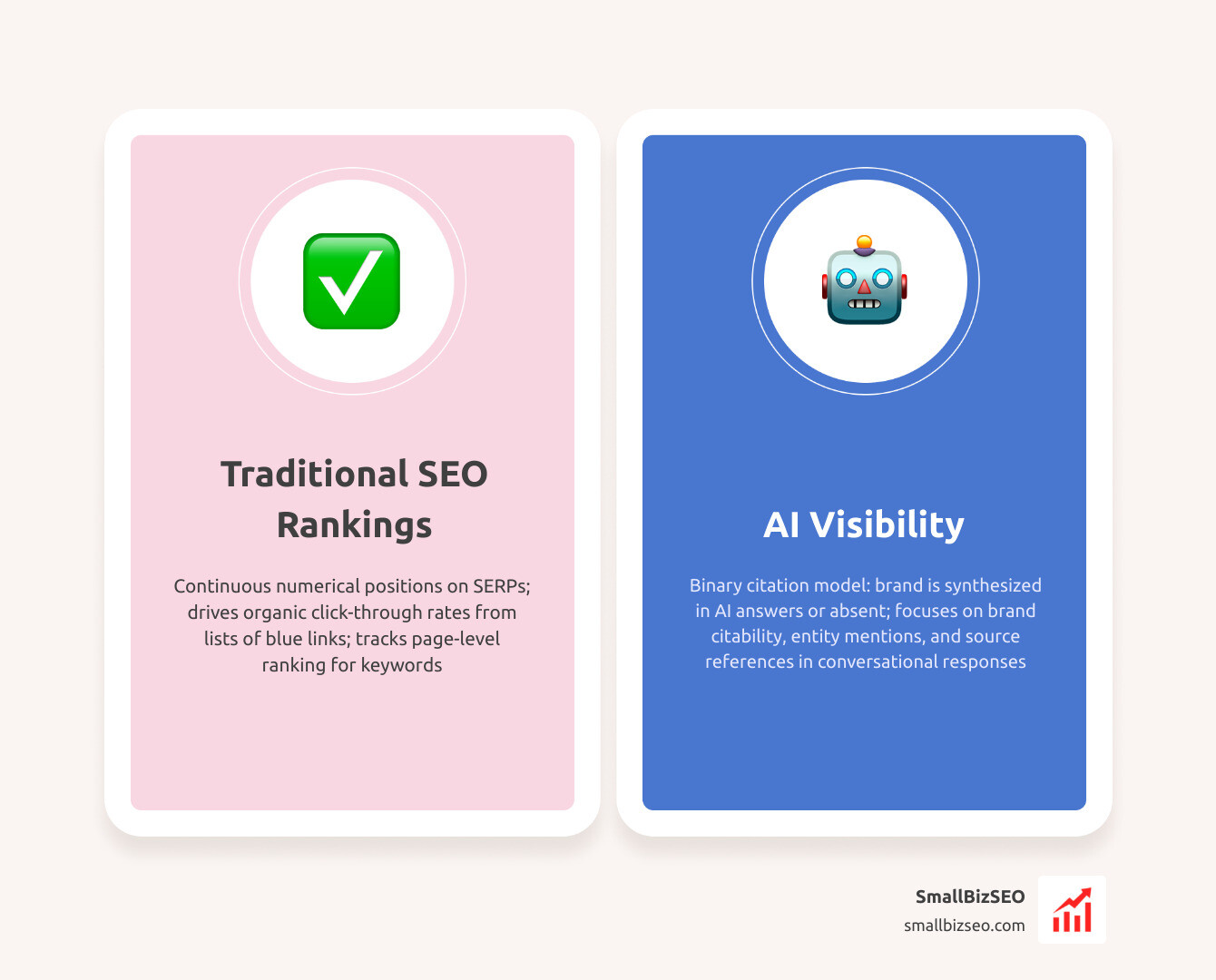
Traditional SEO rankings focus on securing continuous numerical positions (such as positions one through ten) on standard search results pages. AI visibility operates on a binary citation model: your business is either directly synthesized and cited in the generated answer, or it is absent entirely.
Traditional search optimization focuses on driving organic click-through rates from lists of blue links. AI visibility centers on brand citability, unlinked entity mentions, and linked source references within conversational responses. As user behavior shifts toward conversational platforms, transitioning toward AI search requires optimizing for synthesis alongside traditional position tracking.
| Metric Dimension | Traditional SEO Rankings | Generative AI Visibility |
|---|---|---|
| Visibility Model | Continuous numerical rank (1–10) | Binary inclusion (Cited or Omitted) |
| User Interaction | Scan blue links and click to visit | Consume synthesized summary directly |
| Attribution Type | Page-level organic click-throughs | Brand mentions and linked source chips |
| Conversion Context | Multi-stage browsing behavior | Pre-informed, high-intent referrals |
What Are the Core Dimensions of Brand Citability and Zero-Click Discovery?
Brand citability evaluates how consistently and accurately an AI engine references your business as an authoritative source. A comprehensive AI Visibility overview breaks brand presence into several fundamental dimensions:
- Share of Voice: The percentage of industry-relevant prompts and conversational queries that return your brand name or solutions.
- Citation Frequency: The rate at which your domain assets serve as grounding reference links in AI answers.
- Brand Sentiment: The qualitative tone, reputation, and positioning generated by large language models when describing your services.
- Prompt Coverage: The breadth of buyer journey stages, comparison queries, and problem-solving prompts where your brand appears.
- Referral Conversion Value: The downstream engagement and sales performance of high-intent visitors who discover your business through conversational citations.
How Do Generative Engines Choose Sources and Citations?
Generative engines select citation sources using retrieval-augmented generation (RAG) to ground responses in accurate, real-time facts. The engine retrieves live web pages matching the user's prompt, assesses their factual density, evaluates authoritativeness, and synthesizes the most reliable chunks into a final answer.
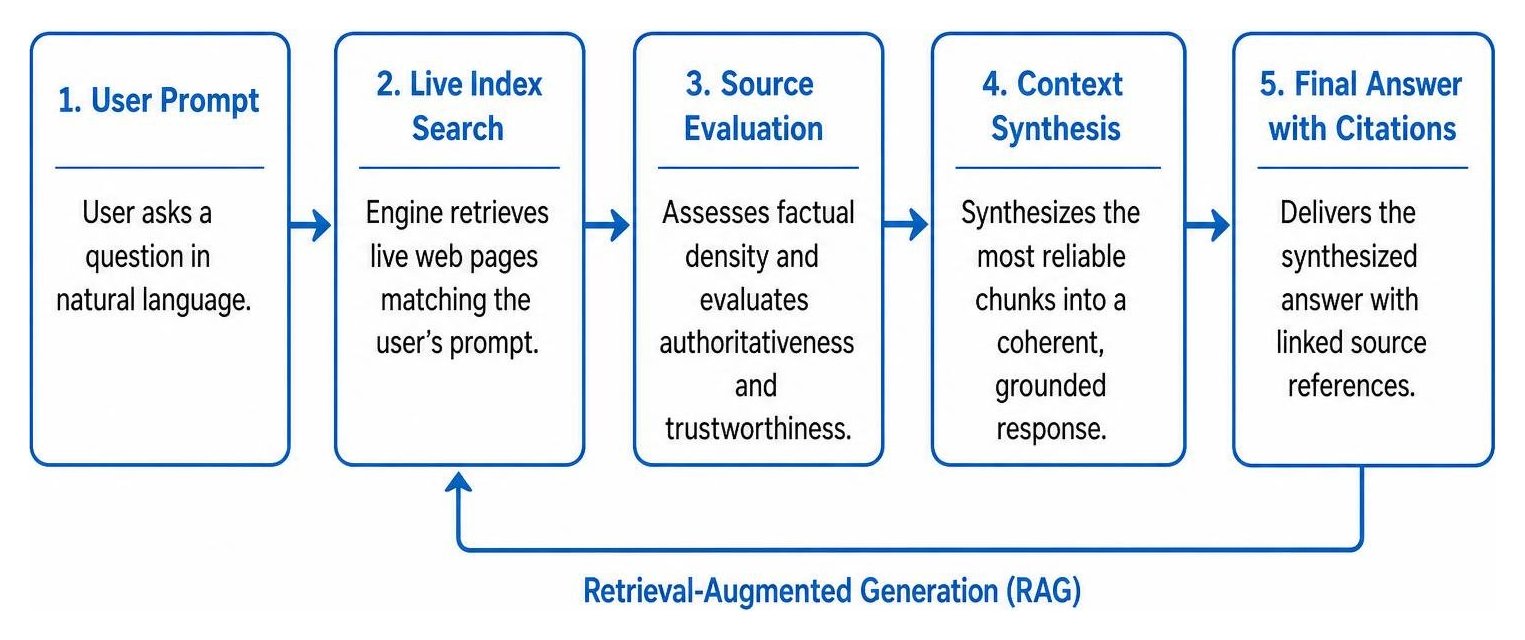
Engines rely on a blend of pre-trained model data and real-time retrieval indexes. They prioritize sources demonstrating clear trustworthiness and factual substance over generic filler text. Building entity consistency across the wider web and mastering E-E-A-T signals for search ensures algorithms recognize your business as an established, credible domain.
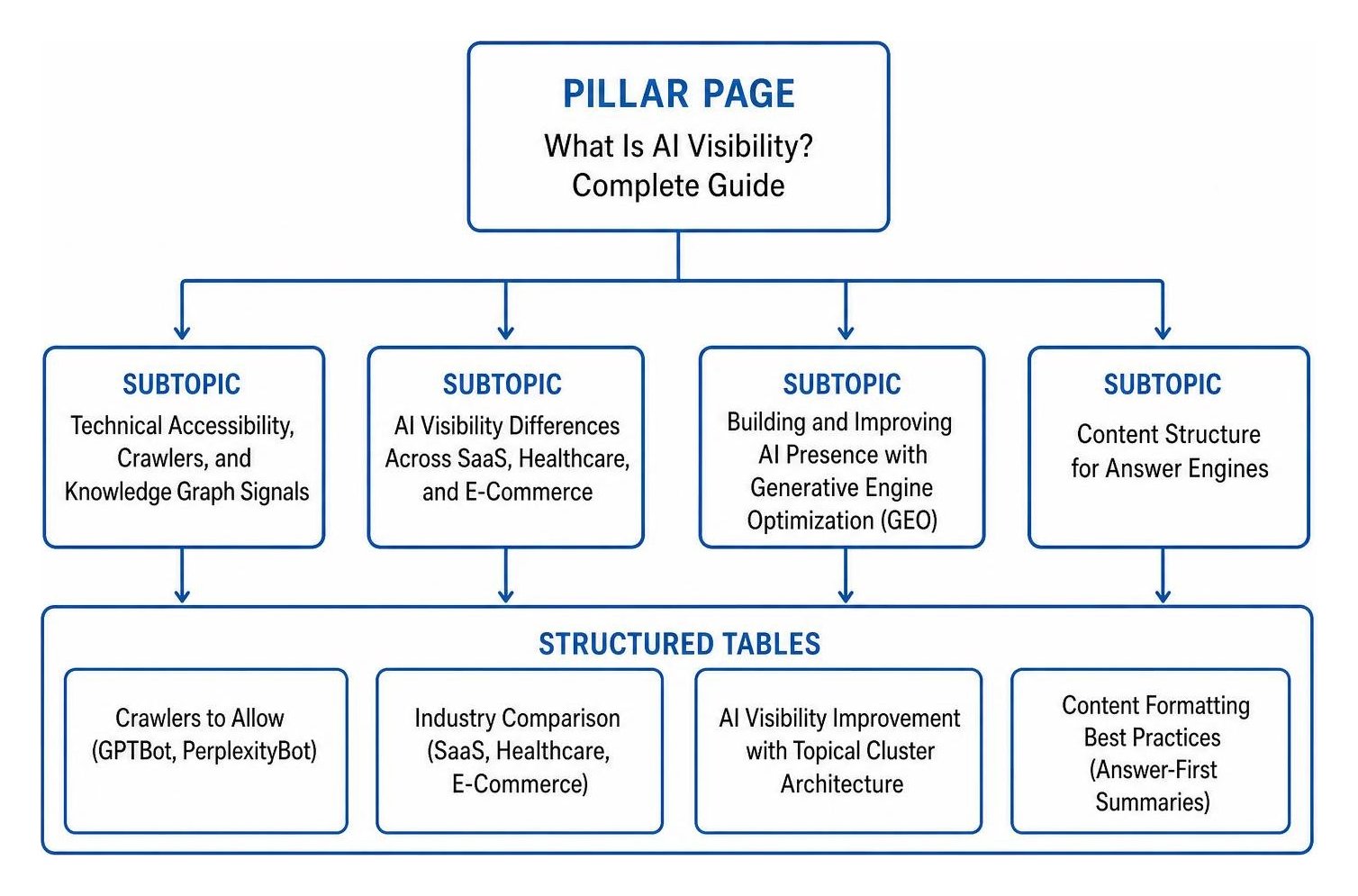
How Do Technical Accessibility, Crawlers, and Knowledge Graph Signals Affect Visibility?
AI systems cannot synthesize or cite content they cannot access efficiently. Maintaining technical accessibility ensures automated web agents index your pages without encountering crawl barriers or performance timeouts.
- Explicit Crawler Access: Maintain clear robots.txt directives that permit major AI crawler bots, such as GPTBot and PerplexityBot, to access public informational assets.
- Server-Side Rendering: Deliver primary page text and structured data via clean server-side rendering so JavaScript-limited web crawlers can ingest content without rendering delays.
- Page Performance: Maintain rapid sub-three-second page response speeds to prevent crawler bot timeouts during real-time retrieval cycles.
- Structured Knowledge Graph Signals: Implement comprehensive schema markup (such as Organization, Service, and Article markup) and maintain consistent entity profiles across external directories and Wikidata references.
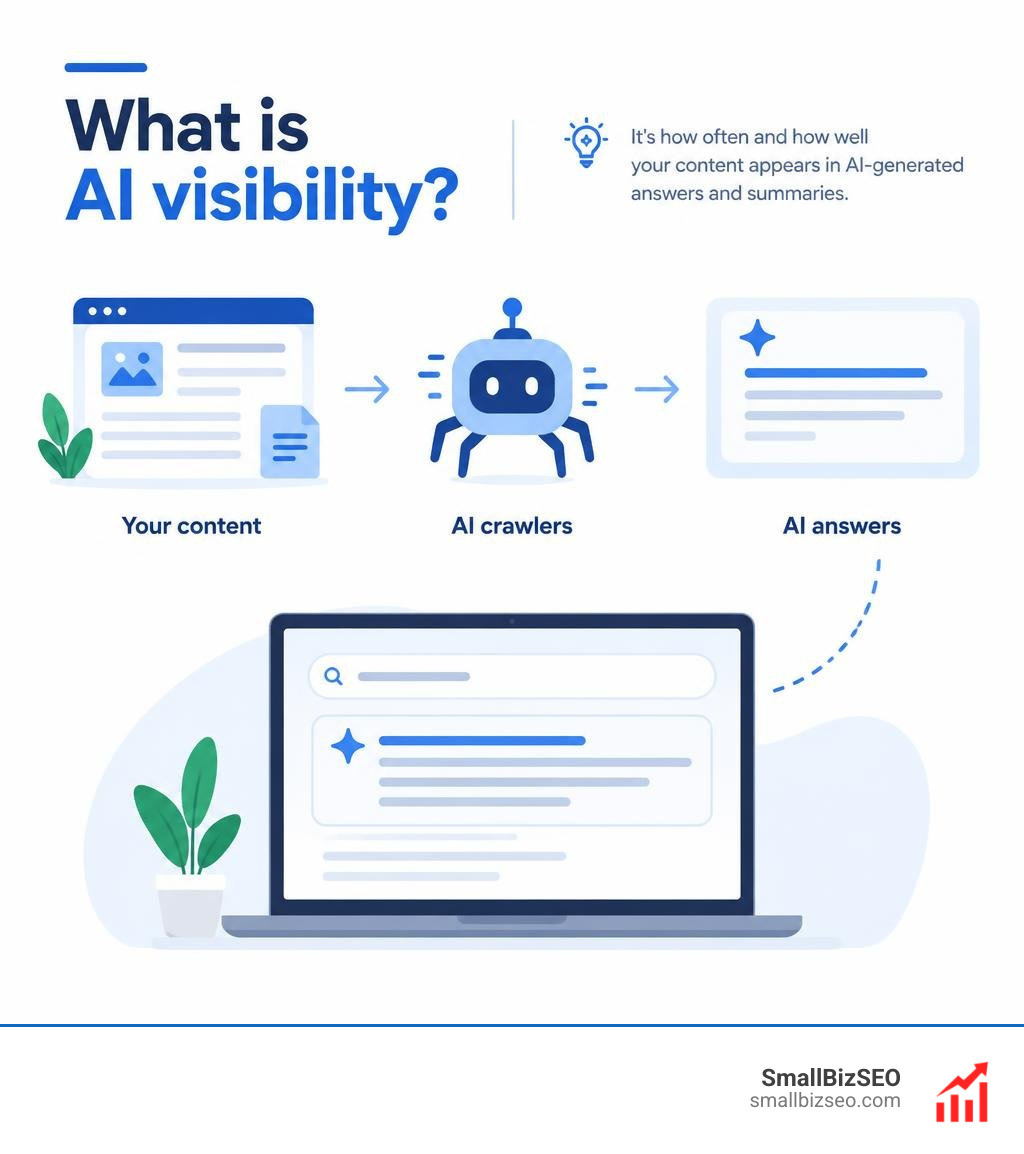
Log-level monitoring through tracking AI crawler analytics provides clear visibility into how often AI agents visit your domain, which pages receive the most attention, and where crawl friction occurs.
How Does AI Visibility Differ Across SaaS, Healthcare, and E-Commerce?
Citation patterns, query triggers, and source preferences vary across industry verticals:
- SaaS and Technology: Conversational prompts focus heavily on software comparison queries, workflow integrations, and pricing breakdowns. Answer engines synthesize verified user reviews, independent editorial roundups, and technical documentation.
- Healthcare and Medical: Generative platforms enforce rigorous accuracy standards. Citations require clinical author credentials, peer-reviewed medical references, and structured informational schemas.
- E-Commerce and Retail: AI systems generate direct product recommendations and feature matrices. Citations pull from granular product specification tables, real-time inventory signals, verified customer ratings, and user-generated content across public forums.
Recognizing these industry-specific search behaviors helps businesses tailor their off-page validation and on-page formats to match the specific discovery mechanisms of each vertical, as outlined in this guide to AI visibility mechanics.
How Can Businesses Build and Improve Their AI Presence?
Improving brand presence in AI search requires Generative Engine Optimization (GEO). This discipline aligns content creation and technical structure with the semantic indexing methods of modern language models.
Target high-intent conversational prompts by publishing unique data studies, original research, and comprehensive topical cluster architectures. By establishing authoritative hubs supported by interlinked subtopics, you raise your domain's factual relevance, directly improving brand AI citation rate across competitive queries.
How Should Content Be Structured for Answer Engines?
Answer engines extract self-contained text blocks rather than whole web pages. Formatting your content for seamless machine parsing requires clear information design and structured summaries.
- Answer-First Summaries: Lead every informational section with a direct, concise forty-to-sixty-word answer that resolves the core user query immediately.
- Natural Language Headings: Format H2 and H3 subheadings as complete, natural-language questions matching the exact prompts buyers type or speak.
- Structured Data Tables: Insert comparison tables and bulleted key takeaways at the top of comprehensive guides to facilitate quick data extraction.
- FAQPage Schema Integration: Append dedicated FAQ sections marked up with valid structured data to provide modular answers for generative synthesis.

Applying these proven answer engine optimization strategies ensures generative models can accurately extract and attribute key concepts from your site.
How Can Businesses Measure Share of Voice, Mentions, and Multi-Engine Performance?
Tracking brand performance across conversational search requires a structured measurement routine across ChatGPT, Perplexity, and Google AI Overviews.
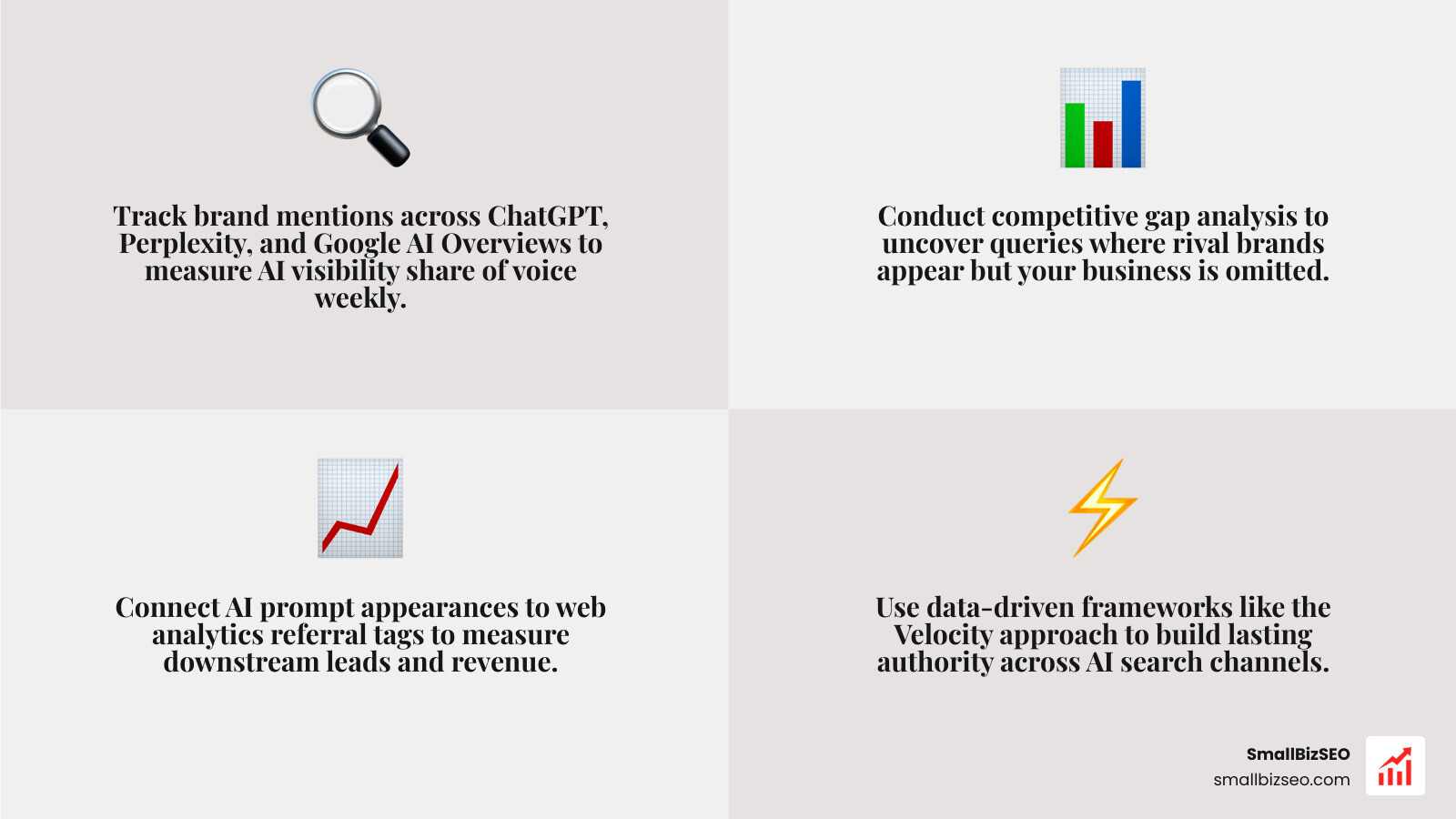
Begin by establishing a repeatable AI visibility baseline across a standardized set of industry prompts. Monitor unlinked mentions, linked domain citations, and AI-evaluated sentiment scores weekly. Conduct regular competitive gap analyses to uncover queries where rival businesses appear while your brand is omitted.
Connecting prompt appearances to web analytics referral tags reveals how conversational discovery drives downstream leads and revenue. At SmallBizSEO, our data-driven "Velocity" framework delivers rapid, transparent reporting and robust technical optimization to help small businesses capture lasting authority across AI search channels.
Turn AI Citations Into Sustainable Growth
Generative answer engines are now a primary discovery layer across the web. Relying solely on traditional blue links leaves your brand vulnerable as conversational platforms reshape how customers evaluate products and services.
By implementing structured data, maintaining clear crawler access, publishing original research, and systematically tracking prompt visibility, your business can claim its place in AI-generated answers. Explore our comprehensive SmallBizSEO AI visibility solutions to audit your current brand presence, optimize your content infrastructure, and build measurable search authority.