4 Reasons Testing a Single Prompt Warps Your AI Visibility Data
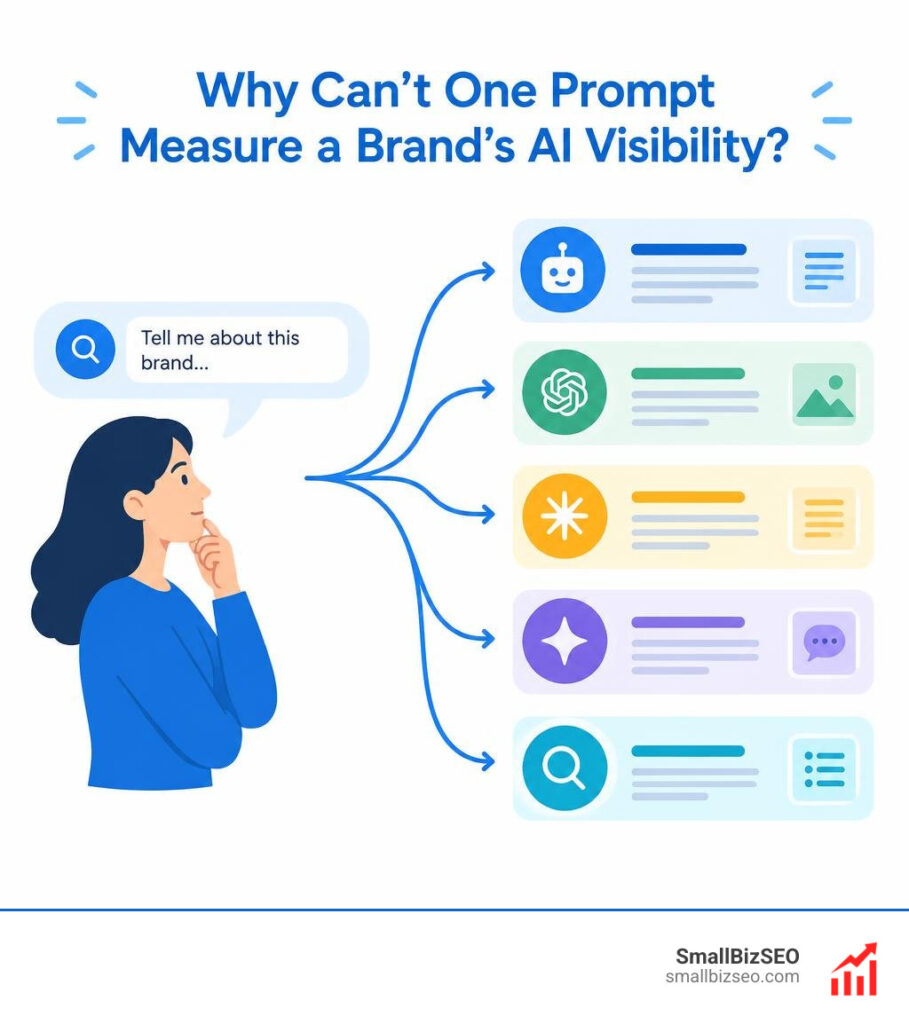
Here's why one prompt cannot measure a brand's AI visibility: one answer shows what happened once, not how often your brand appears. Results can change between runs, across AI tools, and as customers ask different questions. To get a useful picture, test several real customer questions more than once. Track whether AI names your brand, cites your site, and describes your business correctly.
A screenshot can flag a question worth investigating. It cannot tell you whether your brand is consistently visible or whether one answer was an outlier.
I'm Clayton Johnson, founder of SmallBizSEO, where I connect SEO, content, and digital PR to help small businesses get found. That work shapes how I explain why one prompt cannot measure a brand's AI visibility and what to check instead.
Why One Prompt Cannot Measure a Brand's AI Visibility: The Anecdotal Fallacy
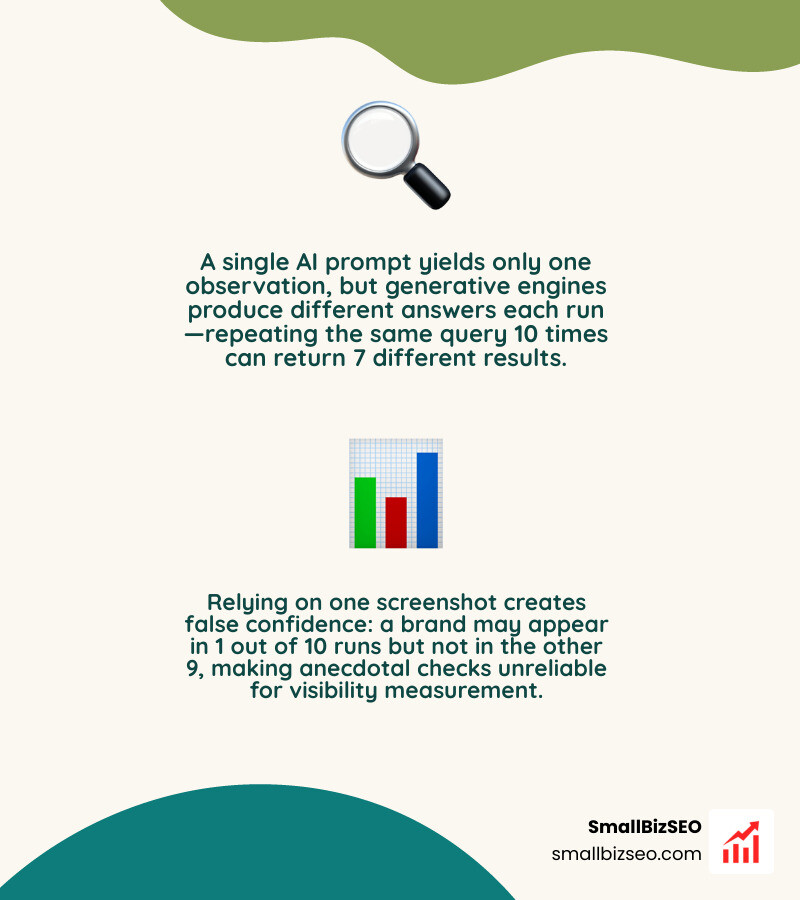
A single AI answer represents an isolated observation, not a true calculation of market presence. Relying on a single query creates a false sense of security or unneeded panic because generative engines operate stochastically.

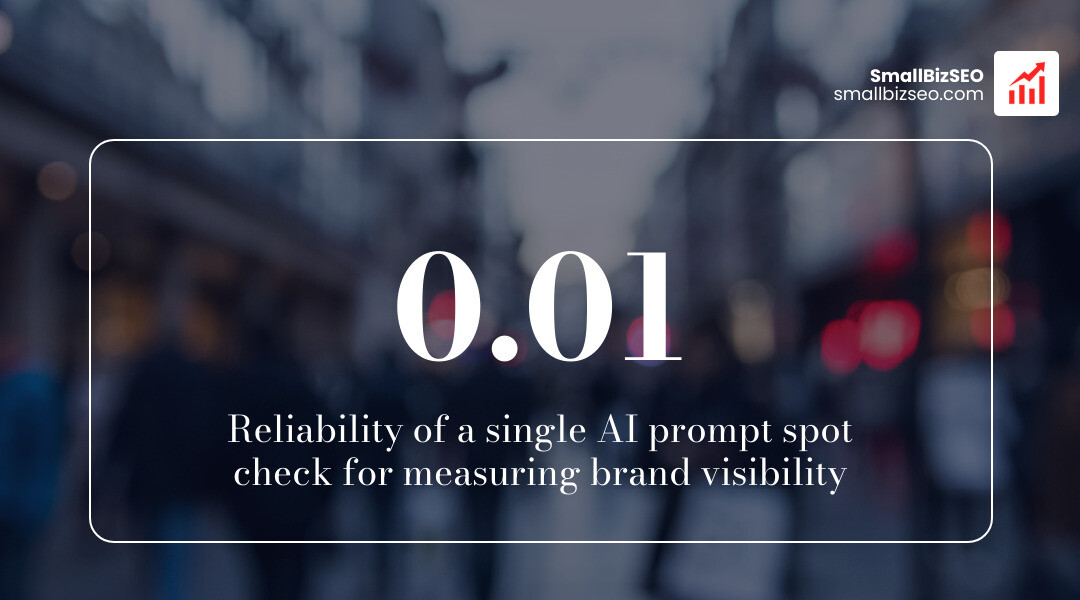
When evaluating modern AI Search, we must acknowledge that generative models construct answers on the fly. A single spot check provides a reliability score close to 0.01, meaning it contains almost zero brand-discriminating signal. In benchmark studies, true brand identity accounts for merely 1.5% of the variance in the generated output. The rest of the variation stems from query phrasing, context windows, and internal model temperature.
What are the four main reasons a single-prompt audit can skew your data?
A single-prompt test distorts your data because it fails to capture run-to-run instability, engine variations, positioning inaccuracies, and the broad spectrum of customer queries.
| Measurement Dimension | Single-Prompt Spot Check | Structured Multi-Prompt Sampling |
|---|---|---|
| Statistical Reliability | ~0.01 (pure noise) | ~0.36+ (actionable trend) |
| Platform Scope | Single snapshot on one engine | Cross-engine comparison |
| Citation vs. Mention | Merges or ignores differences | Measures mention and citation rates independently |
| Positioning Accuracy | Assumes output is correct | Audits ideal customer profiles and factual accuracy |
| Customer Journey | Single isolated phrase | Clustered lifecycle queries |
1. Why Can Repeating One Prompt Produce Unreliable Visibility Data?
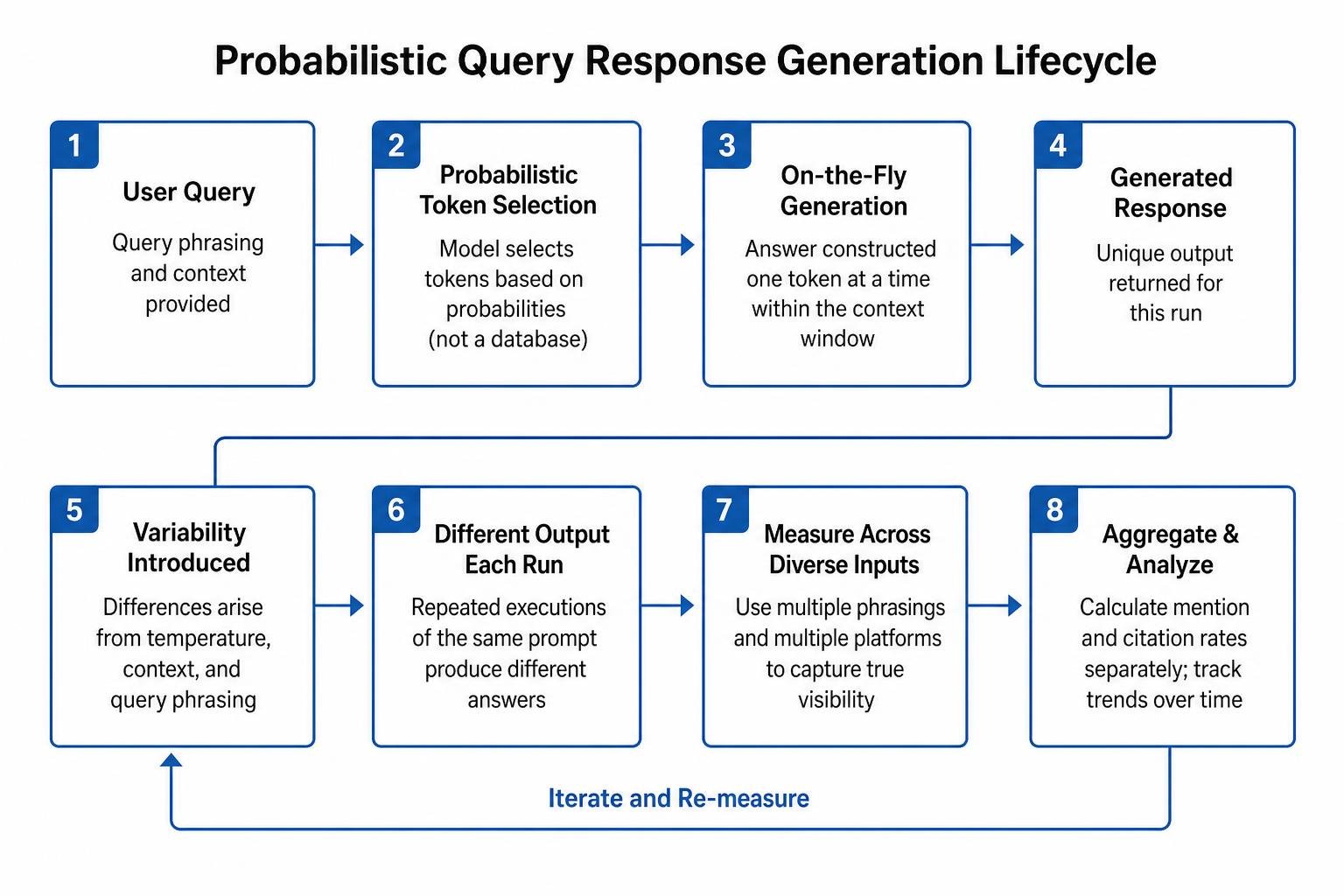
Executing the same query multiple times can generate completely different answers because generative models calculate word probabilities rather than querying static databases.

When an LLM processes a request, it selects tokens probabilistically. Independent research published in [2604.07585] Don’t Measure Once: Measuring Visibility in AI Search (GEO) reveals that repeated executions of the exact same prompt account for 34.8% of the total score variance. Slight alterations in query phrasing account for another 26.5%.
Testing a single prompt past five repetitions yields diminishing returns, adding just 0.0003 to measurement reliability. True stability requires expanding testing across diverse phrasings and multiple platforms rather than re-running one query indefinitely.
2. Why Should You Track Brand Mentions and Website Citations Separately?
AI models frequently name a business without linking to its domain, and they often cite web pages without directly recommending the underlying company.
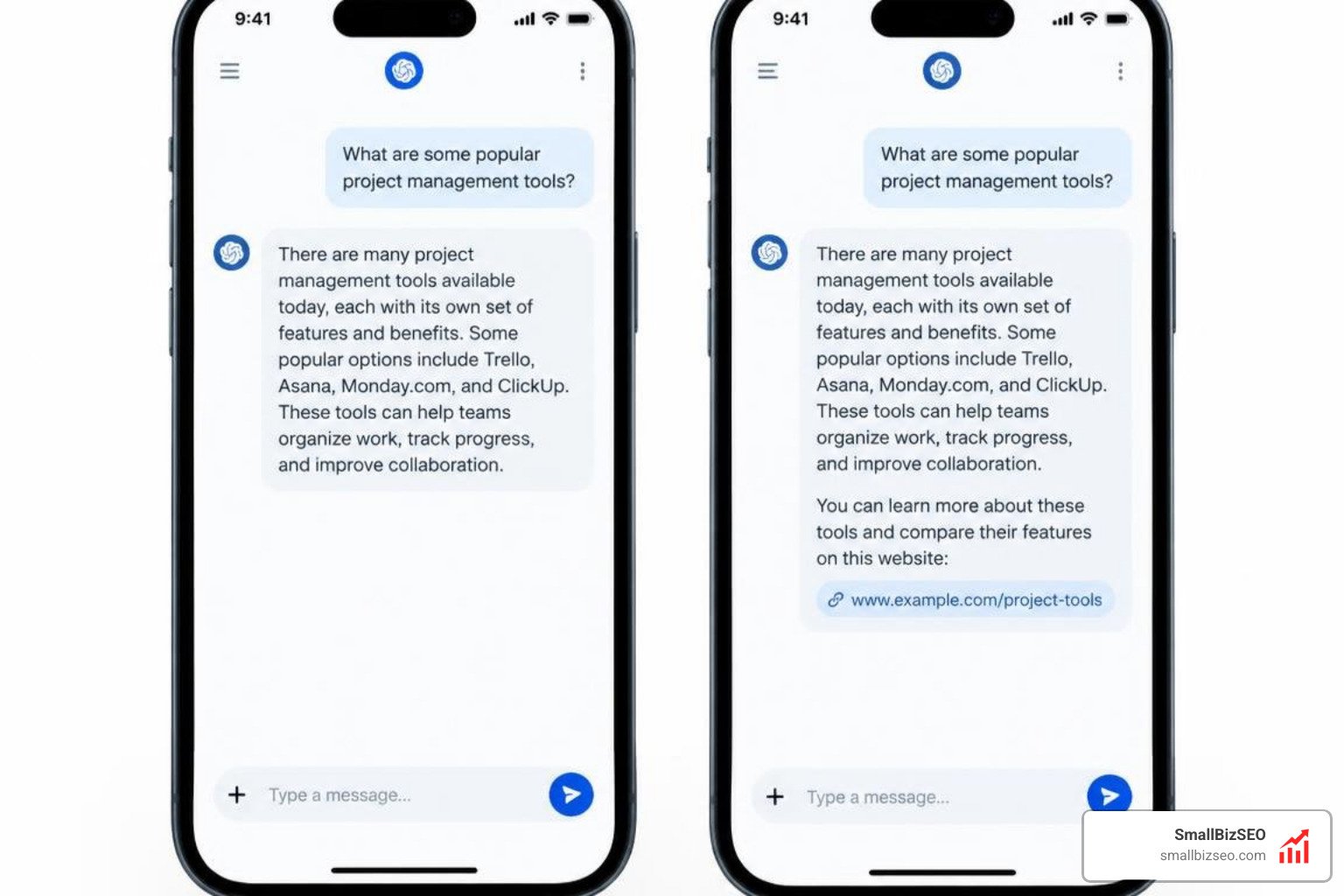
Tracking your AI Citation Rate requires separating citation selection (which pages the model retrieves) from citation absorption (how that information shapes the text). Data shows that 61.7% of AI citations never name the brand they link to.
Furthermore, platform architectures diverge dramatically. In extensive studies, ChatGPT averaged 15 citations per answer, whereas Gemini averaged only 3. Research into the most cited websites in ChatGPT reveals how AI recommends content, demonstrating that models favor high-authority third-party directories over direct corporate domains.
3. How Can AI Misrepresent a Brand's Positioning and Ideal Customer?
An AI system might include your company in an answer while misrepresenting your pricing, features, or target customer base.
Studies exploring why certain industries get cited by AI models twice as often also highlight that generative summaries often struggle with nuanced positioning. Industry research published under the title AI knows what your brand does, but not who it's for reveals that while AI engines accurately state a brand's general category, they frequently misstate ideal customer profiles and fabricate pricing structures.
Securing a Brand Recommendation is counterproductive if the engine positions an enterprise solution as a free budget tool, which distorts inbound lead quality.
4. Search Intent Dispersion: Why One Prompt Cannot Measure a Brand's AI Visibility Across the Journey
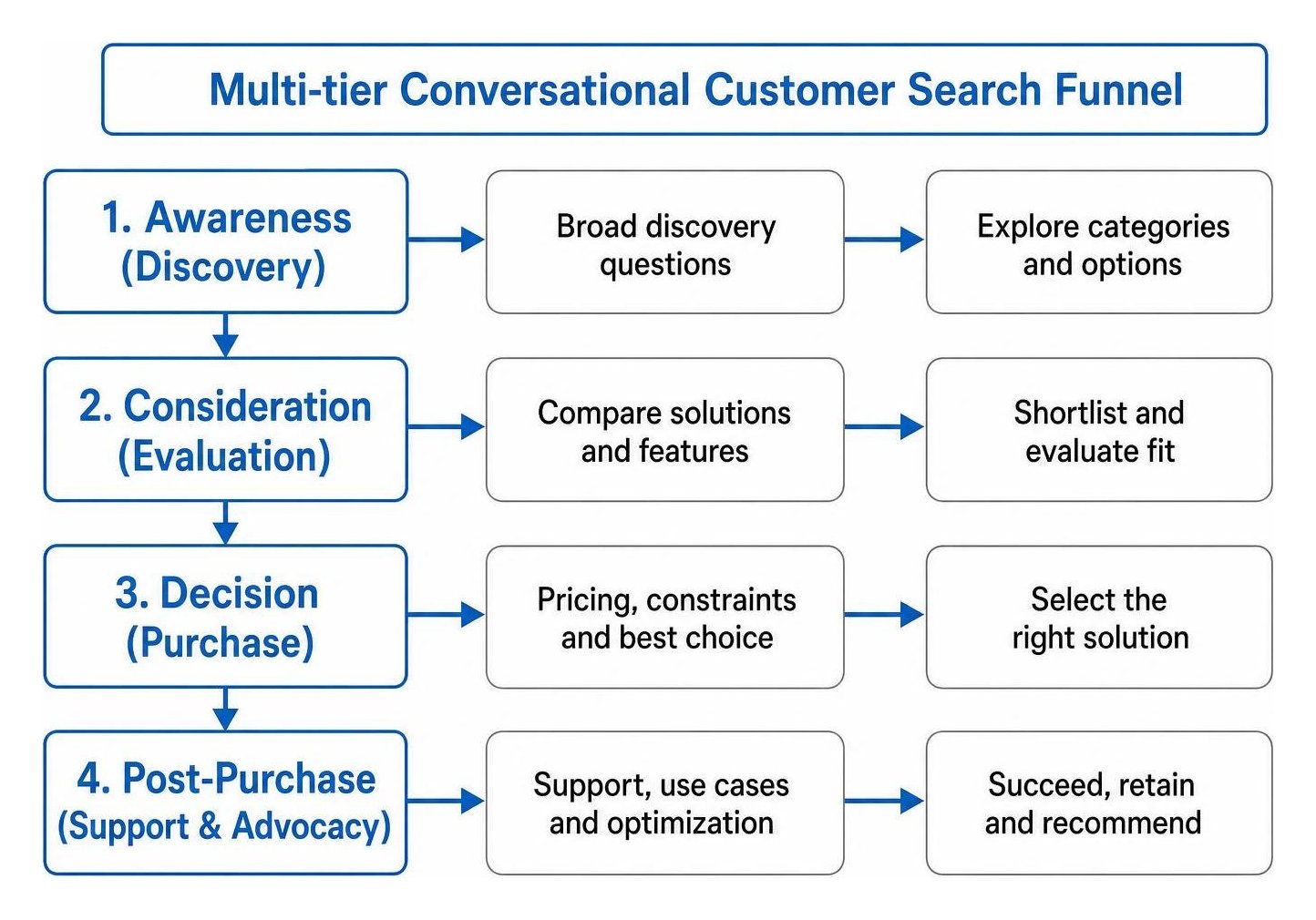
Buyers do not evaluate products using a single static question; they engage in conversational searches across distinct decision stages.
In modern GEO workflows, teams cannot rely on public keyword search volumes because AI interactions remain private and multi-turn. As highlighted in real user prompt data shows what people actually ask ChatGPT daily, user prompts range from broad discovery questions to specific constraint evaluations. Industry documentation on how to measure prompt-level visibility in AI search confirms that tracking visibility requires evaluating clusters of buyer queries spanning every phase of the funnel.
How Can Teams Move from Single Prompts to Statistical AI Measurement?
To achieve reliable visibility tracking, teams must replace ad-hoc spot checks with structured sampling methodologies across a balanced portfolio of queries.
According to the Executive Summary on AI discovery measurement, marketers need multi-engine baselines to capture accurate visibility signals. At SmallBizSEO, we structure our client audits to aggregate mentions, links, and positioning sentiment across all major answer engines. Teams looking to establish dependable monitoring can deploy enterprise AI visibility monitoring services to track statistical progress over time.
How Can You Build a Cross-Platform Multi-Prompt Measurement Framework?
A structured measurement framework establishes a stable foundation for comparing performance across diverse answer engines.
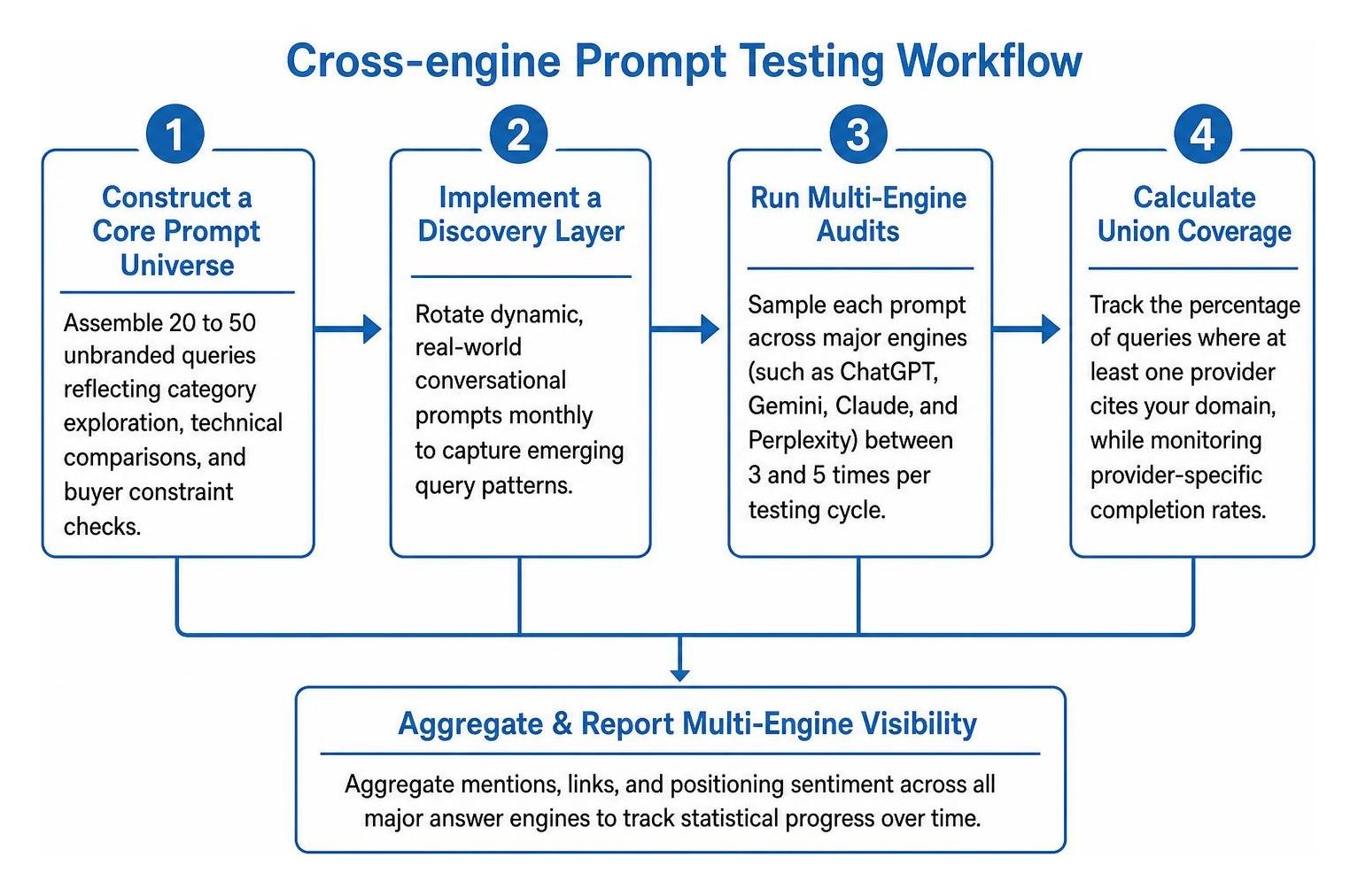
- Construct a Core Prompt Universe: Assemble 20 to 50 unbranded queries reflecting category exploration, technical comparisons, and buyer constraint checks.
- Implement a Discovery Layer: Rotate dynamic, real-world conversational prompts monthly to capture emerging query patterns.
- Run Multi-Engine Audits: Sample each prompt across major engines (such as ChatGPT, Gemini, Claude, and Perplexity) between 3 and 5 times per testing cycle.
- Calculate Union Coverage: Track the percentage of queries where at least one provider cites your domain, while monitoring provider-specific completion rates.
Which Visibility Metrics Should You Report to Leadership Instead of Single Screenshots?
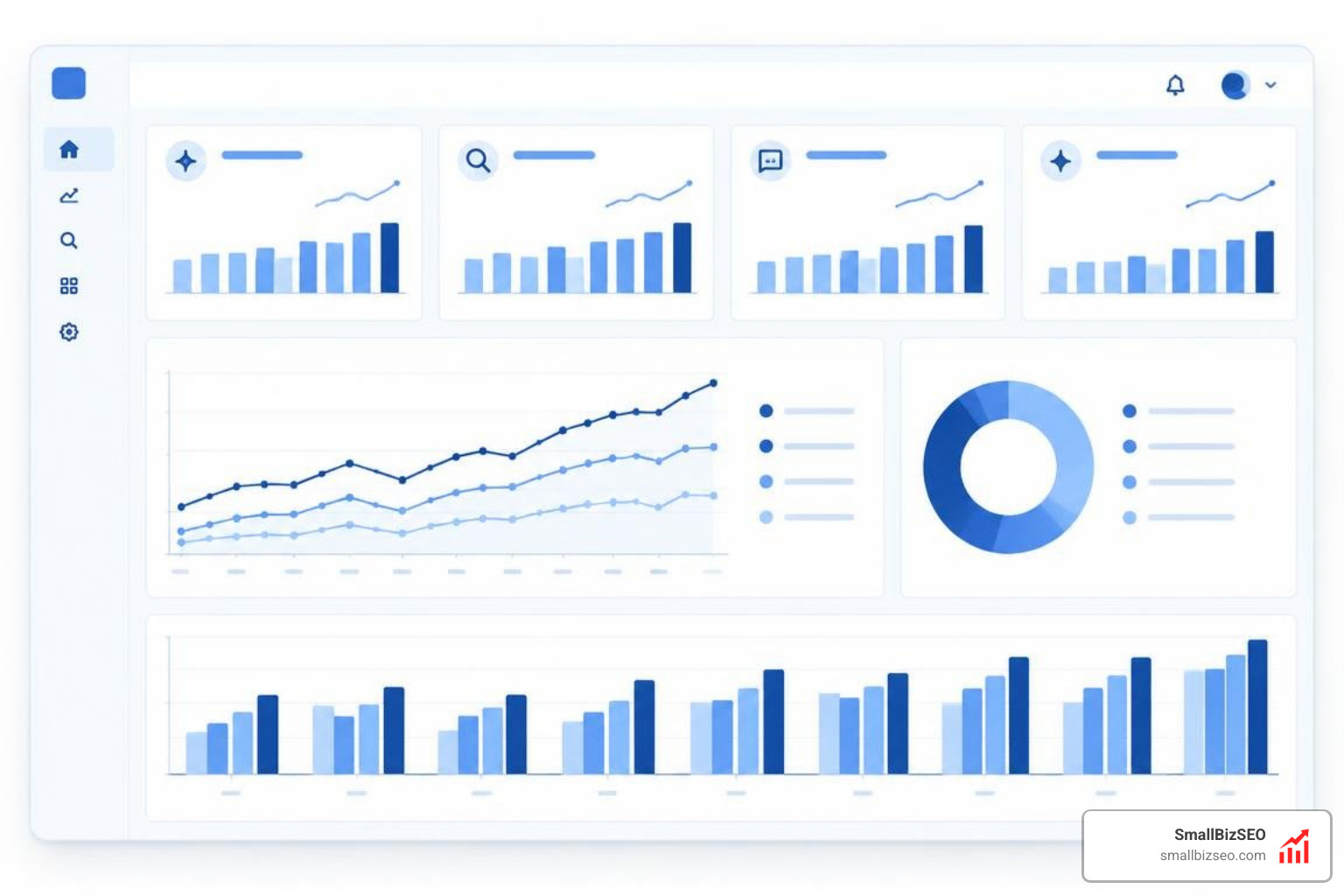
Executive reporting should center on aggregate, statistically validated performance indicators rather than isolated screenshots.
- Brand Mention Rate: The percentage of tested prompts that explicitly name your brand within the generated text.
- AI Citation Share: The frequency with which your domain appears in the grounding source links compared to competitors.
- Positioning Fidelity Score: An evaluation of whether the engine accurately describes your ideal audience, core features, and pricing structure.
- Engine-Level Share of Voice: Your total presence across specific platforms relative to direct category competitors.
- Assisted Referral Traffic: Traffic paths identified through direct referral channels and self-reported conversion touchpoints.
Elevating Your Brand Above the Noise of AI Spot Checks
Treating an isolated AI response as a definitive audit metric is the equivalent of predicting the climate from a single gust of wind. Generative discovery requires a shift from static rank-tracking mentalities to probabilistic measurement frameworks. By testing structured prompt clusters across multiple engines, separating mentions from citations, and tracking positioning fidelity, businesses can make data-driven decisions that build real authority in the generative search landscape.