Is Perplexity Quoting You? Run an AI Visibility Audit Free
How can you run an AI visibility audit for free?
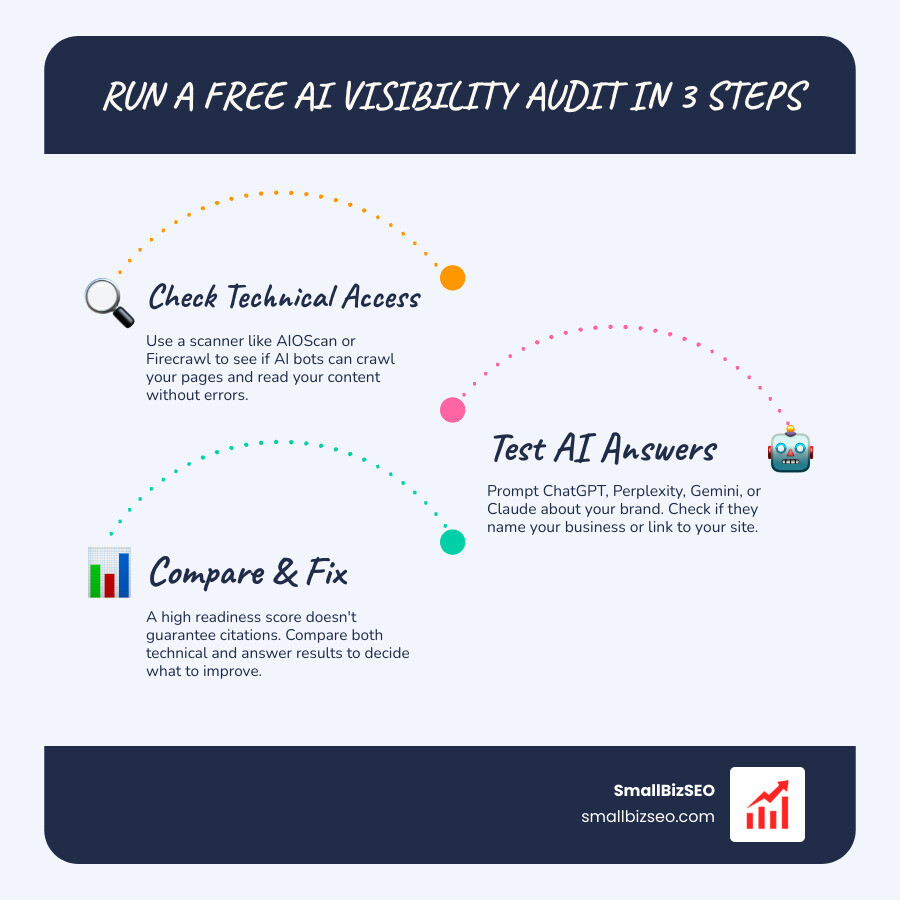
To run an AI visibility audit for free, start with a technical scanner that checks whether AI search tools can access and read your pages. Then use a prompt-based checker to see whether ChatGPT, Gemini, Perplexity, or Claude names your business or links to your site.
Free tools do different jobs. AIOScan and Firecrawl focus on page readiness, while other checkers test AI answers. A high readiness score does not mean Perplexity is quoting you; check both the score and the answers before deciding what to fix.
I’m Clayton Johnson, founder of SmallBizSEO, where I help small businesses build search visibility through technical SEO and clear, useful content. This guide draws on that work to help you run an ai visibility audit free of paid subscriptions and make sense of the results.
Relevant articles related to ai visibility audit free:
- AI Visibility Checker Chrome Extension
- How to Build a Repeatable AI Visibility Baseline
- Why One Prompt Cannot Measure a Brand's AI Visibility
How Can You Run a Free AI Visibility Audit and Compare Top Tools?
You can run an AI visibility audit by scanning your site’s code, structure, and server permissions, and then checking if generative engines cite your domain when answering relevant user queries.
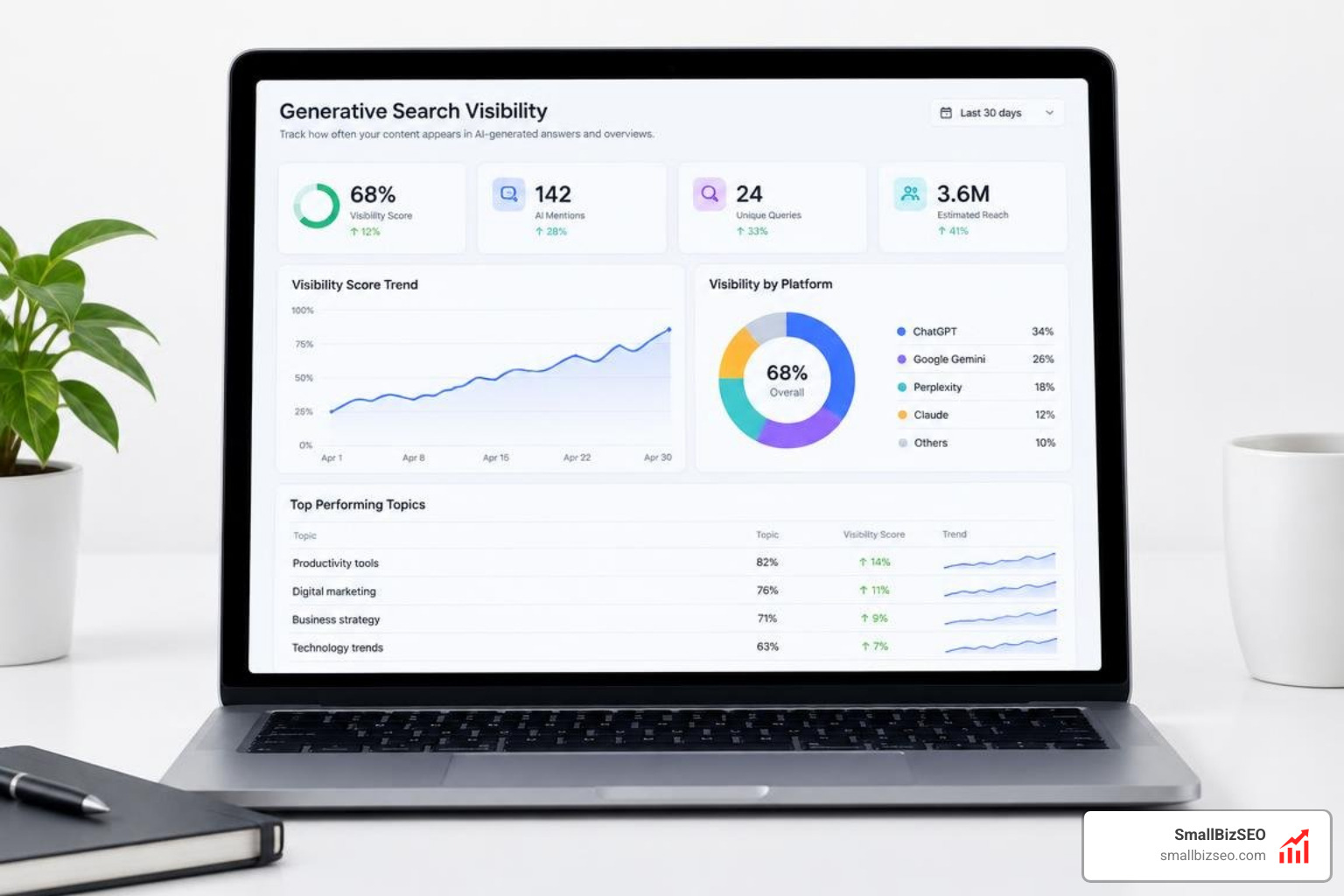
Modern search behavior has shifted rapidly. About 60% of searches end without a click to an external website, while AI-referred traffic has experienced a 357% year-over-year growth. As conversational engines summarize direct answers for users, traditional keyword tracking alone is no longer enough. We must evaluate Answer Engine Optimization (AEO) and Generative Engine Optimization (GEO) factors to ensure models reference our content.
| Tool Name | Core Focus | Scan Speed | Sign-up Required? | AI Engines / Signals Checked |
|---|---|---|---|---|
| AIOScan | On-page technical readiness | ~15 seconds | No | 21 deterministic checks (GPTBot, ClaudeBot, PerplexityBot) |
| Firecrawl | Markdown extraction & metadata | ~20 seconds | No | Page HTML, markdown citability, crawler permissions |
| SearchBind | Technical & content rules | ~30 seconds | No | 61 checks covering crawl access, entity clarity, and Q&A |
| FreeGPTSEO | On-page structure & meta tags | ~10 seconds | No | 15 signals including schema, headings, and answer capsules |
| Sanbi.ai | Multi-engine brand presence | ~2 minutes | No | Live prompt tracking across ChatGPT, Gemini, and Claude |
What Are the Best Tools for a Free AI Visibility Audit?
Several specialized tools allow you to diagnose your generative search presence quickly without paying for an enterprise subscription:
- AIOScan: Free AI Visibility Scanner for Your Website: Evaluates whether AI scrapers can fetch your raw HTML without rendering roadblocks, scoring your retrievability, machine readability, and answer readiness across 21 checks.
- Free AI Visibility Audit (AEO + GEO): Scrapes rendered HTML and clean markdown to assess how easily platforms like Perplexity and ChatGPT can ingest your core information.
- Free AI visibility audit: 61 checks, no sign-up | SearchBind: Delivers an in-depth audit inspecting crawl access, schema markup, and question-and-answer page architecture.
- Free AI SEO Tool & Checker - No Signup Required: Checks your robots.txt, header hierarchy, and answer blocks in seconds to ensure your pages are structured for quick quoting.
- Free AI Visibility Audit — See how ChatGPT, Gemini & Claude describe your brand | Sanbi.ai: Analyzes how major LLMs discuss your brand across specific products and locations, identifying where competitors are recommended instead.
How Do Technical Scanners and Prompt Trackers Compare?
Technical scanners and prompt trackers evaluate two entirely different stages of AI search visibility.
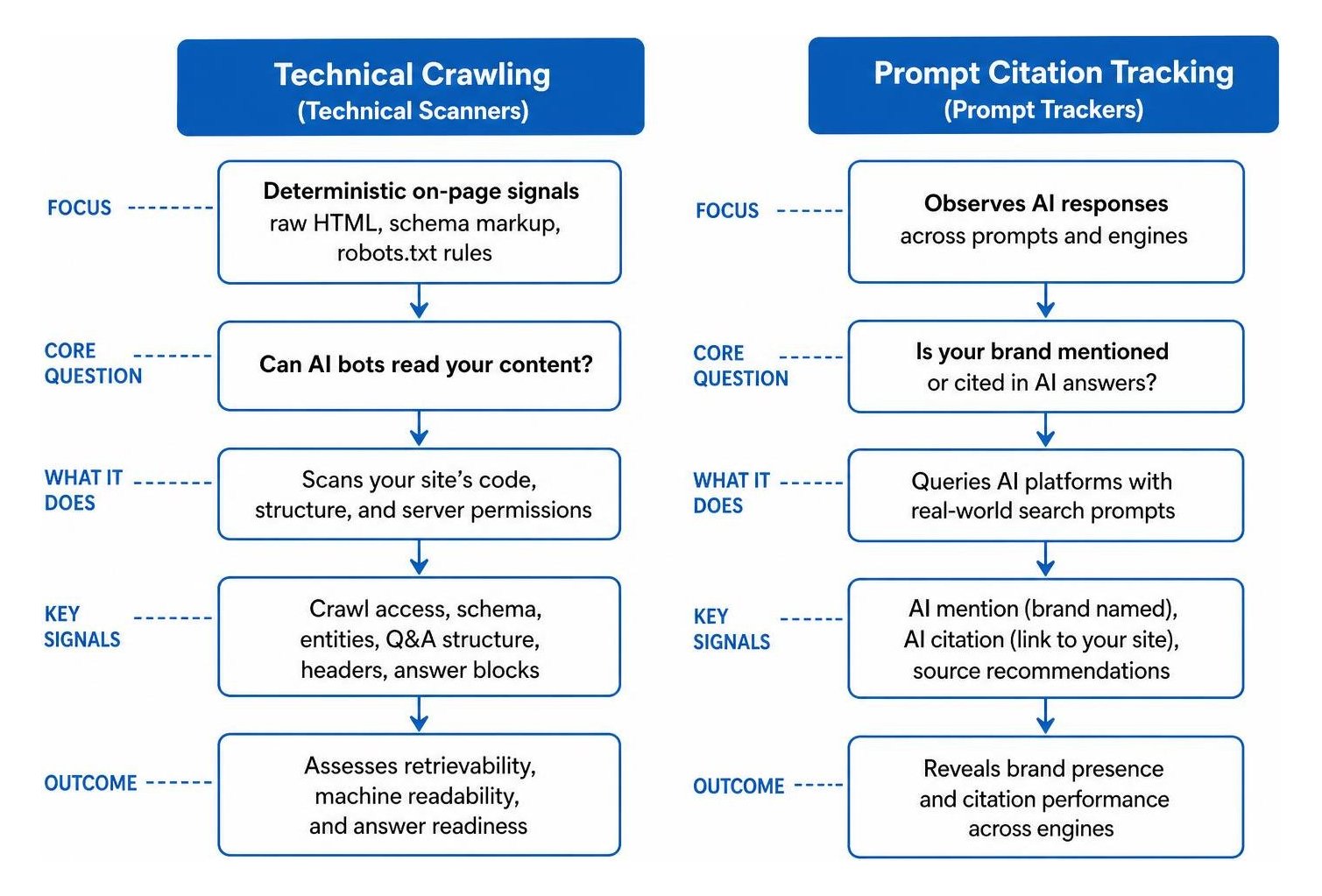
Technical scanners audit deterministic on-page signals: raw HTML accessibility, structured schema markup, and robots.txt rules. They answer whether an AI bot can read your content. In contrast, prompt trackers query AI platforms using real-world search prompts to observe brand mentions and source citations.
An AI mention occurs when a model names your company in its text response, driven largely by your overall web footprint. An AI citation occurs when the platform provides a direct link to your site as an authoritative source. Relying on both approaches helps when establishing a repeatable AI visibility baseline and auditing AI snippets across different conversational engines.
How Should You Interpret Your Free AI Visibility Audit Score?
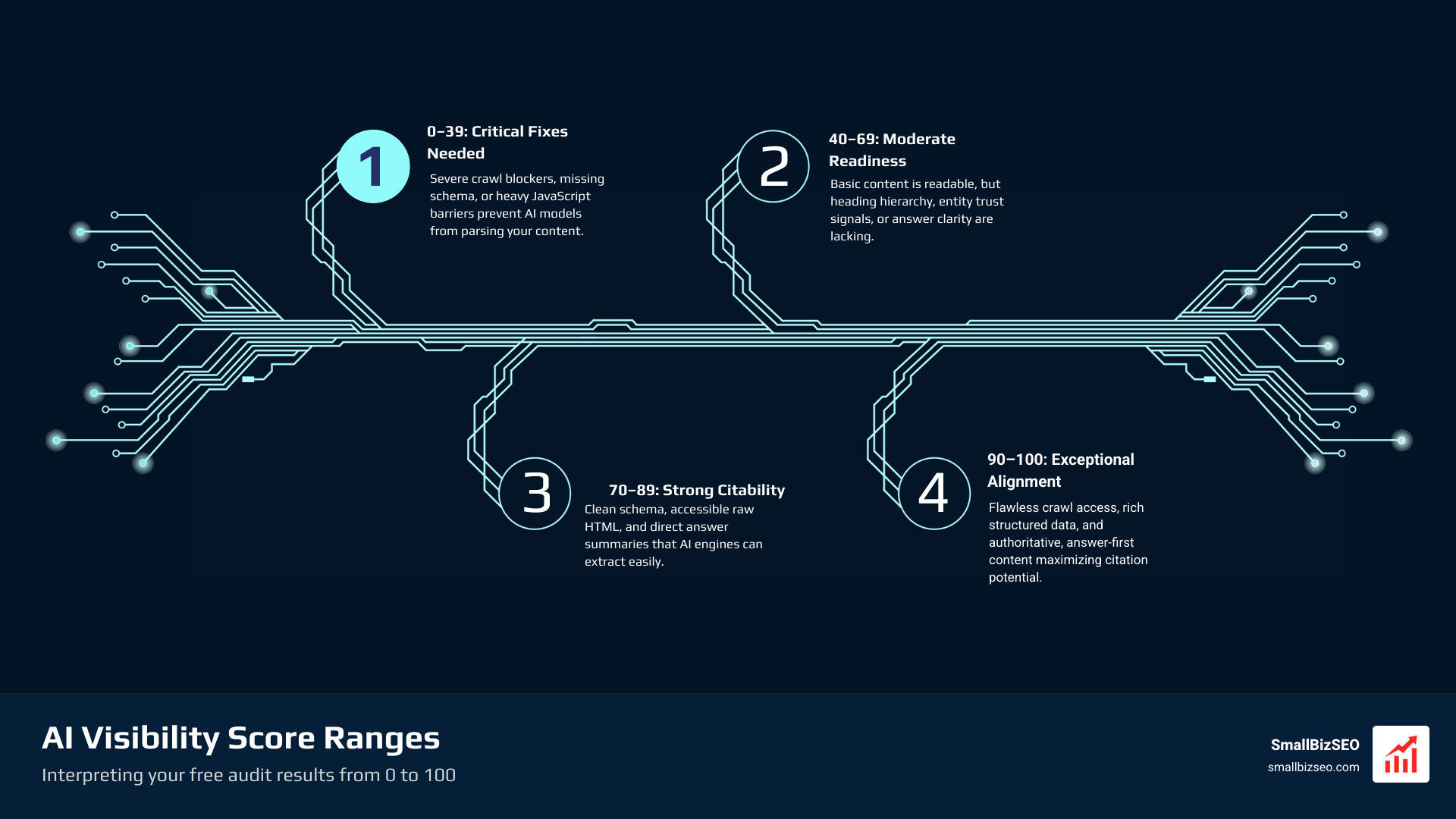
Most free checkers score your domain on a 0 to 100 scale, reflecting your citation readiness rather than a guaranteed mention ranking.
- 0 to 39 (Critical Fixes Needed): Severe crawling blockers, missing schema, or heavy JavaScript rendering barriers prevent AI models from parsing your content.
- 40 to 69 (Moderate Readiness): The average range for most first-time scans. Basic content is readable, but structural clarity, heading hierarchy, or entity trust signals are lacking.
- 70 to 89 (Strong Citability): Pages feature clean schema, accessible raw HTML, and direct answer summaries that AI engines can extract.
- 90 to 100 (Exceptional Alignment): Flawless crawl access, rich structured data, and authoritative, answer-first content that maximizes citation potential.
Implementing automated SEO visibility audit workflows makes it easier to track these metrics over time as you deploy updates.
How Can You Fix Your Signals and Boost AI Search Visibility?
To improve your AI search visibility, resolve technical crawl blocks in your server files first, then rewrite key page sections into concise, easily quotable answers supported by schema markup.
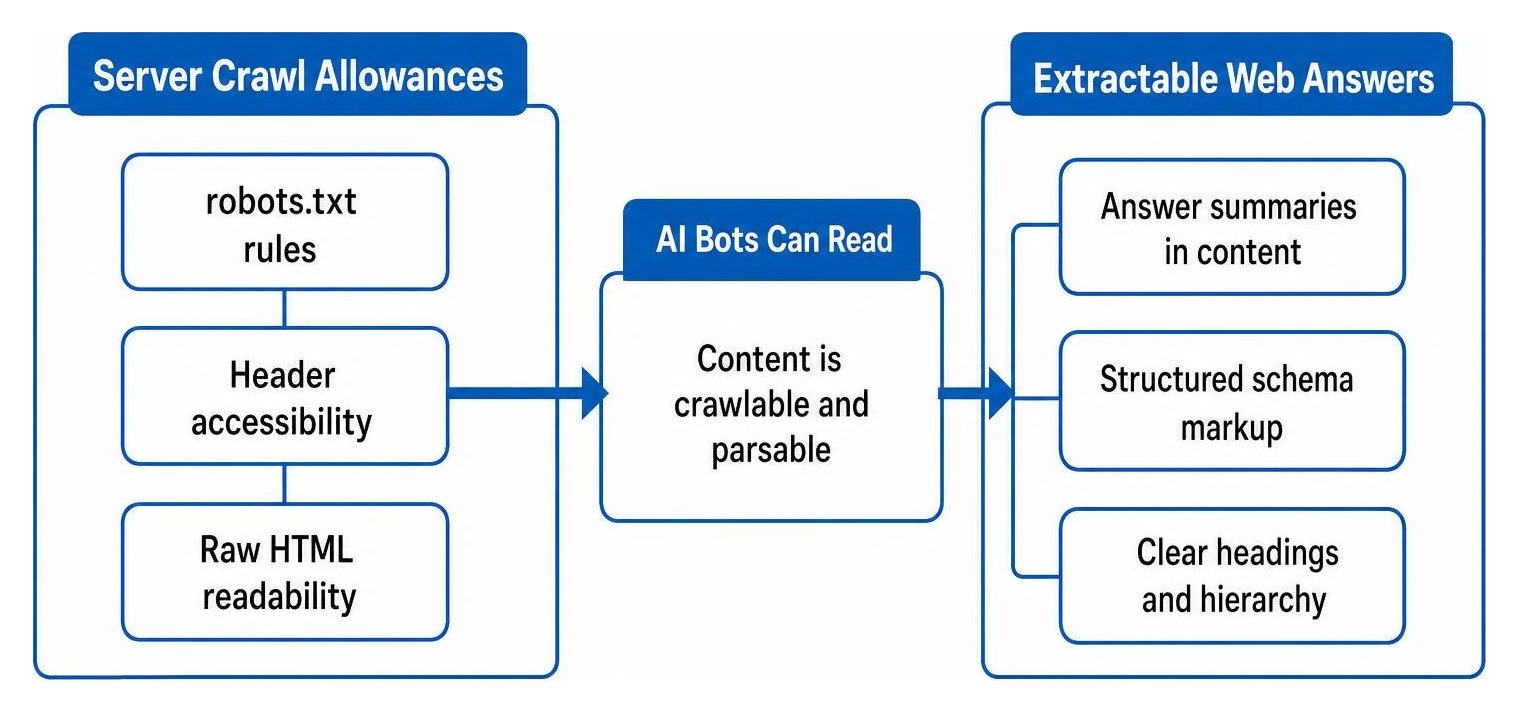
A comprehensive SEO visibility audit ensures your site adheres to traditional ranking fundamentals while integrating the specific signals required for generative search discovery.
What Technical and Content Signals Matter Most in a Free AI Visibility Audit?
Generative engines look for specific technical allowances and structural signals before citing a page:
- AI Crawler Access: Your robots.txt file must explicitly allow search bots such as OAI-SearchBot, Claude-SearchBot, and PerplexityBot. Blocking these bots removes your website from real-time citation retrieval.
- Structured Data Markup: 49% of top-cited pages in AI answers utilize structured schema markup. Deploy Organization, Article, and FAQPage JSON-LD to help models recognize entities and factual relationships.
- Clean Markdown & HTML Extractability: AI crawlers process raw HTML. If your main body text requires heavy client-side JavaScript execution, automated scrapers may see an empty page.
- Answer Capsules: Place concise, 40-to-60-word direct answers within the first two sentences beneath your H2 or H3 headings. AI models lift these self-contained summaries directly into their responses.
- The llms.txt Standard: While log studies across 137,000 domains show that 97% of llms.txt files currently receive zero requests, maintaining a basic markdown summary file remains a low-effort best practice for future crawler standards.
Following these practices is essential for showing up in LLM answers consistently.
What Steps Turn Audit Gaps into Perplexity and ChatGPT Citations?
Converting visibility gaps into active recommendations requires targeted technical adjustments and authoritative content syndication:
- Format Headings as Natural Questions: Structure your content around conversational queries that mirror actual buyer prompts rather than isolated keywords.
- Add Quotable Data Points: Include original research, verified statistics, and concise definition blocks that give language models factual data to reference.
- Maintain Consistent Entity Profiles: Ensure your business name, core services, and leadership details match across your website, schema definitions, and major third-party review platforms.
- Earn Mentions on Cited Third-Party Sources: AI models frequently cite authoritative review aggregators and industry publications. Building off-page brand authority directly lifts generative citation rates.
- Audit on a Regular Monthly Cadence: Re-scan your site monthly or after publishing major content pillars to track technical health and score improvements.
Applying these steps to improve your AI search brand visibility bridges the gap between basic crawlability and active citations.
Maximize Your Reach Across Generative Engines
The transition toward generative search makes citation readiness a foundational requirement for modern organic growth. By running a free audit, identifying structural bottlenecks, and presenting clear, answer-first content, you ensure your business remains visible wherever your customers search. Explore our dedicated SmallBizSEO AI visibility services to build an authoritative, machine-readable website that AI search engines quote with confidence.