5 Practical Steps to Improve Your AI Search Brand Visibility
How do you measure AI search brand visibility?
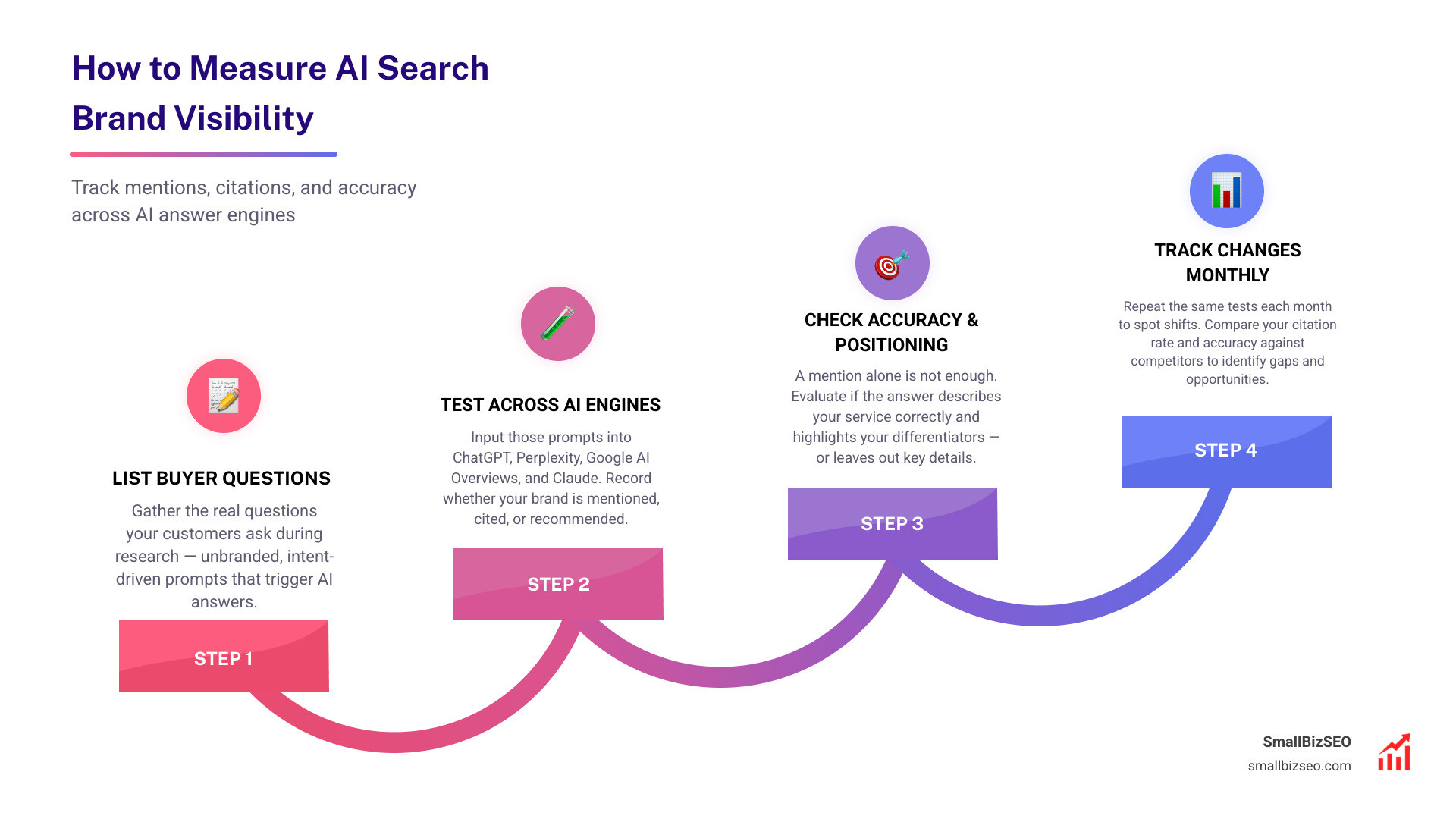
AI search brand visibility is how often and how accurately AI answers mention, recommend, or cite your business when customers ask relevant questions. To measure it, list the questions buyers ask, test them across AI search tools, and record whether your brand appears, how it is described, and which pages are cited. Repeat the same tests each month to spot changes and compare your results with competitors.
A mention alone is not enough. An answer might name your business but describe the wrong service or leave out what makes it a good fit. Tracking accuracy alongside mentions and citations helps you find what needs to change.
I’m Clayton Johnson, founder of SmallBizSEO, where I connect SEO, content, and digital PR to help small businesses earn trust and qualified leads. My work on AI search brand visibility focuses on clear answers, credible evidence, and consistent business information that answer engines can use.
AI search brand visibility glossary:
- AI search competitor analysis
- AI search ranking factors
- comparing ai search answers across locations and follow up questions
What Is AI Search Brand Visibility and Why Does It Matter?
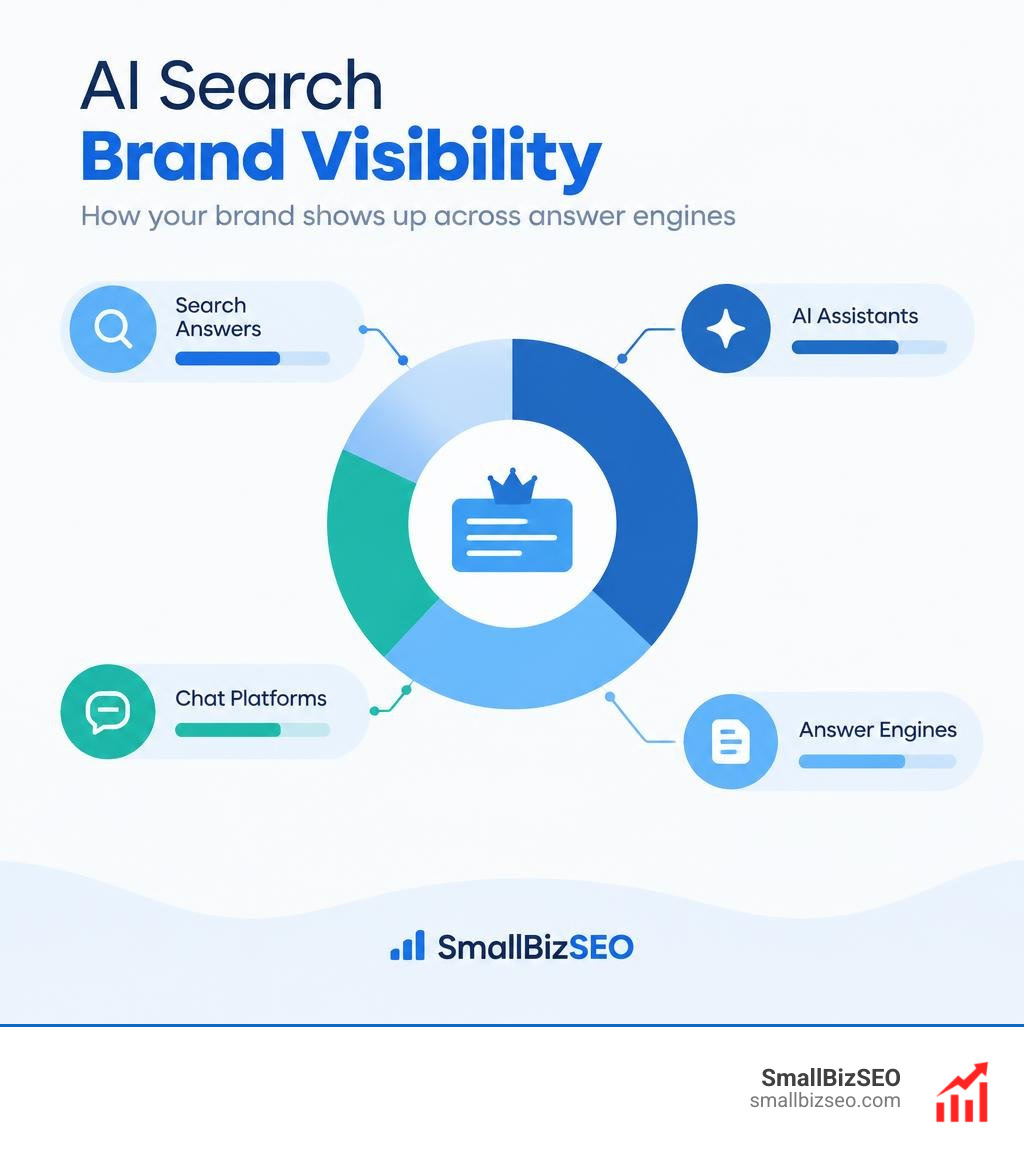
AI search brand visibility measures whether potential customers discover your business when answer engines synthesize options, summarize categories, or directly recommend solutions. When platforms like ChatGPT, Google AI Overviews, Perplexity, and Claude provide comprehensive answers, buyers increasingly make purchasing decisions without clicking through multiple search listings.
Search behavior has shifted toward zero-click interactions. Instead of scanning ten blue links, buyers ask conversational questions and receive synthesized shortlists. If your company is omitted or misrepresented in these summaries, you become invisible during the most critical evaluation phase of the buyer journey. Measuring overall AI visibility ensures you understand how generative models perceive your services and where competitors are capturing market interest.
| Metric Focus | Traditional SEO Metric | Answer Engine Visibility Metric |
|---|---|---|
| Presence | SERP Rank Position (#1–#10) | Citation Rate & Unbranded Mention Frequency |
| Reach | Keyword Search Volume & Impressions | Prompt Share of Voice Across Platforms |
| Perception | Title Tag & Meta Description Snippets | Positioning Fidelity & Sentiment Score |
| Traffic | Total Organic Website Clicks | Qualified AI Referral Sessions & Lead Quality |
| Impact | Keyword Click-Through Rate (CTR) | Assisted Conversions & Shortlist Inclusion |
How Do Answer Engines Decide Which Brands to Recommend?
Answer engines use retrieval mechanisms and semantic consensus rather than traditional link counts to select which brands to highlight. Large language models retrieve information from diverse sources, verify agreement across the web, and synthesize concise responses. Understanding the AI search strategy: 4 layers of brand visibility helps explain why engines favor brands that maintain clear entity definitions, structured data, and authoritative third-party references.
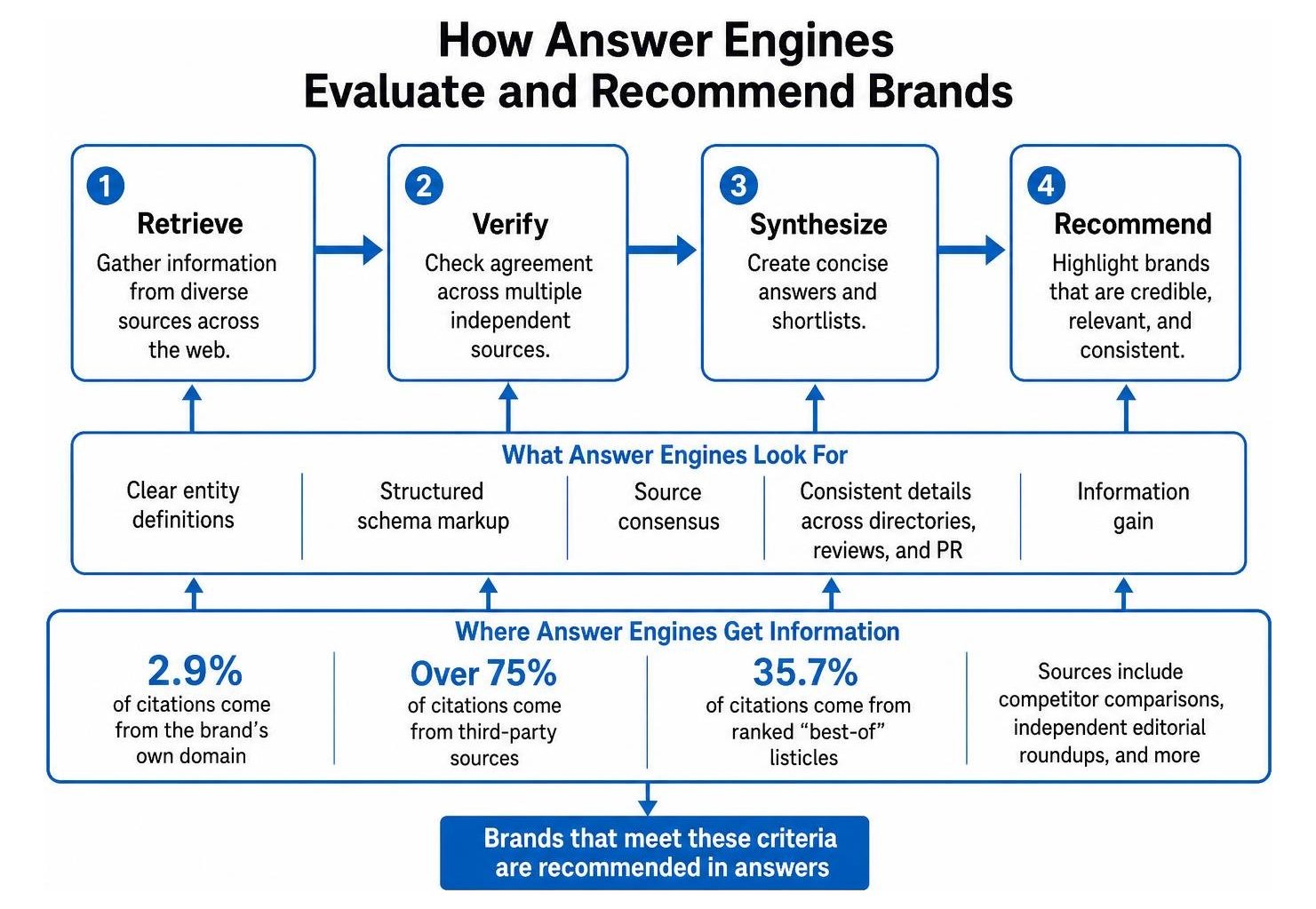
Generative models rely heavily on source consensus. They rarely pull solely from a company's owned website; research shows that only 2.9% of generative citations point back to the brand's own domain, while over 75% reference third-party platforms, competitor comparisons, and independent editorial roundups. Ranked "best-of" listicles represent 35.7% of all content citations in generative engines. Models look for clear information gain, structured schema markup, and consistent details across directories, customer reviews, and digital PR placements to confirm a business is credible.
Which Metrics Should You Track for AI Search Brand Visibility?
To build an accurate picture of your presence in generative search, you need to track specific performance indicators across prompt sets:
- Citation Frequency: How often your domain or third-party profiles are hyperlinked as supporting reference URLs in synthesized responses.
- Share of Voice: The percentage of category-level, unbranded queries that mention your brand compared to competitors. Regularly monitoring your AI share of voice reveals whether your presence is expanding or contracting across target topics.
- Brand Sentiment: The contextual tone (positive, neutral, or negative) surrounding your brand mentions.
- Positioning Fidelity: The accuracy of how models describe your ideal customer profile, key differentiators, and core service offerings.
- Overview Inclusion: The percentage of commercial search results where your business appears inside summarized answer blocks. Regularly tracking AI Overview citation rate helps pinpoint which content formats answer engines favor.
You can calculate your baseline Brand Visibility Score with a simple formula: divide the total number of answers mentioning your brand by the total number of category answers tested, then multiply by 100. Learning how to measure your AI search brand visibility and prove business impact ensures your team tracks reliable benchmarks over time rather than relying on isolated prompt tests.
How Can You Track and Improve Your Brand Presence in Answer Engines?
To improve your presence, build a comprehensive library of customer prompts, audit how major answer engines respond, catalog where your brand is cited or missing, and update both your on-page structure and third-party digital footprint.
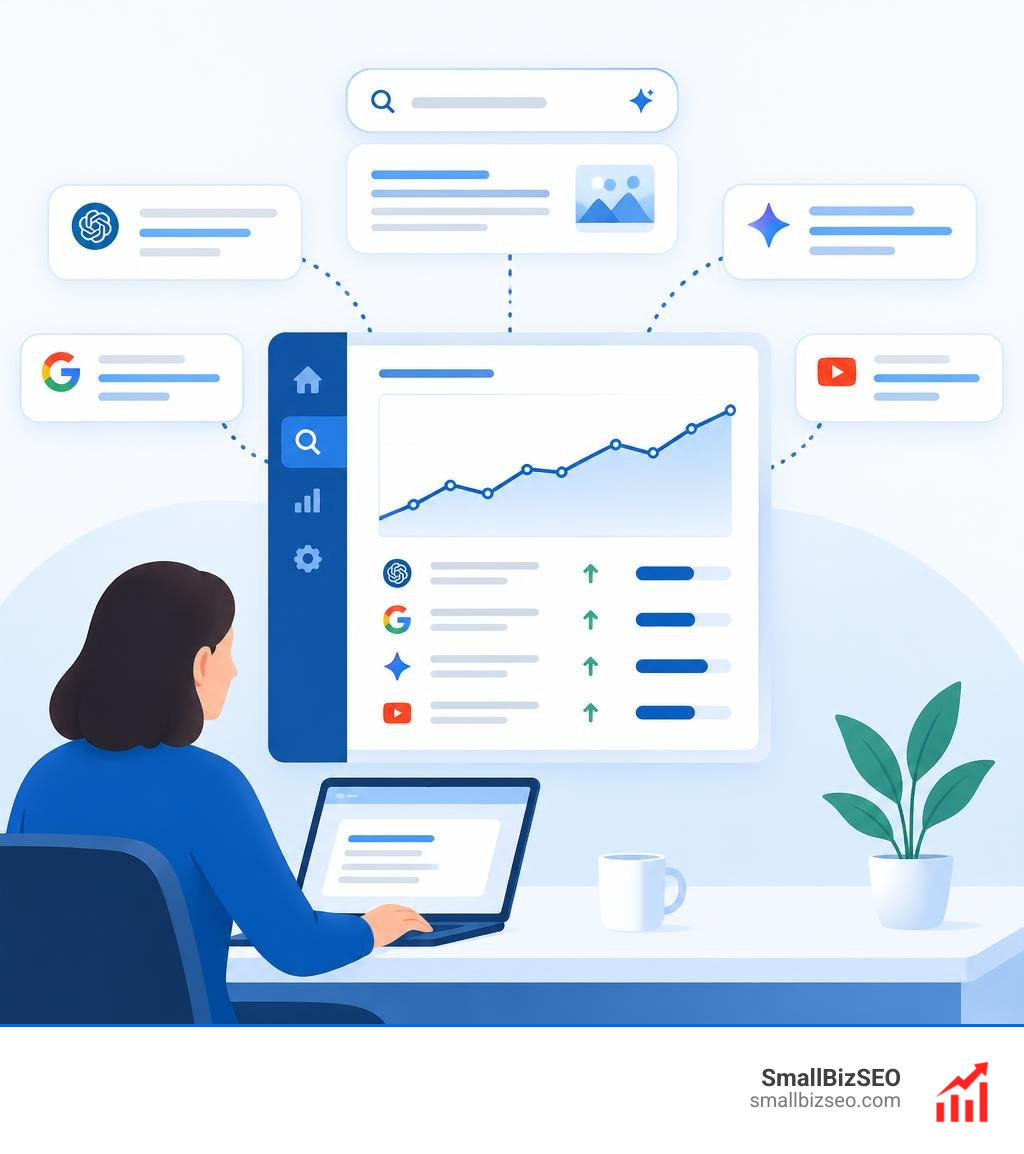
Improving visibility requires making your content easily extractable. Pages with clear list sections, question-and-answer headings, and schema markup get cited significantly more often by generative models. Content freshness is equally vital: pages refreshed within the past twelve months are twice as likely to maintain their citations in conversational search engines. Combining structured on-page updates with authoritative off-page digital PR ensures models encounter accurate, up-to-date facts about your business across multiple trusted sources.
How Can You Audit Your Existing AI Search Brand Visibility?
A systematic audit reveals where generative engines understand your business and where they fabricate missing information. When answer engines encounter information gaps, such as unlisted service scopes or ambiguous pricing models, they often guess or misclassify your ideal customer profile.
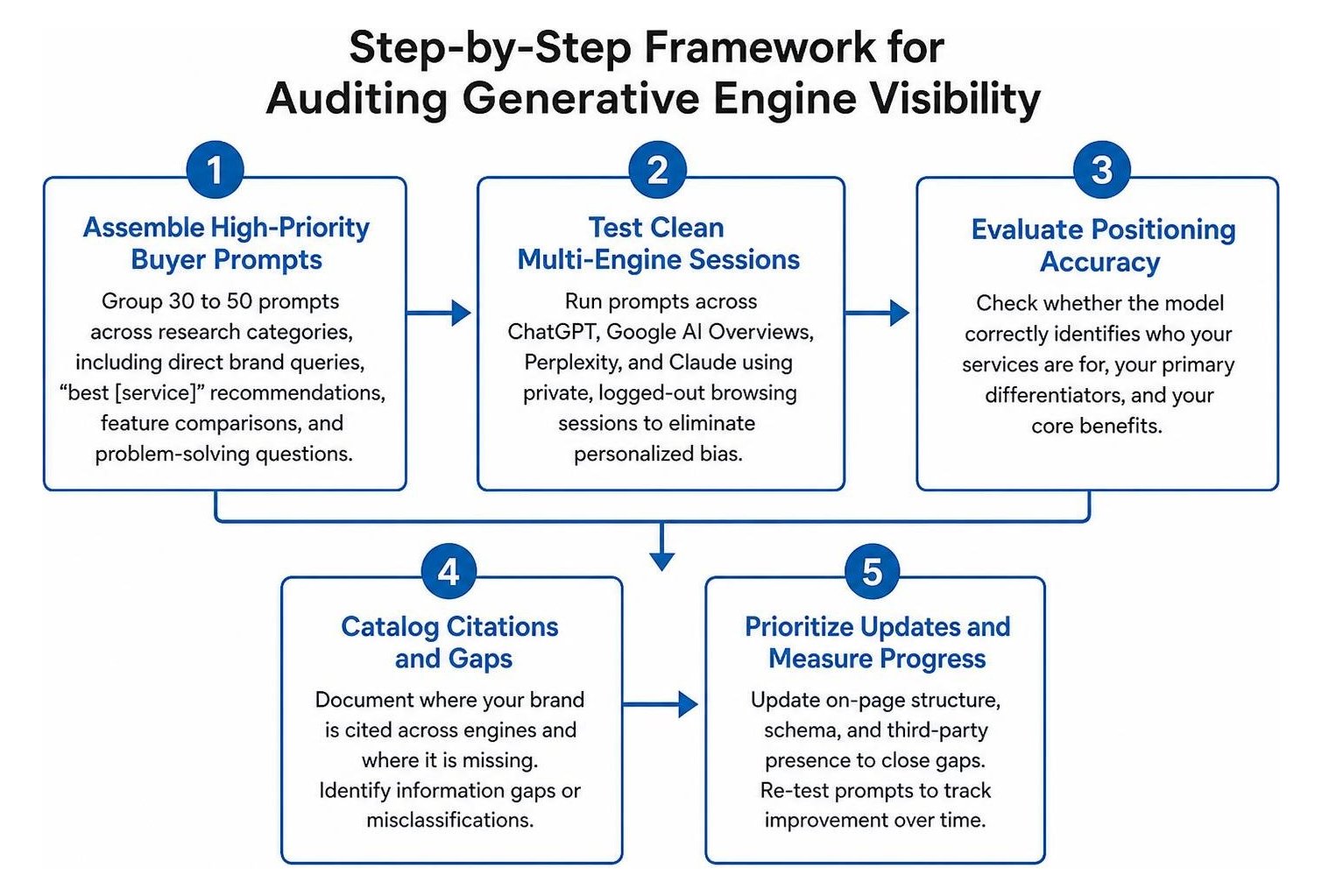
To conduct a comprehensive audit:
- Assemble High-Priority Buyer Prompts: Group 30 to 50 prompts across research categories, including direct brand queries, "best [service]" recommendations, feature comparisons, and problem-solving questions.
- Test Clean Multi-Engine Sessions: Run prompts across ChatGPT, Google AI Overviews, Perplexity, and Claude using private, logged-out browsing sessions to eliminate personalized bias.
- Evaluate Positioning Accuracy: Check whether the model correctly identifies who your services are for, your primary differentiators, and your core benefits.
- Identify Citation Gaps: Map out the exact third-party URLs, listicles, and directories cited by the AI when it recommends competitors instead of you.
- Log Misinformation: Document any hallucinations regarding pricing, offerings, or service capabilities to target for correction.
Completing a regular AI SEO audit provides the data needed to fix inaccurate descriptions, optimize low-performing pages, and close competitor citation gaps.
Which Tools and Methods Can Automate Generative Engine Tracking?
Tracking dozens of prompts manually across multiple generative engines every month is time-consuming. Automated tracking tools allow teams to run scheduled queries, monitor volatility, and capture shifts in share of voice across platforms.
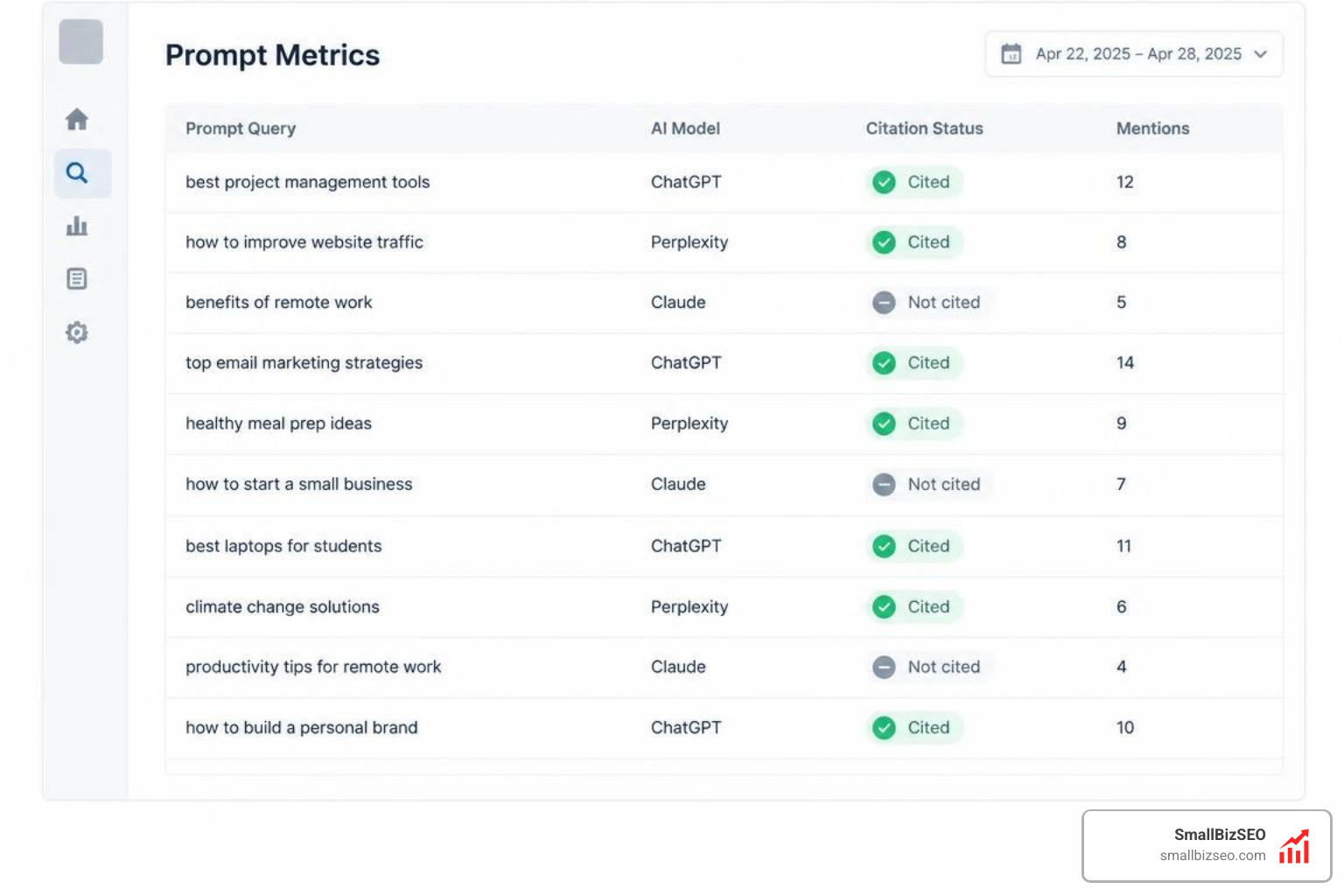
Automated platforms query large prompt sets at scale, extract hyperlinked references, score response sentiment, and track competitive mention rates over time. These tools alert you when an engine drops a citation or introduces inaccurate information. However, automated tracking should always be paired with manual governance: verify that prompt outputs reflect true user search behavior and periodically audit third-party reviews, industry directories, and partner websites to protect factual accuracy across the broader web ecosystem.
How Can You Connect LLM Citations and Mentions to Business Revenue?
While traditional search tracks direct page clicks, answer engine presence drives high-intent prospects who research thoroughly before reaching your website. Visitors who discover brands through generative search convert at substantially higher rates than standard organic visitors because the AI has already pre-qualified the solution during the conversation.
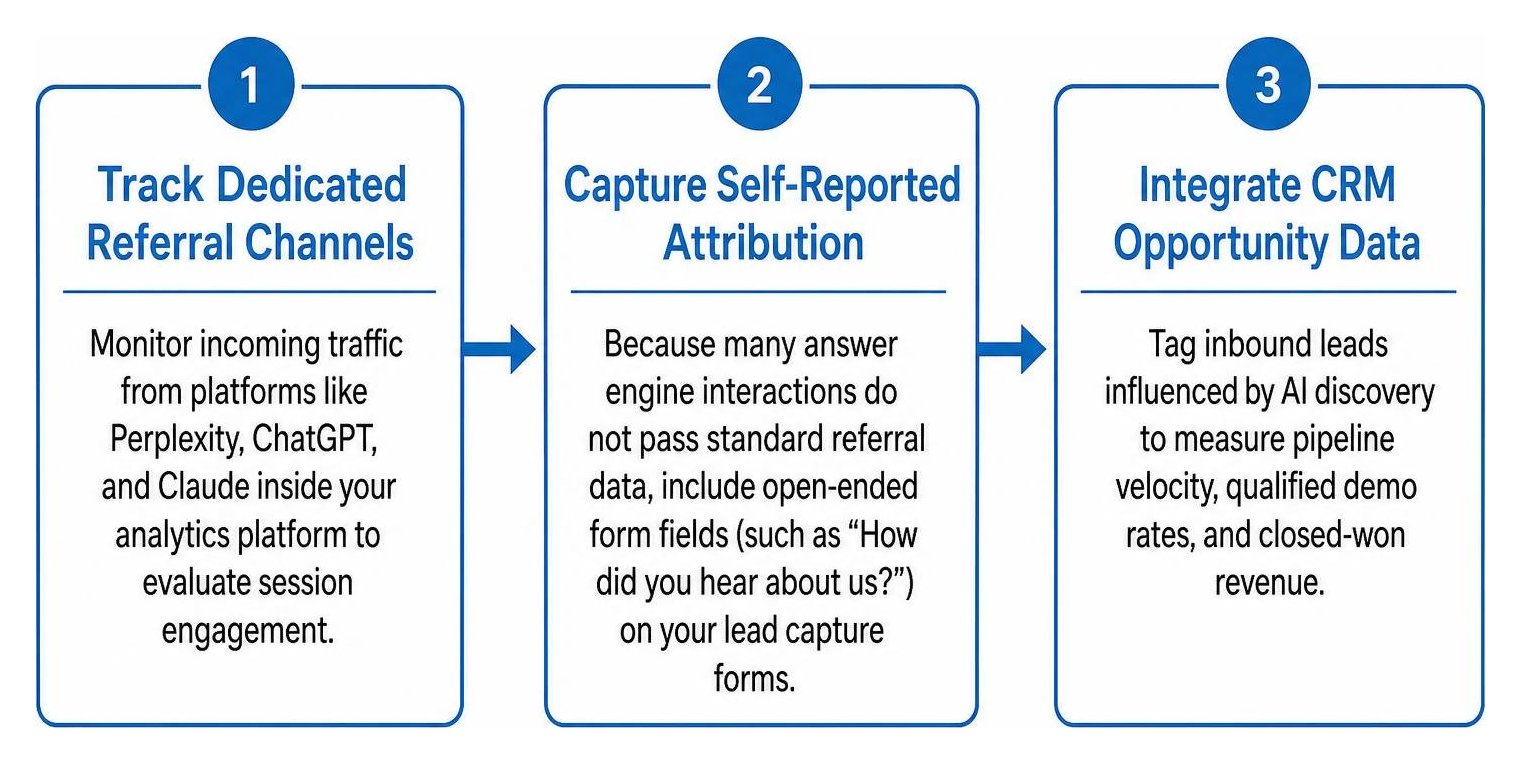
Connecting visibility to pipeline requires a multi-touch attribution approach:
- Track Dedicated Referral Channels: Monitor incoming traffic from platforms like Perplexity, ChatGPT, and Claude inside your analytics platform to evaluate session engagement.
- Capture Self-Reported Attribution: Because many answer engine interactions do not pass standard referral data, include open-ended form fields (such as "How did you hear about us?") on your lead capture forms.
- Integrate CRM Opportunity Data: Tag inbound leads influenced by AI discovery to measure pipeline velocity, qualified demo rates, and closed-won revenue.
Focusing on growing high-converting AI referral traffic ensures your optimization strategy generates measurable business outcomes rather than vanity metrics. Our team at SmallBizSEO uses our proprietary "Velocity" framework to deliver technical SEO, content strategy, and digital PR that build machine-legible authority. To diagnose your current visibility gaps and identify high-leverage growth opportunities, schedule a comprehensive data-driven SEO visibility audit today.
Transforming Answer Engine Presence into Lasting Growth
Answer engines have fundamentally reshaped how buyers discover, evaluate, and choose service providers. Winning in this environment requires moving beyond traditional rank tracking to focus on entity clarity, structured content extractability, and wide third-party source consensus. By routinely monitoring your prompt footprint, auditing positioning fidelity, and connecting visibility metrics directly to sales pipeline, your business can build sustainable brand authority that stands out across every major generative platform.