A Quick Start Guide to SEO for Steel Fabrication
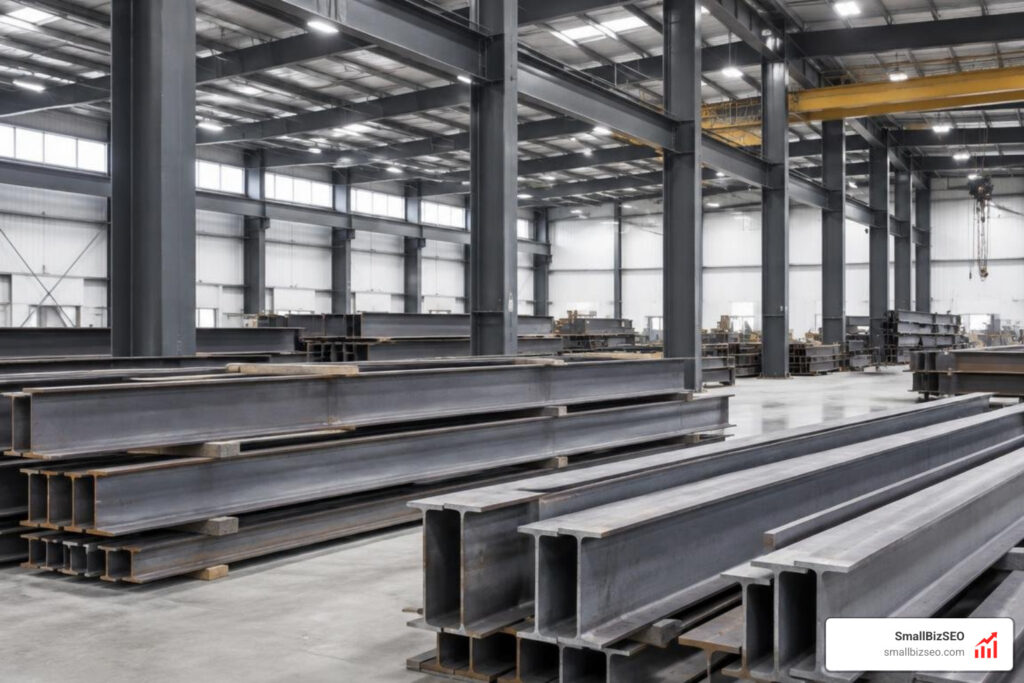
How Can SEO for Steel Fabrication Bring in Better RFQs?
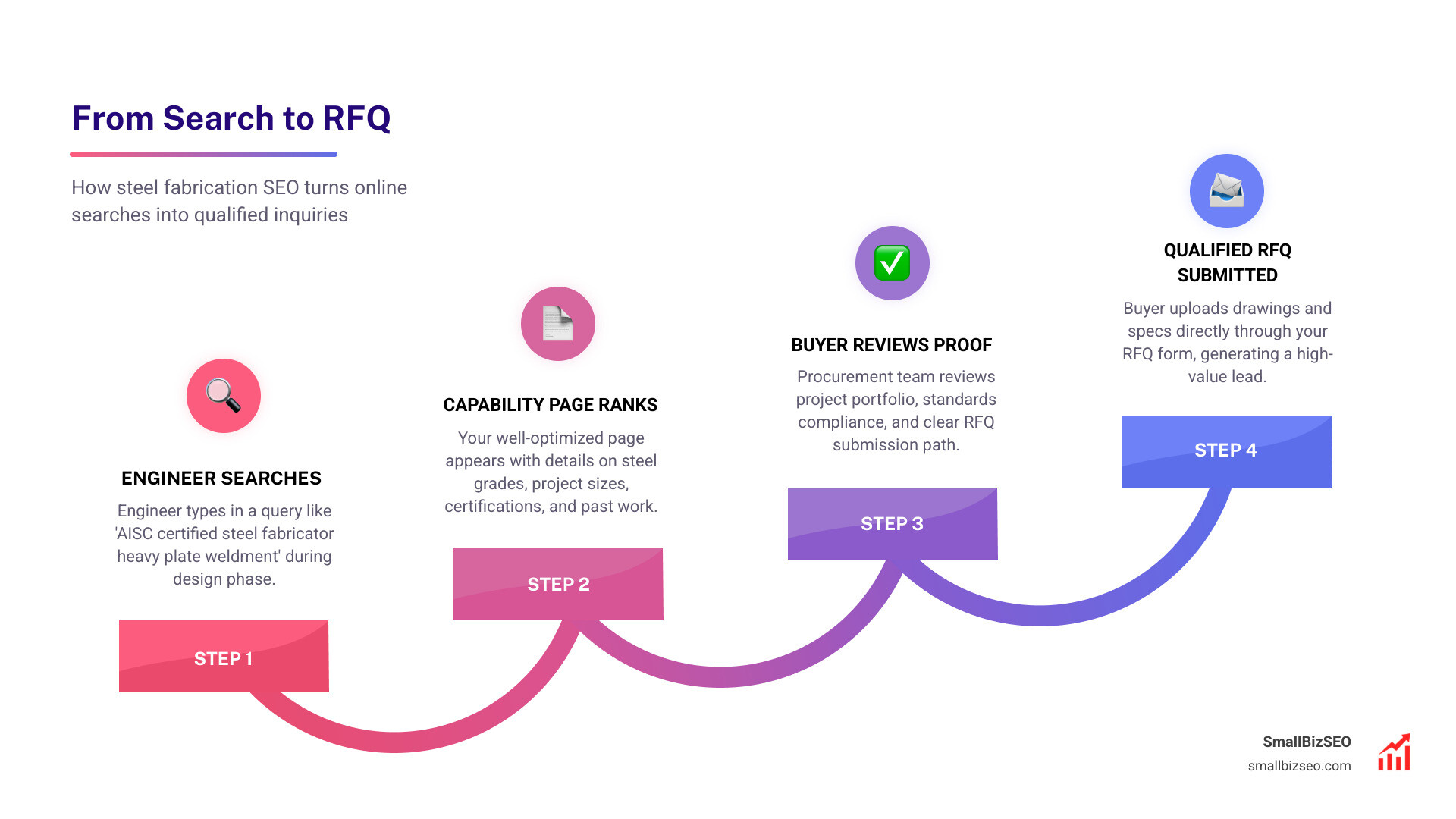
SEO for steel fabrication starts with the work you want to quote. Create a page for each core capability, then state the steel grades, project sizes, standards, and certifications your shop can support. Make those pages easy for Google to find, show proof from real projects, and give buyers a clear way to send drawings with an RFQ.
This approach helps engineers find your shop while checking project requirements. It also helps procurement teams decide whether you belong on their shortlist. The guide below covers the pages, technical fixes, local visibility, and tracking needed to turn those searches into qualified inquiries.
I’m Clayton Johnson, founder of SmallBizSEO, where I work on technical SEO, content strategy, and link building for small businesses. I’ll apply that experience to SEO for steel fabrication, with a focus on clear technical answers and measurable RFQs.
SEO for steel fabrication helpful reading:
Why You Need a Dedicated Strategy for SEO for Steel Fabrication
General B2B marketing tactics fail industrial steel fabricators because they target top-of-funnel consumer interest rather than technical specification intent. In structural manufacturing, engineers search by building codes, welding standards, and material properties long before sending out a formal bid package.
According to the AISC Specification Usage Survey, 78% of structural engineers specify the standard first before identifying approved manufacturers, and 67% begin their product discovery using general search engines. Furthermore, Gartner research on B2B buyer journeys indicates that buyers spend only 17% of their total purchase timeline meeting directly with suppliers. The remaining 83% is spent conducting independent digital research, reviewing technical documentation, and comparing vendor capabilities.
When fabricators fail to rank for specific ASTM standards or AISC criteria, they miss the design development window entirely. Partnering with a dedicated manufacturing SEO company ensures your website captures engineers during this early phase, where the probability of converting a project into a signed purchase order reaches 60% to 75%. In contrast, chasing generic terms at the public tender stage yields only a 15% to 25% close rate.
| Search Dimension | Generic Head Terms (e.g., "Steel Fabricator") | Specification-Intent Queries (e.g., "ASTM A992 Beam Fabrication") |
|---|---|---|
| Search Intent | Broad directory browsing, DIY consumers, job seekers | Design engineers, estimators, commercial procurement |
| Procurement Timing | Late tender stage or ad-hoc commodity pricing | Early design stage (8 to 14 months before tender) |
| Close Probability | 15% to 25% win rate against multiple low bidders | 60% to 75% win rate once written into project specs |
| Content Required | Basic overview copy, generic bulleted lists | Chemical compositions, load tables, BIM files, WPS |
Following fundamental optimization guidelines from the Google Search Central documentation allows your shop to build technical relevance that aligns with how structural components are engineered, specified, and procured.
What Makes SEO for Steel Fabrication Different From General B2B Marketing?
SEO for steel fabrication differs from standard B2B marketing because purchasing decisions depend on rigorous compliance criteria, tolerance limits, and long procurement cycles rather than impulse or brand appeal. Industrial buyers evaluate envelope capacities, plate thicknesses, and weld procedures before ever submitting a Request for Quote (RFQ).
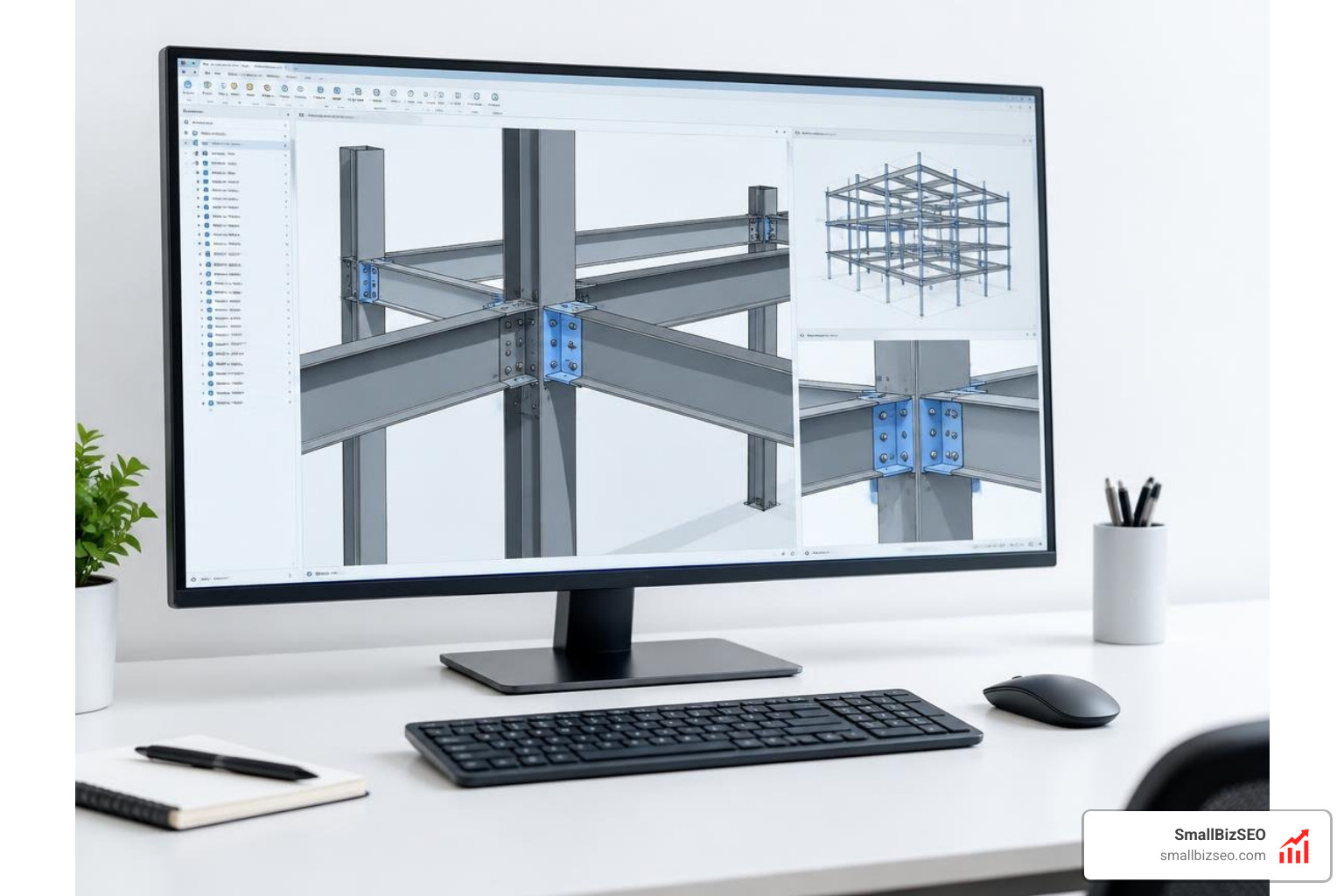
Moreover, search habits have shifted toward conversational queries and AI answer engines. An analysis of manufacturing queries revealed that searches of seven or more words trigger Google AI Overviews 61.2% of the time, compared to only 21.1% for one-to-two-word terms. When engineers ask ChatGPT or Perplexity for fabricators qualified under specific tolerances, AI engines synthesize data directly from websites that feature structured, answer-ready specifications. Working with an experienced b2b SEO company helps fabricators structure data so that both traditional search algorithms and generative AI tools cite their shop as an approved source.
Which Technical SEO and Schema Fixes Prevent Crawl Budget Waste?
Technical SEO ensures that search engine bots crawl and index critical engineering documentation without getting trapped in low-value site architecture. In technical audits of over 40 steel enterprise websites, every single site presented at least 12 critical issues requiring remediation, most notably dynamic URL parameter sprawl.
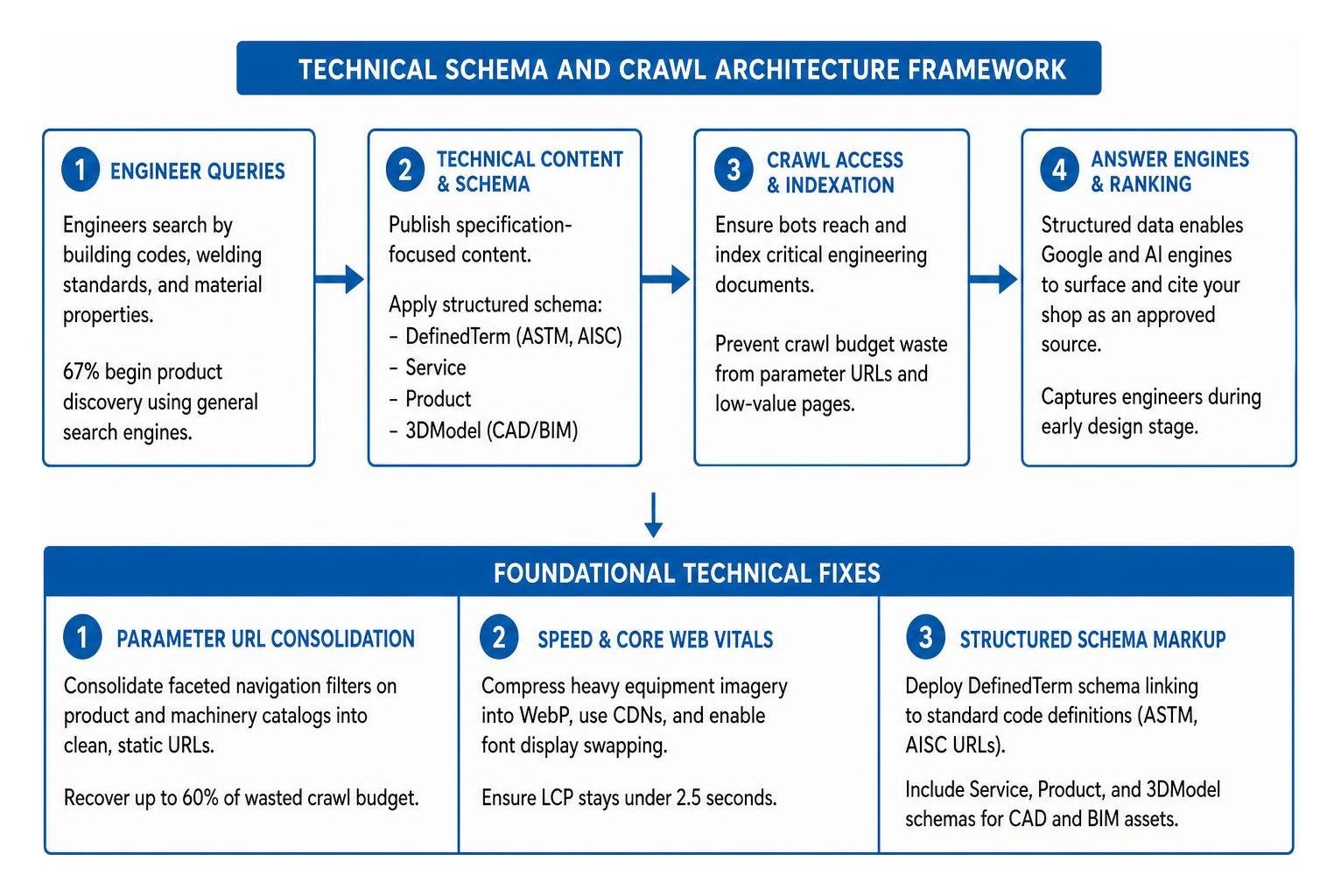
To maintain indexation health and improve Core Web Vitals, implement these fundamental technical fixes:
- Parameter URL Consolidation: Consolidate faceted navigation filters on product and machinery catalogs into clean, static URLs to recover up to 60% of wasted crawl budget.
- Speed and Core Web Vitals: Compress heavy equipment imagery into modern WebP formats, implement content delivery networks (CDNs), and enable font display swapping to ensure Largest Contentful Paint (LCP) stays under 2.5 seconds.
- Structured Schema Markup: Deploy
DefinedTermschema linking directly to standard code definitions (such as ASTM or AISC URLs), alongsideService,Product, and3DModelschemas for CAD and BIM assets. - Thin Content Remediation: Expand thin machinery pages into comprehensive resource hubs containing mechanical properties, tolerance tables, and application guidance.
Detailed implementation strategies can be found in our comprehensive construction SEO services guide.
How to Execute a Full-Funnel SEO Strategy and Win High-Value RFQs
A full-funnel strategy captures industrial demand by guiding buyers from initial engineering queries directly into a conversion-focused quoting workflow. Because 85% of mid-size steel fabricators have no standard-specific keyword targeting or certification landing pages, shops that build structured digital assets gain an immediate market advantage.
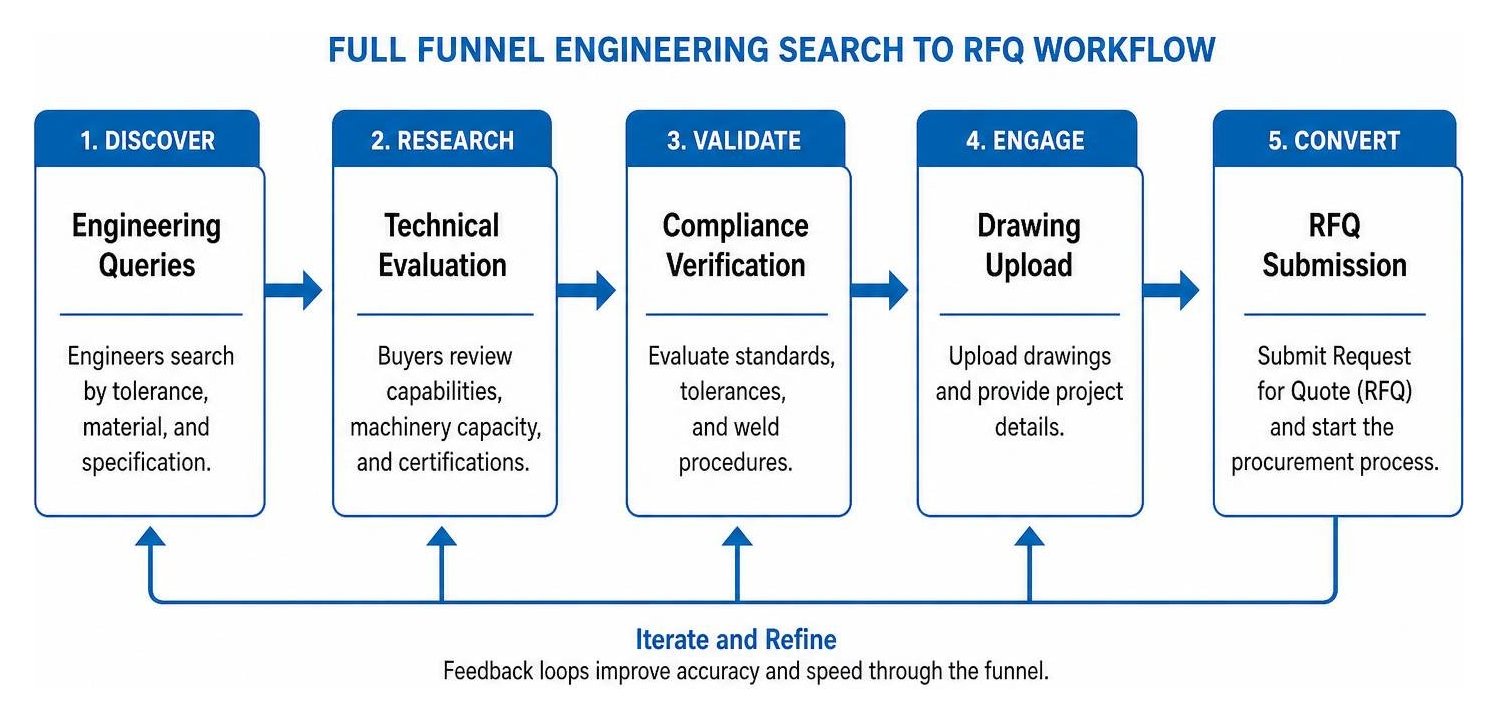
As demonstrated in comprehensive metal fabrication market research, industrial buyers reject vague claims of "high quality." Instead, they look for verifiable shop-floor capacity, machinery tonnage, and clear drawing upload tools. At SmallBizSEO, we use our proprietary "Velocity" framework to eliminate technical roadblocks, build authoritative industry content, and deliver transparent reporting tied directly to RFQs. You can evaluate your current digital footprint by requesting a SEO visibility audit.
How Should Fabricators Structure Capability and Certification Pages?
Fabricators must build dedicated landing pages for every discrete manufacturing capability, material grade, and quality certification rather than combining everything onto a single generic services page.
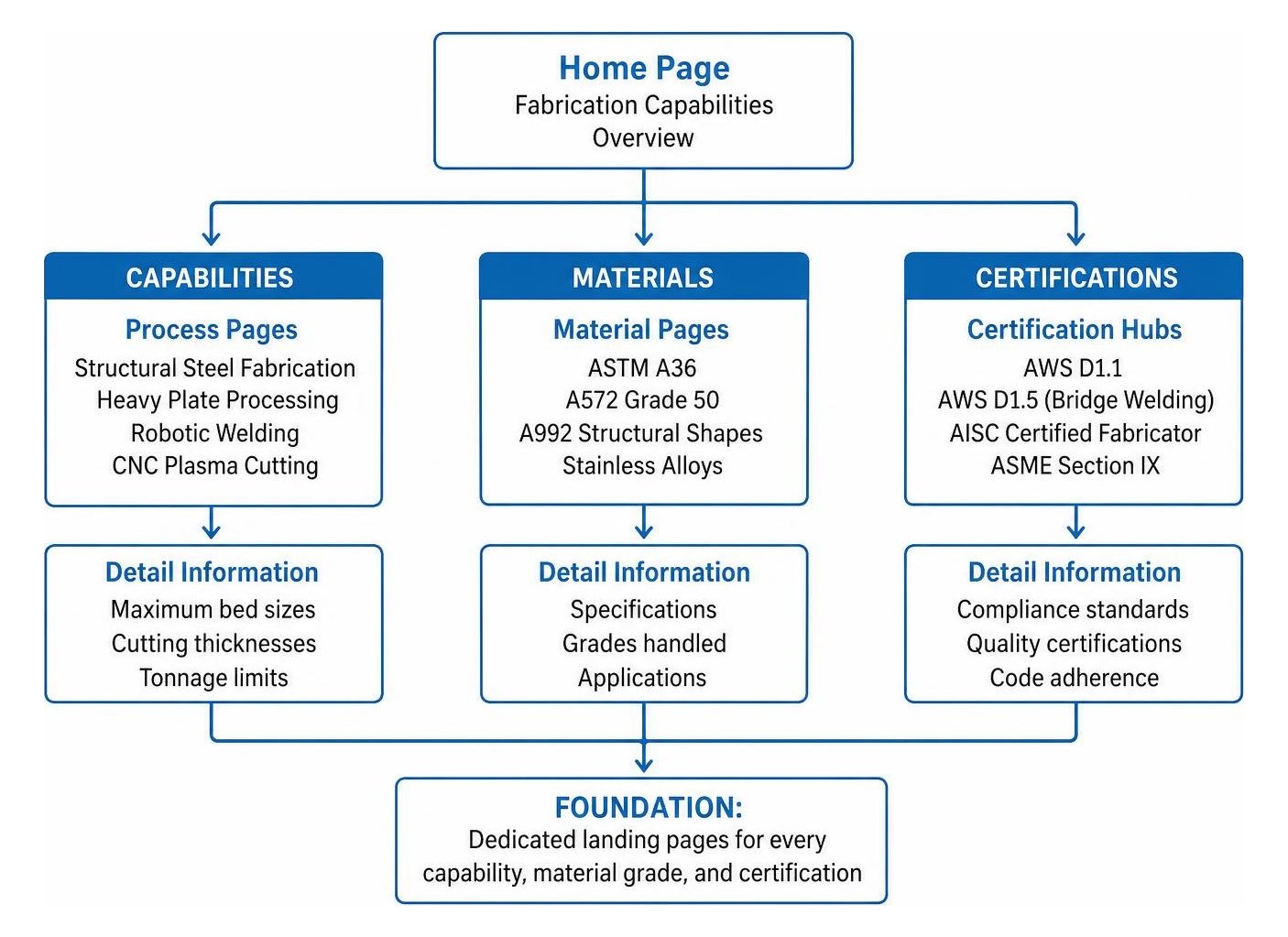
Structure your website around distinct capability silos:
- Process Pages: Build separate URLs for structural steel fabrication, heavy plate processing, robotic welding, and CNC plasma cutting. Include maximum bed sizes, cutting thicknesses, and tonnage limits.
- Material Pages: Detail specific grades handled, such as ASTM A36, A572 Grade 50, A992 structural shapes, and stainless alloys.
- Certification Hubs: Highlight compliance with AWS D1.1, AWS D1.5 (bridge welding), AISC Certified Fabricator standards, and ASME Section IX.
- BIM and Technical Hubs: Provide downloadable Revit families, load tables, and indexed Welding Procedure Specifications (WPS). Survey data shows structural engineers are 73% more likely to specify manufacturers that provide downloadable BIM objects with load data.
For shops seeking turnkey execution, partnering with a specialized steel fabrication SEO company ensures these pages are organized for maximum search visibility and conversion efficiency.
How Can You Capture Local Map Pack Rankings and Industrial Backlinks?
Local SEO captures high-intent regional demand from general contractors, construction managers, and facility operators seeking local fabrication partners to minimize freight expenses and logistical lead times.
Google determines local map rankings using relevance, distance, and prominence. Fabricators can dominate the local 3-pack by:
- Setting "Metal Fabricator" or "Steel Fabricator" as the primary Google Business Profile category, with secondary selections for "Welding Shop" or "Steel Distributor."
- Maintaining strict Name, Address, and Phone (NAP) consistency across top industrial directories like ThomasNet, MFG.com, and regional builders exchanges.
- Uploading high-resolution shop-floor photos illustrating ongoing beam assembly, CNC cutting, and completed structural frames.
- Systematically collecting client reviews that mention specific structural projects and capabilities.
Beyond local citations, secure high-authority editorial backlinks by contributing technical articles to industry trade publications, participating in regional construction association listings, and maintaining active profiles within directories like the AISC or AWS member networks.
How Long Does SEO for Steel Fabrication Take to Deliver Measurable RFQs?
A well-executed SEO strategy for steel fabrication delivers early keyword movement within 45 to 90 days for specific standard and specification queries, while competitive regional and national head terms mature over 6 to 12 months.

Because the average steel procurement cycle spans 8 to 14 months from initial design to purchase order, the true financial return of industrial SEO compounds over multi-year horizons. Success should never be tracked through vanity traffic metrics alone. Instead, fabricators must evaluate SEO performance through five commercial tiers:
- Specification Visibility: Impression growth across specific ASTM, AISC, and AWS code searches.
- Technical Engagement: Download volumes for BIM Revit families, WPS sheets, and load tables.
- Qualified Inquiries: First-party RFQ submissions that include attached structural CAD drawings.
- Pipeline Value: Total dollar volume of commercial bid packages generated from organic search.
- Closed Revenue: Total contracted value of completed fabrication projects sourced from organic inquiries.
Turn Industrial Search Visibility into Closed Fabrication Contracts
Winning high-value structural steel contracts requires transitioning from a passive brochure website to an active, specification-driven technical asset. By building dedicated capability pages, publishing standard-specific engineering resources, resolving technical crawl hurdles, and maintaining local prominence, your shop can establish a predictable pipeline of qualified commercial bids.
SmallBizSEO delivers transparent, data-driven SEO programs tailored to the technical requirements of industrial manufacturers. Focus your digital strategy on the exact specifications your shop is built to fabricate, and ensure your team is the first partner structural engineers find when planning their next project.