AI SEO Content Optimization Made Easy

AI SEO Content Optimization Made Easy
How AI SEO Content Optimization Is Transforming Modern Search
Search engines are no longer simple index-and-match engines that look for exact keyword phrases. Instead, modern search relies on natural language processing and Large Language Models (LLMs) to understand search intent at a deep level. Search algorithms analyze user queries through vector embeddings, interpreting the underlying context, explicit requirements, and implicit intent behind every search.
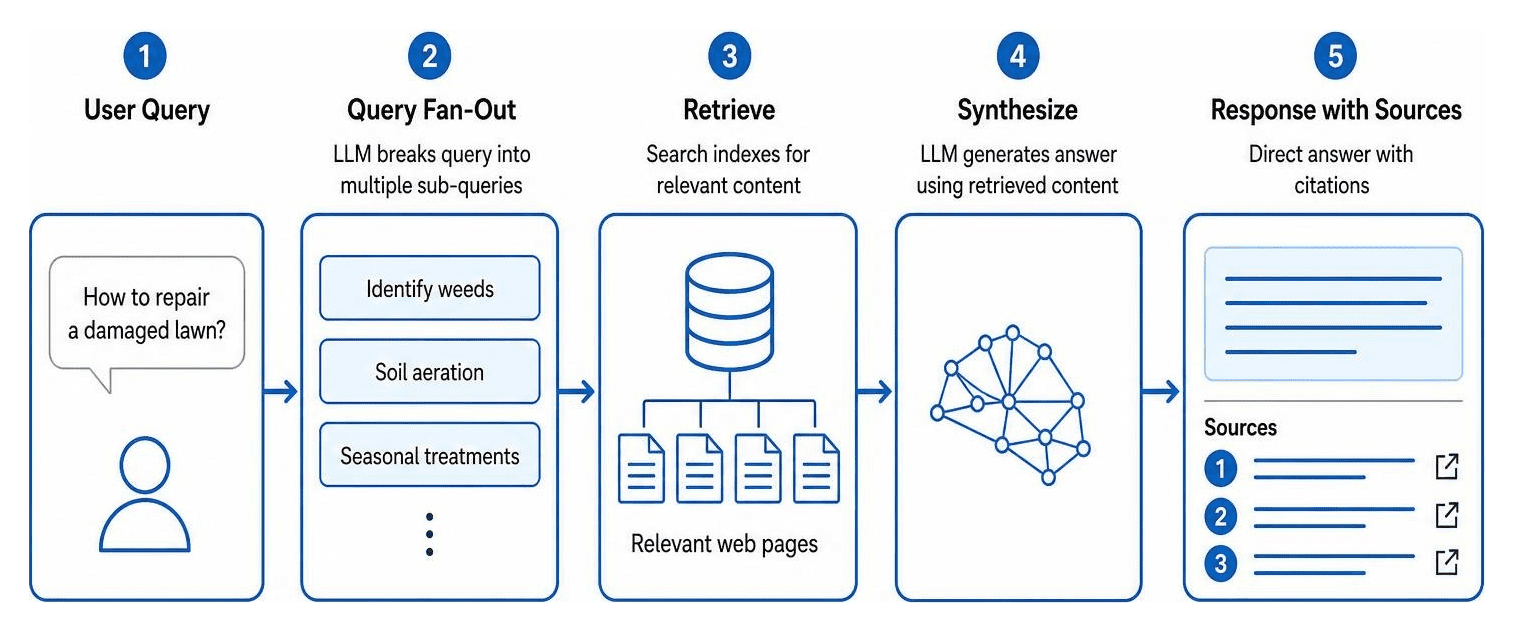
When a user searches for a complex query, engines run what is called "query fan-out." They automatically break a broad search into multiple concurrent sub-queries behind the scenes. For example, a query like "how to repair a damaged lawn" triggers secondary checks for weed identification, soil aeration, nutrient deficiencies, and seasonal treatments. By examining these connected facets, modern search engines build a complete conceptual profile of what the user truly needs to solve their problem.
AI models then compile these web results using Retrieval-Augmented Generation (RAG). RAG pulls authoritative web pages from search indexes and synthesizes a direct response, citing sources with clickable links.
This evolution makes AI SEO content optimization essential for survival. Modern systems evaluate semantic relationships between ideas rather than individual keyword frequencies. Pages that fail to address related conceptual subtopics are routinely overlooked in favor of comprehensive resources.
Core Differences in AI SEO Content Optimization
Traditional SEO focused on targeting individual keywords and securing top blue links on search engine results pages. Modern optimization requires broad topical coverage, semantic clarity, and high entity density. Rather than calculating keyword density percentages, AI algorithms look at how comprehensively a document maps out knowledge graph entities and concepts within a niche.
| Optimization Signal | Traditional SEO Approach | Modern AI SEO Strategy |
|---|---|---|
| Primary Target | Individual keywords and exact-match phrases | Named entities, concepts, and topical authority |
| Search Mechanism | Keyword index matching | Natural language processing and RAG retrieval |
| Content Delivery | Full-page articles designed for site clicks | Modular passages for direct answers and AI summaries |
| User Interaction | Single search and single click | Conversational follow-ups and zero-click answers |
Understanding what are AI SEO tools allows teams to analyze large datasets quickly and spot shifts in user intent before they show up in monthly search volume tools. These tools help identify subtopic gaps, evaluate entity placement, and ensure content aligns with the expectations of both generative AI engines and human readers.
Navigating Google AI Overviews and External AI Engines
Optimizing for Google AI Overviews requires a strategy that also works for third-party conversational assistants like OpenAI's ChatGPT, Perplexity, and Google Gemini. These engines seek immediate, factual clarity without requiring the user to sift through fluff or preamble.
AI engines rely on modular parsing. They slice long-form content into standalone paragraphs, lists, and tables to reassemble answers. If a section of your page makes sense on its own, an AI model can easily quote it directly in response to user queries across various interfaces.
Open-source prompt frameworks like the RankWise LLM Engine help structure content against dozens of scoring parameters, making sure generated copy retains high semantic quality and clear formatting for LLM engines. By organizing copy into self-contained logical units, websites increase their visibility in answer panels and conversational responses.
Step-by-Step Workflow for AI Content Strategy
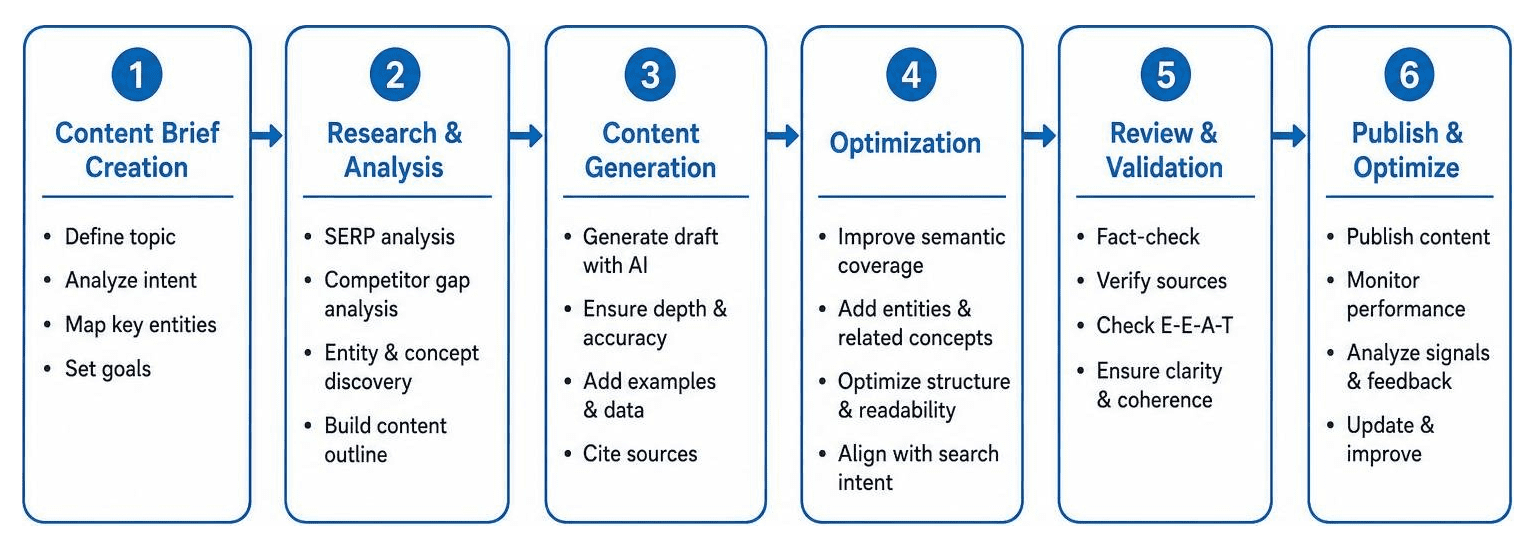
To stay competitive, marketing operations must replace manual keyword spreadsheets with streamlined workflows. Many marketing organizations now use AI tools within their operations to speed up research, outline creation, and content production. Implementing a structured process ensures every asset meets rigorous quality and search standards.
Executing AI SEO Content Optimization for Topic Authority
Building real topical authority requires deep entity coverage rather than repeating a single phrase. Entities are specific, verifiable nouns - such as locations, recognized tools, brands, or technical processes. Search engines group these entities into semantic clusters to measure how thoroughly a page covers a topic.
To build an authoritative page:
- Map out all logical subtopics and questions related to your main topic to establish comprehensive coverage.
- Integrate established entities to show complete coverage of the subject and clarify relationships between concepts.
- Review our Beginner's Guide to Keyword Content Optimization to align search intent with structured headings.
- Apply principles from SEO Friendly Content Writing so human readers enjoy the content as much as search crawlers do.
Google's helpful content systems reward non-commodity content. If your article merely rehashes common knowledge found on ten other sites, AI systems will bypass it. Add real-world experience, internal case data, proprietary screenshots, or original commentary to stand out and establish genuine topical authority.
Automating Content Refreshes and Metadata Tuning
With frequent algorithm updates and shifting search behavior, published pages decay over time. Automating content updates ensures old posts stay competitive without requiring a complete manual rewrite. Tracking performance metrics allows teams to intervene before traffic drops become severe.
Modern software can scan published content against Google Search Console data, identifying pages where rankings have dipped or click-through rates have stagnated. AI-assisted editorial workflows can help teams refresh meta descriptions, fix readability issues, adjust headline structures, and improve content alignment in a single pass.
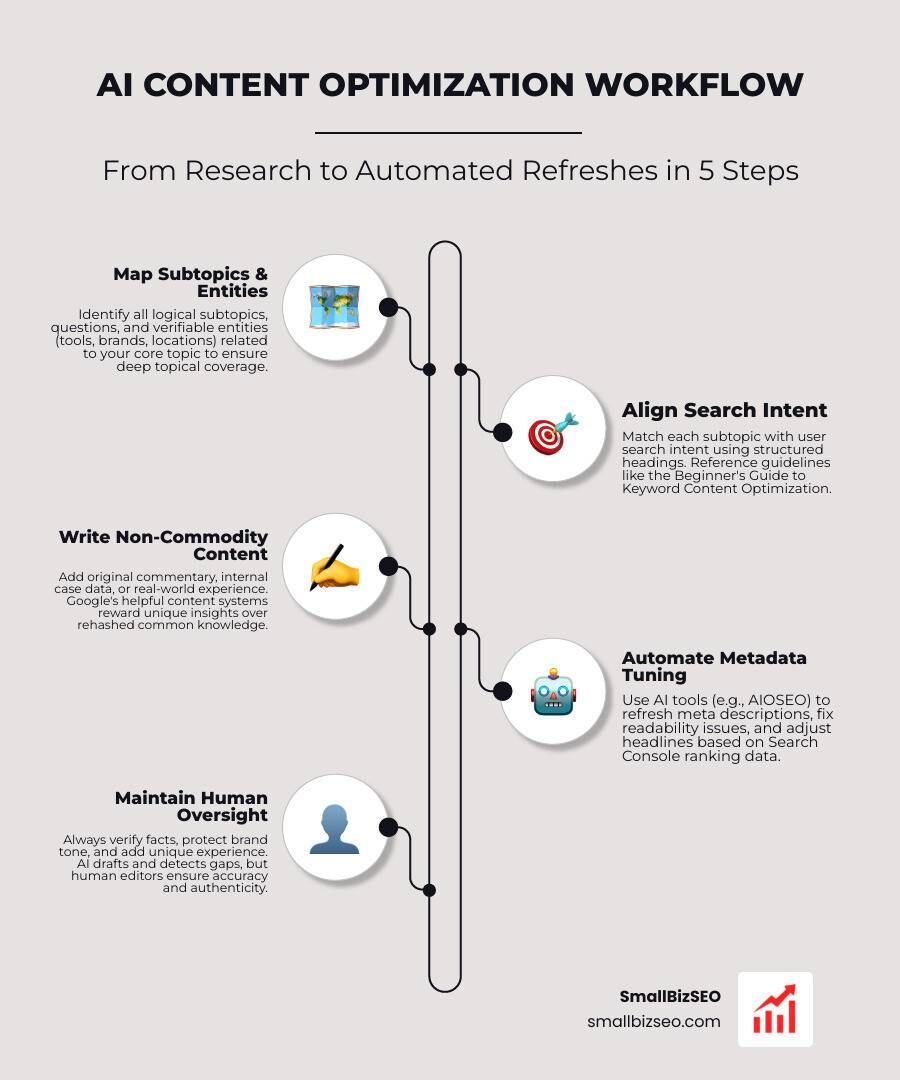
Always maintain human editorial oversight. AI tools are powerful assistants for drafting, summarizing, and detecting content gaps, but human editors are required to verify facts, protect brand tone, enforce editorial guidelines, and add unique subject-matter experience that machines cannot replicate.
Content Formatting and E-E-A-T for AI Answer Engines
AI referral traffic spiked by 357% year-over-year, reaching over 1.13 billion web visits. To capture this traffic, content must be formatted so AI bots can easily scan, extract, parse, and reference specific information across different search modes.
Structuring Modular Paragraphs and Direct Answers
AI answer engines favor clear visual and text hierarchy. Follow these formatting guidelines to increase your chances of earning AI citations:
- Answer First: Place a concise 1- to 2-sentence summary directly below every major subhead to give answer engines an immediate response candidate.
- Use Direct Q&A Format: Phrase subheadings as clear questions (e.g., "What is entity density?") and answer them immediately in the following paragraph.
- Format Data into Lists and Tables: AI models extract structured HTML lists and comparison tables far more easily than dense paragraphs of prose.
- Keep Sentence Structures Clean: Avoid unusual punctuation, overly decorative language, or complex parenthetical statements, which can confuse automated parser rules.
Implementing Schema Markup and Technical Signals
Schema markup turns standard web copy into machine-readable JSON-LD code. Structured data explicitly tells search engines what your page represents — whether it is a product, a technical guide, an event, or an FAQ section. By establishing clear entity connections in your markup, you lower the computational effort required for AI search engines to index your content.
Avoid common structural errors that hide content from search bots. Moving crucial details inside hidden tabs, expandable accordions, raw image files, or PDF documents prevents AI tools from reading and quoting your content. Learn more about navigating these shifts in our guide Beyond the Hype: Unlocking the True AI SEO Advantage. Ensuring full page crawlability remains one of the highest leverage technical optimizations for AI visibility.
Frequently Asked Questions About AI Search Optimization
How does AI SEO differ from traditional keyword optimization?
Traditional keyword optimization targets explicit keyword density, exact search terms, and traditional backlink metrics to rank on search engine results pages. AI SEO content optimization focuses on semantic clarity, structured entity coverage, conversational context, and modular formatting. This ensures content is easily understood by AI chatbots, generative search features, and conventional search engines alike.
Can content rank in Google search and AI answer engines simultaneously?
Yes. Over 73% of web pages cited in AI search answers also rank in Google's top 10 organic results for the same query. Creating comprehensive, well-structured content with clear schema markup, strong entity density, and direct responses achieves dual-surface visibility across traditional search results and conversational AI platforms.
What common mistakes prevent content from appearing in AI summaries?
The most common mistakes include:
- Hiding important information inside generic text without structured subheadings.
- Placing content in expandable accordions, raw images, or downloadable PDFs that search crawlers cannot evaluate easily.
- Writing generic, commodity articles that lack first-person experience, original research, or verifiable data points.
- Omitting JSON-LD schema markup, making it harder for search crawlers to identify and verify core entities on the page.
Elevate Your Visibility with SmallBizSEO
Navigating zero-click searches and AI-driven summaries does not have to be overwhelming. At SmallBizSEO, we help businesses adapt to search shifts through our data-driven frameworks. We combine continuous performance monitoring, entity-based optimization, robust technical schema implementation, and E-E-A-T alignment to keep your brand visible everywhere your customers search.
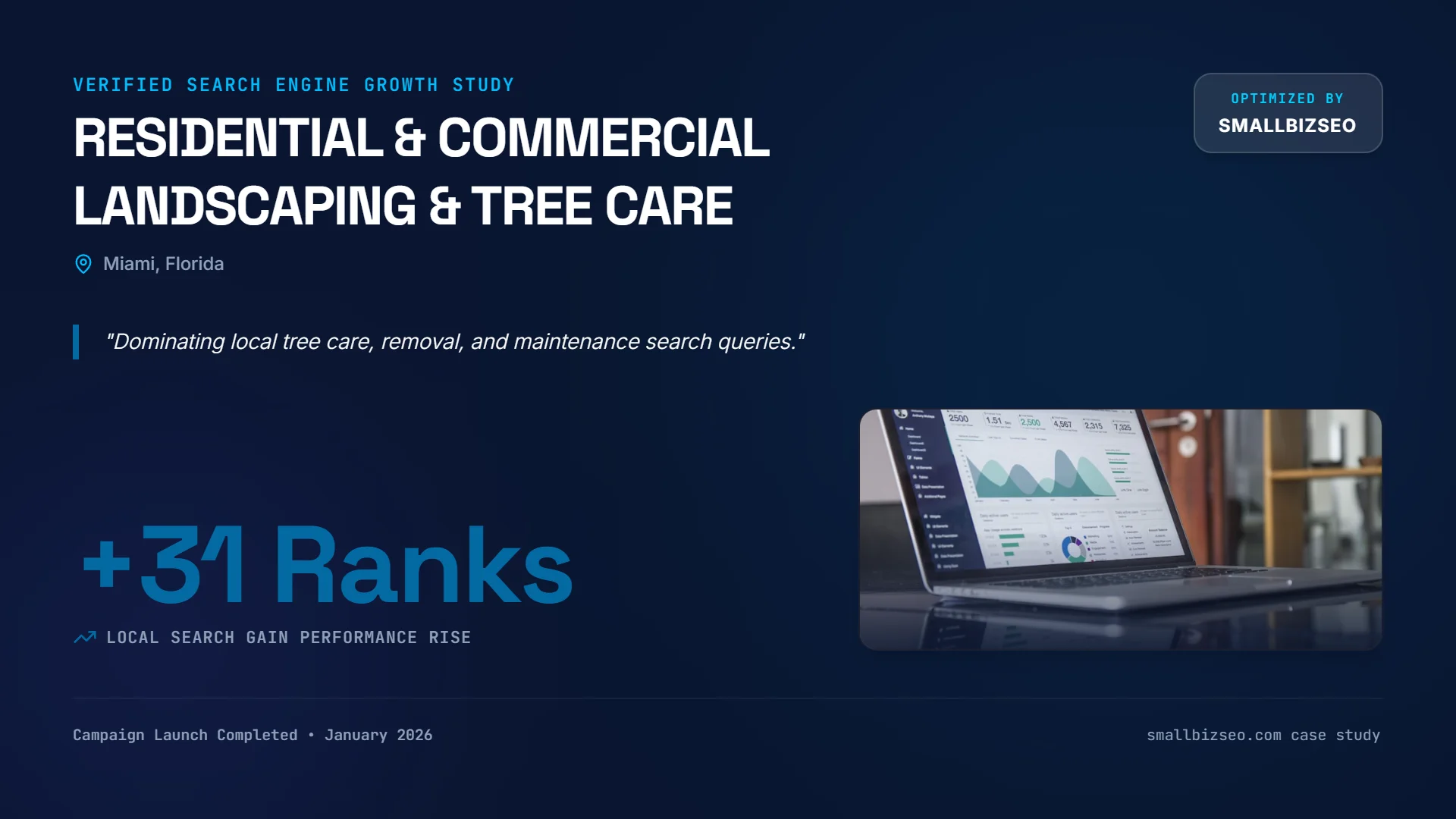
Ready to future-proof your organic search strategy and start earning citations in AI answer engines? Explore our dedicated AI SEO Services today and build a search strategy that lasts.