Audit Your Archive and Update High-Impact Posts First

Which Outdated Articles Should You Update First?
To decide how to prioritize outdated articles for substantive updates, start with pages that still serve an important topic but are losing clicks or rankings. Check whether they have valuable backlinks, rank close to the first page, or contain advice that no longer meets readers' needs. Then compare the likely benefit with the time needed to update each page. Put high-impact, fixable pages first.
A content audit makes that choice less of a guess. It also helps you separate pages that need a full rewrite from those that need only a few corrections.
I'm Clayton Johnson, founder of SmallBizSEO. My work in SEO, content strategy, and authority building shapes how to prioritize outdated articles for substantive updates: focus on useful answers and measurable opportunities, not age alone.
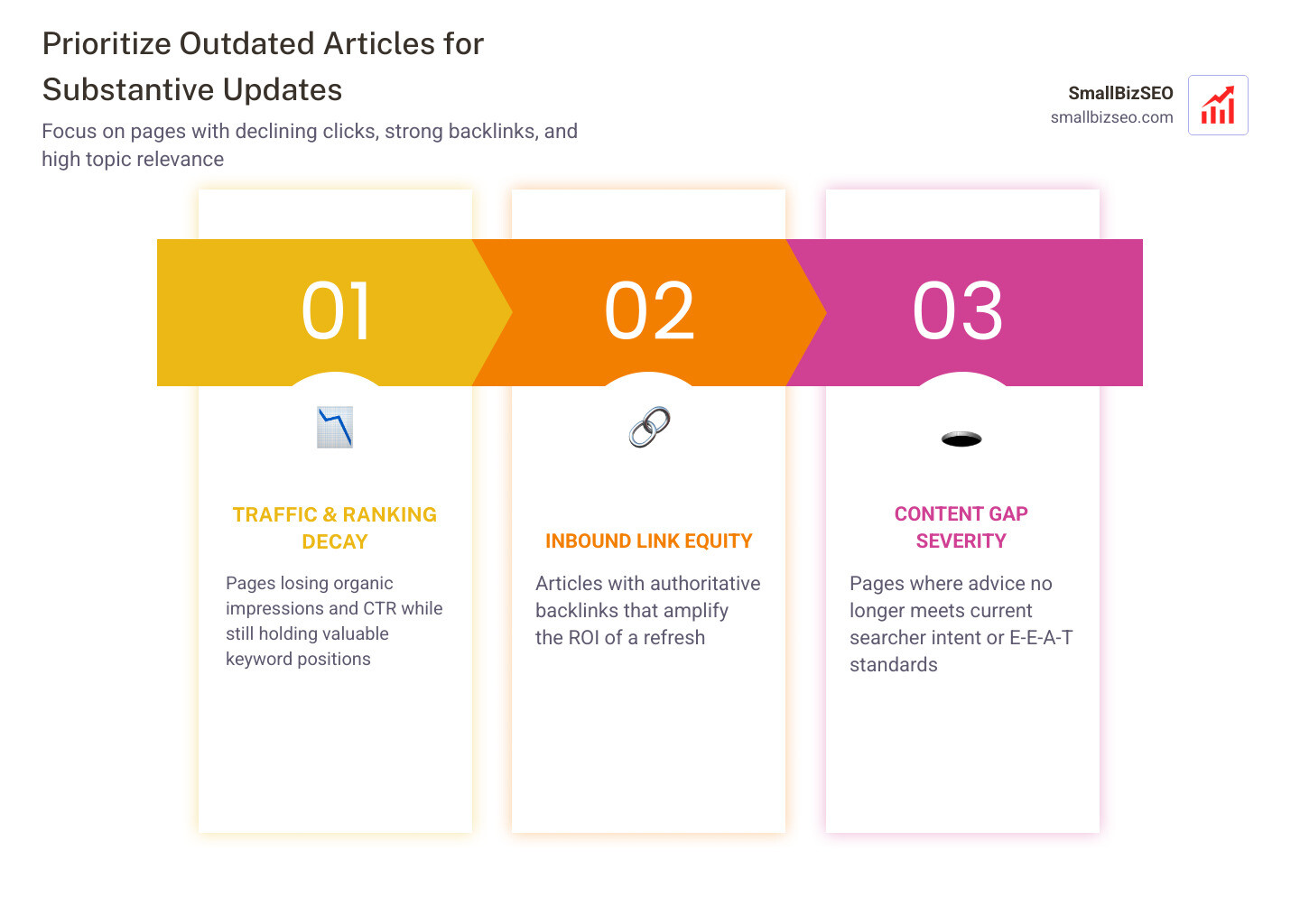
How Should You Prioritize Outdated Articles for Substantive Updates Using Performance Data?
Direct Answer: Prioritize legacy URLs by cross-referencing traffic decline, keyword ranking drift, and inbound link equity. Pages that once produced strong organic conversions and still maintain authoritative backlinks offer the fastest path to traffic recovery when refreshed.
Publishing teams often make the mistake of creating brand-new articles when their existing catalog is already full of proven assets. In fact, bloggers who update old articles are twice as likely to report strong marketing results compared to those who focus exclusively on net-new publishing. Reviewing performance data allows you to separate temporary seasonal dips from systemic drops when refreshing content to drive traffic.
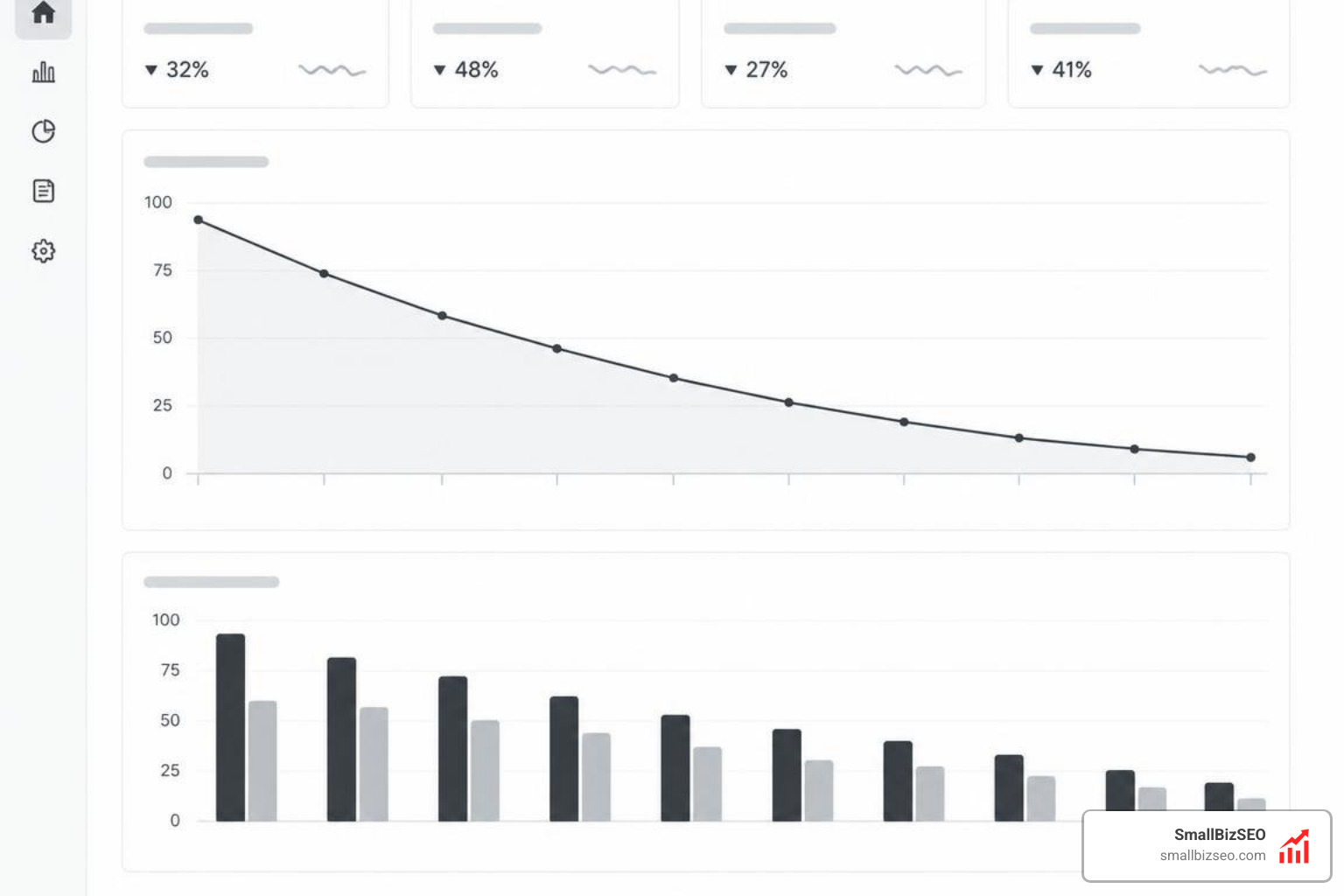
When an established URL loses visibility, it leaves behind historical ranking signals and earned backlinks that make recovery far faster than building authority from scratch. Pages with over 100 linking domains can easily reach a high Page Authority, enabling them to capture competitive search queries once their body copy is brought up to modern standards. By systematically combatting content decay, you protect your site's search visibility and generate higher returns on your existing editorial investments.
How Can Ranking and Decay Signals Help You Prioritize Outdated Articles?
Direct Answer: Track impressions, click-through rates (CTR), average position drops, and backlink losses over rolling periods to calculate an objective decay score.
In Google Search Console and analytics dashboards, decay rarely happens overnight. It begins with subtle position drift, where a top-three URL slips to positions four through eight, followed by a sharp drop in click-through rate. Tracking these patterns requires tracking content decay rate across three core performance metrics:
- Traffic Velocity Loss: A sustained decrease in organic sessions over consecutive quarters.
- CTR Compression: Stable search impressions paired with a steep decline in clicks, signaling that competing titles or search engine result page (SERP) features are capturing user attention.
- Position Drift: Gradual movement away from page-one rankings for primary commercial or informational queries.
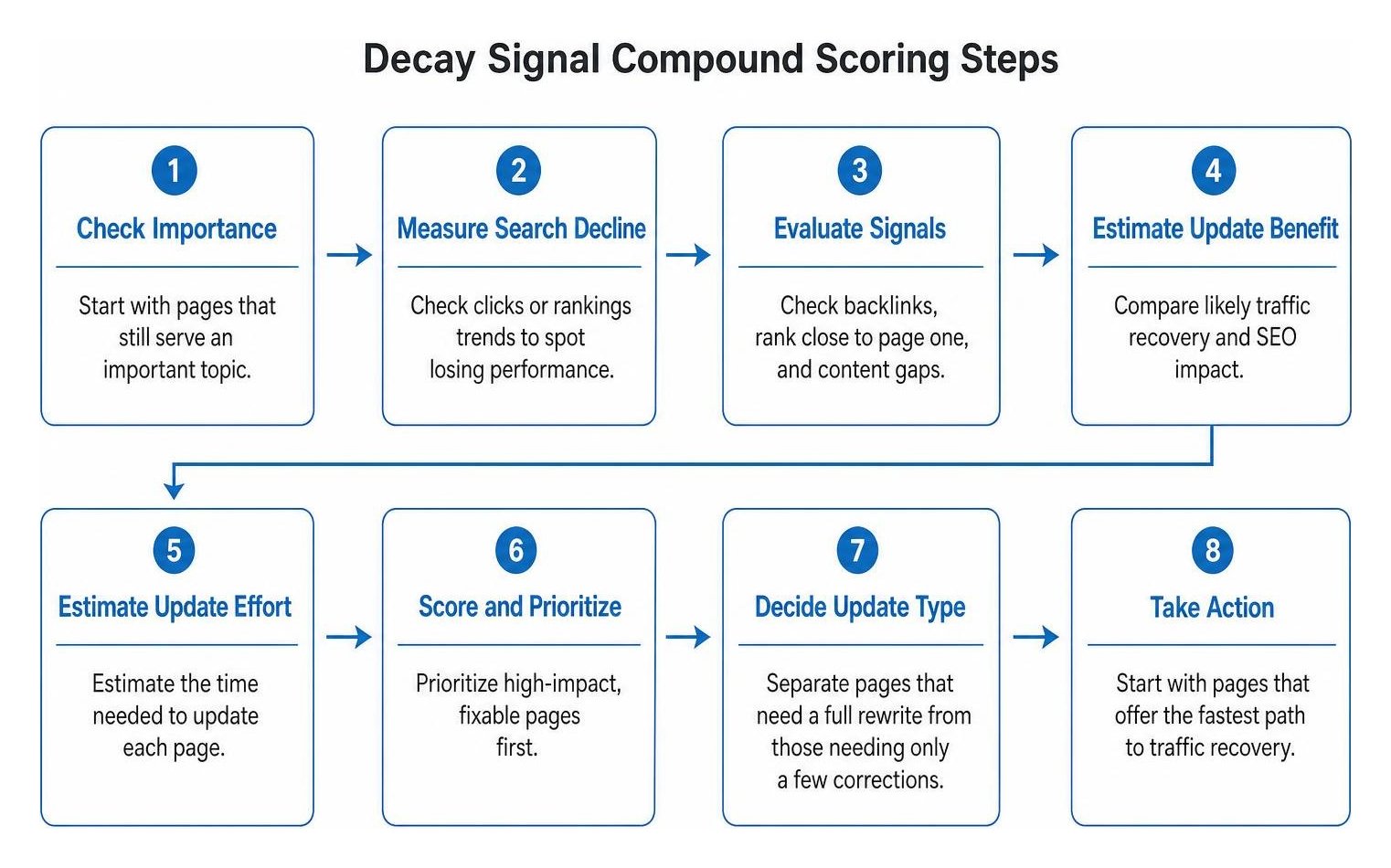
When you notice an unexplained decline across key URLs, working through a structured process for identifying why clicks tank helps confirm whether the root cause is outdated information, technical indexing barriers, or shifted search intent.
How Can You Find “Almost Famous” Pages and High-Value Competitor Targets?
Direct Answer: Filter search data for queries ranking in positions 5 through 20 that generate high impressions but low clicks. These striking-distance URLs require the least effort to achieve page-one visibility.
"Almost Famous" articles already hold baseline topical authority in search algorithms, but they lack the depth, structured answers, or fresh examples needed to break into the top three organic spots. Competitors frequently surpass older content by publishing comprehensive guides with unique data, original diagrams, and clearer answers.
To identify these opportunities:
- Filter performance reports by average position between 5.0 and 20.0.
- Identify pages targeting high-volume keywords with low click shares.
- Review competitor URLs currently holding top-three rankings to identify content gaps.
- Check whether your blog content is gathering dust without providing true information gain.
Adding proprietary insights, modern examples, and clear definitions helps your content surpass competing pages that rely on basic summaries.
How Should Topic Importance and Pace of Change Affect Which Articles You Update?
Direct Answer: Prioritize updates in fast-moving industries where outdated statistics or stale methodologies directly harm user trust, brand credibility, and E-E-A-T signals.
Not all topics age at the same speed. A guide on timeless management principles may remain accurate for several years, whereas articles covering regulatory compliance, software workflows, or medical evidence decay rapidly. Evidence-based research methodologies emphasize that the need for substantive updates depends heavily on the pace of new discoveries and topic importance (Moher et al., 2008). For high-stakes subjects, evaluating source relevance ensures your content aligns with current professional consensus and rigorous quality standards.
Consider these criteria when scoring topic urgency:
- Regulatory and Technical Shifts: Changes in laws, platforms, or tools that render previous instructions incorrect.
- Commercial Value: Articles that directly support primary lead generation or conversion paths.
- Historical Engagement: Articles that historically earned high social shares, citations, and customer engagement.
How Can Content Audits and Meta-Analysis Signals Reveal Content Debt?
Direct Answer: Use a systematic content audit to categorize pages using the ROT framework (Redundant, Outdated, Trivial), while checking for keyword cannibalization across your catalog.
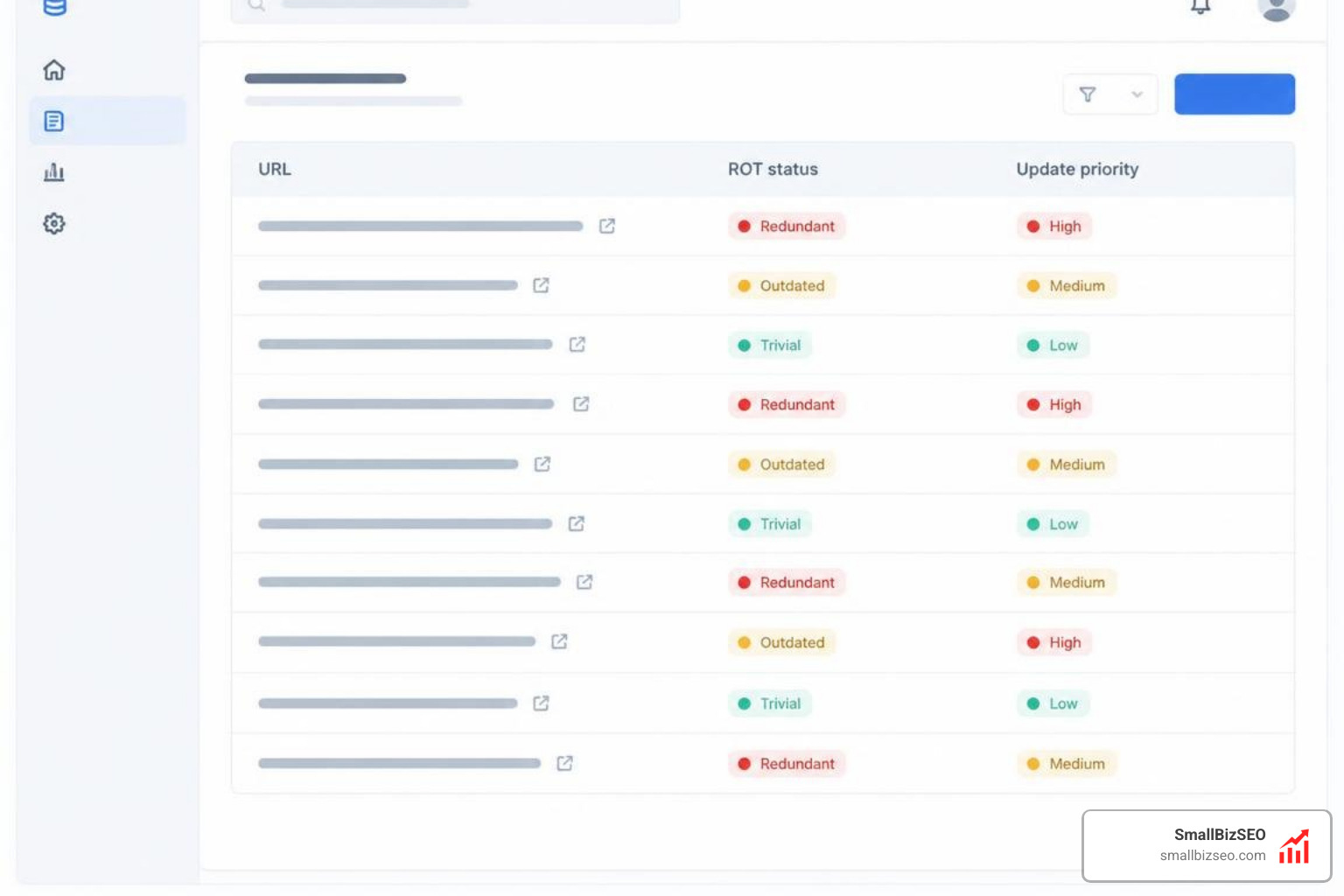
A systematic content audit reveals hidden content debt across large websites. Applying a structured ROT analysis framework allows you to inventory every URL and categorize its health:
- Redundant: Multiple legacy posts competing for the same search queries, splitting link equity and impressions.
- Outdated: High-value pages with obsolete statistics, broken external links, or retired product references.
- Trivial: Thin posts generating negligible traffic and providing no commercial or educational value.
When redundant articles dilute your organic authority, strategic content pruning and consolidation allow you to combine multiple weak articles into a single, highly authoritative guide.
How Can You Maximize Update ROI While Preserving Authority and Long-Term Value?
Direct Answer: Assign updates to specific effort tiers—from quick structural touch-ups to full editorial rewrites—while preserving the original URL structure to retain historical backlink equity.
Executing an active content refresh strategy requires balancing editorial hours against expected traffic gains. Rewriting every outdated article from scratch is inefficient; matching the update scope to the page's potential ensures maximum return on effort. In documented case studies, fully overhauled legacy articles have achieved 700% quarterly traffic increases and 180% engagement rate improvements simply by rebuilding the content around modern search intent.
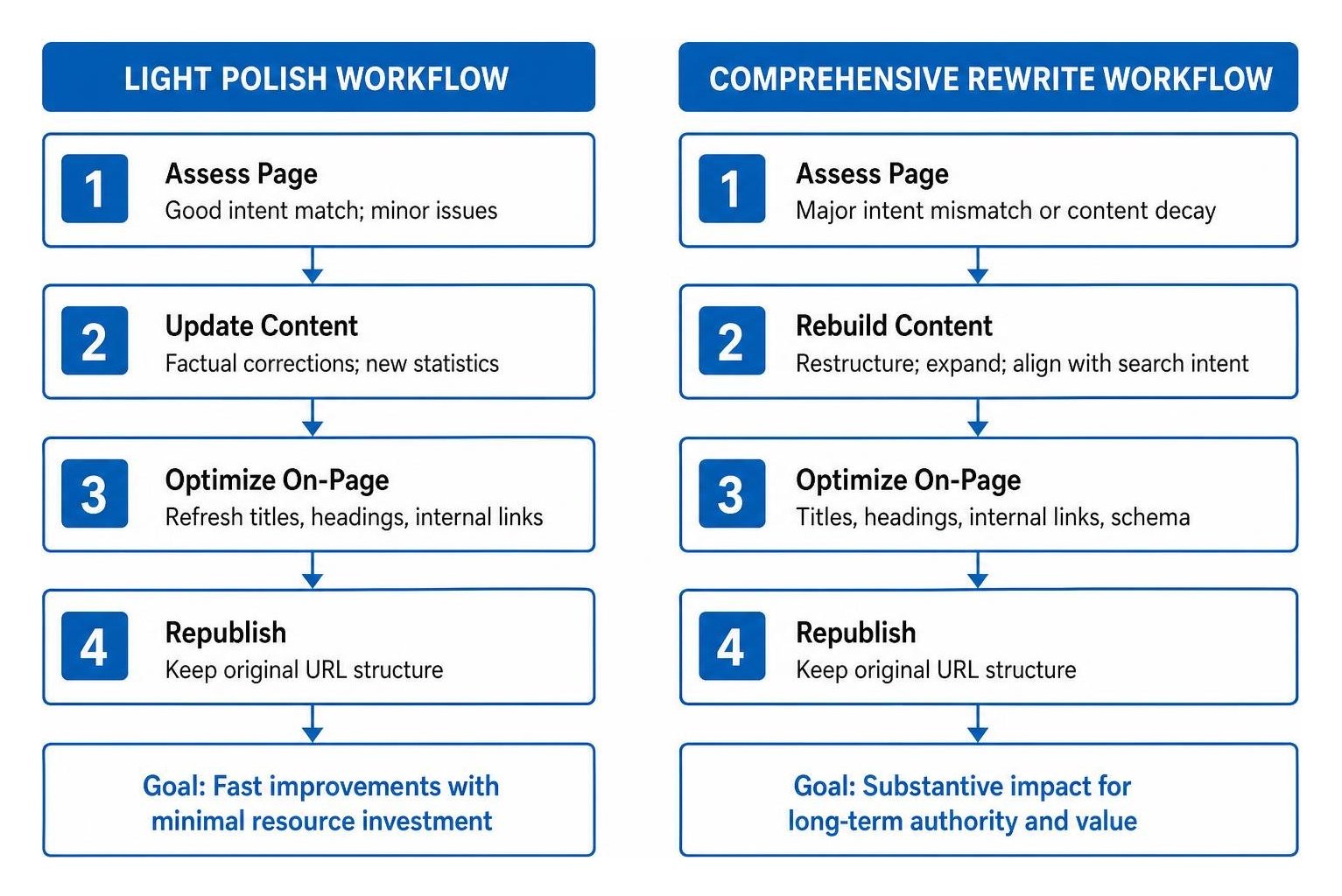
How Should You Choose Between a Full Rewrite and a Light Polish?
Direct Answer: Use light updates for pages needing quick factual or metadata corrections, and reserve full rewrites for URLs with major intent mismatches or severe competitive displacement.
| Refresh Tier | Scope of Work | Typical Resource Investment | Expected Recovery Window |
|---|---|---|---|
| Tier 1: Light Polish | Update statistics, fix broken links, refresh title tags and meta descriptions, add 1-2 FAQs. | 1 to 2 editorial hours | 14 to 30 days |
| Tier 2: Structural Refresh | Reorganize headings, add infographics or comparison tables, expand key sections, add internal links. | 3 to 5 editorial hours | 30 to 60 days |
| Tier 3: Comprehensive Overhaul | Complete rewrite, new proprietary data, expert quotes, intent realignment, full media overhaul. | 8 to 16 editorial hours | 60 to 90 days |
Selecting the lowest tier capable of resolving the underlying issue prevents your editorial team from over-investing in pages that only require minor corrections.
How Can You Preserve URL Equity and Measure Post-Refresh Recovery?
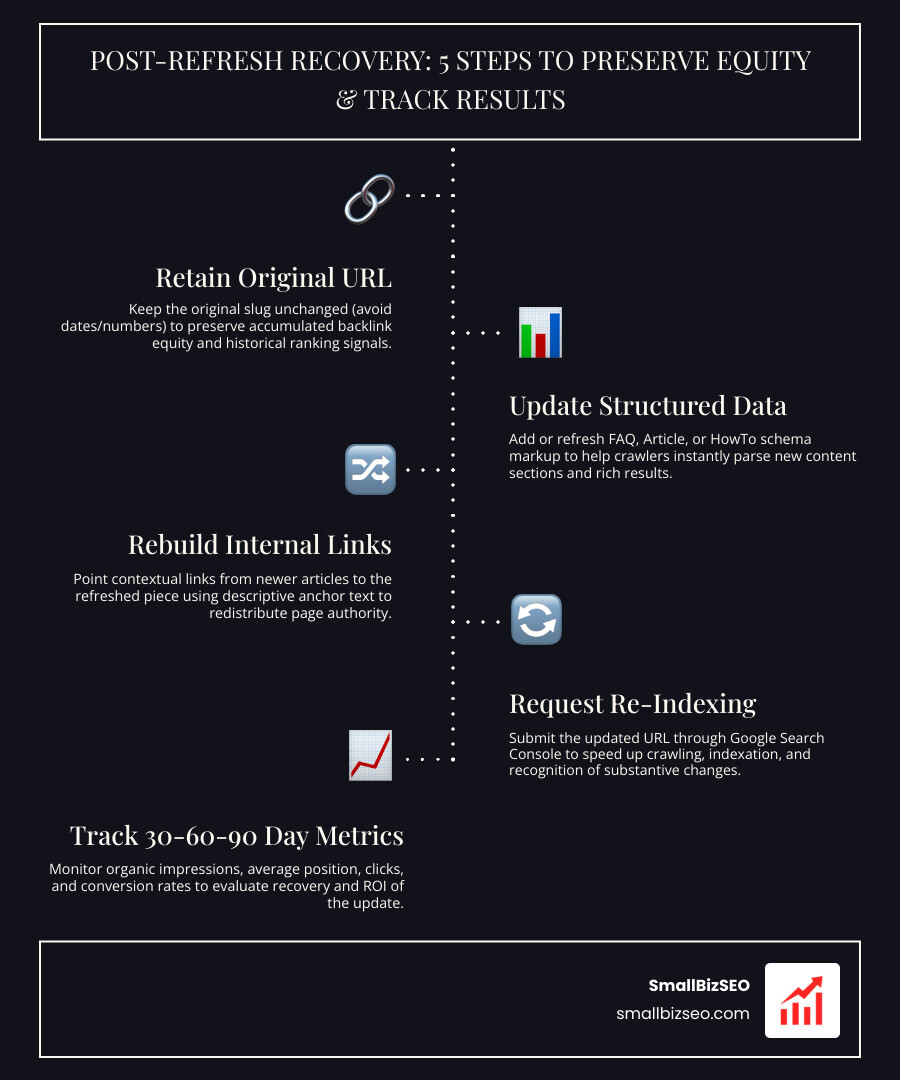
Direct Answer: Maintain the original URL slug to retain backlink equity, update internal links across your site, and submit the refreshed page for re-crawling in Google Search Console.
Changing a URL during a content refresh introduces unnecessary risk. Even with 301 redirects, some link equity can be lost, and historical performance signals may take longer to transfer.
To safeguard your search equity during substantive updates:
- Retain the Original URL: Keep the established slug unchanged, avoiding dates or numbers in the path.
- Implement Structured Data: Add or update FAQ, Article, or HowTo schema markup to help search crawlers parse new sections easily.
- Rebuild Internal Links: Point contextual links from your newer articles to the refreshed piece using descriptive anchor text.
- Request Re-Indexing: Submit the updated URL through Google Search Console to speed up crawling and indexation.
- Track 30-60-90 Day Metrics: Monitor organic impressions, average position, clicks, and conversion rates to evaluate the success of the update.
Revitalize Your Content Backlog for Sustainable Growth
A disciplined content triage system turns an unmanageable archive of aging blog posts into a predictable engine for organic growth. By scoring pages using decay signals, competitive ranking distance, and topic importance, you direct your team's energy where it generates measurable business impact.
If your team needs specialized support to audit, prioritize, and execute high-impact updates, explore our proven SmallBizSEO content refresh services. We help businesses eliminate content debt, recover lost rankings, and scale organic visibility efficiently.