Beginner’s Guide to SEO for Woodworking
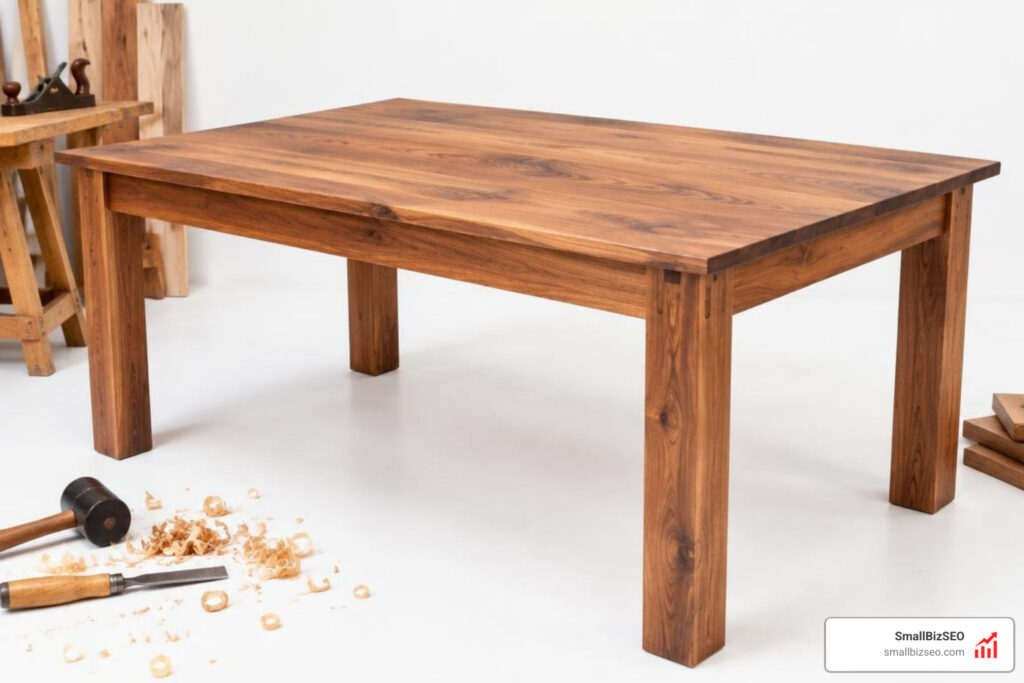
How Can Woodworkers Get Found in Search?
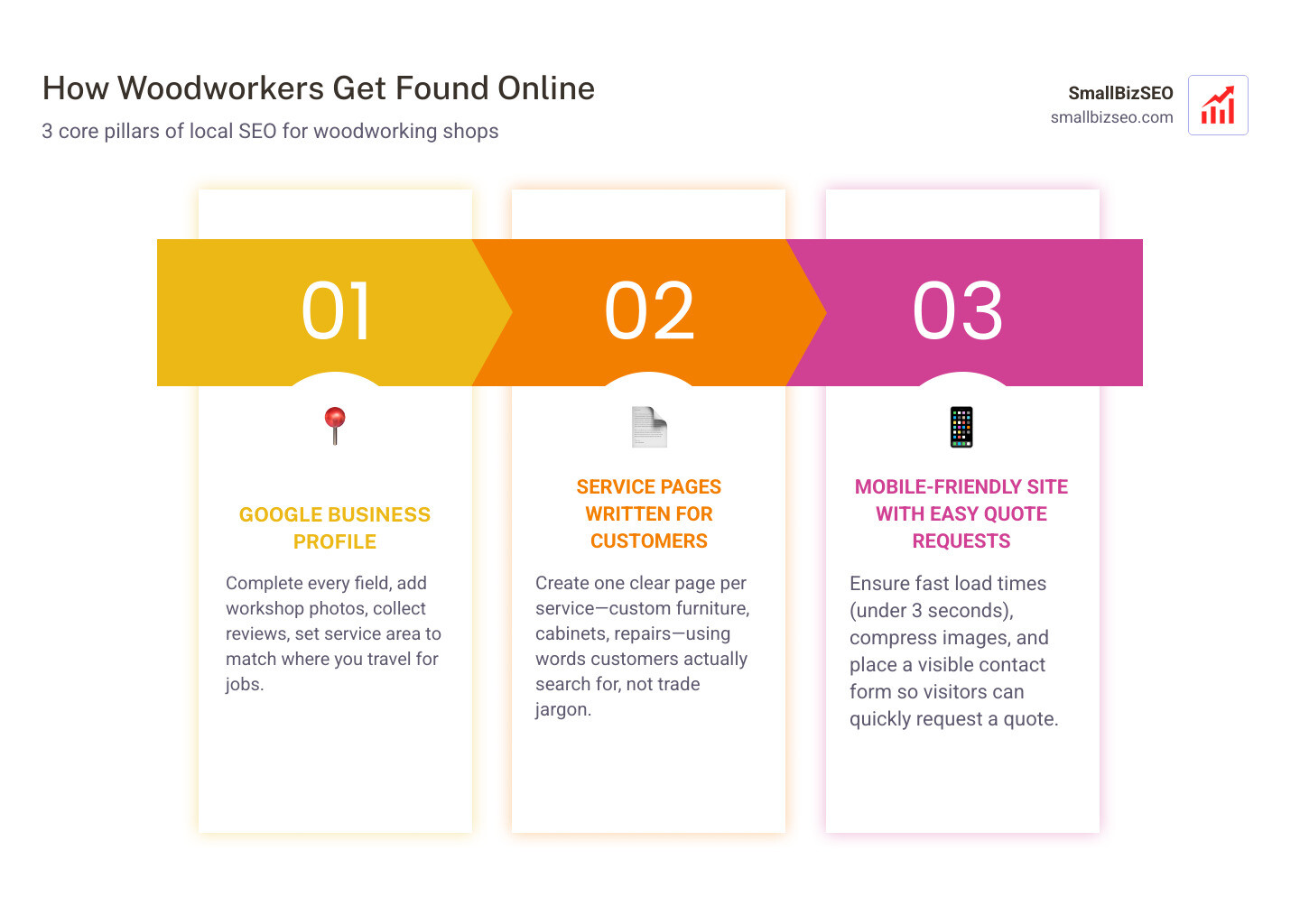
SEO for a woodworker helps people find your shop when they search for custom furniture, cabinets, repairs, or other work you offer. Start by completing your Google Business Profile, creating a clear page for each main service, and describing your projects in words customers use. Add useful photos, make your site easy to use on a phone, and give visitors a simple way to request a quote.
The goal is not just more website visits. It is more inquiries from people looking for the work you do.
I'm Clayton Johnson, founder of SmallBizSEO. My experience in content strategy, technical SEO, and link building shapes this guide to SEO for woodworker businesses, starting with the steps that help customers find and trust your shop.
Basic SEO for woodworker glossary:
Introduction to Search Visibility for Woodworking Shops
Search visibility connects your workshop directly with high-intent clients searching for custom pieces, cabinetry, and specialized architectural millwork.
More than 70% of customers search online even when looking for a local brick-and-mortar trade or shop. Furthermore, around 64% of users search for carpentry and custom craft services directly from a mobile device. With the carpentry and architectural woodwork sector estimated to generate over $100 billion, relying solely on foot traffic or casual word-of-mouth leaves your craft tucked away in a digital dark room.
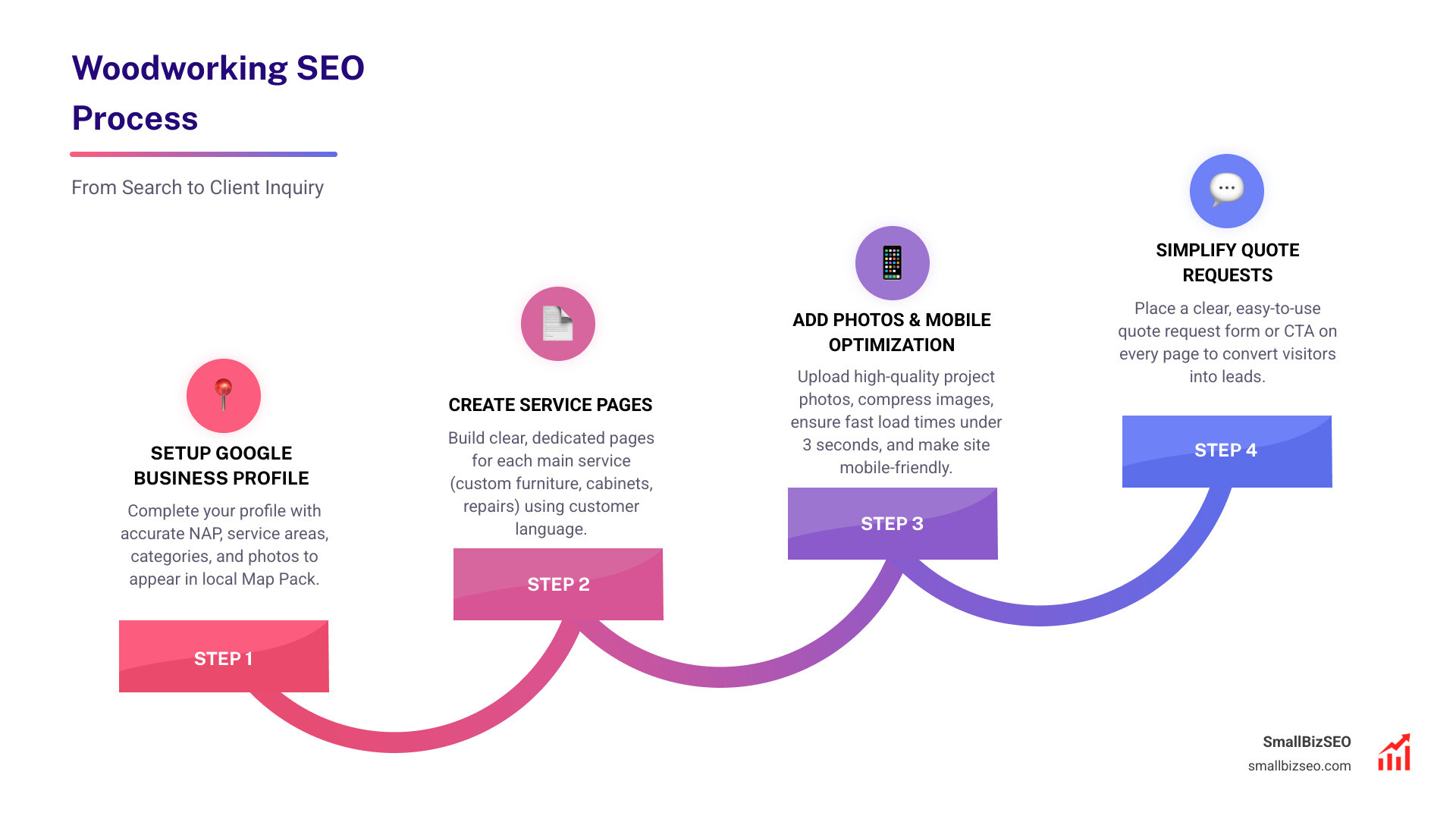
When an organic search strategy aligns with real buyer search behavior, it consistently turns online searches into qualified custom commissions.
Proven Strategies for Local and Technical SEO for a Woodworker
Achieving consistent rankings requires balancing local geographic signals with streamlined technical website architecture. Following foundational guidelines, like the official Google recommendations on tips to improve your local ranking on Google, ensures your business establishes trust with both search engine algorithms and prospective clients.
How Does Local Search Optimization and Google Business Profile Drive Leads?
Local search optimization drives immediate calls and project requests by putting your business in Google's Map Pack when nearby clients search for local woodcraft services.

To rank effectively in localized searches, claim and optimize your Google Business Profile with exact consistency:
- Name, Address, and Phone (NAP) Consistency: Keep your business name, operating address, and phone number identical across your profile, your website, and local trade citations.
- Service Categories: Select precise primary categories, such as "Cabinet Maker" or "Furniture Maker," rather than generic labels.
- Project Photography: Upload 6 to 10 clear, high-resolution photos showcasing finished builds, shop tools, and in-progress joinery.
- Client Reviews: Systematically request authentic client feedback right after completing and delivering a project.
A simple review request message can make a substantial difference:
"Thanks for letting us build your new dining table! Would you mind leaving a quick Google review mentioning the project and how it turned out?"
When satisfied clients mention specific details—such as "custom walnut dining table" or "built-in bookcase"—search engines associate your profile with those specific search terms. For a deeper look at ranking in map results, review our guide to local search optimization basics and our complete local SEO guide.
What Are the Best Keyword Research Tactics in SEO for Woodworker Websites?
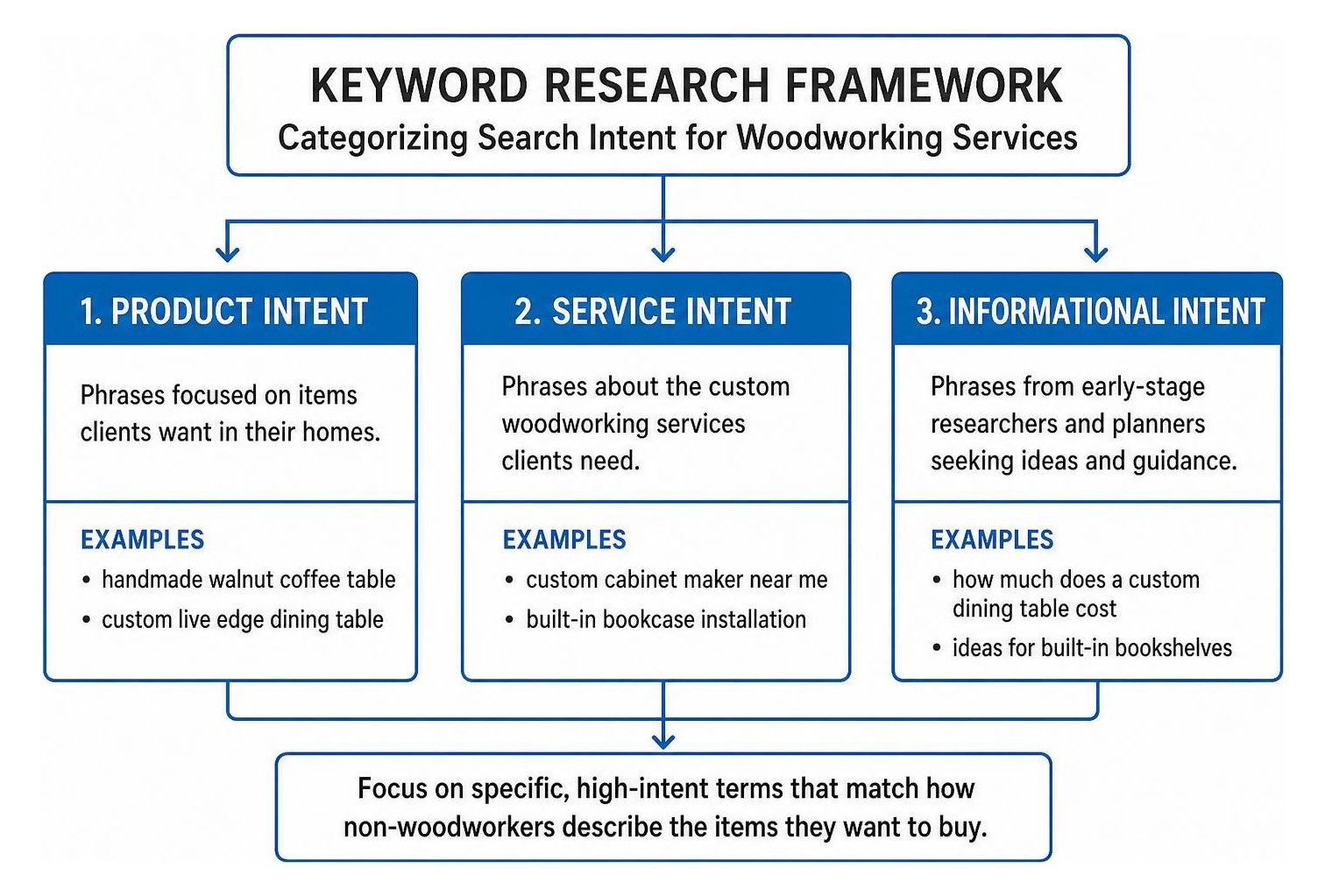
The best keyword strategy focuses on specific, high-intent terms that match how non-woodworkers describe the items they want to buy.
Many artisans mistakenly target overly broad terms like "wood table" or internal shop jargon such as "blind mortise and tenon." Mass-market e-commerce retailers dominate broad head terms, while regular homeowners rarely search for specialized joinery terms.
Instead, organize your keyword research into three clear intent buckets:
- Product Intent: Phrases focused on items clients want in their homes (e.g., "handmade walnut coffee table," "custom live edge dining table").
- Service Intent: Queries focused on specialized fabrication or installation (e.g., "custom kitchen cabinet builder," "slab leveling service"). Similar strategies work well for kitchen cabinet showrooms and custom shops targeting high-ticket residential renovations.
- Location Intent: Searches tying skills to specific areas (e.g., "custom millwork contractor," "wood furniture maker near me").
As explained in practical industry guides like the Bad Owl Tool woodworking SEO guide, targeting long-tail, buyer-focused search queries delivers higher-intent traffic and cuts through generic competition.
How Does Etsy SEO Differ from General Website SEO for Woodworkers?
Etsy SEO focuses on internal marketplace rankings using direct title matching and listing tags, whereas website SEO focuses on crawling, backlinks, technical speed, and comprehensive search engine indexation.
| Feature / Element | Etsy Marketplace SEO | Independent Website SEO |
|---|---|---|
| Primary Algorithm Focus | Listing tags, title keywords, listing conversion rate, seller reviews | Content depth, backlinks, technical health, search intent |
| Tagging System | Exactly 13 customizable listing tags | Metadata, semantic schema markup, header tags (H1-H3) |
| Search Intent | Gifting, room decor, occasion-based items | Local commissions, commercial fabrication, custom builds |
| Backlink Requirements | Minimal impact on internal Etsy search | High impact; top ranking factor for independent websites |
| Conversion Mechanics | Instant checkout via marketplace cart | Project intake forms, custom quotes, consultation calls |
On Etsy, buyers typically search for gifts and specific home accessories. In fact, case studies in the Wood Craft Blueprints Etsy SEO breakdown show that shifting listing titles from technical jargon to buyer-focused terms (such as changing "Handcrafted Custom Walnut Shelf" to "Floating Wood Shelf for Kitchen") helped one shop scale from $100 per month to $15,000 per month. On your independent website, however, you have complete control over technical optimization, long-form content, and direct client acquisition.
What On-Page and Visual Content Optimization Steps Improve Rankings?
Effective on-page optimization requires structuring your website with dedicated project pages, compressed media files, and structured schema markup.

To build strong on-page search performance:
- Adopt a Single-Project URL Structure: Dedicate a specific URL to each major project or plan (such as
/work/custom-white-oak-credenza/) rather than bundling dozens of past commissions onto a single, slow-loading page. - Optimize Image Delivery: Visual portfolios can quickly slow down a website. Users that leave your site increase by 32% when load time increases from 1 to 3 seconds. Compress portfolio images, convert them to modern formats like WebP, and write descriptive alt text (e.g.,
alt="Custom mortise and tenon white oak dining table"). - Implement Structured Data: Add Schema.org structured data to your pages. As highlighted in Ranktracker's guide on woodworking plans and tutorials SEO, using
HowToschema on build guides andProductorLocalBusinessschema on service pages helps search engines parse and display rich snippet results. - Use Qualifying Project Forms: Instead of a generic contact form, ask for project scope, room dimensions, wood species preferences, and target budgets to qualify inbound leads automatically.
What Common Mistakes Undermine SEO for a Woodworker?
Several recurring errors can quietly stall organic search visibility for woodworking websites:
- Targeting Broad Generic Terms: Trying to rank nationally for terms like "furniture" or "woodworking" puts you up against mass-market retailers.
- Relying Solely on Jargon: Writing about lumber cuts and tooling without mentioning room placement, design style, or everyday utility confuses non-expert buyers.
- Overlooking Mobile Usability: Slow mobile navigation turns away the 64% of trade clients browsing from smartphones.
- Ignoring Backlinks and Outreach: Backlinks remain the number one contributing factor to competitive search rankings. Failing to partner with local interior designers, home builders, or maker publications limits your domain authority.
- Broken Lead Forms: Overlooking regular website maintenance can lead to broken intake buttons or unmonitored quote forms that quietly cost you valuable projects.
Actionable Next Steps to Build Long-Term Workshop Authority
Building a steady stream of custom woodworking leads is a step-by-step process:
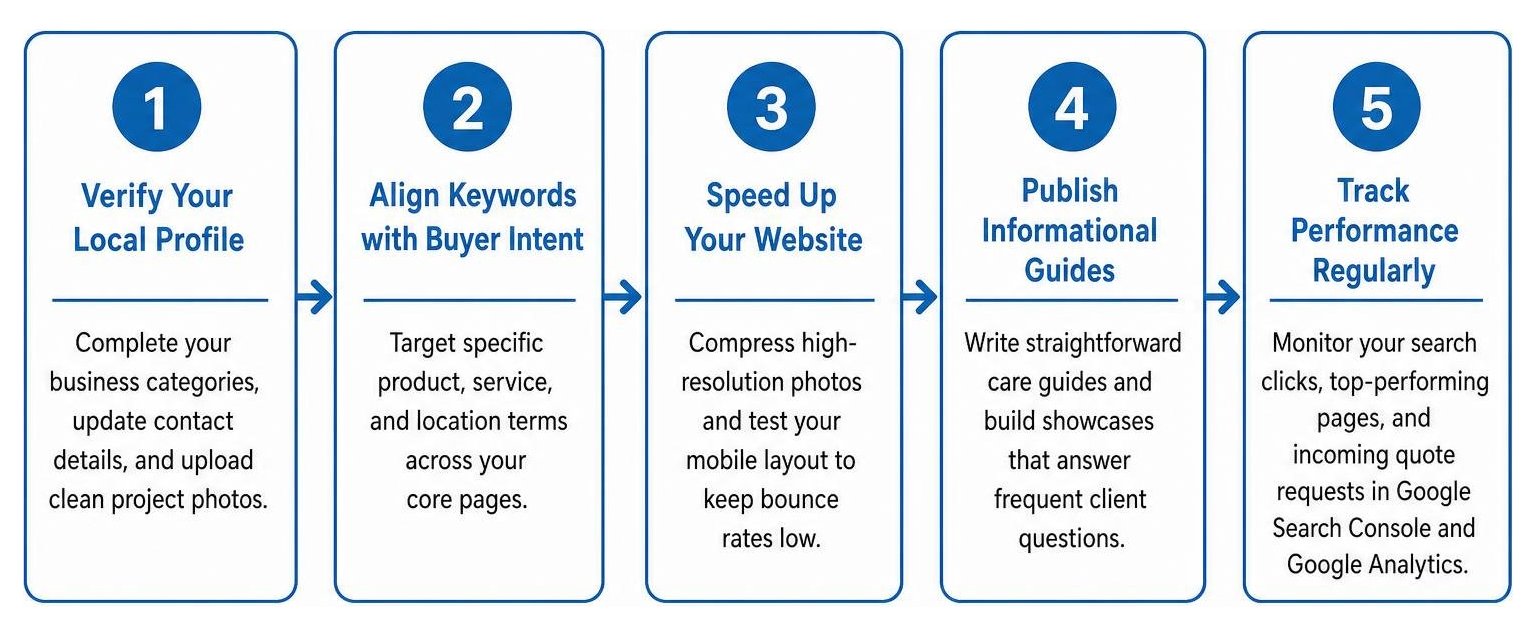
- Verify Your Local Profile: Complete your business categories, update contact details, and upload clean project photos.
- Align Keywords with Buyer Intent: Target specific product, service, and location terms across your core pages.
- Speed Up Your Website: Compress high-resolution photos and test your mobile layout to keep bounce rates low.
- Publish Informational Guides: Write straightforward care guides and build showcases that answer frequent client questions.
- Track Performance Regularly: Monitor your search clicks, top-performing pages, and incoming quote requests in Google Search Console and Google Analytics.
If you want an experienced team to handle the technical heavy lifting, we help trades and custom creators scale their businesses through our data-driven "Velocity" framework. Explore our tailored SEO packages to build lasting search visibility and keep your workbench busy with high-value commissions.