Boost Your Tasting Room Bookings Using High-Impact Local SEO Tactics
How Can SEO Help a Wine Bar Get More Bookings?
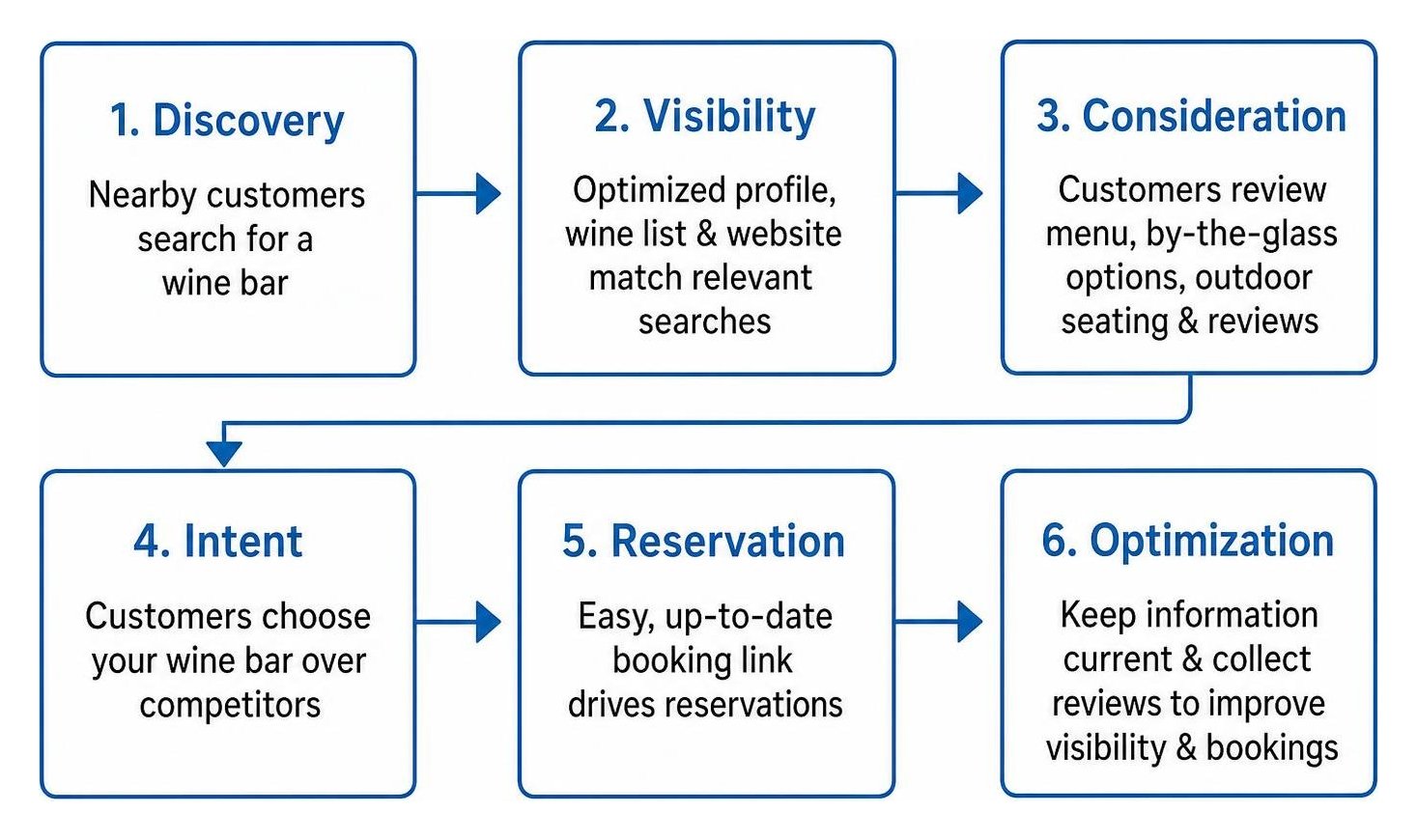
SEO for a wine bar starts with helping nearby customers find you and book a visit. Set your Google Business Profile category to "Wine Bar" if that describes your main business. Keep your hours and booking link current, put your wine list on a mobile-friendly HTML page, and show what makes the space worth visiting, from by-the-glass options to outdoor seating. These steps help Google match your bar to relevant searches and help customers decide where to go.
I'm Clayton Johnson, founder of SmallBizSEO. My work in local search, website content, and link building shapes this approach to SEO for wine bar owners: make the right information easy to find, then make the next step easy to take.
Core Strategies: How to Master SEO for Wine Bar Growth and Bookings
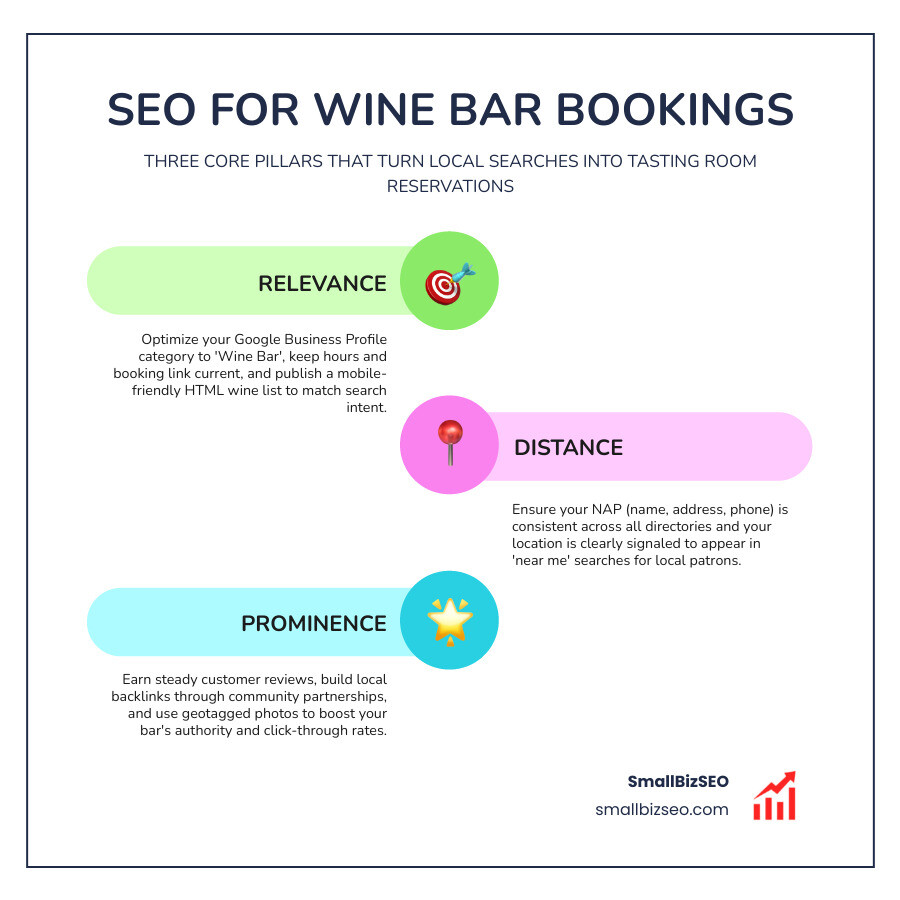
Dominating local search results requires aligning your digital footprint with Google's three core ranking pillars: relevance, distance, and prominence. By presenting crawlable menu details, maintaining verified profiles, and collecting steady customer feedback, you ensure that high-intent patrons choose your tasting room over competitors. Following Google's established guidelines for improving local ranking allows your business to appear right when potential guests are searching for an evening spot.
What Is the Difference Between SEO for a Wine Bar and a Winery?
A wine bar focuses on capturing immediate, local foot traffic and evening reservations, whereas a winery prioritizes tourism planning and direct-to-consumer bottle sales. Understanding this distinction prevents you from wasting marketing effort on keywords that do not generate local bar patrons.
Wineries target visitors planning trips weeks in advance alongside nationwide ecommerce buyers, as noted in Franc Wine's practical guidance on wine marketing. In contrast, wine bars operate as urban hospitality hubs. More than 80% of dining decisions begin on mobile devices with immediate intent queries like "wine bar near me" or "open now." Applying dedicated hospitality search engine optimization ensures you capture patrons ready to walk through your door tonight.
| SEO Dimension | Wine Bar Strategy | Winery / Vineyard Strategy |
|---|---|---|
| Primary Intent | Immediate local foot traffic, tonight's drinks | Advance trip planning, tasting tours, ecommerce |
| Core Search Queries | "Wine by the glass," "natural wine bar," "date night" | "Winery tours," "Pinot Noir order online," "tasting flights" |
| GBP Primary Category | Wine Bar, Tapas Bar, Wine Club | Winery, Vineyard, Tourist Attraction |
| Conversion Action | Table reservation, walk-in directions, phone call | Tasting room tour booking, online bottle checkout |
| Key Web Assets | Live HTML wine-by-the-glass menu, patio details | Vineyard terroir story, shipping rules, wine club portal |
How Do You Optimize Google Business Profile and Local Pack Rankings for a Wine Bar?
To optimize your Google Business Profile (GBP), select "Wine Bar" as your primary category, connect a direct reservation booking button, and upload a continuous stream of authentic photos.
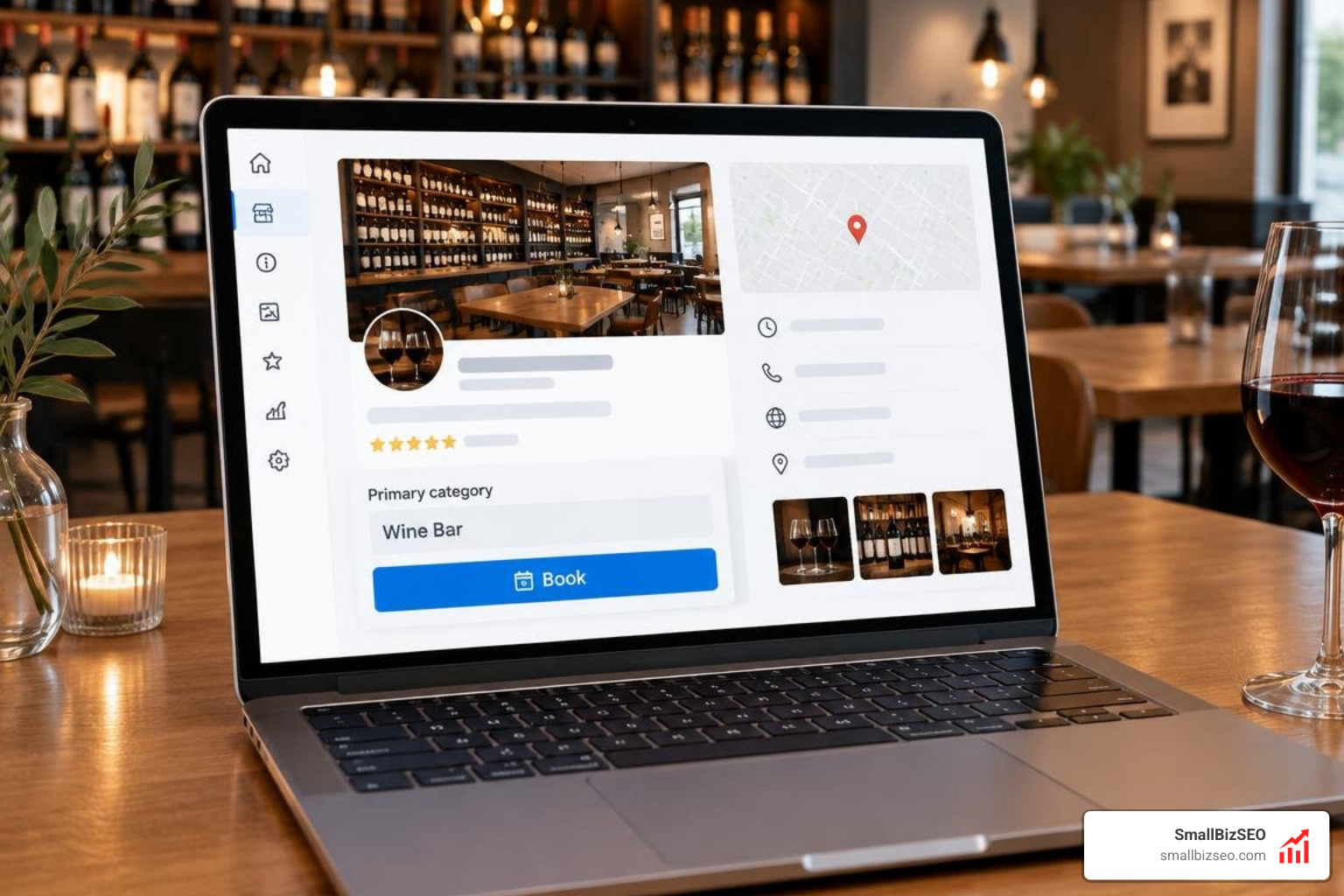
GBP signals account for roughly 15% to 17% of local pack ranking weight—the single largest factor alongside review signals. In local search analysis, the three highest-scoring individual ranking factors are Primary GBP Category, Proximity to Search Location, and Keywords in the GBP Business Title.
To maximize your local pack visibility through systematic Google Business Profile management:
- Lock in Your Primary Category: Select "Wine Bar" as your primary category. Add relevant secondary categories such as "Bar," "Restaurant," or "Lounge" only if they accurately reflect your offerings. Mislabeling your venue dilutes your relevance for local drink searches, a dynamic explored in Storefront Audit's case analysis on winery local SEO.
- Integrate Direct Booking Buttons: Add a direct booking link using integrated providers like Resy, OpenTable, or Tock. This removes two to three clicks from the customer journey, capturing same-day impulse guests.
- Maintain Strict NAP Consistency: Ensure your Name, Address, and Phone number match identically across your website, GBP, and directories. Matching HTML NAP to GBP NAP ranks 15th among all 187 local search ranking factors, while overall citation consistency ranks 28th.
- Publish Visual Content Regularly: Businesses with more than 100 photos receive 520% more calls and significantly more direction requests than those with fewer than 10 photos. Post high-quality images of wine pours, charcuterie boards, and ambient seating weekly.
Why Is a PDF Menu Hurting SEO for a Wine Bar, and How Do You Fix It?
PDF menus hurt your search performance because search engines struggle to connect PDF text to your site's architecture, and mobile users often abandon slow-loading file downloads.
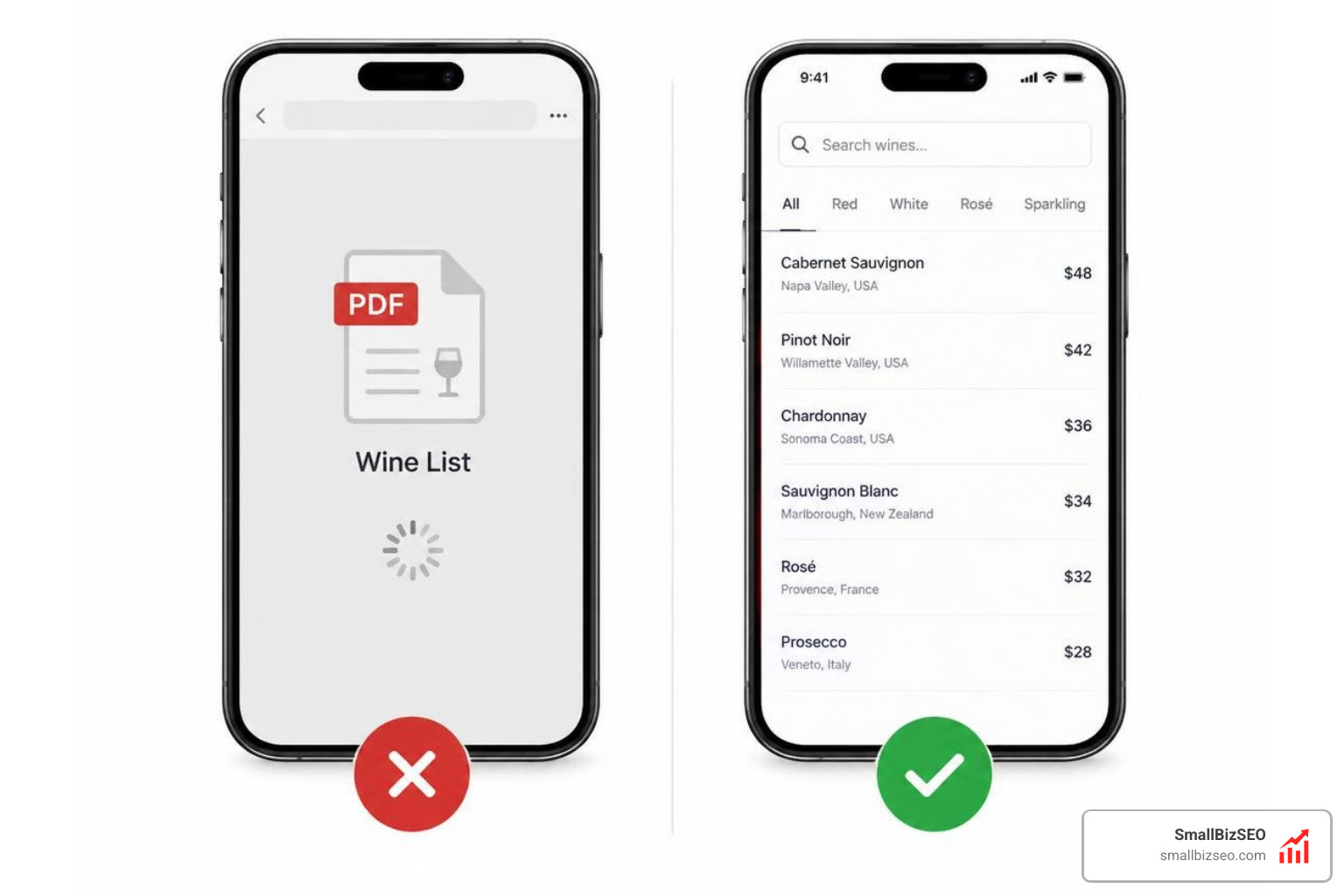
When your wine list is locked in a PDF, Google cannot easily index individual varietals, natural wine producers, or grape regions in association with your physical location. By replacing static files with dynamic HTML pages and applying proven on-page SEO techniques, you transform every bottle and glass into a searchable asset.
- Create Dedicated Menu Pages: Publish your wine list directly in semantic HTML using clean header hierarchy (such as
H2for "Sparkling & Orange Wine" andH3for specific regions). - Target Granular Producer Queries: Mention specific wine styles, natural producers, and regions (such as "Biodynamic Gamay" or "Jura White Wine") to capture educated wine lovers who spend more per visit.
- Enable Fast Mobile Navigation: An HTML menu loads instantly on cellular networks, keeping bounce rates low and allowing patrons to filter by dietary preferences or price.
How Do You Structure Data and Schema Markup for Maximum Discoverability?
Implementing structured JSON-LD schema markup gives search engines direct, machine-readable facts about your wine bar’s menu items, operating hours, price range, and geographic coordinates.
Structured data removes ambiguity, allowing search engines and AI discovery systems to understand your business entity instantly. Adding comprehensive Schema markup helps you secure rich snippets, such as interactive menu previews, directly in the search results:
- LocalBusiness & Bar Schema: Declare your official entity type using
@type: "BarOrPub"or"Winery". - Exact Opening Hours Specification: Clearly format opening hours, including specific late-night and happy hour times, preventing inaccurate "Closed" tags on maps.
- Menu and MenuItem Schema: Mark up individual wine offerings, including glass prices, bottle prices, and dietary tags like vegan, organic, or low-intervention.
- The
sameAsProperty: Link your official social profiles, review directories, and press mentions within your structured code to solidify your business entity across the web.
How Do You Target Occasion Keywords and High-Converting Wine Terms?
Target high-converting wine terms by building dedicated landing pages around specific patron intents, such as date nights, beginner tastings, private events, and outdoor seating.
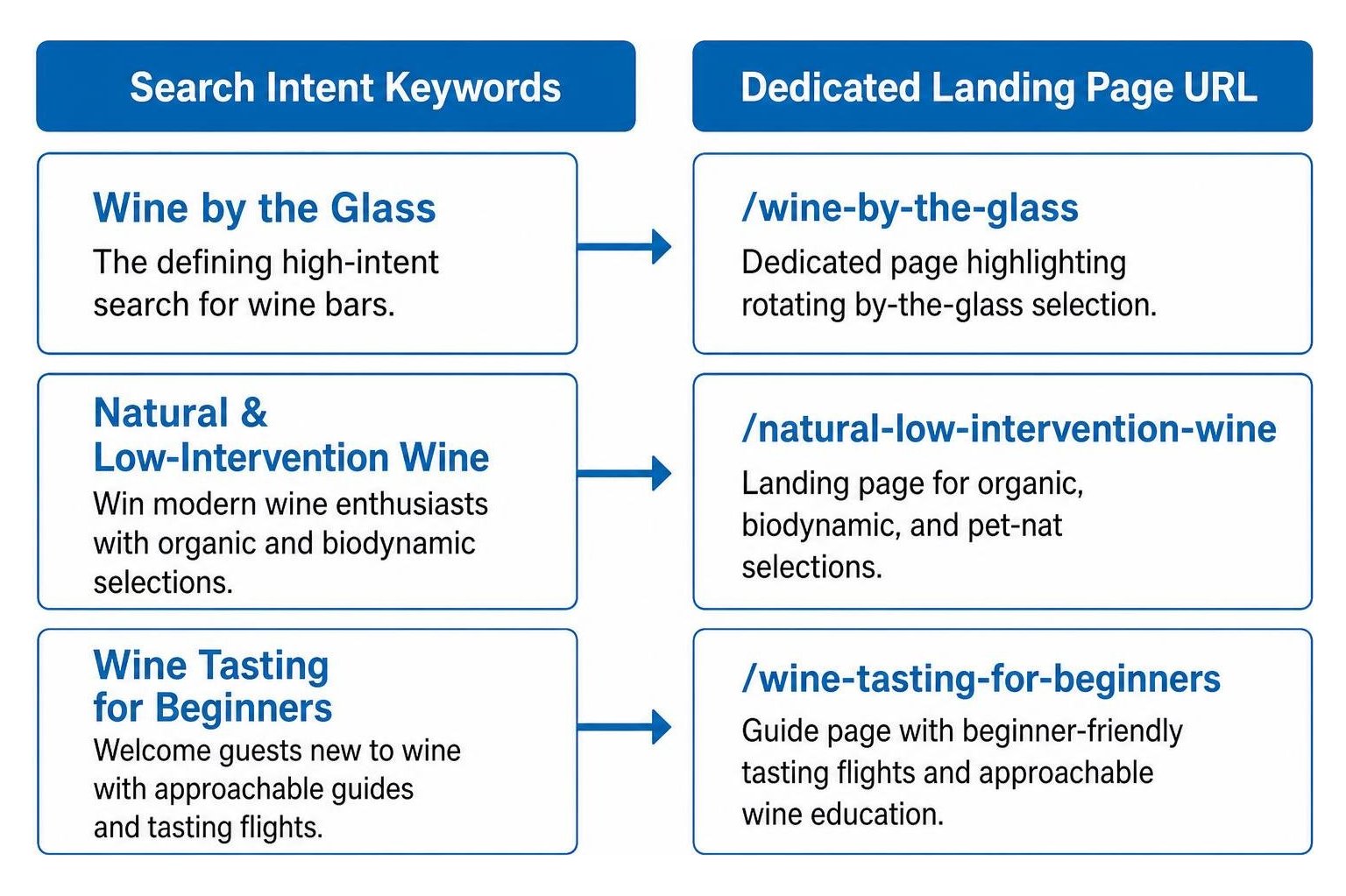
Patrons rarely search solely for generic terms. Instead, they search by the specific experience they want to enjoy. Implementing local search optimization basics through targeted occasion pages allows you to capture niche, high-converting traffic:
- "Wine by the Glass": The defining high-intent search for wine bars. Create a dedicated section highlighting your rotating by-the-glass selection.
- "Natural & Low-Intervention Wine": Build a landing page dedicated to organic, biodynamic, and pet-nat selections to win modern wine enthusiasts.
- "Wine Tasting for Beginners": Write approachable, jargon-free guides on tasting flights to welcome guests who find traditional wine terminology intimidating.
- Occasion-Based Pages: Publish landing pages targeting phrases like "best date night wine bar," "wine bar with heated outdoor patio," and "private room wine tastings."
How Can Customer Reviews, Local Backlinks, and Visual Assets Drive Prominence?
Building prominence requires maintaining a steady stream of positive customer reviews, earning local media backlinks, and optimizing localized image assets.
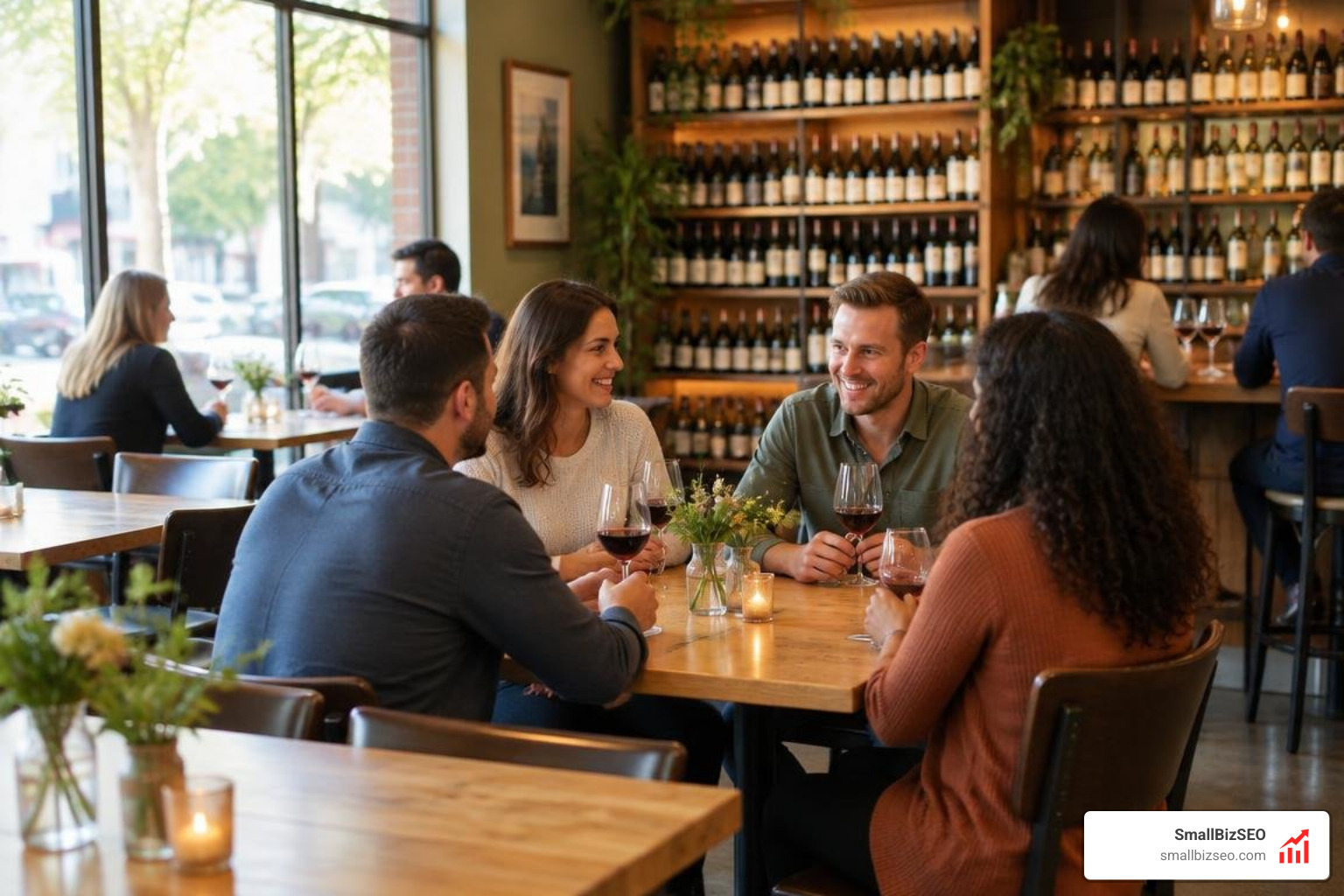
Prominence reflects how established and reputable your wine bar appears across the web:
- Maintain Review Velocity: A venue collecting two to three genuine reviews weekly will frequently outrank a competitor with hundreds of stale, months-old reviews. Use QR codes on table cards or check presentation folders to make reviewing effortless.
- Respond to All Feedback: Address both glowing praise and constructive criticism personally. Incorporating natural context into responses (such as "Glad you enjoyed our chilled Orange Wine flight") reinforces keyword relevance.
- Earn Local Backlinks: Partner with neighboring businesses, sponsor community charity events, and collaborate with regional food and lifestyle writers to secure authoritative local links.
- Optimize Visual Files: Descriptive file names and neighborhood-specific alt tags (such as "cozy-indoor-booth-seating-wine-bar.jpg") help your imagery rank in Google Image searches and Maps previews.
Fill Your Tasting Room Tables With High-Impact Local Search
Mastering local search ensures your wine bar stands out when nearby guests are deciding where to drink, relax, and connect. By building structured HTML menus, optimizing your Google Business Profile, and actively managing customer reviews, you turn passive online searches into reserved tables and steady revenue.
Explore SmallBizSEO's tailored SEO packages to implement a data-driven local search strategy that consistently fills your tasting room seats.