Broken Link Building: Turn Dead Links into Ranking Power

What Is Broken Link Building and How Does It Work?
Broken link building means finding a dead link on another website and suggesting a relevant page on your site to replace it. Start by checking resource pages in your field for broken links. Then confirm the link no longer works, find out what the missing page covered, and offer the site owner a useful replacement. If they update the link, you gain a backlink and their readers get a working resource.
The match matters more than the pitch. A page that answers the same question as the missing one gives the site owner a good reason to make the change.
I’m Clayton Johnson, founder of SmallBizSEO. My work connects SEO, content, and digital PR to help small businesses build authority; in this guide, I’ll show you how to approach broken link building with that same focus on usefulness.
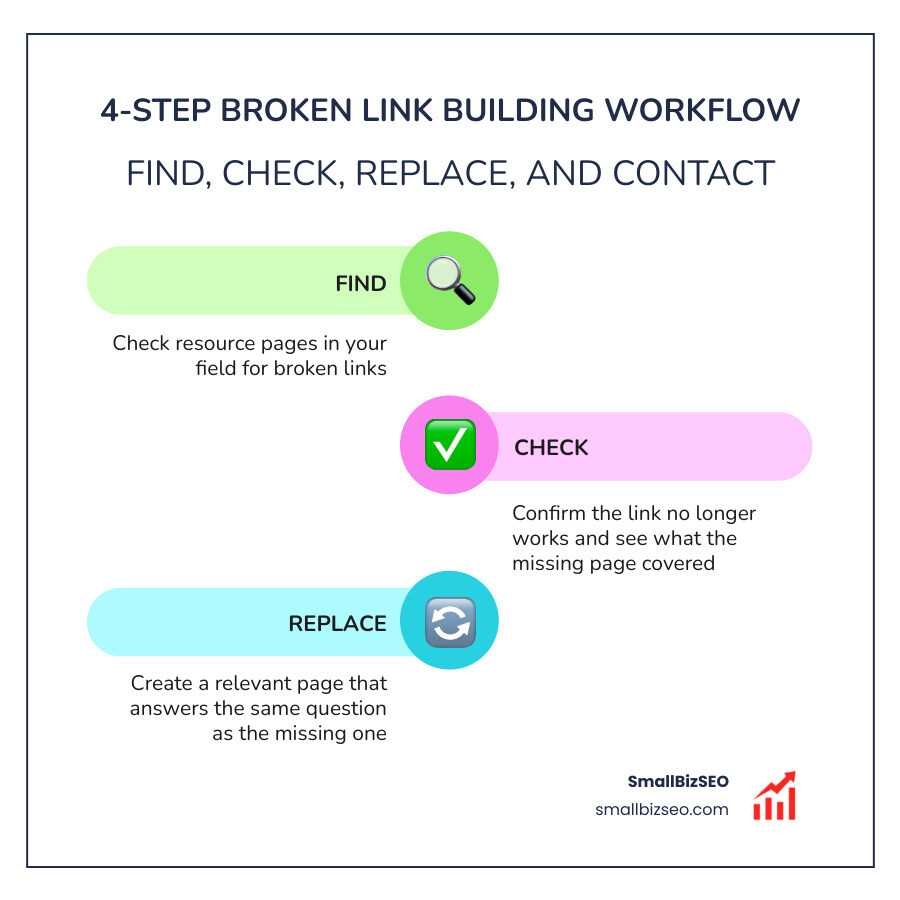
Broken link building works by tackling natural link rot across the web. When websites rebrand, shut down, or delete old articles, the sites pointing to them are left hosting 404 error codes. By stepping in to identify these dead links, you serve as a helpful partner to webmasters. You highlight an issue that hurts their site, supply a ready-to-use solution, and earn a high-value backlink in return.
Because you are helping webmasters clean up broken resources without asking for paid placement, search engines recognize this approach as a clean, white-hat SEO strategy. It focuses on improving user experience while passing natural authority to your site.
Why Do Dead Links Create High-Converting SEO Opportunities?
Dead links convert well because they allow you to deliver immediate editorial value before making an ask. Rather than pitching a generic guest post or cold resource addition, you help site owners fix functional errors on their pages.
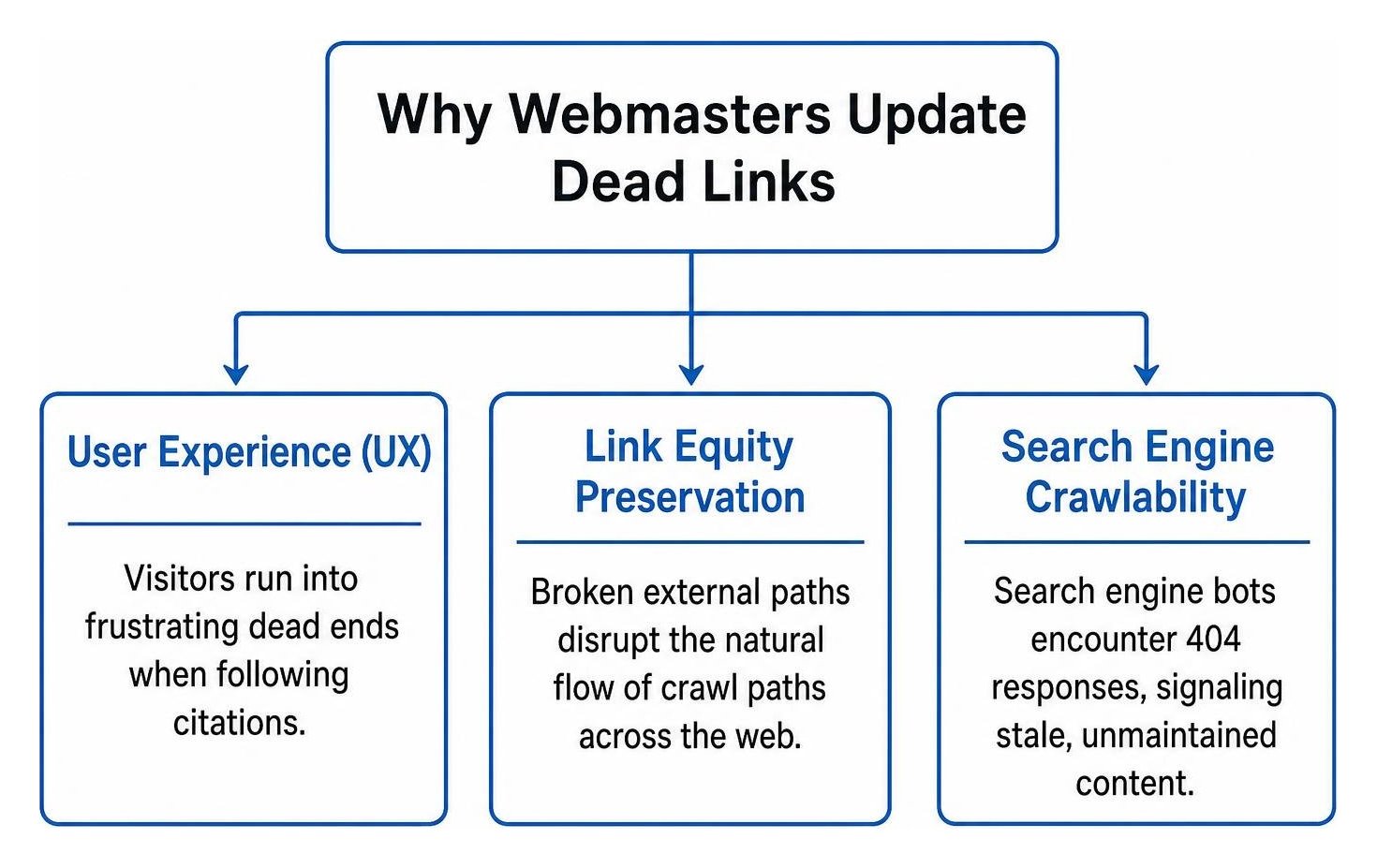
Every broken outgoing link harms a site in three distinct ways:
- User Experience (UX): Visitors run into frustrating dead ends when following citations.
- Link Equity Preservation: Broken external paths disrupt the natural flow of crawl paths across the web.
- Search Engine Crawlability: Search engine bots encounter 404 responses, signaling stale, unmaintained content.
Helping editors solve these issues builds instant rapport. By pointing out a broken resource alongside a relevant alternative on your domain, you preserve link equity across the web. This process mirrors the principles of internal link reclamation, giving webmasters a painless way to keep their content reliable.
How Can You Find and Recreate Dead Pages?
To build an effective campaign, you must first uncover high-authority dead URLs that have accumulated quality links over time, and then publish an updated resource matching the original topic. A comprehensive study on how to gain value from broken backlinks demonstrates that proactively surfacing these dead ends lets you capture referral traffic and boost rankings simultaneously.
How Do You Find Broken Link Building Opportunities?
You can identify viable opportunities through competitor audits, resource page discovery, and targeted reference searches.
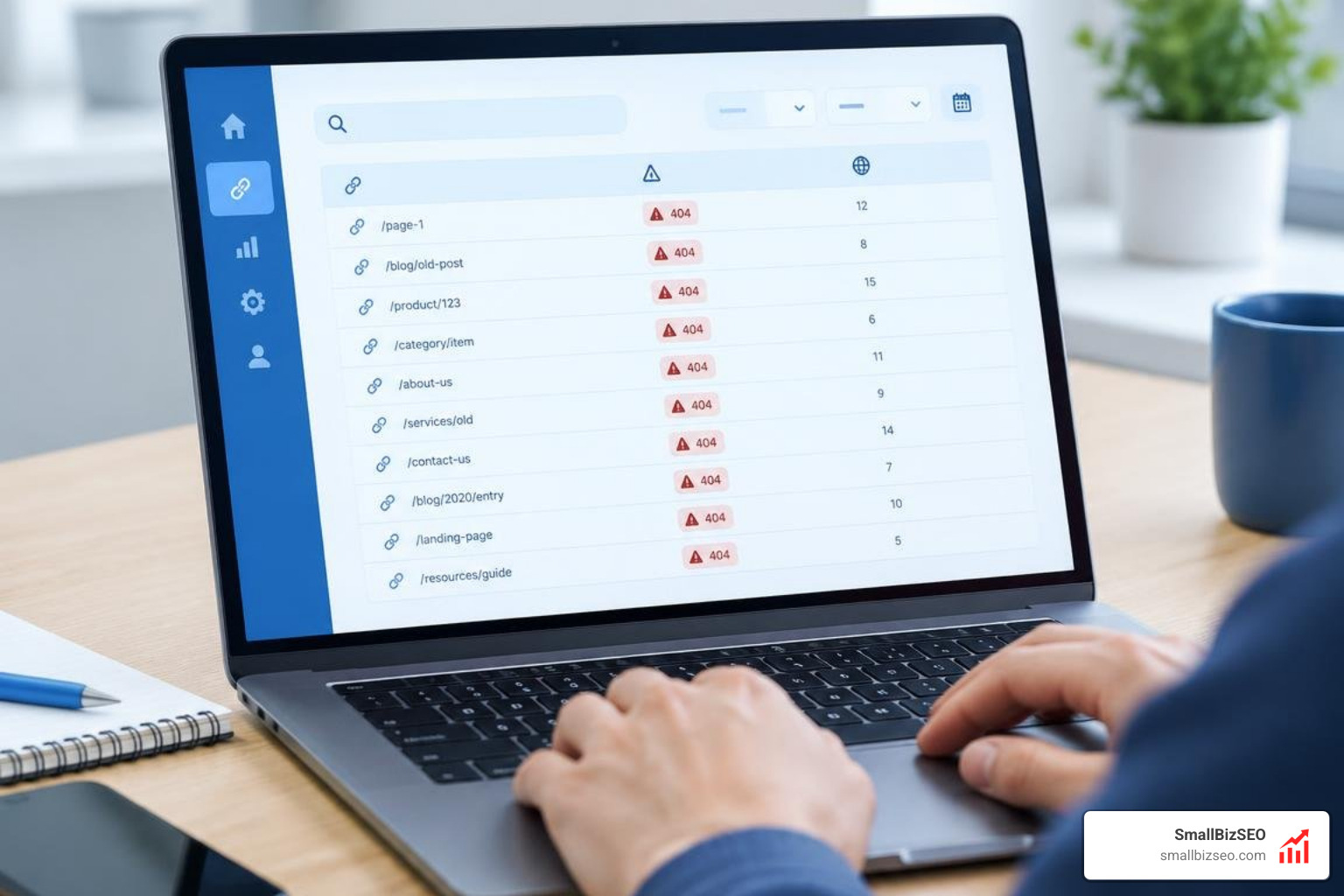
Here is how to structure your search process:
- Competitor 404 Discovery: Plug your top industry competitors into backlink analysis tools. Filter their pages by HTTP status 404 and sort by the highest number of linking root domains. For instance, discovering a defunct industry guide or a discontinued software tool can instantly reveal dozens of relevant targets.
- Resource Page Prospecting: Curated lists and industry resource pages often host dozens of external citations. A page with nearly 200 external links is 38 times more likely to contain dead links than a page with only five. You can run an in-depth external link analysis on these hubs using browser extensions like Check My Links.
- Advanced Google Search Operators: Uncover active resource hubs by running targeted queries in Google:
keyword + inurl:resourceskeyword + intitle:linkskeyword + "helpful resources"keyword + "useful resources"site:wikipedia.org "keyword" intext:"dead link"
This multi-channel approach uncovers both broad resource lists and topic-specific dead pages that have already earned strong trust signals.
How Do You Create a 1:1 Replacement Linkable Asset?
To earn replacements consistently, your replacement asset must directly serve the search intent of the original dead resource while offering modern improvements.
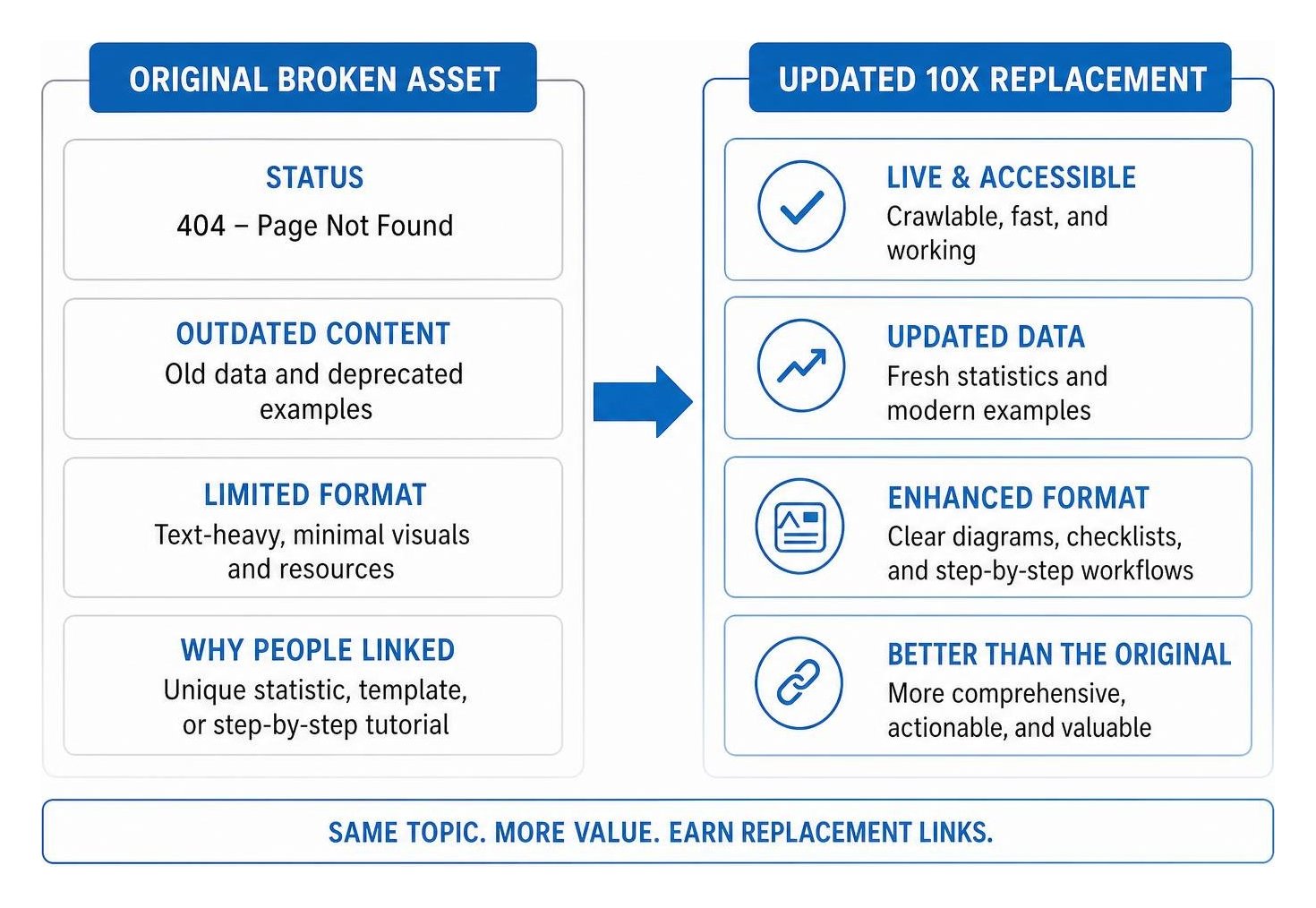
Start by dropping the dead URL into the Wayback Machine. Review what made the original page valuable. Did sites link to it because of a unique industry statistic, a downloadable template, or a step-by-step tutorial? Understanding whether webmasters linked for a specific data point or a broad overview helps you shape the replacement.
From there, create a comprehensive linkable asset that elevates the original material:
- Update all outdated data points and replace deprecated examples.
- Add clear diagrams, actionable checklists, or step-by-step workflows.
- Structure headings cleanly so editors can quickly verify topical relevance.
Publishing a resource with superior depth and accuracy makes accepting your replacement an easy choice for editors, ultimately driving improvements in your overall domain authority.
How Should You Run Outreach and Choose a Link-Building Strategy?
Successful outreach requires delivering value first, identifying the right editorial contacts, and maintaining a polite follow-up routine.
How Do You Run Broken Link Building Outreach?
Find the individual responsible for updating site content, such as a content manager, webmaster, or managing editor. Avoid generic contact forms whenever possible.
When reaching out, follow these core practices:
- Use Clear, Direct Subject Lines: Open with a clear subject like
Broken link on [Site Name]orQuick issue on your [Topic] guide. - Provide Visual Proof: Mention the exact anchor text, paste the broken URL, and note where it sits on the page. Including a screenshot speeds up the verification process for busy editors.
- Pitch a Natural Alternative: Introduce your replacement politely without aggressive demands. Mention why it serves as an accurate, up-to-date substitute.
If you are drafting your campaign, our proven link building email outreach template can help you structure messages that balance politeness with clarity.
When Is Broken Link Building Worth It Compared With Other Link-Building Approaches?
Broken link building delivers the strongest return when you locate dead assets with large volumes of quality referring domains. If a dead page has only one or two low-quality links, creating custom content from scratch may not yield a strong return on your time.
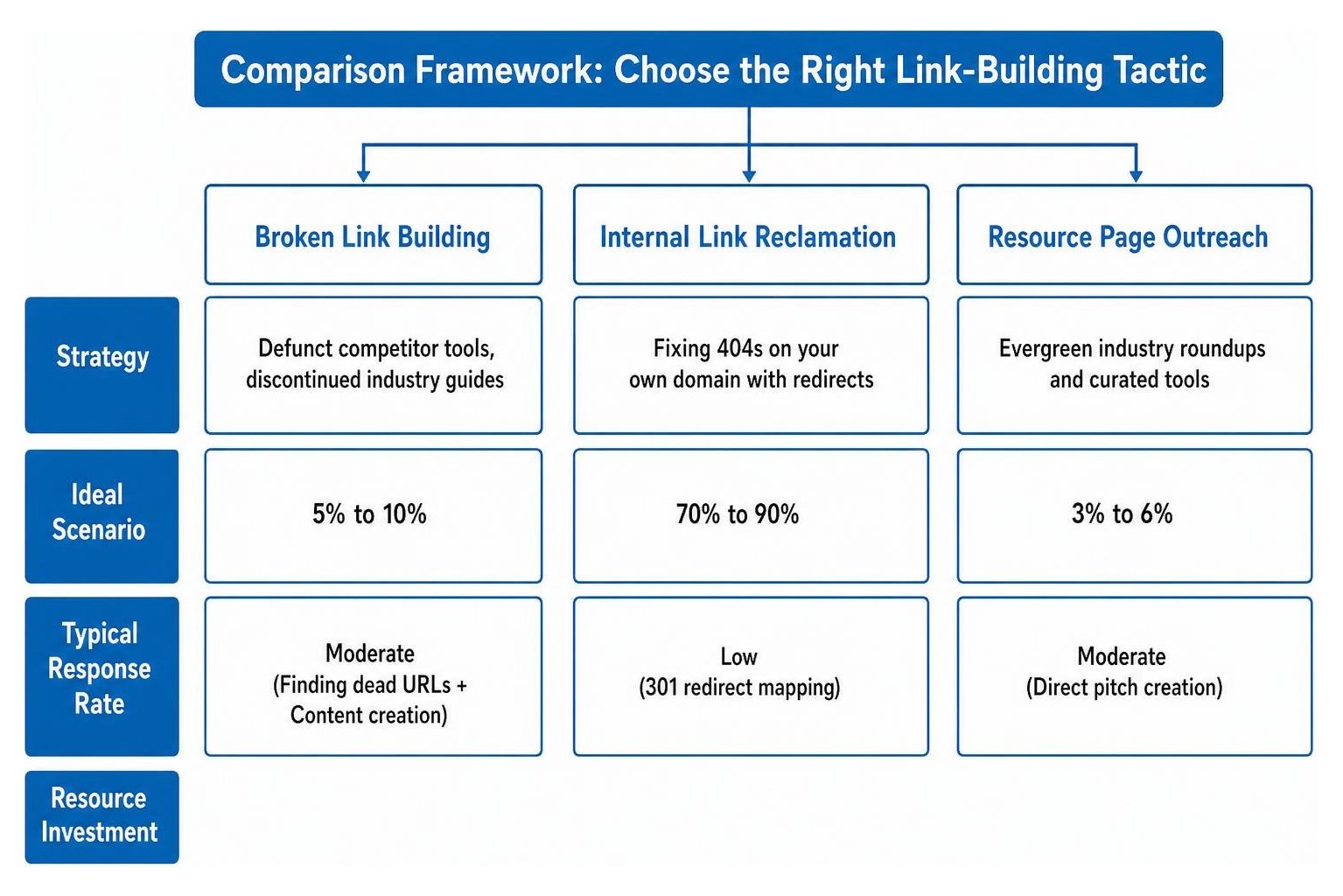
| Strategy | Ideal Scenario | Typical Response Rate | Resource Investment |
|---|---|---|---|
| Broken Link Building | Defunct competitor tools, discontinued industry guides | 5% to 10% | Moderate (Finding dead URLs + Content creation) |
| Internal Link Reclamation | Fixing 404s on your own domain with redirects | 70% to 90% | Low (301 redirect mapping) |
| Resource Page Outreach | Evergreen industry roundups and curated tools | 3% to 6% | Moderate (Direct pitch creation) |
| Digital PR & Asset Promotion | Original research reports and new data studies | 8% to 15% | High (Original data gathering) |
At SmallBizSEO, we combine these tactics within our data-driven "Velocity" framework. By executing technical audits, creating targeted content assets, and running transparent outreach, our link building services help businesses secure authoritative links quickly and efficiently.
Turning Link Rot into Sustainable Search Growth
Broken links will always be a natural byproduct of a changing web. By discovering these abandoned URLs, analyzing why they originally earned links, and publishing modern replacements, you create a reliable engine for sustainable search visibility.
Focus on providing genuine value to editors, keep your communication helpful and concise, and replace dead ends with high-utility resources that keep search rankings climbing.