Cheat Sheet to Getting SEO Clients for Lawn Care & Mowing Services
How Can SEO Help Lawn Care and Mowing Services Get More Clients?
SEO for lawn care & mowing services starts with being easy to find and easy to hire. Complete your Google Business Profile, create a page for each core service, and make your phone number and quote form easy to use on mobile. Focus on towns your crews already serve, then ask customers for honest reviews after the job.
The goal is not just more website visits. It is more qualified inquiries and recurring customers on routes you can serve efficiently.
I’m Clayton Johnson, founder of SmallBizSEO. My work in technical SEO, content strategy, and link building helps small businesses connect search visibility with qualified leads; this guide applies that approach to SEO for lawn care & mowing services.
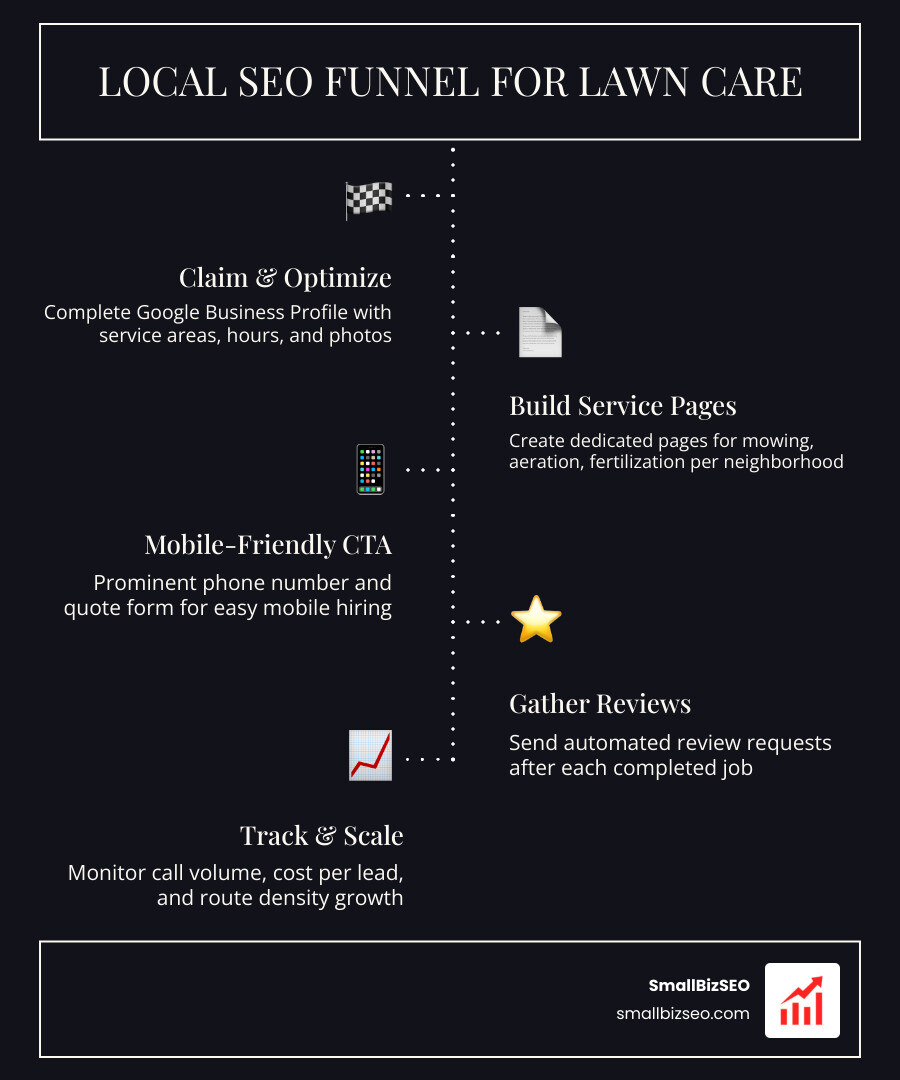
Basic SEO for lawn care & mowing services terms:
Why Local SEO for Lawn Care and Mowing Services Drives High-Density Routes
Local SEO drives high-density routes by positioning your business in front of nearby homeowners right when they look for recurring yard maintenance. When someone needs weekly mowing, seasonal fertilization, or weed control, they turn to search engines on their mobile phones.
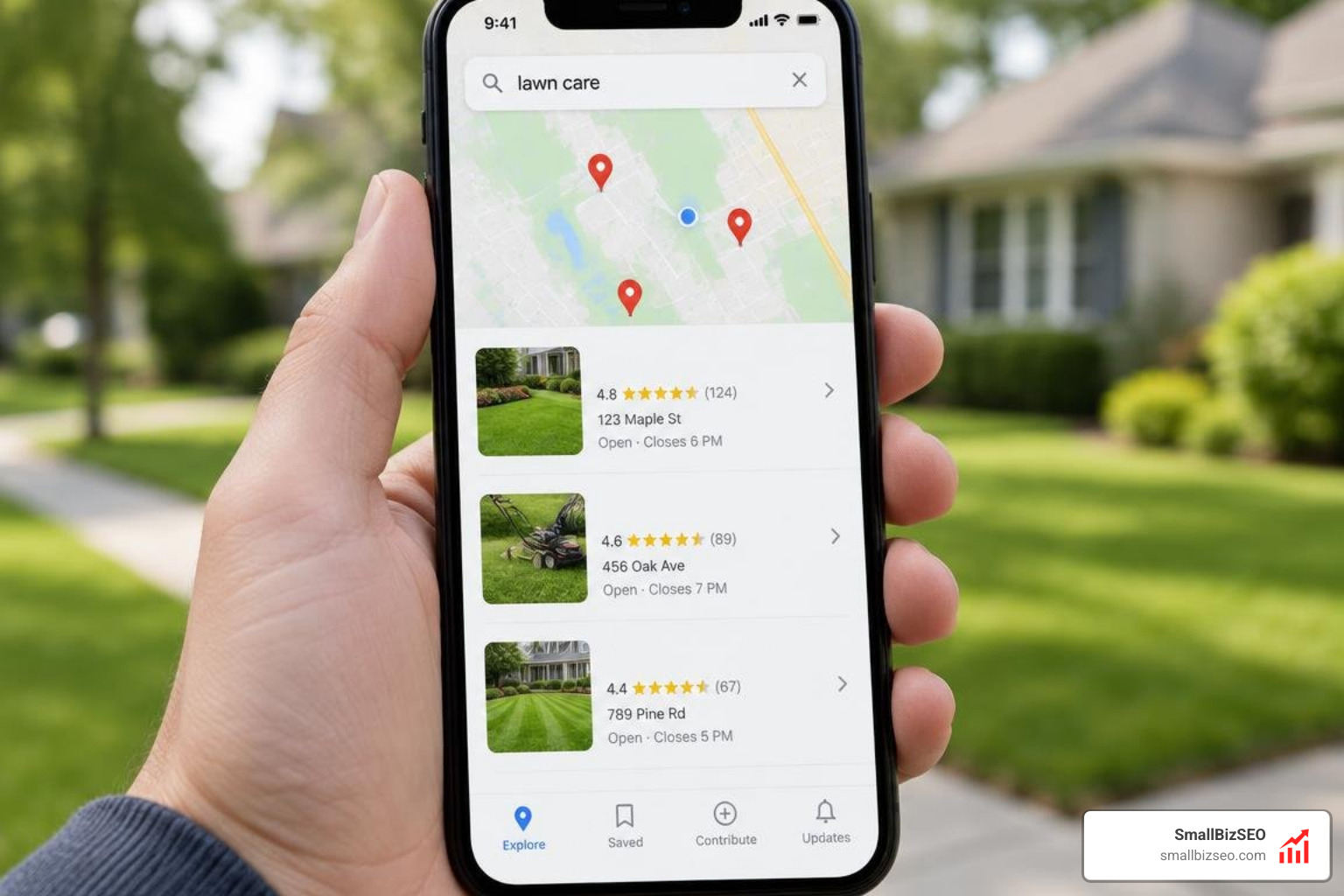
Roughly 46% of all Google searches carry local intent, and 88% of mobile searches for local services lead directly to a phone call or booking within 24 hours. For a mowing company, signing up clients three doors down from an existing property is far more profitable than driving across town for a one-off quote. Route density protects profit margins by reducing windshield time and fuel expenses.
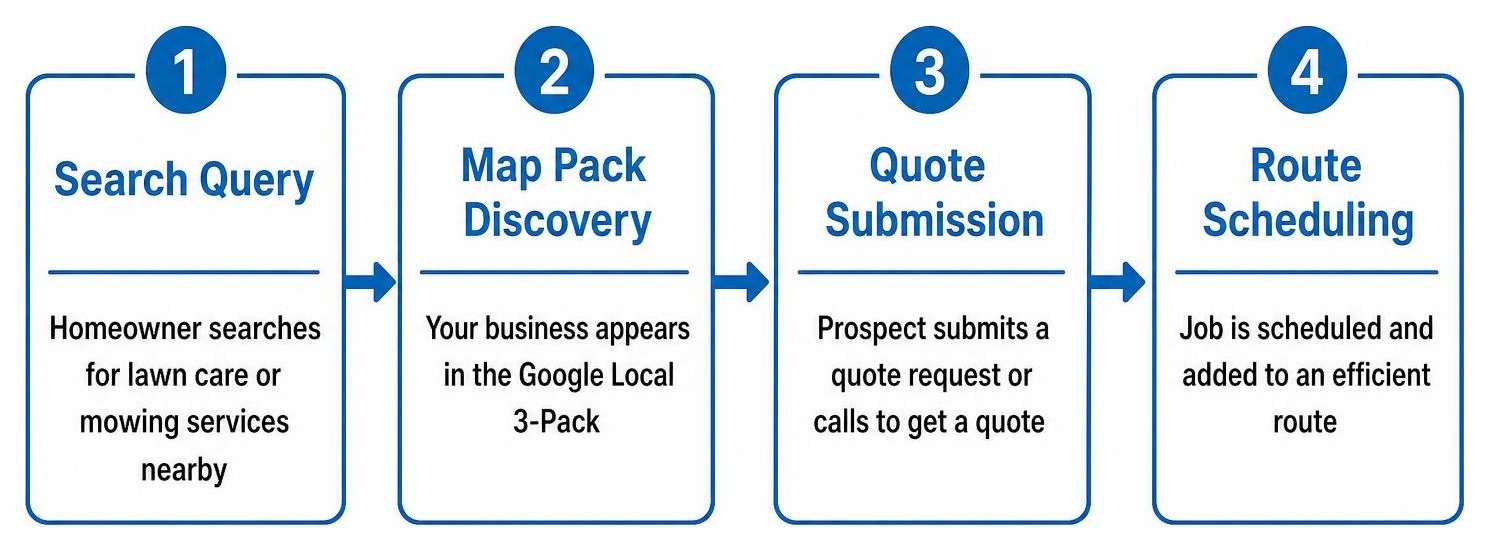
When you partner with a dedicated Local SEO Company, your digital footprint aligns with your physical service territory. Securing top placement in the Google Local 3-Pack captures high-intent traffic before users ever reach organic directory listings. Research shows the local map pack captures 40% to 60% of all mobile clicks. Following official guidelines to improve local ranking on Google ensures your business signals relevance, distance, and prominence across your chosen neighborhoods.
A high-converting website keeps potential clients engaged. Because the average website bounce rate sits near 37%, and every one-second delay in mobile page load time can reduce user satisfaction by 16%, speed and clear contact options directly protect your customer acquisition funnel.
What Are the Essential Core Tactics in SEO for Lawn Care & Mowing Services?
The essential tactics in SEO for lawn care focus on high-intent commercial keywords, clear site architecture, and seasonal search demand. Homeowners searching for lawn maintenance fall into two camps: those looking to hire a professional immediately and DIY researchers seeking gardening tips.
Keyword research must prioritize transactional phrases that generate recurring revenue over informational terms that drain administrative resources. The phrase "lawn care near me" generates 74,000 monthly searches and surges during peak spring sign-up periods. Similarly, searches for "lawn mowing service" reach 27,100 searches per month, showing sustained double-digit growth.
Targeting commercial phrases allows you to bypass expensive pay-per-click costs, where competitive bids often range between $12 and $17 per click. According to research on 189 SEO Keywords for Lawn Care Services, mapping service terms to dedicated landing pages captures qualified inquiries without relying on lead aggregators.
| Keyword Category | Search Phrase Example | Primary Search Intent | Lead Commercial Value |
|---|---|---|---|
| High-Intent Service | "lawn mowing service near me" | Transactional / Ready to Hire | High (Recurring Route Revenue) |
| High-Intent Service | "aeration and overseeding company" | Transactional / Quote Request | High (High-Margin Upsell) |
| High-Intent Service | "residential weed control program" | Transactional / Plan Sign-Up | High (Full-Season Contract) |
| Research / Low-Value | "how to fix yellow grass patches" | Informational / DIY Guide | Low (Non-Commercial Reader) |
| Price Shopper / Negative | "cheap lawn mowers for sale" | Informational / Product Search | Zero (Irrelevant Traffic) |
Publishing seasonal content 4 to 6 weeks before demand spikes ensures your pages rank when search volumes surge. For example, searches for "lawn aeration" average 110,000 queries per month and surge in early spring and early fall. Having optimized service pages ready ahead of these cycles captures early planners before competitors adapt.
How Do You Optimize Google Business Profile for the Local Pack?
You optimize your Google Business Profile by choosing the correct primary category, standardizing your business data, adding high-quality photos, and listing clear service zones.
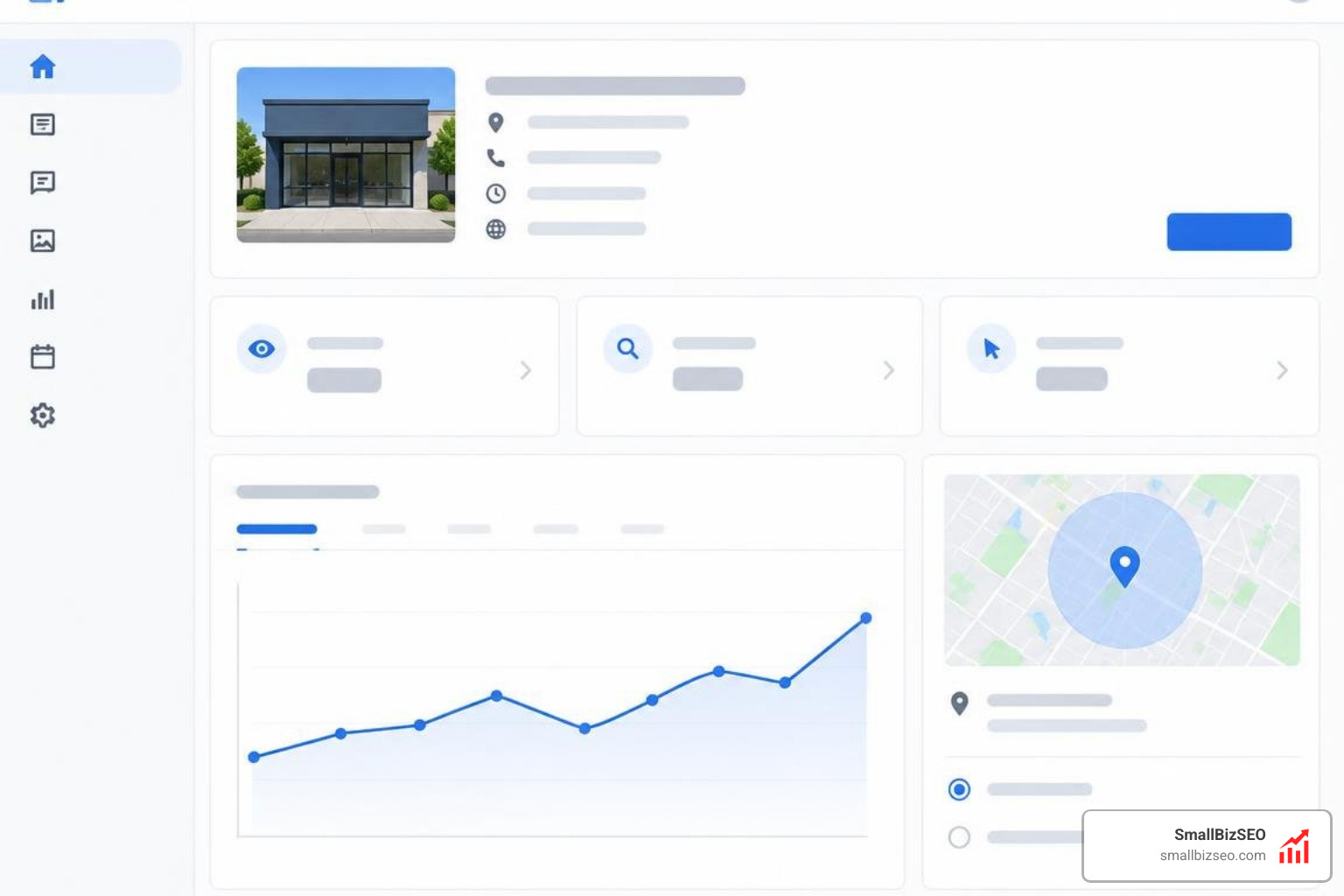
- Primary and Secondary Categories: Set your primary category to "Lawn care service." Add secondary categories such as "Lawn mower repair service," "Fertilizer supplier," or "Snow removal service" only if you actively deliver those offerings.
- Service Area Configuration: If your crews operate without a walk-in storefront, configure your profile as a Service Area Business (SAB) by hiding your residential address and designating the specific towns on your physical route.
- NAP Consistency: Ensure your business name, address, and phone number match identically across your website footer, directory profiles, and local citations without abbreviations or discrepancies.
- Visual Social Proof: Regularly upload real, unedited photos of freshly striped lawns, clean edging, and branded equipment. Authentic work photos establish immediate trust with homeowners browsing on mobile devices.
- Weekly Updates and Services: Populate your profile's product and service tabs with transparent descriptions and starting price ranges to qualify prospective leads.
Should You Create Dedicated Pages for Every Service and Neighborhood?
Yes, you should create dedicated pages for each core service and each neighborhood you actively service, provided each page offers genuine value and unique local details.
A single generic services page grouping mowing, aeration, weed control, and leaf removal dilutes your search relevance. Building individual pages for major revenue drivers—especially high-search treatments like core aeration and fertilization programs—allows search engines to match specific homeowner queries directly to your solutions.
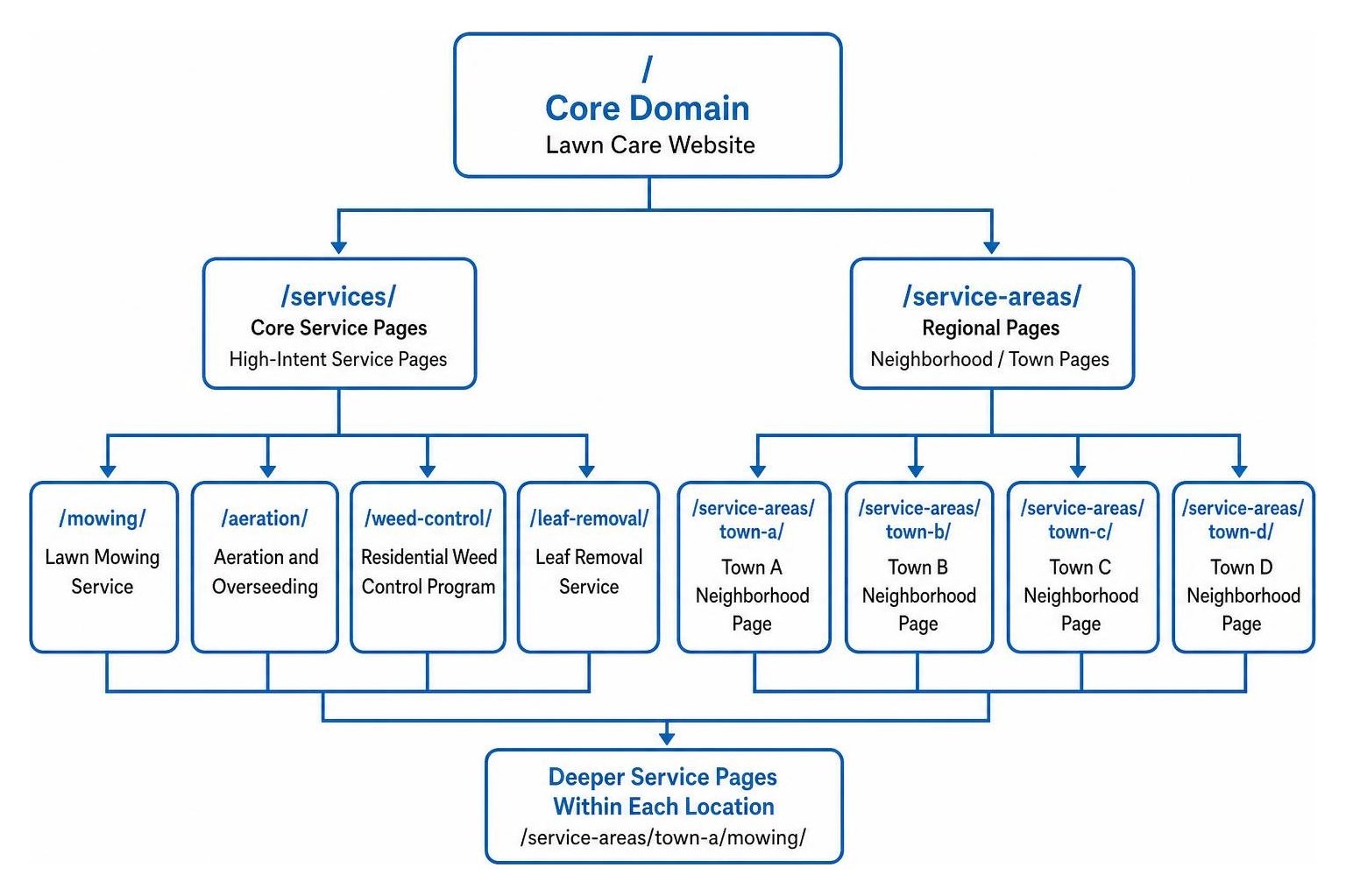
For regional reach, use a parent-child URL structure (such as /service-areas/town-name/mowing/) to keep your site organized for search engine crawlers. Pair your regional expansion with proven strategies from an experienced Landscaping SEO Company to ensure every location page features authentic neighborhood proof, route schedules, and verified local customer testimonials rather than duplicate template text.
Building Authority, Tracking Conversions, and Scaling Your Lawn Care Business
Building local search authority requires combining technical site health, local link acquisition, and transparent conversion tracking. At SmallBizSEO, our data-driven "Velocity" framework delivers fast rankings and E-E-A-T-compliant growth through transparent, automated reporting.

Technical SEO ensures search engines can crawl, index, and understand your website effortlessly. Adding LocalBusiness and Service schema markup in structured JSON-LD format communicates your operational hours, geo-coordinates, and exact service catalog directly to search crawlers.
Fast page speed and mobile responsiveness are non-negotiable. Homeowners frequently request quotes while standing in their yard on a mobile phone; your click-to-call buttons and estimate request forms must load instantly. To identify technical bottlenecks holding your site back, run a comprehensive SEO visibility audit to evaluate page speed, crawl errors, and conversion paths.
How Do Customer Reviews and Local Backlinks Build Search Authority?
Customer reviews and local backlinks build search authority by signaling real-world trust, prominent local activity, and customer satisfaction to search engines.
According to the practical blueprint in Lawn Care & Landscaping SEO: 13 Steps to Rank Higher, authentic customer reviews provide geographic relevance signals. Setting up an automated SMS workflow requesting feedback immediately after the fourth scheduled cut yields steady, high-quality reviews. Encourage clients to mention their specific neighborhood and the service completed in their review text.
Responding to every review reinforces customer care and provides another opportunity to naturally incorporate service and neighborhood terms. Beyond reviews, building authority requires localized backlinks:
- Community Sponsorships: Sponsor local youth sports teams, charity 5K runs, or school events to earn authoritative
.organd community domain backlinks. - Local Business Directories: Maintain complete listings on trusted platforms like the Better Business Bureau, regional Chambers of Commerce, Yelp, and Angi.
- Supplier Partnerships: Secure links on dealer locators and equipment partner websites where your company sources commercial mowers and professional turf supplies.
How Long Does It Take to Win Clients with SEO for Lawn Care and Mowing Services?
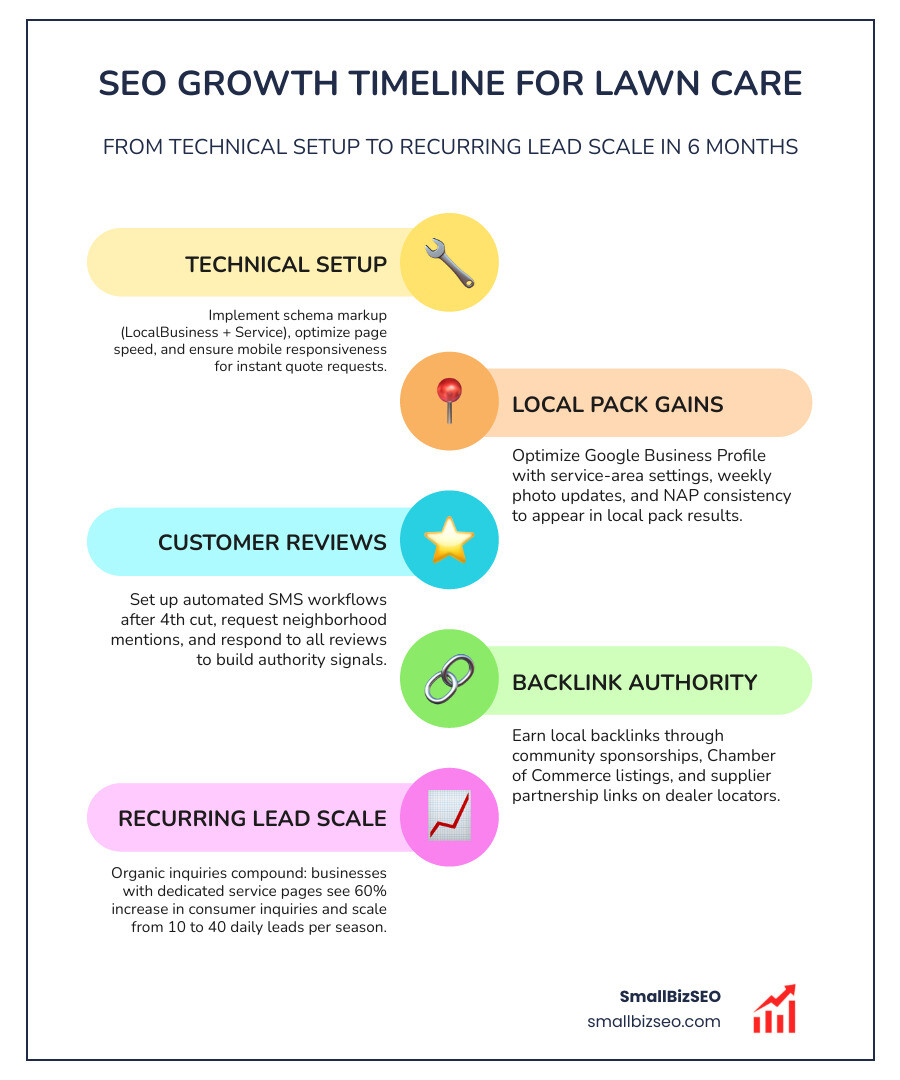
Lawn care SEO typically produces early ranking movement and inbound inquiries within 3 to 6 months, with lead volume compounding significantly over 6 to 12 months.
In local trade case studies, businesses establishing dedicated service pages and consistent local signals increased consumer inquiries by 60% and scaled daily leads from 10 to 40 within a full operating season. Because a single recurring lawn maintenance contract represents ongoing weekly or bi-weekly visits across multiple seasons, the long-term return on investment from organic rankings easily outperforms ongoing paid advertising expenses.
To measure progress accurately, track these primary performance metrics:
- Local Pack Impressions: Monitor your visibility across targeted neighborhoods using localized geo-grid tracking tools.
- Organic Phone Calls and Clicks: Measure direct calls and form fills generated via Google Business Profile Insights and website click-to-call actions.
- Organic Quote Conversion Rate: Track the percentage of website visitors who complete an estimate request form.
- Target Route Density: Measure the concentration of newly acquired recurring service contracts along your existing driving routes.
Turning Local Search Visibility into Fully Booked Routes
Dominating local search results requires aligning your Google Business Profile, service landing pages, neighborhood routes, and customer review workflows into a unified lead-generation system. By targeting high-intent commercial keywords, publishing clear service pricing, and maintaining technical site health, your business captures steady, high-margin maintenance contracts that keep crews productive all season long.